Home Blog Page 809

Nairobi to Receive Delivery of Six Commuter Trains to Boost Transportation

0
President Uhuru Kenyatta boards one of the commuters train at the Nairobi Central Railway Station to Embakasi last year. [PSCU]

The Kenya Railways Corporation (KRC) says it expects six additional commuter trains – known as diesel multiple units (DMUs), which are faster and more efficient than the age-old locomotives.

Expected to be delivered before April, the refurbished trains will assist in expanding frequency of trains services to different routes across Nairobi metropolis.

The trains were previously used by the regional government of Majorca which has started greening its public transport through the electrification of buses and trains.

“We have been revitalising the commuter lines in Nairobi. This started with the modification of the old coaches to increase the capacity by including space for standing passengers. This however turned out not to be very efficient because of the age of the locomotives,” KRC Chairman Umudho Awitta said.

KRC had spent Sh1.15 billion to acquire 11 DMUs from Majorca State in Spain. The Corporation had received the first batch of five trains which were delivered in November and had commenced operations.

“We ordered 11 from Majorca, Spain. Five of these were delivered towards the end of last year. The remaining six will be arriving in the country by the end of this month or early April.”

The Ministry of Transport has in the past said the service is used by upwards of 13,000 commuters daily, making it an essential service for the city.

Awitta said the new units would enable KRC to increase the frequencies of trains on some of the busy routes.

“We plan to run frequent services and the residents can access the central station in a matter of minutes throughout the day. Instead of taking two hours in traffic, they can be in the central business district in 20 minutes,” he said.

“We intend to have hourly trains running in different directions.” The Transport ministry is also moving to revive the stalled bus rapid transit (BRT) system.

While BRT systems along major arteries could hold the cure to the many ills that afflict public transport in Nairobi, they have faced many false starts despite making billions allocated to the project over different financial years.

Transport Cabinet Secretary James Macharia said on Friday the ministry has started the implementation of the Thika Road system, years after it started demarcating lanes on the highway but unceremoniously stopped.

“We have already started the project from Ruiru towards the city, the contractor is on site,” he said. “A BRT is also being implemented on Mombasa Road even as the Expressway is being built. The implementation of the Expressway has made it easier because it has created more space,” said Macharia.

“Before, there were three lanes on either side of Mombasa Road but when the Expressway is completed, there will be enough room for another two lanes at the middle which we will use for the BRT that will be commissioned with the Expressway.”

The Sh62 billion Expressway, which stretches from Mlolongo to Westlands, is expected to be commissioned before the end of this year.

Both the rail and the BRT could ease congestion in the city, with the Nairobi Metropolitan Authority putting the losses at Sh100 billion annually.

Murder At The Altar: When Men Of The Cloth Turn Into Killers

0
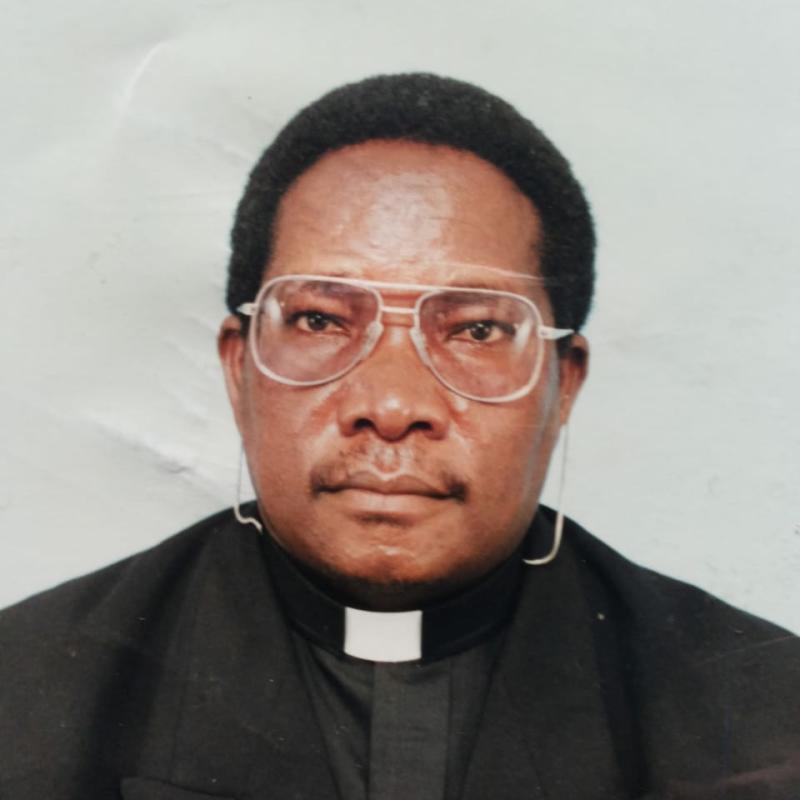
The photo of the late Kelvin Kipkoech (seminarian) whose body was found dead in government quarters Jogoo road in Nairobi on Tuesday, February 2, 2021. [Peter Ochieng, Standard]

By Daniel Wesangula

When a middle-aged man was found dead alongside a woman and her child in Government Quarters on Jogoo Road, Nairobi, last week, few would have imagined that he was a thriving seminarian about to graduate to set about a lifelong Catholic church missionary work.

To the residents of ‘Gava’, as the estate is popularly known, Kelvin Kipkoech passed for a cousin who frequently visited his relatives every other weekend, possibly on break from college or work.

But when truth came out, not even his father Elijah Kimaiyo could come to terms with the circumstances in which he died. Kipkoech was studying at the St Thomas Aquinas Seminary in Nairobi and was expected to go back after finishing his eighth-year examinations.

And as police try to unravel how Kipkoech, Charity Cherop, 34, and her son Allan Kipng’etich died, the incident adds to a growing list of men of the cloth who have been killed or hurt in circumstances that have left the faithful baffled.?

On the night of March 21, 2010, it was raining heavily in Makueni. And as it was the norm in most parts of the country, heavy downpour was synonymous with blackout. But it was an act of man at the Makueni Catholic Mission House on that night that was to dominate conversation for the months that followed.

It started with a reunion of a few good men of God and ended in an attempted murder conviction for a fast-rising priest from Machakos.

On that night, one man became another statistic in a long line of those who came before him, and an even longer line of those who came after him, of priests caught on the other side of the law.

Father Fidelis Nzuki Mutuota, an assistant priest at the Makueni Catholic Parish, arrived from Nairobi for a catch-up with four friends, including the parish’s priest Father John Wambua Makewa. The five men enjoyed a meal and retired to their beds.

Father John Wambua Makewa. [Courtesy, Makewa Foundation]

Later, Nzuki was woken up by a loud sound he believed to be a gunshot at about 4.15am. Court records say the priest called out a colleague, Father Boniface Kioko, to confirm whether he had heard right. The two men, huddled against the wall, remained still.

Ten minutes later, Makewa entered their room, shotgun in hand.  It was a Brno Special Poldi Elettro, double barrel. He informed them that there were thieves outside. They followed him to his bedroom, where he handed Nzuki three bullets, which he was to give him on demand. That was not all. Makewa also gave Nzuki a pistol.

In the darkness, Makewa groped his way to the bedroom window, loaded his shotgun, cocked it and fired twice towards the sisters’ residents. Three sisters lived there. They were yet to see intruders, but Makewa claimed they had moved into the sitting room.

Between them and the sitting room was a long corridor. With the lurking danger, the parish father asked his junior to crawl and open the door separating the corridor and the sitting room.

Nzuki obliged, but as soon as he reached for the door handle, he heard a bang and felt a sharp pain on his left upper arm.

It is this bang that startled Sisters Salome Kamene Peter, Nthike Nzevela and Jane Frances Kamanthe Malika.

Shaken and bleeding, Nzuki muttered in Kamba: ?“Niwambatha! Utonya atha munyanyau ata?” He was asking Makewa why he had shot a friend.

But Makewa, a licensed gun holder, insisted that his assistant had been shot by the thieves. Then, according to court records, he shot Nzuki on the thigh.

In panic, the sisters called Makewa to find out what was happening. Kamene dialed his number. “He said that there were thugs but everything was under control,” court records read. But before Kamene hang up, she heard three more gunshots.

50 metres away, Makewa was telling a different story. He told seminarian Boniface Mutua that the sisters had called to say “that the thieves had gone into their side and were firing from there.”

The sisters fled their room and made their way to the chapel for prayers. As they sought divine intervention, Father Michael Mutuku, who by this time had made his way to the injured priest did not like what he saw. He knelt down beside the bleeding Nzuki and took his confession.

This frightful night earned Makewa a seven-year jail term for attempted murder.

When the case came up before Makueni Senior Resident Magistrate Richard Koech, Makewa, denied shooting Nzuki. “I never attempted to shoot Fr Nzuki. I was not mad to have thought of shooting him. I did not use the 50 bullets in my possession at the time of the alleged shooting,” he claimed.

He spoke of how Nzuki, Mutuku, Mutua and Father Boniface Kioko and himself had exchanged pleasantries before they retired to bed following a blackout shortly after midnight.

He later heard gunshots, rushed to wake up his visitors and noticed Nzuki had been shot.

Four years later, though, there was more than an attempt at a priest’s life. Just a month and a half after he had met Pope Benedict the XVI, the Vatican announced that Bishop Luigi Locati, the Apostolic Vicar of Isiolo, was shot dead as he returned home from a parish centre.

He had just had his supper when, as he walked home, he was accosted by a group of men who shot him in the head and neck. He died an hour later at a nearby hospital. A year earlier, he had escaped a homemade bomb attack.

The then President Mwai Kibaki called the assassination “a repugnant act, a great loss, not only for Catholics” before attending his funeral service attended by thousands. At the time, the common thread was that the bishop was a victim of inter-communities clashes that had claimed dozens of lives already.

But later, investigation would point, first, to a likely motive – money. And then to an unlikely source – Father Waqo Guyo.

Former Catholic Priest Father Waqo Guyo who was sentenced to death for the murder of Isiolo Catholic Bishop Luigi Locati in 2005 at Kamiti prisons during an interview on Papals visit. [David Gichuru, Standard]

After an eight-year trial, a judge named Guyo as the mastermind of Locati’s death. “The priest planned, financed, facilitated the acquisition of the gun and recruited the co-accused persons to execute the plan to kill the bishop,” Justice Fred Ochieng’ ruled.

Guyo had told the gun owner that it was for hunting. It instead cut short the life of the soon to retire catholic priest.

Guyo and four other men were found guilty of the murder of the 77-year-old bishop and sentenced to hang.

The motive was simple. Guyo wanted Locati out of the way so that he could have direct control of the parish funds. “The defence has proved beyond any reasonable doubt that the accused murdered the bishop. It was inhuman for the accused to kill an elderly and harmless man of the cloth in such a brutal manner,” said the court.

The judge noted that Guyo’s mother died after learning that her son had been found guilty, expressed his sympathy, but maintained that he must pay for his sin.

On January 6 last year, members of the Grounds for God’s Gospel Ministries, popularly known as 3G, were treated to a disturbing first service. Eyewitnesses say that all was going well and the pastor, Elisha Misiko, invited the congregants to a time of prayer.

Then, as was customary in the church, Misiko got up and walked towards his wife of 20 years, who was a cofounder of the church. The pastor stabbed Ann several times with one of the two knives hidden in an envelope. Before a shocked audience, he then stabbed himself three times in the stomach, placed the blade on his neck and in one move slit his throat.

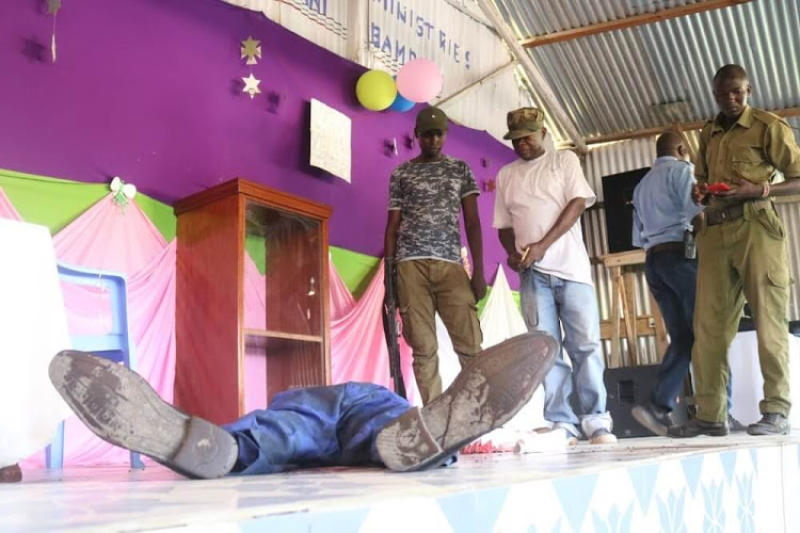
Body of Pastor Elisha Misiko lying on the pulpit at his Ground for God’s Gospel ministry church in Bamburi, Mombasa County. [Courstesy]

The two were bleeding to death at the altar they had spent two decades to build.

The signs had been there. In 2017, Misiko was detained by police in Mombasa after his wife filed a complaint alleging that he wanted to kill her. Misiko, an assistant pastor then, was released the following day and the couple that had four children lived separate lives ever since. The two then got embroiled over the ownership of the church.

In a 17-page suicide note titled ‘betrayal and consequences’, Misiko alleged that his estranged wife had changed the ownership of the church to her name, stolen their land and their children. The note also talked of the couple’s formative years. “When we got married, life was hard. I was forced to do the mkokoteni business. I took a loan from SMEP and combined

Curled from The Standard (Kenya)

Kaduna SWAN Appoints Shehu Dikko As Patron

0

Sports Writers Association of Nigeria (SWAN) Kaduna State Chapter on Saturday formally presented the plaque, mofler appointment to the League Management Committee (LMC) Chairman and vice President of the Nigeria Football Federation (NFF) Malam Shehu Dikko as her patron.

It would be recalled that Dikko was appointed as the second Patron to the State Chapter of the association but was unavailable for the presentation where the President of Nigeria Volleyball Federation (NVBF) Engr. Musa Nimrod was also appointed and presented with his plaque and mofler accordingly.

Making the presentation at the Ahmadu Bello Stadium, Kaduna during the half time in the encounter between Kano Pillars and Enugu Rangers in the ongoing Nigeria Premier Football League (NPFL), the Vice President SWAN, Northwest Zone, Alhaji Lurwanu Idris Malikawa said, the appointment was in recognition of his contribution to sports development in the country.

Earlier, the Chairman SWAN, Kaduna chapter, Isaiah Benjamin flanked by some of his executives and members said, Dikko has been identified to have made Kaduna State proud and that his appointment as patron is to spur him to further do more in making Kaduna and Nigeria as a whole proud in sports advancement.

Acknowledging the gesture, Dikko commended Kaduna State Chapter of SWAN for finding him worthy of such appointment, promising not to let down the confidence reposed in him.

He further assured of giving necessary support to the activities of the Association in the state while reiterating his appreciation to the SWAN family for the honour done to him, which he said, will cherish forever.

Nigeria: Mitigating Effects Of COVID-19 On Primary Education In Plateau

0
Plateau State
Map of Nigeria showing Plateau State

By Martha Agas

Primary school education which is already beset with a myriad of problems now faces a fresh challenge – the COVID-19 pandemic.

Since the first case was reported on February 27, 2020, resulting into long periods of nationwide lockdowns, the sub-sector has continued to suffer lots of disruptions with all stakeholders worried over the future of what is naturally the major foundation of all educational pursuits.

UN report said recently that the pandemic had affected 1.6 billion learners in more than 190 countries.

Even more importantly, the report noted, is the fact that the pandemic had further unveiled a notable disparity in the access to education between rural and urban communities, with children in less privileged homes worst hit because they experienced more hardship in adapting to new methods of learning and accessing lessons delivered virtually, through broadcast stations, during the lockdown periods.

In Plateau, the situation has been particularly bad, with the primary school children, whose quality had not been resounding over the years, forgetting how to read or write, when the schools resumed last year, after close to one year of indolence.

Recalling her experience, Mrs Gavou Ambrose, a primary school teacher in Barkin-ladi Local Government Area, said that many of her pupils could barely remember anything.

“When the schools re-opened in my village, many of the pupils did not remember how to read and write. They only remembered their mother tongue. This is because they did not have access to the educational interventions by government during the lockdown.”

Similarly, Mrs Elizabeth Bulus, a widow and firewood seller in Riyom Local Government Area, said that her three children forgot everything about school during the lockdown.

“I am told that lessons were delivered through the radio, but I don’t have one in my house. I commend the Plateau State Universal Basic Education (SUBEB) for that initiative, but I did not gain from it,” she said.

Bulus confesses that she could not do much for the children because of her literacy level.

“I did not go to school, so I was helpless in terms of helping the children in carrying out any academic engagement,” she said.

Mr Dalyop Jugu, a poultry farmer in Rim, a rural community, also decried the hardship children of his community experienced in accessing SUBEB lessons during the lockdown period.

“The children were left idle with no progress in academic activities. When they resumed, they were generally lost without prospects of promotion or admission to higher schools,” he lamented.

For Mrs Keturah Shammah, Executive Director, Girls Education Mission (GEM), children in rural communities will continue to suffer a massive disadvantage because they lack electricity, digital tools, and even financial resources to access virtual lessons or seek online education.

“The effect of that situation is that the children will forget what they are taught in school, leading to declining interest in education,” she said.

As part of its efforts to meet the learning needs of primary school children, the Plateau government transmitted lessons in basic subjects in four broadcast stations in the state.

The gesture was aimed at cushioning the effect of idleness in the children by engaging them while they were at home, during the lockdown period.

Unfortunately, children in the rural areas and urban suburbs, whose parents were mostly poor, either did not have access to the electronic gadgets for the lessons, or struggled with access to power supply or its alternative, to access the short-term education intervention.

Prof Mathew Sule, Executive Chairman of SUBEB, acknowledges that drawback.

“From our findings, children in the rural areas did not access our intervention efforts.

“To mitigate the gap, the lessons were produced in hard copies, specifically for children in rural communities. However, findings indicate that they hardly benefitted from the approach,” he lamented.

But while the Plateau government has organised short term measures, analysts say that there is the need to devise long term measures to strengthen primary education in the state in view of the fact that the pandemic may rage on for a long period.

Some of the analysts have called for improved electricity supply and the installation of digital network in rural areas.

Mr Ismail Abdullahi, a father of 10 children and a truck mechanic in Yelwa Mistagol community in Jos North Local Government, agrees with the analysts.

“For long term interventions, barriers to connectivity must be tackled through strengthening broadcast signals, internet network and expansion of electricity supply to the hinterlands.

“The state government should provide materials for students while at home and dry cell batteries for radio, so that children can congregate in homes where there are radio or televisions sets, in compliance with the COVID-19 protocols.

“I advise government to ask teachers in the rural areas to teach students based on COVID-19 protocols. They should provide free exercise and text books for students, and ensure power supply and dry cell batteries for the radio sets to ease the virtual learning process,” he said.

Prof. Sule, while acknowledging the suggestions, has opined that individualistic learning was the path to tow in the future, to address incidences such as the COVID-19 pandemic or something similar.

“The COVID-19 pandemic is an indication that we should rely on individualistic learning. Children should be able to learn on their own while the teachers would just be facilitators.

“For that to be feasible, subject mastery by teachers must be very effective to enable them break the knowledge in a simple form for the children to comprehend.

“This approach is critical because of minimal intervention by teachers in the learning approach.”

The professor of education foundation has also proposed the adoption of e-learning approach to strengthen primary education amidst the pandemic and beyond.

He says that the method will also assist children in discovering themselves, but adds that it requires government to designate a lot of resources in procuring computers, installing and strengthening electricity and training teachers in using applications of the e-learning facilities.

He also adds that adopting e-learning will increase computer literacy in children and teachers, especially those in the rural areas.

“We intend to improve the situation and convince the state government to do more for pupils in public primary schools and junior secondary schools,” he says.

He also urges the private sector and development partners to assist the teeming population of children in disadvantaged and precarious conditions, through investing in training of teachers on the use of digital resources.

But while SUBEB and other stakeholders battle to mitigate the effect of COVID-19 on primary education, Mr Ayuba Gana, Chairman, Nigeria Union of Teachers (NUT), Plateau chapter, says that fortifying public primary education requires making mandatory the training and retraining of teachers on Information Communication Technology (ICT).

“What it means is that development associations and religious groups should be involved in sponsoring such training. There should be community collaboration with peer group learning encouraged,” he says.

Dr Dakut Dickson, a senior lecturer at the Faculty of Education, University of Jos, supports the NUT boss.

“Virtual learning is beyond the financial capacity of some parents; government must identify parents of low income and provide platforms for them to participate in that new learning process.

“Cluster learning method should be adopted, expanded and sustained during emergencies such as COVID-19, where lessons are organised for few children on household basis by teachers living in their communities,” he says.

This report is part of COVID-19 Response: Together For Reliable Information Project, implemented by Paged Initiative supported by the European Union and Dress Press Unlimited.

News Agency of Nigeria (NAN) Feature

The War Against Glaucoma

0

By Jennifer Abo-Briggs

Scenario 1
Emeka is a 32 year old banker married with two children. He had perfect eyesight, at least so he thought, until last month when he went for a pre-employment health examination, where he was told by the ophthalmologist (eye specialist) that he had glaucoma, which was quite advanced in his right eye. He would need surgery to preserve his vision.

Scenario 2
Iya Ayo listened as the children in the compound played. They sang a popular Christian song ‘My eyes have seen, my ears have heard….’ She thought to herself ‘my eyes’. Hmmm, she was blind in both eyes. She was diagnosed with glaucoma four years ago, but did not adhere to treatment. Now her vision is gone and her doctors say nothing can be done to restore it.


What is glaucoma?

Glaucoma is an eye condition that causes permanent loss of vision. It is the leading cause of irreversible blindness in Nigeria and all over the world. An estimated 76 million people worldwide suffer from glaucoma. In Nigeria, nineteen out of twenty people with glaucoma do not know they have the condition. Furthermore, one in every five people with glaucoma is blind. Glaucoma occurs as a result of damage from elevated pressure in the eye. When the pressure in the eye (intraocular pressure) is higher than normal, it slowly damages the optic nerve which is responsible for vision. The damage to the optic nerve from glaucoma is permanent and can progress to blindness if it is not detected and treated early.


Who can have glaucoma?

Glaucoma can affect people of all age groups: the young, the old and even babies. It is however more common in people above 40 years of age. The risk factors for glaucoma include older age, people of African descent, having a family member with glaucoma and previous eye injury or surgery.


What are the symptoms of glaucoma?
In the early stages, glaucoma usually has no symptoms. This is mainly because it damages the peripheral (side) vision first, so an affected person may not know as they may be able to still see things in front of them clearly. This is why it is called the ‘silent thief of sight’. As the disease progresses, other symptoms may be noticed such as reduction in vision, bumping into objects and seeing haloes (colours) around light. In a certain type of glaucoma called angle closure glaucoma, affected persons may experience severe eye pain, redness and decreased vision. Babies with glaucoma (congenital glaucoma) have symptoms which include excessive tearing, aversion to light and an enlarged eye. Babies exhibiting such symptoms must be promptly brought to an Ophthalmologist for an eye check.


How is glaucoma diagnosed and treated?

A person with glaucoma should be evaluated by an ophthalmologist. This would involve a thorough eye examination and some tests to determine the type and severity of glaucoma. Many people who are diagnosed with glaucoma in Nigeria already have advanced disease or are blind at the time they present to the hospital. Glaucoma can be treated with medications (eye drops or tablets), laser or surgery. The main aim of treatment is to reduce the eye pressure and to slow down the disease progression as much as possible. The mode of treatment depends on a number of factors which the doctor would discuss with the patient. It is important to note that treatment is lifelong and strict adherence to treatment is key in preserving vision. Any vision that has been lost from glaucoma cannot be regained. However, with compliance to treatment, further vision loss can be prevented.


What should you do if you are diagnosed with glaucoma?

The most important thing is adherence to your treatment plan. Your Ophthalmologist will schedule you for routine clinic visits where your eyes would be examined and adjustments made to your medications if necessary. You may also be advised to have surgery or laser treatment. Screening of family members of affected people, especially their children and siblings is also important as glaucoma has been shown to run in families. A diagnosis of glaucoma is not a death sentence as it can be successfully managed with good collaboration between the patient and the doctor.


Conclusion

Glaucoma is the leading cause of irreversible blindness worldwide and can affect all age groups. Early detection and adherence to treatment can prevent total loss of vision. If you have never had a comprehensive eye exam, now is a good time to do so.

With Glaucoma, a stitch in time definitely saves nine. Let’s beat invisible glaucoma. The world is bright, save your sight! Get your eyes checked by an ophthalmologist today!


Courtesy: Dr Jennifer Abo-Briggs, Young Ophthalmologists Forum, Nigeria

To fish-out fake IDPs, Zulum storms camp midnight for headcount 

0

. Discovers 650 ghost households

Around midnight on Sunday, Borno Governor, Professor Babagana Umara Zulum showed up at Mohammed Goni College of Islamic Legal Studies in Maiduguri, where internally displaced persons from Abadam local government area of northern Borno were being camped.

Zulum immediately sealed entrance and supervise a headcount to identify actual IDPs, in order to put a stop to rampant cases of dubious residents pretending to be displaced, who spend day times at IDP camps to share food meant for IDPs, and towards the night, they return to their homes to sleep, with some of benefiting from other means through which the state distributes food to vulnerable non IDPs in communities.

Governor Zulum’s mission, which ended past 1am, discovered that out of 1,000 households in the records of humanitarian officials, 650 households were ghosts.

450 households were found to be real IDPs after Zulum’s midnight headcount which was conducted by the governor alongside an official of the National Emergency Management Agency, NEMA, Air Commodore M. T. Abdullahi, and two commissioners (Agriculture, and Local Government and Emirate Affairs).

In humanitarian system, a household normally consist of at least six persons who are either related through families, or chosen to stay together for the purpose of receiving household aids.

Officials who were part of the midnight headcount said Governor Zulum was not averse to approving support for any citizen who may be vulnerably in need of food since there is a committee doing that, however, the Governor is vehemently opposed to some residents making dubious claims in other to take what is meant for IDPs while also benefiting from other existing welfare activities that target non IDPs.

GOv. Bala Inspects More Projects… To End Water Problem In Bauchi Soon

0

Governor of Bauchi State,  Bala Abdulkadir Muhammed Sunday  continued an inspection to various developmental projects awarded by his administration.

Projects inspected, were  Maraban Ganye- Gwalpada road, renovated General Hospital of Toro, renovated Primary Healthcare Centre Magama Gumau, Rimin Zayan electrification, renovation of District Head palace Nabardo.

Others are renovated Primary Healthcare Centre Nabardo, elevated water tank Miri, renovated Primary Healthcare Centre Tashan Dirmi, booster station ATAP.

The Governor was also at Buzaye reservoir, access road to Gubi Dam, Gubi Dam embankment, Gubi Dam water treatment plant, Gubi Dam staff quarters, warinje reservoir, ongoing road construction from Malam Goje-Bakin Kura-Muda Lawal Market Road.

At Maraban Ganye- Gwalpada, Governor Bala while addressing communities of the area promised to support the indigenous contractor handling the project to ensure it speedy completion.

He said his administration has reviewed the project awarded by the immediate past administration and it has so far paid eight hundred million naira.

He assured them that his administration will soon award contract for construction of Gumau, Rishi-Tulu road to ensure advancement of the areas.

While at General Hospital Toro, Governor Bala commissioned COVID-19 Isolation Centre, Dental  and other units of the hospital.

He said his administration in collaboration with NSHIP has renovated
about 204 health centres, among which  192 primary health care facilities and 12 General Hospitals.

Governor Bala while speaking at the Palace of the District Head of Nabordo, called on traditional leaders to assist his administration in overcoming criminal activities in the state.

At Gubi Dam water treatment plant, the Governor assured people of Bauchi metropolis that the challenges related to  the water will soon be over as the project reached advance stage of completion.

While inspecting Malam Goje-Bakin Kura-Muda Lawal Market road project, Governor Bala was welcomed by the beneficiaries of the project who came out en mass to express their gratitude and support to him.

STRENGTHENING ENHANCED SAFE ROAD CULTURE AT 33 BY FRSC.

0
FRSC Logo


By Bisi Kazeem:

Thirty three years ago, precisely on 18 February 1988, the Federal Government of Nigeria established the Federal Road Safety Corps (FRSC) as the nation’s lead agency saddled with the responsibilities of identifying the causes of road traffic crashes and proffering appropriate solutions to the menace that had placed the country in the position of the second most hazardous nations in Africa to drive motor vehicles in.

With its lead agency status, FRSC was set as an institution to make effective use of instruments of education, science and technology to resolve the intractable challenges of motorisation in the country which was heightened by people’s fatalistic beliefs towards road traffic crashes.

For a nation that had nearly surrendered itself wanton killings on its highways which most of the people falsely attributed to either “the will of God” or “evil spirits,” the establishment of the FRSC 33 years ago was hailed by some discernible Nigerians as the most comprehensive policy that could address the menace of road traffic crashes in the country.

It’s worthy of note that prior to the establishment of the Corps, there were various efforts made by some concerned individuals, organisations and corporate bodies to create public awareness on the effects of road traffic crashes and tackle the menace to no avail.

With the incapacity of such efforts evidenced by the yearly public enlightenment programmes annually carried out by the Nigerian Army during the ember months particularly in the month of December; the creation of the Highway Patrol Unit under the Nigeria Police and the Oyo State Road Safety, the mandates of the new FRSC were expanded to essentially include conducting research into the causes of road traffic crashes and using all modern tools to adequately address them while prompt removal of obstructions formed an essential part of its mandates.

FRSC thus, started its operations with a renewed spirit of road traffic management system built on public goodwill, integrity and service delivery by its personnel.

Backed by enabling law espoused in Decree 45 of 1988 as amended by Decree 35 of 1992 under the military rule, captioned as Laws of the Federation of Nigeria 1990, but repealed and reenacted as FRSC Establishment Act 2007, during the civilian rule, the statue provided adequate powers to members of the Corps to utilise not just the efficacy of public enlightenment programmes, but to embark on aggressive enforcement of traffic rules and regulations to return sanity to the otherwise chaotic Nigeria highways.

Accordingly, right from its inception to date, successive leaderships of the Corps have strived to build on the solid foundations laid by the founding fathers in creating public awareness on issues of road safety and enforcement of traffic rules and regulations without fear or favour.

First Decade of the FRSC

The first decade of the FRSC from 1988 to 1998 was devoted to laying solid foundation for the organisation; creating alliances between the organisation and strategic members of the public through enlightenment programmes particularly, among the drivers and raising awareness that could convince every Nigerian that in its enforcement strategies, FRSC would not be “business as usual.” To this end, offenders who were apprehended for various traffic violations were not only sent to the banks to effect payment of the coded fines, but made to attend post- payment lectures in the commands after which video clips of road traffic crashes were shown to convince them that road traffic crashes were real, and that because they are caused mostly by human factor, they could be prevented with adequate caution and adherence to the rules of the road by the drivers.

However, this non relenting efforts of the young and energetic members of the Corps who shared the value orientation with the leadership of the organisation chaired by the internationally acclaimed Nobel Laureate, Professor Wole Soyinka and managed by Dr Olu Agunloye as the pioneer Corps Marshal, it became evident that most of the notorious traffic violators started showing remorse and promising to abide by the rules and regulations guiding the use of the roads.

As for the elite members of the society who believed that any law could only be enforced on those less privileged members of the society, the target of the public enlightenment efforts at them coupled with enforcement system that did not exclude anyone from been apprehended whenever they committed traffic violations saw them cautioning their drivers and abiding by the regulations.

With the combined strategies of aggressive public enlightenment and robust enforcement coupled with the introduction of the new licensing system by the Corps, Nigeria’s FRSC successfully commenced a new engagement with the Nigerian public in matters of road safety that restored relative sanity to the roads. This tempo of aggression was sustained throughout the Corps’ first ten years of existence with majority of the people hailing its non-compromising stance on matters of road safety as a healthy development

FRSC in the Second Decade

By the time the FRSC entered its second decade which commenced in February 1998, the organisation had experienced its first leadership change four years earlier. This saw the change of Barton from the pioneer Corps Marshal, Dr Olu Agunloye to Major General Haldu Anthony Hananiya( rtd) who introduced obvious changes into the organisation’s culture of civility upon which the Corps was founded, to a new regimentation that gave impetus to the organisation as a paramilitary agency.

In line with the new postures of a paramilitary agency, changes were effected on the Corps’ uniforms; trainings, including arms trainings were organised for management staff and some selected members of the Corps, while the general comportment of the staff to make them more reflective of the new regimentation were introduced as evidenced by the launch of a new FRSC Disciplinary Code and dominance of military styles in the operational and administrative activities of the Corps.

Despite these massive structural changes however, the Corps’ core values of ensuring safety on the nation’s highways and civility in enforcement remained uncompromised while the civil approach to patrol activities and pursuit of public enlightenment programmes were adhered to religiously. The various changes in the military leaderships of the country within the period especially with the stepping aside of General Ibrahim Badamasi Babangida (rtd) to the brief Interim Government of Chief Earnest Shonekan, to Generals Sani Abacha and Abdulsalami Abubakar within a spate of five years, the FRSC’s first and second decades also witnessed leadership changes. These ranged from General Hananiya to Deputy Corps Marshals Dahiru Yakassai and Engr Abba Wakilbe.

Importantly, within the same period, the Corps also experienced merger and demerger with the Nigeria Police and its return to General Hananiya in November 2003 in the aftermath of the demerger, all of which affected the operations and structures of the Corps in various ways.

Despite the celebrated “second coming” of General Hananiya, he only held the saddle of leadership of the Corps till a new Corps Marshal was appointed from outside in May 2007, few months before the celebration of the Corps’ 20th anniversary, which ushered in a new chapter in the organisation’s tortuous journey.

The Third Decade of the Corps

The third Decades of the FRSC which effectively commenced in February, 2008 saw a new leadership of the Corps undet Chief Osita Chidoka. The new Management came with the introduction of a digital era of rapid development in information and communication technology; consolidation of the gains of the past twenty years of the Corps and chatting a new course for its future as a technology-driven organisation. The decade’s activities commenced with an international Conference on Road Safety, which was organised to mark its 20th anniversary celebration at the Sheraton Hotel Abuja.

The third decade was characterised by a new dynamism in road safety management with the launch of several road safety programmes that are technology-driven; reaffirmation of the FRSC as a veritable tool for achieving the socioeconomic goals of the government and membership of the Corps to the security and other socioeconomic bodies across the States. Meanwhile, with more funding and active participation of the Corps in road safety activities, various local and international recognitions came to the organisation.

Seven years into his tenure and four years before its 30th anniversary, Chief Osita Chidoka was appointed as Minister of Aviation, leading to the appointment of Dr Boboye Oyeyemi, the first Corps Marshal from within the organisation who is the currently saddled with the leadership of the organisation.

Dr Boboye Oyeyemi, a founding officer of the Corps took over the mantle of leadership on 24th July 2014 and has since been pursuing the modernisation policy of the Corps with commendable dexterity. A firm believer in policy continuity, the Corps under his leadership has in the last seven years been propelled by a new force that aligns with the principles of the founding fathers: More Federal Government’s moral and logistics support have been secured; road safety strategy document was first approved under him while the second edition of the strategy is currently in operations.

There have been greater vigour in the pursuit of anti corruption war in the Corps under his Management with the formal launch of anti corruption app in partnership with some strategic stakeholders. Meanwhile, more collaborative initiatives have led to greater vigilance on the activities of members of the Corps with those caught engaging themselves in anti corruption practices being arraigned by the EFCC and ICPC to courts while others are facing the FRSC Disciplinary panel for trial and appropriate sanctions on various allegations to serve as deterrence for others.

The policy of expansion of the Corps’ presence nationwide to bring its operations closer to the grassroots which the Oyeyemi-led Management initiated has led to the opening of a liaison office in each of the remaining local councils across the country where FRSC was yet to establish a full unit command, while liaison officers have been appointed to all such councils since last year. In pursuit of the new agenda, more unit commands, zebra and roadside clinics are being opened while training programmes for staff to prepare them adequately for their tasks have been on the increase.

Moreover, the Corps has also witnessed improved provision of patrol logistics, rescue and tow trucks by the federal government under the present administration of President Muhammadu Buhari to prepare the Corps to carryout its statutory responsibilities most efficiently. There’s no doubt that FRSC has over the years endeared itself to the generality of people of Nigeria and positively impressed the government which has continued to give it supportive hands.

With the growing desire for urbanisation by the government coupled with the central role which transportation and safety plays in the liveability of the people, there is every possibility that the demand on the FRSC to perform more optimally will be on the increase and the present Management is up to the tasks in closing such gaps.

FRSC in the Next Decade

By the time Nigeria will celebrate the 40th anniversary of the establishment of FRSC in 2028, it’s expected that all the lessons learnt over the years would have come to assist the organisation to stand firmly on its feat in order to continue to deliver on safety to the people.

Therefore, It is also expected that the capacity of the Corps would have developed to a level where the personnel would be in a position to address whatever traffic challenges that the nation maybe faced with more professionally and efficiently.

In addition, with improved funding by government and closer collaboration with stakeholders, the entire Nigeria road network would have been effectively covered with the activities of the special marshals been more widely embraced by Nigerians from all strata of life which aligns with the collective nature of road safety campaigns.

Happy 33rd anniversary to the FRSC.
Bisi Kazeem
Assistant Corps Marshal (ACM) fsi
Corps Public Education Officer (CPEO)

Currency Exchange Rates

USD - United States Dollar
ZAR
0.06
EUR
1.17
CAD
0.73
ILS
0.31
INR
0.01
GBP
1.34
CNY
0.14
Enable Notifications OK No thanks