Home Blog Page 519

Train Ride To Eternity, By Wole Olaoye

0
Dr. Chinelo Megafu

Her name is Chinelo Megafu. She graduated in Dentistry from the University of Port Harcourt in 2015. Ah, you already know her? She had never been one to seek cheap popularity. Her becoming a household name was entirely beyond her control. As a medic, she was trained to save lives. Nothing prepared her for a situation in which lives would be ebbing away all around her (including her own life, by the way) and she would be totally helpless in doing anything about it.

The train ride had been a jolly one until the loud bang, which signalled the arrival of doomsday. Unknown to anyone on the train, some terrorists had mined a section of the rail track, which exploded as soon as the train crossed that part. Like bees, armed terrorists emerged from the bush and started shooting. She was hit. Many other people were too. Others were abducted and taken away by the agents of terror. There she was, a trained saver of lives unable to save anyone; helpless.

But she was not trained to give up. When in trouble, reach out. The common humanity that you share with the rest of humankind will propel them to come to your aid. So, in the midst of pain, loss of blood and ebbing consciousness, she did the best thing she could in the circumstance: She sent out a tweet about her predicament.

“I am in the train. I have been shot. Please pray for me.”

Internet fiends and trolls are always quick to the ball. One Big Dave, @odogwupanther, who obviously has lost his humanity, mocked her, “…Why would someone believe this? You got shot on a train, instead of calling for help the next thing is to come on twitter and say we should pray for you. And moreover no one is on the train with you…”

When other contributors descended on him for those insensitive comments, the coward quietly deleted his comments.

Another one, Abolore, @ysone2, sniggered: “Are you dead now?”

Comments such as the above are standard fare on social media whenever any grievous thing happens. Complete loonies, thinking that their comments won’t attract attention unless they are outrageously offensive, quickly populate cyberspace with their display of bad upbringing and savagery.

On the side of the angels, people like Cynthia Chioma Njoku, @cynchimanj, were on hand to give mockers a dose of their own medicine. On the confirmation that Chinelo had died, Cynthia frontally replied to Abolore @ysone2: “Yes, she’s dead now. You can come feast on her corpse.”

Another passenger in the same train, Anas Iro Danmusa, lived to tell her story. Immediately the attack started, she contacted both her brother and the Kaduna State Commissioner for Information, Samuel Aruwan.

How come Kaduna is becoming the headquarters of terrorists when the State hosts at least 12 military and police formations? Those who think that building monasteries and purchasing hoods are tantamount to acquiring holiness will eventually be consumed by the gaseous suffocation of their stupidity.

Anas also cried for help on her Facebook page: “Please this is an emergency. We are inside a train at the moment. Kidnappers planted explosives and the train engines have been ruined. We are helpless. Abuja to Kaduna train. Gunshots still being fired right around us. We are just under the seats praying to God while waiting for help. Since 8:00p.m. we have been here.”

Anas’ Facebook post was shared widely by concerned people in cybersphere, with many showing empathy. How different are the tribes of Facebook responders from their Twitter counterparts! Same incident, different reactions. Different folks, different strokes.

Aruwan requested her to share her location via WhatsApp and he promptly forwarded the coordinates to the military commanders, who swiftly traced the scene and rescued the remaining commuters. The rescue came too late for many passengers who had been taken away by the terrorists, allegedly in five Toyota Sienna buses.

Some puzzles, though: Anas noted that three doors of the coaches were left open as the train sped along and that a concerned passenger had to personally shut them. Why were the doors left open?

Also some passengers said they saw a strange man in mufti with a walkie-talkie but didn’t think much of it until they later saw that the terrorists too were using walkie-talkie to communicate with their coordinator.

Again, one lady saw a member of a gang that had kidnapped her before. She looked forward to exposing him when the train reached the Rigasa terminus. But the train never made it to destination and the kidnapper melted into the night with his fellow terrorists.

How come Kaduna is becoming the headquarters of terrorists when the State hosts at least 12 military and police formations? Those who think that building monasteries and purchasing hoods are tantamount to acquiring holiness will eventually be consumed by the gaseous suffocation of their stupidity.

The Nigerian Railway Corporation has not publicly released the train’s manifest. Many people have said that there is no reliable manifest because of the endemic corruption in the system, about which I have written in the past. The facts released are that 398 tickets were sold but only 362 passengers boarded. But some sources have put the total number of passengers in the train at 970. If true, the only plausible explanation for the difference is corruption — ticket racketeering.

As all the commotion — which Anas wrote so touchingly about — was going on, Dr Chinelo Megafu continued bleeding, having been shot in the stomach. She must have wondered how internet demons on Twitter reacted to her call for help. Those demons are irredeemable because even when their error was pointed out to them, they still insisted that they had a right to taunt a dying woman. Suppose she was lying, they argued.

I have written before about the opaque way we run public enterprises acquired with foreign loans. The railways are being run as an arm of the Ministry of Transport. I have used the service before and from what I saw, it is clear that the government has no intention of realising the huge funds sunk into the project. Train tickets are being sold in the black market at a premium right inside the train stations. The online portal is sometimes sabotaged so that passengers will have no option but to proceed to the station to negotiate with the touts. Selling train tickets is not rocket science. This is pure sleaze.

As all the commotion — which Anas wrote so touchingly about — was going on, Dr Chinelo Megafu continued bleeding, having been shot in the stomach. She must have wondered how internet demons on Twitter reacted to her call for help. Those demons are irredeemable because even when their error was pointed out to them, they still insisted that they had a right to taunt a dying woman. Suppose she was lying, they argued. The Devil has no salvation. No matter how hard you try, some people will still take the expressway to damnation.

What is the difference between the bandits who fired the shots and the internet terrorists who lie in wait to further confound anyone in distress? It is now fashionable for cowards hiding under the umbrella of anonymity in cyberspace to display their total lack of good breeding by putting down anyone they perceive as their betters. They will never find peace.

Apparently, a sense of peace, well-being and painlessness, a sense of removal from the world descended on Chinelo, as she set on her journey to eternity. Ever so polite, she still managed to thank a fellow passenger who was fanning her with his newspaper. The man says he will always treasure that final “Thank you”.

Experts say that when the departure of the spirit from the human body is imminent, the dying person is immersed in a powerful light and observes goings on around the immediate environment from above. They underline five stages: Peace; Body separation; Entering a void; Seeing the light; and Entering another realm of existence, through the light. The person sees his life flash before his eyes like the reels of a film. We shall never know what Chinelo saw. But she was at peace as she was evacuated.

The Nigerian Medical Association was distraught at the violent termination of such a promising life. “The untimely death of the young, promising Dr Chinelo who served at the Kaduna State Dental Centre and worked with St Gerrard’s Hospital, Kakuri, while striving to earn an honest living, is one other death too many. The Association notes that needless blood-letting and senseless loss of lives is fast becoming a recurring decimal in our country, thus worsening the alarming effects of brain drain, which in many instances have been attributable to the worsening security situation in the country,” the statement read.

One commentator who was a friend of the deceased actually revealed that she had recently resigned her appointment because she had gained employment in a foreign country and was due to travel out in a matter of days. The bandits arrested her future.

Goodnight, Chinelo. You are a metaphor for the state of the nation. When parents become pall bearers and their children become ancestors before their very eyes, you know that the society has fallen short of the glory of God. Peace to you, Chinelo, perfect peace!

Wole Olaoye is a public relations consultant and veteran journalist. He can be reached on wole.olaoye@gmail.com, Twitter: @wole_olaoye; Instagram: woleola2021.

UDUS 101: An Introduction to the Most Peaceful University -By Hussain Wahab

0
Usman Danfodio University Sokoto Gate

A Welcome Message for the Newly Admitted Students.

You see, I’m not interested in Taliban and Afghanistan matter, neither will I choose today to discuss the hike in acceptance fee as claimed by some students. In fact I will not talk whether or not there will be increment in next session fees and why UDUS was ranked 38th in Top 100 university ranking.

At the same time, I will choose another day to write on how my takeaway was taken away by unknown person just “because I no get money.” However, today, I will be a pilot, piloting you to a journey of UDUS 101: An introduction to the most peaceful university.

Usmanu Danfodiyo University, Sokoto, also known as UDUSOK, is a public research institution located in the city of Caliphate. It is one of the twelve universities founded in Nigeria by the federal government in 1975. In UDUS, certificate is awarded based on leaning and character. The institution is tolerant as it houses different people from different cultures, places, beliefs and languages but, bear in mind, the management will never tolerate intolerableness. Good character and decency is paramount, or else you want to see maggots in your salt.

Yes, I knew that you will be orientated and taught different courses but should know also that this kind of orientation and course will not be included, so I deem it fit to fit it in here.

Let’s unveil the curtain with Pressure in pleasure disguise. Dear new students, once you are given confirmation letters there are a lot you are going to encounter. Sometimes, it will glitter, whereas it is nothing but rusty dust or gutter.

Should I start with the school library? Many will leave their hostels with the intention to read but the reverse will be the case once the attractive plasma screen of the almighty library beeped into their eyes. A thought will then inculcate their minds. For instance: “This is a big and tough match between Chelsea and Manchester City. How about that of PSG and Barca. Oh, no! I must watch it.” Brethren, before you know it, book has been kept aside. My dear, don’t be like this. Be warned of failure.

Time consciousness is essential. Schedule your time judiciously and avoid any form of distraction. You should be a learner that reads at the end of every lecture and prepares ahead of examination in order to prevent failure. The saying goes thus: “A stitch in time saves nine.” Extra curriculum activities are good but excess of it is dangerous.

Should I even talk about different people whom your path will cross with? These type of people include the chameleons, the dove, the tortoise, the crocodile; the sweet and the bitter, or the good and the bad? No doubt, in your dormitories you will be mixed with different people, you have to be diplomatic and tolerant enough in dealing with people. University is a universe and not your mini home.

Lest I forget, apart from money, foods and book you’re bringing along, do not forget to stash mosquito nets in your bags. In Sokoto, mosquitoes are experienced professionals in their profession. Also, I must warn you of the harsh cold weather just the same way I’ll warn you of the stifling heat. I know you’re strong, you can bear the unbearableness.

You will surely encounter strange things but try to focus on your purpose. University is a microscope of real life, try to view it well. Be calm, humble, associate, explore and respect others and their differences.

As you resume to confirm your admission, let me warn you: At night, you should walk with your peers. Always be with your torch, if you don’t want something to touch you. Better heed these warnings to avoid stories that touch.

In the next chapter of UDUS 101, we shall discuss what creeps in the night, and why you must be a super creeper to overcome them.

To all newly admitted students, as you start receiving your confirmation today, I welcome you to the most peaceful university in Nigeria. And I wish you the best of luck in your study.

Wahab is an intermediate law student in UDUS

2023 Presidential Election And Forces Of Disunity In The Church, By Ayo Akerele

0
The Nigerian Church needs to come together in agreement on 2023

Fellow Nigerians and dear servants of God, please understand that the perennial challenges of disunity in the Nigerian church are not peculiar to Nigeria. It is a global phenomenon whose consequences are only much worse in our clime. Read with me Dr Tony Evan’s recent heart-cry about the American church:

“How else can we have all these churches on all of these corners in America with all of these preachers running all of these programs with all of these members using all of these resources and still have all of this mess. I would like to suggest that the church, while building great ministries and great buildings, has missed the kingdom.”

Interestingly, not even the notorious tyrant, “Adolf Hitler” could succeed in his destruction of the German church, without the dismantling of the church’s fabric of unity. Repeatedly, Hitler leveraged on “disunity” as his preferred weapon of mass destruction against the German church. He wrote in his book, Mein Kampf, that, “the best way to conquer your enemy is to divide them”. Powerful states have always leveraged on “disunity” to conquer “known” or “perceived enemies.” The world’s leading entrepreneur of colonialism, the British empire, which exercised extraordinarily strong hegemonic influences on many African nations, used the weapon of “divide and rule” to champion its imperialist agenda across the length and breadth of Africa. And that was Hitler’s main dagger to the heart of the German Church. According to the detailed account of the events that led to the collapse of the German Church prior to World War II, as given by Erwin Lutzer, Hitler once said, “when you want to tear down a world and build another in its place, you must first of all separate the supporters and the members.”

In exactly the same way, the Nigerian church is on the verge of another sinister, “divide, and, conquer” agenda by powerful demonic forces within the Nigerian socio-political space. By targeting the church, which is widely divided along the lines of doctrinal differences and political interests, Satan and his agents within the Nigeria political space, have begun to tweak their strategies to weaponise this current division as a precursor to capturing the nation’s political climate, just like they did prior to the 2014/2015 elections. To all General Overseers and church leaders in Nigeria, I write this message with a very heavy heart. I have seen nothing more lethal than the force of disunity in dampening the spiritual influence of the Nigerian church within the current Nigerian state. We are so divided that the very thought of establishing widespread synergy across different streams of denominations, or even among the “Pentecostals”, is a dream waiting to happen after the rapture. Historically, successive leaders of the Christian Association of Nigeria and the Pentecostal Fellowship of Nigeria have found this matter daunting, herculean, and too high a mountain to climb.

This article is not, and will never be, a holistic, one-cap-fits-all attempt at solving the decades-old problem of disunity in the Nigerian Church.

However, it presents a little attempt at identifying an existential threat to the spiritual influence of the Nigerian church in establishing a united spiritual front for the emergence of God’s sovereign will for Nigeria in the 2023 presidential election. The problem statement is this: “How do we bring together the leadership of the Orthodox Churches as well as those of the Pentecostals, such as the Redeemed Christian Church of God (RCCG), Winners’ Chapel, Deeper Life, Christ Embassy, Citadel Global Community Church (former Latter Rain Assembly), Sword of the Spirit Ministries, Mountain of Fire Ministries, Christ Apostolic Church, Dunamis Church, Salvation Ministries, Day Star Christian Centre and hundreds, if not thousands of streams of other denominations, for the sole purpose of enforcing the political will of God on Nigeria? These are denominations with highly diverse biblical doctrines, practices, and values. It is for this same reason I have been an advocate of far-reaching changes and reforms in the Nigerian church — such that in the wake of a defining moment like this, the church would have been spiritually prepared to build a very robust and formidable united force that can weather all demonic storms against the emergence of God’s best will for Nigeria as president in 2023.

When the forces of political exigencies stretched forth their hands against a section of the evangelicals in America — in a bid to use the forces of socialism within the marriage institution to divide the them, they repelled this attack with a common voice, displaying the spirit of unity with the following signed document, “The Manhattan Declaration”, which states that:

“We will not bend to any rule purporting to force us to bless immoral sexual partnerships, treat them as marriages or the equivalent, or refrain from proclaiming the truth, as we know it, about morality and immorality and marriage and the family. We will fully and ungrudgingly render to Caesar what is Caesar’s. But under no circumstances will we render to Caesar what is God’s.

The role of the church is to pioneer the predominance of the kingdom of God and its values in the land. The role of the church is to perpetuate the spread of truth, honesty, and integrity, among others, in a nation. The role of the church is to enforce the will of God on the nation in the place of prayer. The role of the church is to leverage on unity to bring about a wave of value system transformation in the land; a development that will then pave the way for the emergence of upright and credible political candidates at all levels.

Following this declaration, Dr Tony Evans, one of the most outspoken American preachers, published a book that addressed this subject of “division” in the American church. He has the following to say to us, “When the church fails to act in concert with God’s prescribed agenda, then God often chooses to postpone His active involvement until His people are prepared to respond.”

Also, let me take you back to a more recent history. In the heat of the preparations for the 2014/2015 presidential election, a section of the Pentecostal movement in Nigeria favoured the candidacy of Dr Goodluck Jonathan, the incumbent president at that time, while another sectionr ooted for the emergence of President Muhammadu Buhari, the present Nigerian leader. The divisions and many heated debates and arguments among leaders of various denominations led to several contentions and spiritual cracks in the walls of the church, leading to the emergence of a new wave of church politics and cliques that have, for the most part, done more damages than good to the unity and progress of Nigeria as a nation. Things went so bad in 2014 that many clandestine meetings were held by various segments of the Nigerian church leadership to force and foist their choices on other segments of the church leadership, a development that further widened the cracks of disunity in the church. The ultimate consequence of this crisis was the labelling of the Nigerian church by many onlookers and political gladiators as “corrupt”, given some rumoured exchanges of money between sections of the church leadership and certain political parties. Labels like this, whether true or false, are the bi-products of disunity in the church, and they do no good to its image.

The role of the church is to pioneer the predominance of the kingdom of God and its values in the land. The role of the church is to perpetuate the spread of truth, honesty, and integrity, among others, in a nation. The role of the church is to enforce the will of God on the nation in the place of prayer. The role of the church is to leverage on unity to bring about a wave of value system transformation in the land; a development that will then pave the way for the emergence of upright and credible political candidates at all levels. This must be done through a concerted mental and spiritual synergy among all members of the body of Christ, or at least among most leadership of the church, in manners consistent with biblical standards. It is an open secret that the current church structure and system in Nigeria is fraught with enormous contradictions and widespread corruption, most of which are deeply rooted in the departure of many church leaders from sound biblical values of accountability, transparency, integrity, and truth.

However, there are still remnants of contrite and credible churches and ministries in Nigeria that are still doing the work of the kingdom with sincerity and truth. Thus, while trusting God for a thorough cleansing and purging of our churches, it is still crucial to our long-term survival that we begin to push for an upgrade in our present level of unity.

Where this unity is lacking, at least to a considerable extent, the propensity for the emergence of wrong leaders in a nation becomes very high. This was Adolf Hitler’s Christmas gift to the German Church, which paved the way for his transformation into a full-blown dictator in the 1940s. According to J.S Conway, “Under a barrage of accusations and vilifications, the German church grew more and more confused between their political and their theological loyalties. Poised between two choices, divided by compromise, and weakened through internal theological differences, the German Church lost its collective influence”.

And when they lost it, Hitler took over and the nation sank into the abyss — becoming the geographical trigger for the second World War. Thus, of all the forces confronting the Nigerian church, disunity remains a lethal weapon in the hands of the enemy.

I, therefore, suggest with utmost humility of heart and soul, and with due respect and honour to church leaders and fathers in the faith in Nigeria, that for the sake of posterity, they should endeavour to shun their differences and come together to establish some forms of synergy.

First, the leaders of our various churches need to congregate a round table conference. Differences must be ironed out in the spirit of love. Compromises must be established. My church is ten million in membership; your church is five hundred thousand in membership; I am a billionaire; you are a millionaire, must all be thrown into the sea of forgetting. I am talking about fathers here, many of who are now in their 60s, 70s and 80s. Posterity must dominate their minds. Without fostering any preferred political candidate on anyone, I believe that our father in the Lord, Pastor E.A Adeboye, one of the most respected church leaders in Nigeria, and some highly respected fathers and elders in the Orthodox cycle, have enough influence and weight to plan and execute this kind of meeting.

…a united prayer front for the emergence of God’s perfect will for Nigeria must be established. The church must not be apolitical. Similarly, we must not be partisan. It is about the will of God. This united prayer front should mirror a situation where leaders in the orthodox segment, as well as those from the Pentecostals, such as RCCG, Winners’ Chapel…and others will come together for a joint prayer movement, executed online and in various national locations to pray for the local, state and federal elections of 2023.

It is a meeting to broker peace and unity, and to establish a working document and an actionable spiritual direction that all church leaders, or most church leaders, must commit to; something similar to the “The Manhattan Declaration” by the Evangelicals in America. We must also be careful with our approach at creating “mechanisms” that will create the perception that a preferred candidate is being promoted by the church above others or even more qualified candidates, Christians or non-Christians.

Second, a united prayer front for the emergence of God’s perfect will for Nigeria must be established. The church must not be apolitical. Similarly, we must not be partisan. It is about the will of God. This united prayer front should mirror a situation where leaders in the orthodox segment, as well as those from the Pentecostals, such as RCCG, Winners’ Chapel, Deeper Life, Christ Embassy, Sword of the Spirit Ministries, Mountain of Fire Ministries, COZA, Citadel Global Community Church (former Latter Rain Assembly), Christ Apostolic Church, Dunamis Church, Salvation Ministries, Daystar Christian Centre and others will come together for a joint prayer movement, executed online and in various national locations to pray for the local, state and federal elections of 2023. This prayer movement must be inter-denominational and must run for an extended period of time under the joint leadership of all the heads of Pentecostal denominations in the country, prior to the coming together of other non-Pentecostal denominations.

Thirdly, I like to bring to our attention that the RCCG’s recent establishment of a directorate of governance is highly commendable. If run properly, it should create a strong platform to support home-grown Christian politicians in their quest to strengthen Nigeria’s democracy. However, the church must not be partisan. That is where the problem lies. Such a directorate should be inclusive to support the entire body of Christ, if truly we do not have any preferred candidate in view. Any perception of the church by other religious movements in Nigeria, as being partisan towards a Christian candidate will tarnish its image and, without doubt, create needless anarchy and confusion in the polity. I will advise that any directorate of governance or any of such initiative by the RCCG or by any other church, must provide a level playing field for all and sundry in the body of Christ. And ministers and church leaders must distance themselves from using their exalted altars for political campaigns or for promoting the interests of politicians, Christians or non-Christians.

In conclusion, it is important to note that we have, for the most part, concentrated on the successes of our personal ministries, rather than operating from a “kingdom perspective”, which is also one of the critical challenges confronting the Nigerian church. Personal ministry orientation is antithetical to Jesus’s kingdom-driven orientation that sees every Christian faithful as a member of the same body to which all churches must collaboratively commit to developing and supporting. This is not the time for individual and segregated efforts towards personal ministry successes, at the expense of a collaborative national transformation orientation.

This was exactly what the majority of the German church leadership were doing in the 1940s; they threw caution to the wind by ignoring all calls to unite and save Germany from the claws of Hitler. They all focused on the success of their individual ministries, damning the consequences until Hitler tightened his grip on the nation and sent most of the church leaders in Germany at that time into concentration camps. In the words of Helmut Thielicke, a German theologian who witnessed the collapse of Germany during the second World War, “…many of the German Church leaders were fixated on their personal ministry successes, but they failed to realize that the worship of success is generally the form of idol worship the devil cultivates most assiduously. Success is the greatest narcotic of all”.

Over-the-counter human remedies will not fix Nigeria; they will only mask the real symptoms for a season. It is now time for us to wake up, stand up and pray up. The destiny of two hundred million people is at stake. This is Nigeria’s last chance at salvaging the nation’s political destiny that is presently in ruins. A nation with some of the most brilliant minds cannot continue to trail the rest of world in development and competitiveness. The church cannot exercise any considerable influence when we are this divided.

Let me leave you with this wonderful message by Dr Erwin Lutzer, the pastor of Moody Bible Church in America: “When Muslim armies swept across North Africa in the seventh century, effectively wiping out Christianity, the church was so identified by its edifices, its priestly rituals, and leadership hierarchy that when the armies destroyed these symbols of Christianity, those few Christians who were left found themselves unable to survive. The church disappeared without a trace. The true church can survive without buildings, but not without united saints.”

Akerele, a leadership and system development strategist, and minister of the word, writes from Canada and can be reached through ayoakerele2012@gmail.com.

Interview: Slave Trade Reparations ‘Essential’, 1619 Project Founder Tells UN News

0
Shackles used to bind slaves on display at the Transatlantic Slave Trade exhibition at UN Headquarters in New York. (UN Photo/Mark Garten)

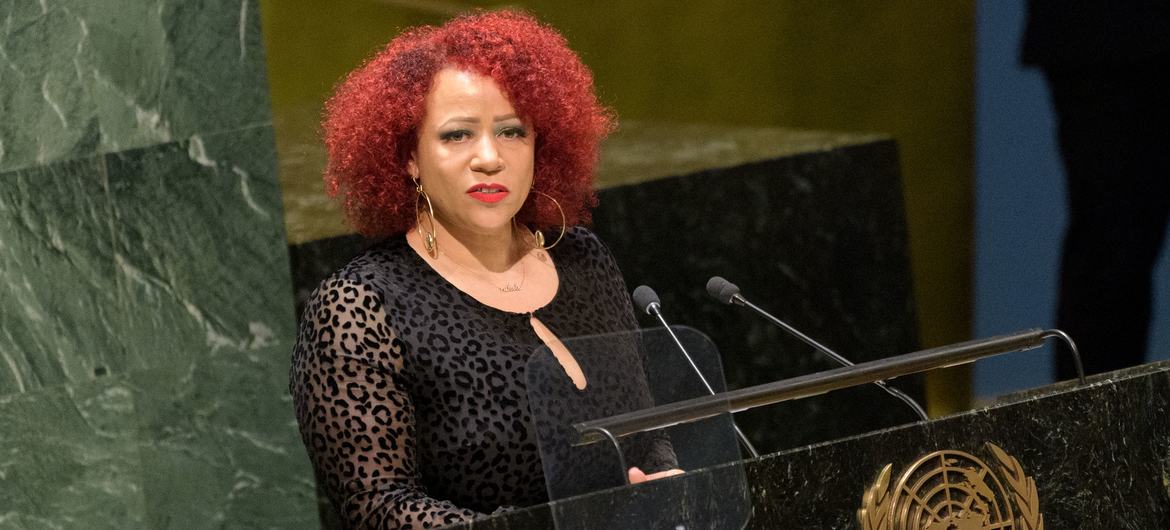
New York Times writer Nikole Hannah-Jones, best known for the 1619 Project, which frames slavery as one of the core elements of the history of the United States, addressed the UN General Assembly during a commemoration of the transatlantic slave trade on Tuesday. She explained to UN News how the Project came about.

Nikole Hannah-Jones The 1619 Project is a book that commemorates the 400th anniversary of the first ship that brought the first Africans to the British colony of Virginia. We mark that as the real beginning of American slavery in the original 13 colonies that would form the United States.

And what the project tries to do, through a series of essays, is to enter slavery as a foundational American institution and to place the contributions of black Americans really at the center of the American story.

But more than that, to also show the way that the 250-year legacy of slavery in the United States still shapes so much of our society today. It’s not just about the past, but it’s about what has happened right now.

But slavery is critical. You cannot understand the United States, you cannot understand the Atlantic world, you cannot understand what has happened on the continent of Africa, and you certainly can’t understand the great wealth of the Western colonial powers if you don’t understand slavery and its legacy.

Nikole Hannah-Jones, Pulitzer Prize-winning reporter for The New York Times Magazine and creator of the 1619 Project, addresses the UN General Assembly commemorative meeting marking the International Day of Remembrance of the Victims of Slavery and the Transatlantic Slave Trade.
Nikole Hannah-Jones, Pulitzer Prize-winning reporter for The New York Times Magazine and creator of the 1619 Project, addresses the UN General Assembly commemorative meeting marking the International Day of Remembrance of the Victims of Slavery and the Transatlantic Slave Trade. (UN Photo/Manuel Elías)

UN News What would you tell those who say “I didn’t participate in slavery, why should you still be telling me about slavery”?

Nikole Hannah-Jones The first thing I would say is that, it is illogical to believe that a system that lasted for 400 years, that reshaped the complexion of the world, that enriched the European colonial powers, that laid the foundation for the economic prosperity of the United States, somehow does not shape the society that we live in any longer.

For instance, in the United States, we’ve had slavery longer than we had freedom, and African descended people remain at the bottom of all indicators of well-being and all of the former slave societies.

If people read the 1619 project, they will see that every single essay is not about something that happened a long time ago. It’s about the way what happened a long time ago still shapes and corrupts so much of society today.

None of us were alive when the Constitution was written. And yet we understand that that is our legacy. You cannot only claim the parts of your history that you think makes you look good or that you think are uplifting. 

UN News Were you surprised by the pushback in some political circles?

Nikole Hannah-Jones I’m not surprised.

The United States in particular has been in a great denial about the institution of slavery and its legacy. We are a nation founded on ideals of God-given liberty.  We believe we are the freest, most exceptional nation in the world. And slavery and its legacy gives lie to that right.


Slavery is a glaring hypocrisy in a nation that wants to believe that it is the pinnacle of freedom for the world. 

But I would be lying if I didn’t say the way the project has been weaponized and politicized, three years after its initial publication, has been actually quite astounding.

And what that tells you is that history in many ways is about power. It is about who gets to shape our collective understanding, who gets to shape our collective memory. And that power does not want us to understand the history that delegitimizes that power.

And that’s what the 1619 does. It takes the people who have been treated as marginal, it takes the global crime against humanity that was slavery, and says that was just as important to the United States and to the Atlantic world as these ideals of liberty. And that is something that’s very, very scary for certain powerful people.

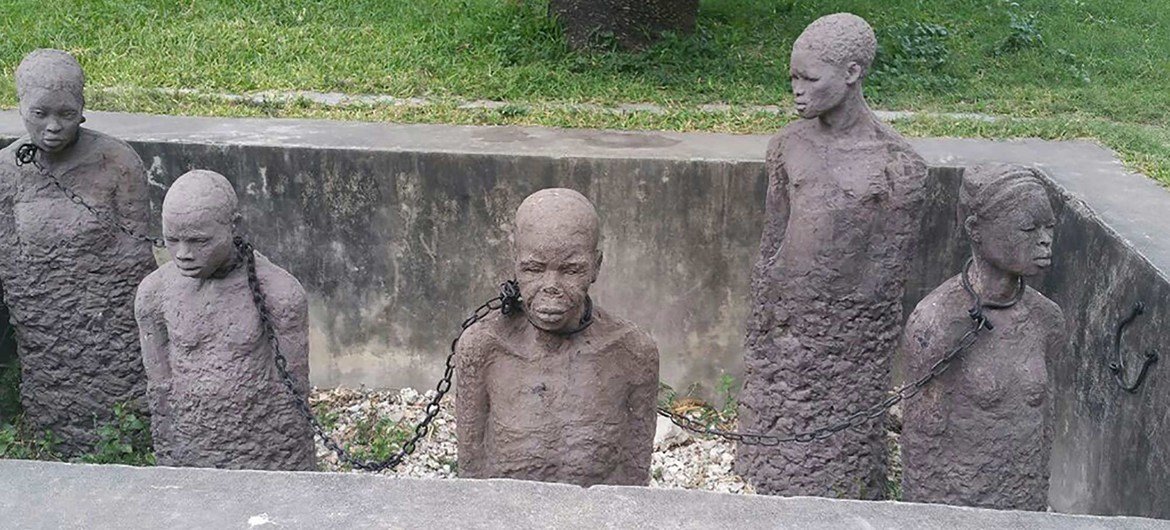
Slavery memorial in Stone Town, Zanzibar, United Republic of Tanzania.
Slavery memorial in Stone Town, Zanzibar, United Republic of Tanzania. (Israa Hamad)


UN News What is your response to those who say that you are exposing a wound, rather than healing it?

Nikole Hannah-Jones Well, clearly, the wound is still festering. Whether we want to take the bandage off and figure out why or not.

Just two years ago, we had the largest protest for black lives in the history of the world because a black man, George Floyd, was killed by a white police officer, who compressed the oxygen out of this man for eight minutes.

Those who say that if we talk about this, we make it worse, are clearly not the people who are living and suffering under the conditions of this history. I personally believe that light is the best disinfectant that we have, to acknowledge and tell the truth about our history. And then we can begin to repair it.

UN News What would you like Africans to take away from the 1619 Project?

Nikole Hannah-Jones That’s a profound and complicated question because we know that African peoples, particularly in western and Central Africa, also engaged in the slave trade. I think that an acknowledgement of what happened is also necessary on the African continent to move towards reconciliation.

Nothing can be done to change the history. But what we can do is acknowledge what happened and then try to build relationships together.

I think Black Americans would love to be able to have citizenship on the continent and to be able to build these relationships across that that bridge. I think that that reconciliation can be so powerful for all of us.

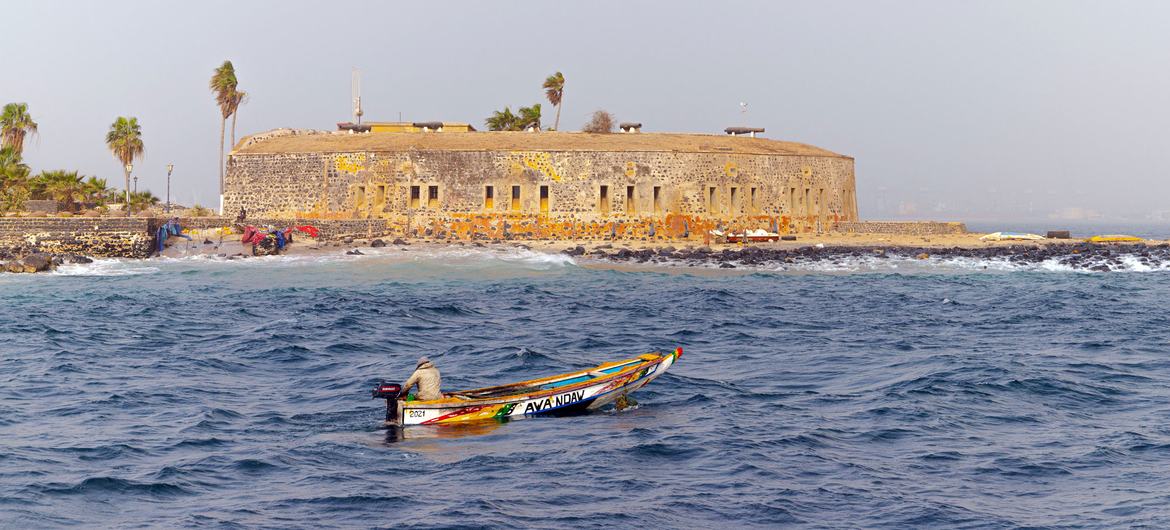
Fort of Goree Island, Senegal, was the site of one of the earliest European settlements in Western Africa.
Fort of Goree Island, Senegal, was the site of one of the earliest European settlements in Western Africa. (Unsplash)

UN News During your address to the General Assembly, you highlighted slave resistance and reparations. Why are these pillars critical to moving forward in a constructive way from the legacy of slavery?

Nikole Hannah-Jones I am so grateful that the United Nations is focusing this year on resistance, because the way that we are commonly taught this history is that somehow Black people, African people submitted to their enslavement, and this it is used as a justification for slavery.

It also, to me, takes away our humanity, because it is not natural to not fight against slavery. Even the story of abolition is centred around white people in a way that robs us of our agency.

It is not the case that, one day, Britain, which was the greatest slave trading nation in the world, simply decided “we don’t want to do this anymore because it’s wrong.”  It is the mutinies and the revolt of enslaved people that made it untenable for the British Empire to continue importing Africans into its colonies. 

And then when it decided that it couldn’t do it anymore, it also clearly didn’t want other countries to do it, because they would have a competitive advantage. That is how we got to the bans on the international slave trade.


UN News You suggested in your address that this resistance continued well into the Twentieth Century.

Nikole Hannah-Jones We think of the United States as a magnet for oppressed people in other places who come to the United States. What we don’t talk about is how Black people in this country were denied democracy, were denied the same rights that White Europeans could immediately get when they came.

There was another migration, not just of immigrants coming to the US, but of Black people in the South.
Six million, the largest migration in the history of the United States, left the South, often under the cover of darkness because they were forced to labour down there, and the white people who were exploiting their labour did not want them to leave.

They decided that they were going to be refugees in their own land, and move to the north to search for a better life and better opportunities.

I feel that, if more people across the globe understood the story of the Great Migration, they would see themselves, their own immigrant story in the story of Black Americans, as opposed to wanting to say, “Why are you not doing better in this country, a great bounty? Why are you not using your opportunity?”

Regarding reparations, I don’t think we can have conversations about one of the greatest crimes against humanity, and not talk about reparations.

I notice that, at the General Assembly, the spokesperson for the Western European countries seemed to prefer to talk about modern day slavery, which, of course, is a great scourge, and that all of us should be fighting.

It is easier to talk about slavery elsewhere than to deal with that original crime. We must have reparations, and I believe in financial reparations across the Atlantic world. And there’s a separate conversation about reparations for colonialism as well.

Black people in America, for instance, have one tenth of the wealth of White Americans. A black person with a child has one hundredth of the wealth of white Americans.

And it is not because somehow Black Americans are lazy, don’t want an education, don’t want quality housing, don’t want to work. We know that that is not true. In fact, I don’t understand how the people who were forced to labour for other people can be considered lazy.


Look at Haiti, a place that was forced to pay reparations to White enslavers because they liberated themselves.
And in the United States, the only group of people who ever received reparations for slavery were white enslavers in Washington, D.C.

UN News What should the UN be doing to support the 1619 Project?

Nikole Hannah-Jones I commend the UN as a body for putting out reports on racism in the United States and being willing to challenge the hypocrisy of the country in ways that you don’t often see.

But there certainly has to be more forceful work on the issue of reparations.

There is also an issue regarding representation in the General Assembly. We can look at many of the nations in the Atlantic world that were former slave-holding nations, and we do not see the African diaspora reflected in who gets to be in spaces like this.

I think there is much to do. But I do also believe that the UN has led in some very important areas.

It has been a surreal experience to be here and to be able to address the General Assembly.

I told the story of my grandmother, who had a fourth grade education, who was born on a cotton plantation, who worked as a janitor until she retired, and she could never have imagined that all of her sacrifice would allow me to speak on behalf of our people in our ancestors in this way.

I’m leaving today feeling very grateful, and very honoured, and I feel the presence of our ancestors around us.

SPECIAL REPORT: Misery Of Agrarian Nasarawa Community Shows Pitfalls, Potential Of Solid Minerals In Nigeria – Premium Times

0
Excavator used for mining at Angwan Gwandara

Every day, dozens of trucks roar through a dirt road into Angwan Kade, a village in Kokona Local Government Area of Nasarawa State in North-Central Nigeria. Then they speed off, laden with tonnes of precious stones, leaving in their wake acres of dredged pits in farmlands.

Years of uncontrolled mining of solid minerals and precious stones have turned many farmlands into pits in Angwan Kade. A 200ft deep pit gapes from where a giant rock stood about five years ago. A field where peasant farmers used to plant rice and fruits is now an industrial site from where cracking noise from bulldozers and dynamites steals the sleep of residents.

A PREMIUM TIMES reporter also noticed the burrowing of land near buildings.

One of the affected residents, Umaru Mai, said he feared his house would cave in because a pit was drilled so close to it. He said the earth shakes so violently during drilling that his family always feared the house would collapse.

Mining pit at Angwan Kade

Nigerian artisans who work by proxy with and for some Chinese nationals are behind the mining activities in unauthorised sites in the area, a week-long investigation by PREMIUM TIMES found. The activities have led to complaints by residents of exploitation, land grabbing and fear of flooding and contamination of water sources.

Illegal?

A check on the list of active mining quarries in Nassarawa state showed that the Mining Cadastre Office licensed no company to mine in Angwan Kade.

Section 44 (3) of the Nigerian Minerals and Mining law of 1999 vests the ownership and control of all minerals in Nigeria in the federal government, which is mandated to manage such natural resources in a manner as may be prescribed by the National Assembly.

The Ministry of Mines and Steel Development is responsible for granting licences to operators through the Mining Cadastre Office. Any operator without a licence from this ministry is deemed to be carrying out illegal activities. Such a person may be arrested and tried in the Federal High Court.

But the permanent secretary of the Nasarawa Ministry of Environment, Abdullahi Agwai, said the authorities are aware of the activities of illegal miners in Angwan Kade. The official, however, said similar activities in several other sites exist.

A laborer at the Angwan Kade mining site

“Even the representative of the federal government in the state, Federal Mines Office, will tell you the state government is aware that unknown mining companies exist in the state. Many unknown miners are being discovered through the state government touring of mining communities and mining sites,” he said.

Mr Agwai said it is the federal government that gives permission to mining companies to operate through mineral titles. “Some companies pay taxes to both the state and federal government but most don’t.”

Inside Angwa Kade mining community

The discovery of Coltan (short for columbite-tantalite and known industrially as tantalite) among other solid minerals in Angwan Kade about a decade ago was welcomed by the locals with hearty cheers.

A remote agrarian community, Angwan Kade lies in the north of Nasarawa, close to the commercial city of Keffi. It takes about 40 minutes on a motorbike to reach the community from Kokona junction. Commercial motorbike operators charge between N500 and N700 from Kokona. The road is untarred; only a few vehicles, mostly used for agricultural purposes, ply it.

So, when several locations in the village were marked as mining sites, residents thought it marked the beginning of development in the community.

However, 10 years down the line, they have seen only the downside as mining activities destroy farmlands and jeopardise the livelihoods of small-scale farmers. Stephen Ali, a farmer who now farms one acre of land, said he lost four acres after miners encroached on his land and left it barren.

The community still lacks basic amenities such as electricity, pipe-borne water, healthcare facilities, primary school, and modern means of communication. The houses are mostly made of mud. There is no sign of government presence even though the people also vote during elections.

With no schools to attend in the community, children join in working on the mining sites while their mothers sell food to the workers. A few other women also participate in mining.

The locals said Chinese companies acquire land by proxy to mine precious stones in the area.

Village head of Angwan Kade

‘No Royalties’

Dahiru Mallam, the spokesperson of the village head, said the miners do not make any form of payment to the community.

“The Chinese people and others mining in this place have never given us one naira,” Mr Dahiru said. “Whenever a company gets raw materials from here, we should also be paid some royalties. We only see them taking the minerals away, but they don’t give us anything.”

Mr Dahiru said community leaders negotiated with more than 15 prospectors, who all agreed to pay some royalties to them before commencing mining operations. But nothing concrete came out after they began their operations.

Mr Agwai, the official from the state ministry of environment, did not respond when asked if the mining company in Angwan Kade pays any form of fees or taxes to the state government or if they have any form of local registration.

He, however, blamed mining communities such as Angwan Kade for not promptly reporting to the government when mining companies enter their area.

“Mining communities are largely underdeveloped because they undertake community development agreement with mining companies in a manner that are disadvantageous to the communities. Mining communities hardly consult the government for advice, despite sensitisation in that regard,” he said.

Mining pit at Angwan Kade

Land Grabbing

Mr Dahiru mentioned one Alhaji Mundasa as the frontman used by foreign companies to acquire lands in the village for mining activities.

“In fact, the land they are mining from belongs to the community. It was Alhaji Mundasa who came and said he wanted to use the land for some personal use for a period of one year and we allowed him. Now, we cannot even count the number of years he has spent there.

“He came back after some time and told us he has purchased the land and it no longer belongs to the community. We cannot question him because he is more powerful than us. We still do not know whom he bought the land from, but he said the land now belongs to him.

“We have no school in this place, some of our children go to school in another community far away from here. Some of the children you saw at the mining site don’t even go to school because there is no school.

“The only time we see any government officials is when they bring electoral materials during elections,” he said.

The phone numbers of Mr Mundasa made available to this reporter were always switched off, as the reporter tried to reach him for his comments.

Chinese mining equipment

Chinese fingerprints

The cold, dry and dusty northeasterly trade wind synonymous with the harmattan season was gradually yielding dominance to heat after sunrise when Aliyu Umaru took a spot in front of a huge rock.

Armed with a chisel and a mini sledgehammer, Mr Umaru was about to start his daily routine of breaking smaller particles of precious stones commonly called Kas (columbite) by locals.

Looking uninspired for the day’s job, Mr Umaru said he works for a Chinese company.

“The company we work for belongs to some Chinese nationals but one Alhaji Mundasa fronts for the Chinese people,” he said. “When the minerals are extracted from the ground, they give Alhaji his share while they take some to government officials.

“My daily wages are between N6,000 and N8,000 depending on my output. I have a wife and two children living here with me in Angwan Kade,” he said. “The Chinese people use the kas they get from here to produce car batteries. Aside from kas, we also have tantalite.”

Mr Umaru works with about 16 other workers at the site. The site manager, John Bashiru, refused to name the company and the owners.

Most of the equipment and industrial houses on the site have Chinese inscriptions while on some pillars of tents is written “PROPERTY OF S.B OLATUNJI GLOBAL NIGERIA LIMITED”.

Shehu Adam, one of the workers, said they were trained by the Chinese to till the stones into particles. “They come here often to inspect the sites and what we are doing. They pay me N1,500 for each bag of consonite that I bring out,” he said.

At another site, a bulldozer was taking heavy tantalite rocks to locals working on the site for further tilling. Children and young women were either bagging the stones after they are tilled or hawking food and snacks within the site.

Some of the raw materials picked by children at the mining site

‘Columbite and Tantalite’

The mineral group tantalite is the primary source of the chemical element tantalum. It is chemically similar to columbite, and the two are often grouped together as a semi-singular mineral called coltan or “columbite-tantalite” in many mineral guides. Tantalite is black to brown in both colour and streak.

Tantalum, a dull black metallic ore from which is extracted the coltan, is used to manufacture tantalum capacitors which are used for mobile phones, personal computers, automotive electronics, and cameras.

Tantalum metal is used in dental and surgical instruments and implants, as it causes no immune response. It is used for many industrial purposes, including making bulletproof materials.

Our reporter visited a semi-industrial plant along the Keffi-Akwanga expressway where most of the lorries from Angwan Kade take Coltan stones for refining.

Workers at the plant were at first hostile to this reporter who posed as a post-graduate student of geology from Nasarawa State University.

“Why are you taking pictures of what we are doing here,” a woman who appeared to be one of those in charge of the site, demanded.

After a brief introduction, the reporter was finally directed to one Adam Ade for any inquiries. Mr Ade confirmed that truckloads of tantalites are brought from Angwan Kade to the plant.

“We buy in tonnes from the sites (Angwa Kade). A ton is about N3,000 and when they bring it here, we further break it down into smaller particles with our machines and then sell to Chinese companies and dealers who export them,” he said.

Mr Ade said that although Chinese dealers operate many sites in Angwa Kade by proxy, they also buy from the plant because its products are more refined than the ones at the sites.

He, however, refused to name the companies they sell products to.

Mining area at Angwan Kade

Illegal mining in Nigeria

This is not the first time Chinese companies and their associates would be fingered in unlicensed mining activities in Nigeria and many parts of Africa.

Last year, the Nigerian government said it would clamp down on illegal activities of Chinese and other artisanal miners across the country.

Dozens of Chinese nationals were arrested in several raids, mostly in the southwestern states of Osun and Ondo and Zamfara in the northwest. In addition to curtailing illegal mining activities, the federal government is also going after Chinese companies that violate environmental regulations.

Authorities acted against the Hongao Mining Company that ran a gold mine near Abuja for polluting the local water table. Officials were tipped off to Hongao’s misdeeds from an investigative report published by The Cable.

Two other reports by PREMIUM TIMES revealed how artisanal illegal mining activities from Osun to Ondo undermine Nigeria’s economy, and how a large number of illegal miners pursued from Zamfara now carry out their unauthorised business in Osun

Despite these measures, however, illegal mining activities continue in several parts of the country. Environmental experts attributed this to the connivance of security operatives and traditional rulers with foreigners.

By law, only Nigerians are allowed to get mining licences and work in small-scale operations. But some local miners accept Chinese partners because they provide capital and technical services and equipment, experts said.

Children picking pieces of raw materials to earn a living

What government is doing

Mr Angwai, the official from the Nasarawa State ministry of environment said that the state government would soon sign the State Mineral Policy which will help to develop host mining communities and the state at large.

On allegations that the government colludes with some of the companies, the official said, “Miners don’t give mineral products to the state government. Even ordinary samples, the state used to purchase from the miners to showcase during mining events, etc. This allegation is baseless and irrational.”

On what the government was doing to curb illegal mining, he said, “in some cases, the state government chased away illegal miners. However, it is the responsibility of Federal Mines Office in the state through Mines Surveillance & Special Task Force to arrest illegal mining operators. Meanwhile, small mining operators are allowed to operate across the country as artisanal miners. The group is informal in nature.”

In accordance with the Nigeria Minerals and Mining Act of 2007, the Nasarawa State Governor, Abdullahi Sule, earlier this year announced plans to tackle illegal mining in the state.

This is especially due to rising concerns over the discovery of gold in the state. Early this year, large deposits of gold were found in the Abuja-Nasarawa axis, through the National Integrated Mineral Exploration Project (NIMEP), a programme undertaken by the Federal Ministry of Mines and Steel Development.

The Federal Government then announced collaborations with the Nasarawa State Government to ensure security around areas known to have gold deposits and other solid minerals in the state.

Although Angwan Kade axis is around Agwada, the home to a former governor of Nasarawa State and new National Chairman of the ruling All Progressives Congress (APC), Abdullahi Adamu, there is no security agency in the area amid the mining activities.

“When we protest against the actvities of these illegal miners, Alhaji Mundasa will use his personal security operatives to disperse us,” Mr Dahiru, the spokesperson of the village head, said.

“Sometimes back, our youth protested and prevented the miners from going into the site but Alhaji brought in policemen who dispersed them.”

Already extracted mineral resources waiting to be evacuated

Ripple effects

The Nigeria Extractive Industries Transparency Initiative in two separate solid minerals audit reports revealed that the Nigerian government may have lost about N4 billion in three years, owing to illegal and corrupt activities of companies operating in the mining sector in the country.

The many schemes through which these companies have defrauded the Nigerian government include non-remittance of revenues, unlicensed mining and evasion of taxes, illegal practices, and incessant smuggling of solid minerals out of the country, the reports found.

The NEITI reports state that activities of unlicensed miners are prevalent in the industry, leading to even more loss of government revenue. An analysis of the NEITI solid minerals audit reports was done by the Premium Times Centre for Investigative Journalism early last year.

According to Abubakar Bwari, the then Minister of State, Ministry of Mines and Steel Development, more than two million people in Nigeria profit off illegal mining in the country.

Although the Mining Police and the Mines Inspectorate were established to monitor and enforce compliance by all industry operators, illegal miners, including Asian and African immigrants, currently populate the industry with unapproved mining sites in different locations across the country.

The former Minister of Solid Minerals Development, Kayode Fayemi, warned that the continuous presence of foreign nationals, who are the major patrons of mined products from artisanal and small miners, has led to reduced value addition, revenue leakages, and inaccurate transaction records.

According to a report, the natural resources sector of Nigeria loses N50 trillion annually to untapped resources.

Estimates suggest that Nigeria’s mining sector has the potential to generate N8 trillion naira annually if properly coordinated.

But from the observation of mining activities in Agwan Kade, achieving that potential will take years of coordinated hard work on the part of the Nigerian authorities.

Support for this story was provided by the Center for Democracy and Development (CDD)

Gunmen kill 10 persons, injure 19 during cultural festival in Plateau

0
Picture of bandits used to illustrate the story

Gunmen have killed 10 persons and injured 19 others during a cultural festival in Chando Zerreci community in Irigwe Chiefdom of Bassa Local Government Area of Plateau.

Lawrence Zango, the National Publicity Secretary, Irigwe Youth Movement, disclosed this in a statement on Sunday in Jos, the Plateau State capital.

Mr Zango said criminals launched the attack on Saturday night during the annual ritual festival of ‘Zerreci’, which usually ushers the Plateau community into the new farming season.

Mr Zongo, who condemned and described that act as ”sad and unfortunate”, added that the injured are currently receiving treatment at Enos Hospital Miango.

He called on the government at all levels and the security agencies to find lasting solution to the incessant attacks that usually lead to loss of lives and property.

”The government has a responsibility to promote and protect human rights, including the right to life, and a duty to protect civilians from attacks by taking effective measures to prevent and deter attacks on our people,” he said.

ALSO READ: Unstable Plateau (3): A wounded people and their healing process
“The government must as a matter of urgency investigate the attack in Irigwe land and bring the perpetrators to justice and ensure that families and other victims are adequately compensated

“Brutal attacks on our communities are becoming rampant and frequent and this is unacceptable.

”Government must take more concrete steps to protect lives and property across Iregwe chiefdom and neighboring communities.”

Mr Zango also appealed to the International community to come to the aid of the people and to support them and address the huge humanitarian challenges caused by the attacks.

Ubah Ogaba, the Police Public Relations Officer (PPRO) of the Plateau State Police command in the state, confirmed the attack, adding that the command had mobilised armed officers to the place to restore normalcy.

Mr Ogaba, an assistant superintendent of police, called on residents of the area and Plateau in general to remain calm and law abiding, adding that security agencies are working seriously to ensure their safety.

NAN

Nigerian Democracy In Peril As Country Descends Into Lawlessness, By Ebenezer Obadare

0
Abuja-Kaduna train damaged

The recent attack on a Nigerian railway is the latest chapter in the country’s worsening security crisis and tottering democracy.

On Monday March 28, some gunmen launched a deadly attack on a Nigerian Railway Corporation (NRC) Abuja-Kaduna evening train carrying an estimated 398 passengers. After detonating explosives on the track (and possibly inside the train, according to conflicting reports in the local media), the gunmen surrounded the immobilised train and started discharging their firearms into the carriages. It took at least an hour before a detachment of the Nigerian military came to the rescue of the passengers, who had cowered under their seats as the bandits fired incessantly.

The incident left at least eight people dead — among them a young medical doctor, Chinelo Megafu, and Musa Lawal-Ozigi, secretary-general of the country’s Trade Union Congress — and at least another forty-one hospitalised, while the yet unidentified assailants also captured some of the passengers.

The toll on the Muhammadu Buhari administration and Nigeria’s tottering democracy is likely to be greater.

The sheer brazenness of the attack throws into relief the administration’s so far unsuccessful struggle to impose some kind of public order, even as the country continues to spiral into general lawlessness. Inaugurated in July 2016, the Abuja-Kaduna evening train is a perfect metaphor for this struggle, as a growing number of travelers have embraced the service as travel on the highway between Abuja and Kaduna (a distance of 130 miles) became increasingly unsafe due to the activities of kidnappers and sundry gangsters.
Abuja is the seat of the Nigerian Federal Government, while Kaduna houses the Nigerian Defence Academy (NDA).

In recent times, the northwestern state of Kaduna itself has been literally under siege. On March 26, gunmen attacked the Kaduna International Airport, killing an official of the Nigerian Airspace Management Agency (NAMA), after allegedly storming the runway. In March last year, bandits abducted eleven people after a surprise attack on the staff quarters of the Federal Airport Authority of Nigeria (FAAN) in Kaduna. In August, two military officers were killed and at least one kidnapped after bandits attacked the permanent site of the Nigerian Defence Academy (NDA). Over the past several months, attacks on various villages across the State have resulted in the death of dozens. Over the years, authorities in Kaduna and a local Shiite Muslim sect have been at loggerheads, with tensions boiling over in December 2015 after a military crackdown led to the death of 347 Shiites.

The situation in Kaduna is far from unique, the security situation across the country having rapidly deteriorated, even as government at various levels continue to scramble for a solution. According to the New York-based Global Center for the Responsibility to Protect, attacks by bandits across the Nigerian northwest have claimed at least 5,000 lives since 2018. Since 2009, nearly 350,000 people have been killed in the northeastern part of the country due largely to the activities of Boko Haram Islamist insurgents. The number of displaced people in the Lake Chad Basin is estimated at three million.

Violence in Nigeria is multidimensional and pervasive, ranging from perennial herder-farmer clashes to gang violence, armed robbery, attacks on state infrastructure, especially police stations, airports and power transformers, intercommunal violence, lynching, ritual killings, mob justice, and casual intimidation of ordinary citizens by law enforcement.

More than six million small arms are believed to be in the hands of civilian non-state actors in the country.

Nigerian police use lethal force on the slightest pretext. Ranked the worst in the world by the 2016 World Internal Police and Security Index, the Nigeria Police Force kills an average of 841 citizens every year. Nigeria (estimated population, 200 million) ranks eighth in the top ten of countries with the highest numbers of police killings.

Most murders in Nigeria — official or otherwise — go unsolved. The recent spike in vigilante justice, which has seen a ramp up in incidents in which citizens have taken the law into their own hands, owes in large part to distrust of the police and frustration with the justice system. In 2019, the New York-based Committee to Protect Journalists (CPJ) ranked Nigeria among the thirteen worst countries in unsolved murders of journalists.

Nor has increased spending on security produced a commensurate decrease in insecurity. Between 2015 and 2020, Nigeria budgeted an average of about $4.2 billion on security, with the total budget for security rising to 2.5 per cent of the GDP in 2020. In 2019, Nigeria had the third largest military budget in Africa, behind only South Africa and Algeria.

While, on paper, security expenditure goes toward the training of soldiers, operations, and purchases of vital military equipment, the reality is much different. Corruption is a major problem, with much of the funds budgeted for security regularly diverted. In 2017, at least $2 billion out of monies set aside for the Boko Haram campaign were diverted to other uses, including the financing of political activities. In 2016, Vice President Yemi Osinbajo disclosed that about $15 billion were stolen from the fight against Islamists under the previous Goodluck Jonathan administration. At the state and local government (LG) levels, governors and local government chairpersons regularly mismanage “security votes,” a monthly federal allocation towards security-related expenses within the states. An estimated $900 million is lost to their mismanagement annually.

Corruption in the security sector has been cited as a factor in some of the recent military takeovers in the region.

In the wake of Monday’s attack, President Buhari held an emergency meeting with service chiefs and heads of security agencies and promised to bring the bandits to justice. The Chief of Army Staff, Lieutenant General Faruk Yahaya and Minister of Transportation Rotimi Amaechi both visited the site of the attack and echoed the president’s assurance. The latter promised, improbably, that all passenger trains will now be escorted by Nigerian Air Force jets. In truth, most Nigerians feel like Kaduna State Governor Nasir El-Rufai, who confessed to being “angry, frustrated, and feeling totally helpless.”

While horse-trading among the political class for next year’s all-important elections hums along in the background, it increasingly feels like a sideshow — an expensive one, to be sure — to the anarchy that daily life in the country has become. If, as some have plausibly contended, the Nigerian state failed a long time ago, what we seem to be witnessing is the unfolding reel of its agonising decomposition and dismemberment.

It has been long in coming, but what used to be a geographically coherent unit is now effectively a collection of parts barely managing to keep in touch with one another. Nigeria, in theory, has become incommensurate with Nigeria, in reality.

The first task before the next president (there will be an election, the question is what kind) is to put Nigeria back in sync.

But first, the incumbent must restore law and order.

Ebenezer Obadare is Douglas Dillon Senior Fellow for Africa Studies at the Council on Foreign Relations (CFR).

This article was originally published by the Council on Foreign Relations as part of the Diamonstein-Spielvogel Project on the Future of Democracy.

Corruption: A Disease to Nigeria Economy, By Yusuf Abdulbasit Hozaifah

0
President Muhammadu Buhari of Nigeria

Corruption is the single tremendous obstacle preventing Nigeria from accomplishing its enormous potential. It depletes billions of dollars a year from the country’s economy, stymies advancement, and weakens the social contract between the government and its people. Nigerians view their country as one of the world’s most corrupt and struggle daily to cope with the effects. Yet few logical tools exist for examining the full range and knottiness of corruption in Africa’s largest economy and most populous country. This paper proposes a new, context-specific framework for understanding a problem that will remain a focus of international and domestic Nigerian policy discussions for decades to come.

Transparency International (TI) has issued its Corruption Perceptions Index. As in prior years, its citizens together with a selection of international organizations perceive Nigeria as one of Africa’s most corrupt countries. Nigeria’s ranking—146 out of 180 countries surveyed worldwide—is little changed from years past. TI measures the perception of corruption, not corruption itself, in the public sector. (It does not measure the perception of corruption in the private sector.) The current low ranking is no surprise. Nigerians commonly regard the state as corrupt, and President Buhari campaigned successfully for the presidency in 2015 on an anti-corruption platform.

The Corruption Perceptions Index ranks countries and territories based on how corrupt their public sector is perceived to be. A country or territory’s rank indicates its position relative to the other countries and territories in the index. People most commonly define corruption as the “abuse of entrusted power for private gain,” and government officials and citizens feel its effects on a daily basis. It is a growing political issue around the globe, but developing countries like Nigeria often struggle deeply to control or combat corruption.

Corruption is a crucial obstacle to business in Nigeria: companies are very likely to encounter bribery and other corrupt practices. Corruption risks are growing throughout all institutions but the oil sector is particularly corrupt. Corruption is criminalised primarily by the Criminal Code and the Corrupt Practices and Other Related Offences Act. Accepting or giving gifts as well as facilitation payments are illegal, and individuals can be punished with up to 7 years’ imprisonment. Despite a strong legal framework, enforcement of anti-corruption legislation in Nigeria remains weak: in practice, gifts, bribery and facilitation payments are the norm.

Nigeria has executed a fixed exchange rate for its currency, the naira, in hopes of preventing further inflation from corruption. The naira is currently one of the lower performing currencies in the world largely due to prolonging corruption in Nigeria. This new rate has caused prices of imported goods to double and inflation to impale.

Corruption in Nigeria has neither improved nor declined in score over the past several years. Typically, the country’s score varies from 25-28 any given year. Although there has not been a sharp increase or decrease, Nigeria still ranks below the average of 32 for the sub-Saharan African region.

Nigeria has two major political parties: the All Progressive Congress party (APC) and the People’s Democratic Party (PDP). These parties are almost comparable in platforms but still oppose one another. Each party often increases corruption in Nigeria by taking up misappropriated public reserves to run obstructing campaigns.

Entrepreneurs generate 50 per cent of the GDP in Nigeria but often face deception and racketeering from police forces. Federal legislators have diverted $433 billion to vague projects in the past several years. This hurts small businesses in the country and allows corruption in the government to continue.

Corruption in Nigeria affects poorer families most severely. These high levels of corruption could cost individuals $1,000 per person by 2030 if the country does not address it. Further, the levels of imbalance continue to increase in the country due to corruption.

Government offices are abused and misused when these individuals at the helms of these government offices gives out payoffs to hijack government policies for personal gains. Irrespective of these, government positions are offended for private gain even though there were no bribery cases. This is because the stealing of state assets and resources has been identified as one of the major means corruptions are measured which creeps into the public sector of any country.

Hozaifah is a Nigerian Journalist

Currency Exchange Rates

USD - United States Dollar
ZAR
0.06
EUR
1.17
CAD
0.73
ILS
0.31
INR
0.01
GBP
1.34
CNY
0.14
Enable Notifications OK No thanks