Economic and Financial Crimes Commission (EFCC), LOGO
Kaduna (Nigeria) – Nigeria’s Economic and Financial Crimes Commission (EFCC), has recovered and returned the sum of €10, 540 to a polish who fell as a victim of Internet love scam.
The victim, named Jamina, was allegedly duped €40,000 by the suspect, one Gabriel Oseremen Xavi, who runs a fake Facebook account with the name, Collins Page.
The suspect was traced to Benin City, Edo State, where he was arrested by EFCC operatives following a petition by the victim.
Speaking Wednesday in Abuja at the presentation of the sum of €10,540 recovered from the suspected Internet fraudster, Chairman of EFCC, Ibrahim Lamorde, tasked diplomats to sensitise their citizens against Internet love scam.
Lamorde, urged them to also focus more on lonely elderly people who have been found to be easy prey, adding that “All the assets acquired by the suspect from the proceeds of the crime will be disposed off at the conclusion of trial, and the money returned to the victim.”
The money was handed over to the Belgian Ambassador, Stephane De Loecker and his Polish counterpart, Andrzej Dycha, by Lamorde
Expressing his gratitude, De Loecker, thanked the Nigerian government as well as the EFCC for what he described as ‘its commitment to curbing Internet scams.’’
He remarked that it was his first time of witnessing the restitution of a victim of scam by any law enforcement agency and urged the EFCC not to rest on her oars.
The envoy assured that the Belgian government would carry out rigorous campaigns to sensitize its citizens on the dangers of love scam.
In a remark, Dycha, who also expressed his gratitude, extended invitation to the EFCC to be part of the meeting of association of EU Consuls to further “advise and sensitise them on Internet scam.”
Kaduna (Nigeria) – Vice President of Nigeria, Yemi Osinbajo has called on Africans to make a re-think on some of the time-worn economic ideas and myths that have held its people and policy makers bound to only a few economic options.
A statement by the Senior Special Assistant to the Vice President on media and publicity, Laolu Akande, said the Vice President stated this at the inauguration of the new African Development Bank (AFDB) President, Akinwunmi Adesina in Abidjan, Ivory Cost.
Osinbajo who represented Nigerian President, Muhamadu Buhari tasked Africans to develop uncommon creativity, innovation and change in charting the pathway for future growth and development of countries in the continent; noting that western economies particularly the United States of America toed this path to emerge from its recent economic meltdown in 2008.
He added that, “in 2008 western economies faced with what Ben Bernanke (then Chairman of the US Reserve Bank) described as the “deepest financial crisis since the Great Depression” abandoned conventional free-market thinking and embraced State bankrolled stimulus plans to forestall the imminent collapse of their economies.”
Osinbajo pointed out that, the action the US took then proved once and for all that the monster called the economy cannot be allowed to prowl the streets with its free-wheeling, free market struts without the leash of a trainer.
He also opined that, African countries need a new strategy in the face of the daunting challenges; questioning, “Do African economies not require a different paradigm?” “How can trickle down paradigms work when half our populations are extremely poor? Do we not need some attention to social investment?
The Vice president further posited that, “Conditional Cash Transfers to the poorest segments, universal primary healthcare schemes, school feeding programs, can energise local economies and create important multipliers in the economy.”
While expressing optimism on the African Development Bank given its recent achievements under the immediate past President, Donald Kaberuka who served for 10 years, he said, it can greatly assist Africa in addressing some of its socio-economic problems; urging the new leadership of Adesina, to redouble its efforts in addressing the needs of these fragile areas, through institutional support, emergency assistance, and bold pro-poor interventions in health, education and agriculture.
He further advise Adesina, “to focus on how economic policy can produce economic empowerment for women, and all categories of our people who have become disempowered and whose voices are seldom reflected in the rhetoric of policy.”
The new President, Akinwumi Adesina in his remarks unfolded a 5-point agenda which he said would be given utmost priority in the next five years of his tenure.
They include; Light Up and Power Africa; Feed Africa; Integrate Africa; Industrialise Africa; and improving quality of life for the people of Africa.
Adesina also emphasised his commitment towards confronting the numerous challenges faced by the continent and said, “Unlocking the potentials of Africa for Africans will be our goal at AfDB.”
Those present at the event include, the President of Cote D’Ivoire, Allasane Quattara and his Prime Minister, Daniel Kaplan Duncan; from Nigeria includes; the Governor of Kano State, Dr. Umar Ganduje; the Governor of Taraba State, Darius Ishaku; the Governor of Sokoto State, Aminu Waziri Tambuwal; former Governor of Ekiti State, Dr Kayode Fayemi; Governor of Central Bank, Godwin Emefiele; former Minister of Finance, Mrs Ngozi Okonjo-Iweala, and Nigeria’s Ambassador to Cote D’Ivoire, Mrs Ifeoma J. Akabogu Chinwuba among others.
Akinwunmi Adesina, is Nigeria’s immediate past Minister of Agriculture. He is the 8th President of the AfDB and the first Nigerian to occupy the office since the creation of the Bank in 1963.
Lagos (Nigeria) — The Eko Hotel & Suites in Lagos, Nigeria will once again host the 2nd annual Dental Africa Exhibition & Conference (http://www.dentalafrica.com). The only specialised dental event to benefit from the privilege support of the Nigerian Dental Association. The exhibition will host some of the region and world’s well-known names in dentistry to bring the best practices, technology and innovation together under one roof.
The event will feature hands on workshops and a conference that will highlight the latest technology, procedures and developments in the field of dentistry. Dental Africa Exhibition will showcase the latest products by the frontrunners in the field from Africa and beyond. Attendees will benefit from the opportunity to network with some of the biggest local and international names, including Casa Dente Nigeria LTD, Oral B, S&S Biomat, Trinity Dental Supplies and more.
According to Roland Yammine, Managing Director, Casa Dente Nigeria LTD, “This is our first official presence within the Nigerian dental field, and as a newly established dental company that is specialized in oral implantology, Dental Africa is an excellent opportunity to gain exposure and recognition in the Nigerian dental industry .As for the workshop, we will include an interactive hands on and lecture about MEGAGEN as well as a product introduction on the features and benefits of this exciting system.”
Casa Dente Nigeria LTD will offer dental implantation workshops during the Dental Africa Exhibition & Conference. The event, organised by Informa Life Sciences Exhibitions, will take place from 7-9 October 2015 at the Eko Hotel & Suites in Lagos, Nigeria.
“The workshop will demonstrate innovatively inducing Calcium Phosphate nano-particles to the Titanium layer of the implant and the unique implant design that eliminates the loss of crestal bone/biological width. This will lead to a faster loading period and faster treatment and recovery,” highlighted Mr Yammine.
The event will host more than 2000m2 of exhibition space, more than 1500 participants, 25 local and international speakers, and a 3 day CPD accredited conference all dedicated to the dental industry in West Africa and Nigeria.
“We chose to set up in Nigeria because we wanted to be in a growing market in its early stages, where the sector is healthy and developing steadily. We have strategically chosen to be present here after conducting several market studies for over a year. This is a promising opportunity because we can have the chance to operate in a low competitive market and grow simultaneously with our customers, creating strong bonds and customer loyalty, which will pay off on the long run,” says Mr Yammine.
Distributed by APO (African Press Organization) on behalf of Informa Life Sciences Exhibitions.
A fire outbreak at Venezuela’s central Tocuyito prison has left 17 people dead and 11 others wounded at the early hours of Monday in the state of Carabobo.
According to reports, eight women and nine men were killed by the fire at the prison, which were authorized to spend the night at the detention facility under a family visit program.
The state prosecutor in a statement said, the cause of the fire was being investigated but there was no immediate indication of how it started.
Director of Prison Rights Group, Window to Freedom, Carlos Nieto said inmates told him an electrical fault had caused the fire; adding that, it could be cause as a result of negligence by authorities in not having satisfactory prison conditions.
The Tocuyito Prison authorities as at the time of filing this report did not respond to any comment.
Tocuyito Prisons in Venezuela is reported to be overcrowded, holding more than 3,000 inmates even though they are designed to accommodate nearly 900 people.
Meanwhile, the Venezuelan Prisons Monitor, a Non Governmental Group, claimed that 309 inmates were killed in the country’s prisons last year. It added that another 179 were injured in prisons that are allegedly at 170 percent capacity
Jos (Nigeria) – President, Church of Christ in Nations (COCIN) Rev. (Dr) Dachollom Datiri, has asked Christian youths in Nigeria to always strive towards attaining a great future by studying the Bible.
This he said will make them standout and distinct in the society.
Rev. Datiri was addressing the youth over the weekend, at the 2015 COCIN Youth Fellowship Zone B Annual National Convention in Bokkos, Plateau State – North central Nigeria.
Rev. Datiri challenged them to be strong and steadfast by studying the Bible which would make them overcome the evils bedeviling the current generation; adding that, they should do away with distractions like the internet, handset and social media which were capable of taking away their useful time.
He prayed for the youths and also urged them to be true Disciples of Christ by learning to walk in his steps, noting that, “As you grow like Jesus, you will see yourselves as critical and valuable stakeholders as regards to missions and evangelism of the church. I trust that all the young people of the church will embrace the discipleship thrust of the church and also, be more committed in prayer and support our quest for revival” he said.
The Guest Speaker, Rev. John Sagai in his teaching urged the youths to aim high in life by making use of their God given talents to impact humanities while they are alive in order to fulfill the will of God. He said, “The way you see yourself is the way you would move or grow whether to grow and fly like a chicken or like an eagle,” adding that one cannot fulfill his destiny in life except he sees himself the way God sees him.
He also tasked them to be imitators of Christ and make themselves available for His use at their age.
Rev. Sagai also urged them to grow spiritually in order to withstand temptation, resist immorality, handle rejection and overcome the kingdom of darkness emphasizing that, it take spiritual strength to be able to overcome all this just as Christ overcame them and became blessing to others. “God can flow through you only if you are mature and grow like Jesus, even at a young age,” he added.
The National Youth Coordinator Rev. Alexander Maisaini in a remark encouraged the youths to remain firm in their faith despite challenges of the times and be more prayerful; adding that as the backbone of the church, they should not relent in actualizing the vision and mission of the church.
Quoting from the Bible in Ecclesiastes 12:1, the Youth Coordinator said, “Youthfulness is an important aspect in someone’s life. It is equally the stage that enables one to serve God and the community with his or her highest level of commitment. Such stage is highly important and recognized by God, which is why God’s word is calling our attention to make use of our youthfulness in serving him and humanity with all sense of responsibility.
The convention witnessed a mass turnout of youths from over 30 Regional Church Councils (RCC) of COCIN and featured varieties of programs which include teaching, songs ministrations, talk shows, seminars, Bible study, quiz and sport among others.
Costa Rica has broken clean energy records by going 94 consecutive days using only renewable sources for electricity generation and is on course to become the first country in the world to achieve carbon neutrality.
The Central American country has beaten its own record set in the spring when it went 75 consecutive days without using any fossil fuels to generate electricity.
Costa Rica has a wealth of hydroelectric and geothermal power sources and pledged in 2007 to go 100 per cent carbon neutral by 2021.
According to the Costa Rican Electricity Institute (ICE), between 8 May and 9 August Costa Rica produced its electricity from a variety of renewable sources including 78 per cent hydropower, 12 per cent geothermal, 10 per cent wind, and a fraction of a per cent solar.
So far in 2015, renewable energy has accounted for an about 93 per cent of Costa Rica’s electricity generation, according to ICE.
The run ended on 10 August when fossil fuels were required to meet one per cent of the power demand.
Electricity generation is different from total energy production, which includes transportation emissions from the country’s population of nearly five million.
Emissions from cars, buses, and trains made up nearly 70 per cent of Costa Rica’s greenhouse gas emissions in 2014 and transport a key area for the government to address if it is to reach its carbon neutral target by 2021.
Costa Rica’s reliance on hydropower, which makes up about four-fifths of the nation’s energy mix, is a concern with widespread drought, as experienced in 2014, making hydropower sources unreliable.
The drought in 2014 caused grid operators across Costa Rica to use diesel generators for back-up power and the government is now aiming to develop geothermal and wind energy.
To achieve its target of becoming carbon neutral, Costa Rica is aiming to reduce fossil fuel emissions and increase its carbon sinks by reducing deforestation and implementing reforestation projects.
The government is also working to align its environmental policies with a broader sustainable development strategy to be adopted by the country’s industries.
Ali Hassan Mirbahar, who was born and grew up near the Indus, has many tales to tell of his experiences related to the river. He may not be a centenarian, as he says he is, but he’s considered the oldest person in his own village and in nearby ones.
He spent most of his life in the village of Kaka Mirbahar which was one of the villages located in a forested area. Mirbahar also worked as a shepherd, at the same time engaging in woodcutting, honey-gathering, and collecting fodder. He sold the products in the urban market, mostly in Hyderabad.
Despite belonging to a fishermen’s clan, he never owned a boat, he says. He couldn’t afford one, and he didn’t really think it necessary to get a boat for fishing. So he expertly used nets to catch fish from the forest’s ponds and streams.
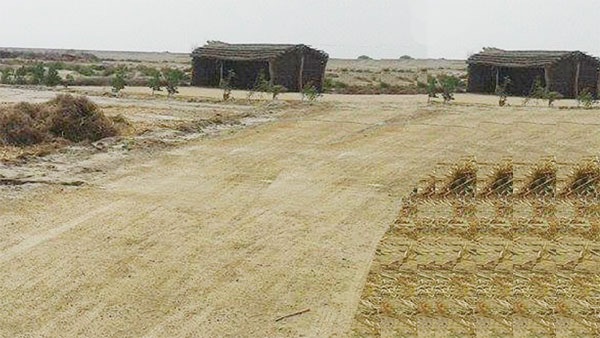
Mirbahar has nine sons, three daughters, many grandchildren and a large number of great-grandchildren. His family is among hundreds of families belonging to the Mirbahar clan who were forced to migrate from the catchment areas of the Indus in the 1970s. The government ordered them to leave. The forests had to be cleared, the officials told them, so that criminal gangs couldn’t use the thick foliage for cover after committing crimes. The villagers had to leave with their belongings on bullock carts and on camels and donkeys, he said. Among the many other things the riverine and forest communities were deprived of are the ancestral dwellings which had become part of their very existence.
In 1973, or thereabouts, he said, residents of five villages, at least 300 families altogether, had to move out.
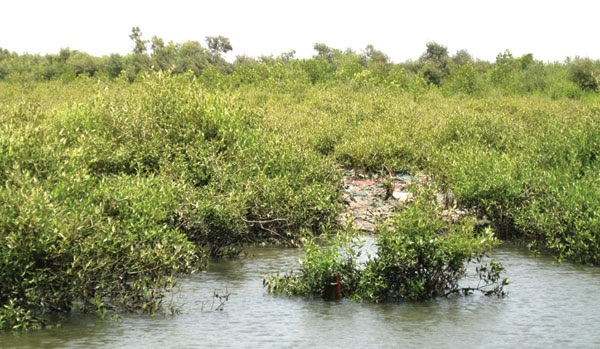
Before they had to abandon their villages, the forest communities didn’t treat floods as a threat. This, he explained, was because the inhabitants had always been prepared for calamity. Before the floods arrived and the waters rose too high for safety, they had already moved to safe places on higher ground. When the villagers returned after the floodwaters had receded, they had increased sources of income for the immediate future: fresh grass for the herds, land now silted by the floodwaters did not need fertiliser. There were always fish in the ponds anyway, as well as the beehives everywhere, he recalls.
After the government’s move, village elders took a near-unanimous decision to move out, with their belongings loaded on bullock carts, camels and donkeys, he said. After they left, they made for the open ground near villages neighbouring Hyderabad. Some weeks later, they moved with the animals to another place, he said. Since that time they have been living at the present location which is close to the river embankment. They want to remain as close to the river as possible, he said, and to the remaining forest land.
Ali Hassan remembers the happy life before they were forced to abandon their dwellings, the green pastures, the clear ponds full of fish, and the fruit-bearing trees with the birds chirping on their branches.
Sadly, he says, his larger family does not have a single cow now. This is because the clan had to sell out as many of its assets as possible to survive, and these included the cows. The milk for the children has to be bought nowadays, he said.
Among the many events he has witnessed was the mass migration of people during the partition of the subcontinent—with refugees arriving from India to the new country and those having to leave for India. With radio as a quite rare thing even in towns, the only source of information for the villagers was large urban centres like Hyderabad, Nawabshah and Larkana. In turn, the information was brought back to the village by those who had gone to the cities and towns to buy necessary rations and to sell milk, butter, honey, handicraft, pottery and fuel wood. The visitors returned with more information on the grim situation. Sometimes, if it was too “political,” the information brought back was not of much interest to many villagers. From that point on, the information reached the more remote communities living in the forests with their animals.
Development, as it is known as nowadays, hasn’t really reached many villages. In the case of Kaka Mirbahar, his partly electrified village, there is only one television set for the entire community. In any case, the villagers “do not have time” to watch TV and learn about politics. He says he hates politics, which for him is a kind of game continuously played by electoral candidates.
Bilawal Mirbahar, Ali Hassan’s grandson, said he works as a daily wager in the fields now being worked in an area which was forest not too long ago, earning a daily wage of Rs250. Aside from teenagers and other youths, he said, even old people have to work to contribute to family incomes to meet the needs.
Ali Hassan himself, despite his deteriorating health has been assigned a task to take care of the makeshift cattle farm of 40 cows near his village. He stays there from dawn to dusk. He gets a meagre amount of a few hundred rupees, but calls it enough to have his own money.
Ali Hasan’s daughter, Zohra, who is the mother of seven children, agrees with him, saying the relationship of the inhabitants Kaka Mirbahar with the river is fundamental to villagers’ lives. Everyone, male and female, is dependent on the river to earn their livelihood, since it’s the river which ultimately waters the fields.
Ali Hassan said of his attachment to the river that it has always been a regular routine with him to visit the riverbank after dawn. The river and what remains of the forest is the “native place” for him. The river and the forest is where he grew up. He loves to visit the areas he has always known, identify the old tracks, the ponds still remaining despite the scourges of “progress.” Many times he returns disappointed from the forest. Because of the change, sometimes he comes across things he does not recall having ever seen before.
Story curled from http://magazine.thenews.com.pk/mag/moneymatter_detail.asp?id=11564&magId=10&catId=281
By Muhammed Ibrahim Kaduna (Nigeria) – A group of five Non Governmental Organisations under Strengthening Advocacy and Civic Engagement (SACE) project, lamented the high rates of maternal death in Nigeria.
According to them, the rate at which women are dying during childbirth is alarming.
Speaking Thursday during an advocacy meeting at Igabi Local Government Area of Kaduna state, northwest Nigeria, representative of the group, Hajiya Hauwa Lawal Saulawa said there is the need to Save pregnant women in the society.
She said they were at the local government to meet with the officials on measures to tackle the menace of women and child deaths.
“We feel it’s not proper for women to continue dying during child birth. Today, we discovered that rate of women dying in rural areas are higher than those dying in urban areas.
“This is why we selected two wards Zangon Aya and Afaka in Igabi local government to train Ward Development Committees on areas of reducing maternal mortality,” she said.
She added that what they were doing at the local government was a pilot scheme on improving the health sector.
Saulawa also added that about five organizations were under the SACE project and their aim was to save pregnant women and children.
In his remarks, District Head of Afaka. Malam Aliyu. Abdulwahab described the involvement of Civil Societies in the fight against maternal mortality as a welcome development.
He urged the group to ensure that they sustained the project, promising to support them to achieve their goals.
Representing the Council Chairman, Director Health Department of the council, Hajiya Binta Mohammed commended the group for their interest in saving women lives.
“Thank you for selecting Zangon Aya and Afaka ward for the pilot scheme. We will surely support you in your effort to protect out pregnant women during childbirth,” she said.