Home Blog Page 1606

Only Journalism Gives Me The Latitude To Act Locally And Make Global Impact — Chiahemen

111


Introduction
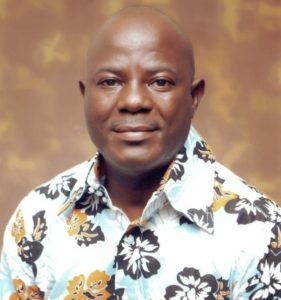
Chiahemen: I was born on January 1, 1965 in Vandeikya, Benue State in North Central Nigeria. I am married with three children. Besides writing, I love swimming, playing Badminton and gardening. I come from a very backward, rural community and right from my primary school days, I have been bothered by inequality, so I set for myself the goal of helping to change the situation and bring about the desired development to my community and the society at large.
I did not fancy politics because I did not see politics (especially as practiced in Nigeria) resolving any of the protracted socio-economic problems plaguing the community where I was born. Yet, from my early, privileged contacts with the media – radio, newspapers and later the television (courtesy of my elder ​brother who was already a star broadcast journalist with the Nigerian Television Authority, NTA), I knew that only a government of the people by the people could accelerate socio-economic transformation by reducing poverty and placing even my community in a proper pedestal to compete globally and open the world to its teeming citizenry.
With this at the back of my mind, I chose journalism because it offers an unequalled opportunity to speak for the speechless, expose the cancer of corruption and hold the rulers accountable on their promises. Thus, when I was introduced to the publisher of a then local but highly controversial Nigerian newspaper (late Chief Godwin Daboh), I did not hesitate to join his weekly tabloid, THE BROOM, because I was clear in my mind why I needed a career in journalism. I wanted to be a change agent for my society, which remains in dire need of socio-political and economic transformation. Using the instrumentality of news reporting, I wanted to bring to the fore, problems of inequality, injustice, marginalization and human rights abuses from every corner of the globe. I wanted to truly act locally and make global impact; I know that journalism only gives me this latitude.
That was in 1987, shortly after I left the Benue State Polytechnic with a National Diploma in Secretarial Administration. Since then, in addition to my HND and PGD in Mass communication and Communication Technology, respectively, I have had several trainings in ICT, news reporting, newspaper production and management, and worked for several local and national media houses in Nigeria. In 2010, when I clocked 20 years in journalism practice, I decided to resign from PEOPLES DAILY newspaper based in Abuja, Nigeria (where I was the Group Political Editor and Member of the Editorial Board) to spearhead the establishment of a daily publication, NATIONAL ACCORD, also based in Nigeria’s capital, Abuja.
Before I spearheaded the setting up of NATIONAL ACCORD Newspaper, I realized that for me to be able to achieve the kind of change (development) I desired for my community, I needed to study and properly understand the problem and the best approaches to solving it; I needed to understand the concepts of social welfare, community development and other relevant areas of study. I therefore went to the Ladoke Akintola University of Technology (LAUTECH) Ogbomosho in Oyo State, South West Nigeria and enrolled, first for a Postgraduate Diploma in Public Administration, followed by a Master of Sciences (M.Sc) in Social Work (with specialization in Community Development). Believing that I needed to sharpen my skills to understand, analyse and interpret the various policies of government at the local, state and federal levels.
I enrolled for a PhD programme in Public Policy Administration (PPA), which I am still pursuing online with one of the famous universities in the United States. I imagined that as the Editor-in-Chief/CEO of a newspaper that reports for a global audience, I would require the exposure that the PPA would give me to be able to grasp the policy decisions of governments and at the end of the programme, I will be the change agent that I have always wanted to be.


Experience in journalism
Chiahemen: I have spent a total of 26 years in Journalism, 22 of those as a Reporter, Correspondent, Bureau Chief, Line Editor, Editorial Board Member and Managing Editor/CEO for different Newspapers including VANGUARD, THISDAY, The Post Express, NATIONAL INTEREST, Daily Independent, PEOPLES DAILY and NATIONAL ACCORD. I have also reported for online news media across a range of subjects and I am particularly at home with Nigerian Politics, Education, ICT, Defence and Community Development. I am also a member of the Nigeria Union of Journalists (NUJ) and the Guild of Corporate Online Publishers (GOCOP).


What has been your driving force?
Chiahemen: My driving force would be my love of the profession, the ever growing need for journalism in a country still in the throes of eradicating corruption, poverty, injustice and ​marginalization, as well as a platform for earning a living.


Challenges faced on the job
​Chiahemen: Some of the challenges I have faced on the job include lack of access to information, poor remuneration/working conditions, lack of the basic tools and facilities, interference by owners/financiers on partisan grounds, etc


Could you please compare the practice years ago and what is obtainable now?
​Chiahemen: There is significant improvement in the quality of newspapers/magazines and Radio/Television programming these days; the facilities that were hitherto lacking are now available (thanks to the Internet) and the living standards of journalists have remarkably improved; today’s journalists have more access to training. I can recall that I started when journalists used typewriters. Now we all use laptops or tablets. Again, when I started, the fax was the most high-tech communication tool in the newsroom. The internet and mobile phones were to come more than a decade later. That is just talking about the tools of the trade alone.
I can also say that the biggest change is the fragmentation of the industry. At the time I start practicing ​journalism in Nigeria, radio and Television were state monopolies. There was only one national ​TV network (NTA) and one national radio station (Radio Nigeria or FRCN). Although state governments started setting up their own TV and radio stations in the 1970s, there was no privately owned radio or TV station. That was to come in the 1980s. Only four of the newspapers published when I started practicing journalism are in circulation today — Tribune, Vanguard, Punch and Guardian. Tens or dozens of papers that have emerged since then, and I am sure if we check the NBC website for the number of TV and radio stations in the country today, we will discover that they are even far more than the national papers we see on the news-stands today.
In comparing the practice, I should not forget to add the advent of social media and how it is already changing the media landscape and the practice of the profession in Nigeria and Africa generally.


What is your take on Journalism standard and press freedom in the country and Africa at large?

Chiahemen: While the proliferation of media — print and electronic — has kept up the spirit of the free and vibrant press that has been the feature of Nigerian history since the anti-colonial campaign, it has come at a price. The phenomenal growth in the number of broadcast stations, newspapers and magazines has not been matched by corresponding improvements in training, mentorship and ethics. Budgets are also squeezed and both media owners and their journalists have come to accept cutting corners as part of the game. The sub desk as we knew it hardly exists. Print journalists routinely run unprocessed and unabridged interviews, many of them gratuitous, simply transcribing verbatim from tape recordings. I am sure that you know about all the shenanigans of today’s Nigerian media as much as I do.


How can we promote quality reporting in the region?
Chiahemen: I think there is the need to strike a balance here. The media is part of the society. In the Nigerian context, it is not the only professional group that is generally perceived to have declined over the years in terms of quality and ethics. Today, even judges are in the dock of public opinion, so to say, many openly accused of corruption and giving judgments for a price. The same is true of university teachers and civil servants. In my view, people see journalists as the defenders of the public good and public interest, and champions of the voiceless, so a lot more is expected of them. Hence, a lot of training and in-house mentoring must be at the top of the agenda to restore the public trust in the profession.
At the end of the day, it is media owners that will make the difference. Amid the proliferation of media brands, it is those whose owners were motivated by the love and respect for the profession that will win back that public trust and discerning audiences, not those driven purely by commercial gain or narrow partisan or ethnic interests.


The emergence of the internet provides a great opportunity for media development and a daunting challenge to best practices in journalism, what’s your take?
Chiahemen: I quite agree with both planks of the statement. The Internet has influenced the way we gather and process news, in terms of what can be reported, how it can be reported and the speed of the media’s response to events as they unfold. It has broken barriers that were thought to be impregnable way back. With the Internet we can see the world as a real global village. All these are opportunities for the media to develop if they are not to be left behind. People will always want the media to provide them with timely accurate information, and the Internet has made this demand more urgent. Besides, the fact that the traditional media are now competing with the new and social media, thanks to the Internet, means that the media have to innovate to keep abreast with the internet-driven dynamics of modern information flow.

The dim side of the internet and its effect on the media is that journalism has become an all comers affair. When you have an army of bloggers and citizen journalists whose only requirements are android devices and raw passion, how do you ensure best practices?


How do you see the future of news (fusion of the traditional and new media) and what it portends for the traditional news media in your country and Africa at large?
Chiahemen: People will depend less and less on the traditional media for their daily news, with the result that traditional media has to leverage on the many possibilities of the new media in order to remain relevant. It is already happening. Newspapers, television and radio channels are using the new media to promote their contents in a bid to capture part of the large audience of the new media.


Advice to upcoming journalists
Chiahemen: Don’t be trapped in the past. Don’t ignore the new media that is where the​future belongs. Be innovative and dynamic.

Curled from http://amdf-centre.org/only-journalism-gives-me-the-latitude-to-act-locally-and-make-global-impact-chiahemen/

Kenya’s Amina Mohammed Eyes AU Chair Seat

0

President Uhuru Kenyatta on Saturday met with his Namibian counterpart Hage Geingob as Kenya intensified the final lap of lobbying ahead of African Union elections today [Monday].

The President’s meeting on the sidelines of the AU Summit in Addis Ababa was meant to discuss “bilateral issues”, according to his team.

But at the back of his mind is the imminent elections in which Kenya’s Foreign Cabinet Secretary, Amina Mohamed is seeking to become the chairperson of the AU.

Since her nomination, President Kenyatta has sent special envoys to 53 countries across the continent including Namibia.

But the lobbying at the summit is key because these countries belong to separate regional blocs which had endorsed different candidates.

Namibia, for example, belongs to the Southern Africa bloc, SADC.

In September, the 15-member organisation endorsed Botswana’s Pelonomi Venson-Moitoi.

Ms Mohamed is also competing with candidates from Equitorial Guinea, Chad and Senegal.

Ms Mohamed herself gathered foreign ministers from 12 countries in the eastern Africa region seeking their final support.

“The eastern Africa ministers’ meeting agreed to stand in solidarity and support their own candidates and reach out to other countries for support,” she said.

Djibouti, Sudan and Burundi are some of the countries from the region which have fronted candidates for different posts.

Ms Mohamed also met with Egyptian Foreign Minister Sameh Hassan Shoukry for a “consultative meeting”.

Egypt, alongside South Africa, Nigeria and Ethiopia are some of the influential countries on the continent because of their economic power, military might and population size.

So high is the focus on this election that a determination by the AU to have its members leave the International Criminal Court (ICC) in masses lost its steam after influential countries on the continent prioritised the poll instead.

A top Kenyan diplomat told the Nation in confidence that the ICC matter has taken a back seat because “there are other pressing needs at the moment”.
“It is not important for now and it can be very divisive particularly at this time of elections,” the official said.

And the fear is that donors, most of whom finance the AU, may lobby against candidates who criticise the court in public.

This story first appeared on Daily Nation, under the title ‘CS Amina Mohamed ready for AU elections Monday’

Trump Criticises Media For Misinterpreting Extreme Vetting Order As Ban On Muslims

0

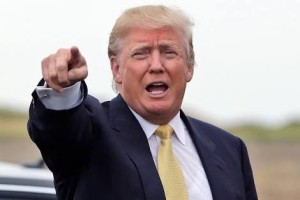
United States President Donald Trump, has criticised the media for misinterpreting his ‘Executive Order Concerning Extreme Vetting’, as ban on muslim, stating that such step was taken by ex-president Barack Obama in 2011.

Trump said on his Facebook Wall that the order was in line with the oath he took of protecting American from external threat.

“We will keep it free and keep it safe, as the media knows, but refuses to say. My policy is similar to what President Obama did in 2011 when he banned visas for refugees from Iraq for six months,” the post says.

The order has already caused demonstrations in America and worldwide roar, because many immigrants had been trapped in airports and refused entry into the US.

A court in the US had ordered a temporary suspension on the order, saying immigrants with genuine US visa should be allowed entry.

9 hours after the Trump Facebook post, it had attracted almost 80,000 comments, 195,000 shares, and 528,000 likes.

Find below copy of the post.

Statement Regarding Recent Executive Order Concerning Extreme Vetting

“America is a proud nation of immigrants and we will continue to show compassion to those fleeing oppression, but we will do so while protecting our own citizens and border. America has always been the land of the free and home of the brave.

We will keep it free and keep it safe, as the media knows, but refuses to say. My policy is similar to what President Obama did in 2011 when he banned visas for refugees from Iraq for six months. The seven countries named in the Executive Order are the same countries previously identified by the Obama administration as sources of terror. To be clear, this is not a Muslim ban, as the media is falsely reporting.

This is not about religion – this is about terror and keeping our country safe. There are over 40 different countries worldwide that are majority Muslim that are not affected by this order. We will again be issuing visas to all countries once we are sure we have reviewed and implemented the most secure policies over the next 90 days.

I have tremendous feeling for the people involved in this horrific humanitarian crisis in Syria. My first priority will always be to protect and serve our country, but as President I will find ways to help all those who are suffering.”

Zuma May Axe Some Ministers To Tighten Grip On Power, Say Senior ANC Leaders

136

President Jacob Zuma is considering firing ministers who backed calls for him to step down last year and defied his instructions, according to senior ANC leaders.

Zuma told the party’s national executive committee (NEC) this week that he’s considering the action and said the government needs to improve its performance, according to two leaders who attended the gathering in Johannesburg and declined to be identified because they’re not authorised to comment. Presidential spokesperson Bongani Ngqulunga didn’t immediately respond to calls for comment.

The meeting was called to discuss ways to boost the economy, improve access to land and contain rising public impatience with a government that is not meeting its targets to fight poverty and reduce a 27% unemployment rate. The ANC suffered its worst-ever electoral performance in the August 3 municipal elections, when it lost control of Pretoria and Johannesburg to opposition party coalitions.

Tourism Minister Derek Hanekom could be one of the ministers to be fired after he proposed a motion of no confidence in Zuma to the NEC’s more than 80 voting members at a meeting on November 26, according to the officials. Health Minister Aaron Motsoaledi and Public Works Minister Thulas Nxesi backed Hanekom’s call, according to party leaders who were present.

Rand slumps
The rand slumped the most in six weeks, falling as much as 1.8% before paring the loss to trade 1% weaker at 13.4880 per dollar by 3.45pm. Yields on benchmark government bonds due December 2026 jumped 11 basis points to 8.88%, the highest since January 4.

The main target of a Cabinet reshuffle would be Finance Minister Pravin Gordhan, with whom Zuma has feuded over the management of state-owned companies and the affordability of building nuclear power plants, according to Ralph Mathekga, a political analyst at Mapungubwe Institute for Strategic Reflection, a Johannesburg-based research group. Gordhan didn’t join ministers calling for Zuma to step down.

Untenable relationship’
“The relationship between Zuma and his finance minister is untenable,” Mathekga said on Friday. “You cannot have a treasury minister that does not toe the same line as the head of Cabinet.”

Other firings would be “simply a way to make the impending reshuffle look comprehensive,” he said.

Still Zuma could be dissuaded from dismissing Gordhan fearing a replication of the market reaction in December 2015 when Zuma fired respected Finance Minister Nhlanhla Nene and replaced him with little known MP Des van Rooyen before appointing Gordhan four days later after pressure from party officials and businesspeople. The rand fell 8.2% against the dollar over three days and government bond prices plunged.

Zuma (74) is scheduled to step down as the ANC’s leader in December and his second term as president ends in 2019. He may be considering appointing Nkosazana Dlamini-Zuma to Cabinet when she is due to end her term as chairwperson of the African Union Commission next week, easing her path to succeed him as national leader, government officials have said.

The move would bolster Dlamini-Zuma’s profile and chances of replacing Zuma’s leader of the ANC at a conference in December, according to party officials. Zuma told Motsweding FM radio on January 12 the ANC is ready for a female leader and the job won’t automatically go to his deputy Cyril Ramaphosa, the other front-runner for the top post.

Curled from Mail & Guardian

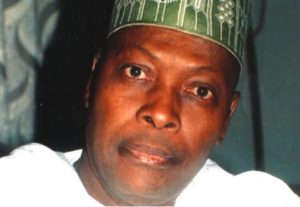
Buhari Hasn’t Convinced Nigerians He Passed School Certificate Examination – Junaid Mohammed

0

You once came out to accuse President Muhammadu Buhari of perpetuating the worst form of nepotism in Nigeria; do you still hold this view?

Absolutely! I have seen no evidence so far to make me change my mind. In the previous interview I granted you, I did ask Nigerians or anybody else to look at the evidence I produced and that evidence is very much alive and well and can be verified by anybody who cares to verify it. As far as I am concerned, I stand by everything about the allegations I levelled against President Buhari, Mamman Daura and other relations of his for being nepotistic and if you want, I can repeat what I said offhand because I am certain about my facts. To the best of my knowledge, there has been no response either from the people mentioned or from the so-called Presidency and their spokespersons. As far as I am concerned, everything I said still stands and if anybody is willing to challenge me, I am prepared. If anybody wants to challenge the identities of the people mentioned or their actual, exact connection with Buhari, I am prepared to go public. I am prepared to confront such people whoever they are or whatever they say.

A few days ago, you told the President’s minders to come out with the truth about the health of their principal; do you know something that Nigerians don’t know about him?

Not much except that I rely on my training as a medical doctor. I also have a few insiders within the system and I am also aware of the level of some people who are supposed to be his personal physicians. The main reason why I thought it is important for Nigerians to know the state of the health of their President is that one, the health of the person occupying the office of the President or the head of government is not a personal affair. It is also not the affair of his family or for that matter, his friends or cronies. It is the responsibility of all Nigerians to know what happens to the leader they elected. That information was not forthcoming and the previous information dished out was not only misleading but highly speculative and I think the nation was shortchanged. Nobody has the right to shortchange 180 million people. Besides, the idea that information should be hidden from the Nigerian public about the health status of Mr. President is misguided and in very bad taste. Attempts to also manipulate medical information by people who know next to nothing about medicine is, in my view, irresponsible. In mature democracies, when a nation is confronted with a similar situation, what they do is they bring in the doctors of whoever is the personality involved and ask him to explain in some reasonable detail the state of the President’s health when he is sick, when he became sick and when the illness is likely to remain, what is the prognosis, is he likely to come out of the illness, is he fit to carry out the onerous task of office as head of government? It’s his doctors that can answer such questions. It is his doctors who should ab initio issue a statement to tell the nation this is the state of the health of their President. But you know, small boys and hustlers hanging around the president just dabble into matters which are delicate. Any idiot can grab a sheet of paper, sit behind the typewriter or a little laptop and issue a statement on behalf of his boss. When talking about the state of health of the President, it has to be convincing, it has to be the truth, it cannot be manipulated if you are not a medical doctor. Any attempt to do that ends up in disaster and frustration especially on the part of family members, members of the National Assembly and the political party he belongs to.  There are other professionals who will be looking at us to say oh, what kind of system are they running? That is why we cannot be economical with the truth by telling the people what is wrong with our President. Whether or not anyone likes the President or not, he is the one President we have, whether he likes other people, or whether he does not want other people and will want to continue with his opportune way of doing things, he must realise that he is the President of all Nigerians. The issue is, he is the President for all Nigerians and as President, there is an amount of privacy he or his family can enjoy because, whatever he says or does will attract public attention.

You claimed to have been a friend to President Buhari since he was a rising officer in the army, do you have to come to the open to criticise him instead of doing that privately?

There is a little story about this. I had occasion to speak about this issue about two or three times. Yes, the man has been my friend and I remember in 1998, I saw Buhari, he was then Chairman of the Petroleum Trust Fund and he asked me to see him in Abuja from Kano which is about 450-500 kilometres. Upon my arrival, I was lodged at the then NICON NOGA Hotel, the next morning, I joined him in the office at Asokoro over tea. After we had discussed other matters, I gave him the information I had about some dirty business going on in the Finance Department of the PTF. I mentioned names, I gave him details. And I told him, ‘Don’t trust me because I understand there are some people you normally trust, out of these beneficiaries, get some of them to investigate.’ Then we parted company and I returned to Kano. Three and a half months later, Buhari himself called me over the telephone and said, ‘Mallam doctor, can we see?’ I said yes. The next day, I went to Abuja and found that a hotel accommodation had been booked for me by one Sali Hidjo who ran the African Projects Consortium, the main consultants to the PTF. The next day, I went to his (Buhari’s ) office, the first question he asked me was,  ‘Mallam doctor, what is your source of information?’ I told him I was not going to let him know my source of information because if I don’t keep my sources private, then I am finished as a public person. He kept quiet for a while; then he smiled and told me that everything I told him turned out to be correct. In fact, he said there were certain facts that I didn’t get but which he found out. He said he commissioned some people with accounting backgrounds and some officers of the SSS and gave them the freedom to recruit others to do a forensic audit of the records and the team submitted a report to him. They found that everything I said was the truth and he thanked me. Then I asked him, ‘Sir, General, what do you intend to do with these people since the head of the Mafia-he used the word, not me- was a man who was a director of finance in the PTF was the elder brother of a friend of his,  a former military governor. Buhari said he and the former governor, now late, were friends. He said he (Buhari) he and the former governor had come a long way, that they joined the armed forces around the same time, though in the Air Force. He said they started soldering around the same time; they had been moving around together around the same stations, that they were made (military) governors and sworn in the same day when  Murtala (Muhammed) appointed them governors. He was appointed the Governor of the North East and his friend was appointed the governor of North Central state, and they remained close until the man’s sudden death. It was his brother who was the mastermind of this fraud perpetrated under Buhari. And I said, “General, what are you going to do with these people?’ He said he summoned the culprit and scolded him blah, blah, blah. He said he also summoned the entire staff of the finance department and addressed them. I asked him, “Is that all?’ I think he realised that I was not satisfied; he said there was nothing he could do. I said it is not your personal money; it is the money belonging to the Nigerian patrimony, money belonging to all of us. If they have been found to have abused public trust, they should be taken to court and dealt with appropriately. If for whatever reason technical or otherwise, they are found not guilty, they should be allowed to go free, but in this situation, you cannot pretend as if nothing has happened. The way and manner you have handled this matter, I assure you no matter the explanation you will want to give about your personal relationships will not suffice.’ I was not satisfied; Buhari was not satisfied with my position. I stood up, we shook hands, he walked me to the lift, I entered the lift, then my car and left for Kano.  So, when he started messing up this time around, a reporter whom I have known for over 40 years who is also from that state and has lived in Kaduna with Buhari asked me on live television why I decided to go public with Buhari- he volunteered the information to me that Buhari was aware I was going to grant the interview and in fact, would be watching the television station at that time. Then I said, this was what happened, and I decided I was not going to go to him. I said the experience I had with him was unpleasant and I found the standards I expected of him were not the standards he maintained when he became President. The people who asked me the question are very much around; one is Mr. Toyin Alabi, the General Manager of Liberty Radio and Television. The man who did the Hausa version was a man from a famous family in Zaria, Mamman Baba-Ahmed. You can verify from them. I believe that one if you are in a position of public trust, it is a challenge; I don’t relate to people who don’t take the truth I tell them, and I am not prepared to be associated with a leader who believes that his personal interest can override that of the public. I believe Nigeria is greater than all of us, including the President and if any of my friends believes their personal interests and that of their dubious cronies are greater than the collective interest of Nigeria, we will part ways.

The Presidency accused you of forming the habit of criticising, even insulting every Nigerian leader and that you do that just to grab the headline, why?

First, I am not in the habit of insulting every Nigerian leader. Those who level such allegations should check their facts. The fact that I have been consistent, I even understand that they even dragged in the name of Abacha that I didn’t criticise him because of some plot to eliminate me. I am not surprised. I have had reason to criticise people in government. Anyone in government is fair game; they have to be criticised; we are in a democracy. Unfortunately for the hustlers around Buhari now, they find it difficult to differentiate between the fascist dictatorship which he ran from 1983- 1985 and now. There is a world of difference between that government he ran and the government he is running now.  When you ask the people many of whom are alive, with whom he ran the Supreme Military Council, there was this complaint that he was always trying to intimidate people. He was said not to sufficiently listen to the ideas of military officers some of whom were better soldiers and had come out of the civil war with better track records. To accuse me of criticising those in government is an honour because if I don’t know what I am talking about, I would have been silenced a long time ago. I have never heard of a democracy where people decide to put a limit to when and how leaders should be criticised. If people don’t want to be criticised, they should stay away from public office. As for me, I will continue to criticise for as long as I see things going wrong and as long as I am alive and in good health.

When you said the president should be honest enough to admit he has not achieved much since he assumed office, do you think that is a fair assessment of the Buhari government?

It is a fair assessment which I stand by even today. See, you have to look at the areas which he promised to look at. He promised that he was going to see the back of Boko Haram. I admit that he has done something regarding what has been happening in the North East. I said, and I repeat,  Boko Haram is still alive and well. Even if they are not holding territory for a prolonged period in Nigeria, there is no denying the fact that they are still holding areas in the northern part of Nigeria, Ditto in the Niger Republic and part of Northern Cameroon. Whoever says they have been defeated is telling lies and taking diabolical liberties with a lack of the thorough knowledge that one is supposed to have before commenting on such matters.
Buhari inherited a very bad situation in terms of the level of corruption. It has to be admitted that in appointing (Ibrahim) Magu at the initial stages, he had given indication that he was going to do something about it. When you are dealing with a situation like the anti-corruption war, you measure success by the number of high profile convictions you have recorded. I want to be told how many of the big guns have been successfully prosecuted. The few people prosecuted were the small judges and some small fries here and there, a police man who ran foul of the law but the big guns are still sitting pretty. That is because Buhari still lacks an understanding of what it is to fight corruption. It is a systemic illness and you have to fight it in all its ramifications and you don’t fight corruption by just prosecuting the policeman who takes N20 on the road when you overlook his boss who stole billions. The idea that the people around him should dictate who should be vigorously prosecuted and those who should not be prosecuted is utterly disgraceful. The anti-corruption war ought to be re-lunched to have any serious meaning.
Some can say oh, Buhari met the situation that was so bad. I think former President (Olusegun) Obasanjo answered them adequately when he said he should stop talking about what he inherited whether it was a bad system or a good system because it was because the former guy was not doing well that was why people voted him out. So there is no need for him to continue to harp on the past. Obasanjo who was his boss in the Army, told him this, not only in private but publicly. He should sit down, get the correct people and the correct policies to get the country out of this mess.

Why did you say that of all the people that have ruled Nigeria, the late General Sani Abacha was the healthiest, how do you mean because Abacha was said to have suffered liver cirrhosis?

I don’t know where such people got their diagnosis.  If he had liver cirrhosis with the large resources at his command at the time, how come nobody ever heard that he had such an ailment? And when he died, was there any postmortem?  Who established liver cirrhosis as the cause of death? What they said about Abacha’s health was not true. I knew him; I knew his father and mother, brothers. I went to school in Fagge, as you know.

But former President Olusegun Obasanjo is someone that has not been associated with any illness, at least publicly. Are you saying Abacha was healthier?

Frankly speaking, I don’t think I remember comparing Generals Abacha and Obasanjo’s health at any time. I do not know Abacha as a sports man but I know Obasanjo as one man who takes his exercises seriously before he became head of state and during his time as President and even after leaving office. Even today, he still enjoys playing squash. I believe Obasanjo has been served and is still being served by his exercise which is almost like a religion to him. This tells on his state of health compared to others like him.

Buhari has come out to say that both Ibrahim Magu and Babachir Lawal have been cleared of allegations against them; do you think Buhari is protecting his appointees?

Precisely, that is what he is doing, and he is doing it in a very shameless manner too. The two cases (Magu and Lawal) are not the same. Magu got his appointment after a proper background check had been done as far as I can recall. Magu is still a serving police officer. The police keep a very meticulous record of their officers, and you don’t go up to the rank of an Assistant or Deputy Commissioner of Police with a bad record. As far as I am concerned, Magu was appointed because among those checked, he was considered as one who has what is required to carry out the anti-corruption war the way the President wants it fought.  Now, those who have something to hide and members of the cabal around the President have, in cahoots with senators who feel threatened, are trying to deny him an opportunity to do his job. I have said in the past, and I repeat it today that the ambition of members of the cabal is to hijack the anti-corruption war so that they can use it to make money and exercise power. Magu has gone through a lot. If there is any evidence that he is teaming up with individuals to shortchange Nigerians at his duty post, he should not only be relieved of the job but also be prosecuted.  The DSS report cannot be a basis of an indictment against Magu because the DSS is acting in cahoots with the cabal; they take directives from the cabal, and we have to be careful. In the case of Lawal, he should have been asked to step aside, but that was not done. And then to cover the tracks, the cabal and some elements within the Presidency tried to bring in the case of Magu to distract the public.

Nigerians have criticised Buhari for always going abroad for medical treatment despite billions budgeted for Aso Rock clinic, what is your opinion about this?

There is no basis to criticise the President on this one. He had been going to the UK for his medicals even as a private citizen. He cannot now be compelled to stop because he has become President. What Nigerians should find out is whether they have been getting value for the money spent on the Villa clinic which was set up to cater for the needs of members of staff of the Presidency, not just the First and Second families.

Buhari government is still insisting on getting the $29bn foreign loan, do you think the money would be judiciously spent if the national assembly gives the go ahead?

No. I do not support the National Assembly granting this request because I can say with a high degree of certainty that the money will be mismanaged. There is nothing wrong with loans if such loans are to be used to improve the lot of the people, but from our experience as a nation, the reverse has been the case. If you will recall, several governors were jailed by this same Buhari when the military toppled the administration. They were jailed for mismanaging federal government guaranteed loans during their time. It took the tenacity and courage by the Obasanjo administration which took over in 1999, to fight until Nigeria was given a relief by its foreign creditors.

Without media attention, the presidency said you would not have a life, is that the truth?

You have known me for about two decades now. I am sure if your readers or readers of other news outlets who seek out my views on national issues consider such views useless, no one will call me up to hear me out. As we speak, I have seven interview requests waiting.
Since you left the parliament years ago, why have you kept away from elective politics instead of criticising those who have attempted to participate?
Unlike most of the people who think this way, I have a profession. I am a medical doctor by training and practice. The decision not to take part in active politics was a deliberate one, as they have rightly admitted. I took part in elections, won and represented my people in the National Assembly. If in the future, I see the need to do it again, I will. But let it be known that I cannot be cowed by blackmail or intimidation.

What is your response to allegations that you took to criticising Buhari because you were not given an appointment?

I have learnt to live with the malicious rumour anytime I say something substantive about somebody in government. When they have no response, they come up with such mundane arguments. I am not in politics, and I know the limitations it places on you. I was never a member of the NPN, I did not expect Shagari to give me any appointment, and none was offered. I was a member of the House of Representatives from 1979 to 1983, and in 1983, I won again to represent my people. Even if I was offered, it would have been very stupid of me to leave my representation of the people of Kano to take up such an appointment.
Besides, I am eminently qualified to aspire for any office in the land by educational achievement and experience in public life and certainly more qualified than Buhari who could not pass school certificate. And up till today, he has not been able to convince Nigerians that he was able to pass school certificate. He has chosen to take the country on a judicial merry go round putting the case on and off until his term expires but the schools he attended are there and if they could not attest that he passed his school certificate, I don’t know how he can confirm that in a court of law. Frankly speaking, any leader who could be so mediocre as to fail his school certificate ought not to have been trusted by the people of Nigeria with such an awesome responsibility as that of the office of the President. I will not accept any offer of appointment from this government, and thankfully, none has been offered.

What is your view about calls for President Muhammadu Buhari to seek re-election come 2019?

If performance is to be the judge, not some tribal, ethnic or religious sentiment, if Buhari stands for elections, he will lose. And if he attempts to use the power of incumbency and rigs the elections to come back, there will be violence. My reasons are simple; he has not performed.

Curled from Punch

War or Terror: Group Exhibits Positive Photos From Bornu

0

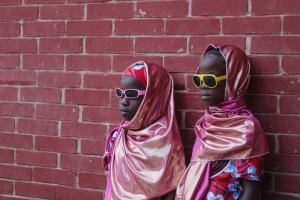
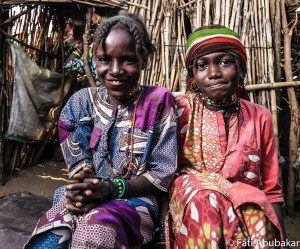
Determined to re-brand the North-Eastern Nigeria in a positive narrative on developments against the negatives on insurgency, the North-East Regional Initiative (NERI) has hosted the Bit of Borno Photo Exhibition by acclaimed Photographer, Fati Abubakar.

Speaking at the occasion, the Manager of NERI, Albert Pam disclosed that the Bits of Borno Photo Exhibition was conceived as a platform to showcase the beauty, culture, traditions of people living in Borno State. He said that the state which was traumatized for several years has the tendency to be viewed from the angle of despair and destruction in the media.

Pam said: “The media have portrayed an image of Borno as a place of death and destruction. We are happy that a photojournalist is using her pictures through various platforms to challenge misconceptions about her hometown. Most of the pictures demonstrate the resilience of the peoples, especially women and children who are still proud to carry on their day to day activities with joy and happiness.

“The beautiful pictures show the faces of cheerful children and proud mothers in unusual environment trying to live a normal life outside the negative portrayal of Borno as state of insurgency.”

The exhibition according to PR Nigeria was organized by Borno State Government in collaboration with Centre for Arts and Creative Talents provided a counter narrative to the negative headlines by displaying the resilience of the people to rebuild their lives after insurgency, hence the photo exhibitions is tagged bruised, not broken.

The photo Journalist, Fati Abubakar, is a visual storyteller born and raised in Maiduguri, Borno State. She developed a passion for photography and is the creator of Bits of Borno, a visual portrayal of the lives of Borno State residents after insurgency.

Maternal, Child Mortality: How Northern Women Risk Their Lives – Leadership

0


By Beatrice Gondyi

For 37-year old Bilhatu Gideon (not real name), her sixth pregnancy was just like any of her previous pregnancies, until she had a miscarriage on her way back to Bauchi from Abuja, where she had gone on official assignment. The pregnancy was two months old at the time she lost it. The miscarriage took her unaware.

When the bleeding became unbearable, she was rushed to the hospital for evacuation of the remnant of the fetus. After it was flushed out, her doctor advised her to take a sample of the miscarriage to the laboratory with a view to ascertaining the cause of the abnormality. This she did but never bothered to go back for the result of the test conducted, which led to her inability to conceive though she so much desired to take another go at becoming pregnant once more.

Two years later, she went back for the result she abandoned and she discovered she had an infection, acute endometritis, which could have been easily treated at the time she had the miscarriage.

Many women, out of sheer ignorance or even negligence at times make pregnancy-related complications common in the society with the attendant effects on their social, financial and general wellbeing. Often times, it is noted that the complications are avoidable in the first instance had one or two steps been taken by the women.

LEADERSHIP Weekend’s findings among some women in Bauchi revealed that many factors are responsible for complications in pregnancy leading to maternal and child mortality. Such factors include loss of blood during delivery, multiple pregnancies, reluctance and in some cases outright refusal to deliver at health facilities as well as delay in registering for ante-natal care.

Talatu Umar, 42, disclosed that her last two pregnancies were her most difficult as she struggled between life and death to give birth. According to her, prior to these, she had had eight children and due to age and the expansion of her uterus, she spent over six days in labour.

She said when she was to deliver her ninth baby, she was induced and when she was to be wheeled to the theatre for a cesarean section (CS) she delivered. But with the 10th pregnancy, Talatu stated that she had no choice but to go straight for CS as it appeared as if the baby was trying to claim her life.

“I had never experienced anything like that before. The pain was unbearable.

I don’t normally attend antenatal until the ninth month of my pregnancy, so I thought it would come easy. I really suffered and I will never wish same experience even for my worst enemy. Going for antenatal is crucial; with it your life and that of your baby will be saved. Now I have decided I won’t conceive again and even if I do, I will strictly adhere to the rules and regulations guiding antenatal,” she stated.

However, some women are serious with their antenatal schedules as Maryam Sani confirmed to LEADERSHIP Weekend. She explained that her current pregnancy was her eighth and she had never missed her antenatal days just as she always carried out all tests required of her.

“As you can see this pregnancy is about six months but I started attending ANC (Ante-Natal Clinic) two months back. I am very grateful as I don’t have any complications in all my pregnancies. I can attribute this to the care I receive during antenatal visits and regularly taking my routine drugs as well as bringing all the tests results and the scanning I was asked to do,” she said.

When asked why women don’t carry out examinations required for their health and that of their babies, a director of community health with Bauchi State government, Dr Joseph Odiba, said most of the patients are not aware of the importance of the tests. He added that, religion plays a vital role as most people believe whatever happens to them is the will of God, which explains their nonchalant attitude.

“Most of the time it depends on the patient you are seeing and what she may require. Most of them if you give them test, they don’t come back. Sometimes they come back. At times if there is a delay before they get their result, you won’t see them. Sometimes they don’t know the importance of the test as they will just go home and don’t bother coming back for their result until something happens.

“Most of the time, you know our community is very religious and when you tell them the effect of certain behavior and why certain tests are required to be carried out, they tell you everything belongs to God, if God destines it, it will come to pass. I attend to so many women, sometimes 35, at other times, up to 42 women on a daily basis,” he said.

Odiba, however, called on community and religious leaders to enlighten and encourage women to be healthy as they adhere strictly to the tenets of their religion, saying the leaders ought to emphasize the fact that religion and science are different though everything ultimately belongs to God.

“I am calling on community and religious leaders to continue to tell women to carry out the tests required of them and to tell them the adverse effects of most of their behavior. To tell them that what belongs to God belongs to God and the knowledge that has been released by God to humanity is for our own good, for our own use. They should know that religion is different and science is different but at the end of it all it comes down to God,” he submitted.

A matron with one of the urban maternity clinics in Bauchi, Mrs Grace Sale, advised pregnant women to eat healthy food and when labour starts, they should go and deliver at a health care facility for prompt intervention. She further them to attend antenatal regularly and take their routine drugs daily because if they don’t, it could lead to loss of blood during delivery which also could lead to loss of mother and child.

Meanwhile, as part of efforts to reduce maternal and infant mortality as well as improve healthcare delivery service, the Bauchi State government inaugurated the new Maternal and Pre-natal Death Surveillance Response (MPDSR) and Technical Working Group (TWG) Committee.

The committee is saddled with the responsibility of planning and establishing the mechanism for the MPDSR at the state level as well as make recommendations to the state government on ways to reduce avoidable maternal and pre-natal death in the state.

Inaugurating the 26-member committee drawn from different departments and agencies in the state health sector, the permanent secretary in the state Ministry of Health, Dr. Saidu Aliyu Gital, said it became necessary when recent statistics released by the state chapter of Maternal and Pre-natal and Technical Working Group showed a worrisome trend in maternal mortality.

“There is no reason why a woman should die while giving birth in the state. Our budget captured life-saving drugs for pregnant women and the five-point health agenda of the state governor, including the under-five free treatment,” Gital said at the occasion.

Bauchi is ranked among the first states which introduced the use of Misoprostol and Chlorhexidine as part of efforts aimed at preventing mother and child death. It did this with the support of the United States Agency for International Development (USAID) programme, Targeted States High Impact Project (TSHIP).

Misoprostol, LEADERSHIP Weekend learnt, is meant for controlling primary postpartum haemorrage, which is described as the number one killer of pregnant women. Nigeria is said to be the first country in the world to have included this drug on its essential drug list even before the World Health Organization (WHO) listed it on its essential drug lists.


culled from Leadership

Why Nigeria Should Invest In Renewable Energy

0

By Longtong Ibrahim

How can an environment be sustainable, healthy and the people living in it be healthier? One sure way is when countries or governments begin to harness natural resources like renewable energy as an alternative means of energy generation to cushion the effects of pollution and climate change – a global challenge that is affecting the environment and health of man.

Renewable energy is energy gained from natural resources such as sunlight, wind, rain, tides, waves and geothermal heat, which cannot be exhausted but replenished. According to experts, it could also replace conventional fuels in four distinct areas like electricity generation, air and water heating/cooling, motor fuel and rural (off-grid) energy services. Renewable energy technologies range from solar power, wind power, hydroelectricity/micro hydro, biomass and biofuels for transportation.

Current projections from the International Renewable Energy Agency (IRENA) show that at least 70 percent of Africa’s 600 million people are not connected to the electricity grid. Instead, most are forced to rely on inefficient, expensive and polluting energy sources to power their homes and businesses. Bloomberg New Energy Finance reported that in Africa, Kenya, Ethiopia and South Africa countries are leading in the renewable energy revolution.

The advantages of renewable energy utilization cannot be over emphasized especially to a developing country like Nigeria, where population growth is high, with an increase in industrial activities which result into environmental pollution and economic difficulties from more consumption.

Nigeria for instance is one of the countries that largely supply crude oil in the world, but still suffer setbacks in terms of access to electricity for their daily usage in homes and industries. A climate change expert, Amaefula, wrote that, only 40 percent of households in Nigeria are connected to national grid due to decline in power generation and energy lost.

The only renewable energy source Nigeria utilizes is hydro-power and biomass; where solar energy is minimally utilised for street lightening, mostly in the cities. The country relies also on fossil fuels, natural gas and oil which are non-renewable – they dwindle, are expensive, and pollute the environment.

Hydroelectric power plants with installed capacity and those coming on stream cumulatively accounting for roughly 13,000MW, but the effectiveness of supply is less than 5000MW across the country.

Alex Uangbaoje, a journalist said, for Nigerian economy to grow, the country must invest in an alternative source of power generation, to at least an average of 200,000MW, stressing that the country currently generates less than 4500MW.

He said inadequate power supply has affected his work negatively, since his gadgets rely on power to work, noting that, its absence made him incur more costs in terms of buying fuels to power a generator.

Similarly, Barde Luka, an Engineer, says, “Today most of our reliable sources are hydro, that is why when it is dry season, power generation drops” hence the need to particularly utilize the wind to generate energy (electricity) so that, businesses that contributes to the economic growth would not pack-up.”

He also noted that with the exploitation of renewable energy as alternative energy sources, it could go a long way in addressing climate change and environmental pollution.

In a chat with AFRICA PRIME NEWS, Yakubu Ahyock, a Computer Engineer said, “imagine a steady power supply in the country, it can boost jobs and revive the local industries. Many youths would be gainfully employed in one way or the other because smaller industries would spring up and excel.

According to him, Nigeria is blessed with various natural resources which if utilized accordingly; each region can explore its endowed resource to generate energy which can go a long way in solving the lingering energy crisis experienced in the country. He said, it can boost agriculture in rural areas and enhance development.

An Environmental scientist, Suleiman Zubair Abdullahi said when renewable energy are harnessed, it has less impact on the people and the environment, stressing that, moving into the path of renewable energy is a major path for climate control, not only providing energy.

He noted that, they are sustainable and very easy to maintain if the government can invest in harnessing them from their natural source. According to him, Oil has been the number one resources of Nigeria which its exploration has negatively impacted the environment like the Niger-delta region where there are oil spillages that has affected the availability of farmland, water (for drinking) as well as the atmospheric conditions from gas flaring resulting to climate change.

“By trapping flaring gasses from NNPC, offshore/onshore oil exploration, they can be use as resources of energy to reduce its effects on the atmosphere.

“Also, we have natural energies that can be harnessed and replenished naturally without exploration; all that is needed is for government to train people on how to harness, revitalize this energies to fight climate change and bring the environment to its natural state.

“Sustainable development does not mean that the environment should be protected and sustained or should not be develop, but there should be a control in such a way that the environment is not tempered with, polluted, or contaminated,” he added.

Zubair further explained that, a whole country or particular community can be powered naturally with renewable energy without any combustion of gas, (almost 0.001 pollution); hence, making the people and environment healthier, outbreak of diseases controlled. “This is because the carcinogenic, mutagenic and terotogenic chemicals that comes majorly from pollutants as a result of combustions or reactions of gas are been control.”

“By the time these smokes/gases emitted (carbon emission) reacts with natural gases in the atmosphere, the reactions leads to so much perforation of the ozone layer; at this point, we will begin to have ultra violet rise coming to us which could result into different kind of diseases and health problems such as cancer. These gases that circulate in the earth surface are contaminated and the water we drink also are polluted.” he noted.

The environmental scientist further pointed out that in some communities in Northern Nigeria, there is a scourge of Dengi fever which is caused as a result of climate change. He noted that a recent research found out that Dengi fever is caused by a special mosquito form Asia. “Before now we don’t have Dengi fever in Nigeria, but ordinary malaria; now people are losing their lives more from malaria than before.

“It started emanating as a result of climate change because it was not experience before. As it is now, there is so much proliferation all over the north and even in the south-western Nigeria, where the issue of typhoid and malaria is high. They are not just ordinary malaria. Dengi fever can easily kills within the shortest period. If you notice the mosquitoes these days, they are not the type we use to have in the last ten years, they are black mosquito not as big as the ones we have; they is terribly dangerous.

“Government needs to do more, look for its source, cause, and control it so that it doesn’t spread by fumigating the environment.”

He however tasked government to explore other renewable energy sources and be proactive in implementing its policies on power, energy, and environment as well educate the people on the benefits of keeping, maintaining, and protecting the environment in order to have a sustainable, healthy environment and people.

Nigeria had a target in 2007 to produce 7% of its year 2025 energy needs from renewable energy with solar and hydro as the major priority.

Based on a report by Charles Opara-Ndudu, Nigeria has the potential to exploit its abundant solar energy resources considering its geographic location around the equatorial sun-belt – receiving abundant sunshine all year round ranging from 6.70kwh/m2/day in Borno State to roughly 4.06kwh/m2/d to 5.86kwh/m2/d in locations such as Calabar in Cross Rivers State.

In states like Katsina, Zamfara and Sokoto, the abundant natural winds can be trapped into windmills to generate energy.

From the NIMET’s info sheet, Nigeria is endowed with an annual daily sunshine that is averagely 6.25 hours, which is ranging between about 3.5 hours at the coastal areas of the northern boundary of the nations and also has an annual average daily solar radiation of about 3.5 KWm2/day in the coastal area which is in the southern part and 7.0 KWm2/ day at the northern boundary.

Nigeria receives about 4909.212 kWh of energy from the sun which is equivalent to about 1.082 million tonnes of oil; this is about 4000 times the current crude oil production per day, and also put at about 13 thousand times of daily natural gas production based on energy unit.

It is estimated that when 1% of Nigeria’s land area is covered with a solar technology of 5% efficiency, about 333,480MW of electricity may be produced at about 26% capacity factor. This electricity generation capacity will be more than enough for the country, up to year 2050, that will conveniently support 11% -13% economic growth rates as envisioned by vision 20:2020.

This level of solar radiation across the country can support huge deployment of solar power and wind power infrastructures designed to primarily feed into the regional power distribution entities, which would add up to the national grid, offering a much more affordable, practical and healthy solution that could boost the economic and enhance healthy environment.

Most renewable energy comes either directly or indirectly from the sun. Sunlight, or solar energy, can be used directly for heating and lighting homes and other buildings, for generating electricity, and for hot water heating, solar cooling, and a variety of commercial and industrial uses as well as be valuable for rural usage where supplying electricity from utility line could be expensive.

The sun’s heat also drives the winds, whose energy, is captured with wind turbines. Then, the winds and the sun’s heat cause water to evaporate. When this water vapor turns into rain or snow and flows downhill into rivers or streams, its energy can be captured using hydroelectric power.

Recently Nigeria’s Minister of Power Works and Housing, Babatunde Fashola, in a write up revealed that Nigeria is engaging with countries like United Arab Emirate (UAE) and China to bring significant investment into various areas in the electricity sector. He noted that Nigeria would engage with UAE to bring solar power to the country at an attractive price, while China has signed collaboration agreement with Nigeria in the area of power infrastructure development.

He also revealed that, the country is also developing an energy mix that will explore renewable energy potentials in the country, given consideration to location of the power production facility in relation to the source of power by developing solar projects in Northern States like Jigawa and Kano which have been identified as the most prolific solar area in the North.

In the North- Central Zone, the energy mix in that area will be a combination of solar, hydro and coal. In South South and South West, it will largely be gas. In part of South East, it will be a combination of gas and coal.

According to him, “the development would be a major boost for made- in -Nigeria goods for which the markets in the area have been famous”.

With what government pronounces every day, there is need for The ministry of environment and power, the Nigerian Electricity Regulatory Commission (NERC) and the Energy Commission of Nigeria to take proactive measures on policies pronounced on renewable energy technology, by taking full advantage of the natural sources it has to boost her power generating capacity through adequate investment and collaboration with relevant local and international bodies to bring it to fore.

Renewable energy is clean and pollution-free and is therefore a sustainable natural form of energy unlike the nuclear and fossil fuels plants.

Currency Exchange Rates

USD - United States Dollar
ZAR
0.06
EUR
1.17
CAD
0.73
ILS
0.31
INR
0.01
GBP
1.34
CNY
0.14
Enable Notifications OK No thanks