Kaduna (Nigeria) – The Kaduna state Commissioner for Rural and Community Development, Balaraba Aliyu Inuwa, has described the activities of civil societies in the state as quite disappointing, saying, they are not engaging with government effectively.
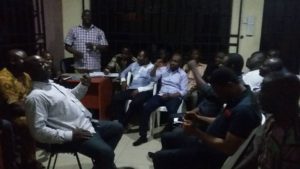
Balaraba stated this recently in Kaduna, North-west Nigeria, during a roundtable dialogue on good governance organized by Concern Civil Society and the Kaduna State Government.
According to her, since she assumed office, there has never been any CSOs or NGO that has visited her office; noting that, this has made it to look like they have lost their voice.
She described the dialogue as a welcome development looking at the role Civil Organizations play in the society.
“Civil societies are key stakeholders in governance; in theory they are representative of people, so for the purpose of sustainability, transparency and accountability, they have a role to play in the implementation of government policies and programs.
“I think with processes like this one, they can come together and build network, coalition and build their capacities in order to engage effectively with government.
“As representative of the people, they can mobilize people at community level to engage properly with government; they can keep tab of projects that are happening even when a government is gone,” she stated.
In his remarks, convener of the program, Emmanuel Bonnet, said, engaging with government has become necessary so as to enhance development.
He noted that over the years, CSOs have been working separately from government but with the coming of this administration, they have approached and have agreed to fashion out modalities on how they can partner effectively for development.
He said they (civil societies) would be on the table when government is drawing its policies and also bring citizens to be engage as well; adding that, “We would also propose policies and areas of engagement that government needs to follow so that community would not just sit down and receive policies from government without been involved.
“We also want to ensure that there is inclusion in the government policies and program.”
According to him, this partnership would be a sure way of enhancing development, an increase in transparency and accountability. He noted that, they intend to work with government in seven ways among which includes; acknowledging good practice and areas of improvement, bringing together variety of voices, responding directly to government reports, recommendation of actions and improvement, demonstrating civil society commitment to implementation.
By Destiny Ugorji A youth group, under the aegis of the Niger Delta Youth Movement, NDYM has alleged that there is massive corruption in the running of the Niger Delta Development Commission-NDDC, even as it threatened to expose it in the coming weeks.
NDYM, the umbrella youth organisation in the Niger Delta region made the allegation in a Communique issued at the end of a National Executive Council meeting of the body in Port Harcourt, weekend.
The Communique, signed by the group’s National President, Joe Jackson, Secretary, Amakuro Isaac and twenty three (23) others, blamed corruption for the underdevelopment in the region.
The group lamented that despite the huge investments in the Commission, not much is being done to better the lives of the people, but warned that it is presently investigating the information of massive looting going on in the Commission under the present leadership and will make its findings public soon.
“Corruption is at the centre of the region’s underdevelopment and the youths have remained endangered species in their patriotic efforts to draw the attention of relevant agencies to the developmental challenges of the region.”
“…despite enormous resources committed to the development of the Niger Delta region by successive administrations, not much is being seen in terms of development of the region.
“…the absence of transparency and accountability in institutions empowered to develop the region is a major obstacle to the development of the region.”
“…the Niger Delta Development Commission (NDDC) needs to be purged of corruption, with a view to sanitising the system and bad eggs expunged. The NDDC under the present leadership has no place for the youth of the region. No action plan or template for youth development, empowerment and engagement is in place. The youth of the region have not been effectively involved in the activities of the NDDC.”
“The impact of the Ministry of Niger Delta Affairs on the region has been minimal.”
Continuing, the youth group called on the country’s anti-graft agencies to beam their light on the region, while urging the present leadership of the Commission to ensure transparency, accountability and due process in its dealings.
“The country’s anti-corruption agencies must begin to beam their searchlights on public institutions in the Niger Delta region.
“The present Management of the Niger Delta Development Commission-NDDC, under the leadership of Mr. Nsima Ekere must ensure transparency, accountability and due process in the award of contracts by the Commission, especially, that of Water Hyacinth projects.
“The present NDDC Management should, as a matter of urgency, ensure that the youths of the region are carried along in the issues concerning them. The continued marginalization of youths of the region by the present leadership is unacceptable.
“As a principal stakeholder in the formation of the NDDC and particularly, the YOUTH DIRECTORATE, NDYM is reviewing the situation in the Commission and will soon make its findings and decisions known to the world.
“We await a blueprint and action plan, backed with an implementation guide on youth empowerment and engagement by the current NDDC leadership.
“We support a civil means to the resolution of the Niger Delta problem and shall at no point, back any military action in the Niger Delta.
“The Federal Government should commence the ACTUAL clean-up of Ogoniland and other areas/states in the Niger Delta Region affected by oil exploration without further delay.
“As the umbrella youth group in the region, NDYM should be actively involved in the Federal Government’s dialogue initiative, aimed at restoring peace to the region.
“NDYM calls on President Muhammadu Buhari to immediately nominate, for confirmation, credible persons to represent the three states of Abia, Imo and Ondo on the Board of the NDDC, in order to calm frayed nerves.
“NDYM strongly condemns the planned relocation by the Shell Petroleum Development Corporation (SPDC) of some of its offices from Port Harcourt to Lagos and wants Exxonmobil to immediately relocate all its offices to Akwa Ibom State for the sake of the on-going peace moves by the Federal Government.
“The Ministry of Niger Delta Affairs must review its mandate, with a view to developing and implementing activities and projects that can touch the lives of the Niger Delta people positively.”
Below is the full Communique:
COMMUNIQUÉ ISSUED AT THE END OF A NATIONAL EXECUTIVE COUNCIL MEETING OF THE NIGER DELTA YOUTH MOVEMENT (NDYM) HELD AT HER NATIONAL SECRETARIAT, PORT HARCOURT ON THE 3RD OF FEBRUARY 2017.
The Niger Delta Youth Movement (NDYM) is the Umbrella youth organisation in the Niger Delta region of Nigeria, covering the 9 states of the Region.
The National Executive Council (NEC) of the Movement met on Friday, 3rd February, 2017 at the NDYM National Secretariat, No. 40 Mbonu Street, D-Line, Port Harcourt. All the members of the NEC from the nine states of the Niger Delta region were present.
The objective of the meeting was to review recent happenings in the region, affairs of the youths of the region, governance, and general situation of the region, especially, as it concerns the youth. The discussions were exhaustive and resolutions reached.
OBSERVATIONS After deliberations and contributions to the issues raised, members made observations and recommendations on strategies, and means to enhance the welfare of the youths of the region, while holding governments in the region accountable, with a view to ensuring good governance. 1. That despite enormous resources committed to the development of the Niger Delta region by successive administrations, not much is being seen in terms of development of the region. 2. That the absence of transparency and accountability in institutions empowered to develop the region is a major obstacle to the development of the region. 3. That the Niger Delta Development Commission (NDDC) needs to be purged of corruption, with a view to sanitising the system and bad eggs expunged. 4. That the NDDC under the present leadership has no place for the youth of the region. No action plan or template for youth development, empowerment and engagement is in place. 5. That the youth of the region have not been effectively involved in the activities of the NDDC. 6. The impact of the Ministry of Niger Delta Affairs on the region has been minimal. 7. Corruption is at the centre of the region’s underdevelopment and the youths have remained endangered species in their patriotic efforts to draw the attention of relevant agencies to the developmental challenges of the region.
RECOMMENDATIONS/RESOLUTIONS 1. That the country’s anti-corruption agencies must begin to beam their searchlights on public institutions in the Niger Delta region. 2. That the present Management of the Niger Delta Development Commission-NDDC, under the leadership of Mr. Nsima Ekere must ensure transparency, accountability and due process in the award of contracts by the Commission, especially, that of Water Hyacinth projects. 3. The present NDDC Management should, as a matter of urgency, ensure that the youths of the region are carried along in the issues concerning them. The continued marginalization of youths of the region by the present leadership is unacceptable. 4. As a principal stakeholder in the formation of the NDDC and particularly, the YOUTH DIRECTORATE, NDYM is reviewing the situation in the Commission and will soon make its findings and decisions known to the world. 5. We await a blueprint and action plan, backed with an implementation guide on youth empowerment and engagement by the current NDDC leadership. 6. We support a civil means to the resolution of the Niger Delta problem and shall at no point, back any military action in the Niger Delta. 7. The Federal Government should commence the ACTUAL clean-up of Ogoniland and other areas/states in the Niger Delta Region affected by oil exploration without further delay. 8. That as the umbrella youth group in the region, NDYM should be actively involved in the Federal Government’s dialogue initiative, aimed at restoring peace to the region. 9. NDYM calls on President Muhammadu Buhari to immediately nominate, for confirmation, credible persons to represent the three states of Abia, Imo and Ondo on the Board of the NDDC, in order to calm frayed nerves. 10. NDYM strongly condemns the planned relocation by the Shell Petroleum Development Corporation (SPDC) of some of its offices from Port Harcourt to Lagos and wants Exxonmobil to immediately relocate all its offices to Akwa Ibom State for the sake of the on-going peace moves by the Federal Government. 11. The Ministry of Niger Delta Affairs must review its mandate, with a view to developing and implementing activities and projects that can touch the lives of the Niger Delta people positively.
Signed
Comrade Joe Jackson National President- Akwa Ibom State Com. Mathias Tamunoeni Dep. Nat. President-Rivers State Com. Amakuro Isaac National Secretary Bayelsa State Com. Kenneth Toate Assist. Nat. Secretary Rivers State Com. Nta Ani Treasurer Cross River State Com.kanu Sherrif Organizing Secretary Abia State Com.(Barr.) Peter Oghenebrume Nat. Legal Adviser Delta State Com. Meduoye Goodluck National Pro. Ondo State Com. Barthlomew Obodo National Nat. Welfare- Imo State Com. Anthony Ntukidem Assist. Nat.Org.Sec.Akwa Ibom state Com. Honesty Asemota Assist. Welfare Officer – Edo State Com. Nosa Asemota National Provost Edo State Com. Davik Irek Assist. Legal Adviser Cross River State Com. Mathew Nwamaginna Assist. Provost 1 Abia State Com. Gospel Werenepreye Assist. Pro Bayelsa State Com. Izuchukwu Okeabaram Nat. Assist.Fin.Sec.Imo State Com. Kingsley Okere chairman Abia state Com. Sammy Charles chairman Akwa Ibom State Com. John Dan Aputu Chairman Bayelsa State Com. Emmanuel Edet Chairman Cross River State Com. Youyah Stephen Chairman Delta State Com. Asoro Philips Chairman Edo State Com. Abidoye Adetoye Chairman Ondo State Com. Chigozie Ohiri Chairman Imo State Com. Ijeoma Austin Chairman Rivers State
Kaduna (Nigeria) — Some Nigerians have criticized recent announcement by their Minister of Science and Technology, Ogbonnaya Onu on plans to teach science subjects and mathematics in indigenous languages.
The Minister recently says in order to make children interested in mathematics and science, Nigerian schools would teach pupils in various indigenous languages.
According to him the act would also prevent local languages in the country from going extinct.
The Minister said, “These pupils grow up with their indigenous languages at home before they start going to school, where they are now taught in foreign languages. So, we have observed that there is a challenge to understand the foreign languages first before they could even start understanding what they are being taught.
“We believe that this plan will help our students to understand mathematics and the science subjects, and also promote the application of science and technology for national development. Our ministry has looked around the world how nations attained greatness and all the countries that are doing very well use indigenous languages at very early age in the teaching of science and mathematics.”
Reacting, a Nigerian, Dorothy Galadima said, “It is a very wrong idea because the public who learn in their dialect will have to interact with other people from other tribes. If I learn with ‘Jaba’ how then do I interact with a ‘Jju’ or ‘Kataf’ person?
Also speaking Godiya Esther says: “That is almost impossible. It will take too much time for the different languages to introduce new mathematical terms to their vocabulary. How do you say integer in ‘Jju’ language? How do you say equation and calculus, how about logarithm? Words have to be derived or formed. That would take ages.”
A lawyer, Florence Hassan said, “Although it is a welcomed idea, however it should be noted that students will be restricted to understanding these subjects in the languages being taught and may find it hard to relate to it internationally.
“Recognised languages such as English and French and as such knowledge, ideas and invention or development of such knowledge may however be restrictive as the students can only pass the knowledge to only those who understand the language.”
To Bodam Gwani, “The poor quality of education in Nigeria is not because of the language being used, but because we have neglected the sector. I didn’t have any problem with English, simply because I was taught well.
“I attended all government schools, and no one can tell me I got inferior education, even those that studied abroad. I can say now, the same schools I went to, can’t provide the same level of education. This has nothing to do with English language as the medium.”
“We shouldn’t create a new problem, when looking for a short cut, we should address the real problem. The problem is the Quality of education, medium used is not the problem.”
A school girl who hails from Jaba in north central Nigeria told AFRICA PRIME NEWS that she does not understand her language and would rather have her teachers teach her these subjects in English, “My teacher teaches me mathematics in English and I understand the subject.”
Nigeria has over 400 indigenous languages and dialects with several others gone extinct. The plan to teach mathematics and science was to find a way of preserving some of these languages.
But there is currently no definite plans with timelines put on ground to actualise the announcement. There is also no idea on how many of the 400 languages would be used to teach the primary school pupils.
To achieve the lofty idea, content and curriculum must also be designed in the chosen languages to make it work.
South Sudan has once again rejected the suggestion that the country be placed under UN trusteeship.
Government said that the international community should support implementation of the African Union-brokered peace deal rather than impose an external trusteeship regime, africanews reported.
Spokesman of the South Sudanese Presidential, Ateny Wek Ateny, said, “It is our right. It is our country. We fought for it. We achieved the independence through referendum. The people of South Sudan decided for their country. So nobody is better than the people of South Sudan.”
According to him, if the country is placed under the UN trusteeship then the body will govern the country for a specific period of time before handing governance back to South Sudanese.
Some former government officials have proposed putting the country under UN trusteeship.
Ateny added that, “There are always minority voices that would hope for something totally different from what the majority of people of any given country say”.
On Thursday Uganda rejected the notion, saying such interference would only make the country’s security situation worse.
South Sudan broke into conflict in December 2013. The conflict has killed thousands of people and driven more than 2 million from their homes.
Currently, more than 200,000 people still sheltered under UN protection in many parts of the war torn nation.
In 2014, President Salva Kiir accused the UN of seeking to take over the country and speculated that UNMISS may have pushed his political rival, former vice president Riek Machar, to rise up against the government, africanews noted.
… 2Face Cancels Nationwide Protest, As It Generated Mix Reactions
Nigerian President Muhammadu Buhari has written to the National Assembly informing them of his desire to extend his leave.
This is coming at a time Nigerians were anxiously waiting for his return, after much speculations on the social media that he was dead.
The president did not state the duration of the extension.
The letter which was written on Sunday by the Special Adviser to the President on Media and Publicity, Femi Adesina, stated that the extension was to enable the president complete and receive the results of a series of tests recommended by his doctors.
“The President had planned to return to Abuja this evening, but was advised to complete the test cycle before returning.
“The notice has since been dispatched to the Senate President, and Speaker, House of Representatives.
“Mr. President expresses his sincere gratitude to Nigerians for their concern, prayers and kind wishes,” the statement noted.
President Buhari is expected to be back to the country on Monday, February 6th after his ten days vacation to London. The Presidency had also said the President would use the opportunity for his medical checkup.
In a separate development, one of Nigeria’s Hip hop Artists, 2Face (Innocent Idibia) has cancelled his planned nationwide protest 24 hours to the return and resumption of President Buhari.
Idibia had used his Instagram handle, @official2baba to call on Nigerians especially his fans and followers to support a peaceful protest demanding for good among others from government, saying that, the Nigerian government had failed its people by leading the country into an economic downturn.
2Face announced the cancellation of the protest via his Instagram page, Official2baba Saturday evening. In the video clip, 2face said, “Dear Nigerians, after due consultations, it has become clear that the #OneVoice Nigerian protest scheduled to hold in Lagos and Abuja on Monday the 6th of February is under serious threat of hijack by interests not aligned with our ideals. The point and intent am making is not worth the life of any Nigerian.
“It is a fact motivated by the need to demand a better deal for the ordinary Nigerian.
“I therefore announce the cancellation of the planned protest. We will share further information in due course… I appreciate the massive support and I am convinced that our voices have been heard. “May God bless you all and may God bless Nigeria,” 2face concluded.
Earlier the plan protest has generated a lot of mixed reactions in the news and social media.
Nigeria’s Minister of Information and Culture, Lai Mohammed, has urged the media to eschew disinformation and fake news, saying the phenomenon, if left unchecked, could damage the credibility of the media and endanger the country’s peace and security.
The Minister made the call in Abuja on Friday when he paid a courtesy visit to the headquarters of Daar Communications Plc. owners of the African Independent Television (AIT) and Raypower radio station.
Minister of Information and Culture Lai Mohammed in a group photograph with the management of Daar Communications Plc. when the minister paid a courtesy visit to the Media Group in Abuja
According to him, “The country today is under the siege of disinformation and fake news. Unfortunately this dangerous trend, if not checked by the media – especially the traditional media – is capable of tearing the fabric of the society and bringing the country to its knees”.
Mohammed recalled the role that disinformation, fake news and hate speeches played in the 1994 genocide in Rwanda in which over 800,000 people were killed, and urged the media to draw some lessons from that unfortunate development.
He added that to make matters worse, a section of the traditional media often amplifies the disinformation and the fake news being spread on the Social Media.
He noted that in spite of the incursion of the Social Media, the traditional media remains the most credible platform; hence it should not join forces with the purveyors of falsehood.
“My greatest problem is with the traditional media, because most people will probably say Social Media is what it is. But when the traditional media also latches on the same fake news and the same disinformation, then I begin to get worried for many reasons. Number one, it affects the credibility of the media itself and once the media is no longer believed, once the media loses its credibility, then it has serious consequences for the media and the society as a whole”.
The Minister also expressed concern that in the past few weeks, the media was saturated with false news on the health of the President, and that even when the government and the presidency promptly clarified that the President is hale and hearty, some people did not believe them because of the lies they have read in the Social Media.
“What happened in the last couple of weeks is quite worrisome. Mr. President left for a vacation. When he was leaving, he transmitted the necessary letter to the National Assembly on who was going to act. He said during his vacation, he will also use the opportunity to carry out his routine medical check-up. Within 12 hours of leaving the country, the news was that he had died, and when that was not sustainable, they said he was critically ill.
‘Some even went on to say that he was actually flown out of the country in an ambulance, when the whole world saw when he was leaving and it was televised. For a week or so all we heard was this dangerous disinformation,” the Minister said.
In his remarks, the Executive Chairman of Daar Communications Plc. Chief Raymond Paul Dokpesi, said the emergence of fake news is a global phenomenon, but noted that the Media Group has been absolutely committed to upholding the highest standard of journalism.
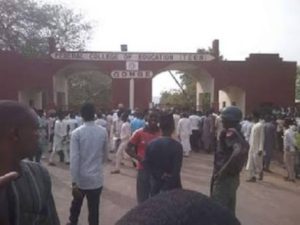
By Our Reporter National Association of Nigerian Students, (NANS) has issued a 14-day ultimatum to Federal College of Education (Technical) Gombe in northeast part of the country, to reinstate sacked students, and review sanctions meted students who conducted a peaceful protest last year – failure to do that NANS said it will hold a mass rally leading to the closure of the school.
In June last year, students of the Institution staged a 2-day protest on campus over alleged lack of water and other basic amenities on campus.
In sanctioning the student actions, the school authorities expelled 29 students, withdrew 34 students admissions, and asked 11 other students to repeat the academic year.
The students were also asked to pay a compulsory fine of 5,000 naira, with an undertaken carrying the endorsement of their District Head that they will not involve in such act again.
The punishment had angered the students body, leading to the setting-up of an 8-man committee to engage relevant bodies to ensure the reinstatement of the students without any condition.
A statement by Mr, Akolo Raymond Eggon, spokesman of NANS President, “The rejection of the resolution was due to the inability of the investigatory committee set-up by the college’s management to involve NANS in the decision making as the mother union of all Nigerian students in Nigeria and Diaspora, denying the affected students their fundamental human right of fair trials.”
Below is the Press Release
NANS Rejects FCE Gombe Resolution On Expulsion, Withdrawal & Repeat of Students *** The National Association of Nigerian Students, (NANS) has rejected the resolution of the Federal College of Education Gombe on the expulsion of 29 students, withdrawal of 34 students admission and the 11 students to repeat the academic year as a result of a protest held last year.
Recall, in June 2016 the students of the aforementioned citadel of learning staged a 2-day peaceful protest over lack of water and other basic amenities within the school campus.
The rejection of the resolution was due to the inability of the investigatory committee set-up by the college’s management to involve NANS in the decision making as the mother union of all Nigerian students in Nigeria and Diaspora, denying the affected students their fundamental human right of fair trials.
Secondly, NANS rejected the resolution on the basic facts that the students were asked to pay a compulsory fine of 5,000 naira, with an undertaken and the endorsement of their district head that they will not involve themselves in such act again, also for paying accommodation charges despite the fact that the students has registered for the new academic session by paying all the necessary fees, the college went ahead to expel them.
With this action of the management, they are directly causing more problem and hampering the efforts of the Buhari-led FG to restore lasting peace in the region, at the time where insurgency penetrated the region due to high level of illiteracy, youths end up been expelled from the educational system, as we all believed that without education, there is no peace and in the absence of peace nothing can be achieved.
Regrettably, the expulsion of the students also came at a time where many Nigerian students are struggling to gain admissions into various tertiary institutions within and outside the country. We cannot fold our arms to this gross injustice and senselessness!
In view of this, NANS under the President Aruna Kadiri’s watch has set-up a committee to ensure that the resolution which in all facets was an act of “political victimisation” is completely reversed within 14-days.
The 8-man committee includes:
1. Comrade Shettima Umar, Vice President, National Affairs – Chairman/Leader of the delegation
2. Comrade Zakari Hashim, S.U.G President, Federal Polytechnic Bauchi -Member
3. Comrade Garkuwa Iliya Dogon Yaro, S.U.G Secretary General, Gombe State University -Member
5. Comrade Zyak Patience Yakubu, S.U.G Vice President, Federal College of Education Panshin, Plateau -Member
6. Comrade Abu Hanifa, S.U.G President, University of Maiduguri -Member
7. Comrade Muhyiddin A. Zubairu, S.U.G President, Aminu Saleh College of Education, Azare -Member.
8. Comrade Zaidu Ibrahim, Audu Bako College of Agriculture Dambatta, Kano – Member
The committee led by the Vice President National Affairs shall work with management and relevant agencies to ensure that the rights and liberties of the affected students are full restored without conditions.
However, we want to state in clear terms that failure to meet our demand(s) within the 14-days ultimatum, it will be viewed by the Kadiri-led administration as a direct confrontation of NANS and a deliberate attempt to test our might, which President Kadiri will personally lead a protest for the complete shutdown of the school.
Lastly, I wish to reiterate President Kadiri’s administration commitment to the reinstatement of all politically victimized Nigerian students.
Wherever they exist, we shall deploy all at our disposal in ensuring their reinstatement. Restoring their rights and liberties is one of our main policy thrust.
An injury to one, is an injury to all. Viva Aluta!
Akolo Raymond Eggon SSA on Media To The NANS President Tuesday January 31, 2017
SA drug addict transfusing blood for highness.
Pic: Citizen News
By Winifred Bulus
SA drug addict transfusing blood for highness. Pic: Citizen News
South Africa has reported a new dimension in consumption of nyaope (a street drug) which now involves transfusion of blood from an already high addict to a fellow addict in situation where the addict receiving the blood cannot afford the drug.
Whoonga (also known as nyaope or wunga) is a concoction of various substances: rat poison, soap powder and the main ingredient – Anti-retrovirals (ARVs) or Aids medication. It is distributed as a fine white powder which is added to marijuana and/or tobacco. This mixture is smoked – the result is said to be one of the most lethal drugs in the world.
A South Africa media, THE CITIZEN NEWS reports that street addicts of nyaope have moved from smoking to injecting the substance after mixing it with little water, on grounds that smoking it has little effect. The have also introduced a new way of sharing the “highness” with fellow addicts by taking blood from persons that have injected to substance and injecting themselves in order to get high. This is done when the sober addict cannot afford nyaope.
Chair of South Africa Medical Association, Mzukisi Grootboom had expressed sadness due to intense drug use in the country and its effect on the users and even called on the government to take some steps in rescuing the addicts.
“South Africa is battling not only the scourge of certain uniquely South African illicit ‘street drugs’, such as nyaope, but also the increasing abuse of legal medications, such as ARVs, painkillers and cough syrup, leading to what has been called ‘silent addictions’.”
“The abuse of all forms of drugs is a huge problem that needs urgent attention, and we applaud the SA National Council for Alcoholism and Drug Dependence’s efforts to deal with it,” the paper quoted him.
In 2013 Harmony Addiction Clinic in South Africa reported that “the Central Drug Authority’s (CDA) Dr. David Bayever reckons that 15% of South Africans abuse drugs.” The Clinic also recorded that, one out of two school children have experimented the drugs.

 Balaraba stated this recently in Kaduna, North-west Nigeria, during a roundtable dialogue on good governance organized by Concern Civil Society and the Kaduna State Government.