Students of University of Abuja in Nigeria, Monday blocked the express way passing in front of their institution, hindering vehicular movement into Nigeria’s capital city. The incidence followed the accidental killing of a year two student, by a motorist on Sunday night.
The students demanded that Nigerian government provide a better medical facility in the school and improve on the security situation around the main campus.
A final year Sociology Student of the University, Comrade Egberi Papa one of Bayelsa told AFRICA PRIME NEWS that, “The 200 level student was on her way to school from home at about 8:00pm and was approached by a group of bandits. They were coming to attack her while she was on the pedestrian crossing close to our school gate. The girl ran down from the pedestrian crossing and was hit by an oncoming vehicle.”
The driver took her to the school clinic, where she died as a result of poor emergency facilities.
Another student told journalists that, “They (robbers) have been robbing students in front of the school for some time now. She was knocked down by a car while trying to escape armed robbers.”
Late last night, President of the Student Union Government, Okoye Abdulazeez, in a statement says the chief security officer of the institution “must go” since he could no longer protect the students.
His statement added, “Our university clinic must be adequately staffed and equipped….We thereby jingle the solidarity bell to all the students. Come 6:00 am Monday, we are converging at the front of main campus of University of Abuja. And our prayers to the vice-chancellor must be honoured.”
Other Issues On Ground Before The Protest
The protest was to declare the University’s Chief Security Officer unfit to secure the school.
“The Chief Security Officer is unfit and has not been fair to students. We want him to be replaced since he cannot provide security for us. The chief Security is not being fair to students and has some irregularities,” says Abubakar, a Law student.
Investigation by AFRICA PRIME NEWS reveals that the Chief Security Officer had disqualified candidates who were contesting for the post of President of the Student Union Government, Vice President and Secretary-General on claims that they were cultists.
The students were likely to have won the elections. “He decided to replace them with students that would dance to the tune of the school management instead of those that would fight for student right,” said a student who wants to remain anonymous.
The students are protesting because of what they termed ‘injustice’ going on in the university and the death of a student as a result of the Chief Security’s failure for security in the school.
“The scene of the incident where the robbers wanted the attack the girl is just outside our school. We want better security here on the Main campus and at the Mini campus,” said the student.
Three UN Agencies on Monday has warned that war and a collapsing economy have left some 100,000 people in starvation in parts of South Sudan, with an additional one million people on the brink of famine.
In a jointed statement, the United Nations Food and Agriculture Organization (FAO), the United Nations Children’s Fund (UNICEF) and the World Food Program (WFP) warned that urgent action is needed to prevent more people from dying of hunger.
According to the statement, “If sustained and adequate assistance is delivered urgently, the hunger situation can be improved in the coming months and further suffering mitigated.”
The total number of food insecure people is expected to rise to 5.5 million at the height of the lean season in July if nothing is done to curb the severity of the food crisis.
The famine is the first to be declared since 2011 in Somalia, where more than a quarter of a million people are estimated to have died between October 2010 and April 2012, Guardian reported.
An Integrated Food Security Phase Classification (IPC) update released on Monday by the government, the three agencies and other humanitarian partners, revealed that about 4.9 million people – over 40% of South Sudan’s population, are in need of urgent food, agriculture and nutrition assistance.
Famine, the Agencies said, is currently affecting parts of Unity State in the northern-central part of the country. A formal famine declaration means people have already started dying of hunger. The situation is the worst hunger catastrophe since fighting erupted over three years ago.
The UN agencies however noted that, further spread of famine can be prevented if humanitarian assistance is scaled up and reaches the most vulnerable.
FAO representative in South Sudan, Serge Tissot, said: “Famine has become a tragic reality in parts of South Sudan and our worst fears have been realized. Many families have exhausted every means they have to survive.
“The people are predominantly farmers and war has disrupted agriculture. They’ve lost their livestock, even their farming tools. For months there has been a total reliance on whatever plants they can find and fish they can catch.”
Malnutrition is a major public health emergency, exacerbated by the widespread fighting, displacement, poor access to health services and low coverage of sanitation facilities.
The IPC report estimates that 14 of the 23 assessed counties have global acute malnutrition at or above the emergency threshold of 15%, with some areas as high as 42%.
According to UNICEF Representative in South Sudan, Jeremy Hopkins, “More than one million children are currently estimated to be acutely malnourished across South Sudan; over a quarter of a million children are already severely malnourished. If we do not reach these children with urgent aid many of them will die.”
WFP country director Joyce Luma said: “This famine is man-made. WFP and the entire humanitarian community have been trying with all our might to avoid this catastrophe, mounting a humanitarian response of a scale that quite frankly would have seemed impossible three years ago.
“But we have also warned that there is only so much that humanitarian assistance can achieve in the absence of meaningful peace and security, both for relief workers and the crisis-affected people they serve.”
U.N agencies and other partners have conducted massive relief operations since the conflict began, and intensified those efforts throughout 2016 to mitigate the worst effects of the humanitarian crisis. In Northern Bahr El Ghazal state, among others, the IPC assessment team found that humanitarian relief had lessened the risk of famine there.
In 2016, WFP said it reached a record 4 million people in war-ravaged South Sudan with food assistance, including cash assistance amounting to US$13.8 million, and more than 265,000 metric tons of food and nutrition supplies. This is reportedly the highest largest number of people assisted by WFP in South Sudan since independence from neighboring Sudan in July 2011.
Nagarta Radio, a private media outfit in Northern Nigeria has solicited for more training opportunities for its staff especially Journalists from Africa Media Development Foundation (AMDF) so as to keep them abreast with current ways of reporting.
The Managing Director of the Media outfit, Lawal Saulawa, solicited for the opportunity when a delegation from AMDF paid him an Advocacy visit in his office on Monday, in Kaduna, North-west Nigeria.
According to him, most of his young Journalists learn in an informal way through the guidance of the elderly who had practice for a long time, but acquiring a formal training especially with the emergence of new media would make them perform better at work; adding that, his organization would continue to interact with AMDF so as to benefit from each other’s experience.
While thanking AMDF for its programs and creating a platform for training Journalists, he appealed for the inclusion of his medium/staff in future training organized by them.
Earlier in her remarks, leader of the delegation from AMDF, Sekyen Dadik, said one of their organizational goal is promoting professional excellence in journalism through capacity building of Journalists not only in Kaduna but Nigeria and Africa, so that Journalists can report from an inform angle.
She said, “AMDF has trained over 100 Kaduna based Journalists on fundamentals of journalism, media ethics and mentoring, online journalism as well as specialized reporting among others.”
Dadik also hinted that her organization promotes developmental, investigative and data driven journalism, explaining that, developmental reporting attracts intervention and enhances development at community level where it allows people at the grassroots speak on their plights. She further noted that, reporting developmental issues attracts intervention to communities and gives recognition and awards for media organizations and Journalists.
Africa Media Development Foundation (AMDF) is a nonprofit, nonpolitical organization that supports journalists, media development and promotes freedom of the press. It activities includes; Training, advocacy, research, coordination and information sharing.
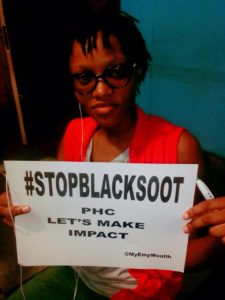
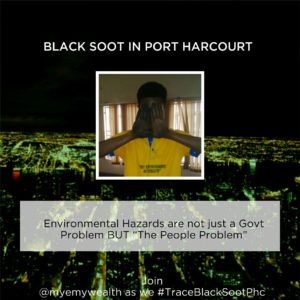
For the past few months, Rivers State has been experiencing Black soot – an environmental and health hazard. In this interview with Alli Abiola, Port Harcourt based Environmental advocate and CEO of Bliss Octanoprise International, BOI, Wonne Afonelly, weighs in on the deadly menace and advise for the Government and the citizens. Excerpts.
Soot, as we know is a major Environmental Hazard in the Society. Do you think Charcoal usage in the society adds to the hazards Port Harcourt is currently facing?
First of all, I’d love to use this medium to correct something I heard severally on some media stations in Port Harcourt, OAPs trying to correct participants who express their views on black soot, saying ” there’s no such thing as black soot, soot is black”. I think ‘being a professional OAP doesn’t make one an Environmental Professional’. NOT ALL SOOT ARE BLACK
Soot is a term that describes particulate matter 2.5picometer:
1. Red soot is observed in exhaust tips of vehicles that use octane boosters which contain manganese or iron compounds
2. Brown soot is from burning of organic matter or particular wood species like the Pine or Beech wood. Brown soot during winter causes serious environmental hazards around the Indian ocean and South Asia
3. Black soot is caused by incomplete combustion of hydrocarbons especially black carbon compounds
The soot prevalent in Port Harcourt is the “black soot”. To the question – I think charcoal usage contributes some soot but the quantity is almost negligible in Port Harcourt since Charcoal usage is more in the rural communities, but they have experienced little or no black soot since the past one month I’ve lived in one of the rural communities.
Few days ago, the newly inaugurated Environmental Task Force Shutdown a suspected company, is the Government on track?
They have since the task force was set up shut down 3 companies. I could say the government is on track to have plunged into action at all, the fears are that the root causes of the black soot may not be traced if actions are taken in a hurry. One wonders what methods were utilized by government before concluding and shutting down these companies. What regulatory limits are set according to Environmental Impact Assessment (e.g. EPA proposes to change set tolerance limit by Clean Air Act at 15 micrograms per cubic meter of air to 12 & 13micrograms by year 2020); what are the limits of soot dischargeable into the environment, how far were these limits exceeded? If these facts are known then it makes it better to checkmate other companies in the future.
What do you advise to be done by the people or organization while the Government still uncovers solution to the Hazard?
Like I’d always reiterate that “Environmental Hazards are not just a Government problem but The People problem”; I’d advise everyone to support Government in every ways possible. Look out for different types and colours of smoke and report to appropriate quarters.
Here’s a guide:
– On cold days the smoke is white; due to moisture content and therefore looks like steam but in hotter climates, the smoke is black showing the carbon and ash clearly;
– Light grey smoke is observed in fire from things that easily burn like paper, cardboard
– Brown smoke is observed in fire from Wood, a sign that it’s starting to burn
– Darker Grey smoke shows content is seriously burning
– Black smoke is observed in noxious items when burnt like plastics, synthetics, paints, fuel oils etc.
– These differences in colours of smoke is caused by a combination of what is burned and how completely it is being burnt.
– Completeness of Combustion is controlled primarily by Oxygen supply.
QUESTION
What kind/colour of soot do you get when burning grass or wood: white, brown, grey or black? Clue: Not Every Soot Is Black!
In what way do you think the government can solve Environmental Hazards?
The Government of Rivers state and any other state can tackle Environmental hazards by – First setting tolerance limits according to UNEP and WHO standards, if possible edicts that suit the state based on level of industrialization, secondly – setting up a 24hour active Regulatory and Monitoring team, (not task force only when a hazard is posing serious threats), thirdly -implementing these laws by ensuring defaulters ( irrespective of political affiliations) pay full penalties all the time, even before shutting down, fourthly – sensitize it’s citizens regularly about environmental laws, collaborate with other stakeholders and teach them their roles especially during a hazard as the black soot.
What do you think are the causes of Environmental Hazards?
Some causes of Environmental hazards are (but not limited to) – degraded biodiversity, deforestation, overpopulation, improper waste disposal, amongst others etc.
As an environmental advocate, to what extent will the ‘Soot’ have on the health and well-being of the citizens in the society?
To a large extent, (the black soot if all sources are not traced and stopped); the damage to the well-being and health of Port Harcourt residents and neighbouring states would be irreparable as it would not only affect those who experience it now but may also affect unborn generations especially with soots that contain PAH (polycyclic aromatic hydrocarbons) which are highly carcinogenic. Research in America as at 2013 showed that many premature deaths are directly related to soot in the environment – about 20,000 premature deaths annually. More so, a 2012 study has also shown that fine particles 2.5PM are linked to more low weight babies in 22 developing countries including China, India, Nigeria, Nepal and Peru. What are your advices to the Government on Waste eradication in the community?
The best solution to waste eradication in any system is to make everyone responsible and pay for waste generated, that way, most persons would be careful about how much waste they generate daily. They would get to understand the 4Rs of Waste Management, (and they include): Reuse, Reduce, Recycle and Recover energy.
Every state should have at least 2 recycling plants and set up waste management agencies in each Local Government Area.
BOI has over the last two years advocated clean and secured environment. What are the challenges of BOI as an Environmental advocate?
A major challenge of BOI in Environmental advocacy is the unfriendly approach/response of major stakeholders of the environment to support and partner with the program if possible. We have had bank managers tell us that the areas we want to clean up were not defaced by them. We have also had Broadcast Media stations tell us bluntly, “nobody cares about what happens in or to the environment, we can’t give you airtime, nobody would listen, would be a waste”.
What else has BOI been up to recently?
BOI through its Environment Advocacy Project is now partnering with Educational Institutions (Primary and Secondary schools) in raising volunteers and advocates for the environment. We have also taken the campaign to Grassroots communities; certain projects in the pipeline would be unveiled before the end of the first half of 2017. Thank you!
Inspector General of Nigerian Police, Ibrahim Idris has postponed the date of the National Security Summit in Abuja which was to take place on 22nd and 23rd of February, till further notice.
The decision is to give more time to stakeholders to prepare for the summit and take part actively.
A statement by police spokesperson in Abuja, Jimoh Moshood, says the diplomatic conference will focus on Kidnapping, Farmers-Pastoralists Clashes, Violent Crimes and Other Forms of Criminality in Nigeria.
The statement says “The Inspector General of Police, recognizes the concerns which all the stakeholders have registered towards the success of the summit and hereby expresses sincere apology to the Chairman of the summit, the Thirty Six (36) State Governors and FCT Minister, Guest of Honour, Service Chiefs, Government Functionaries, Traditional Rulers, Religious Leaders, Members of the Organized Private Sector, Captains of Industry, Heads of other sister Security and Safety Agencies, Leaders of Herdsmen and Farmers Associations, Resource persons and Intellectuals, Women and Youth Groups, Opinion Leaders, Important Stakeholders and other invited guests for the inconveniences the change of date may cause them.”
Pretoria (South Africa) – “If I go back home it won’t be good for the South Africans,” a Nigerian man said after a mob ransacked his home and stole his belongings in Pretoria West on Saturday afternoon.
News24 reporter Mpho Raborife watched as a group of at least 50 people forced their way into a block of flats along WF Nkomo Street, stealing residents’ belongings and demanding that Nigerians leave the country.
The man, who didn’t give his name, said the mob forced their way into his house and stole his TV, laptop and cell phone.
“If they want us to go back home they must tell the embassy to stop giving out visas. There are a lot of South Africans with businesses in Nigeria. If I go back home it won’t be good for the South Africans living in Nigeria. They say we are selling drugs but they didn’t find any. Why did they steal our things if they are looking for drugs?”
A woman whose house was also vandalised cried hysterically while police looked on.
Some among the angry mob were drinking beer during the raid. At least five police officials looked on as the mob forced its way into the block of flats.
Some South Africans as well as Congolese nationals who live in the block told News24 their houses had also been ransacked. They said the mob, which claimed to be looking for drugs, found nothing but instead stole their belongings.
Shops in and around the area have closed and people are leaving the area in search of safety.
Lieutenant Colonel Lungelo Dlamini, said he would investigate why police stood looking on as resident’s homes were vandalised.
“I am not sure about that but I will look into it. We have enough officials on the ground in the area and they are supported by a police chopper.”
Dear Honourable Minister Dr Matthew Opoku Prempeh:
Re: The Accreditation Challenges in Transnational Educational Ecology: The Ghanaian Experience
We wish to congratulate you on your appointment as the Minister of Education for the Republic of Ghana. We hope your appointment infuses new perspectives and strategies into the administration of education in Ghana, especially in higher education.
As you may be aware of, the above reference was a report submitted to the Ghana Embassy in Washington, D.C., on Wednesday, July 27, 2016, for onward transmission to the out gone Minister of Education, Prof Jane Naana Opoku-Agyemang. The report and its accompaniments were duly received and acknowledge by the Minister.
The report generated a wide-ranging public debate with regard to institutional accreditation, conferment and award of higher education degrees, particularly doctoral degrees, and the credibility of the research endeavor as part of the tenure requirement for lecturers and professors in Ghanaian universities.
As part of that ongoing debate, we took the time to expatiate on the academic publishing process and also exposed what has become known as predatory journals in the academy. We provided examples of what other countries are doing to curtail the pervasive intrusion of predatory journals in knowledge production and consumption.
Of particular interest is the steps taken by the South African Government, through its Department of Higher Education and Training, to give approval or accreditation to journals they consider worthy to be considered as producing credible, valid, and reliable knowledge (Please follow the link here to approved journals http://www0.sun.ac.za/research/assets/files/DHET%20Local%20journals%202016(1).pdf).
The said report placed the searchlight squarely on some unaccredited institutions, including one by name the Swiss Management Center (SMC), which is in the business of awarding questionable double doctoral academic degrees to Ghanaians who, then, obtain academic positions with these questionable qualifications in Ghanaian universities to the detriment of students.
Two important points of interest here. First, the so-called SMC had threatened legal action against us for exposing its questionable practices but has failed to do so since August 1, 2016, when the report went public. Second, the SMC has failed to meet the accreditation requirements of its home government through the Swiss Accreditation Council (SAC) until now.
The debate has also exposed many questionable academic practices at the University of Professional Studies, Accra (UPSA). First is the curious question of how professors at UPSA are promoted from one rank to another. The peculiar case of (Prof.) Abednego Feehi Okoe Amartey has been extensively discussed and written about (Please follow the link to this article http://www.ghanaweb.com/GhanaHomePage/NewsArchive/On-the-Appointment-of-Prof-Amartey-to-the-position-of-Vice-Chancellor-of-UPSA-467720).
In spite of the overwhelming evidence produced to help the UPSA Governing Council and its outgone Vice Chancellor Joshua Alabi, the Ghana National Accreditation Board (NAB), and the Minister of Education, to make decisions in the interest of Ghanaian students and the nation, we are very much aware of the political undertones that made it impossible for the aforementioned individuals and institutions to act decisively to cleanup UPSA and other institutions that are harboring some of these individuals.
Instead of cooperation from these individuals and institutions, we were met with attempts at each stage of the debate to malign and undercut our credibility. An example was during the 2016 matriculation ceremony of UPSA. At that ceremony, Joshua Alabi lampooned issues in question, especially the question regarding the credibility of research publications engaged in by his faculty.
According to Alabi, in apparent reference to us, “so we hear people talk about UPSA lecturers and research. Research, yes! There is an element of research in what we do, but that is not what we are into, ours is a purely technical university” (Please follow the link http://therepublicnewsonline.com/2016/10/24/upsa-vice-chancellor-replies-critics/).
The diversionary strategy should be noted here. Ours was not a question of whether UPSA is mainly a research institution, technical institution, or a teaching university. Our concern was about the credibility of journals in which UPSA professors publish their work.
We provided substantial evidence to educate both the general public, the UPSA and its Governing Council, and the Ministry of Education on the modus operandi of predatory journals and provided a specific case in UPSA, where 70 percent of the total publication of a fulltime professor was churned out in predatory journals manned by uneducated crooks in corner shops in India and other parts of the world (Please follow the link to the article https://www.ghanabusinessnews.com/2016/10/10/162700/).
Instead of responding to the substantive issue, Alabi diverted the attention of his unsuspecting audience as though the question was about whether the UPSA was a teaching or research institution. Alabi forgets that the claim that the UPSA is not a research institution, only triggers the question of whether his faculty receives research allowances from the Ghana Government. If UPSA faculty does, then what do they use such allowances for? To pay some crooks in some corner shops in India to churn out chaff?
Other examples are: NAB’s attack on us in the Daily Graphic in October 2016. Also, a response from a so-called legal officer of NAB to a lead we provided to NAB to investigate Nana (Dr.) Appiagyei Dankawoso who claims to be a doctor and is on boards of some public institutions.
In that response, the so-called legal officer pointed out that “the board does not take directives from individuals but its mother ministry and persons or bodies with appropriate authority. In addition, the Board would have appreciated it, if you had attached your findings” (Please follow the link to the lead provided to the NAB http://www.juabenruralbank.com/board/64-nana-dr-appiagyei-dankawoso-i).
With regard to the NAB, the question is whether its so-called legal officer appreciates the role of whistleblowers in the political discourse of democratic nations, including Ghana.
Further, during a recent induction service organized for Amartey at UPSA, the claim to double doctoral degrees has been altered. In a news report announcing the appointment of Abednego Feehi Okoe Amartey by the Daily Graphic on August 30, 2016, the Daily Graphic in paragraph six of that reportage announced Amartey “holds a Doctor of Philosophy (PhD) degree in Business Administration from Universidad Central de Nicaragua and a Doctor of Business Administration (DBA) from the Swiss Management Center” (Please follow the link here http://www.graphic.com.gh/news/general-news/prof-okoe-amartey-appointed-upsa-v-c.html).
Contrary to the claim to the double doctoral degree, during his questionable induction, the claim was dropped. In this latest report, especially, after realizing the ridiculous claims have only created a laughing stock out of the individuals in question, the message is now he “holds a PhD in Business Administration from the SMC University of Switzerland” (Please follow the link here http://www.ghananewsagency.org/education/professor-amartey-inducted-as-second-vice-chancellor-of-upsa-111778).
One important aspect of policy formulation and implementation is the consistency of policy. If the policy is that one can acquire academic awards from unaccredited institutions, go on to churn out publications in journals operated by crooks in corner shops in India and then progress rapidly to become a professor and a Vice Chancellor, we think the policy must be made clear to all Ghanaians, so that those who choose the academic path can find these easy ways to move to the top as quickly as possible.
We are also aware that Ghanaian universities, of which UPSA is a part, as a result of its accreditation status, require doctoral degrees from their professors. While there are many Ghanaians with a PhD who want to work with UPSA, Alabi retains unqualified individuals including those with questionable qualifications in UPSA and ran the institution as if it was his bona fide property.
We believe that the high offices of the Vice Chancellor is an office that carries a lot of weight within the academy and beyond. For that reason, both the office and its occupier must radiate with the level of credibility that such an office requires within the academy and beyond. We are of the view that academic practices under Alabi had undermined the credibility of the institution and its high office of Vice Chancellor. To this end, we are urging you, the Minister of Education, to take immediate steps to address the UPSA issue in particular and the issues we raised in our report generally.
We would also appeal to your office to review and implement the recommendations contained in the report. We will make ourselves, our expertise and services available to you and your ministry as needed. We believe strongly that you have the capacity to reform higher education in Ghana by providing structures for the evaluation of awards and publications in higher education in Ghana. It is an urgent need that cannot be delayed any further.
Thanks for your attention in anticipation of your consideration and action.
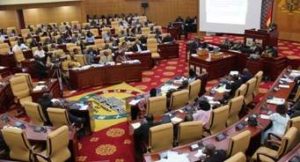
Ghanaian Parliament has granted approval to the nomination of two persons to serve on the Council of State.
The two nominated persons are a former IGP, Nana Owusu Nsiah and Former Chief of Defence Staff, General JB Danquah.
Ghana’s Constitution mandates the President to forward names of nominees to Parliament in the appointment of a former IGP, a former Chief of Defense Staff and a former Chief Justice into the Council.
Speaker of Parliament, Prof Mike Oquaye, said, “After consultations, I was informed that the House has no objection in line with the request made to us to adjust the consultative position, and for that matter, we shall communicate with the President accordingly.”
Elections for the various regional representatives of the Council of State also took place on Friday, in all regional capitals across the country, where 113 candidates contested in the election. The elected regional representatives are:
Eunice Jacqueline Buah, Western Region
Kwadwo Agyenim Boateng, Brong Ahafo Region
Yakubu S. Nantogmah, Northern Region
Agona Akrofosohene Nana Owusu Achiaw, Ashanti Region

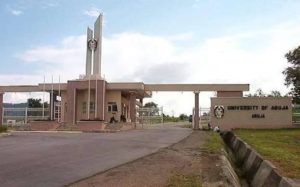 Students of University of Abuja in Nigeria, Monday blocked the express way passing in front of their institution, hindering vehicular movement into Nigeria’s capital city. The incidence followed the accidental killing of a year two student, by a motorist on Sunday night.