Home Blog Page 1598

Nigeria: Over 65% Of Pupils In Kaduna School Quit schooling After Government Suspended Free Feeding Program

0
Rigasa school
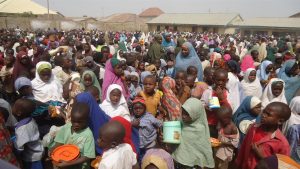
Rigasa primary school pupils in Kaduna state, collecting food under govt's school feeding programme

By Longtong Ibrahim

Pupils going out of the school compound after receiving their ration of food at UBE Primary School, Layin Biliya last year

“Where were these thousands of children that came up all of a sudden to enroll into school because of free feeding? I’m just imagining where these children will be in the next 10 to 15 years if they are not educated. They will become a big problem to our country and even be worst than Boko Haram.”

The above statement was a point of concern for the Chairman, School Based Management Committee (SMBC), of UBE Primary School Layin Biliya, Rigasa, (a community school in North-western Nigeria), Idris M. Sheriff, where over 65 percent of pupils stopped schooling after the Kaduna State government suspended the free feeding program it introduced to public schools in 2016.

In February 2017, school attendance in UBE Primary School, Layin Biliya has reduced to about 5,000 from 19,954 pupils who enrolled in February 2016 when the program began.

It would be recalled that the Kaduna state Governor, Nasir El-Rufai during the flag-off ceremony of the program on 17th January, 2016, said, the feeding intervention was necessary to boost nutrition, health of the children, and also encourage school attendance; noting that, the free feeding program will expand access to education.
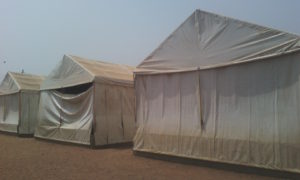
Tents provided by government as a result of an increase in school enrollment in the school

This development attracted lots of pupils and students’ enrolment, but the case is not the same now as the suspension of the program has led to a large drop in school attendance; one of such schools is UBE Primary School Layin Biliya.

Speaking with Africa Prime News, the SBMC Chairman said, before the commencement of the program, the school had a little above 2000 pupils, and it later rose to almost 20,000 when the program began but currently, it is declining because government suspended it.

He said, “Currently the pupils are not more than five thousand in both morning and afternoon session.”

“We believed it was the school feeding that attracted them if not why then did they stop coming because school feeding has stopped?” he questioned.

He however noted that after the school pled for school expansion in order to accommodate the increasing number of pupils, government heard and bought a house in the neighborhood, mounted a temporal tent within the school compound, but they have not started using them because number of pupils have drastically reduced.

While commending the Government for initiating the program, Sheriff tasked El-Rufai to resume the school feeding program so as to make the children return to school and be educated for the advancement of Nigeria.

“Education is important and any program that would attract students’ enrollment should be encouraged. These children are vulnerable to manipulations but when they are educated they become wise and difficult to be manipulated.

“Because of this, El-Rufai should bring back this program so that the lives of this children and the future of our country could be secure,” he emphasized.
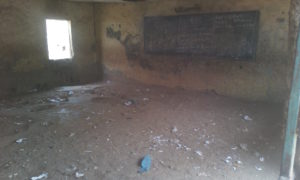
A typical classroom in the school

Sherif observed that the school is lacking facilities that will ensure effective learning.

“We have made little efforts and cemented the floor of some classrooms instead of sitting on the dust; some of the pupils stand while some sit on window walls during classes and that hinders effective learning.”

Corroborating what the SBMC Chairman said, a volunteer assigned to the school by the Parent Teacher’s Association, Mohammed Yunus, decried the state of facilities in the school. He said some of their challenges include; lack of toilets, chairs, classroom, windows, doors, and security, noting that six irons used in mounting the tents have been stolen because the school lacks a watchman

The state government began the school feeding program in January 2016 at the cost of N1.1 billion monthly.

The Education Commissioner in the state, Andrew Nok, said government has spent over eight billion naira within the first eight months of the program in 2016, explaining that, government is putting all the needed logistics to resume the feeding program.

According to him, “Under the arrangement, the Federal government will feed students from primary one to three, while the state government will feed students from primary four to six.

It was also agreed that the Federal Government would refund to the state 60 percent of the amount spent on feeding primary one to three pupils. However the program was suspended after eight months following the failure of the Federal Government to reimburse the state as agreed.

Nigerian Advocates Peace Education As Subject In Schools

0
Map of Nigeria
Map of Nigeria

By Winifred Bulus

Ramatu Tijani, a peace activist in Nigeria has urged Nigerian Government to introduce Peace Education in the country’s primary, secondary and tertiary institutions for the sake of promoting peaceful co-existence amongst citizens.

The peace activist in an interview with some Journalists in Kaduna, northwest Nigeria, stated the need for building young minds towards peace, which has become a vital issue in the country.

“Peace education refers to the process of acquiring values, Knowledge, and develop attitude, skills and behavior to live in harmony with one self, others and natural environment.

“The overall goal of the peace education is by no doubt to promote peaceful co-existence among learners, better understanding hence contributing to peace and national cohesion in the country and this is mainly achieved through equipping members of the school community with sound knowledge, skills, and attitudes for managing conflict, riot, crisis and demonstration without resulting to violence or any cause of alarm,” she said.

Ramatu revealed seven major ways of gearing peace education including; schools debate, human rights awareness, peace building, advocacy, leadership and learning to tolerate and accommodate each other.

She also added that peace education would go a long way in identifying early signs of conflict in young people and handling them the right way before getting out of hand and also enable young people communicate their feelings instead of bottling up anger that might be expressed through conflict.

“Peace Education helps children and young people discover the wonder and beauty within themselves ,nurturing inner peace, and it also supports the development of the attitudes, values and skills needed to respond to conflict creatively- encouraging inter-personal peace and unity among students of different faith base.

“It also encourages children to examine the root causes of violence and war and explore the possibilities for building peace at community,national and international levels through collective responsibility.” She says.

She appealed to the ministry of education and other stakeholders in the sector to invest in the future of the country’s education.

Infant Mortality: Nigeria Has One of The Highest Rate In Africa – UNICEF

0

Nigeria is one of the countries in Africa with highest number of newborn deaths, official said.

This was made known by the United Nations International Children’s Fund (UNICEF) in its presentation during a two day workshop on Media Engagement On Dissemination of “Facts For Life” messages, on Wednesday.

In her presentation, UNICEF resource person, Mrs. Tamani Yusuf said, “Nigeria has one of the highest numbers of newborn deaths in Africa, with a neonatal mortality rate of 37 per 1, 000 live births and approximately 250, 000 deaths occurring every year.”

According to her, one in every 15 babies born in Nigeria will die before their first birthday and about one in eight before their fifth birthday”.

She explained that, if Nigeria is desirous of meeting the 2030 Sustainable Development Goals (SDGs), then more attention should be given to newborns; as over 80 percent of the under five deaths are from preventable causes. She further stressed that, expectant and nursing mothers as well as caregivers should be encouraged to embrace correct practices that could guarantee sound health.

Some of the factors responsible for the deterioration of child health as quoted from the “Fact for Life” messages, Tamani said they include; “Malnutrition, a high incidence of diseases, inappropriate household caring practices, poor environmental/living conditions and the HIV/AIDS pandemic.”

Amongst the right practices to be promoted to guarantee health for newborn babies, are exclusive breastfeeding, provision of quality health care and good nutrition, she added.

Nigerian Agencies Must Work Together To Promote Non-Oil Export – Femi Boyede

0

By Adebote ‘Seyifunmi

Abuja (Nigeria) — Trade support institutions in Nigeria have been asked to synergize and break bottlenecks that hinders the country’s non-oil export sector from breaking forth.

Managing Director of Koinonia Ventures Limited, Olufemi Boyede, made the call in Abuja, at a 2-day Export Readiness Workshop – KoinEx, with the theme “Exporting your way out of Recession”.

Identifying some of the factors that thwarted non-oil export in Nigeria, Boyede urged exporters to pay detailed attention to quality of products meant for export, especially in the area of packaging, among other significant areas.

He praised the effort of the present administration towards revamping SMEs activities across the nation and called for speedy actions towards the actualization of the Export Expansion Grant (EEG) and other incentives that exporters require.

Another facilitator at the workshop, Professor Ken Ife of Lead Consultant, revealed how profitable export business is and the potentials it holds to redeem Nigeria of her many economic woes.

Prof Ken, citing examples of the Asian tigers, called on Nigerian Government to task relevant agencies to set targets for the export sector that must be achieved within specified time, thereby keeping exporters and relevant agencies on their toes.

The workshop proposed that “a single window should be created, thereby making it possible for ready exporters to walk into one of the relevant agencies, for example, the Nigeria Export Promotion Council and fulfil all the requirements needed by sister agencies rather than hopping from one agency to another, repeating similar registration processes over a long period of time”.

Some of the Trade Support Institution represented at the Workshop include, Nigeria Export Promotion Council (NEPC), Nigeria Export-Import Bank (NEXIM), Small and Medium Enterprise Development Agency of Nigeria (SMEDAN), Corporate Affairs Commission (CAC), National Agency for Food and Drugs Administration and Control (NAFDAC), Standard Organization of Nigeria (SON).

Logistics giants in the country including, Fedex/Redstar and KSP Logistics were also on ground to guide exporters on the process of transporting exportable items without hindrances.

An official of Koinonia Ventures Ltd, organisers of the workshop, Mayokun Akpoterabor, said the next Export Readiness Workshop will hold in Lagos in April.

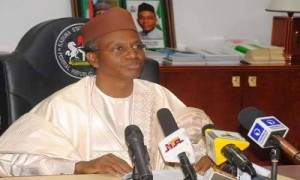
El-Rufai Reshuffles Cabinet, Appoints New Permanent Secretaries, Retires Some

0
Nasir-El-Rufai
Gov. Nasir-El-Rufai of Kaduna State, Nigeria

The Kaduna State government in North-western Nigeria has reshuffled its cabinets. Some of its commissioners were swapped, some new ones nominated, while new permanent secretaries were appointed. Some of the senior personnel were also retired.

The state governor, Nasir El-Rufai, announced this during a meeting of the state executive council on Tuesday in Kaduna.

The commissioners swapping portfolios are as follows: Amina Dyeris-Sijuwade moves from the Ministry of Justice to the Ministry of Environment and Natural Resources; Dr. Maigari Daniel Manzo moves from the Ministry of Agriculture and Forestry to the Ministry of Commerce, Industry and Tourism; Shehu Balarabe moves from the Ministry of Environment to become Commissioner, Stakeholder Relations;  Mohammed Bashir Saidu, having become the Chief of Staff, relinquishes the office of Commissioner for Local Government .

Rabi Abdulsalam, former Commissioner for Women Affairs and Social Development, becomes Special Adviser on Social Development; Dr. Shehu Usman Adamu, former Commissioner of Commerce, Industry and Tourism, returns to Academia.

The Governor has also nominated four commissioners for confirmation by the Kaduna House of Assembly. They are: Umma Hikima, Clerk of the House of Assembly, as Commissioner of Justice/Attorney-General; Professor Kabiru Mato, currently Special Adviser, Intergovernmental Relations, as Commissioner of Agriculture and Forestry; Hafsat Baba as Commissioner of Women Affairs and Social Development; Jafaru Sani, Permanent Secretary Cabinet Affairs, as Commissioner for Local Government.

Three special advisers have been reassigned. Uba Sani is redesignated as Special Adviser, Political Matters and Intergovernmental Relations; Chris Umar, Deputy Chief of Staff, is to become Solicitor-General, while Murtala Dabo, Special Adviser, Economic Matters, is appointed Permanent Secretary, Ministry of Works, Housing and Transport.

The Governor has also announced the appointment of eight new Permanent Secretaries. They are: Mohammed Mahmoud Shuaibu: Ministry of Health and Human Services; Chris Umar: Ministry of Justice; Rabilu Shehu Ibrahim: Ministry of Environment and Natural Resources; Joseph Steven: Ministry of Local Government; Habiba Anana Shekarau: General Services, Office of the SSG; Lawrence Shemang: Ministry of Water Resources; Murtala Dabo: Ministry of Works, Housing and Transport; Abdullahi Sani: Cabinet Affairs and Special Services, Office of the SSG.

Five Permanent Secretaries have been redeployed as follows: Hauwa Umar, Ministry of Women and Social Development; Ibrahim Shehu Jere, Bureau of Establishments, Management and Training; Ibrahim Sambo, Ministry of Rural and Community Development; Nuhu Ishaku Buzun, Public Service Office, Office of the Head of Service; Aishatu K. Mohammed, Ministry of Commerce, Industry and Tourism

The following permanent secretaries have been retired: Esther C. Tsuwang, Lukman Musa Soba, Victoria Galadima, Mamman Garba Senior, Mary Musa Sawok.

The Governor in a statement through his Special Assistant on media and publicity Samuel Aruwan, the governor Nasir El-Rufai thanked all members of the team for the successes the government has recorded so far.

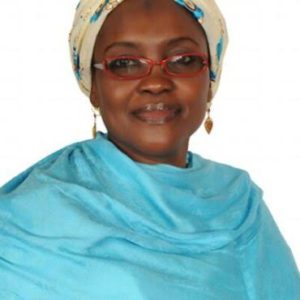
There Is No Justification For Another Person To Raise Your Child — Hafsat Baba

0

Hajiya Hafsat Baba is the Executive Director of an NGO, Global Initiative for Women and Children (GIWAC). The NGO works in the area of health, rights and education for women and the girl-child. In this interview with Correspondent Winifred Bulus, she speaks on how parents can protect their children from harm’s way by not giving them out in the name of going for house help jobs, or any form of deceit.


AFRICA PRIME NEWS: Have you handled cases of child maltreatment and negligence?
HAJ. BABA: We had a case of a 13 year old girl from Kaduna, a minor who had lost her mother and was adopted by the mother’s friend in Niger state; the woman claimed the girl’s mother had promised to give her one of her children to live with her even though there was no documented evidence.
The girl’s relations wanted to get her back, but that became a challenge. The girl was brought to the Foundation and she wept and confessed to being subjected to doing all house chores and not having even time to be in school. The girl confessed that the host family would not let her stay in school and will always ask her to come back before closing, so she can attend to more chores.
On weekends, the 13 year old would go and help the lady of the house fry bean cake and fried yam, which she would sell. It made me wonder, what time does the girl have to play, sleep or do her homework?
We learnt that the girl even ran away twice because of the hardship she was subject to. You find out that such children go to bed late and wake up early because they have a lot of work to do in the morning before school.
When this girl was brought here she was crying and pleading not to be taken back to this woman. The woman involved the police, being that her husband is a Police officer. We had to write the Commissioner of Police in Kaduna State and The Commissioner of Police in Niger. The matter is still being handled and hopefully would be resolved soon. Hopefully by next week, the girl would be reunited with her family.


AFRICA PRIME NEWS:  “Where is the girl’s family?
HAJ. BABA: “Her family is in Kaduna, but the lady she worked for lives in Niger State”

AFRICA PRIME NEWS: Does the woman have children of her own?

HAJ. BABA: We learnt she has just one son who does absolutely nothing in the house.


AFRICA PRIME NEWS: Have you had cases where the victims of the maltreatment were males?
HAJ. BABA: We have had very few of such cases. There was a lady who had come to declare her son missing after her divorce from his father. She didn’t have access to her children and she learnt that her son was going through hardship because his father (who is well to do) and the new wife neglected him and he left the house.
The mother came to Global Initiative for Women and Children (GIWAC) to report that her son was missing. We helped her find the boy and she ran to us for his safety due to her husband’s refusal to grant her access to the children after the divorce. The mother was crying profusely and the boy said he had been running errands for a food vendor who would pay him two hundred naira daily. The boy looked so haggard, dirty and the mother was crying profusely.
Eventually we had to look for the boy’s father and also involve Civil Defense to settle the problem between the parents so that the woman would have access to her children because we discovered that the boy didn’t recognize the woman to be his mother.
AFRICA PRIME NEWS: “You must be doing a great job.”
HAJ. BABA: Yes, by God’s grace. There was a child that got missing for a year. His father sent him to live with his grandfather and the grandfather who could not care for him gave him to clergy. The boy narrated his hardship and constant struggle to feed. He had to flee the clergy’s house from Jigawa state and travelled to different states where he would he gathered from begging in the streets before he ended up in Kaduna North.
There he met a food vendor whom he sold stolen ground nut oil to and gets afterwards. He had no place to lay his head and would go to a mosque to spend his nights.
The boy’s appearance and wellbeing became a thing of concern for women in the area because he had no means of taking care of himself. CWAG said he had not had a proper bath in about a year.
The boy was taken to CIWAG and given some immediate help, a good bath and some new clothes to change.  CIWAG works with the civil defense to handle cases that require their help. There is a child Desk officer who has been trained to handle children’s cases. The desk took temporary custody of the boy and was able to get in touch with the father.


AFRICA PRIME NEWS: Have you had cases of parents who have subjected their own children to hardship or maltreatment?

HAJ. BABA: I have not had such cases but have had cases of people maltreating their relatives.
There was a lady who asked her mother in law for a house help and was given a 5 year old. The lady subjected the little girl to so much suffering and a lot of chores were saddle on her. She was made to look after the house, wash plates at the auntie’s restaurant and with little food. The little girl was scarred from several beatings and some bite marks from the lady who would beat her mercilessly on claims that the girl was stealing her meat and other little thing.
The authorities had to be involved in the case because of the severity of the situation and the level of dehumanization the girl was subjected to. The lady was put behind bars for her crime and taken to the Magistrate court where she pleaded guilty and asked for forgiveness and was made to write an undertaken that under no circumstance is she to take any child under her care.  The little girl’s parents were contacted from Kogi to come for their daughter with evidence that they are her parents.

Drought In Somalia: Time Is Running Out

0

Four-year-old Safia Adan lies in Baidoa Regional Hospital in southern Somalia with a tube through her nose. She is suffering from severe malnutrition and dehydration. At her side her worried grandmother looks up to explain that Safia first became sick after drinking water from the local well.

“The water had changed colour but we still drank it,” says her grandmother. “We stopped after Safia became sick. We brought her to the city because we knew you could get good treatment here.”

They were lucky – seven people from their village are now confirmed dead and the hospital has seen a surge in children suffering from water-borne diseases such as cholera and diarrhoea.

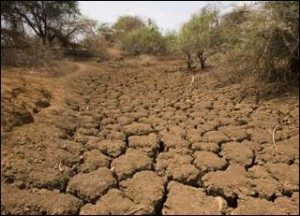
They are the latest victims of the on-going drought ravaging Somalia that has left more than six million people, half the country’s population, facing food shortages and has seen water supplies become infected with bacteria rendering them undrinkable.

Last week the United Nations warned that a severe famine in Somalia was a distinct possibility and noted that if the rains failed again and urgent international action was not taken the country could see a repeat of the famine of 2011, which killed more than a quarter of a million people.

“In the worst affected areas inadequate rainfall and lack of water has wiped out crops and killed livestock,” the UN said in a statement released last week. “Communities are being forced to sell their assets and borrow food and money to survive.”

Aid agencies are particularly concerned that the drought is exacerbating the country’s on-going humanitarian crisis – 365,000 children under the age of five are acutely malnourished and 71,000 of those children are in need of urgent life-saving assistance.

“This time last year we had far fewer cases but due to the drought people will use any kind of water,” says Dr Abdullah Yusuf, medical coordinator for the Baidoa Regional Hospital.

Culled from Aljazeera

Nigeria Condemns Killing Of Citizens In South Africa

0

By Winifred Bulus

Nigeria has called the attention of South African government to the killing and looting of its citizens’ property in Pretoria and other cities, calling on Africa Union to intervene in the matter.


This is not the first time the incidence is occurring, and the call was in response to recent attacks on Nigerians in South Africa weekend.


Senior Special Assistant to Nigerian President on Foreign affairs and diaspora, Abike Dabiri-Erewa in a statement says, “These attacks should not be allowed to continue because it is a big setback”.


“We have lost about 116 Nigerians in the last two years. And in 2016 alone, about 20 were killed,” this is unacceptable to the people and Government of Nigeria,” Dabiri-Erewa said.


Recently, a Nigerian man was murdered by a South African Police officer. That amounted to 20 Nigerians being killed by South Africans.


Leader of Nigerian community in South Africa Ikechukwu Ayene says the matter has been reported to the South African police and the Nigerian mission in South Africa.


He also confirms that there have been attacks on businesses owned by Nigerians in South Africa.


Currency Exchange Rates

USD - United States Dollar
ZAR
0.06
EUR
1.17
CAD
0.73
ILS
0.31
INR
0.01
GBP
1.34
CNY
0.14
Enable Notifications OK No thanks