Home Blog Page 1595

Ghana At 60 Appreciates Good Ties With Nigeria

0

By Winifred Bulus

Ghana has appreciated Nigeria’s good relationship and its role in Ghana’s attainment of independence.

Ghana’s high commissioner, William Awinador-Kanyirige, made the remarks during the celebration of Ghana’s 60th independence in Nigeria’s federal capital city, Abuja.

He said, “The struggle of Ghana’s independence was a struggle not just by Ghanaians but by all Africans that were in that territorial region.

“When we talk of the heroes of Ghana’s independence, we are also talking of the Nigerians that assisted us in that struggle although we don’t hear of them often.

“Our independence is intertwined and when you dig into history, you realise that many Nigerians helped in enforcing the freedom of Ghana.

“Take for instance the Ghana military, which has Hausa songs used to motivate the soldiers, was gotten from the interrelationship between the two countries.

“Colonialists created the Officer Corp Training in Accra and the Police Training School in Kumasi where the great Nnamdi Azikiwe enrolled in before his mother took him out prior to his graduation day.

“The history of our countries have been intertwined for decades and it’s not just the relationship between the military and the government but it is mainly in the relationship between the people of Ghana and Nigeria.

“We hope this relationship gets stronger as we grow together.”

Ghana’s Minister of Foreign Affairs, Geoffrey Onyeama, who was represented by Peter Iyambo, admonished Nigeria to keep supporting Ghana so as to improve bilateral trade and economic integration.

“Like Nigeria, Ghana is currently carrying out reforms targeted at rebuilding the psyche of the people on issues of transparency and good governance.

“I want to appeal to all Ghanaians present here to support the Ghanaian president, Nana Akufo-Addo, in his efforts to transform Ghana.

“Nigeria and Ghana have both enjoyed economic and international relations as our two countries have signed a number of agreements aimed at fostering economic integration.

“Nigeria remained determined in its resolved to implement bilateral agreements in order to ensure our people receive the full benefits.

“The relationship between Ghana and Nigeria remains very promising and full of potentials, we should collectively build on existing political and economic cooperation that has been the hallmark of our partnership,” he said.

Rita Orji, Chairman House Committee on Nigerians in the Diaspora, said: “I must confess that Ghana is one of the countries that we have the best relationship with.

“They know how to maturely handle and deal with issues that may bring about controversies or problems.

“Ghana is three years older than Nigeria and the fight for our sovereignty involved similar people like Kwame Nkrumah, Obafemi Awolowo, Nnamdi Azikiwe and other prominent people.

“There are many Nigerians who migrated from Nigeria and helped develop Ghana, therefore we see Ghanaians as our brothers.

“Nigerians have come to celebrate Ghana’s 60th independence anniversary because Ghana has been a good friend and ally to Nigeria.”

Meanwhile, during the celebration of Ghana’s independence in Ghana’s capital city, Accra, the President Nana Akufo-Addo said the country has no justification to be inadequate after sixty years of independence.

“After sixty years, we have run out of excuses, and it is time to set Ghana to rights and get our country to where it should be. The challenge before us is to build our economy and generate a prosperous, progressive and dignified life for the mass of our people.

“Hard work, enterprise, creativity, discipline and a consistent and effective fight against corruption in public life would bring the transformation we seek.” he says.

The president also added that called on Ghana to join hands in building a better society,

“Let us mobilize for the happy and prosperous Ghana of tomorrow, in which all of us, including our youth, our women and the vulnerable in our society, will have equal opportunities to realise their potential, and build lives of dignity.”

Nigerian Military Destroy 80 Illegal Refineries In Niger-Delta

0

By Lontong Ibrahim

Nigerian Military joint operation, code named ‘Delta Safe,’ have intensified operation against crude oil theft in the Niger-Delta region of the country.
During the operation, they destroyed 80 illegal refineries in Bayelsa, Delta and Rivers States.

A statement by the Co-coordinator, Joint Media Campaign Centre of the Operation, Major Abubakar Abdullahi, noted that in Bayelsa state, troops patrol around Obhoyohan and Ngiri Creeks in Nembe local government area discovered and destroyed seven illegal refineries containing 150,000 litres of suspected stolen crude oil.

The statement explained that three suspects were also arrested in connection with the illegalities, and are currently undergoing investigation.

According to the statement, “While in Delta State, troops patrol around Sara Abileye Swamp in Warri South West local government area discovered a network of six illegal refineries made up of four storage tanks, two dug out pits filled with products suspected to be stolen crude oil.

“Another patrol at the axis of Ajoloso Creek in Elume community destroyed a camp housing eight illegal refineries. Similarly, troops destroyed nine illegal refineries comprised of four ground pits and three metal tanks filled with product suspected to be stolen crude oil at Katu near Camp 5 in Warri South West.  This is in addition to seven illegal refineries earlier destroyed around Opunami Creek.

“Another patrol conducted around Udu, Ughelli South local government area discovered eight illegal refineries depot at Udu trailer park and destroyed 1,200 drums laden with 140 metric tonnes of illegally refined diesel.

“In Rivers State, troops destroyed other 10 illegal refineries around Bolo in Bonny local government. This is in addition to 25 others earlier raided at Creek 6 and Ijokiri in same local government area.”

While calling on sponsors and operators of illegal refineries to desist from the economic sabotage which begets environmental pollution and other social problems, the Military urged citizens to continue to support their activities, saying, all hands must be on deck to frustrate the activities of economic saboteurs.

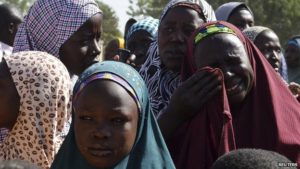
Nigerian Government Rebukes Former President Jonathan For Comments On Chibok Girls

124

By Winifred Bulus

The federal government of Nigeria has rebuked its former President, Goodluck Jonathan, from criticizing the current administration for being unable to find the abducted Chibok girls.

The 276 girls were abducted from their boarding school in Chibok, Borno State, North-Eastern, Nigeria on 14 April, 2015.

A foreign newspaper allegedly revealed that former President Goodluck Jonathan refused help by British Armed forces to help the country rescue the Chibok girls, though the former President on the other hand denied the allegation and claimed the current administration was maliciously using the Chibok girls to play politics.

The country’s Minister of information and culture, Lai Mohammed, revealed this in a statement, saying, ”While former President Jonathan reserves the right to defend his Administration, he should not engage in finger-pointing by saying, in a statement, that ‘some people who have obviously been playing politics with the issue of the Chibok girls will stop at nothing to further their interest.”

The Minister also accused Goodluck Jonathan of being guilty of playing politics with the girl’s lives saying, “After the girls were kidnapped and the Jonathan Administration did nothing for all of 15 days or make any determined efforts to rescue them thereafter, our party, the then opposition APC, told the nation several times that the whole Boko Haram crisis was allowed to escalate by the PDP-controlled Federal Government so they can use it as apolitical tool ahead of the 2015 elections.”

He noted that in a statement on 8 Sept. 2014, former President Jonathan-PDP’s political manipulation of the Boko Haram had to be understood as part of its poker-like calculus for clinging on to political power ahead of the 2015 elections.

He explained that the Boko Haram crisis was readily used by the PDP to rationalize the Jonathan government’s abdication of its constitutional responsibilities, including visits and assistance to areas affected as well as effective response to abductions.

”Two-and-a-half years after that statement, we have been vindicated by the report that claimed former President Jonathan rebuffed an attempt by the British government to help rescue the girls. We hope the former President will now refrain from stoking further controversy over the lingering abduction issue and allow the government of the day to focus on its ongoing negotiations to secure the release of the Chibok girls,” Alhaji Mohammed said.

He said in 2014, after the Chibok Girls were abducted, former President Goodluck Jonathan in a meeting with their parents said the government was being careful in approaching the issue for fear of the girls losing their lives.

“Anyone who gives you the impression that we are aloof and that we are not doing what we are supposed to do to get the girls out is not being truthful. Our commitment is not just to get the girls out, it is also to rout Boko Haram completely from Nigeria,” former president Goodluck told the girls’ parents.

In the same year, the All Progressive Congress (APC) in a statement by its National Publicity Secretary, Lai Mohammed, now Nigeria’s Minister of Information and Culture, accused the former President’s administration of being incapacitated in aspect of resuing the Chibok girls due to his prolonged silence after their abduction.

“It is cruel and unconscionable for anyone to use these girls as pawns on a political chess board. They have now been in captivity for over six full months. Please end the agony of the girls’ parents and indeed of all Nigerians.

“First, the then President waited for all of 19 days before even admitting that the girls have been abducted, losing a critical window of opportunity to rescue them from their abductors. When eventually he was forced by global pressure to admit that the abduction is real, Mr. President and his wife chose to subject the girls’ parents and others to untold verbal assault and mental torture,” he said.

Trump Signs New Travel-Ban Directive

0
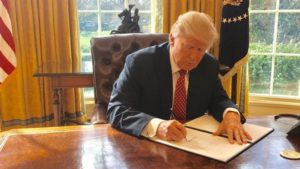
President Donald Trump

President Donald Trump has signed a new executive order placing a 90-day ban on people from six mainly Muslim nations.

Iraq – which was covered in the previous seven-nation order – has been removed from the new one after agreeing additional visa vetting measures.

The directive, which includes a 120-day ban on all refugees, takes effect on 16 March.

The previous order, which was blocked by a federal court, sparked confusion at airports and mass protests.

Presented as a means to strengthen national security against terror threats, it was blocked by the courts and effectively remains on hold.

The new order was unveiled by Secretary of State Rex Tillerson, Attorney General Jeff Sessions and Department of Homeland Security John Kelly.

“The fact remains that we are not immune to terrorist threats and that our enemies often use our own freedoms and generosity against us,” said Mr Kelly.

In justifying the refugee ban, Mr Sessions said there are more than 300 refugees under investigation for potential terror offences. But no further details were given.

What is different about the new order?
Citizens of Iran, Libya, Syria, Somalia, Sudan and Yemen, the other six countries on the original 27 January order, will once more be subject to a 90-day travel ban.

Iraq has been taken off the banned list because its government has boosted visa screening and data sharing, White House officials said.

The new directive says refugees already approved by the State Department can enter the US. It also lifts an indefinite ban on all Syrian refugees.

Green Card holders (legal permanent residents of the US) from the named countries will not be affected.

The new order does not give priority to religious minorities, unlike the previous directive.

Critics of the Trump administration had argued that this was an unlawful policy showing preference to Christian refugees.


What does the administration say?
Secretary of State Rex Tillerson, Attorney General Jeff Sessions and Homeland Security Secretary John Kelly held a joint news conference on Monday morning to discuss the new directive.

America’s top US diplomat said the order was meant to “eliminate vulnerabilities that radical Islamic terrorists can and will exploit for destructive ends”.

Mr Sessions said that, according to the FBI, more than 300 people who entered the US as refugees are under investigation for potential terrorism-related offences.

The top US prosecutor said three of the countries were state sponsors of terrorism.

The other three, Mr Sessions said, had lost control of territory to militants such as the Islamic State group or al-Qaeda.

Mr Kelly added that unregulated and unvetted travel was putting national security at risk.

He said the US cannot tolerate “malevolent actors using our immigration system to take American lives”.

None of the cabinet secretaries took any questions after the press conference.


Analysis – Anthony Zurcher, BBC News, Washington
Donald Trump has, at last, unveiled his new immigration order, and it looks like government lawyers – and not just White House political operatives like Steve Bannon and Stephen Miller – have had their input.

Gone are the most controversial measures of the old order, such as preference for Christian refugees and the suspension of existing visas and green cards.

The details of the action’s implementation are outlined with greater clarity this time, with more than a week before the new rules kick in.

It’s still an open question as to what, if anything, this order will do to prevent violent attacks on US soil, given that past high-profile incidents have not involved individuals from any of the six named countries.

Mr Trump had promised bold action on border security, however – the kind of move that would unnerve traditional politicians and anger civil liberties advocates.

Given the early reaction from groups like the ACLU and Democratic leaders, the story is unfolding as expected.

Although Mr Trump’s campaign-rally talk of sweeping Muslim bans are a thing of the past, his supporters will likely revel in the uproar and consider this latest move a campaign promise kept.


Why the delayed implementation?

The new order is set to take effect on 16 March.

White House officials hope the 10 days’ notice will help to avoid some of the chaotic scenes at US airports that occurred on 27 January when the first executive order was announced without warning.

Travellers with valid visas who were in the air at the time found themselves detained by border officials on arrival.

Mr Trump had defended the lack of notice, tweeting that “if the ban were announced with a one week notice, the ‘bad’ would rush into our country during that week”.


Will the new executive order face legal challenges?
Yes. New York Attorney General Eric Schneiderman – the state’s highest ranking law enforcement officer – issued a statement on Monday saying his office is ready to take the Trump administration to court.

“While the White House may have made changes to the ban, the intent to discriminate against Muslims remains clear,” he said.

“My office is closely reviewing the new executive order, and I stand ready to litigate – again – in order to protect New York’s families, institutions, and economy.”

The American-Arab Anti-Discrimination Committee (ADC), an Arab-American grassroots civil rights organisation, immediately called for donations to fight impending legal battles ahead.

“The ban is about xenophobia and Islamophobia,” the group said in a statement to the BBC.

Curled from BBC

It’s Time For Washington To Strengthen Ties With Egypt

0

By Joel C. Rosenberg

As the Trump administration develops plans to confront Iran, destroy Islamic State (ISIS) and strengthen US-Israel relations, it’s critical that it also rebuild America’s ties with Egypt, the leader of Sunni Arab world.

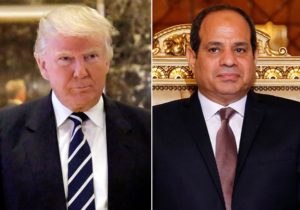
Egyptian President Abdel Fattah Sisi was often disrespected if not ignored by president Barack Obama. This serious mistake should be promptly corrected.

The American secretaries of state and defense should visit Cairo immediately to map out ways to work together. President Donald Trump should then invite the Egyptian leader to visit him in Washington soon, following up on successful recent meetings with Prime Minister Benjamin Netanyahu and Jordan’s King Abdullah.

Sisi came to power amid the most catastrophic meltdown of Egypt’s social, economic and political order in living memory. He has made mistakes. But he’s making progress, and he needs help.

Here are six big things the Egyptian leader is doing right:

First, he’s signaling he wants a dramatically improved relationship with the US. Sisi met privately with then-candidate Trump last September during the opening of the UN General Assembly in New York. He immediately called Trump after the election to congratulate him, and has spoken to him several times since. “Egypt hopes Trump’s presidency will breathe a new spirit into US-Egyptian relations,” Sisi made clear in a written statement. The White House should reciprocate quickly.

Second, he has courageously called for what amounts to a Muslim “Reformation.”

On January 1, 2015, Sisi addressed scholars and clerics at Al-Azhar University in Cairo, the Harvard of Sunni Islam, challenging them to reform Islam and rescue it from the radicals.

“We are in need of a religious revolution.

You, imams, are responsible before Allah. The entire world is waiting for your next move…. I am saying these words here at Al-Azhar, before this assembly of scholars and ulema [learned men]. Allah Almighty be witness to your truth on Judgment Day concerning that which I’m talking about now.”

This stands as one of the most impressive speeches by a moderate Muslim leader in recent memory. By working closely with Sisi (and Jordan’s king), Trump can demonstrate that when he rightly denounces Radical Islam he’s not suggesting that he’s going to war with the religion of Islam.

Third, he’s not just talk – he’s working hard to protect Egypt from radical Islamist jihadists. In the summer of 2013, after 22 million Egyptians signed a petition to remove the Muslim Brotherhood from power, Sisi and the Egyptian military brought down the Brotherhood regime that was strangling Egypt and was trying to impose Sharia law. They specifically removed Mohammed Morsi from the presidency. It was Morsi, after all, who had famously declared, “The Koran is our constitution, the Prophet is our leader, jihad is our path and death in the name of Allah is our goal.” Since then, Sisi has directed his military to crush jihadists operating in the Sinai.

Fourth, he’s not only maintaining Egypt’s peace treaty with Israel but developing a close working relationship with Israeli leaders. Under Morsi, there was a real risk that Egypt would abrogate her 1979 peace treaty with Israel. But relations between the two countries have warmed considerably under Sisi. During the Obama years, several members of Congress told me of meetings they had in Cairo in which the Egyptian leader candidly shared that he had a better working relationship with Netanyahu than with Obama. Security ties between Cairo and Jerusalem are growing ever closer, especially in terms of battling terrorists in Sinai. And there are whispers Sisi is looking for the right moment to invite Israel’s premier to Cairo.

Fifth, he’s building closer ties with the Christian community. In 2014, Sisi visited Pope Francis in Rome. In 2015, for the first time that anyone could remember, Egypt’s president publicly celebrated Christmas with Coptic Christian leaders, then did so again in 2016. He’s helping restore dozens of Coptic churches damaged or destroyed by terrorists. Egypt’s parliament has approved measures to make it easier for churches to be built and renovated. Christian leaders in Egypt say they feel Sisi is sincerely working to protect and assist Christians, though clearly much more progress must be made, as was made evident in December when jihadists bombed a historic Coptic church in Cairo, killing 29 and wounding dozens more.

Sixth, he’s building close ties with the Jewish community. Unlike any of his predecessors, the Egyptian leader has been engaged in a truly extraordinary effort to build warm and close ties to the American Jewish community, and for this he deserves enormous credit. In early 2016, Sisi welcomed a delegation of 36 American Jewish leaders to Cairo.

He personally met with representatives from the Conference of Presidents of Major Jewish Organizations for more than two hours, discussing his view of the region and answering their questions.

In September 2016, the Egyptian leader met privately with Jewish leaders in New York. In December 2016, Sisi met with yet another Jewish delegation to Cairo, this time from the American Jewish Congress. Then, just last week, Sisi met with another delegation of Jewish leaders in Cairo. During the hour-anda- half meeting, the president discussed his efforts to fight terrorism, improve Egypt’s economy and advance peace between the Israelis and Palestinians. Sisi said the peace process was a top priority for him.

Yes, there are human rights violations in Egypt, economic challenges and a myriad of other serious issues Sisi must address.

One analyst of the Egyptian political scene writing in Foreign Policy magazine has noted that “the Egyptian government’s theme is ‘safe before perfect,’ meaning it will try to improve on human rights but the top priority is ensuring day-to-day safety on the streets and freedom from terrorism.”

The Trump-Pence administration – along with Christian and Jewish leaders – should press Egypt’s leaders to make more progress, especially on human rights. At the same time, we should thank Sisi for what he has done right while encouraging him to move further in the right direction.

The West needs a stable Egypt as a friend and an ally, now more than ever.

The author is a US-Israeli dual citizen and former aide to US and Israeli leaders. A New York Times best-selling novelist, he has sold more than three million books. His new thriller, Without Warning, is about a series of Islamic State attacks inside the American homeland. It releases on March 14.

Curled from Jerusalem Post

Nigerian Airport Runway Repair: Free Bus and Train Ride For Diverted Flight Passengers

0
Airport Runway
Airport Runway

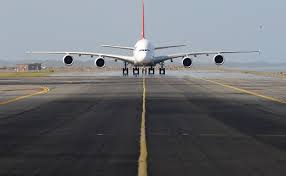
Nigeria says Abuja bound passengers aboard diverted flights to Kaduna will enjoy free train and bus ride from Kaduna to Abuja.

Nigeria plans to divert Abuja bound passengers to Kaduna over the next six weeks starting March 8th.

The government under Ex-president Goodluck Jonathan attempted to carry out repairs on the airport runway in 2014, but the then opposition parties and other activists opposed the move.

At a joint press conference, Minister of Information and Culture, Lai Mohammed; Minister of Transportation, Rotimi Amaechi; and Minister of State for Aviation, Hadi Sirika; Representative of the Minister of Power, Works and Housing; as well as the Inspector-General of Police, Ibrahim Idris said adequate measures have been put in place to ensure smooth operation.

There will also be adequate security, with the police deploying the air wing, the counter-terrorism and the special units to ensure the safety of passengers travelling between Kaduna and Abuja, according to the Inspector-General of Police.

It was also announced that the rehabilitation of the Abuja-Kaduna road has been completed and that the road is now very motorable

According to Minister of Information and Culture, “When an airport is built there is a maintenance schedule depending on the number of landings that have been made. After a particular number of landing there is what we call surface cleaning, which is done. After additional landings, we now do resurfacing, after that it is closed completely and we do reconstruction.

“In the case of the Abuja Airport, for 34 years neither surface cleaning has been done nor resurfacing and it has deteriorated, so what we are doing is total reconstruction and there is no other alternative than to close the runway,” he said.

Also speaking, Minister of State for Aviation said, both the Council for the Regulation of Engineering in Nigeria (COREN) and the National Society of Engineers (NSE) have agreed with the government that the integrity of the Abuja Airport runway has been degraded and that the only way to ensure safety on the runway is total reconstruction.

Mr. Sirika said the government is adopting the Concession Model to ensure that all the airports in the country are rehabilitated to meet global best practices and safety.

“We are concessioning the entire airports in Nigeria that belong to government. We will begin by concessioning four. Concession means we will give it to a private entrepreneur who has the wherewithal, the know-how, the technology, the capacity, the ability, the finance to put up huge fantastic edifices as airports with everything including hotels, just the way you see them abroad,” he said.

Nigerians speak on their experiences with worn out money

0

By Winifred Bulus

Nigerians have expressed dismay on the way and manner the country’s currency is being handled.

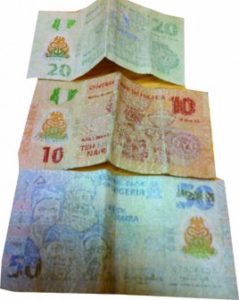
The currency is mostly torn and worn out, a situation if not checked could give a bad picture of the country’s currency.

It is observed by Africa Prime News that most Nigerians are in the habit of rejecting such money. Despite the rejection of old torn or worn out money, it is in circulation and finds its way in people’s hands.

Speaking on the issue, a commercial bus conductor in Kaduna, Nigeria, said, “I accept old torn money so long as it is still intact.”

Another commercial bus conductor observed that he rejects torn money given to him by any passenger because he finds it difficult to spend it. “The problem in the country is that people are in the habit of misusing the curreny with many people making it dirty beside tiring it,” he lamented.

Tinock Garba, a Nigerian also expressed her experience with worn out money, saying, “I give old torn money to my father to use while buying petrol at the filling stations. I also give some to bankers to change the worn out money for me for new note.

“It is also hard to spend that kind of money in the market because traders always refused taking it. I always end up with worn out money because I don’t always check change given to me by motor cyclists. Ironically, It is the same motorcyclists who don’t accept old money from me.”

Amina Abdulkareem, a fashion designer from Abuja, Nigeria shares her experience saying, “I don’t collect  old money from people as change or any other transaction because of the way it is being used. At the bank where one suppose to get good currency, the story is the samething and you find it very difficult to spend.”

To Teddy Moore, a professional photographer in Lagos, “All torn or worn out money should be returned to the bank and replaced with new notes. That is what I do. It also depends on how bad the money is, there are times I accept worn out money, but there are also cases when the money is unacceptable.”

Others who expressed their opinion on the condition of the country’s currency noted that there was the need for the government of the day to ensute strict compliance on proper use of its money with respect.

Nigeria: Marie Stopes Advocates More Investment In Family Planning In Kaduna

0

By Winifred Bulus

Marie Stopes International Organisation Nigeria (MSION), has appealed to Kaduna state government to make more investment in family planning to avail child spacing services to more women in the state.

Country Director of the Organisation, N. Effiong, who made the appeal at the winding up of one of its projects, Family Health Plus (FH+), in Kaduna, northwest Nigeria said, family planning has become the most effective vaccination that reduces the burden of maternal deaths worldwide.

Represented by Kingsley Odogwu, the Country Director said, Marie Stopes had worked in Kaduna state to strengthen capacity of nurses and midwives in selected facilities and rendered sustainable family planning services.

The country Director also called on Nigerian women to subscribe to the Long Acting Reversible Contraceptive (LARC) method, which is less cumbersome and reduces the chances of women missing their hospital revisit dates.

“We want to change the mentality that provide women with only temporary family planning methods and encourage them to take part in our plan. Our method is safe and administered after proper counseling of the patient in order to avoid health challenges for the woman and ensure the right plan for the individual.

“We make sure the family planning method suits the hormones of the individual because when the plan is wrongfully implemented, there can be implications such as long term bleeding.”

In a remark, Kaduna State Commissioner for Women Affairs, Hajiya Hafsat  Baba acknowledged the good works of Marie Stopes in the state and stated her willingness to work with the state Ministry of Health, and the State Primary Healthcare Development Agency in mobilizing and sensitising women for uptake of family planning in the state.

“I am an active member of Family Health Advocates in Nigeria Initiative (FHANI) and will work together to make sure Kaduna state reaches the national target of getting as many women to subscribe to family planning.

“FHANI has made major contributions in the lives of women and worked hand in hand with the State Government’s in family planning services to mobilise sensitise as many women as possible.”

“Kaduna State Governor, Malam Nasir El-Rufai has special interest in the health of women in the state,” she said.

FH+ project is a three-year project that started in 2014. The project was to strengthen the overall health system, build providers’ capacity to deliver quality Long Acting Reversible contraceptive(LARC) and empower users to access quality and voluntary Family Planning services.

Currency Exchange Rates

USD - United States Dollar
ZAR
0.06
EUR
1.17
CAD
0.73
ILS
0.31
INR
0.01
GBP
1.34
CNY
0.14
Enable Notifications OK No thanks