The Controller General of Nigeria Prison Service, Ja’afaru Ahmed, said 46,351 of the 69,259 inmates imprisoned in the country are awaiting trial.
He said, as at March 6, 2017, the Prison facilities throughout the country accommodate 68,259.
According to him, in order to ensure self-sufficiency in food production for the feeding of inmate in the Prisons, the Prison Service has reopened the various prison farm centres to ensure the realization of its set objective.
He explained that the Prison Service has purchased additional twenty-two tractors that would lead the service to specialize in food production to feed the inmates and sale to the general public.
He said, “As at March 6, 2017, total inmates population stands at 68,259. Out of this number, 46,351 are awaiting trial persons, and the remaining 21,903 are already convicted.
In terms of percentage, he said, the convicted is 32 while those awaiting trial is 68 percent. “The figures are not static, as it goes up and down,” he explained.
“In 2016 budget, we purchased so many farm machineries like tractors and other kinds of implements. We have also dug so many boreholes, fish-farming and the rest of them. These would be used to reposition our farm centers.
“What we intend to do when the budget for 2017 is passed is we will pick three (3) out of fourteen farm centres. The idea is to make sure that we specialize in different farming processes.
“In Kujama Farm, we intend to set it up strictly for the production of maize. We want to see the production of maize all year round, not only during the raining season but also during the dry season. We have budgeted some amount of money to sink boreholes for irrigation purposes to ensure the success of these programmes.
“We have picked Lampushi farm center strictly for rice production and the possibility of producing rice during both raining season and dry season. We have also taken Ozalla for the production of palm oil. These are three pilot projects we intend to do this year to see the possibility of whether the prison can actually feed itself,” he said.
He added that it would go into mechanized farming where crops would be produced in large quantity, reducing manual labour and enhancing production.
On the synergy existing among the three arms of the Criminal Justice system, Ahmed said, the Prison was the last bus-stop and only a custodian of all the parties, that is, the Judiciary cum the prosecution authority (Ministry of Justice), the Police and the Prisons.
While calling for collaboration between the three arms of government, he advised the criminal Justice system to always determine cases of those awaiting trials, noting that so long as anybody knocks on the door with valid warrant and appropriate papers, they have no option but to receive such persons.
Malawi government has brought back 60 trafficked Malawian women that have been in Kuwait since 2016.
Spokesperson of the country’s minister of foreign affairs, Rejoice Chaponda Shumba, confirmed that the women were brought back after being stranded in Kuwait.
The spokesperson added that the women had been trafficked to Kuwait on the presence of being offered jobs.
On getting to the destination, their passports were taken away and they were deployed to sex work or domestic jobs with little or no pay.
Nigeria’s Dangote salt company and National Agency for Food and Drugs Administration and Control, NAFDAC, have agreed to collaborate to get rid of circulation of fake product in the market.
This was contained in a report released by the National salt industry of Nigeria, NASCON’s response to NAFDAC’s call for food companies to conduct a Product Market Surveillance.
The two managements also intend to censor product in the market to make sure the quality of product was not hampered after leaving factory.
Managing Director of NASCON Allied Industries Plc, Mr. Paul Ferrer and the Dangote Group’s Chief Corporate Communication Officer, Mr. Anthony Chiejina, had paid the Agency Director-General of NAFDAC, Mrs Yetunde Oni a courtesy visit in her office in Lagos.
Dangote salt management revealed that products were resized, repackaged or reduced by some traders, violating the standard set by NAFDAC.
NAFDAC’s director while speaking on the issue said, “We are solidly behind the food sector, the sector is dear to us. We can do mop-up as we did in juice sector, we will go on random sampling, to ascertain the product quality and the sustenance of the quality.
“The establishment of the PMS unit is the way to go, to actually tackle this menace. The value chain has to be monitored.”
Both managements hope to work together to attain the goal of circulating only products that are legitimate.
The curse of bars and prisons around the world continues. It is in those places that lives are stolen and tyrants aim at killing the hopes of those who dream of a better future for their country and the end of occupation of their homeland.
Among those dreamers is Palestinian activist Hassan Karajah, held captive in Israeli occupation prisons. Even though I never met him, I don’t know why I always feel a friendly connection between us.
Born in the town of Saffa in Ramallah, Karajah has been carrying the Palestinian cause in his heart since childhood. Karajah was an active member of the popular campaign against the wall and settlements (Stop the Wall). Through his wide-range activities and efforts, he successfully became the campaign’s youth programme coordinator and one of the important human rights defenders on the local and Arab levels. In 2012, Karajah served as the youth ambassador for the Arab Thought Foundation and represented Palestinian youth in Arab and international conferences and events.
In January 2013, Karajah was arrested. Special forces raided his house and assaulted him. He spent 22 months in prison on accusations related to his social work, and was then released in October 2014.
Last July, Israeli soldiers arrested Karajah at a checkpoint near Ramallah; after five days of detention, he received a six-month prison sentence and has since been languishing in Ofer prison with a renewable administrative detention decision—similar to the pre-trial detention process in Egypt, which allows the imprisonment of political opponents for long periods of time without charges.
This unjust law applied by occupation authorities enables the harassment of detainees especially in light of the detainee’s lawyers’ inability to obtain documents regarding their legal charges and the automatic renewal of the administrative detention. The laws implemented by the Israeli army on arrests date back to the 1945 emergency mandate law, according to which 750 Palestinians dwell in occupation jails under administrative detention.
At the beginning of his second detention, Karajah’s family was denied visits because he started one of his hunger strikes in solidarity with Palestinian prisoner Bilal Kayed, who was also on a hunger strike under administrative detention before being freed.
Karajah’s attitude did not surprise me—it was an inspiration in terms of endurance and tolerance.
Years and days pass while Karajah sits inside his cell in occupation prisons, deprived from seeing his twin baby girls, Sarai and Kinza, born when he was absent, in jail, away from his wife Thameena Husary who has devotedly supported his case. There is no doubt that the suffering of families of detainees is as painful as that of detainees themselves.
Finally, dear friend whom I never saw, prison cannot be indefinite. Nature tells us that morning follows night, and there will come a day when the detainees’ land is returned to those who once inhabited it.
May you remain the hero who teaches us reverence and nobility.
And to all detainees in occupation prisons and all prisoners of conscience around the world: when the detainees’ land is freed, it will honour you.
Tarek Hussein is a lawyer and assistant secretary of the rights and freedoms committee at Al-Dostour party.
Going by recent global report of 6 million people dying each year from tobacco related diseases, it is imperative that steps must be taken to curtail the use of tobacco. The need for quick implementation of provisions of the Tobacco Control Act and Regulations for safety of lives in Nigeria and other parts of the world should be giving priority.
It is worrisome that in Nigeria, the Tobacco Control Bill which was passed by both arms of the National Assembly and signed into Law in May 2015 by the former President Goodluck Jonathan, is yet to have to come to effect two years after becoming an Act.
The Civil Society Legislative Advocacy, CISLAC, at a one day workshop for journalists in Kaduna, northwest Nigeria, noted that the World Health Organization, WHO, has introduced a Framework Convention on Tobacco Control (FCTC). The FCTC is charged with the responsibility of making research on tobacco, following agreement by 192 member states of WHO, that tobacco smoking should be controlled.
WHO report revealed that almost one billion men, 250 million women are daily smokers and one in ten death is linked to tobacco – use related diseases, while about 8 million people globally are likely to die in 2030. It is projected that the percentage of smokers will rise from an average of 16 percent to 22 and possibly as high as 27 percent by 2030 in Africa. But with strong tobacco control policies, including 100 percent tax increase in place, the smoking prevalence will decrease to 11 percent.
In Nigeria, the implementation of the Act, which has the provisions that can successfully control tobacco smoking in the country, with over 9 million smokers has already been delayed for two years; and a minimum of 18 months have to be given to the tobacco company to change their packaging before its full implementation. There shouldn’t be any reason for further delay to salvage the lives of the younger generation.
The Act seeks to protect Nigerians of the devastating consequences of use and exposure to tobacco and its products; it prohibits smoking in public places; prohibits sale or access to tobacco products to persons below 18 years of age; it increased tax on tobacco product in Nigeria; it promotes large, clear rotating health warnings and messages that cover 50 percent or more, among others.
The percentage of people smoking particularly the youth is alarming. It is enormous and therefore calls for concerted effort to arrest the signal of what befalls the country and world in the near future. The message of a healthy society is the main focus, as well as the dream of the next generation. Strict implementation by government should be made towards controlling the usage of the product by people, and the introduction of stiff penalty to defaulters.
The adverse effect of tobacco on people inhaling the smoke is devastating; it is hazardous and should be condemned in all its ramifications. The regulation for smoking need be quickly introduced; set the Tobacco Control Unit in motion, and ensure that government get to effective implementation of laws guiding smoking in the country.
The idea is for the citizens to know the existence of the Act – for them not to go against the law, as well as know the hazards of taking tobacco. The Act will control the use of tobacco to a minimal level, and its packaging be carried out in line with international standards.
Tobacco Act is a health related Act and it is to protect the health of the citizens. Everything within reason need be done to ensure that people are in good health and not suffer on account of any particular product.
The United Nations says 2016 was the worst year yet for children affected by Syria’s six-year-long civil war, with at least 652 being killed and many millions more suffering as refugees.
“Verified instances of killing, maiming, and recruitment of children increased sharply last year in a drastic escalation of violence across the country,” the United Nations International Children’s Emergency Fund (UNICEF) said in a report published March 13.
UNICEF’s report comes two days before the sixth anniversary of the civil war, which began in March 2011 when protests broke out against President Bashar al-Assad.
An estimated 300,000 people have been killed and millions more have been displaced by fighting that has created one the largest migrant crises in Europe since World War II.
Turkey and the United States support various rebel groups fighting against Assad, while Russia and Iran back Assad.
The conflict also involves fighters of the Islamic State (IS) militant group, which is opposed by all sides.
“The depth of suffering is unprecedented,” said Geert Cappelaere, UNICEF’s Middle Eastern regional chief. “Millions of children in Syria come under attack on a daily basis, their lives turned upside down.”
The report said the 652 killed from conflict-related causes last year represent a 20 percent increase over 2015. At least 255 of the children were killed in or near schools, it said.
Many of the children were killed directly from the conflict, but many others died because of a lack of access to doctors and basic services.
UNICEF verified 850 cases of children being recruited to fight in the conflict, about double the 2015 figure.
“Children are being used and recruited to fight directly on the frontlines and are increasingly taking part in combat roles, including in extreme cases as executioners, suicide bombers,or prison guards,” it said.
UNICEF warned that social and medical services are continuing to deteriorate, forcing many children into “child labor, early marriage, and combat.”
Dozens are dying from preventable diseases, it said.
At least 6 million children rely on humanitarian aid and 2.3 million are refugees in Turkey, Lebanon, Jordan, Egypt, and Iraq, it said. About 280,000 are living “under siege,” cut off from any humanitarian aid.
“Each and every child is scarred for life with horrific consequences on their health, well-being and future,” Cappelaere said.
The Federation of Egyptian Banks (FEB) prepared a note of its remarks on the new “restructuring, pre-insolvency conciliation, and bankruptcy” bill. This will be sent to the Central Bank of Egypt (CBE), which, in turn, will send it to the legislative committee of the Ministry of Justice, a senior official told Daily News Egypt.
The source explained that the Ministry of Justice had already sent a copy of the bill to the CBE in February, before it was sent to the FEB for review.
The FEB called for banks’ officials to hold extensive meetings to study the bill. Several meetings have been held already by banks’ legal affairs officials under the umbrella of Egypt’s legal technical committee, most recently on Monday.
According to the source, this law is very important for the economic life in Egypt, as well as for both Egyptian and foreign investors.
The bill, of which Daily News Egypt obtained a copy, has 264 articles regulating restructuring, pre-insolvency conciliation, and bankruptcy procedures.
The provisions of this bill shall be imposed on all traders—whether on an individual or a corporate level—except for joint ventures, public sector companies, and public business sector companies. This is in accordance with the definition provided in law No. 17 of 1999 on commerce.
Regarding the bankruptcy procedures, the bill stipulates that each economic court shall establish a bankruptcy department to manage mediation procedures in the restructuring, pre-insolvency conciliation, and bankruptcy requests.
The bill stipulates that if a settlement of the dispute was reached, the parties in question shall sign a settlement agreement that shows details of the agreement and the mediation procedures. The bankruptcy judge shall approve the agreement and end the request. This agreement shall have executive power. If the disputed parties could not reach an agreement, the judge shall refer the request to the specialised court. If the applicant did not attend before the bankruptcy judge for two consecutive sessions, the judge shall save the request.
According to the bill, the bankruptcy verdicts are final and could not be challenged, unless the law mentions something else.
The economic courts are obliged by the bill to use bankruptcy management experts—among others—who assist the judges. Those experts should include members of restructuring and asset management companies. Additionally, there will be representatives from the ministries of finance, manpower, investment, trade, and industry, as well as representatives from the CBE, the General Authority for Investment and Free Zones (GAFI), the Egyptian Financial Supervisory Authority (EFSA), the Egyptian Exchange, the Federation of Egyptian Industries (FEI), and the Federation of Egyptian Chambers of Commerce (FEDCOC).
The bill regulates the restructuring operations, where each trader with a minimum capital of EGP 1m who did not commit fraud is entitled to request the restructuring of the company. It also prohibits the restructuring of companies in liquidation. It is also not permissible for companies to request restructuring if the court announced the company’s bankruptcy or during the beginning of the pre-insolvency conciliation.
According to the bill, the restructuring aims to develop a plan to reorganise the financial and administrative affairs of the trader. It also includes the procedures of ending the company’s financial turmoil and paying its debts, as well as suggesting funding sources, including re-evaluating assets, restructuring debts, increasing capital, increasing internal cash flows, reducing external flows, and restructuring administration.
The company owner shall provide the restructuring request in which they state the reasons for and the date of financial turmoil, as well as the previous measures taken to avoid it or treat its effects. They must also provide suggestion to solve the crisis at hand.
The restructuring commission shall provide its report to the judge specialised in bankruptcy cases within three months, stating its opinion about the reason for the business disruption and the feasibility of restructuring as well as the proposed plan. The preparation of the plan can be extended for more than three months with the permission of the judge, on the condition of implementing it in a period of no more than five years.
The bill allows traders or company owners to continue their management of the assets throughout the restructuring period. They would also be responsible for the company’s obligation and previous or future contracts since the date of adoption of the restructuring plan. However, owners should not engage in any conduct that affects the interests of their creditors.
According to this bill, traders or companies that did not commit fraud are entitled to request a pre-insolvency conciliation, in case the business experienced any trouble that prevents it from paying its debts. However, the pre-insolvency conciliation request is not allowed in case the company was in liquidation.
The bill obliges creditors to provide documents of the debts of the court on certain dates; otherwise, they will not be allowed to engage in the conciliation proceedings. The same case applies to creditors whose debts have been rejected.
According to the bill, the conciliation requires the approval of the majority of creditors whose debts were accepted, on the condition that they seize two-thirds of the value of these debts.
If the company requesting conciliation has issued bonds or financing instruments worth more than one-third of its total debt, the conciliation would not be allowed unless the general assembly of the owners of these bonds approved this step.
The bill allows for the pre-insolvency conciliation to give debtors deadlines to pay their debt or interest, and also allows debtors to be exempted from a part of the debt or interest.
According to the bill, the pre-insolvency conciliation will be invalid should the debtor be convicted of fraud after the ratification of the conciliation. It includes hiding money or debt or deliberately exaggerating the value of the debt. The creditors must request the cancellation of the pre-insolvency conciliation within six months since the day they discover the fraud, or else their demand will be unacceptable.
According to the bill, the bankruptcy may be declared upon the request of the same trader or the request of a creditor or the prosecution. It also may be declared after the trader’s death or retirement from trade or when they stopped paying their debts. The bankruptcy request must be submitted within a year after the death of the trader or the date of removing their name from the commercial record.
According to the bill, traders must request their bankruptcy within 15 days from the date they stopped payment, through presenting an application to the bankruptcy department in economic courts. They must also state the reasons for stopping the payment. The bankruptcy request shall be rejected in case the trader stopped paying criminal fines, taxes, fees, or social insurance.
In the case of bankruptcy, the specialised court has the right to take the necessary steps to preserve the debtor’s funds or manage them for a renewable period of three months, until the lawsuit is closed. It also has the right to take any necessary measures to identify the financial situation of the debtor and the reasons for stopping payment.
Any interested party, except those who have been convicted, can object the declaration of bankruptcy from the court that issued it within 30 days from the date of its publication in newspapers—unless they have it challenged in the appeal court, where they can present their objection to the court trying the appeal.
The bill allows the specialised court to ban the trader who is bankrupt from leaving the country for a renewable period of up to six months, if they harm the rights of creditors. The trader can then challenge the travel ban; however, this challenge will not stop it from being implemented. The court can decide to cancel the travel ban at any time.
According to this law, whoever is convicted of criminal bankruptcy shall be banned from exercising political rights or running for parliament or local council for a period of six years since the date of the sentence. This ban shall be nullified if the trader was rehabilitated or the court suspended the execution of the sentence.
Traders that have gone bankrupt and have not been rehabilitated shall be banned from joining commercial or industrial chambers, unions, or professional associations. They are also not allowed to become managers or board of director members of any company nor engage in banking, business agencies, export or import, securities brokering, or auctions (whether buying or selling).
Those who are bankrupt shall be banned from the management of their own assets, including funds gained on the same day of bankruptcy or after that.
The bill obliges creditors to hand over the original documents of their debts, accompanied by a statement of these debts and their value in the local currency at the exchange rate declared by the CBE—according to the sale, closure, remittance, or banknote prices—if there was no price on remittances on the day of declaring bankruptcy.
With respect to the bankruptcy of a company, the bill stipulates that any company established based on the Companies Law that has stopped paying its debt due to financial disruption shall be considered bankrupt. The court must then declare the company’s bankruptcy, even if it was during liquidation.
The legal representative of the company is not allowed to request bankruptcy only after obtaining permission from a majority of the partners or of the general assembly.
The bill permits the court to order on its own, or at the company’s request, the delay of declaring bankruptcy for a maximum period of three months, if the company is likely to support its financial position or if the delay serves the interest of the national economy. The court may accordingly take the necessary measures to preserve the assets of the company.
If the court declares the bankruptcy of a company, it shall also declare the bankruptcy of all its partners. The court may also declare the bankruptcy of every person who used the company for their own interest and made use of the company’s money as if it were their own. The declaration of the company and its partners’ bankruptcy shall be issued in one judgment, even if the court was not competent in trying the bankruptcy of these partners.
If the company’s assets were not sufficient to pay at least 20% of the debt, the court would oblige the members of the board of directors or managers of the company to pay its debts or part of them, unless they prove that they were keen in the management of the affairs of the company.
According to this bill, the legal representative of the company can submit proposals to reconcile with creditors. If the company requesting conciliation has issued bonds or financing instruments worth more than one-third of its total debt, the conciliation would not be allowed unless the general assembly of the owners of these bonds approved this step.
With regard to rehabilitation of those sentenced to bankruptcy, they shall restore all their rights after three years of the end of bankruptcy, except in the case of fraud.
The court is obliged to rehabilitate those sentenced to bankruptcy, even before the end of the three-year period, if they paid all their debts including the expenses and revenues for a period of up to two years. If the person in question has gone bankrupt and was a partner in the governance of another company that has also been bankrupt, that person would not be rehabilitated unless they paid all the company’s debts, including the expenses and revenues for a maximum period of two years.
The court is obliged to rehabilitate those sentenced to bankruptcy, even before the end of the three-year period, if the person has reconciled with their creditors and implemented its conditions; if they proved that the creditors have discharged them from all debts; or if they unanimously agreed to approve the rehabilitation.
According to the bill, those in bankruptcy who have not been convicted in one of the bankruptcy crimes of negligence shall not be rehabilitated, unless they implemented the punishment or have been exempted. According to the bill, those who are bankrupt, who were convicted in one of the bankruptcy crimes of fraud, shall be rehabilitated only after five years from the date of implementing the punishment or since the date of exemption.
According to the provisions of this bill, any trader who stops paying their debts is considered in bankruptcy fraud if they concealed or destroyed their company’s documents or hid part of their money to harm creditors.
The trader is charged of bankruptcy negligence if they contributed to the loss of their creditors because of negligence in their personal or home expenses, if they spent large sums of money in gambling or any fake work, if they bought goods and deliberately sold them for less to delay their bankruptcy and improve their financial situation, or if they borrowed funds or issued securities or used other ways which led to severe losses only to delay his bankruptcy.
Those convicted of bankruptcy fraud and those who have participated in the issue shall be sentenced to 3-5 years in prison and shall be fined between EGP 50,000 and EGP 500,000, while those convicted of bankruptcy negligence, shall be fined EGP 50,000 to EGP 200,000.
According to this bill, the members of the board of directors and managers of a company that has gone bankrupt shall face the penalties prescribed for bankruptcy fraud, in case it was proven that they contributed to the company’s bankruptcy by fraud, or caused the halt of the company through hiding the truth about the subscribed or paid capital, or through distributing fake profits or fraudulently taking sums of money for themselves more than authorised by the company’s contract.
Cairo (Egypt) –In recent weeks Gamal Mubarak has shown up at a wedding, a funeral and a soccer match, happily snapping selfies with onlookers who are still enamoured by the flamboyant figure who was groomed to succeed his father, Hosni Mubarak, the dictator who ruled Egypt for three decades.
Mockingly referred to as Jimmy, the investment banker rose through the former ruling party’s ranks, along with a coterie of influential businessmen bolstering his political capital, to run the most populous Arab country for years, before a revolution erupted and Mubarak snr was deposed during the Arab Spring.
He is still widely regarded as embodying Egypt’s endemic corruption, along with his brother Alaa, who appears in the Panama Papers, amassing a fortune from buying and selling Egyptian debt through offshore accounts.
The brothers were tried and later released for embezzling millions of dollars of state funds used to renovate their palaces as well as cases of insider trading to the tune of £E2.5 billion ($187 million).
But they have been making more public appearances in recent months, stoking rumours of a possible presidential run in 2018 against the current military-backed President Abdel Fattah al-Sisi.
“So what if he [Gamal] runs for president? Isn’t this what democracy is supposed to be about?” asks Khaled Abdel Naim, 52, a high school teacher who runs a kiosk in an upmarket suburb of Cairo by night.
“I was one of those voices wanting him to become president before his father stupidly did not want to step down until he was deposed by force,” he says. “They would have reformed the country. They grew up with silver spoons in their mouths and wouldn’t have looked at us to steal more.”
The nostalgia for the Mubarak clan’s return comes on the back of Hosni Mubarak being acquitted of all charges for killing protesters in 2011 earlier this month.
“Gamal was a pivotal decision maker and had an important say in several key portfolios,” says Mohamed Naeem, a political analyst and writer who lived in Australia before the 2011 revolution. “He was de facto ruler from about 2004 [to] 2010.
“There are nostalgic factors in certain sections of the media in amplifying his routine public appearances to mean something else.”
A widely shared phone call on social media of a gushing journalist playfully interviewing Hosni Mubarak after his acquittal is the latest example of the political amnesia that the country has undergone. She repeatedly asks the former president if she can talk to his sons.
“There are also some elites and businessmen that look to Gamal Mubarak as a figure, whether or not he can actually play a political role,” Naeem adds.
Several Mubarak cronies have struck reconciliation deals with the state, effectively trading their sentences for investments in the economy.
Mubarak-era prime minister Ahmed Nazif, information minister Safwat al-Sherif and culture minister Farouk Hosny have all walked free recently.
“I don’t believe Gamal would be allowed to be involved in politics again by the current military regime as he is perceived as a threat to it,” says Zeinab Abul-Magd, a professor at Oberlin College who has written a book on the Egyptian military’s economic empire.
Estimates for the military’s expansive economic activities range between 5 and 40 per cent of the entire economy. Sisi said in December 2016 that the military’s share of the economy was about 2 per cent at best and that he hoped it would be more.
“Gamal Mubarak’s cronies would continue to be a threat to the military regime because of their economic influence and potential revival of their connections with old security apparatuses figures,” Abul-Magd adds.
She points to Gamal’s close friend, steel magnate Ahmed Ezz, as an example of the military’s intolerance for economic competition. A court ordered his arrest again this week on corruption charges.
Legally the Mubaraks are not allowed to hold office or any political position for six years, so a presidential run is not on the cards in 2018.
Yet that has not stopped them from carefully manicuring their public image as many Egyptians express impatience with a languishing economy.
However, Robert Springborg, a retired Naval Postgraduate School professor and expert on Egypt’s military who also taught in Australia for several years, says the key to Gamal’s political ambitions lies with tycoons who have wholeheartedly backed Sisi.
“Businessmen would be wary of backing Mubarak lest they gain the ire of Sisi and the military,” he says. “So I doubt Gamal would have much appeal to them, as he simply could not deliver what the military can to them.”
When there were recent shortages of baby formula, medicine and sugar on the market, the military stepped in to import and manufacture them locally.
“His only appeal would be to be critical of the military and Sisi, but this would seem very hypocritical,” Springborg adds.
For Abdel Naim, the kiosk owner, seeing the Mubaraks in public does not sway him from supporting Sisi, who remains his best hope for political and economic stability.
“The conditions are tough these days,” he says, referring to inflation, which is at its highest in over a decade, and terrorism from Islamic State in the Sinai Peninsula. “The man [Sisi] put his foot on the right path. He needs to finish, so we might as well leave him to do it.”

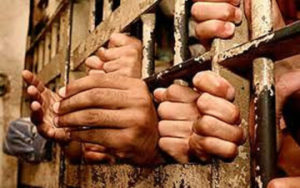 The Controller General of Nigeria Prison Service, Ja’afaru Ahmed, said 46,351 of the 69,259 inmates imprisoned in the country are awaiting trial.