Zambia has confirmed the shortage of HIV/AIDS drugs in some of its health centers to the activities of some medical personnel that smuggled the drugs to DR Congo.
This discovery was made by a District commissioner, Royd Chakaba, who was tipped off by some concerned medical workers that complained the shortage in the availability of the ARVs.
The commissioner also confirmed that a the sale of a month’s dosage fetches up to K5,000- 522 USD.
“We have information that some medical staff are stealing ARVs from the clinics, which they are selling in the DRC at K5,000 for a month’s dosage.
“In this syndicate, these medical personnel selling the drugs to people from Congo are instructing their buyers to return the used bottles which they refill and sell back to them.
“These ARVs get into this country at a huge cost. Smuggling them does not only deprive patients, but the government as well which has to keep replenishing stocks.
“Unscrupulous dealers think that now that the government’s attention to be focused on tracking and monitoring the illegal Mukula trade and Mealie meal smuggling, they can switch to something else…to ARVs,” he said.
Institute for Agricultural Research, IAR, Ahmadu Bello University, Zaria, northwest Nigeria, has released 3 variety of maize, SAMMAZ 49, SAMMAZ 50 and last year.
Executive Director of the Institute, Professor Ibrahim Umar Abubakar, made the disclosure at the opening ceremony of the Institute’s 3 day Research Review and Planning meeting of stakeholders in Agriculture consisting, Scientists, Policy makers, Extension Officers, Media, Agro Producers, Processor and Marketers as well as Farmers held the Institute, Wednesday.
He said that the mandate of his Institute in hundred years of it’s existence was geared towards improving livelihood Farmers nationwide.
Professor Abubakar stated that the variety SAMMAZ 49 and SAMMAZ 50 were hybrid with orange and white grain colours respectively, saying that as for SAMMAZ 49 in addition was pro-vitamin (A) and could yield up to 7.8 tonnes per hectre.
The Director pointed out that SAMMAZ 50 was drought and striga tolerant variety with yields of 9.3 tonnes per hectre while SAMMAZ 51 variety was open pollinated with yields of 8.5 tonnes per hectre.
He explained that plans were under way for the release of additional 10 variety of Maize this coming season by the Institute.
“The Institute has several candidate varieties of sorghum, groundnuts, cowpea and jatropha being prepared for release soon.
“The candidate varieties are not only superior in yield to existing varieties but address most biotic and abiotic stress,” The Director affirmed.
Earlier in his remarks the Vice Chancellor of the University, Professor Ibrahim Garba, said that Nigeria was undergoing gradual and rapid transformation from an oil dependent to a diversified agricultural based and mining economy , saying that it was stride toward self-actualization for a better Nigeria.
Professor Garba represented by his Deputy on administration matters, Professor Kabir Bala, noted that the Research Institute was at forefront of agricultural revolution with Muhammadu Buhari’s led administration vision for sustainable food production and food security.
In his goodwill message, acting Executive Secretary, Agricultural Research Council of Nigeria, ARCN, Professor Andrew Voh, said that agricultural Research would provide entrepreneurial skills to teeming population of the country youths in particular.
He said, “It is expected that the current agricultural research and extension drive should reflect current realities of National and global transformation to prevent ambiguity and re-package agriculture for better delivery and higher efficiency.”
Professor Voh therefore described the Institute as only Agricultural research Institute with highest number of ongoing projects, saying that it was surprising considering it’s age in existence and strategic nature of it’s mandate crops.
A Karmo Grade 1 Area Court, Abuja, Nigeria Federal Capital on Tuesday sentenced 10 men to two weeks imprisonment each for loitering by the Area Court.
The convicts were accused of loitering around Gwarimpa area, Abuja, and were arraigned on a charge of constituting public nuisance. They admitted committing the offence.
The convicted men are Emmanuel Hassan, Bagu Ayuba, Nicholas Jeremiah, Uchenna Hysinth, Tunde Musa, Daniel Abel, Paul Bago, Adeniyi Oladepo, Nicholas Titus, and Awalu Usman.
The Judge, Abubakar Sadiq, however, gave the men an option of N2,000 fine each and warned them to desist from committing crimes.
Vanguard reported that, the prosecutor, Florence Auhioboh, earlier told the court that a police patrol team attached to Gwarimpa Estate, Abuja, led by DSP Solomon Adebayo, arrested the men on March 25.
She said the men were arrested while loitering at an area in Gwarimpa notorious for committing of crimes.
Auhioboh further noted that after many interrogations, they could not give satisfactory explanation of their mission in the area; adding that the offence committed was punishable under Section 183 of the Penal Code.
The men who were pleaded guilty prayed the court to temper justice with mercy as they didn’t know the area was a black spot.
20 students from Darfur region have been arrested by the Sudanese Police, following a sit-in to protest the rejection of Al-Azhari University to exonerate Darfurians from tuition fees.
A statement issued on Monday by the opposition Sudanese Congress Party, SCP, noted that five female students and the general-secretary of Darfur Student League, Abel Rahman Kakoom, were among the detainees.
It further stated that, the student decided to stage the protest following the university’s decision to request Darfur students to pay the tuition fees.
The anti-riot police cordoned off access to Al-Azhari University in Khartoum for the second day despite the fact that the students have organized a peaceful protest based on a presidential decision to exonerate Darfur students from the fees.
Sudan Tribune reported that, in December 2016, the Ministry of Higher Education and Scientific Research announced that 2016 was the last year to exempt Darfurians from the universities fees, in line with the Doha Document for Peace in Darfur.
About 4,400 students from Darfur in the Sudanese universities benefited from the decision, according to the ministry.
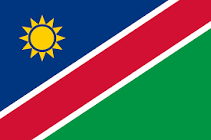
Namibian government is to increase 9 per cent of teachers and civil servants salary starting from April, 2017.
This was disclosed by the country’s finance permanent secretary, Ericah Shafudah in a notice given to offices, agencies and ministries in the country.
The promise for the increase was made in October, 2016 after the teachers countrywide went on a two-day strike for an 8 per cent salary increment and improvements to their condition of service.
The strike had hampered the national examination of the country’s grade 10 and 12 students and the examination had to be postponed.
The strike led to an agreement of increase of salary of teachers and civil servants in the country between the Namibia Public Workers Union (Napwu) along with the Namibia National Teachers Union (Nantu) and the education ministry.
The increase is to take effect in April, 2017.
Shafudah said the salary increase is for Grades 1A to 15, including a 7 per cent adjustment to the transport allowance for staff below the management unit, and 7 per cent to the motor-vehicle allowance for management.
Nantu secretary general Basilius Haingura commended the Namibian government for keeping to its promise.
“It will improve the lives of not just teachers, but all public workers. It started out as a fight for teachers, but in the end it benefited all. We must always stand together, and never be divided for fights such as this,” he stated.
An Environmental scientist in Nigeria, Suleiman Zubair Abdullahi, has revealed that there is so much proliferation of Dengue fever in Northern and southwest Nigeria, always mistaken to be ordinary Malaria.
In an interview with Africa Prime News, the environmental scientist said research had revealed that Dengue fever is caused by a special mosquito commonly found in Asia but the change in climate has resulted to the scourge in Nigeria.
He pointed out that, “Before now we don’t have Dengi fever in Nigeria, but ordinary malaria; now people are losing their lives more from malaria than before.
“It started emanating as a result of climate change because it was not experience before. As it is now, there is so much proliferation all over the north and even in the south-western Nigeria, where the issue of typhoid and malaria is high. They are not just ordinary malaria. Dengi fever can easily kills within the shortest period.
“If you notice the mosquitoes these days, they are not the type we use to have in the last ten years, they are black mosquito not as big as the ones we have; they are terribly dangerous,” he noted.
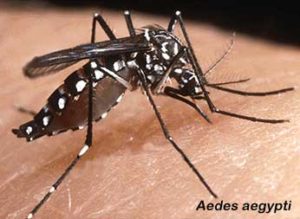
The Chief Medical Director of Graceland Hospital, Dr. Thot Joseph explained that Dengue fever was a kind of fever caused by a virus called Dengue virus which is usually transmitted via a mosquito called Aedes Aegypti with incubation period of between 3-15 days. “It is also known as Dengue Hemorrhagic,” he said.
According to him, the virus presents something very similar to Malaria and something like Ebola, noting that the disease was spread from one human to another via these mosquitoes, with the environment playing a great role in its spread.
He said the factors that aid in the spread and growth of the disease were similar to that of Malaria of which include waterlogged area, broken pots/tyres, poor drainage, stagnant water and bushy areas.
“It symptoms include fever, general body pain (myalgia), bleeding from orifices (all openings in the body like the nose, anus, mouth). It is been diagnosed in the laboratory.
“The treatment for all viral disease is given as supportive treatment for dengue fever patient because there is no direct treatment for the fever,” he added.
On proliferation of the disease in Nigeria, Dr. Joseph said, the disease was commonly found in the Caribbean and Asia which they have incorporated it into their child disease.
In Nigeria, he explained, there was more of malaria, adding that the Mosquito that spread Dengue disease is present in the country.
He cited an example of an incidence that happened in 2015 when he was the Kaduna state Health Commissioner of a Dengue fever patient that was mistaken for Ebola patient.
“For instance there was a case in 2015 where someone was suspected of having Ebola but after virology test diagnoses and asking where he came from, we discovered it was dengue fever.
“So the issue of climate change and global warming as well as lots of movement around the world (migration) makes it easier for the spread of the disease. So if an individual is infected, the first question to ask is where the person is coming from so as to know the source,” he observed.
While calling on medical personnel to always have a high index of every disease and not zero everything to malaria, he called on Nigerians not to restrict any sign of fever to ordinary fever especially whenever they feel those symptoms.
He urged Nigerians to always take care of their environment and ensure there was no stagnant water and pile rubbish around them; while government should occasionally fumigate the environment in order to destroy the mosquitoes parasite.
The first isolated case of Dengue disease in Nigeria was in the 1960s; only few other cases have been reported with most cases often undiagnosed, misdiagnosed as malaria or referred to as fever of unknown cause due to lack of awareness by health care providers and poor surveillance by the public health officers.
Religious leaders and activists in Nigeria have expressed concern with the high prices of commodities, goods and services, calling on government to immediately intervene to safe the ugly situation.
They observed that despite the continuous daily appreciation of naira over the foreign currencies in Nigeria, traders seem to be taking advantage of consumers, refusing to reduce price of commodities, goods and services in the country, making life extremely difficult for the ordinary citizens in both rural and urban parts of the country.
Comrade Ramatu Tijjani, a peace activist from Northern Nigeria, in an interview with the newsmen shortly after visiting some local markets in some parts of the region confirmed that majority of traders have failed to reduce the prices of commodities, goods and services, even when there was a fall in the value of foreign currency in the country.
Ramatu said, “It is surprising to see that despite the continuous devaluation of dollar below 400 naira, the prices of foodstuff, building materials, various commodities, livestock, spare parts of vehicles , and other social services still remain high without any reduction.”
She added that many Nigerians, especially the masses, the unemployed, less privileged, widows, street destitute were finding live extremely hard as a result of the economic recession.
The activist pointed out clearly that, “Many local Nigerian marketers have never used or made transactions with the dollar but claim the rise in foreign currency has affected the price of their goods.”
Ramatu called on the federal government, Nigerian Labour Union, and Trade Union, with human rights organizations to quickly intervene, through dialoging with market unions by solving the problems through reducing the prices of goods in the market as marketers have failed to comply.
“Dollar has crashed yet traders still sell all products at high prices, can you imagine that? What does sugar cane, vegetable, onion, pepper, tomato, okro, mango and paw-paw got to do with the rise of dollars for God’s sake!
Religious leaders, Non-Governmental Organization and civil organizations across the country have expressed dismay with the attitude of some Nigerian traders who are guilty of their unruly behaviour to humanity.
In Kaduna, northwest Nigeria, pastor Yohanna Buru, had also visited some local markets in some parts of the region with some Muslims and Christians to see things for themselves.
Buru expressed shocked towards the attitude of some of the marketers as they failed to reduce prices of goods even after the fall in dollar.
He urged the traders selling food items and other assorted commodities in the market to consider the suffering of many Nigerians which is as a result of hike of dollar.
He also appealed to traders to bring down prices of commodities in order to make the common man happy and get reward from God.
Yohanna Buru said, “The increase in the prices of food commodities at various markets has put many Nigerians into difficulties, with most prices of foodstuff and other commodities in the market almost tripling the normal price.”
He noted that in less than two months to Ramadan traders always take advantage of the season to increase the prizes of foodstuff thereby making the situation unbearable to Muslims throughout the 30 days fasting and prayer.
Firefighters look for hotspots in the debris after their team put out a fire at the scene where a small plane crashed into a home in Northglenn, Colo., Monday, May 5, 2014. The plane had been towing an advertising banner and crashed into an unoccupied house in an area north of Denver, setting the plane and the house on fire. The pilot walked away with minor injuries, according to authorities. (AP Photo/Brennan Linsley)
By Winifred Bulus
Firefighters look for hotspots in the debris after their team put out a fire at the scene where a small plane crashed into a home in Northglenn, Colo., Monday, May 5, 2014. The plane had been towing an advertising banner and crashed into an unoccupied house in an area north of Denver, setting the plane and the house on fire. The pilot walked away with minor injuries, according to authorities. (AP Photo/Brennan Linsley)
Six people die in plane crash near a border between Zimbabwe and Mozambique.
The plane was reportedly hired by a private joint venture between Mozambique and Dutch called Cornelder.
The victims of the crash were six in number, including two cabin crew members and four executives from Cornelder.
Some reports have it that the cabin crew included a father and son who piloted the plane.
The crash is said to have been caused by bad weather.

 Zambia has confirmed the shortage of HIV/AIDS drugs in some of its health centers to the activities of some medical personnel that smuggled the drugs to DR Congo.