Home Blog Page 1582

DFID Blames Meningitis Outbreak On Weak Health System In Nigeria

0

By Amos Tauna

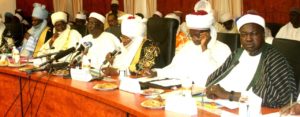
Dr. Kolo spoke on Tuesday at the emergency meeting of Northern traditional leaders committee on Public Health Centre, and some northwest state governors.

The Sokoto State governor, Aminu Waziri Tambuwal, northwest, described the meningitis as a dangerous epidemic, saying that his state had recorded over 1,000 cases so far.

Also, Kaduna State governor, Malam Nasir El-Rufai, northwest, said that it was sad for governors to see the number of deaths recorded in their states due to meningitis.

However, the DFID boss explained, “The outbreak of meningitis is an indication of weak health system in Northern Nigeria. And I want to use this opportunity to plead with the leaders, especially the Executive Governors to continue to put in more efforts in strengthening the health system, especially the primary healthcare system.

“Unfortunately, we in Northern Nigeria are not privileged, the vulnerable groups are mainly women and children that are jobless, have no access to funds.

“Therefore, their care must be provided for free of charge, 100 per cent free of charge and that is possible. It has been demonstrated in Nigeria and we are beginning to see the outcome of such commitment through the work that we do with the state governments.

“The government of United Kingdom is concerned about the outbreak of meningitis in Northern Nigeria, just like it is concerned about the case of maternal and new born mortality. It sympathises with the government and people of Northern Nigeria and people of Nigeria in general.

“The United Kingdom government had immediately sent its contribution of 800,000 dozes of meningitis vaccines through World Health Organization, WHO, and that has been acknowledged and it is already being utilised in the country.

“As part of other programmes funded by the UK government, one of which is reduction and averting maternal death in Northern Nigeria and also improving child survival.”

Cerebrospinal meningitis, CSM, has spread across 19 states in the country, with 3,959 suspected cases reported and 438 deaths recorded as at April 5, 2017.

The Northern states have been worst hit by the epidemic as Zamfara, Katsina and Sokoto, account for 93 percent of the cases.

Tambuwal said, “Meningitis is a very dangerous epidemic that has been ravaging many parts of the country. Collaborations between the governors and traditional leaders is vital.

“We had cases in seven local governments areas of Sokoto state, Bodinga, Dange Shuni, Wammako, Kafin Rafa, Gadabawa with over 1, 000 cases of the disease recorded, we were on the threshold of having an epidemic.”

He said for the state to address the disease and stop it from becoming an epidemic, “An awareness campaign was set up, ventilation of living areas, decongestion of where out children are living.

“We received over 20, 000 doses of vaccine from the federal ministry of health, we are expecting over 800, 000 doses of the vaccine though our target is 2 million vaccine doses for most of our children between the ages of two and 29.

“We have had number of teams mobilised led by the state Commissioner for health. We have never witnessed this type of Type C meningitis in the state which is why we have so much challenge in the state.”

The Convener of the meeting and Sultan of Sokoto, Alhaji Muhammad Sa’ad Abubakar III, who was represented by the Emir or Zazzau, Alhaji Shehu Idris, said the meeting was timely and commendable.

“Traditional leaders in coordination with stakeholders will do everything possible to assist in ensuring appropriate medical asistance promptly to avoid future outbreak of meningitis in the North,” he observed.

Governor El-Rufai added, “It’s a matter of great sadness for us governors to see the number of deaths recorded in our states. North west has been battling with meningitis epidemic in the last few months. It has killed many of our people because it is a new strain; Type C that our people are not used to.

“The action taken by stakeholders has slowed down the rate of spread of the disease: vaccination, awareness and drugs. Our traditional leaders have also been of gear help, our people have greater trust in our royal fathers than any other institution.

“Here in Kaduna, we have recorded 17 sporadic suspected cases across 11 local government areas with one type C causing one death. We have instituted measures and hope, we have I tensioned surveillance, drugs and awareness, so far we have been successful.

“Our hope is that our traditional leaders will take this battle with the same zeal you toak the issue of polio that has been successful. We hope to ensure that our effort of promoting preventive primary healthcare will begin to get traction.”

WHO Country Representative, Dr. Wondimagegnehu Alemu, said, “The current type C is a new one. It has never been known to cause this magnitude of outbreak, it used to be only sporadic cases.

“So, that has left us with no option than to rely on few of the tools that we have including few number vaccines that are available at global level, through the strategy contingency plan.

“The government has applied and has received and judiciously distributed to the affected places and the vaccination has taken place. More is coming on the way.”

UNICEF County Representative, Dr. Muhammed Fall said, “Meningitis is a highly communicable disease, but it can be easily controlled through very simple improved hygiene measures, understanding the mode of transmission, early health seeking behaviour can help very much to roll back this disease.

“I need to call attention of your excellences to the situation in the North East. We know that, in the North East, children are already facing the burden of malnutrition. They are already facing all the consequences of the devastating conflicts.

“Now, letting meningitis penetrate this area would increase the burden and this is why I want to take this opportunity to appeal to the Federal Minister Health, to appeal to all the partners for special attention to be paid to avoiding this disease get and spread into the North East.”

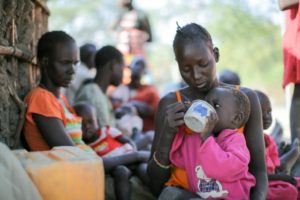
United Nations Warn Against Case Of Humanitarian Crises In African

0

By Winifred Bulus

United Nations High Commissioner for Refugees (UNHCR),has revealed risk of mass deaths in parts of Africa including, Nigeria and Yemen.

This was made known by Adrian Edwards, the spokesperson of the United Nations High Commissioner for Refugees (UNHCR) during a press briefing in Geneva, Switzerland.

He added that this was a result of the drought experienced by some African neighbouring countries, displacement of persons in war zones as well as insurgency amongst others.

Edwards pointed out the possibilities that the poverty could be worse than the 2011 East Africa crisis, the worst in 60 years which caused about 260,000 lives.

According to him, “In northern Nigeria, seven million people are now struggling with food insecurity and need help. The situation is particularly bad in parts of Borno, Adamawa and Yobo states where by June it’s expected that some 5.1 million people will be in Integrated Food Security Phase classification levels of between 3 and 5.

“In Yemen, which is experiencing the world’s largest humanitarian crisis with almost 19 million people in need of humanitarian help, around 17 million people are food insecure. Food needs are being cited as the lead factor in displacement at three quarters of all locations where there are internally displaced people.

“Already, displacement is rising, forcing us to upgrade our displacement estimates for 2017. In Sudan, for example, where our initial estimate was for 60,000 arrivals from South Sudan this year, we are in the process of revising the expected total upwards to 180,000. Similarly in Uganda we are revising planning from 300,000 displaced to 400,000.

“In all, some 20 million people in these countries are in areas affected by drought, 4.2 million of whom are refugees. Consecutive harvests have failed, conflict in South Sudan coupled with drought is leading to famine and outflows of refugees.

” insecurity in Somalia is leading to rising internal displacement, and rates of malnutrition are high, especially among children and lactating mothers.

“In the Dollo Ado area of southeast Ethiopia, acute malnutrition rates among newly arriving Somali refugee children aged between 6 months and five years are now running at 50-79 percent.”

Nigeria Minister Of Health Directs Gasau Federal Medical Centre To Set Up Rapid Response Team To Search For Meningitis Cases

0

By Lontong Ibrahim

Nigeria’s Minister of Health, Prof. Isaac Adewole, has directed the Management of the Federal Medical Centre, Gusau in Zamfara State – northwestern Nigeria, to immediately activate a case finding mission in a bid to stem the current outbreak of meningitis in the state.

Adewole gave the directive during his visit to the hospital on Monday.

Spokesperson of the Ministry Mrs. Boade Akinola in a statement quoted the minister to have said; “Set up a rapid response team and let them go and find cases.

“This is not the time to wait for referrals before you treat. You should go out and search for the cases,” he said.

While describing a picture of a girl receiving treated on the floor in one of the state PHCs that made the front page of a recent edition of a National Newspaper as unacceptable, the governor called on the facility to assist in strengthening the Primary Health Care system in the state in order to curtail the current meningitis outbreak and future occurrences.

He said, “What I saw in The Newspaper is unacceptable. They are human beings and not animals and we must treat them with dignity.”

He promised the hospital of the ministry’s support in ensuring that Zamfara people access care and halt unnecessary death in the state.

Zimbabwe Human Rights Association Criticise The Country’s First Lady For Dehumanised Treatment Of Some Citizens

0

By Winifred Bulus

Zimbabwe Human Rights Association, ZimRights, have criticised the country’s first lady’s dehumanization of 15 families in the country.

This was after the police forced members of a community off Arnold farm in Mazowe, a village in Mashonaland Central province in Zimbabwe.

The members of the community lost their lands and homes to the country’s first lady, Grace Mugabe, who intends to use if for a wild life park.

The ZimRights also condemned the violent method of evicting the locals which is against the country’s human rights constitution and the government’s failure in providing a substitute homes for the locals.

“The fact that the police, who are supposed to uphold the Constitution and the rulings of the courts, are in the forefront of violating them, is a travesty of justice.

“The fact that evictions that violate human rights are allegedly being spearheaded by the First Lady, Grace Mugabe, is a serious abrogation of the rule of law, accountability, constitutionalism and democracy in the country,” they observed.

The first lady and her family own several pieces of land which they acquires after the violent land confiscation in the country and recently seized 22 hectares of land from small scale miners for the expansion of the first lady’s business.

State Of IDP Camps In Nigeria

66

By Adebote Seyifunmi

Often times, we hear of IDPs, IDPs, maybe most of us know that IDP stands for Internally Displaced Persons, but what more do we know? Or should I ask, what else should we know, about IDPs, particularly in Nigeria?

Typically, people forced to flee their native home/land to seek a sort of refuge elsewhere but within his or her country’s borders are regarded as Internally Displaced Persons (IDP), the cause for fleeing, in most cases are closely tied to communal clashes, natural disasters and most prominent today, insurgency attacks by extremists.

According to Internal Displacement Monitoring Centre (IDMC)’s most recent publication on May 2016, 207 Local Government Areas are of concern, covering 13 States of Northern Nigeria: Abuja (13,481 IDPs); Adamawa (136,010); Bauchi (70,078); Benue (85,393); Borno (1,434,149); Gombe (25,332); Kaduna (36,976); Kano (9,331); Nasarawa (37,553); Plateau (77,317); Taraba (50,227); Yobe (131,203); and Zamfara (44,929).

Having over 2, 000, 000 people in IDP Camp is saddening, having an insight into what happens within the borders of such camps is horrible. On Saturday, March 25, 2017, I visited the Internally Displaced Persons Support Booth at Area 1, Garki, Abuja where 2539 people are trying to get back their life after the insurgencies in Borno and Adamawa state; 63-year-old Idris Ibrahim Aliyu, popularly called, Baba IDP, the camp coordinator who also doubles as Public Affairs Personnel for the camp, spent some time with me to reveal the state of the IDP since 2009, when Mohammed Yusuf was killed, what he thinks the way forward is and the role of individuals, NGOs and Government agencies.

“I escaped Boko Haram attack on March 3rd, 2011 in Borno State, after I was marked by the terrorists because I stood up against their philosophies and ideologies. I fled to Kano and they came after me again, when it became apparent they were after me and would kill me, I had to seek refuge here and so I have been here since 2011” Baba Aliyu, continued, “I was a teacher, professionally trained and had my grade two in 1972 from Catholic Mission School, Maiduguri.

I taught in a primary school briefly, trained in office administration & procedure, worked with Ministry Of Health in Maiduguri. In 1975, after completely my course in Mass Communication from the University of Mogadishu, Somalia, I worked with NTA for almost two decades as a producer, then when ahead to spend 17 years as a public relations consultant, in Lagos before my return to my home town in Borno”

When asked about his family, Baba Aliyu painfully explained, “I was married and had two children, I lost my wife to the insurgency, my first child was born June 22, 1969, and I lost him at the age of 27, I lost my second child in 1980 I have since refused to remarry nor have child (ren) out of wedlock, so, I went on to adopt two children, one is in Maiduguri, the other should be in Kaduna but I have lost touch with them.”

It looked quite evident that Mr Ibrahim Aliyu is gradually getting over the painful past and his channeling his strength to be a voice for IDPs in the camp, 23rd December 2015, I wrote the presidency to inform him on the state of IDPs. “We appreciate those who do not come here with a jeep or bags of rice, but those young people with human spirit, great talent and ideas that can transform the state of the IDPs.

“It is good to donate rice, carton of noodles, blanket, mosquito net, bags of cloth but there are other things that can transform lives of IDPs permanently” He regretted that, “it is so sad that the government has ignored us, the last donation from the government to the IDPs were packs of Mosquito coil, that was in September 2016, before then was in 2014, when they brought 20 bags of rice, all labelled with GEJ portrait and that was obviously political”.

“Health parastatals are concerned about the outbreak of meningitis, they don’t know that if one of the IDPs get infected, because of the congestion here in the camp, the whole community and by extension, Abuja, is threatened. What has troubled us the most concern in recent time, is that our IDPs are now being through out of the hospitals. Hospitals suddenly withdrew subsidy used to treat IDPs, they have refused to comply with the documented directive from the Federal Government to treat IDP in government hospitals. Next to that, we have lot of students, and some structures have been put in place from the children to learn but no materials, no teachers.”

Amidst the 2539 IDPs in the camp, 713 are youths, 70% of them – females while 520 are women with children, this pose so much on Mrs. Hadiza, whose husband was killed by Boko Haram in Borno forcing her to take refuge at the IDP she has since become ‘the mother of the camp’ who without medical facilities has helped deliver over 100 babies safely in the camp leveraging on the little traditional medicine she learnt for her grandmother in Borno before the insurgency. In the words of the Camp coordinator, Ibrahim Aliyu, “…without her, this camp would be completely empty. She tries her best, though every member of this community is important, it seem they can be no substitute for her roles here”.

“Despite the many health challenges, absence of hand glove, disinfectant, other anti-natal check-up or treatment, unavailability and/or unaffordability of post-natal treatment. She remains committed to the IDP, she barely has time to herself, she could be called upon in the middle of the night to treat some of the IDPs”

Baba Aliyu believes there is a way forward and that individuals, NGOs and Government agencies have roles to play, “Train our young people to be industrious, let it be part of our working capital; get us a website so that the world will know what is happening here, the issue is beyond clothes, rice and other items, if proposals are written to address long-term, human based issues and submitted to willing individuals, notable leaders that should be concerned like AMAC chairmen, financial institutions, banks, foundations, Federal Ministries, Department and Agencies, the reproach of been an IDP will be taken and we can become wholly integrated again back to the society.”

Adebote Seyifunmi is an Environmentalist, a youth advocate and a Wildlife Researcher. He writes from Abuja, Nigeria. He can be contacted via adeboteseyi@gmail.com and +2348130979064.

Nigeria: Security Officers Thwart Bombing Attempt By Another Female Suicide Bombers

0

By Longtong Ibrahim

Security personnel in Maiduguri, northeastern Nigeria, have thwarted an attempt by another set of female suicide bombers to attack a community around University of Maiduguri in the early hours of Monday.

Information officer of the National Emergency Management Agency, NEMA, Abdulkadir Ibrahim, in a statement said the incident occurred at about 4am on Monday.

According to him, no casualty was recorded except the two female suicide bombers who died and their remains were deposited at Borno state specialist hospital by NEMA and State Emergency Management Agency, SEMA, emergency response teams.

Last Saturday, a similar explosion occurred at a Mosque close to Federal high court Jiddari polo, where the emergency response teams evacuated the bodies of two female suicide bombers believed to have died in the incident,while four others were injured during the attack.

Nigeria: Evangelical Church Winning All, ECWA, charges Youths On Godly Living

0

By Winifred Bulus

The Evangelical Church Winning All, ECWA, Kaduna South District Youth Council, DYC, in Kaduna State northwest Nigeria has called on youths for a godly living in a godless generation.

Speaking on ECWA theme, ‘A generation without God,’ in a 3-day DYC Conference, Reverend Gideon Kantiyok, drew the attention of the youths to the current evil and wickedness going on in the world and challenged them to restrain from ungodly activities.

“The role of watching and praying cannot be over emphasised. Exercise care, caution and restraint in this perverse generation without God Communicating with God and waiting for response from him is the only way out of the unpleasant situation in the world.

“Our generation will not know God, unless we are prayerful. May the Lord help us to be watchful in this generation that does not know God we must never allow this generation influence us negatively,” he challenged the youths.

Also Reverend Micah Alkali called on the youths to divorce wickedness, hatred, backbiting, and seek for a new heart from God.

He observed, “When a man who knows God turns away from Him, he falls and becomes an object of shame and ridicule. Forfeiting God’s grace and becoming prey to satan, the enemy is the worst thing that could happen to a child of God.

“Godliness is inexcusable. Take the Christian race seriously and forsake worldly pleasure that is only temporal.

“The disdain, disregard, lack of love faced by God’s children will come to an end one day. Fear, doubt, defeat, failure will make you amount to nothing. Forget the past and focus on the future, for it is what matters the most. If godliness is not transmitted to the next generation, the next generation will be lost.”

Some parents expressed their concern in the atrocities carried out by the young generation.

“Purity is the key to a bright future. Youths have been lost to the desires of the world. My expectation for the youths after the conference is that we see changes in their lifestyle, attitude and behaviour.

“As a young man or woman, understanding God’s word helps you plan for a better future and prevents youths from getting carried away by peer pressures: setting them up high above their peers.

“This generation is lost in the darkness of sin. Youths engaged in ungodly activities such as smoking and drinking. Some of them have rejected education for waywardness and careless living.

“My desire is that this generation will go back to God and truly seek him. They also need to be contented with what they have and have regard for God and their parents,” they reiterated.

Gambia’s Peaceful Parliament Elections Mark Significant Growth For The Country-President Adama Barrow

0

By Winifred Bulus

President of The Gambia, Adama Barrow, commends Gambians for conducting a peaceful parliament election.

The president in a press statement expressed gratitude to the country for conducting a peaceful campaign and election.

This, he said was significant in the country’s new dimension towards change which is in line with the new government’s journey.

“I thank all Gambians for going through the campaign in a mature and peaceful manner to canvass for votes.

“The unprecedented number of candidates in this National Assembly election is a manifestation of the freedom Gambians have begun to enjoy since the change of government in December 2016. This is one of the first great achievements of the new Gambia.

“Fellow Gambians, I urge all of us to put our positive energies together and stand strong in building the New Gambia.

“We want a Gambia where citizens will enjoy their freedom and dignity through socio economic development and respect for the rule of law,” he noted.

Meanwhile, the country’s long time opposition party, United Democratic Party (UDP) won absolute majority in the parliament elections.

31 out of the 53 parliament seats in Gambia were taken by the UDP party which had stood alone after the coalition of parties that won the presidential elections with the party’s candidate coming third in the presidential running.

Official results show the party took 31 of the 53 available seats in Gambia’s National Assembly.

The parliament election conducted was the first legislative election in 22 years after the country’s freedom from dictatorial rule by former President, Yadhya Jammeh, who was succeeded by the new president, Adama Barrow.

Currency Exchange Rates

USD - United States Dollar
ZAR
0.06
EUR
1.17
CAD
0.73
ILS
0.31
INR
0.01
GBP
1.34
CNY
0.14
Enable Notifications OK No thanks