The blending of fertilizer in Nigeria without any Federal government subsidy and foreign exchange has saved the country N260 billion, the President, Fertilizer Producers and Suppliers Association of Nigeria, FEPSAN, Mr. Thomas Etuk, has said.
This was as the Presidential Committee on Fertiliser has said that, one million metric tons of fertilizers, amounting to 20 million 50kg bags of the product is to distributed in Nigeria before the end of June 2017.
The Presidential Committee which paid a visit to the three fertiliser blending plants in Kaduna, northwest Nigeria on Saturday evening said that the era of hoarding fertilizers is gone in Nigeria, as people who engage in such act would be losers, because 15 fertilizer blending companies were producing simultaneously across the country at a rate that the market will be saturated with the products.
Speaking with newsmen shortly after the tour of Fertilizer and Chemicals Company, Abakpa and Chemicals Ltd. Kakuri, Chairman of the committee and Governor of Jigawa State, Alhaji Abubakar Badaru, said, the Presidential Fertilizer Initiative, which is a collaborative programme with the private sector will deliver 700,000 metric tons above what was consumed in Nigeria last year.
He warned agro dealers and distributors of the fertilizer against selling the product above the approved price of N5,500, saying anyone reported by whistle blowers for such would be prosecuted.
According to Governor Badaru, “The project is working very well and the farmers are happy, they are getting fertilizers at a very good price and very available too. Nobody believed we will get to this stage when we started, but you have seen the development so far, how fertilizer has started becoming available everywhere.
“We intend to continue because there is no subsidy element, because the businessmen, the private sector are involved in this, it is well sustainable and it will continue.
“From the plant, the fertilizer is being sold to the agro dealers at the rate of N5,000 per bag, and after deducting transport, they are made to make some margins, and they shouldn’t sell more than N5,500. There are telephone numbers on each bag for whistle blowers to raise alarm if any agro dealer sells the product to them more than N5,500. Such dealer will be prosecuted.
“This year, this project is going to distribute one million metric tons of fertilizers, which is going to amount to 20 million bags. This is going to be a great improvement, because last year, all the fertilizers consumed in Nigeria was 300,000 metric tons. So, this year we are producing 700,000 tons over what was consumed last year.
“Governor Badaru said dealers who try to hoard fertilizers will be doing that at their own peril because “apart from paying for storage for such products, the Federal Government has set a price for NPK 50kg at N5,500 and they can’t sell more than that anywhere.”
Speaking on the fertilizer project, Managing Director, Nigeria Sovereign Investment Authority (NSIA), Mr. Uche Orji said, 1.3 million bags of fertilizers have already been sold across the country, while another 1.6 million bags have been released.
According to him, “If you put that in context, in two and half months, we have sold more than 60% of the entire programme of 2016. We have materials on ground to deliver more than 8 million bags. And next week, more materials will come for another four million bags.
“This programme targets 20 million bags for this year, it has never been done in this country. So, there will be enough fertilizer for everyone. So, anyone hoarding is just wasting his time because more is coming.
“This is a classic case of import substitution. In the past, we would have imported this fertilizers and no job would have been created locally. Out of the over one million so far sold to the dealers, not one naira subsidy has been used. There is no need for subsidy.
“Three blending plants are working in Kaduna, one is working in Funtua, one in Ebonyi, one in Lagos, Minna is working, we are having Plateau, Benue and before the end of this programme, we will have many more blending plants across the country”, he said.
FEPSAN President, Mr. Thomas Etuh in his own remarks said, the Fertilizer Initiative is a tripartite agreement between Fertilizer Producers and Suppliers Association of Nigeria (FEPSAN), OCP in Morocco and Nigeria Sovereign Investment Authority.
He said the programme which has agreement to blend NPK 20:10:10 in Nigeria without any FG subsidy has in the last six months saved Nigeria N60 billion from subsidy and N200 billion from foreign exchange, adding that, “So far, over 4,500 trucking has taken place, imagine the drivers, the motor boys, those loading and off-loading, so direct and indirect jobs have been created and that is the joy of the project and at the end we expect a bumper harvest from the farms.”
Talking about the raw materials, Etuh said, only two of the raw materials used are imported. “We import phosphate from Morocco and we have the potash coming also from Europe. These are the two products we don’t produce in Nigeria. But the other two raw materials are produced in Nigeria, that is Urea, which 36% and lime stone which is 27%. So, 63% of the raw materials are produced locally,” he explained.
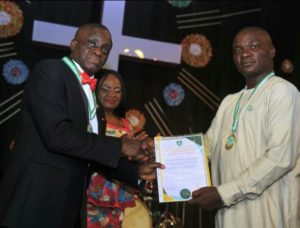
Pastor Christopher Delvan Gwamna Ajiyat, has in Kaduna, northwest Nigeria, been honoured with an award of fellowship and icon of monitoring for his sacrifice to humanity.
The Pastor life Pastoral Centre, Kaduna, according to the organizers, Institute of Monitoring and Career Coaching Nigeria, IMCCN, was awarded for his exceptional qualities of making life meaningful to others around him.
On receiving the award, the pastor acknowledged the institution for recognizing his effort, saying, “I take prime interest in people, because I have failed many times but I made it a life goal of making sure people coming up do not fail. I do all I do casually but seriously with most influence and the award is a call to come up higher and be the salt and light of the world.”
In his remarks, the Chairman Board of Fellows of the Institute, Mr. Dauda Ageni, described Pastor Chris Delvan as an Icon of Hope to the younger generation who has steered the institution to greater heights.
Also, the Director General of the Institute, Rotimi Matthew, noted that the choice of Pastor Chris Delvan for the Award and Investiture was carefully done considering his contribution in shaping the lives of many people beyond his immediate ministry; stressing that in seeking recommendations about the recipient, it was clear Pastor Chris has mentored innumerable people and have had great influence even on people he has never met.
He described him as a distinctive man of God, a gentleman whose influence was beyond his ministry and is respected by leaders in other sphere of life.
He added that the Institute recognizes him as an accomplished leader, administrator, a mentor per excellence, a tireless advocate of right standing with towering impact.
The National President of the International Christian Chamber of Commerce, Nigeria Chapter, Architect Gregory Icha, a very close friend of Pastor Chris, in a goodwill message said the award was well deserved; describing the recipient as a humble man who truly demonstrates what mentoring is. Icha observed that Jesus Christ is the greatest Mentor who empties himself into people till they began to look and behave like him, adding that Pastor Chris epitomizes Jesus as he has poured out his Christ-like nature into many. The wife of the recipient, Pastor Anna Gwamna described him as a passionate, sacrificial and selfless man of God who would go to any length to build a broken life and give direction to as many as God brings his way.
A ubiquitous trend in all human species and societies is a constant desire for change – change from bad to good, and good to better. It is a desire that has fuelled decades of development and propelled advancements in science, medicine, technology, arts etc. Change however is not always progressive. There exists the propensity for change from good to bad due to leadership challenges. And it breaks the heart that the change currently being experienced at the National Open University of Nigeria (NOUN) is one that threatens to undo years of progressive developments at the institution.
The federal government of Nigeria in February 2016 rejigged the leadership of the nation’s flagship open and distance learning institution by appointing Professor Abdalla Uba Adamu as Vice Chancellor, taking over from Professor Vincent Ado Tenebe. This was immediately challenged by a civil society organization, alleging that the move ran contrary to the National Open University Act (2004), which mandates the federal government to consult with the University Council before removing or appointing a Vice Chancellor.
The National Open University of Nigeria, NOUN, was established formally in 2002 as the flagship tertiary institution for Open and Distance Learning in Nigeria. Since its establishment, the institution has engaged the services of NOUN iLEARN, a harmonised Learning Management Portal that allows for online instructional delivery through the combination of audio, video and text mediums. Without the iLEARN platform, the relationship and synergy that exists between the students and the knowledge bank as provided by the university management through the lecturers are shattered. And this transcends academics. Other aspects of the university operations made possible through the iLEARN technology are condemned to stone age realities. Unfortunately, this is what currently obtains at NOUN as decisions taken by the VC have plunged the school into an operational chaos that is having a devastating impact on the students.
The iLEARN platform serves as the digital soul for the smooth running of an ICT-compliant National Open University. Without it, students are subjected to long trips to and from the school to physically do things that should be done remotely. The workload of support staff and admin officers are tripled as they have to attend to long queues and manually fill forms and file papers. Removal of the iLEARN platform basically strips NOUN of all its ICT components and that is what the leadership of Professor Abdalla Adamu has done.
Apart from operations, iLEARN provides NOUN students with dedicated support lines and staff who answer student’s questions on all matters of interest from admission to graduation. The service ensures students can reach to the school via multiple social and digital media platforms like Facebook, Twitter, WhatsApp, BBM, blogs all coordinated and linked to a dedicated call centre with 5 personnel per time. Before the questionable decision to stop the service, students called in from all part of the world to make enquiries on NOUN through iLEARN. Now students must visit the institution to make enquiries. Without the synergy and connectivity that iLEARN provides, students no longer have valuable and immediate feedback on issues affecting them and the management is left winking in the dark as well. It gets even worse.
Professor Abdalla’s insistence of doing things his own way even when all available metrics point to better solutions has left NOUN with a broken student-tutor interaction system. Due to the VC’s decision to strip the school of ICT framework provided by the iLEARN platform, students now rely more on self-learning and have been cut out of interacting with tutors where they could ask questions and get guidance on studies. Currently, there are no engagements or interactions of any sort between students and tutors. In the bid to help themselves, they must constantly source for tutors to tutor them face to face – which is against the vision and spirit behind the establishment of the institution. It doesn’t end there.
In the catalogue of retrogressive taken the current VC to undo 15 years of development at NOUN is the decentralization of the university portal. Before now, nou.edu.ng served as NOUN’s only website and a centralized portal that guided students’ and visitors alike for correct information while providing the school the benefit of being well placed according to webometrics ranking.
This has since changed under the new VC. NOUN now operates multiple websites with portals that have barely worked for 48 hours, leaving students stranded at different stages of their payment and registration processes. This has also opened students and the institution to security challenges as sensitive information are entered into different websites in a world of cyber and information attacks. The cost of operating multiple websites also raises the question of whether the VC’s decision makes any economic sense.
These and more are what students of the National Open University are currently dealing with. Learning has been made cumbersome, and even basic processes such as payment of fees, registration and taking exams have become so stressful that a lot of students have been demoralized and frustrated.
Things may yet get worse if the current trend is not checked. A fully functional and operational NOUN is in the best interest of Nigeria’s human capital development. As such the relevant authorities must come to the aid of the labouring students of the school by compelling the VC to reverse the damaging policies so instituted.
Over forty five Ward Development Committee Chairmen in 15 Local Government Areas of Kaduna state, northwest Nigeria, have been trained on understanding how to voice and engage Government officials towards financing maternal health.
The training which was organized by Family Health Advocates in Nigeria (FHANI) with support from Nigeria Urban and Reproductive Health Initiative (NURHI) is aim at ensuring the rate of women dying as a result of pregnancy related complications or child birth in Kaduna state drops to the barest minimum.
Report of the National Demographic Health survey in 2008 shows that, maternal mortality ratio in Kaduna state was 800/100,000 live births (about 1 death for every 12 pregnant women).
According to the Assistant Secretary of FHANI, Iliya Kure, Child Birth spacing (CBS) has been identified as one major means that could reduce maternal mortality; as such there is the need for people at the grassroots to be enlightened on its importance.
He noted that the beneficiaries of the training would further educate their fellow community members on the need to space child birth and ensure that facilities at their communities are working, while on the other hand engage government officials who are duty bearers on financing health at community levels, especially family planning.
“We want to see a situation where these communities are enlightened and empowered on how to engage government and how to demand for accountability because they elect leaders and so the leaders are responsible to them. It will bring about accountability and transparency in governance
“Leaders are supposed to be accountable, transparent and be participatory – the community needs to be part of government and governance by having their opinion captured for government to work with including those who are vulnerable like women and people with disability.
“Leaders need to lead with voice of this people and be in tune with what the people want for the advancement of leadership,” he stressed.
In the composition of the participants, Kure said, they are all members of ward development committee, facility committee, including religious leaders, traditional rulers and community based organizations who work in the facilities at ward level (grassroots).
In a remark, the Deputy Chief Imam of Central Mosque Kafanchan, Mohammed Kabiru Kassim, also emphasized the need for community members and adherence of both religions to be enlighten on the importance of child spacing, saying both religion support it.
“We want to see child birth spacing becomes a social norm where everyone would be talking about it and it becomes part of us,” he added.
Family Health Advocates in Nigeria (FHANI) is a body established in November, 2010 to help in advocating issues around family planning, policies, and health financing.
For effective immunization of child killer diseases in Nigeria, Nigerians have been urged to be ambassadors by preaching its importance in every nook and cranny of the country.
Executive Secretary, Kaduna State Primary Health Care Agency, Dr. Hadiza Balarebe who spoke through a director, Dr. Neyu Iliyasu on Thursday in Kaduna, northwest of Nigeria said the importance of vaccination should be made known to every Nigerian.
Observing the 2017 Africa Vaccination Week in Kaduna organized by Kaduna State Accountability Mechanism for Maternal Newborn and Child Health in collaboration with Kaduna State Primary Health Care Development Agency, she explained that time has come for all hands to be on deck to ensure the success of any health programme meant to ensure the general welfare of citizenry in the country.
She assured that the Kaduna State government was doing everything possible to free the state from any child killer disease, adding that all machineries have been put in place in all the three senatorial zones for effective coverage of all health related issues in the state.
The meeting which had traditional rulers, couples, youth organizations and other stakeholders in attendance discussed extensively on ways to ensure full coverage of the state in all immunization and other health related programmes.
With proper enlightenment, she noted that the desired goal would be achieved following the enthusiasm shown by participants and their readiness to contribute their quota to the success of government programmes meant for the general welfare of the people.
Citizens of a society cannot do without the existence of a nation because every activity people engage in, within and outside the nation can all be determined by policies made by the people in the nation. Nations are an important part of modern society. History tells us about the existence of empires, fiefdoms and kingdoms, all dating from the classical era, medieval period, age of enlightenment, even to the contemporary modern world of today.However, nations or nation states have replaced all of them as the basic unit of human political organization.
Nations are not a product of historical accidents but are deliberately built by men and women of vision and resolve. Nation-building is therefore not the product of wishful thinking but of conscious,well thought-out governance. It is a continuous work-in-progress, a dynamic process in constant need of development and re-invention. Nation-building never stops and true nation-builders never rest because all nations are constantly faced with new challenges.
Nation-building encompasses many important aspects. Firstly, it is about building a political entity that is said to be related to a given territory which has its foundation on some generally accepted rules, norms and principles, and citizens who share the same vision.
Secondly, it is also about building institutions which embody the political entity; institutions such as a bureaucracy, an economy, the judiciary, universities, a civil service, and civil society organizations.
However and perhaps most importantly, nation-building is about the builders, i.e.the citizens, building a common sense of purpose, a sense of shared identity and destiny, and possessing a collective imagination of belonging. It involves the building of the tangible and intangible threads that hold a political entity together and gives it a sense of purpose by which it attains modernity. This can be linked to the founders of Nigeria, men like Chief Obafemi Awolowo, Dr.Nnamdi Azikwe, Sir Tafewa Balewa, Sir Ahmedu Bello and others, who had vision and showed keen interest in the attainment of independence and continuous building of the nation. These are the kinds of people that the nation Nigeria needs for its continuous growth and development.
Unfortunately, in modern times, Nigeria has been caught in the webs of so many challenges, despite the fact that she is endowed with so many human and natural resources. Some of the webs of challenges trapping Nigeria as a nation include the following:
The Web of History
The Web of Socio-Economic Inequalities
The Web of Building of Institutions for Democracy and Development
The Constitutional Web
The Web of Leadership
The Web Of History
From times past, it could be said that the challenges of nation-building have their roots in the colonial rule.According to Peter Ekeh’s Colonialism and the Two Publics, the two publics are the primitive and the civilian publics which involve the African and the colonial bourgeoisie respectively. In it, he stipulated that the primitive public involves the African way of living – their traditions, cultures, norms, values and political systems related to the culture and the likes. The civilian public refers to the colonial period and how the colonialists covered the Africans with the veil of ideology including: the fact that traditional worship is evil;that Africans are not progressive or developed because of their way of life and such similar thoughts.
In essence, this period can be regarded as the era of civilization,which involves the building of institutions like schools, hospitals, the constitution which involves rules for the people,political institutions and systems which encompasses or has been responsible for the people’s standard of living, even after the colonialists had left governance in care of Nigerians, assigning nationalist leaders according to their regions.This has led to tribalism which has gradually created the web of illegitimacy crisis, political instability and the likes. Scars had been left from history which cannot be forgotten because everybody is affected by what had happened since then, even up till date.But instead of focusing on the past, we can focus on what is on ground and give solutions to it. A wise man once said that history is past politics and politics is present history but those who do not learn from their past are doomed to repeat it – again.
The Web of Socio-Economic Inequalities
In Nigeria, many citizens are denied basic rights, such as the right to affordable and qualitative education and healthcare.There are also variations in the enjoyment of these rights across the country. As a consequence, the average citizen is not motivated to support the state and society, because he or she does not feel that the society is adequately concerned about their welfare.
Secondly a socio-economic inequality across the country encourages fear and suspicion which keep people divided. For example, the level of immunization of children against dangerous childhood diseases, it can be said that while the South-East has 44.6% immunization coverage, the North-West has 3.7% and North-East 3.6%. This is also be applicable to the education of the girl-child as an indicator; the pattern of inequality is similar with the South-East having an enrolment rate of 85%, South-West 89%, South-South 75%, North-East 20%, and North-West 25%. Only 25% of pregnant women in the North-West use maternity clinics, while 85% of the women in the South-East do. It is not surprising that 939%more women die in child-birth in the North-East, compared to the South-West.
Education and poverty levels show the dimensions of inequalities across Nigeria. If we take admissions into Nigerian universities in the academic year 2000/1, we see that the North-West had only 5% of the admissions, while the South-East had 39%. As for poverty, the former Governor of the Central Bank, Charles Soludo, once pointed out that while 95% of the population of Jigawa State is classified as poor, only 20% of Bayelsa State is so classified. While 85% of Kwara State is classified as poor, only 32% of Osun is in the same boat.These inequalities can be related as challenges to nation-building.
The presence of socio-economic inequalities means that different Nigerians live different lives in different parts of the country. To put it succinctly, Nigeria needs a social contract with its citizens as a basis for demanding their loyalty and support.
The Constitutional Web
It can be said that ever since Nigeria got her independence, the country has been caught in the web of creating an acceptable constitution by the people without having so much lacunas. In the 1940’s and 1950’s our founding fathers were said to have been caught in the web of a stable constitution arrangement. In the long run, they embraced the principle of federalism as a foundation for our nation. But federalism had been caught in the web of those who, on the one side, want a unitary form of government and of those, on the other side want a confederal arrangement.
Another constitutional web is in relation to the nature of the nation’s democracy. Many Nigerians may embrace the principles of democracy which includes the forming of government based on the will of the majority, respect for the rule of law, and respect for basic freedoms of citizens, but in reality, Nigerians are said to be caught in the web of either the military rule or defective civilian governments. These events can be related in terms of accountability, or respect for the rule of law, or the holding of elections, our conduct in the recent past has been far from democratic. Be that as it may, while most Nigerians do not want military rule, the practice of democracy does not imply uniformity, showing a fundamental lack of consensus on this important question as well. Moreover, political parties should need to become little more than vehicles to deliver power to the highest bidders at local, state and federal levels.
The Web of Building Institutions for Democracy and Development
Institution building can be said to be very important in nation-building. Lest nations are able to manage their political and social disputes peacefully, without being involved in conflict, or sustain economic growth without creating huge inequalities, it absolutely depends on the quality of the relevant national institutions.
Institution building encompasses the following components:
Institutions for the Enforcement of Laws; This is often related to the courts, Police, EFCC (Economic and Financial Crime Commission) and the likes are said to be institutions that ensures the integrity of the public
The Judicial Institutions:These are important institutions in any democracy and are important in the functioning of a market economy. The judiciary settles disputes between the various levels of government, between government and citizens, and among citizens and also among private sector agents.
Economical Governance Institutions: An economic institution is responsible for the regulation of the supply and flow of money and the financial system (Central Bank); to allocate capital to firms and individuals (Banks and Stock Exchange); to insure against commercial risks (insurance firms); to insure individual bank depositors against loss of up to certain amount (deposit insurance); to enforce contractual obligations (courts); and to collect revenue for the government (fiscal authorities) and the likes.
The Web of Leadership Failure
Since inception, Nigeria has been caught in the web of poor leadership. Leadership is an essential factor in nation-building.It is the ability to lead, manage, control, guide, and give direction to the people. Leadership is often given to appointed or elected individuals who possess personal qualities of integrity, honesty, commitment, noble character and competence of individual leaders at the top. Also, leaders possess the collective qualities of common vision, focus, and desire for development as a group of the elites.
The performance of our past individual leaders over the years has left much to be desired. In these times, Nigeria as a nation needs leaders who can understand the social, political, cultural, and economic problems of the nation,and provide solutions to them; leaders who see all citizens as one, and carry them along; leaders who do not place self above the constitution and laws of the nation, but lead by example showing respect for the rule of law.Nigeria needs leaders who are not of double-standards. This vision however, cannot be accomplished by one person alone but with people who share the same vision and goals. This can be linked to the statement united we stand but divided we fall.
Closing
Nations are built by men and women who have the will and vision to accomplish greatness, not born of selfish motives, but for the country and for posterity. A good personality to mention is Late Chief Obafemi Awolowo who can never be wiped away from history because of his numerous contributions.Among his other notable accomplishments, he coined the name of the Nigerian monetary unit – the Naira.Late President Nnamdi Azikwe,Late Sir Tafewa Balewa together with Late Sir Ahmadu Bello, had shared the vision and began the nation known today as Nigeria.
Lastly, national greatness can be achieved by the will to offer such a leadership and support it through strong dependable political and economic institutions. Hiring persons with the technical expertise and moral competence to interpret the rules or implement the goals of the organisations; and ensuring that the institutions inspire public confidence by being transparent, fair and consistent. These are also the standards by which the performance of any organisation, in particular, public sector organisations should be measured. This shows that the act of creating the organisation itself is not as important as its proper functioning and overall effectiveness. In this regard, Nigeria needs to create and strengthen institutions that would help achieve the national goals of democratic governance and sustainable development.
German Chancellor Angela Merkel says some British people have “illusions” about discussing the UK’s future ties with the EU at the same time as nailing down the UK’s Brexit terms.
The future relationship can only be discussed once the exit issues – such as UK payments to the EU budget – are resolved, she told German MPs.
On the sequence of the Brexit talks, she said “some people in the UK still have some illusions on that score”.
“That would be just a waste of time.”
EU leaders are to meet on Saturday to adopt their joint negotiating position on Brexit.
The EU will “for sure” reach a free trade deal with the UK after Brexit, EU Trade Commissioner Cecilia Malmstrom said, shortly after Mrs Merkel spoke.
But the German chancellor insisted that “a third country – which is what the UK will be – cannot and will not have the same rights as an EU member state.
“All 27 EU countries and the EU institutions agree about that,” she told the Bundestag, Germany’s lower house of parliament.
Mrs Merkel said the immediate Brexit priorities to decide on were the rights of EU citizens in the UK and Britons in continental Europe and Britain’s ongoing financial obligations.
“We can only do an agreement on the future relationship with Britain when all questions about its exit have been cleared up satisfactorily,” she said.
“The sooner the UK government is ready for constructive solutions, the sooner we can meet its wish to talk about the future relationship. But first we need to know how the UK government envisages that relationship. It can only be done in that sequence.”
EU officials estimate that the UK faces a bill of €60bn (£51bn; $65bn) because of EU budget rules. UK politicians have said the government will not pay a sum of that size.
Mrs Merkel stressed the need to protect the interests of some 100,000 Germans living in the UK.
But she went on to say “we are also ready to make a fair offer to British citizens in Germany and the rest of Europe.
“They are an important part of our community and should remain so.”
Mrs Merkel noted the difficulty of unpicking 44 years’ worth of EU legislation that counts the UK as a member state.
The UK triggered Article 50 on 29 March – the treaty clause that enables a state to leave the EU. It sets a two-year deadline for completion of the exit negotiations.
The EU’s draft guidelines for the Brexit talks were issued on 31 March.
Experts have warned that it usually takes the EU many years to negotiate free trade deals with non-EU countries. The EU-Canada deal, Ceta, was concluded after eight years of talks.
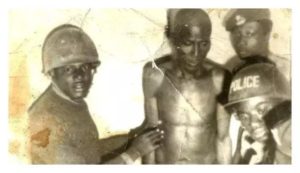
Boko Haram has claimed thousands of lives in Nigeria between 2009 till date but within 12 days, the Maitatsine uprising claimed 5,000 lives in the Northern part of the country.
The Maitatsine uprising was believed to be the forerunner of religious insurgency in the Northern part of Nigeria.
It was a period of sheer madness which was mixed with agonizing destruction as towns burned.
It witnessed untamed hordes of insurgents brandishing all sorts of primitive weapons like bows and arrows, dane guns, leopard skins to serve as bulletproof vests.
During this period, religious militants went from house to house in the state of Kano, looting, maiming, burning, assaulting women and killing as they wished.
Despite the savage nature of their weapons, the uprising inflicted a brutal and complete destruction of lives and properties.
Ironically, the founder of the Maitatsine sect, Alhaji Mohammed (Muhammadu) Marwa was not a Nigerian. He migrated from the town of Marwa (Maroua) in northern Cameroon to Kano state in 1945.
In Kano, he was known for his controversial teachings of the Qur’an. He claimed to be a prophet and he rejected the hadith and the sunnah and regarded the reading of any other book but the Koran as paganism.
Alhaji Mohammed Marwa who was later known as Maitatsine condemned the use of western things like radios, watches, bicycles, cars.
He even spoke against possession of more money than necessary and eventually rejected the prophethood of Mohammed before declaring himself an annạbi (Hausa word for prophet).
Giving his radical teachings in Kano which has earned him a teeming followers, the British colonial authorities exiled him, but he returned to Kano shortly after independence On his arrival back, he launched his own movement after Nigeria’s independence in 1960.
His message was a straight forward one: rejection of established order. He transformed himself to a terror that will turn Nigerian soil into blood stream.
Gradually, he evolved into a three horned monster that gave birth to terror in Africa’s most populous nation. Though, his family history was not much known, but he was said to be a polygamist who was also a loving and caring father and husband.
Information has it that he had a son named Tijani and his death was a turning point in the life of the man that would later turn Northern Nigeria to a bloody battle ground. Tijani was said to have been killed while on an outing with his friends.
When the father saw the lifeless body of his son who was shot in an unclear circumstances, he was said to have cried in agony, saying: “Oh the people of Kano, what have I done to you to deserve this?”
He was said to have believed that the government was behind the death of his son and from that moment, the fate and death of thousands were sealed.
He became bitter and his wrath knew no bounds. And the tone of his preaching changed drastically. He became known for hate filled speeches against the Nigerian government and it was through this practice that he became known as Maitatsine.
He would reportedly say ‘whoever uses wristwatches, radios or ride bicycles, – Allah ya tsine maka albarka! This means ‘May God deprive you of His blessings!’
This eventually earned him the nickname of Maitatsine from the Kano people.
Maitatsine simply means ‘the one with curses ’ or ‘the one who curses’.
However, Nigerians and Muslims alike were shocked when the fiery preacher rejected the teachings of Islam and embraced his own form of Islam while condemning everything else.
To the surprise and fear of leaders in Kano, his scary teachings attracted followers of the jobless, labourers and loafers. And these set of people accepted his teachings, lapping into it like lost lambs in search of shepherds.
The Emir of Kano, Muhammadu Sanusi, (who incidentally was the grandfather of the present Emir of Kano) was shocked at Maitatsine’s audacity and was one of his most hated critics.

 The blending of fertilizer in Nigeria without any Federal government subsidy and foreign exchange has saved the country N260 billion, the President, Fertilizer Producers and Suppliers Association of Nigeria, FEPSAN, Mr. Thomas Etuk, has said.