More than 30 people – almost all of them schoolchildren – have been killed in a bus crash in northern Tanzania, officials say.
They say the bus plunged off the road in a steep ravine near the town of Karatu.
A number of people were hurt. Officials later tried to remove survivors and dead bodies from the vehicle.
The students from a primary school in Arusha were travelling to another school to sit an exam.
The final year pupils from the Lucky Vincent school – believed to be aged between 12 and 14 – were on their way to take mock exams when the accident happened on Saturday morning.
Two teachers and the driver were also killed.
President John Magufuli said the accident was a “national tragedy”.
“This accident extinguishes the dreams of these children who were preparing to serve the nation, it is an immense pain for the families involved and for the whole nation,” he said.
Regional police commander Charles Mkumbo told Reuters that “the accident happened when the bus was descending on a steep hill in rainy conditions”.
“We are still investigating the incident to determine if it was caused by a mechanical defect or human error on the part of the driver,” he added.
About 1.25 million people die each year as a result of road traffic crashes.
Road traffic injuries are the leading cause of death among people aged between 15 and 29 years.
90% of the world’s fatalities on the roads occur in low- and middle-income countries, even though these countries have approximately 54% of the world’s vehicles.
Nearly half of those dying on the world’s roads are “vulnerable road users”: pedestrians, cyclists, and motorcyclists.
Road traffic crashes cost most countries 3% of their gross domestic product.
Without sustained action, road traffic crashes are predicted to become the seventh leading cause of death by 2030.
The newly adopted 2030 Agenda for Sustainable Development has set an ambitious target of halving the global number of deaths and injuries from road traffic crashes by 2020.
Coordinating the Decade of Action for Road Safety
World Health Organisation (WHO) is the lead agency – in collaboration with the United Nations regional commissions – for road safety within the UN system. WHO chairs the United Nations Road Safety Collaboration and serves as the secretariat for the Decade of Action for Road Safety 2011– 2020. Proclaimed through a UN General Assembly resolution in 2010, the Decade of Action was launched in May 2011 in over 110 countries, with the aim of saving millions of lives by implementing the Global Plan for the Decade of Acton.
WHO also plays a key role in guiding global efforts by continuing to advocate for road safety at the highest political levels; compiling and disseminating good practices in prevention, data collection and trauma care; sharing information with the public on risks and how to reduce these risks; and drawing attention to the need for increased funding.
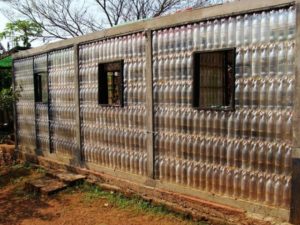
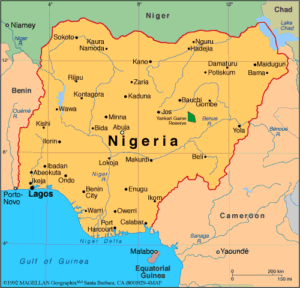
A house in Kaduna, northwest Nigeria, constructed with plastic bottle can last over 200 years if properly constructed, the Chief Executive Officer, Devepmental Association for Renewable Energy in Nigeria, Engr. Yahaya Ahmed, has observed.
According to him, “The plastic bottled house can last for more than 200 year if constructed properly, it can stand the challenge of fireproof, bulletproof, and earthquake resistant and adapt to all kind of climate change and desertification.”
Speaking with Africa Prime News in Kaduna Friday shorty after a tour to the center at Yelwa village, Zaria –Kaduna road, Engr Yahaya Ahmed, explained that the plastic bottle house could be constructed anywhere, even on water if a good and adequate foundation is prepared before hand.
“It can last more than 200 years on earth irrespective of the circumstances that may occur, and is 20 times stronger than brick walls, bomb proof,” he added.
Yahaya pointed out clearly that constructing such beautiful home duly consume time and technical guide. “The bottles, even though filled with sand, are waterproof if securely capped. Undertaking such task however need some elementary preparations, namely, getting enough bottles and finding good or trained manpower to fill the bottles, not anyhow, but as it should be and that it duly need the guidance of professional from the Centre.
“Such house is constructed by thousands of recycled plastic bottles which are filled with sand, cement, and mud, and indeed, these components form a highly formidable wall which is 20 times stronger than brick walls, fireproof, bulletproof, and earthquake resistant.
“This is the first of its kind in Nigeria,though we trained many students and youths who are actually displaying the talent of what they learnt at the centre to other places in Northern Nigeria.
“Indeed Recycling of waste plastics is one of the best technologies to avoid environmental air pollution from burning the plastics. As the human population continues to increase, the quantity of solid wastes generation also increases, that is the government need solution.”
Yahaya said, “We must join hand in tackling all the challenges disturbing our environment, we must support government at all cost in bringing an end to deforestation and pollution in order to save our country from climate changes.
This year’s world earth day celebration theme “Environmental and Climate Literacy” was a vital premise to advocate for protection of our environment with emphases on climate literacy. Basically, environmental and climate literacy refers to knowledge, effects, benefits and importance of our planet’s surrounding and temperature. Interestingly, earth is the only planet in the cosmos where life is possible so it is very essential to maintain the natural endowments of the earth in order to enjoy life on earth and not endure it as humans are swiftly pushing with the increased rate at which carbon emissions and careless attitudes plummet ideal natural balance which supports life to stay healthy and alive.
Earth day celebration has been a long time coming, since it was first marked 1970, thereafter every 22nd day of April was adopted for the purpose of making humans aware and appreciate the importance of the planet. It has grown in leaps and bounds from the united State of America and is now observed today in about 195 countries across the world, obviously with Nigeria on the list; how then does Nigeria mark April 22nd?
In line with 2017’s theme, “Environmental and Climate Literacy”, there is a call for increased participation and efforts to mitigate the effects of climate change and global warming through environmental conservation, education and advocacy to encourage environmental sanitation.
Nigeria in particular is faced with many environmental challenges; increased industrialization and burning of fossil fuel (CO2) depleting the ozone layer which prevents us from the ultra violet rays of the sun has made atmospheric temperature very hot and most times unpredictable in many areas. Another big problem is the death of rivers and waterways getting mixed with industrial toxic materials leading to global warming, with increasing industrialization leading to deforestation and destruction of vegetative zones which helps carbon sequestration and mitigate the depletion of ozone layer.
Today our surroundings are dirty and littered with non-biodegradable materials and solid waste constituted in many areas blocking drainages and water ways giving raise to health and environmental hazards, saddening, we presently lack the technology however, our massive human capacity, knowledge, financial resources and political can remedy the present menace- if we collectively get down to work.
Unfortunately, our planet is presently losing about 15 billion trees each year, that is about 56 acres of forest every minute, Nigeria perhaps has the highest rate of deforestation in the world losing about 4,000 hectares annually according to the food and Agriculture Organisation (FAO), with demands for fuel wood, agricultural land and housing for our ever increasing population is plundering our forest covers and waste gaining disrepute for Nigeria due to its obvious but humiliating image it constitutes to the nation with no displayed effort at getting rid of the waste scattered all over.
Although, it is perceived as the duty of the government to enhance, maintain and enforce environmental laws and order at both federal and state levels; having noted the non-performance or the unfocused effort, much lies on you and I to fill in the vacuum for active public campaigns and environmental advocacy.
The Government of the day is encouraged to lead in terms of strategies, policies and enforcement to ensure that its citizens understand the urgent need to avert the impending danger; to grossly reduce the ‘unearthy’ rate of logging, poaching, gas flaring and deforestation. There are worthy examples in some developed nations, Nigeria can and should take a cue.
Nigeria’s vulnerability to environmental risk and lack of institutional capacity to respond to threats in a sustainable manner should serve as premise for an increased capacity, advocacy and funding towards environmental sensitisation and enforcement to save our nation from the impending peril ahead.
Written by Udo-Azugo Somtochukwu from Lagos, Nigeria, Editing by Adebote ‘Seyifunmi and Reporting By Alli Abiola. First published on http://itsallisay.com
With opportunities in the young population, widening middle class, development in telecoms and exodus of people in Africa, foreign reinsurers that once chided the continent are swarming for businesses on the continent with confidence in consumers with throwaway incomes and hefty infrastructure schemes being built, Odimegwu Onwumere writes
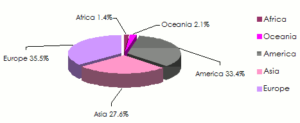
Over the years, the West was seen as a place for mature reinsurance business with expensive and classy competition. For example, Europe spawned $1.69bn premium in 2014, something stakeholders said was in the ratio of 35.53 per cent allocation of the world insurance market. The whistle-blower, Sigma 2014 World Insurance Report by Swiss Re, expressed that the sum threw in 6.83 per cent to the Gross Domestic Product (GDP). In that index, Africa recorded about $68.97m, which was regarded as the lowest among the committee of nations and diffused to 1.44 per cent share of the global insurance market. But this trend may be no more as the reinsurance markets on the continent are expected to gain from strapping underlying growth, with insurance premiums of US$ 64 billion in 2016, as according to Africa Reinsurance Pulse at the 21st African Reinsurance Forum in Dakar, Senegal; and there has been a drive in the escalation of the primary markets.
In its Q3 2016, Continental Reinsurance, an amalgamated reinsurer, scripting business in over 50 countries across the African continent announced that it made 16% growth in gross premium income of N17.5billion, as against N15.1 billion in 2015. This juxtaposed to what Sigma further exposed, saying that $1.59bn premium was gained by America and $1.31bn premium or about 27.57 per cent share of the global market was attained by Asia in 2014, but the 2016 indicator expressing US$64 billion for reinsurers in Africa, has shown that reinsurance markets on the continent are really making headway in adding to Africa’s GDP. Africa has a great hope because of the diversity in the African reinsurance markets, given their regional sub-sets and the continent can boast of about 35 registered reinsurers operating on ground. Unlike when the continent had a decline in life insurance from 6% in 2013 down to 1.6% in 2014 and non life insurance taking the same method from 4.4% in 2013 to 1.8% in 2014, the trend can be seen is changing with the continent regarded as the most vigorous continent for business in the world.
There are records showing that Africa has recorded USD $2 trillion on her economic stage. AM Best, an international rating agency would attest to the fact that by 2020, Africa might have $2.6 trillion USD in its GDP. It’s expected, according to World Bank that by 2025, many countries in Africa will rise to the “middle income” position. The manifest is that time was gone when African countries were wearing diapers in the reinsurance markets. South Africa was however excluded then and was regarded as one of Africa’s most advanced in the sector. In those years, reinsurance markets on the continent had extremely low capital base, except 2013 Swiss Re report, surmising that South Africa earned 75 percent, or $51.6bn, of all insurance premiums in Africa, while foreign firms in the Americas, Europe and Asia superintended 75 per cent of reinsurance deals in Africa.
Alluring And Dynamic
In spite of the competition and new investors besieging for business in Africa, African reinsurers have made their mode of operations insufficient and underused hence creating room for foreigners to invest on the continent and making the continent a potential market. There are cases of inept capacities of regional players and incompetent underwriting and risk management staff.
Despite some wavering economic policies in some countries of Africa today and the many years of neglect meted out to the reinsurance markets in Africa by American and European reinsurers, the sector is becoming alluring and dynamic, because of unswerving GDP growth and the Western firms beginning to gear up for business on the continent, but especially in Sub-Sahara Africa (SSA).
Checks have revealed inter alia that France’s leading insurer, AXA in February 2016 had informed of its decision to spend €75m ($87.27m) in Africa Internet Group (AIG), according Jean-Baptiste Mounier, media relations officer at AXA Group. Buttressing the point, Mounier revealed, “Market growth has been boosted by government reforms such as mandatory motor and group life insurance.”
The source further highlighted that the coming of AXA Group, was intended to provide for insurance products and services through Jumia – Nigerian online vendor with warehouses across the country, and other AIG podiums transversely in Africa.
Conversely, before this development, stakeholders in the field had singled Nigeria out (apart from South Africa?) as the only country with a rationally large capital whereas other countries had low capital prerequisite, thereby triggering the anxiety in reinsurers not to agree to big ticket risks, hence many of the businesses from the continent went offshore.
Capital Flight & Cession
Over 75% of African reinsurance market was lost to assets flight, said the Group Managing Director, Africa Reinsurance Corporation, Cornellie Karekezi. Supporting the argument, those who know better explained that the loss was as a result that 75% of the market share was located outside the continent.
But experts’ outlook was, “In order to protect their national market, many African countries limit access to reinsurance for foreign companies. A compulsory cession to the national reinsurer is oftentimes imposed on insurers. Moreover, equally compulsory cessions are added to other reinsurers or entities (specialized pools) in which the State possesses interests.
“For instance, in Senegal, local insurance companies are required to cede to the national reinsurer a fixed percentage over all policies written nationwide. To this “baseline” or on ground-up basis cession another cession on reinsurance treaties is added.
“Besides, regional reinsurer CICA-Re and continental reinsurer – Africa Re, also benefit from compulsory cessions. The same scheme, with some variables (ground up cessions+reinsurance cession or reinsurance cession only) exists in Ghana, Nigeria, Kenya, Gabon, Algeria, Morocco, Egypt…”
Massive Potentials
A leading market broadsheet in Kenya had a luring caption – Africa’s insurance market a ‘giant waking up’ – on its June 27, 2016 edition. Not many perhaps reasoned deeply the prophetic message that the paper was intended to pass.
The message could be likened to an Ernst & Young report, “Africa, with a median age of 20 years, is the youngest continent. Its population amounted to 1.138 billion people in 2014 but it is poised to double in the course of the next 40 years to reach nearly 2 billion people, that is 20% of the global population in 2050. African labour is therefore poised to reach 1.1 billion people by 2040, a figure above labour projections for China and India.”
But here is the source in Nairobi explaining, “When KPMG, the advisory company, held its inaugural East Africa Insurance Conference in February, organisers were surprised that more than 100 industry participants attended. James Norman, KPMG’s regional insurance head, was equally enthused when a similar number attended the launch of a report on the sector last week.”
Quoting James Norman, KPMG’s regional insurance head, the source added, “There’s a real buzz about the sector because opportunities are immense. There’s a young population, a growing middle class – most with smartphones – and an increasingly large diaspora coming back. There’s a whole new generation of savvy consumers with disposable incomes and large infrastructure projects being built.”
Fastest Growing
There have been fingers suggesting that with the lack of insurance when countries on the continent like Mozambique, Kenya, Tanzania, South Africa, and Nigeria, experienced severe draught and extensive flooding, showed that Africa is a potential industry for the re/insurance markets.
The 2016 South African Insurance Survey homepage examined, “Rating agencies are awarding stronger ratings to African Reinsurance providers despite the continuing economic crisis in the West.”
The highlight of this is that Kenya, Nigeria and Morocco are among the fastest growing re/insurance markets in Africa, said Dr. Schanz, Alms & Company in its annual review (Africa Reinsurance Pulse 2016).
The revelation further pointed to the fact that these countries are driven by the size and multiplicity of their economies, a juvenile and getting-bigger population and intricate dogmatic regimes.
Recorded Gains
Investigations have revealed that premiums totaling US$ 43.7 billion were recorded in African life insurance in 2015, something that was double the dimension of the non-life insurance market (US$ 20.4 billion). In another angle, it was looked at to be in the ratio of two thirds of the market’s general premium quantity.
A reliable source narrated, “The top 5 life insurance markets of the region are South Africa (US$ 37.5 billion), with a dominating share of 86%, followed by Morocco (US$ 1.1 billion), Egypt (US$ 1.0 billion), Kenya (US$ 0.7 billion) and Namibia (US$ 0.6 billion).
“At a time in 2015, African non-life premiums stood at US$ 20.4 billion, representing about 1% of global non-life premiums. The five largest markets – South Africa, Morocco, Algeria, Kenya and Egypt – account for 68% of the total. In non-life insurance, South Africa’s market share, at 41%, is less dominant than in the life space.”
Very Diverse
On balance, upon that many analysts believe that Africa’s financial and insurance markets are very diverse in the understanding of “socioeconomic indicators, financial literacy”, Magdalena Ramada, who specializes in emerging-market research and multinational company expansion for Willis Towers Watson, a leading voice in insurance markets, explained in a public appearance that SSA alone, has a massive aptitude that makes it “a new frontier in the insurance markets” for lots of insurance transnational. “Here’s why,” explained Ramada:
SSA accounts for just 2.2% of global GDP. In 2014, GDP growth was 4.6% (5.7% including South Africa), and 2015 growth forecasts are 4.2% (5%).
With 16% of the world’s population, it is the second-most populous continent, with around 1.1 billion people and an expected population of 2.3 billion by 2050.
Over 25% of all languages in Africa are only spoken, with over 2,000 recognized languages.
More than half of the population is under the age of 25.
Expected economic growth and growing middle classes, technology-enabled distribution channels, a high mobile phone penetration rate and a very low insurance penetration – 3.5% on average for SSA (less than 1% if South Africa is excluded) in a market of 1.1 billion people.
The source orated that with the low penetration of re/insurance on the continent, with an example of “even lower insurance density (US$61)” the figures for SSA become quasi-negligible. But for Delphine Maïdou, CEO of Allianz Global Corporate & Specialty Africa, “Nigeria is Africa’s largest country by gross domestic product and has a mere 0.6 percent insurance penetration. She has all the ingredients for a thriving insurance industry because of its vast population of 170 million and active economy.”
Internal Growth
The economy of the continent skyrocketed in 2002 with the International Monetary Fund (IMF) putting 11 African countries as among countries that are in the echelon of 20 sprinting and enlarging economies by 2017.
This could be the reason Ramada added, “Demographic and economic growth forecasts estimate that in the next 50 years, Africa will comprise 30% of the world’s population and the region’s consumption will generate internal growth.
“The World Bank classifies half of Africa’s countries as middle income. In fact, Africa’s middle class is growing steadily, having reached the size of India’s middle class, although its geographic dispersion makes it more challenging to leverage.”
In spite of this, Africa Reinsurance had been proud of making 10 per cent of the entire reinsurance market share in Africa quarter of 2016 and there was fear that the company “might not do up to 25 per cent during the period”.
Synergy To Cover Risks
There was apprehension in the dearth of synergy to cover large risks in the areas of oil and energy, and carry on multi-projects and most importantly in the areas of airlines and aviation.
These invariably would make new companies to gain from legal cession. Against this influence, a source by Atlas Magazine, an informant for insurance around the world, had a divergent view as follows:
That is how in Ghana a third national reinsurer, GN Reinsurance Company, was set up in 2015. As a reminder, Ghanaian insurance companies are not allowed to place their reinsurance on international market unless local capacities have been exhausted.
In Uganda local insurers are required to cede 15% of their treaties to Uganda National Reinsurance (Uganda Re) set up in 2013.
In Gabon, the Société Commerciale Gabonaise de Réassurance (SCG-Re) which was established in 2012, benefits from a compulsory cession of 15% of life reinsurance treaties and of 10% of the ones pertaining to the non life reinsurance.
In Ethiopia, a national reinsurance company – Ethiopian Re – is about to be established. Endowed with 50 million USD in seed capital, the new company’s objective is to increase market capacities.
Heightened Prospect
At the 21st African Reinsurance Forum in Dakar, Senegal, where the Africa Reinsurance Pulse known as the first on the continent was launched, there was heightened prospect in the primary markets with insurance premiums of US$ 64 billion with GDP anticipated to augment by approximately 4% per annum from 2016 – 2020, before the accepted global standard growth rate of 3.6% for the time.
Analysts have said that with the stumpy insurance penetration of 2.9%, as a split of insurance premiums to GDP, there were revelations that the continent had great capability in grabbing with the global middling of 6.23% for 2015.
These were coming when the Africa Reinsurance henchman bared his fears that Africa was competing in capacities and also in ratings, but with minute support from African populaces to help reinsurance and insurance development bolster on the continent.
“More than 90% of Africa’s insurance companies have only been created in the past 40 years. As a result, our industry still has to build the awareness for the benefit of protecting and enabling economic progress…” Corneille Karekedzi said.
Despite that, the Africa Reinsurance that once gasped for breath to control 10 per cent of the entire reinsurance market share in Africa beat its chest that it was controlling 20% of Nigeria’s Reinsurance Market by April 2017.
A delectable Karekezi, said, “Nigeria, where Africa Re is headquartered since 1976, represents an important market for the Corporation as it represents about 13 per cent of its total turnover in 2016.”
The highlight of this is that the continent has been having good news in reinsurance markets lately, not minding the aspersion by Africa Reinsurance clamouring that European and other oversea reinsurers were dominating about 65 percent of the market in Nigeria and the residual 15 percent was divided by other local reinsurers that comprised Continental Reinsurance, and Nigerian Reinsurance.
Odimegwu Onwumere is a Media Consultant based in Rivers State. He contributed this piece via: apoet_25@yahoo.com {Graphs sources: Sigma, Swiss Re; Oxford Economics, WIIW, Swiss Re Economic Research & Consulting; Standard Bank, Understanding Africa’s middle class.}
Nigerians have been urged to be actively involved in budget processes and tracking so as to ensure its implementation – bringing about transparency and accountability from government.
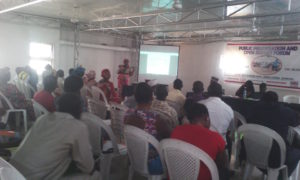
The call was made during the Kaduna state open budget forum organized by League of Democratic Women (LEADs-Nigeria) held recently in Kaduna.
Speaking during the program, Executive Director of LEADs-Nigeria, Mrs. Rebecca Sako John, said it is important as citizens of a state or country to know what the budget of their state is made up and be well inform about it, saying, knowing and engaging government on issues contain in it would make them work efficiently.
According to her, the forum is to draw attention to contents of the 2017 budget as well as provide simple tools to engage in tracking and advocacy for improved service delivery, noting that, the Kaduna state government has already created an enabling environment for social accountability by making access to information on public policy and budget more accessible to citizens through the use of social media to enhance citizen engagement with the executive.
She said, under the Strengthening Citizens Engagement in Electoral Process (SCEEP) project, they had done series of advocacy strategy and budget literacy trainings for focal communities from which they have started strategic engagement with their duty bearers.
“The open Budget Forum is part of series of activities aimed at creating a platform for communities, government and stakeholders to engage around topical issues.
“Our interest is in seeing citizens, communities and civil society groups constructively engaging duty bearers at different level of responsiveness, efficiency, and quality of public services,” Mrs. Sako noted.
She however urged Citizens to utilized the information provided by government and other stakeholders and be alive to their responsibilities in order to engage government to do the right thing by being responsive, transparent and accountable to the citizens.
In her remarks, representative of the Director of Budget, Kaduna State Ministry of Budget and Planning, Mrs. Linda Abu, stressed the importance of CSOs in ensuring successful implementation of budget, saying they are key partners.
“They promote interest of the citizens to ensure that value for money, transparency and accountability is achieved. They are like the eye of the citizen looking at what the government is doing and also speaking to the government on area they are found wanting, that way, they can take measures and correct whatever tension government has put in place.
She further urged the CSOs to be versatile in knowing and understanding the budget and it processes because that is the only way they can key in properly.
One of the participant at the forum, Aisha Mohammed, while commending the organizers of the program said the open budget policy would allows citizens to participate in the budget process, as such, their participation can make governance progress; adding that, when fully implemented it will encourage grassroots development.
Africa Media Development Foundation, AMDF, has called on Nigeria government to grant freedom of expression to the country’s journalists.
The call was made by the Coordinator of the Africa media Development Foundation (AMDF), Sekyen Dadik, while speaking to online journalists in Kaduna, northwest Nigeria, Wednesday during a media forum in observing the World Press Freedom Day.
She pointed out that some of the challenges faced by journalists were subject to harassments and intimidation amongst other things, making reference to the recent press freedom index which reveals Nigeria to have fallen from 116 to 122.; Placing Nigeria on the red-zone for press freedom in the globe.
“Journalists and bloggers in Nigeria are no longer at ease to publish reports perceived to be unfriendly by those in power; especially stories on politics, terrorism among others. A number have been recalled from their beats or jobs.
“However, it is rather unfortunate that in Kaduna State, northwest Nigeria alone, over 5 five journalists have been arrested in less than two years on different charges but all geared towards shutting down the press.
“Hence, as a day of reflection among media professionals about issues of press freedom and professional ethics, we call on journalists not to be threatened or intimidated but to ensure the highest standard of professionalism is implored in carrying out their mandate.
“As a day of support for media which are targets for the restraint, or abolition, of press freedom; we call on the general public to rise up and join the media in crying out against every attempt to gag the press which is the hope of the voiceless,“ she observed.
The coordinator also appealed to the government to see journalists as partners who are interested in moving the country forward and not antagonize the government. She added that Kaduna State has the highest ranking of press suffocation and arrest of press men in the course of their official duties.
She explained, “AMDF calls on the government at all levels, especially Kaduna State to consciously create space for press freedom and freedom of expression as no government will achieve meaningful development by gagging the press and limiting freedom of expression.
“We enjoin them to see the press as partners in development not as enemies that must be put down, as such open up for criticisms and see it as an opportunity to meet the yearnings of their followers. “Africa Media Development Foundation, AMDF, also appeals to development partners and the civil society to lend their voices in speaking and calling for action against every attempt to muzzle the freedom of expression.”
Speaking at the event were some members of the League of Professional online Journalists (LEPOJ) who shared personal challenges and experience in the field of journalism and made a decision to keep working hard despite all odds.

 Pope Francis has criticised the naming of the US military’s largest non-nuclear explosive ever used in combat as “the mother of all bombs”.