Home Blog Page 1571

Missing Charity Aiyedogbon: One Year After

0
Map of Nigeria
Map of Nigeria

By Destiny Ugorji

It is exactly one year that an Abuja-based business woman, Charity Aiyedgbon was declared missing by her Facebook friends. Charity, popularly known as ‘Chacha’, is said to have gone missing since the 9th of May, 2016 and family, friends and Security Agencies said to be working to unravel the mystery behind her sudden disappearance.

Speculations on the possible whereabouts of the 44-year-old mother of four, also known as Deepdeal Chacha Dehammer were rife.

First, a Lagos-based lawyer, Emeka Ugwuonye said he had overwhelming evidence that the missing Charity was dead, accusing her erstwhile husband, David Aiyedogbon of having a hand in her disappearance; an allegation he posted on his Facebook group, The Due Process Advocates.

Reacting to Ugwuonye’s allegation, former husband of the missing woman, Mr. David Aiyedogbon washed his hands over the disappearance of the lady and wrote his accuser, through his lawyers, demanding an apology, failure which he would seek legal redress.

The letter titled: “Defamation of the character of David Aiyedogbon; demand for apology,” signed by his lawyer, Obiora Illo esq (Ogbulafor Chambers) and made available to newsmen, expressly states: “It is our instruction to demand an unqualified apology from you to our client through our chambers for the defamatory publications you have made of and concerning our client.”

Also, addressing newsmen in Abuja, Mr. Aiyedogbon urged the Inspector General of Police, Ibrahim Idris to investigate the allegation against him, describing it as “cruel, criminal and untrue”, stressing that his estranged wife Charity left their matrimonial home on the 28th of May, 2014, noting that since then, he had neither heard from her, nor had any dealings with her.

While the controversy lasted, a Civil Society Organisation, Coalition against Crime (CAC) called on Nigeria’s Inspector General of Police, Ibrahim Idris to arrest Lagos-based lawyer, Ugwuonye to explain his role in the disappearance of Charity Aiyedogbon.

National Coordinator of the group, Harrison Pepple, made the call while addressing newsmen in Abuja, arguing that Mr. Ugwuonye had some questions to answer.

In a Petition to the Inspector General of Police, the group quoted Mr. Ugwuonye as saying: “…Charity Aiyedogbon is said to have been missing since the 11th of May, 2016 and one Emeka Ugwuonye claims he has evidence that the woman is dead and was murdered. He also posted a photograph of a dead person, part of whose body was dismembered. How can Police be looking for a missing person and someone says he has a clue and he has not been invited or arrested.”?

Following the intervention by the Civil Society Organisation, the Police eventually arrested Mr. Ugwuonye and later released him on bail, after questioning, while investigations continued.

Several developments aided Police investigations. First, those believed to be close to Chacha are quoted as saying that she went missing on the 9th of May, 2016, but her lawyer, Barrister Nsikak Udoh, handling a suit filed at the Federal High Court, Lokoja on 29th April, 2016 against 29 respondents, including her biological children and former husband, claimed she (Chacha) came to his house on the 18th of May, 2016 (eight days after her purported disappearance) and one of his staff accompanied her to Federal High Court, to sign and depose to an affidavit in support of the ex-parte motion filed along with the case. How could someone who was declared missing on the 9th of May reappear on the 18th and then disappear again?

Today, it has been established that Chacha’s signature was forged; as the lawyer, Barrister Nsikak Udo has recanted. He says he did not see Chacha, as earlier claimed. He confessed to the Police that he forged Charity’s signature in an affidavit he filed in court. Apparently, Charity was not behind the filing of the suit, but her lawyer, Barrister Nsikak Udoh. He therefore lied on oath. Both himself and the Commissioner for oaths in the Federal High Court Abuja jurisdiction risk being prosecuted by the Police for forgery and perjury.

Another puzzle is that a corpse, said to have been dismembered beyond identification was allegedly seen in Abuja on the 12th of May and Mr. Ugwuonye claimed it was Chacha’s body. Till date, who has identified the corpse as that of Chacha? Impeccable sources say a DNA test conducted on the body revealed otherwise. Children of the missing woman have also chorused on several platforms that their mother was NOT dead. They have also stated that the displayed corpse is not that of their mother. The missing woman also has siblings and parents who have been going about their normal businesses and have neither said their sister was missing, dead, nor joined in the search for her.

The missing Chacha has a case of forgery that is yet to be concluded. A suit instituted in a High Court of the Federal Capital Territory (FCT High Court 8) on the 14th of March, 2016, with suit number CV/1231/16, between Messrs Chibuzor Ogugua and Chigozie Eme (plaintiffs) and Mrs. Charity Aiyedogbon (defendant), made eight prayers to the Court. The last prayer reads: “an order of the Honourable Court directing the defendant to pay the plaintiffs the sum of 200,000,000.00 (Two Hundred Million Naira) as damages for the losses suffered on the ground of the unauthorized and fabricated Valuation Report by the defendant.”Could she have disappeared to frustrate the Suit or evade justice?

In the last one year, a lot has happened. The law enforcement agencies and private investigators have worked very hard to unravel the mystery behind the disappearance of Mrs. Charity Aiyedogbon, aka Chacha Dehammer. Cases have been instituted and some already decided.

Some friends of Chacha, believed to have earlier raised the alarm recanted. They are said to be at war with Emeka Ugwuonye, who said he was briefed by same Chacha’s friends on the matter. They engaged in war of words on Facebook. One of them, Pamela Nwansoh allegedly confronted Mr. Ugwuonye in a Police premises in Abuja over an obvious sense of disenchantment with his activities, alleging extortion of members of the public (in the name of looking for Chacha) using his Facebook Group, the Due Process Advocates (DPA). Ugwuonye had, via a post on the group, solicited financial contributions for his trip to Abuja to respond to Police invitation to explain himself over the case of the missing Chacha.

One of the ladies said to be involved in the search for Chacha, Viola Ifeyinwa Okolie, on the 14th of July, 2016, also made a worrisome post on her Facebook wall, expressing disenchantment with Mr. Ugwuonye’s antics.

Also in a post on The Due Process Advocates on the 17th of July, 2016, Ugwuonye attacked Viola Okolie, making spurious allegations. The post was titled: “How the search for Chacha took strange turns and her friends turn out not to be friends after all.” The drama continued.

But, how did Emeka Ugwuonye get involved in this matter? Was he really in America when the incident happened, as he claimed? Available records suggest otherwise.

Barrister Ugwuonye claimed to have been in the United States of America as at the time of Chacha’s disappearance and only came into Nigeria in June, 2016, after being briefed to handle the matter, but his call log betrayed him, showing that he was in Abuja on the 10th, 11th and 12th of May, 2016; same time Chacha is said to have got missing. Information from private investigators and telecommunication service providers revealed that he made calls around Jabi area of Abuja, up till midnight same 10th and 11th and departed Abuja on the 12th of May, 2016. When confronted by the Police in Abuja with evidence of his movement, he owned up.

Three key suspects earlier arrested by the Police in connection with Chacha’s disappearance were said to have been released at his instance. He claimed at the FCT Police Hqrs that they were his clients; but when brought face to face with Mr. Ugwuonye, they denied all his claims, saying they neither briefed him nor identified any corpse to him as that of Chacha.

As at today, Police sources reveal that Mr. Ugwuonye has not provided any evidence to substantiate his claims. The only person he claims showed and identified the corpse as that of missing Chacha (Jo) denied him.

Today, Chacha’s car has been recovered. Two of her handsets have also been recovered. Is it a coincidence that he (Ugwuonye) has been questioned more than thrice by the Police in Chacha’s case?

The first puzzle is solved, with the admission by one of Chacha’s lawyers, Barrister Nsikak Udo that Chacha’s signature was forged. He admitted that he lied on oath and his fate shall be determined by the laws of the land soon.

Second, Chacha’s last Facebook post before she ‘went missing’ shows that she sat on the passenger’s seat of her car. That was the last she posted on Facebook, using that particular User ID- Deepdealdehammer. The question of who drove the car may have also been addressed.

Her car has been recovered, following a tip-off by one of the suspects that were in Police custody, IK Ezeugo. IK never opened up until Police arrested one of Jekwu’s friends, who now gave the lead, indicating that he (IK) personally drove the vehicle to the place where it was parked. His (Ik’s) younger brother, identified as Paul Chukwujekwu Ezeugo (still at large) is believed to have been in custody of the vehicle. He (Chukwujekwu) is also believed to have driven the missing woman on that last trip. The car was found in Enugu State by the Police, in the residence of one Uche, with its Plate Number and particulars already changed.

Again, Chacha’s two handsets have been recovered. One of them, a Nokia handset, is said to have been found with Chukwujekwu’s biological mother, Mrs. Ezeugo. The second handset (a Samsung phone) was recovered from one Augustine, who claimed that one Odinaka, Chukwujekwu’s friend and phone repairer sold it to him for Twenty Five Thousand Naira. The proceeds, according to Odinaka, were handed over to Chukwujekwu. Just like the vehicle, the both handsets were found in Enugu. Chukwujekwu is still at large.

Why is it that almost all the persons arrested/suspected so far in connection with Chacha’s case are from Enugu State? Precisely, six suspects so far arrested in the case are from Enugu State. Emeka Ugwuonye is from Enugu and Chacha’s car and handsets were found in Enugu. Chacha’s maternal home is Enugu. In fact, Paul Chukwujekwu Ezeugo and the missing Chacha’s mother are both from Oba-Nsukka, in Enugu State.

Mr. Ugwuonye’s relationship with one of the prime suspects, Chukwujekwu Ezeugo is suspicious and his call log points in the same direction. He is also suspected to have aided his escape, as, according to Police sources, the day he (Jekwu) was to be arrested, Ugwuonye personally called the Police, promising to produce him, only to revert 24hours later, telling the Police that he had escaped.

Understanding how bad the matter was getting, Ugwuonye at a point, announced his withdrawal from Chacha’s case, a move Police sources described as diversionary, since he is already a suspect in the case.

David Aiyedogbon fights back

Following his refusal to apologize, ex-husband of the missing woman, Mr. David Aiyedogbon dragged Lagos- based Lawyer, Emeka Ugwuonye to the Nigerian Bar Association (NBA) over what he described as unprofessional publications against his person.

A letter dated 22nd August, 2016, captioned: “Petition against Emeka Ugwuonye for Unprofessional Publications and False Allegations”, addressed to the General Secretary of the Nigerian Bar Association (NBA), urged the professional body to investigate the matter and invoke appropriate disciplinary actions against the lawyer. Till date, Mr. Ugwuonye has not responded to a query issued him by the NBA, following Aiyedogbon’s petition.

Also, for falsely accusing him of, having a hand in the sudden disappearance of his estranged wife, Charity Aiyedogbon, Mr. Aiyedogbon instituted a defamation of character suit of Ten Billion Naira (N10b) against Lagos Lawyer, Emeka Ephraim Ugwuonye.

 The Suit, with number CV/2750/16, between David Aiyedogbon (Plaintiff) and Emeka Ugwuonye (Defendant) on defamation of character, before Justice Peter Kekemeke of Federal Capital Territory (FCT) High Court 14, Apo Abuja; also prays that the defendant be ordered to pay the cost of the suit.

 The Plaintiff is also seeking an order of perpetual injunction “restraining the Defendant, his Agents, Privies, Associates or whosoever called” from making further defamatory publications against him and his family members. The matter is adjourned to Thursday, 18thMay, 2017.

 Sources also reveal that Mr. Aiyedogbon’s lawyer, Tony Ogbulafor may have also filed a personal suit against Mr. Ugwuonye for wrongly accusing him of giving a bribe (in an envelope) to a Police man to detain him.

Police sources also reveal that, while some persons have already been charged to Court (awaiting trial) for their roles in the disappearance of Charity Aiyedogbon, others that have questions to answer will also be charged soon, to explain their roles in the controversy.

Meanwhile, the suit purportedly filed by Chacha at the Federal High Court, Lokoja, wherein Barrister Nsikak Udoh represented her has been decided in favour of David Aiyedogbon.

One year after, Chacha’s case is getting more interesting. We await the explanation of those in possession of Chacha’s car and handsets on their roles, accomplices and her whereabouts.

While we wait patiently for the unfolding drama, the Police must realise that Nigerians and indeed the world are watching. They must address Nigerians now on the extent of their investigation.

Again, Police must expedite actions in charging suspects to court. Waiting endlessly on the matter does not help the course of justice.

One is still at a loss as to why the prime suspect in the matter, Jekwu is yet to be declared wanted; and why Charity Aiyedogbon has not been declared missing. The Police must clear the air now.

As the whereabouts of Charity Aiyedogbon remain unknown, I join millions of Nigerians to demand that Emeka Ugwuonye provides his “overwhelming evidence” regarding what happened to Chacha or get prosecuted for false information and criminal conspiracy.

Misleading Promises By Kachikwu To End Fuel Importation

0

By Odimegwu Onwumere

“By 2019, we should be able to exit completely on the importation of petroleum products in this country.”

Petroleum Resources Minister, Ibe Kachikwu made this quotation at a public hearing on the evaluation of petroleum pricing pattern for PMS organised by the House of Representatives on February 7, 2017. In 2015 he had correspondingly promised that Nigeria will end fuel importation in 2017. The minister appears to be shifting the goalpost at will.

Flashback

Since the collapse of the nation’s four refineries, the country has been importing Premium Motor Spirit (PMS) popularly known as petrol. There are undying concerns about this: The government has not earnestly risen to the occasion. Huge resources that would have gone into other areas of need are being spent on fuel importation and those benefiting from it.

Stakeholders like the Nigeria Union of Petroleum and Natural Gas (NUPENG) had in 2015 supported complete deregulation of the downstream sector and total deletion of fuel subsidy. They thought that would solve the country’s fuel crisis.

Even Vice-President Yemi Osinbajo, currently acting president, had in 2016 claimed that the fuel subsidy removal has erased the burden of some N15.4 billion monthly on government. Even at that fuel importation is still a booming business.

The government had also hoped that if they crushed the fuel subsidy monster, it will be all over for importation. This is not happening yet more than a year after the subsidy removal. While dealing a blow on the subsidy matter in December 2015, government equally promised to reduce fuel price from N87 per litre to N85 on January 1, 2016. Today fuel is selling for N145 per litre and sometimes more depending on the area one find him/herself.

The skeptical fuel consumers knew the authorities were playing to the gallery in 2015. It did not take long the real deal crept into the open through Kachikwu. He said, “We have just finished a meeting of various stakeholders presided over by the Vice-President. The meeting had in attendance the leadership of the Senate, House of Representatives, Governors Forum, and labour unions (NLC, TUC, NUPENG, and PENGASSAN)… Pursuant to this, PPPRA has informed me that it will be announcing a new price band effective May 11, 2016 and that the new price for PMS will not be above N145 per litre.”

#Misleading Promise 1: Not 2019, But 2017

Again, this is in spite of the fact that Kachikwu had assured that there are foreign investors that are partnering with the Nigeria National Petroleum Corporation (NNPC) to restore the country’s refineries within two years. This is yet to happen!

Kachikwu had on October 15 2015 given promise to Nigerians and foreign investors that fuel importation would end in 18 months.

Kachikwu revealed this at the opening of bids for Offshore Processing Agreements (OPAs), according to The Guardian.

“I hope that this is going to be the last OPA that the corporation will go into. Our aim is to get our refineries to a point where they can produce the products that we need because that is where we should be headed. That is the target we have in the next 18 months,” Kachikwu had said then.

Consequently, Reuters on March 9, 2016 confirmed the statement by Kachikwu in a headline,   “Nigeria aims to end refined petroleum imports within 18 months”.

“We must target between the next 12 to 18 months we should be able to get out of importations of refined products,” the source reported Kachikwu on March 9 2016.

Conversely, besides the October 15 2015, if we count from March 9 2016 it is expected that the importation of fuel was to end in November 2017, not in 2019. But if we have to count from October 15 2015, we expected the end to fuel importation in June 2017.

#Misleading Promise 2: Nigeria Didn’t Stop Fuel Importation By 2016 Upon Cost

To really get out of the importation problem, Nigeria needs $700 million to upgrade her refineries, as Kachikwu rightly pointed out.

The amount is quite huge given the prevailing exchange regime. Conservatively, this is around N254 billion. Is there any political will to get the refineries running at full capacity, and the plundering ring of the fuel import cabal smashed?

Whereas Kachikwu meant that the N254 billion would invariably be used in a space of two years to upgrade the refineries.  But according to a research conducted by Daniel Adugbo, a journalist withDaily Trust, on August 21 2016, “Federal Government spends N264bn on refinery repairs in 16 years.”

Adugbo said, “Since the return of democracy in 1999, the federal government has spent N264 billion for the maintenance of its refineries, yet they have not performed up to the expectation of Nigerians despite claims by government officials.”

From this statistics, it is evident that if Nigeria had spent N264b for the upgrade of three refineries across the country in 16 years, then the N254b that Kachikwu was talking about to put the refineries in order within this year is apparently an oversight function.

#Misleading Promise 3: Nigeria Was Not Taken Out Of Fuel Importers List

Kachikwu could learn from the Goodluck Jonathan administration that was not able to end fuel importation with reasons. Aliko Dangote, Africa’s richest man and friend of government tried it.

Dangote said on September 4, 2013, while speaking to State House correspondents that fuel importation will end in 2016. Then, he was quite optimistic because he was investing $9 billion in petrochemical, in Olokola, Ondo State.

According to Dangote at the time, ‘’Nigeria is going to be taken out of the list of countries that import petroleum products by 2016. We will produce 20 million metric tons, which is equivalent to what Nigeria consumes currently’’. This is 2017, and the fuel importation music is yet to stop.

Odimegwu Onwumere is an award-winning writer based in Rivers State. He contributed this viaapoet_25@yahoo.com

Family Planning Gaining Acceptance In Kaduna, Nigeria

0
Map of Nigeria Showing Kaduna State

By Amos Tauna

Kaduna State government in northern Nigeria, in collaboration with Nigerian Urban Reproductive Health Initiative (NURHI), have introduced programmes aimed at ensuring people in the state fully understand and embrace family planning.

This has resulted in the training and sensitization of relevant stakeholders in different fora towards appreciating the benefits and importance that goes with child birth spacing to the individual,  the family, the community and the society at large.

Speaking in Kaduna at the training of religious leaders on child birth spacing, the State Team Leader of NURHI, Kabir M. Abdullahi, explained that Nigeria remains the worst place for a woman to die as a result of pregnancy complications.

He lamented that this was as a result of birth practicing, inadequate medical personnel and equipment,  stressing that in Nigeria, it is one doctor to 400,000 patients while the global accepted practice is one doctor to 500 patients.

Abdullahi emphasised that lack of birth spacing affects the health of the child, mother, father, the entire family and the society in general, adding that the chances of death was very high among children that do not have good spacing.

The State Team Leader noted that about 33,000 women die annually through child birth as a result of series of complications, pointing out that the number could be eradicated, if necessary measures were taken to avert the ugly situation.

Kabir Kassim, the Deputy Chief Imam, Kafanchan and Pastor Gbaderu quoted several scriptures in the Quran and the Bible to show the acceptance of Christianity and Islam have for family planning as the basic way of man existence on earth.

Participants at the training programme also showed enthusiasm, describing it as the best practice for the existence of man, while assuring of their resolved to spread the message to their communities.

Demolition Of A Hotel Sparks Religious Tension In Kaduna Northern Nigeria

0

By Amos Tauna

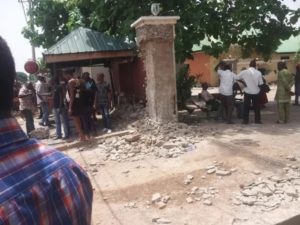
Police in Kaduna, northern Nigeria have averted a civil unrest following the alleged demolition and destruction of a building in Sabo Area. The structure – Green Apple – runs as a hotel and recreational facility.

The Hotel, belonging to former Minister of Environment, Laurentia Laraba Malam. has for sometime been sealed-off following a court order, over its legitimate owner.

An eye witness who wants to remain anonymous told AFRICA PRIME NEWS that suspected thugs from a “Muslim community, in company of armed policemen, ‎stormed the property,” located in a Christian community, and “started pulling down part of the structure.”

In reaction, youths within the area quickly mobilised themselves to resist the alleged demolition that almost took religious colouration. They barricaded the road passing through the area and burnt down tyres.

The thugs who were said to have stormed the area in buses left immediately when they saw the youth of the area mobilising themselves.

News like wildfire immediately went round Kaduna and the social media, creating tension – people giving it religious meaning.

Our reporter gathered that a Court had earlier ruled the case in favour of the former Minister while she was in power, but the contender filed a fresh case last year, in which the court asked for the suspension of business activity and the matter to maintain its status.

One of the policemen on ground told our reporter that they were stationed there to ensure restoration of peace and order.

AFRICA PRIME NEWS could not establish the identity of the police alleged to have accompanied the thugs, effort to reach the Police Public Relations Officer, to clarify that was unsuccessful as his phone line was not going through.

Normalcy has been restored in the area and its environs, as people are going about their normal activities.

But on his Facebook Wall, Samuel Aruwan, the Special Assistant to Governor of Kaduna State says “There is no any crisis in and around Sabon Tasha, Narayi and Barnawa areas as being speculated. Please ignore the story…”

Iliya Kure contributed to this report

Meningitis: Nigeria Kidding With Local Production Of Vaccines

0

By Odimegwu Onwumere

 Successive governments at all levels had raised the issue of opening local production of vaccines many times that never saw light of the day. However, with the outbreak of meningitis and the recent call by health workers for vaccine production in the country, the government may not turn a new leaf given its antecedents, Odimegwu Onwumere writes

 What will it cost Nigeria to produce vaccines?

 “This Meningitis outbreak shows that the Ministry of Health has no solid plan of action to help prevent such widespread outbreaks. It is disheartening that here in Nigeria, we wait until there is an epidemic or an outbreak before we start running helter-skelter to try to manage it,” cried out Dr. Nini Iyizoba, a contributor to national and international health discourses.

 Iyizoba’s thoughts came when over 8,000 cases of Cerebro Spinal Meningitis, CSM, and about 800 deaths were reported in Nigeria by April 17 2017, amidst were 336 children. This precarious disease that was reported late 2016 with the authorities showing lackadaisical attitude, escalated this year, especially in the North-west and North-central zones, compelling the once ostensible lame-duck authorities to pronounce it as contagion in six states of Katsina, Kebbi, Zamfara, Niger, Sokoto and Yobe – informed the News Agency of Nigeria (NAN).

 According to science, meningitis is a serious disease in which there is inflammation of the meninges, caused by viral or bacterial infection, and marked by intense headache and fever, sensitivity to light, and muscular rigidity; and most affected age group is 5-14 years of age. The source added that those in whose hand it’s to handle such a case were motiveless given that, “Meningitis is quite common in sub-Saharan Africa and countries like Nigeria, Senegal, Niger, Chad, Benin, Mali, Burkina Faso etc which make up the ‘Meningitis Belt’.”

 Apart from the 2016-2017 presence of the disease, health establishments educated that this is not the first time that the country was experiencing meningitis. “In 1996 alone, Meningitis killed more than 11,000 people in Nigeria. In 2009, almost 600 people died. In fact, just two years ago, a meningitis epidemic affected almost 10,000 people and killed over 1,000 people in Nigeria.  And now, again, in 2017, it’s happening all over again,” enthused Iyizoba, adding, “How can we not be prepared? Why should we be caught unawares? It is occurrences like these that make people theorise about the lack of empathy for the poor or average Nigerian life.”


Failed promises on vaccines

Experts have judged that if there were local vaccine production plants in the country, it is apparent that the number of the affected would not have risen as drugs would be at doorsteps to help in the outbreak. But over the years the authorities have deafened people’s ears that they would be building drug plants and manufacture vaccines in Nigeria that never come to be. Hence, Nigerians have taken the government’s overtures on production of vaccines in the country aftermath of the epidemic as a tale by moonlight.

 Many believed that what the authorities have always preferred was what it did recently: Buy and share drugs. In the voice of Iyizoba, “About 500,000 doses of Meningitis C vaccine have been distributed to affected areas in the North for immediate vaccination. Approximately, another 800,000 doses are being expected from United Kingdom to help support the ongoing vaccination programmes. That brings the total to about 1.3m vaccine doses for a country that has a population of over 180m people.”

 In several occasions, individuals and organisations such as the Association of Medical Laboratory Scientists of Nigeria (AMLSN) have pleaded with the federal government to redirect its focus on local production of vaccines. But the government wouldn’t do this given the many years it had been clamouring for erecting vaccines and drug production plants in the country.

 The government would always prefer to import vaccines even when there were suggestions that the Federal Vaccine Laboratory, Yagba, can help Nigeria vaccines-wise go a long way if reinvested in. Before its comatose condition, this outfit produced vaccines that were sent to foreign countries.


Many failed calls on local vaccines

In July 2013, the Nigerian Medical Association (NMA), had called on the federal government to gear up in producing domestic vaccines, but that call seemed unattended to.

 NMA’s call was in order to curtail the sprinting of hepatitis in the country, which was viral. It was the then President of the association, Dr. Osahon Enabulele who made the call on the occurrence of the 2013 World Hepatitis Day. It is evident that the call died immediately it was made.

 Even when Dr. Enabulele made it known at the occasion that hepatitis virus A, B, C, D and E were accountable for the millions of death in the country, because they caused sensitive and unremitting infections and inflammation of the liver, the government did not bellyache.


Failed attempts to produce vaccines

In June 2012, ex-President Goodluck Jonathan had approved the local production of vaccines with an aim tailored towards everyday accessibility of routine vaccines in the country. While Jonathan might have meant well for the health sector with his government taking-off with Biovaccines Nigeria Limited, which was a joint project company between Federal Government and May and Baker Nigeria Plc, that project did not meet the direction it was intended to reach. If it had reached, the health sector and the government wouldn’t be gasping for air on where to get vaccines for the control of outbreak of meningitis in the country as they are doing today.

 At the opening of the Health Canada-NAFDAC Mentorship Launch aimed at building the Agency’s capacity in the area of vaccine regulation on March 26, 2013, the then Director General of National Agency for Food and Drug Administration and Control (NAFDAC), Dr. Paul Orhii said that the country was ready to start local production of routine immunisation vaccines for tuberculosis, hepatitis B, diphtheria, tetanus and pertussis/whooping cough (DPT), polio, measles and yellow fever. With these words by Orhii – “We want to start manufacturing vaccines. We are starting on a right footing of vaccine production in Nigeria by beginning with capacity building of NAFDAC officers” – up till now, there is nothing on ground to show for the mouthing.

 From the month of June 2012, there was expectancy that Nigeria would have a world-class vaccine plant where the production of Yellow Fever vaccines would be fad in 18 months, but this expectation also bit the dust.


Lying on vaccines

Opinions were that the government has been toying with the hope of Nigerians of benefitting from a well designed local vaccines production, given the statement by the MD/CEO, May and Baker Plc, Mr. Nnamdi Okaforthat could not have come to pass till date.

 “Our job is to revive that entity using our knowledge, expertise and resources to produce and distribute vaccines in Nigeria once again and consequently end the era of 100 per cent dependence on foreign vaccine producers to immunise our citizens against vaccine preventable diseases that ravage our society.”

 Okafor made it known that the requisite industrial capability had been attained. But Nigerians have been wondering why they still gasp for local vaccines today, if that target has been met. Hear Okafor again, “Our major priority now is to commence local vaccines production as soon as possible. The Biovaccines business plan is being reviewed and will be presented to the Board as soon the latter is constituted. We plan to commence construction of a new vaccine plant at the new site in Ota, Ogun State with a view to starting production of Yellow Fever vaccines within 18 months.”


Millions of money that never produced vaccines

The initial plan for the vaccines plant in Ota was to give hope in Nigeria that there would be enough and quality vaccines that are also secure and inexpensive, and create job opportunities for Nigerians.

 Okafor even captured it thus: “By going into local vaccine production, Nigeria will be putting the health security of her citizens in its hands. Immunisation is a national health security issue. No country can afford to leave the health security of her citizens in the hands of foreign organisations.

 “The venture would also save Nigeria substantial savings in foreign exchange and logistics costs of vaccine importation. Currently, the federal government spends over N6 billion to import vaccines every year, excluding what is imported by states and local governments.

 “Local vaccine production will ensure Nigeria’s participation in an industry that is at the cutting edge of science by helping to transfer technology to Nigeria and build capacity for primary healthcare delivery.”

 It is hoped that the federal government would stop making further overtures on local production of vaccines but just go into action.

 Odimegwu Onwumere is an award-winning writer based in Rivers State. He contributed this viaapoet_25@yahoo.com

Celebrating Reroute Of The Cross River Superhighway – A Win For Wildlife!

0
wildlife
wildlife

By Adebote ‘Seyifunmi

Earlier this year, environmentalists stood up to vehemently challenge Prof. Ben Ayade’s decision to construct a proposed ‘Cross River Superhighway’. It did not matter that the idea seemed beautiful on the surface – a 260 kilometers long highway with anti-slip features, speed cameras and to crown it, high-speed internet connectivity while connecting other distant parts of the country in a short time.

Debates here and there followed, the conflict was not on the basis of the proposed huge sum of $3.5 billion dollars to be spent for the construction; it was not the dispute over who should get the contract, foreign expatriate or indigenous companies? Neither was it the fear over how long the project will span entwined with the willingness (or not) of subsequent administration(s) to complete such pioneering project.

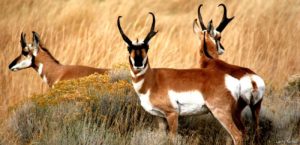
The imminent degradation of Nigeria’s rich biodiversity, the destruction of her ancestral heritages, the possible extinction of wildlife like the Cross River gorillas and further threats to the diminishing population of chimpanzee, pangolin, and forest elephant were the issues that attracted international uproar over the construction of the superhighway.

Records have it that the world’s largest decline of any subspecies of great ape recorded is the Cross River gorillas. Between 1995 and 2010 – 5 years, there was a 59 percent decline rate in their population. The Cross River superhighway could have in few months raised that percentage by another 41 per cent, thereby, causing this endemic species of Gorilla (with less than 300 left in the wild) to be entirely wiped off.

The decision to reroute the highway is a big win considering that Nigeria is viewed as a ‘democratic’ country where people in power – federal and state take decisions with or without (mostly without) long-term consideration of the resultant effect of such actions or policies.

The selfless act of passionate environment conscious individuals, organizations and closely related agencies across the world that stood up and spoke loud enough concerning this issue is highly commendable.

Lastly, we sincerely thank you – President Buhari, Minister Jubril, and Governor Ayade for this. The decision to reroute the highway and to suspend plans for the superhighway’s 20km-wide buffer through some parts of the Cross River National park is a win for our irreplaceable wildlife, a win for posterity, a win for Nigeria’s biodiversity and a win for the world at large.

Now that we know that the superhighway’s new route will ensure that Nigeria’s biodiversity is prioritized and that our fauna and flora entities will thrive undisturbed, we are super excited about the project and anticipate its realization.

‘Seyifunmi, an Environmentalist, a youth advocate and a Wildlife Researcher, writes from Abuja. His Email, adeboteseyi@gmail.com


2017 Annual Round Table for Indigenous Language Newspapers To Hold In Kaduna

0
Map of Nigeria Showing Kaduna State

By Longtong Ibrahim

The 2017 Annual Round Table for Indigenous Language Newspapers organized by the National Institute for Cultural Orientation (NICO) in collaboration with the Federal Ministry of Information and Culture will be holding in Kaduna, northwest Nigeria.

The 2-day event is scheduled to hold between 15th and 16th May, 2017 at Arewa house by 11am, with the theme: “Nigerian Indigenous Language Newspapers and National Development”.

Press secretary of the Ministry of Information and Culture, Joseph Mutah, in a statement noted that the event would be hosted by the Minister of Information and Culture, Lai Mohammed, while the Governor of Kaduna State, Nasir El-Rufai will be the Special Guest of Honour.

According to him, the Chairman, Senate Committee on Culture and Tourism, Senator Mathew Urhoghide will chair the opening ceremony and the Chairman/Publisher of Leadership Newspapers, Mr. Sam Nda-Isaiah will deliver the keynote address.

“The lead paper presenter of the occasion is the CEO/Editor-in-Chief, Media Trust Limited, Manir Dan Ali and Professor Olu Obafemi of the University of Ilorin will serve as Moderator.

“The Annual Round Table is designed to build the capacity of publishers, editors and art correspondents of the indigenous language newspapers in order to keep them abreast of contemporary realities in the sector and also enhance their professional skills and competence for effective service delivery.

“The event underscores the relevance of indigenous language newspapers to national development and appreciates their role in the promotion of our cultural heritage. The event also emphasizes the importance of indigenous language newspapers as a potent tool for information dissemination and grass roots mobilization as well as advocate for a synergy between the government and indigenous language newspapers in nation building,” Mutah noted in the statement

Nigerian Judge To Rule On Mode Of Trial Of Former NSA Dasuki June 15

0
Dasuki Sambo, Former National Security Adviser, Nigeria

First published by PRNigeria under the title ‘After FG Insists on Secret Trial of Dasuki, Judge to Rule on Mode of Trial’

The federal government will on June 15 know its fate in the fresh bid for protection of 14 witnesses it assembled to testify against the former National Security Adviser (NSA) colonel Sambo Dasuki (rtd) in the charges of unlawful possession of firearms brought against that former military officer.

The government insisted that Dasuki, being a former military officer, former aide de camp (ADC) to a former President, former  NSA and a crown prince of Sokoto caliphate was a potential threat to its witnesses lined up to  justify the charges against him.

In a fresh application for witness’s protection argued by Oladipo Okpeseyi SAN, the federal government urged Justice Ahmed Ramat Mohammed of the federal high court Abuja to allow the screening of the witnesses in order to guarantee their safety after their evidence in court.

Okpeseyi told the court that the witnesses who are operatives of the Department of Security Service (DSS) carry out their works across the country and could be attacked by sympathizers and well- wishers of Dasuki unless their identifiers are protected.

The counsel submitted that Dasuki was once the boss of the witnesses and that they (witnesses) could be jeopardized unless their names are not placed at the public domain adding that the ex NSA will not be jeopardized in anyway if the request for the witness protection is granted.

“This application for witness protection will not in any way take away the right of the defendant (Dasuki) to see the witness and cross examining them in their evidence as required by law” Okpeseyi argued adding that a witness who once testified in the matter was involved in a mysterious ghastly accident.

However, counsel to Dasuki Mr. Ahmed Raji SAN described the government bid as a cheap blackmail against his client and urged the court to dismiss the request for being speculative, baseless and un-meritorious.

Raji said that the ex NSA was not charged with terrorism offence to warrant protection for any witness adding that several operatives of the Economic and Financial Crimes Commission (EFCC) have testified against Dasuki in two other courts without any complaint of threat to their lives.

Besides, the senior counsel argued that similar application had been filed by government but was dismissed by the same court for lacking merit adding that the fresh bid was a ploy to cause the court to sit as an Appeal Court on the previous decisions.

He insisted that the fresh application which was the third in the services was a classical gross abuse of court process adding that no cogent reason has been advanced other than to scandalize the ex NSA for no just cause

“In two other courts, several operatives of EFCC have testified as witnesses for government and nothing, I repeat, nothing has happened to any of the witnesses. The point here is that, this fresh application is a cheap blackmail against the defendant.

“I have perused the application, all the grounds advanced to justify the request for witness protection have no cogent evidence but mere speculations.

“The defendant has been detained in violation of court orders on bail for almost two years now, yet nothing negative has happened from his well-wishers and sympathizers across the country. I urge this court to resist this cheap blackmail by refusing to grant their prayers.

“Besides, the prosecution has in the charge, listed the names, addresses and positions of the 14 witnesses and made same available to the public and now, that same prosecution does not want their names mentioned in this open court after it had on its own volition made same public in the charge against Dasuki .

Justice Muhammed after taking arguments for the two parties fixed June 15 to give ruling in the application.

Dasuki was arraigned on September 1, 2015 over charges that bordered on unlawful possession of firearms and money laundering.

But due to intermittent interlocutory applications from both the prosecution and defense counsels, commencement of trial of the former NSA has been delayed.

Justice Adeniyi Ademola of the Federal High Court had on April 19, 2016, dismissed similar application brought before the court by the Federal Government.

The Federal Government had applied to the court to stop the public except accredited journalists, legal team and few immediate family members of Dasuki from attending the trial.

Also, the prosecution counsel had begged the court to order that its witnesses be allowed to use pseudo names, be hooded and have their identities hidden before mounting the dock box to testify.

Delivering ruling on the application on April 19, 2016 Justice Ademola observed that the prosecution counsel had earlier included in the charge sheet, names and addresses of 11 witnesses to be called to testify against Dasuki and had made same available to the general public.

In the light of the afore stated, the Judge considered it baseless and of no point for the prospective prosecution witnesses in the trial to wear facial masks, hide their identity and addresses so as to protect them from alleged attack from those loyal to Dasuki.

Justice Ademola said the government lawyer did not advance cogent reason to show how the life of its witnesses was being threatened, insisting that no court of law would accede to such requests without established reason.

Justice Ademola also noted that the charges filed against Dasuki were not terrorism charges and that there was no information that the life of any of the witnesses to be called was under threat by a group or anybody.

However, at a resumed hearing yesterday, the prosecution counsel, Oladipo Opeseyi, again begged the court for protection of the identities of the witnesses and that records of proceedings shall not be made accessible to the public.

Curled from PRNigeria

Currency Exchange Rates

USD - United States Dollar
ZAR
0.06
EUR
1.17
CAD
0.73
ILS
0.31
INR
0.01
GBP
1.34
CNY
0.14
Enable Notifications OK No thanks