Home Blog Page 1561

Nigeria Launches Health And Nutrition Response Project

138
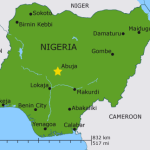
Map of Nigeria
Map of Nigeria

Nigeria has launched the Health and Nutrition Emergency Response (HNER) project to reduce high cases of “morbidity and mortality” of its citizens through provision of life-saving services to persons affected by insurgency in the northeast region.

Nigeria’s Minister of Health, Isaac Adewole made this known at the midterm review session held in Maiduguri city, northeast Nigeria.

The project is to assess affected population to an essential package of primary and secondary life-saving health services, as well as strengthen capacity for disaster preparedness and response at three tiers of health system in the region.

The country plans a six-month implementation based on leadership; governance, accountability and coordination to achieve targeted emergency health responses in Adamawa, Borno and Yobe states.

According to the Representative of World Health Organisation (WHO), Dr. Alemu Magednehu 21 health partners were in involved in the midterm review.

London Attack: 12 Arrested In Barking After Van And Knife Attack

0

Twelve people have been arrested after the London terror attack which left seven people dead and 48 injured.

The arrests in Barking, east London, followed a raid at a flat belonging to one of the three attackers.

A van hit pedestrians on London Bridge at 21:58 BST on Saturday. Three men then got out and stabbed people in nearby Borough Market.

The attackers were shot dead by eight officers who fired 50 bullets. A member of the public was accidentally shot.

The member of the public remains in hospital in a non-critical condition, Assistant Commissioner Mark Rowley said.

“The situation these officers were confronted with was critical, a matter of life and death – three armed men wearing what appeared to be suicide belts,” he said.

“They had already attacked and killed members of the public and had to be stopped immediately.”

The suspected suicide vests were later found to be hoaxes.

Thirty-six people are in hospital with a “range of injuries”, he said, and 21 are in a critical condition.

The mother of 23-year-old Daniel O’Neill, who is recovering in hospital after being stabbed, told the BBC he had a seven-inch scar from the knife attack.

“He had just stepped outside the bar for a second and a man ran up to him and said ‘this is for my family, this is for Islam’ and put a knife in him,” Elizabeth O’Neill said.

“I’m still in shock. I can’t quite believe it’s happened.”

Controlled explosions were carried out at the flat in Barking during the raids on Sunday morning.

According to neighbours, the dead attacker lived there for about three years and was married with two children.

One man, who did not want to be named, said one of the attackers had become more extreme over the past two years.

“We spoke about a particular attack that happened and like most radicals he had a justification for anything – everything and anything.

“And that day I realised that I need to contact the authorities,” he said.

He said no action was taken.

“I did my bit… but the authorities didn’t do their bit,” he said.

It is the third terror attack in the UK in three months, following the car and knife attack in Westminster in March, in which five people were killed, and the Manchester bombing less than two weeks ago, in which 22 people were killed.

Most political parties have suspended national general election campaigning, but the prime minister said full campaigning would resume on Monday.

The general election will go ahead as planned on Thursday.

Condemning the attack, Theresa May said it was “time to say enough is enough”.

Eyewitnesses described a van travelling at high speed along London Bridge, hitting pedestrians, before crashing close to the Barrowboy and Banker pub.

The white Renault van used was recently hired by one of the attackers, Mr Rowley said.

Three men then got out wearing fake bomb vests and began attacking people in the nearby market – an area known for its bars and restaurants.

Four police officers who tried to stop the attack were among those injured, two of them seriously.

One of them was an off-duty officer and amateur rugby player who tackled one of the terrorists, suffering stab wounds.

Another, a British Transport Police officer who joined the force less than two years ago, took on the attackers armed with only his baton.

Metropolitan Police Commissioner Cressida Dick praised their “extraordinary bravery”.

The three suspects were shot dead within eight minutes of the first 999 call being received.

Eyewitness: “They were running and stabbing everyone”

Among the main developments:

  • Prime Minister Theresa May made a private visit to King’s College Hospital in south London to visit some of the injured
  • There will be a minute’s silence on Tuesday at 11:00 BST in remembrance of those who lost their lives and all others affected by the attacks
  • A Canadian national was among those killed, the country’s Prime Minister Justin Trudeau said
  • Two Australian citizens “have been directly impacted” said the country’s Prime Minister Malcolm Turnbull
  • A French national was killed and seven others wounded, including four with serious injuries according to foreign minister Jean-Yves Le Drian. One French national is still missing
  • The Met Police has set up a casualty bureau on0800 096 1233 and 020 7158 0197 for people concerned about friends or relatives

BBC reporter Holly Jones, who was on the bridge, said the van was “probably travelling at about 50 miles an hour” and hit “five or six people”.

According to another witness, Eric, the men inside jumped out once the van crashed and “ran towards the people that they nearly ran over”.

“[Then] they literally just started kicking them, punching them, they took out knives… it was a rampage really,” he said.

One man, Gerard, told the BBC he saw a woman being stabbed “10 or 15 times” by men shouting “This is for Allah”.

Steven Gibbs, who was drinking in a pub metres from the scene, told the BBC: “A black cab drove past and the driver shouted, ‘Terrorist attack, run!’

“I stood up to take a look and then all of a sudden there were gunshots. Lots of people were screaming.”

#SofaforLondon

Hundreds of people were stranded after being unable to return to their homes and hotels.

As with the Manchester attack, there were stories of Londoners coming to each other’s aide, offering free taxi rides, free accommodation or just the opportunity to call friends and family – many using the hashtag on social media #sofaforLondon.

Speaking in Downing Street after a meeting of the government’s emergency Cobra committee, the prime minister said the country “cannot and must not pretend that things can continue as they are”.

“We believe we are experiencing a new trend in the threat we face as terrorism breeds terrorism,” she said.

Mrs May said the counter-terrorism strategy would be reviewed and the UK would work with other countries to prevent the internet being a “safe space” for terrorists.

She said there was “too much tolerance of extremism in our country” and while it would involve “some difficult and embarrassing conversations”, that must change.

Inspired by IS: By Frank Gardner, BBC security correspondent

All through the night, supporters of so-called Islamic State celebrated the London attack, even before any claim was made by IS.

There was never much doubt either in their minds, or in those of British counter-terrorism officials, that this was a jihadist attack inspired by IS.

It follows a widely-circulated propaganda message put out by the group on social media urging its followers to attack civilians in the West using trucks, knives or guns.

The message makes reference to the current Islamic holy month of Ramadan. Last year, attacks intensified during this month with deaths resulting in Istanbul, Dhaka and Baghdad.

Some analysts see this as a last desperate bid by IS to its supporters, following multiple setbacks in the Middle East where its self-proclaimed caliphate is shrinking fast.

But the ideology of IS is likely to survive those defeats – and will continue to fuel terrorist attacks around the world.

London Mayor Sadiq Khan said the capital remained the “safest global city” and would not be cowed by terrorism.

Harun Khan, secretary general of the Muslim Council of Britain, said Muslims everywhere were “outraged and disgusted at these cowards who once again have destroyed the lives of our fellow Britons”.

New normal: Dominic Casciani, BBC home affairs correspondent

With three attacks in three months, terrorism against soft targets is beginning to feel, to some people, like the new normal.

The brutal reality is that this kind of threat is absolutely typical of what jihadists sought to achieve in all their attacks across Europe.

Since 2013 security services in the UK have foiled 18 plots. A large proportion of those have involved suspects who set out to commit acts of violence similar to the attack on Westminster Bridge and London Bridge.

Plans to use bombs, such as at Manchester Arena, are rarer because plotters need to have the technical skills for such an appalling attack – but attacking people with cars and knives is far easier and has long been encouraged by so-called Islamic State and other jihadists.

The aim of the three attackers last night is abundantly clear – not only did they want to kill, but they wanted to lose their own lives.

They would’ve known full well that attacking people in the street would draw armed police in their direction and the fake bomb belts they were wearing would, in their own warped minds, hasten their demise.

The area around the attack scene remains cordoned off, with London Bridge closed. Neighbouring Southwark Bridge has now reopened.

Many other roads, including Borough High Street and Lower Thames Street, are also closed, and trains are not stopping at London Bridge rail station or Tube station.

Curled from bbc.com

FRSC Redeploys Spokesperson, 70 Other Senior Officers

0
FRSC Logo

The Corps Marshal, Federal Road Safety Commission (FRSC), Dr Boboye Oyeyemi, has approved the redeployment of 71 senior officers nationwide for enhanced performance.

The redeployment, aimed at repositioning the Commission, affected three zonal commanding officers alongside several sector commanders.

The spokesperson of FRSC who was formally the Corps Public Education Officer at the headquarters, Corps Commander Imoh Etuk has been deployed to Rivers as Sector Commander.

He replaced Ayodele Kumapayi, the former Sector Commander who was recalled recently for forcibly cutting the hair of some female personnel.

Kumapayi is now the Head of Corps Safety and Transport Office at the national headquarters, Abuja.

Corps Commander Bisi Kazeem, who was the Head of Media Relations and Strategy at the headquarters, takes over from Etuk as the new Corps Public Education Officer.

In the redeployment released by FRSC Secretary, Susan Ajenge, Kingsley Agomo, the former Zonal Commanding Officer of Zone 7, Abuja, was moved to Zone 6, Port Harcourt.

Jonas Agwu, who was in charge of Zone 6, Port Harcourt, was redeployed to Zone 4, Jos.

The erstwhile Commanding Officer of Zone 4 Jos, Oludare Fadogba, takes over the affairs of Zone 7, Abuja.

A.A. Nwaka, who recently completed a course at the National Defence College, Abuja, was deployed to the National Headquarters, Abuja, to take over as the Assistant Corps Marshal in charge of Admin section.

Also affected is the former Kaduna State Sector Commander, Mr Francis Udoma, who is now the Head of Transport Section at the Technical Service Department at the national headquarters.

Former Sector Commander, Gombe, David Mendie, was moved to Benue as Sector Commander, while Chidi Nkwonta, the erstwhile Sector Commander, Benue, takes charge in Cross River in the same capacity.

Similarly, Ikechukwu Igwe was moved from Cross River as Sector Commander to Bayelsa in the same capacity.

James Mbatse was moved from Niger State as Sector Commander to assume the same position in Yobe.

Ibrahim Abubakar and Umar Ibrahim were moved from Imo and Osun as Sector Commanders to assume the same positions in Gombe and Kaduna states respectively, among others.

In a statement circulated on Sunday, Sani Abdullahi, Media Assistant to the Corps Marshal, said the redeployment takes immediate effect.

According to Abdullahi, handing and taking over process is expected to be completed latest by June 10.

The statement said Oyeyemi enjoined all senior officers of the FRSC to brace up to the challenges of delivering safety to Nigerians in line with the Corps’ 2017 strategic goals.

Curled from PRNigeria

Anti-Corruption: The Role Of Media As A Change Agent

0

By Nuhu Ribadu

I am happy to be in the midst of a gathering of journalists and media practitioners, today. I am especially glad that you chose to have us reflect on a very important and ever-relevant topic of the fight against the malice of corruption in Nigeria, and the roles a powerful tool like the media can play in combating corruption in our country. Having this discussion in the month of Ramadan, a time of spiritual odyssey, underscores the fact that we should not only pray but compliment the needed supplications with practical solutions to our challenges of nationhood.

There is a consensus about the position of corruption as our major impediment to greatness. It is a malady that has unfortunately gone deep into our national fabric. Corruption is the major reason why we are where we are today as a country. It is also the reason why we are unable to address a lot of our problems and challenges.

Years of mindless stealing and waste of public resources has brought bad name to Nigeria and reversed the hope and aspirations we had as a country at the time of Independence. The haemorrhage of corruption has dragged this country to a brink in spite of efforts at different times, including what we are witnessing presently, to get the country away from the monster. Fighting corruption, therefore, is key to the survival and progress of our country.

In this fight to emancipate Nigeria from corruption and the corrupt, you as journalists have a great role to play. Your role in this crusade is conferred by the potent of the weapon that is in your hands as pressmen and women. Journalism, you would agree with me, is a frontline profession when it comes to nation building and search for development.

Throughout history, media has played momentous roles in different societies to tackle a number of malfeasances, including corruption. Such turning point interventions by the media have also occurred at different points in Nigeria. In the case of fight against corruption, the Nigerian media should continuously rise up and resist continuous desecration of our country. Corruption desecrates our national ethos and values, and inhibits our well-being as a people. As the acclaimed voice of the voiceless, the media should be up against corruption in all forms.

However, for the media to effectively fight corruption, there must be self-purgation. Media should purge itself of corruption and stand up firm on the path of integrity to discharge its function effectively. As I always say; corruption cannot fight corruption. He who is morally challenged has no moral right to sermonize on morality. And when the morally deformed person attempts to rise against immorality, hardly would he ever succeed and often he ends up ridiculing such moral responsibility.

Cardinal objectives of journalism; that of upholding honesty, probity, fight against injustice and patriotism, sit very well with the teachings of Islam. In fact, fighting for the oppressed and telling the truth are some of Islamic injunctions that are repeated a number of times in the Qur’an and for which Allah promises abundant rewards.

Therefore, as Muslim media practitioners, you should first see your positive role in the fight against corruption as an act of worship. Allah enjoins Muslims against injustice, and there is no injustice greater than cornering what is unto people into one’s own.

The media is therefore needed to champion the anticorruption message and always stand for what is right. As a journalist, you should make it a point of principle to never join forces with people you ought to help the public to fight. Above all, fear of God should be the guiding principle always. At points of temptation always prick your conscience; ask yourself what is in the public interest. Ask yourself; what or who is on the side of the truth before making news judgments or lending yourself to any cause.

Distinguished audience, what I try to do is to scratch the surfaces before we immerse into the lecture proper. I believe the paper presenter, eminent professor Is-haq Oloyode and the discussants lined up will take us through the full course of the theme of this lecture and expectations on you are media practitioners in helping the fight against corruption and, ultimately, the development of this country.

Professor Oloyode has had a long term engagements with activism around this issues. I know his commitment to anticorruption crusade having helped us at the EFCC for a number of initiatives, including developing a faith-based training manual on the war against corruption, in his capacity as the Secretary General of the Supreme Council for Islamic Affairs. We thank you Prof.

The three discussants on the agenda are all eminently qualified to address us on the topic and I believe if we listen carefully we will have a lot of take-away points that will benefit us, especially in your work as journalists.

Ramadan Kareem

Malam Nuhu Ribadu, Former Chairman Economic and Financial Crimes Commissiion (EFCC) delivered this remarks at Ramadan lecture organised by the Muslim Media Practitioners Association of Nigeria at the National Mosque, Abuja
June 3, 2017

Nigeria’s Foreign Debt: Zaria Youth Urge Shehu Sani To Contest For Governorship In Kaduna

0
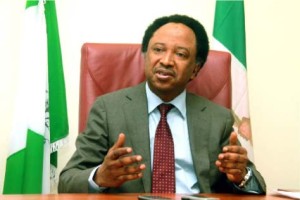
Senator Shehu Sani
Senator Shehu Sani, Representing Kaduna Central

By Amos Tauna​

The Senator representing Kaduna central senatorial District, Shehu Sani, has lamented level of development in his home state, saying the state is left far behind compared with allocations received from the Federal Government

“Hundreds of millions of dollars have been given to state governors, but in Kaduna State, we don’t know where that money is going into. It is wrong for people to exaggerate their achievements and it is also wrong for people to belittle the achievements that have been made,” said Sani  when youths from Zaria and other communities paid him a courtesy visit, urging him to contest the 2019 governorship election in the state.

Speaking on the alarming rate of Foreign and Domestic Debts of state governors, Shehu Sani said, ”As Chairman of The Senate Committee on Local and Foreign Debt, I worked on Nigeria’s debts. We have been able to work out a new strategy, whereby a functional oversight activity could take placed on how Nigeria borrows money.”

While speaking, he warned state governors Nigeria to desist from accumulating external and domestic loans, saying the situation was becoming embarrassing and capable of plunging the states into a worse economic crisis.

“I am disturbed at the rate which state governors pile up foreign and domestic debts in their various states, there is the need to halt the trend.

“We have also been able to work on several loans request from the Federal Government as far as Eurobond is concerned. And that has been very much successful. It is very clear to us that Nigeria is today exiting the recession, but we must also warn that the level in which states are borrowing is becoming unbearable. And this must be seriously taken care off.”

He called on the northern state governors to always deploy available resources to uplift their citizens out of poverty and also impact development in their economies.

Senator Shehu Sani expressed delight with steps taken by President Muhammadu Buhari in fighting insecurity and corruption.

Nigerian Legislator, Katung, Supports Southern Kaduna Farmers With Fertilizer

0
Map of Nigeria Showing Kaduna State

By Amos Tauna

Following the incessant crisis that engulfed Southern Kaduna in Northern Nigeria, the lawmaker representing Zangon kataf/Jaba Federal constituency in the House of Representatives, Sunday Marshall Katung, Thursday distributed bags of fertilizers to rural farmers to boost farming activities in the area.

The move is part of his efforts to strengthen agriculture and encourage local farmers to go back to farm in the area that has been devastated by insecurity.

Beneficiaries include Traditional rulers, tribal associations, welders association, motorcycle groups, road transport workers, women groups, co-operative societies, Christian Association of Nigeria and Ja’amatu Nasir Islam, members of different political parties among others.

The Peoples Democratic Party, PDP, lawmaker who was represented at the ceremony by Yohanna Allahmagani, a former commissioner for culture and tourism in Kaduna State said the distribution of fertilizer was for everybody because he believes that the product is very crucial at this point in time because the people are peasant farmers hence the need to encourage them to go back to the farm following the prevailing hardship.

He said the product would be distributed across the whole local government area since the rains is just starting, adding that it is given out free of charge to people and encourage people to go to farm.

Katung said the security situation was a serious setback for his people , hence the need to assist the local farmers with fertilizers in order to encourage them go back to farm.

He expressed confidence that the fertilizer which was given to farmers would yield a bumper harvest at the end of the farming season in Southern Kaduna.

He called on governments at all levels to take the security situation of the area with all seriousness so that people could go back to their farms and in order feed the nation.

On his part, Chairman of the occasion and former commissioner of Information, Ben Bako said the distribution was not only timely but more than ever crucial to the survival of the people.

He said the current situation shows that people could no longer survive with their work alone, hence have resulted to farming, “So this fertilizer distribution is timely and all Nigerians need fertilizer because farming without fertilizer now is a waste of time.”

“May God continue to bless Honourable Sunday Marshall Katung for remembering his people after the elections, because many politicians only remember their people during elections.

“This is a ceremony to show that Honourable Katung is keeping to his promises, this is a demonstration of a man that knows the feeling of his people and commitment to their welfare. It is meant for everybody, no discrimination at all whether on party or religious lines.” he said.

Others who spoke at the gathering includes Traditional Ruler,  His Highness Sheyin Tauna Gimba, the district Head  of Zonzon, who  said that even the government fertilizer has not reached the people and thanked the legislator for his efforts, “As traditional rulers, we are happy with his performance. We are very happy that our people are happy and we are praying for him.

“We employ the people to go back to farm as the fulanis should not stop us from farming, thank God the fertilizer is here. Our people will continue their farming.

Woman leader in the area, Mary Ephraim posited that, “Today is a great day because this fertilizer is coming at the right time and shows that the member is feeling the pulse of the people and we employ him to do more for the people.

“With the situation in the country farming is the key to survival and we thank God for someone like Hon. Katung who has come to help the farmers with fertilizer. We pray that he would continue to remember the people even next year.”

Kaduna Electric In Northern Nigeria Recalls 130 Ex-Staff

0

By Amos Tauna

The Management of Kaduna Electricity Distribution Company in Northern Nigeria has recalled 130 former employees of the company relieved of their appointments early this year.

The Managing Director/Chief Executive Officer of the Company, Garba Haruna, who stated this in Kaduna Thursday while kicking-off a five day refresher training organized by the Company for the re-engaged staff also called on them to reciprocate the gesture through hard work and dedication to duty.

He announced that, “The Company has put in place a performance driven mechanism where the performance of each and every staff shall be constantly monitored and evaluated on weekly basis.”

He charged the re-engaged workers to think outside the box and leverage on the power of ICT for effective discharge of their responsibilities.

“You must ensure that you bring to bear practical creative solutions and make effective use of modern ICT devices to improve your performance and ultimately enhance service delivery to our customers,” he contended.

Mr. Haruna also promised that those found to be performing excellently among the workers would be given handsome rewards and elevated to higher position while the poor performing ones would be sanctioned accordingly.

He also urged them to share ideas, best practices and their challenges with their supervisors and other senior colleagues for timely resolutions of customers’ complaints or any other day-to-day challenges, while at the same time warning against any unethical conduct.

According to him, “Honesty, transparency and ethical business practice while dealing with customers must be maintained at all time.”

Earlier, the Chief Corporate Services Officer of the Company, Mr. Uday Mishra disclosed that all the about 600 workers disengaged last year were given the opportunity to participate in the re-evaluation tests, an exercise that culminated in the selection of those re-engaged.

He said the re-fresher training was aimed at acquainting the workers of the working processes, what is expected of them, basic knowledge of the industry and their assignments as well as correcting previous mistakes.

Mid-Term Report: Meningitis Outbreak Headlines Public Health Challenges Of Buhari Administration

0

The health sector in Nigeria under President Muhammadu Buhari has had a lot of media attention. Not much of this has however been about the government delivering on its promise to provide functional healthcare system to Nigerians. Instead, the headline has been grabbed by epidemic outbreaks in parts of the country, underlining the challenges that still face the sector.

During the electioneering campaign, candidate Buhari essentially promised to reposition healthcare service delivery in the country. After his election, his government said it would reduce import dependence by providing incentives for domestic manufacturing of pharmaceuticals, ensure that unadulterated drugs are easily available and affordable, get states to provide free ante-natal and maternal care for pregnant women, and free healthcare for children up to 12 years of age.

It also promised to collaborate with states to raise the gross national health expenditure per person per annum from less than N10,000 to about N50,000 and raise the quality of federal government-owned hospitals to global standard within five years through investment in infrastructure, diagnostic equipment and continuous professional development.

However, the government later focused its health agenda on reviving primary health facilities so as to bring healthcare closer to the people. This, it said, would ensure that the poor have access to qualitative and affordable health care services as the health system in Nigeria has only favoured the rich.

PRIMARY HEALTHCARE 

The Minister of Health, Isaac Adewole, a professor of Medicine and former University of Ibadan Vice-Chancellor, has since constantly emphasised the goal of revitalizing the primary health care sector which the government believes to be the bedrock of healthcare provision in the country.

“If all primary centres were functioning well, at least 70 percent of Nigeria’s problem would have been solved”, Mr. Adewole had stressed.

Early in January during the commissioning of the Model Primary Healthcare Centre in Kuchingoro, Abuja to kick off the revitalization scheme, Mr. Adewole said the exercise would touch about 10,000 primary healthcare centres, with at least one in every ward across the country. He said the scheme would avail poor Nigerians with qualitative and affordable healthcare services.

The National Primary Healthcare Revitalisation Initiative is to be carried out through the National Primary Healthcare Development Agency, NPHCDA. The facility in Kuchingoro, as the model for the revitalization scheme, was adequately staffed and provided with all the medical equipment necessary at the primary healthcare level, ambulances and drugs.

Since the flag off and in spite of the minister restating the plan several times, special investigation by PREMIUM TIMES in May revealed that the scheme has yet to take off across the country. Most of the PHCs visited remained in dilapidated buildings and lacked manpower, equipment and power supply. The health workers and their patients generally decried the poor state of the facilities and work environment.

OUTBREAK OF MENINGITIS

The epidemic outbreak of Meningitis C and its spread to 24 states was attributed to the lack of functional primary healthcare facilities which should have quickly detected the disease when it broke and nipped it in the bud.

And despite the revitalization project being a priority of the administration, the NPHCDA, which is overseeing implementation of the project, was allocated only N19 billion in the 2017 Budget.

Response to public health emergencies in the country was put to test by the outbreak of different types of diseases such as measles, Lassa fever, cholera and meningitis.

Though most of these diseases were not of epidemic status, the meningitis C outbreak, however, exposed the low level of response and lack of preparedness for health emergency situations by the country.

The Meningitis outbreak started in Zamfara in November 2016 and recorded over 1,114 deaths and 14, 005 suspected cases before it was contained.

The Nigeria Centre for Disease and Control, the agency under the Federal Ministry of Health in charge of disease control, claimed that it became aware of the disease very late. The ministry said it did not know about the epidemic until three months after the outbreak, because the health workers on ground were not able to identify the disease and alert the government.

Even after the ministry was made aware of the outbreak of the disease, however, it could not immediately provide the vaccine for curbing the spread. The vaccine was not available in the country, although the World Health Organisation WHO, and NPHCDA, had issued a warning well ahead of the likely outbreak of meningitis C in Nigeria due to previous occurrences and the epidemiological cycle of the disease.

Due to the recurring nature of the disease, it was expected that public health authorities would have some vaccine in the vaccine store to tackle the outbreak. Unfortunately, the government had to start sourcing for vaccine weeks after the outbreak, resulting in the spread of the disease to 226 local government areas in 24 states of the country.

Trying to provide explanation for the anomaly, the Minister of State for Health, Osagie Ehanire, said the drugs and vaccines are “extremely expensive” and have short shelf life. He added that there was limited stock of the meningitis type C vaccine around the world, as it is not in much demand.

Nigeria did not get enough vaccine before nature mercifully intervened to contain the disease: meningitis ravages only during the dry season and washes away when the rain season begins.

POLIO SETBACK

Polio eradication effort in Nigeria also suffered a setback last year as two new cases were reported in Borno State. This means that the country will not get the polio-free certificate which was expected to be issued in July this year.

The new cases were attributed to the Boko Haram insurgency which had made it difficult for immunisation process to be carried out in some communities. The federal government has, however, restated its commitment to eradicating the disease in the country by making funds available early for the purchase of vaccines for immunisation, more so that Boko Haram has been beaten back.

NIGERIA STILL DEPENDENT ON DONORS

Nigeria has over the years depended heavily on international agencies and donors for most of its activities in the health sector.

This was evident in the meningitis type C case whereby the government relied on foreign intervention for the vaccines. Many of the vaccines for immunization activities in Nigeria are still imported and largely come from foreign donors, as the country is not producing them locally.

The Federal Vaccine Production Centre in Yaba used to produce some of the vaccines used in the country and exported to some neighbouring countries, but it has been moribund since 1987.

Most of the drugs used in Nigeria are also imported as the pharmaceutical companies operating in the country do not have capacity to meet the need of the sector.

Mr. Adewole, however, raised hope of local production of vaccines by 2019. He said the federal government has signed a Memorandum of Understanding (MOU) with May and Baker Nigeria Plc for the production of vaccines Nigeria under a Public Private Partnership.

He said it takes two years to produce a vaccine, so the first batch of local vaccine cannot come earlier than 2019. The MOU was approved by the Federal Executive Council on Wednesday.

There were also reported cases of acute malnutrition in the north-west and north-east of the country. The therapeutic foods used in combating malnutrition in the country are being imported and majorly sponsored by foreign agencies which are at the forefront of tackling the issue.

SHORTAGE OF STAFF 

One of the major complaints of workers in the health sector has been the shortage of staff to carry out necessary services.

The National Association of Nigerian Nurses and Midwives said its members are leaving the country in search of greener pastures because of the working condition in the country.

Against that backdrop, Gombe State Government recently had to defer the retirement of 100  nurses and midwives due to the shortage of personnel.

The government also introduced a policy of a three-year waiver for nurses and midwives from their legally allowed 35 years of service.

But the nurses’ association said the challenge is not about the inability of the country to produce enough nurses, but getting them employment opportunities as most of the health institutions in the country are not employing even though they are short-staffed.

The President of the Nigerian Medical Association, Mike Ogirima, also said most hospitals are under-equipped and short-staffed. This, he said, has had an effect on the training of doctors to become specialists and is affecting the quality of healthcare service in the country.

HEALTH WORKERS DEMAND BETTER WELFARE

Health workers across the country at federal government and state levels also embarked on strikes, protests among others, over their working conditions, state of amenities in government hospitals and their welfare packages.

The NMA had called on the Federal Government to shelve its plans to harmonise salaries of health workers, in another face of the crisis in the country’s health sector.

Mr. Ogirima noted that although other health workers also face many health hazards in the discharge of their duties, their output could not be compared to those of doctors who perform the bulk of the work. He said the government’s attempt to harmonise salaries in the sector was causing a lot of disharmony in the sector.

These and many other issues stand in the way of President Buhari achieving his agenda in the health sector.

Currency Exchange Rates

USD - United States Dollar
ZAR
0.06
EUR
1.17
CAD
0.73
ILS
0.31
INR
0.01
GBP
1.34
CNY
0.14
Enable Notifications OK No thanks