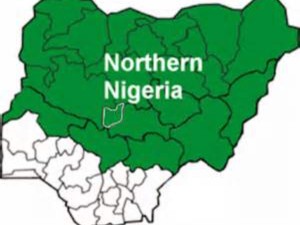
Coalition of Northern Groups has reaffirmed its stand by the Kaduna Declaration while restating its commitment to the respect for Nigerian laws.
A press statement signed by its spokesman, Abdul-Azeez Suleiman, said, “It has come to the notice of this Coalition that some people have been sponsored and are holding press conferences around Kaduna in our name.
“Specifically, a certain group led by one Adamu Sambo and Auta was said to have told the media that they are part of our coalition and have withdrawn the Kaduna Declaration on our behalf.
“We state categorically that these people are never part of us and have not at any time been mandated to speak on our behalf.
“Our Coalition is coordinated by the only the signatories at the end of the Kaduna Declaration and we emphatically state that these two men are not among.
“We call on the media and the public to be wary of such impersonators and state that if anybody deals with them in our behalf, he does so at his own risk.
“The only reliable information regarding our coalition should only come from our spokesperson Abdul-Azeez Suleiman or our leader Shettima Yerima or Nastura Ashir Sharif.
“The public should note that we are not out to extort money from individuals, groups or government agencies the way these people are doing in the name of negotiation.
“Our coalition restates its commitment to lasting peace in our dear country, Nigeria which which forms the basis for our decision to open the doors for the Biafrans who have already carved out a new country for themselves.
“It is the enemies of the North and northerners that are sponsoring the spread of all sorts of lies through these greedy youth that impersonate us.
“We urge the media to be very professional by not taking anything from unconfirmed sources that has to do with our coalition and the Kaduna Declaration.
Doing so will only pave way for these impersonators to continue extorting people in our name.”
Two sisters, aged 10 and 13, have died in a blaze in a granny flat in northern Tasmania.
The bodies of the girls, Shanzel and Ruby Brewer, were found after emergency services crews were called to the fire in Austin’s Road in Turner’s Marsh near Launceston about 3:00am on Sunday, after the girls’ father raised the alarm.
“The resident of a property there reported a granny flat at the rear of the property was alight and that two of his children were unaccounted for,” Tasmania Police Inspector John King said.
“Crews arrived and found the granny flat fully alight, they subsequently extinguished the blaze,” Inspector John King said.
“Tragically a 10-year-old and a 13-year-old girl have lost their lives in that fire.”
He said preliminary investigations were indicating there may have been a fault on an electrical cord leading out to the flat.
Inspector King said there were no fire alarms in the flat.
“Not only have the two little girls unfortunately perished in this fire, the three other children were in the main house.”
The girls’ father, Clifford Brewer, has posted an emotional tribute online.
“To my babbie girl Shanzel brewer I love you with all my heart… and your sister Ruby Brewer, I will always love yous two girls,” he posted on Facebook.
“Yous was the best thing that ever happened to me.”
Family and friends of the girls expressed their grief and shock on Facebook.
Kelsey wrote she was “waking up to hear this tragic news and still can’t believe my two beautiful little cousins have been taken away from us”.
“You will forever be in my heart and I hope you both knew, that I love you dearly. Rest in peace,” she wrote.
Miraki wrote: “My heart is broken I feel so lost!”
“No words can explain the pain! I’m speechless! I can’t believe it. It just doesn’t feel real.”
“Omg I can’t believe your gone.”
Kristy wrote she was “thinking of the children’s family and the emergency services who attended.”
Police said a detailed report would be compiled for the coroner.
HIV positive teenagers in the Northern Cape have started defaulting on their treatment because of the difficulties they encounter as they regularly have to miss school in order to fetch their medication.
The situation has sparked calls for more community nurses in the province in order to lengthen clinic operating hours to offer young people the opportunity to get their treatment after school.
Missing school
“We cannot run away from the fact that children living with HIV will grow to be adults tomorrow, and that is why we need to coach and mentor them as well as educate them about positive prevention,” said Nametsegang Gaetsosiwe, a sector leader from People Living with HIV.
“We have noticed that as they grow up they start defaulting on their treatment,” Gaetsosiwe said.
A 16-year-old girl explained that she was struggling to continue with her treatment, as it involved her missing school on days she had to go and collect the medication.
“My teacher says I am always asking for permission to be absent , and I told her to go and ask my mother,” the girl said.
“This makes it hard for me to continue with taking treatment because I don’t like explaining myself that much.”
Defaulting has implications
Dikeledi Senatle of Denosa (Democratic Nursing Association of South Africa) in the Northern Cape said a multisectoral, holistic approach was needed to address the problem.
“As Denosa we are advocating for more posts to be made available for nurses so that our facilities can stay open till late. This will grant teenagers enough time to go and collect their treatment after school, and not during school hours. This will help us to keep a learner in class and at the same time help them to adhere to their treatment and ARV’s,” she said.
“Defaulting on HIV treatment has implications,” said family practitioner Doctor Chika Ifebuzor.
“Taking medication for life is not an easy task, especially if you are a child. But breaking treatment also has its own adverse reactions,” he said.
Chika said when a patient stops treatment, the virus multiplies in the system and organs are affected. This could also lead to treatment resistance in the future.
Nthabiseng Andreas from the Department of Social Development said was important for parents raising children with HIV to register them at adherence clubs so that could learn to understand the importance of taking life time medication and also receive the psychosocial support they need. –
A breeze wafts through a broken window and over grimy floors cluttered with used condoms and other junk.
This is the house struggle icon Winnie Madikizela-Mandela lived in for eight years.
Here at house number 802 in Majwemasweu township outside Brandfort, the small Free State town to which the apartheid government banished her in 1977, she slept, cooked and wrote letters to her then husband, Nelson Mandela.
Today, the only sign she once lived there is a sign in the long grass, which gives information of a failed attempt to restore the house and turn it into a museum.
Outside the main house stands a rusty, framed structure, once a clinic and community centre that Madikizela Mandela established, but that was bombed by apartheid security forces in 1985.
Through curatorial items and the house being left mostly in its original form, visitors were supposed to come to learn about Madikizela-Mandela’s life of isolation in Brandfort, also, ironically, home to apartheid’s architect, Hendrik Verwoerd.
Her movements were always closely monitored by a police officer on a koppie nearby.
But, R1.8m later, it remains abandoned with patched walls and eroded memories, a sore reminder of an illustrious legacy of the woman locals still fondly call Mama Winnie.
Residents say the house went from being a symbol of hope to one synonymous with all manner of social ills: one in which women are raped, where adulterous quickies take place and drug users hide out.
The floors – strewn with broken booze bottles, used condoms and wrappers, matchboxes, marijuana joints and old clothing – bear testimony to what happens here in the dark.
Former teacher Norah Moahloli, who befriended Madikizela-Mandela in the 1970s, recalled how the struggle icon was branded a communist and how the public was not allowed to talk to her.
“We weren’t supposed to even respond to her greeting from behind the fence where she lived in isolation, but, in the end, her angelic spirit came out and we could not run away from her any more as she began to uplift our community,” she said.
There is a crèche that still operates today at a local Methodist church, as well as soup kitchens, sewing projects and many other community initiatives Madikizela-Mandela founded.
So a museum would save people from digging for traces of Mama Winnie’s legacy, which lives on in the dusty township more than three decades later.
“I was happy [thinking] that the museum project was going to end all criminal activities at this house.
“But at the rate things are going, someone will soon get killed or die from drugs there. I also don’t feel safe living next to Ma’ Winnie’s house, when I should be proud of it,” said 77-year-old Betty France, who lives next door.
France wondered what happened to the project after money was set aside for it.
Part of her fence was removed by men digging trenches in preparation for construction, but it all ended there.
“They left my fence [wide open],” she complained.
According to Independent Development Trust (IDT), the department of arts and culture initially allocated R3m to the project, of which R1 858 195.71 was transferred to them as an implementing agent to oversee the project.
They appointed a contractor for R2.5m in November 2013, but terminated the contract one year later because the contractor failed to do the job.
By then, the IDT had spent R593 622 on consultancy fees, including one payment for R117 543 “mainly for preliminaries and general site establishment and earthworks”, said IDT spokesperson Lesego Mashigo.
He said the scope of work was later reduced, bringing the project down to R1.36m.
Other features such as the youth centre were scrapped.
“The IDT was awaiting approval from the department to proceed with the appointment of a [second] contractor for the implementation of the reduced scope of work when its agreement was terminated on November 9 2016,” he said.
“A process of ceding all the documentation, assets and liabilities to [the department] is under way. The remaining amount of R1 264 573.42 remains in the trust account of the [department].”
However, the continent has reported some positive developments which are worth consideration. In this article I will expound, on the subject of ease of doing business and drill down on various improvements and some statistics across the region.
The Ease of Doing Business index was launched 14 years ago by the World Bank. The index ranks economies against frontier scores for the 10 topics which I will cover in the following paragraphs.
This measure shows how close each economy is to global best practices in business regulation.
A higher score indicates a more efficient business environment and stronger legal institutions.
The nations, rankings are based on the following indicators :
Starting a business — This implies the procedures, time, cost and minimum capital required to launch a new business.
Access to electricity — The procedures, time and cost required for a business to obtain a permanent electricity connection.
Access to construction permits — This indicates the time, procedure and cost to build a structure.
Registering property — The time, and cost to register a commercial real estate.
Getting credit — This shows the strength of legal rights index, depth of credit information index.
Investor protection — Indices on the extend of director liability and easy of shareholding suits
Tax payments — This indicates number of taxes paid, hours per year spent preparing tax returns and total tax payable as of profit.
Trading across borders —Number of documents, cost and time necessary to export and import.
Enforcing contracts — This indicates the time procedures and cost to enforce a business contract.
Resolving insolvency — The time, cost and recovery rate under bankruptcy proceeding.
Sub-Saharan African countries are continuing to implement policies and reforms to improve the business environment. According to Ease of Doing report 2016, the reforms implemented in sub-saharan Africa accounted for about 30% of the 231 reforms implemented globally.
The region also boasted half of the world’s top 10 improvers. The region stood out in implementing reforms under the getting credit indicator. Out of 32 reforms made globally, 14 were carried out in sub-saharan Africa, with Kenya and Uganda making astounding progress.
Despite these remarkable improvements governments in sub-saharan Africa will need to continue working on closing the gap in many key areas that impact the ease of doing business for example increasing access to reliable electricity and providing effective commercial dispute resolutions which are the regional lowest scores.
Getting access to electricity in Sub Saharan Africa, takes an average of 130 days for a businessperson. After connection the outage lasting 700 hours a year, making the region the highest duration of electricity outage globally.
According to 2016 rankings, Mauritius lead the park of economies for ease of doing business. It is ranked top in terms of getting electricity, protecting minority investors, paying taxes, trading across borders, enforcing contracts and resolving insolvency. It is on number 32 globally. It only takes 152 hours for a business person to pay taxes compared to 261 hours globally.
Rwanda is ranked second best in the region, with a global ranking of 62. Rwanda implemented the highest number of reforms in the region, with six reforms carried out in the past two years.
It is on number 12 for registering Property indicator. A decade ago in Rwanda, an entrepreneur used to take 370 days to transfer property.
Now it takes 32 days which is less than in Germany. Other progress which was made in Rwanda one of the best in the region is making it easier to start a business by eliminating the need for new companies to open a bank account in order to register for value added tax.
Kenya launched government service centres offering company pre-registration service in major towns, reducing the time required to start a business. In the past years, starting a business in Kenya took 54 days. Now it just takes 26 days less than region average. In Senegal the electricity utility improved the regulation of the connection process and lowered the cost by reducing the security deposit. Botswana, with global ranking of 72, South Africa 73, and Seychelles 95 are also among the better ranked economies in Sub-Saharan Africa. Those with least rankings are Eritrea, South Sudan and Central African republic.
Patson Chapeyama is a young writer and business start-up consultant. He is the author of bestselling success books and columnist in international news platforms such as Footprints to Africa, Making Finance work for Africa. He is also an editor for a number of local magazines. Can be reached on, +263733551626/ patchapeyama@gmail.com.
WUZZUF, the recruitment website in Egypt, has announced the launch of their internship programme for Summer 2017. This is the second year in a row the site has offered opportunities at1,000 companies all over Egypt.
WUZZUF internship programme aims to empower students and fresh graduates through an introduction to the market. Participants get the chance to receive hands-on experience, bring innovative ideas, and gain new perspectives in the workplace.
Dina Khedr, WUZZUF marketing programmes manager, said that in 2016 WUZZUF was able to get more than 700 companies to offer more than 2,500 internship opportunities, which attracted over 65,000 applicants.
Khedr explained the process is free for both applicants and participants. There is no charge for companies to post their internships on WUZZUF.
This year, more than 3,500 internship opportunities will be hosted on the site. Over 1,000 companies will participate that include opportunities in engineering, IT, software, marketing, PR, and more.
Egyptian Ministry of Education has denied the leak of secondary school physics and history secondary at Thanaweya Amma which students sat for on Sunday.
The ministry assured that since the beginning of exams, one week ago, none of the exams have been leaked.
The ministry was reacting to a Facebook posting which claimed the ministry had leaked the exam on social media platforms.
Some students had told local journalists that leaks usually occur during exam season.
About 50,000 students across the nation are currently taking their exams, according to media reports.
Last year, students claimed that a number of exams had been leaked during the exam period. All of these claims have been denied by the ministry. In response to this, security forces have arrested at least 20 people on charges of administering pages that are accused of leaking exams.
Exam leaks have put the Ministry of Education under increasing pressure, raising more and more questions about Egypt’s educational system, which many want to change.
Security forces in Egypt Sunday arrested 48 wanted criminals in North Sinai — the operations targeted wanted criminals who have received judicial verdicts.
A statement by North Sinai Security Directorate says, “Several security operations have been executed in North Sinai. These covert operations have resulted in the arrest of 48 wanted criminals who are wanted according to judicial verdicts,” the statement read.
Violence in North Sinai surged significantly when Islamist president Mohamed Morsi was ousted from power in 2013, following mass protests against his turbulent one-year rule.
The Egyptian government blames the violence on the Muslim Brotherhood, which was branded a terrorist organisation last year. The group denies its involvement and insists it is committed to peaceful forms of resistance. A state of emergency was first declared in North Sinai by interim president Adly Mansour, who came into power following Morsi. It has been extended following this year’s extremist attacks on Coptic churches during Palm Sunday.
Much of the violence has been claimed by an extremist group, formerly known as Ansar Beit Al-Maqdis. They now call themselves “State of Sinai” after they pledged allegiance to the regional extremist group “Islamic State.”
Over the last two years, the Egyptian armed forces have launched counter-attacks against militant stationing points across the Sinai Peninsula, where the group is based in the cities of Sheikh Zuweid, Rafah, and Al-Arish.

 Coalition of Northern Groups has reaffirmed its stand by the Kaduna Declaration while restating its commitment to the respect for Nigerian laws.


