Blessed with an abundance natural resources, vast arable land, a temperate climate and a teeming population of young vibrant people, Nigeria has the potentials to be one of the biggest economies in the world. However, the potentials for greatness have failed to translate into any viable economic development due to decades of bad leadership, gross mismanagement of public funds, institutionalized corruption and infrastructural decay.
Nigeria has for a long time developed an unenviable reputation as one of the hardest places to do business in the world. The economic implications of a harsh business environment, however, have been mollified for decades by steady revenue from crude oil sales. This false dawn of economic prosperity, therefore, served as insurance against the repercussions of paying lip service to create an enabling environment for businesses to thrive by successive administrations.
A marginal improvement in the global ease of doing business index, from 170 in 2016 to 169 in 2017, flatters the medieval realities those running businesses in Nigeria confront daily. It takes longer to register a business in Nigeria than in most other countries in the world. Access to credit is a mirage, with dissuasive interest rates and collateral demands. A litany of arduous government regulations, high cost of energy, lack of adequate security for personnel and properties, multiple taxations, and the activities of corrupt and hostile government officials all combine to dissipate the energies of business owners.
Arguably, the most resounding commitment by any government in Nigeria’s history in tackling these perennial problems has been the Presidential Enabling Business Council, PEBEC, chaired by Acting President, Yemi Osinbajo. In this capacity, Osinbajo has shown that regulatory frameworks are malleable in the face of a strong political will to institute positive reforms. By expediting the removal of bureaucratic bottlenecks to make agencies of government more agile and efficient, the council has been able to enact market-friendly policies and considerably improve the overall ease of doing business in the last six months.
The implementation of a 60-day National Action Plan on Ease of Doing Business in Nigeria approved by the council in late February to “remove critical bottlenecks and bureaucratic constraints to doing business in Nigeria” and “move Nigeria 20 steps upwards in the World Bank Ease of Doing Business Index” has already yielded positive results like visa on arrival and a 48-hour visa processing time for tourists and investors seeking to visit Nigeria.
In cooperation with the National Assembly, the legal framework was established for improving access to credit through the speedy passage of two critical bills. The Credit Bureau Bill will ensure entrepreneurs are better able to access credit by reducing default risk while the National Collateral Registry Bill makes room for the provision of a register of all loan collaterals, putting an end to the practice of securing multiple loans with one collateral.
Also, as part of the 504 comprehensive action plans implemented in 60 days, the time it takes to register a business in Nigeria has been reduced from 10 days to 2 and the process made simpler through the upgrade of the online portal of the Corporate Affairs Commission (CAC) which now allows investors to register businesses without physically visiting the CAC office. The paperwork involved in company incorporation has also been reduced, with seven forms previously required replaced by just one.
An unscheduled visit by the Acting President to the Murtala International Airport in Lagos to assess the quality of services rendered by relevance departments and agencies of government went a long way in signaling the administration’s will in ensuring an attractive and conducive business environment is created for investors. This was further stamped in the three executive orders signed last month to ease operations at the nation’s ports and improve transparency and service delivery by all agencies.
This has informed the decision of the Nigerian Ports Authority for example to evict all touts and other unauthorised personnel who often run a parallel economy at the nation’s seaports. The number of security agencies present at the ports have also been reduced and their operations synergized. The leadership of the Nigerian Ports Authority has certainly put words to action on ports reform, including opening up opportunities for old and new businesses by dismantling age-old monopolies. The Nigerian Customs Service on its own part has reduced the number of paperwork needed for the export of products and raw materials.
While remarkable progress has been made through the Osinbajo reforms, more work still needs to be done in moving 20 places up the ranking of the World Bank’s Ease of Doing Business index and be in the top 100 within the next 3 years. This desire as expressed by President Muhammadu Buhari at the sixth Tokyo International Conference for African Development in Nairobi requires the concerted efforts of all stakeholders to mark a clear departure from the old ways.
Nigeria still ranks 181st out of 190 countries with respect to trading across borders, 174th out of 190 with respect to dealing with construction permits, and 182nd out of 190 countries with respect to registering property. Bags are still being checked manually at the airports in direct conflict with Osinbajo’s executive orders, a lot of MDAs have still not complied with other directives issued. There is definitely still a long way to go and more than anything else, those committed to reforming the system when it comes to improving the ease of doing business must understand that this is a marathon, an unending commitment to making Nigeria a true haven for local and foreign investors. These are some of the issues Osinbajo through this council has to find solutions to for the sustenance of the reforms so far established.
Bukola Ogunyemi is social commentator based in Lagos.
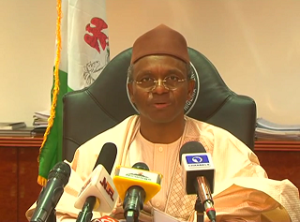
Kaduna State government in northwest Nigeria, has launched its residency card aimed to ensure effective provision of social services to the people.
Speaking with journalists shortly after registering at the North West Zonal Office of the National Identity Card Management Commission, NIMC, the state Commissioner for Budget and Planning, Muhammad Abdullahi, called on residents to register explaining that the initiative would also tackle security challenges as residents will be captured on national data base.
The commissioner while explaining that the registration exercise was being carried out in partnership with NIMC, is open to all residents of all ages in Kaduna State.
He added that the state government was currently providing a number of free social services for the people in the state.
According to Abdullahi, people would be required to present their residency card before they could access free social services, adding that 31 registration locations have already been established across the three zones of the state.
The Commissioner however called on the people to come out and be registered: “But to achieve the desired impact, we need to know who and who resides in our state and where.
“When you know the number of people residing in your state and where they are, you will be able to provide better services.
“Kaduna state is open for everyone due to its strategic location, geographically, economically and politically.
“But if you are going to stay in the state beyond 180 days, you would be required to register and obtain our residency card.
“This is very important not only in planning but also in ensuring security. This is because must of the security issues we are having in the state are cause by people from other states.”
Also speaking, NIMC North West Zonal Director, Mr Oyesola Taiwo, said that registration for the Kaduna State residency card was linked with the NIMC data base.
Taiwo explained further, “For those who have their national identification number, all they need do is present their number and they would be captured.
“If you do not have, you would have to register for the national identification number before you would be captured for the state residency card,” he explained.
On his part, Kaduna State House of Assembly committee chairman on budget and planning, Alhaji Idris Abdullahi, said that the exercise has a legal backing and was appropriated for in the 2017 budget.
The Presidency, on Wednesday, described as outrageous and travesty of justice the acquittal of Senate President Bukola Saraki by the Code of Conduct Tribunal, which upheld the no-case submission of the Senate President.
The Special Assistant to the President on Prosecution, Mr. Okoi Obono-Obla, wondered why the CCT dismissed the weight of “overwhelming evidence” against Saraki, who was tried for false asset declaration by the Federal Government.
The CCT in Abuja had discharged and acquitted Saraki of all the 18 charges of false asset declaration and other related offences preferred against him.
The two-man panel of the CCT, led by its Chairman, Danladi Umar, unanimously upheld the no-case submission, filed by Saraki after the prosecution closed its case with 48 exhibits tendered and after the testimonies of the fourth and the last prosecution witness on May 4, 2017.
But the Transparency International (Nigeria) and a chieftain of the defunct National Democratic Coalition, Mr. Ayo Opadokun, among others, described the judgment as sad and a calculated attempt to frustrate the war against corruption in the country.
The CCT chairman, Umar, in his lead ruling, exonerated Saraki of all the charges on, among other grounds, the failure of the prosecution to obtain Saraki’s statement and make it part of the proof of evidence.
He described as “absurd” that neither Saraki’s statement nor the report of investigation said to have been carried out was produced before the tribunal.
He agreed with the defence team, led by Chief Kanu Agabi (SAN), that the prosecution’s evidence had been manifestly discredited during cross-examination by the defence.
He added that the evidence adduced by the prosecution, led by Mr. Rotimi Jacobs (SAN), was “so unreliable that no reasonable tribunal could convict” anyone based on it.
Umar also noted that the evidence of the first prosecution witness, Mr. Michael Wetkas, an operative of the EFCC, was unreliable.
Concerning the evidence of the second prosecution witness, Mr. Amazi Nwachuckwu, Head of Funds Transfer Unit of the Guaranty Trust Bank, Umar noted that the witness had testified that documents relating to alleged foreign transfers by Saraki had been consumed in a fire incident, adding that there was nothing to prove the charges that were based on the documents.
Lawyers and Saraki’s supporters in court burst into wild jubilation as soon as the tribunal made the pronouncement exonerating the Senate President on Wednesday.
While the lead defence counsel, Agabi, thanked the tribunal for the ruling, the counsel, who led the prosecution team at the Wednesday’s sitting, Mr. Pius Akutah, told journalists that the prosecution would review the ruling “in order to determine the next step”.
The charges instituted against Saraki before the CCT related to the alleged breaches of the code of conduct for public officers, acts which were said to be punishable under the Constitution and the CCB/CCT Act.
He allegedly committed the breaches by making false declaration of his assets while being the governor of Kwara State between 2003 and 2007 for his first term and between 2007 and 2011 for his second term as governor and from 2011 to 2015 as a Senator.
Among the breaches were that he obtained N375m loan from Guaranty Trust Bank Plc in 2010, converted it to £1,515,194.53 and transferred the sum to the United Kingdom for full and final mortgage payment for a London property.
Additional charges against him included allegation that he continued to receive salary and emoluments as governor of Kwara State after the expiration of his tenure and at the same time, from the Federal Government as a Senator between June 2011 and October 2013.
He was also said to have failed to declare to the Code of Conduct Bureau on assumption of office as Governor of Kwara State in 2003, his leasehold interest in the property at 42 Remi Fani-Kayode Street, Ikeja, Lagos.
The prosecution also alleged that while being a public officer, the ex-governor operated bank accounts outside Nigeria and failed to declare the foreign accounts to the CCB while being governor and a senator during the period.
Properties that were allegedly falsely declared by Saraki included 17, 17A and 17B McDonald, Ikoyi, Lagos; Plot 2A Glover Road, Ikoyi, Lagos; 37A Glover Road, Ikoyi, Lagos, which he allegedly bought through Carlisle Properties; No. 1 and 3 Targus Street, Maitama, Abuja, otherwise known as 2482, Cadastral Zone A06, Abuja.
The Supreme Court had on February 5, 2016 dismissed Saraki’s objection challenging his trial before the CCT.
In his contribution to the ruling of the tribunal on Wednesday, co-member of the tribunal, Atedze Agwaza, who expatiated on the decision of the tribunal to free Saraki, noted that the Senate President was investigated by an illegal team comprising officials of the CCB, the Economic and Financial Crimes Commission and the Department of State Services.
He noted that such investigative team was strange to both the Constitution and the CCB/CCT Act under which Saraki was charged.
He also rejected the entire evidence of the prosecution on the basis that the evidence of the third prosecution witness, Mr. Samuel Madojemu, the Head, Intelligence Unit of the CCB, was nothing but hearsay.
Agwaza stated, “I find and hold that this apposite testimony is an affliction and epidemic that bedevilled the entire prosecution’s case and that particular evidence has rendered the whole-evidence of the prosecution invalid.
“It connotes that PW3 had no first-hand knowledge of all he said and the documents tendered. This is hearsay evidence and violates sections 37, 38 and 126 of the Evidence Act 2011.
He said the combined effect of the illegality of the investigative team and the inadmissible evidence of the prosecution was that “the charge is incurably defective” and amounted to a miscarriage of justice suffered by the defendant.
Agwaza added, “It will be fundamentally erroneous for this tribunal to call upon the defendant to prove his innocence.
“On this account, the prosecution had failed to link the defendant to the commission of the offences as charged.”
My CCT trial was torturous, says Senate President
Meanwhile, Saraki has described his trial at the CCT as torturous.
The lawmaker said he knew he was innocent of the charges against him and was ready to clear his name.
Saraki, in a statement he signed, said his victory at the tribunal had given hope to the common man that Nigeria’s judiciary could dispense justice.
The statement read in part, “After undergoing the crucible of a tortuous trial, my vindication today calls for celebration. It is my belief however that if there
should be any celebration at all, it should be a celebration of the hopes that this judgment gives us as citizens, that despite all the challenges that we face as a country, we are well on our way to building a country where the innocent needs not be afraid.
“On a personal note, I habour no grudge against anyone, regardless of the role they might have played in the persecution that I had endured in the last two years.”
Deputy President of the Senate, Ike Ekweremadu, described the development as victory for democracy.
He stated that the acquittal did not come to him as a surprise as “the trumped-up forgery and conspiracy charges” filed against himself and Saraki were later withdrawn by the Federal Government.
In a statement by his Special Adviser on Media, Uche Anichukwu, Ekweremadu added that “the CCT trial was hatched in the coven of evil politics and was, therefore, bound to fall like a pack of cards.”
It’s a sad day for anti-corruption fight –TI
The Transparency International (Nigeria), however, described the acquittal at the CCT as a calculated attempt to demoralise the anti-corruption fight in Nigeria.
The Head of the Nigeria chapter of TI, Mr. Auwal Musa-Rafsanjani, said this in a telephone interview with one of our correspondents on Wednesday.
According to him, what transpired at the CCT was a clear indication that Nigeria’s corrupt elite are united and will stop at nothing to circumvent the system.
Musa-Rafsanjani stated, “It is another sad day for the anti-corruption fight in Nigeria. I think Nigerians are sad that this has happened. It just goes to show that Nigeria’s corrupt elite are united.
“To take advantage of the system is their thing; they will continue to connive against the Nigerian people. They have no regard for ethno-religious or party affiliation, the corrupt Nigerian elite are united in perpetuating violence and plundering our resources to perpetuate themselves in power.
“You can see how they were celebrating this kangaroo verdict, which is a calculated attempt to demoralise the anti-corruption community in Nigeria’s attempt to fight corruption.
“Even those people like (Col. Sambo) Dasuki (retd,) and all those who helped themselves to our collective patrimony during the President Jonathan era, who are standing trial for corruption, may be set free by this judiciary, but we must never give up. We must continue to fight until we rid this nation of the traces of corruption.”
Saraki’s acquittal outrageous, travesty of justice –Presidential aide
Obono-Obla said, “It is a travesty of justice. It is pedestrian and it is outrageous. It is against the weight.
“There was overwhelming evidence, cogent evidence, incontrovertible evidence, which cannot be dismissed by a no-case submission. The trial judge ought to have called on the defendant to enter his defence against the evidence adduced by the prosecution.
“The prosecutor, Mr. Rotimi Jacobs (SAN), is one the best in the country and he conducted that case professionally, conscientiously and diligently.
“So we are amazed, we are surprised.”
He described as balderdash, the speculation that the CCT’s ruling was an outcome of a political settlement reached between Saraki and some high-profiled members of the Buhari administration.
He said, “It is balderdash; it is hogwash.
“We know that President Muhammadu Buhari is a paragon of integrity. The Attorney General of the Federation is also a paragon of integrity that will never compromise cases.”
Obono-Obla, however, vowed that the anti-corruption fight would continue despite the setback.
He said, “And we will go on with this fight against corruption despite the frustration, despite the setback.
“We will go back to the drawing board, re-strategise because Nigeria must be saved.
“Our head is bruised but it is unbowed.”
Fayose, Ahmed, others hail ruling
Ekiti State Governor, Ayodele Fayose, has hailed the victory of Saraki at the CCT as another victory for Nigerians over tyranny.
Fayose, who spoke through his Special Assistant on Public Communications and New Media, Lere Olayinka, on Wednesday, said the judgment was another lesson for the President Muhammadu Buhari-led All Progressives Congress government that criminal cases were not won on the pages of newspapers.
He drew the attention of Nigerians to number eight of his 22 predictions for year 2017.
He said, “I said it categorically that the Code of Conduct Tribunal will absolve Senate President Bukola Saraki and today, the prediction came to pass.”
“I have maintained that the government of President Buhari is not fighting any corruption. Rather, what is being done is hiding under anti-corruption fight to persecute, humiliate, harass and malign perceived political enemies.”
In his reaction, the Kwara State Governor, Abdulfattah Ahmed, said, “The no-case verdict is a testimony and a vindication of the incorruptibility of Dr. Abubakar Bukola Saraki, which some of us, who are privileged to work with him, have always known him for.
“He has always been selfless in his services to the good people of Kwara State and Nigeria at large.”
Similarly, human rights lawyer, Chief Mike Ozekhome (SAN), hailed the acquittal of Saraki by the CCT.
He said the ruling by the tribunal was evidence that the anti-corruption war was nothing but a ruse to fool the feeble-minded.
In a statement on Wednesday, Ozekhome said, “The CCT was bold, courageous and right, in spite of visible executive interference and manipulation, to have discharged and acquitted Senate President, Dr. Bukola Saraki, on all the counts of false declaration of assets levelled against him.
Ozekhome said the performance of government prosecutors in court was reminiscent of the television comedy programme, Fuji House of Commotion.
He said the government should get serious instead of disgracing itself every time.
Also, scores of members of the Kwara State chapter of the APC trooped to the streets of Ilorin in jubilation over the acquittal of Saraki by the CCT.
But some prominent Kwara State indigenes expressed shock and sadness at the ruling. These include a former NADECO chieftain, Mr. Ayo Opadokun; a former Kwara State governorship aspirant in the Peoples
Democratic Party, Mr. Sunday Babalola; a social critic, Alhaji Olola Kasum; a factional chairman of the PDP in the state, Chief Iyola Oyedepo; and Mr. Sunday Fagbemi.
Addressing party supporters at the APC state secretariat, the state chairman of the party, Alhaji Ishola Fulani, said Saraki’s acquittal was a good development, adding that the allegations against him were politically motivated.
He said, “We are going to the Emir of Ilorin to rejoice with him and thank him for supporting our leader, the Senate President. From there, we will move to the Executive Governor of Kwara State to thank him for his support from the outset up to the end of this time.”
A former APC woman leader and chairperson, Kwara State Local Government
Service Commission, Alhaja Sarah Adebayo, expressed delight at the judgement, saying it was a welcome development.
The Director-General, ABS Mandate, Alhaji Abdul Issa, in a statement by an official of the outfit, Alhaji Kayode Omotose, commended eminent individuals for standing by Saraki.
The Speaker of the Kwara State House of Assembly, Dr. Ali Ahmad, described the ruling as victory for rule of law in Nigeria.
In a statement he personally signed, the Speaker said with the discharge and acquittal of the Senate President, the Judiciary had demonstrated its impartiality and independence by formally declaring Saraki innocent.
The APC members and Saraki supporters later moved from the APC secretariat in scores of vehicles to the palace of the Emir of Ilorin, Ahaji Ibrahim Sulu-Gambari, to express their happiness.
Also, the Senator representing Ogun East Senatorial District at the National Assembly, Buruji Kashamu, congratulated Saraki on his discharge and the dismissal of the case against him at the CCT.
In a statement on Wednesday, Kashamu said, “This development gladdens my heart because it will help to deepen our democracy and further entrench the principles of the separation of powers and the rule of law.”
Opadokun, Kasum, others condemn judgment
But Opadokun and other opposition members faulted Saraki’s acquittal.
Opadokun stated, “It is a curious judicial summersault that is certainly going to be unravelled sooner than later. I am definitely surprised that a quasi-judicial tribunal would present this kind of ruling when the evidences were in the public domain.
“I believe that the prosecution have a duty, which Nigerians will expect them to perform diligently in order to save the reputation and the image of the Nigerian state.”
Babalola added, “It is very sad. With all the evidences that were presented, somebody paid into an account 150 times a day and the account belongs to him and he did not declare it, and they still acquitted such a person. It is just a way of saying that corruption is business as usual, unlimited. It is very, very sad indeed.”
Kasum stated, “The FG should take the case to the Supreme Court. The anti-corruption war of FG has failed with the acquittal of Saraki.”
Fagbemi said, “This is shocking. It is contrary to expectations; with all the celebrated evidences? That is why they said the law is a double-edged sword.”
Oyedepo said, “It shows that the anti-corruption war of the Federal Government is a charade; it does not worth anything. The anti-corruption war is a ruse. We are sad and shocked at the judgment. What did we expect? I think the party (APC) and the executive have agreed to scuttle the trial so as to provide a platform for unity in their party. The judgment is sad and shocking.”
FG’s witnesses messed up Saraki’s trial– SAN
A Senior Advocate of Nigeria, Emeka Ngige, said the witnesses presented by the Federal Government in Saraki’s trial were responsible for the loss of the trial, noting that they worked at cross purposes with the government.
Ngige stated, “I am surprised that such a case should be dismissed. It brings to the fore the issue of the Federal Government’s witnesses coming to the court to contradict their own evidences. One of the witnesses, an EFCC operative, contradicted his witness, which I believe the defence counsel capitalised on.
“This was the same thing which happened in Justice Ademola’s case. Therefore, one begins to wonder if the witnesses are working at cross-purposes with the government.
“No matter how diligent the prosecutor is, if the witnesses mess him up, the case will suffer the consequences we see in Saraki’s trial. The government should look inward and work on its witnesses.”
Another SAN, Chief Onueze Okocha, believed the prosecution of the case was weak.
Okocha stated, “This should be a signal to the Federal Government that its needs to get it act together if it wants to seriously fight corruption. You must have sufficient evidence, enough to establish a prima facie case before taking a case to court; otherwise, you will make a mess of the anti-corruption fight.
“For a case to terminate at the stage of no-case submission, as we have seen in the case of Ademola, and now in the case of Saraki, it shows that the prosecution needs to up its game. This has happened repeatedly.
“In a civilised society, you don’t take a case to court until you have sufficient evidence. The investigation and the prosecuting agencies must up their game.”
Story by: John Alechenu, Olusola Fabiyi, Kamarudeen Ogundele, Eniola Akinkuotu, Leke Baiyewu, Ade Adesomoju, Success Nwogu, Olaleye Aluko and Oladimeji Ramon
South Africa’s private sector companies – the biggest creators of wealth, jobs and state revenues – have very little, if any trust, in the government.
Labour federations, which represent the luckiest of a dwindling number of the employed, have lost confidence in the government and its leader, Jacob Zuma.
One of the federations, Cosatu, has banned Zuma from its events. Significantly, Cosatu, an alliance partner of Zuma’s ANC, is dominated by public sector unions. This means government employees no longer have confidence in their boss.
The relationship between the commercial banks, which oil the engine of a modern economy, and the government, is at best shaky. The damage caused by the Guptas, who put pressure on the banks to provide them with banking services, the delay in signing off an anti-money laundering bill and the downgrades they have endured due to ill-advised government decisions won’t be forgotten.
Ordinary tax-paying citizens, without whose contribution the state would collapse, are increasingly wary of whether their taxes are used correctly.
The most forgiving institutions of God, the churches, have lost their cool, describing the government as morally illegitimate. Some church leaders want an early election.
Court judgements give an impression that, on the whole, the judiciary doesn’t think the executive is competent. Court decisions read like how-to-govern manuals. Like a delinquent, Zuma’s government is not listening.
Former presidents – FW De Klerk, Thabo Mbeki and Kgalema Motlanthe – recently came out of their retirement to comment about the unfolding tragic state of affairs. They believe the country is headed in the wrong direction. As Mbeki described the situation, borrowing from William Blake’s poem, the rose planted in 1994 is not well: “O Rose thou art sick…”
The media, which is as skeptical of government’s use of power as it always should, has reached the highest level of skepticism. Contradictions between the state’s constitutional obligations and the deviant conduct of those in charge have become the unavoidable framework for political news coverage.
In light of all these, it is difficult not to ask: who actually trusts Zuma’s government? Most likely those who are linked to the shadowy state over which he presides and to which taxpayers’ resources are illegally channeled at the expense of the constitutional state on which the majority depends.
Without the necessary confidence from society, the government becomes dysfunctional. A successful government is one that inspires confidence. Confidence in government ensures that different sectors cooperate either voluntarily or respond positively to credible government policies or changes in leadership. To inspire confidence the government must be legitimate and credible. Legitimacy is derived from elections. Credibility from conduct. Zuma’s government lacks the latter.
The crisis of confidence Zuma’s administration faces is best illustrated by its disastrous management of the economy. Finance Minister Malusi Gigaba and his deputy Sfiso Buthelezi face an impossible task of reviving confidence in the South African economy.
Here is why they will fail:
First, the manner of their appointments diminished trust between business, government and labour. Finance Minister Pravin Gordhan was on an investor show in London when he was called back home to watch midnight-to-early-morning television news of his dismissal. Business and labour, which had been working with the government to project an image of cooperation to foreign investors, felt cheated and dumped. Gigaba is a symbol of the outcome of the betrayal.
Second, Gigaba is associated with state capture – the very thing that, thanks to the #GuptaLeaks, we know is linked to Zuma’s Cabinet reshuffles that caused harm to the economy. Except for those who are direct beneficiaries of the outsourcing of executive authority of the Republic, South Africans who are aware of the dangerous consequences of state capture are livid.
Third, rating agency Moody’s has highlighted South Africa’s deteriorating institutional strength as one of the reasons it joined Fitch and Standard & Poor’s in downgrading the country’s credit rating, although it placed the sovereign slightly above junk. At the heart of the institutional weakness was the Cabinet reshuffle. The weakened institution referred to is the Treasury. Previously, South Africa escaped a downgrade because of institutional strength – a reference in part to the strength of the treasury, the Public Protector’s office under Thuli Madonsela and the judiciary.
Unlike Gordhan, Gigaba is the face of institutional weakness at Treasury. Having facilitated state capture in state-owned enterprises while he was public enterprises minister, he is seen as unsuitable to the finance ministry. He has no moral high grown stop the corporate governance collapse he allegedly authored with Gupta associates. In light of the revelations of scandals that took place in state-owned passenger rail firm, Prasa, while Buthelezi was chairman of the board, he too is hobbled by past governance malfeasance.
Fourth, when stakeholders make political judgements, they are bound to draw comparisons between Gordhan and Gigaba on the one, and former deputy minister Mcebisi Jonas and Buthelezi on the other. Buthelezi is associated with improperly benefitting from Prasa tenders while Jonas is famous for rejecting a bribe from the Guptas. This background hardly provides any hope for the generation of confidence in both Gigaba and Buthelezi.
– Mpumelelo Mkhabela is a fellow at the Centre for the Study of Governance Innovation (GovInn) at the University of Pretoria.
Disclaimer: AFRCA PRIME NEWS encourages freedom of speech and the expression of diverse views. The views expressed by opinion writers are therefore their own and do not necessarily represent the views of AFRICA PRIME NEWS.
On Wednesday, the Washington Post described the decision by Mr Mueller to investigate President Trump’s own conduct as a major turning point in the investigation, which until recently focused on the Russian angle.
Quoting unnamed officials, the newspaper said Daniel Coats, the director of national intelligence, Mike Rogers, the head of the National Security Agency, and Richard Ledgett, until recently Mr Rogers’ deputy, agreed to be interviewed by investigators.
The questioning could happen as early as this week.
The unnamed officials told the newspaper the obstruction of justice investigation began just days after President Trump fired former FBI director James Comey on 9 May.
Before the sacking, Mr Trump had sought and received assurances from Mr Comey that he personally was not under investigation.
However, Mr Comey has since suggested that Mr Trump attempted to get him to shut down the investigation into his sacked former National Security Adviser Michael Flynn.
Mr Flynn was fired in February for failing to reveal the extent of his contacts with Sergei Kislyak, the Russian ambassador to Washington.
The White House has denied it put pressure on Mr Comey.
James Comey hinted at it. Washington insiders suspected it. Now US media are reporting it (through anonymous sources, of course).
Donald Trump himself is under direct investigation for obstruction of justice by the special counsel’s office.
Take all those previous assertions by the president that he’s not the target of law enforcement efforts, and throw them out the window.
Mr Trump will surely insist that the inquiry into whether his campaign had ties to Russia is still a hoax perpetrated by Democrats and a hostile media, and that the obstruction allegations are built on that empty foundation.
That may not matter. “It’s not the crime; it’s the cover-up,” may be a hackneyed political saying, but that doesn’t mean it lacks a kernel of truth.
There’s still an open question as to what, exactly, could happen if Mr Mueller does find the president violated the law in acting to disrupt an ongoing investigation.
Could charges be filed? Would it fall on the House of Representatives to act?
It’s all uncharted legal terrain.
If the latest media reports are correct, however, Mr Mueller may be charting a course for the darkness.
President Trump has so far made no comments on the latest report.
However, Mr Trump’s legal team responded angrily.
Mark Corallo, a spokesman for Mr Trump’s lawyer, Marc Kasowitz, said: “The FBI leak of information regarding the president is outrageous, inexcusable and illegal.”
Ohanaeze Ndigbo Youth Council (OYC) says the South East geo-political zone of Nigeria will not accept anything other a president of Igbo extraction in 2019, adding that it is the only panacea to Biafran agitation raging in the zone.
The group met in Enugu, saying it has activated all machineries towards the actualization of the project.
In the meeting communiqué signed by the Secretary General of OYC, Mazi Okwu Nnabuike, the group said Ndigbo would no longer play second fiddle in Nigeria politics.
It reads, “it is Igbo president 2019 or Biafra 2020”. The group described as a “sheer injustice and hatred, a situation where no Igbo has been allowed close to the seat of power for decades of years, whereas other geo-political zones have been taking turns either as military or civilian presidents.
“More annoying is the fact that the North, a major beneficiary in this direction has bluntly refused to heed the call for restructuring, which has been identified as the panacea to the many socio-political problems plaguing the nation.
“Besides, they have also not only continued to express disdain over the demand for Biafra by IPOB and MASSOB, but have also ordered Ndigbo out of the North based on these agitations.
“Remember that former President Obasanjo had urged Nigerians to beg Biafra agitators; and only Nigeria president of Igbo extraction will appease Igbos or Biafra agitation will be inevitable.
“If there is any conspiracy against President of Igbo extraction, that will surely bring Biafra into existence. One now wonders why Ndigbo will continue to be treated in this manner.
“Two days ago, the acting President, Prof. Yemi Osinbajo re-echoed the fact that Nigeria is in a marriage. He was quoted as saying that our nation has been in marriage for a while now. Sometimes, there are quarrels within that marriage. Sometimes there is disagreement. What is important is that you must remain together. You must remain united.
“It does appear from the above that Ndigbo have perpetually remained the sacrificial lamb to keep this forced marriage together. They have remained victims of an abusive marriage, often beaten, cheated by the husband.
“We have resolved today that this grave injustice cannot continue. It is Igbo presidency in 2019 with a Vice President from the North or nothing.
“We are not ready any longer to be treated with levity and disdain in this country and for that we are calling on all Igbo sons and daughters both at home and in the Diaspora to key into this project”, the communiqué stated.
Nigeria’s Senate President, Bukola Saraki, has won the case instituted against him bothering on false declaration of assets. The Code of Conduct Tribunal sitting in Abuja has discharged and acquitted him Wednesday.
A statement by his Special Assistant, Bamikole Omishore, says, “The conclusion of this trial has vindicated my position. With the outcome of this case, our faith is renewed in our courts and our hope is restored that the judiciary in our country could indeed provide sanctuary for all those who seek justice.
“I thank the Almighty Allah, the ultimate Judge and the repository of all powers. He alone has brought about this victory. I am immensely grateful to all my colleagues in the National Assembly for their abiding support.
“All through my trial, they demonstrated their strong conviction about the choice we all decided to make two years ago. I thank members of my family for their unflinching support.
“I thank all friends and supporters back home in Kwara State and across the length and breadth of our country for their prayers and their sacrifices. My gratitude also goes to all members of my legal team for their tireless efforts to ensure the cause of justice is served.
“After undergoing the crucible of a tortuous trial, my vindication today calls for celebration. It is my belief however that if there should be any celebration at all, it should be a celebration of the hopes that this judgment gives us as citizens that despite all the challenges that we face as a country, we are well on our way to building a country where the innocent needs not be afraid.
“I therefore urge all my supporters to refrain from any unbridled triumphalism. The challenges that our country faces today are enormous and do not allow for wanton celebration. Instead, we should all reflect on the significance of this moment and what it meant for our democracy.
“On a personal note, I harbour no grudge against anyone, regardless of the role they might have played in the persecution that I had endured in the last two years. I believe that If my trial had in anyway given hope to the common man that no matter the forces arraigned against him, he can still get justice in our courts, then my tribulation had not been in vain.
“Once again, I thank my colleagues in the 8th Senate for standing firm. Regardless of the distraction of my trial, we have achieved more as legislators than the previous Senates. Now that this distraction is over, we can even achieve so much more.
“We must now proceed from here with greater vigour to deliver on the expectations of Nigerians and show that this 8th Senate can indeed play a central role in improving the quality of lives of our people.
“Lastly, I thank all the gentlemen of the press for your abiding interest in this case, which I believe had contributed in no small measure in ensuring that truth and reason ultimately prevailed.
Higher Institutions of learning in Southern Kaduna, northern Nigeria have been closed-down since last year. The area have witnessed series of crises and several attacks by Fulani herdsmen on communities giving rise to high level of insecurity.
The long stay of students at home became a concern and has led Kaduna state government to ask students of the closed schools to report in Kaduna campuses of their institutions to undertake lectures, until another analysis of the security situation of southern Kaduna is conducted in July.
This did not go well with Southern Kaduna Youth and Students Forum, SKYSFOM, who believe that the closure of institutions in the area is an attempt by Kaduna State government to deter educational development in the area.
A statement by President and Secretary of the Forum, Galadima Jesse and Ezekiel A. David on Wednesday also accused Directorate of Security Service, for stalling a press conference by their group to make their position on the school closure known.
“It is now looking very apparent that the resolve of this government to put our future in tatters is no longer in doubt, since it is gagging us from speaking about our persecution for the world to know.
“Yet the Coalition of Arewa Youths Groups, for three consecutive days addressed the press and threatened the Igbo with forceful eviction from Arewa and the seizure of their assets by October 1st 2017 without any intervention by the police and the DSS.
“The venue and time of their press conferences and the youths who addressed the press on the national security threat, are all known to the police and the DSS. No move was made to stop them. For three days!
“To further buttress that in Kaduna state some people are above the law, when governor Nasir el-Rufai ordered the arrest and prosecution of the youths, they again held another press conference and rained abuses and insults on the executive governor as if he was just a mere APC spectator making a side comment that annoys them.
“To again prove that indeed, the present Kaduna state government has agreed that there are indeed sacred cows, the PRO of the Northern Elders Forum, Prof. Ango Abdullahi addressed the press in Zaria and further made inciting comments against the Igbo. He said that his forum was in total agreement with the violent proposal of the Arewa Youths.
“The Professor who is a District Head under Zazzau emirate, and as such, under the payroll of Kaduna State government, is still working free.
“Today some Southern Kaduna persons who spoke against the killings going on in our land have been arrested and are facing prosecution in various courts of Kaduna state.
“We just want to point out that there is an affirmed hate and injustice against Southern Kaduna by the present government, while at the same time, the other side is free to break the law with impunity.
“This hate policy has extended to we students and higher institutions of learning in Southern Kaduna. With the heavy presence of police bent on stopping the press conference, the Chairman of the NUJ met us and convinced us to go see the DSS in his company. His presence was enough assurance for our safety so went to see the DSS around 2pm.
“We wish to let you know that after the long meeting with the DSS, they said that we should not hold the press conference for security reasons. They said that they would table our case before the governor and that we would hear from them within a week.
“We wondered when the DSS has taken over Kaduna State Ministry of Education, to the extend that Professor Andrew Nok, Kaduna State Commissioner of Education has been so sidelined.
“As patriots and stake holders in the state, we agreed not to hold the Press conference. After our meeting today however, we have decided to issue this statement so that it would be put on record what happened.”
The forum noted that the suffering and frustration of the affected students was caused by the closures of their schools for onwards of 10 months under the pretence of ‘security concern’ by the government of Nasir el-Rufai.
“We had wanted to use the occasion to plead with Governor Nasir el-Rufai to re-open the schools since he has said that security and peace has been restored in Southern Kaduna through his various efforts.
“We also wanted to tell the world know that it would look like the closure of our schools was punitive, vindictive and in bad omen simply because our elders have condemned the killings in Southern Kaduna and had called on the government to more to protect us.
“We wanted to say that the closure could not have been out of goodwill because more vulnerable primary and secondary schools pupils have been attending schools in Kafanchan and environs even in the heat of the violence.
“But, to our shock, the Chairman of the NUJ, Mallam Adamu called the next day (12th June, 2017) to say that armed Policemen have barricaded the premises of the NUJ, Kaduna office. That they came in Hilux vans. He told us that the DSS said we could not address you, without explaining to them why we wanted to speak to the Press.
“The Press Conference that was supposed to have taken place at the NUJ office on Muhammadu Buhari Way, Kaduna by 9am was rescheduled for 12:30pm. When we came by 12:30pm, we were sadly surprise the Police were still at the NUJ premises. They stopped us from entering.
“They were so armed and intimidating as if they were expecting to confront some notorious bandits or terrorists, – not harmless, poor, deprived students of Southern Kaduna. We were really troubled by the development.
“That the premises of Journalists where everyone in the world can come and express his fundamental right to freedom of speech could be so beseeched by heavily armed police because very ordinary students like us were coming for a press conference. Many of members of the Press must have also felt threatened because the place was almost empty of Journalists.
“But we are aware that politicians, activists, businessmen, the clergy and every person and group do come to the NUJ to brief the press.
We are indeed very surprise that a peaceful conference that will explain the plight of our members could be visited with such display of state power,” the students lamented.


 Kaduna State government in northwest Nigeria, has launched its residency card aimed to ensure effective provision of social services to the people.