Kaduna State government, has following the audio message alleging killing of Igbos in the state, said all communities irrespective of where they come from are safe in the northern Nigeria state.
At a joint press conference with leadership of Igbo community in Kaduna on Friday, the Senior Special Assistant on Media and Publicity to Governor of Kaduna State, Samuel Aruwan, said, “The attention of Kaduna State Government has been drawn to an inciting picture and audio message stating, that some Igbos relocating to Eastern Nigeria were ambushed and killed in Kaduna State.
“According to the audio being circulated in Igbo language, the Igbos in question were ambushed in a luxurious bus conveying them to Eastern Nigeria.
“The man behind the mischievous narrative, who also claimed to be at the scene, went further to lie, that the attackers slaughtered Igbos, including women and children and that their corpses were burnt along with the luxury bus.
“The so-called eyewitness then appealed to all Igbos residing in Kaduna and rest of the North to relocate to their states of origin. And to also avoid travelling en mass considering mass killings that awaits in the North.
“It is clear that some dark forces are bent on sowing and creating panic in our communities.As you can see, we are here with the leadership of the Igbo community in Kaduna State. The story is entirely false and mischievous. The Igbo community in Kaduna is safe, like all our communities. Nobody is being attacked and nobody is relocating in fear.
“The Kaduna State Government, under the leadership of Governor Nasir Ahmad El-Rufai, will continue to uphold and defend the right of every resident of the state to live in peace. Our state is a safe place for all that choose to call it home.
“The government vigorously condemns the use of social media for purposes of incitement, falsehood and to cause distress to citizens.”
Cross River State in south-south Nigeria says it is developing operational guidelines for implementation of its Health Insurance Scheme meant for residents of the state.
Already Governor Ben Ayade has signed into law the provision for the take-off of the Health Insurance Scheme.
Commissioner for Health, Dr. Inyang Asibong told a meeting of Health Insurance stakeholders in Abuja that the scheme when inaugurated, will provide cover to all residents for diseases treatable in the state.
“We didn’t just introduce a law, we brought together all that we need to make it work. The law provides a platform for collaboration of stakeholders in the healthcare financing as well as identifying their roles and responsibilities in the governance structure to avoid conflict of functions,” she told the gathering,” she said.
The Scheme which is mandatory for all residents of the state to enrol, will require each person to pay a premium of N1,000.
“Apart from the N1,000 premium by beneficiaries, the state government is also committing 1% of its consolidated revenue to finance the scheme,” she said.
The Commissioner added that the state government has commenced construction of referral General Hospitals in various locations across the state to handle cases beyond the level of primary health care centres.
The State is also working towards increasing manpower in the health sector preparatory to the take-off of the Scheme, scheduled for 1st October, 2017.
According to her, the search for Executive Secretary of the agency has been advertised for a worthy individual of any nationality to apply, but such person must have expertise in health insurance.
“We are confident that the law will work in the state, the governor is one of the signatory of the scheme’s bank account and he has a personal interest having it succeed, what else do we need? she queried.
The meeting was organised by Nigeria Health Watch, a health advocacy NGO, with support from Christian Aid, an International NGO.
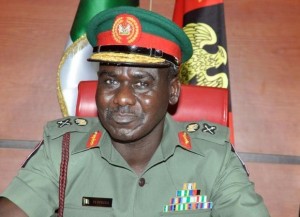
Nigeria's Chief of Army Staff, Lt. Gen. Tukur Buratai
The Army War College Nigeria (AWCN) has been formally inaugurated as a Centre for Professionalism, training and purposeful leadership for the security sector.
Speaking at the inauguration, the Minister of Defence, Mansur Muhammad Dan-Ali said that the establishment of the War Colleges for the Army, Navy and Airforce underscores the importance that the federal government places on the improvement and development of its professional military education.
He said, “The Armed Forces of Nigeria has continued to play an important role in the security of the nation. The professional conduct of our military has seen the capabilities of Boko Haram significantly degraded which had before now terrorized and killed innocent citizens as well as seized territories within our country.
“Professionalism, training and purposeful leadership at all levels contributed to this feat. We must therefore continue to train in order to sustain these gains.”
Dan Ali added, “The government will continue to support the Nigerian armed Forces in its quest to continue professionalizing. Already, government is acquiring necessary equipment required by the military to prosecute the war against insurgency in the north east. New platforms are already waiting final clearance from Tin Can Island and very soon they will be inserted into operation Lafiya Dole.
“The procurement of new equipment coupled with good leadership has boosted the morale of troops, which has led to the numerous successes recorded in the fight against terrorism.”
Also speaking at the occasion, the Chief of Army Staff, Lt. General Tukur Buratai said that time has come for the military, in its battle to rid the Nigerian environment of terrorism and insurgency among other security challenges, to think out of the box and evolve an evolutionary approach to war-fighting
Buratai said the Army War College which witnessed the inauguration of its pioneer set of Course 1/2017 participants in Abuja, was conceptualized to develop the capacities if the Nigerian army officers in operational planning and management as well as the development of basic strategic skills for effective application of land power.
The Army Chief disclosed that having critically assessed the professional military education curriculum and performance of officers in battlefield and theatre of war fight, “it was discovered that there were gaps in the Nigerian Army training especially at operational level.
“It was discovered there were no Army level courses that supported officers’ capacity building at the operational level and as a consequence, Nigerian Army Officers were not well grounded in operational art.
Consequently he said that, “the end state for participants at the AWC is to develop the critical and creative skills, knowledge and attributes expected of senior leaders at the operational level.
“Most importantly, students would be taught skills to incorporate other sister agencies in the operational joint planning process. This approach will promote joint approach to war-fighting.
Describing the inauguration of Course 1/2017 as the beginning of a new journey in the professional military education in the Nigerian Army, General Buratai said, “Before now, delegations from the Nigerian Army had visited similar colleges in Bangladesh, United Kingdom and United States of America in order to get first-hand information on how such colleges are run”.
With such information, the teams were able to internalize the structure, administrative model and curriculum to suit our peculiar challenges. With the crop of officers in the faculty, I can confidently say that the college is poised to achieve greatness”.
Paying tribute to all officers and soldiers who have made the ultimate sacrifice while defending the interests of the nation, the COAS said, “With the commencement of studies at the college, we will surely get better at war fighting.
Reiterating the commitment of the Nigerian Army under his leadership to uphold the constitution of the federal republic of Nigeria, Buratai said, “The Nigerian Army is a professional institution whose loyalty to constituted authority and service to the country is not in doubt
The Commandant of the Army War College, Major General Gafar Okunola in his remarks stated that within the short time of establishment of the college, it has developed a curriculum that takes into cognizance, “our peculiar challenges, gaps and strength.
He revealed that, “Under the guidance and direction of Army headquarters, we have developed a home-grown programme that we trust will meet the present and future expectations of the Armed Forces of Nigeria.”
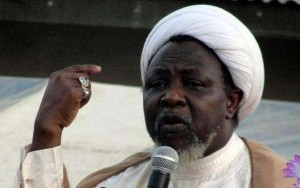
The N2bn suit filed at Federal High Court sitting in Kaduna, northwest Nigeria by El Zakzaky against Nigerian Army, Chief of Army Staff and three others which came up on Thursday for hearing has been adjourned to 30th June.
The leader of the Islamic Movement in Nigeria, Sheikh Ibraheem El-Zakzaky in the suit is alleged of abuse of his human right, destruction of his house in Zaria and the murder of his three children.
The case was adjourned at the instance of the defence Counsel’s inability to identify and argue the motion he had filed, alleging abuse of court process in the Zakzaky’s suit .
The counsel to the Nigerian Army and the Chief of Army staff who are the first and the second defendants respectively in the suit N2Billion as damages over the killing of El Zakzaky’s three children and destruction of his house, Hussein Oyebanji pointedly told the presiding Judge, Justice Saleh Shuaibu that he was not familiar with the case.
Barrister Hussein Oyebanji stood in for the lead Defence Counsel, Biola Oyebanji who was not in court.
At the resumed hearing on Thursday in Kaduna, counsel to Elzakzaky, Femi Falana, SAN moved an application for the regularisation of the processes that he had filed out of time.
But when counsel to the Nigerian Army and the Chief of Army staff Staff was invited by the presiding judge to identify and argue the motion of objection earlier filed, Barrister Hussein Oyebanji told the judge that he was not conversant with the case.
When asked by the Judge whether he can conduct the case, Oyebanji pleaded for adjournment to allow his principal, the lead counsel appear in court to argue the case.
The Judge however adjourned the case to the 30th June to enable the defence identify and argue his motion.
Speaking after the adjournment, Femi Falana SAN cautioned against footdragging in the case.
According to him, “We cannot challenge a violation of human right that occur in a particular state outside that state, because the destruction took place in Kaduna and it shall be determined in the state where the violation of human right took place.”
He said since the government has pledged to operate within the confines of the rule of law, the government must uphold order of a competent court, arguing that it is Zakzaky today, it might be another person from government official tomorrow.
His words: “This government has pledged to operate under the rule of law, so for that reason, by the virtue of section 387 of the constitution, all authorities and person are bind by judgement. So, a government that goes to court everyday to ask for justice can not go there to justify disobedience to court order, this is babaric and primitive. So, we are not going to allow that.”
It would be recalled that an Abuja Division of the Federal High Court had on 2nd December, 2016 ordered the release of the leader of the Islamic Movement in Nigeria, Sheikh Ibrahim El-Zakzaky.
In this report, Odimegwu Onwumere writes that it was believed that the Biosafety would address the problem of hunger in Nigeria when on Monday, April 21, 2015, the then President Goodluck Jonathan signed the National Biosafety Agency Bill into law after the National Assembly passed the bill; but this is yet to happen two years after because of the authorities lackadaisical approach to the innovation
Some four years ago, attaining the Genetically Modified Organism (GMO) was what occupied the mind of many Nigerians but especially that of a chief scribe of All Farmers Association of Nigeria (AFAN), Arc Kabiru Salman.
Nigeria had signed and ratified the Cartagena Protocol on Biosafety in 2000 and ratified it in 2003 in obligation to Global Biodiversity Management, but was yet to sign it as a law in Nigeria. International bodies believed that countries that adopt a better approach to biotechnology, genetic engineering, biomaterials and informatics being the four novel technologies in using agriculture to fight malnutrition would not lag in economic and social capacity development.
It was in October 2014, and Nigeria was faced with tremendous food questions just as she is faced with today. The country was under strain to produce added food for its mounting population. The GMO was needed. Countries like Kenya, Togo, Tanzania and Mali had their Biosafety laws. Also, Republic of South Africa, Burkina Faso and Egypt already had Biosafety laws and were growing and consuming GMO crops.
Salman was showing uneasiness that what was remaining of Nigeria to boost her agricultural production that was staying behind on an infinitesimal dimension and chiefly reliant on rainfall which at most periods was not foreseeable was to imbibe GMO. Salman wanted a law regulating biotechnology in the country so that farmers in the country would not be deprived of GMO which was reliant in most African countries.
“As farmers, we embrace biotechnology and the passage of the bill will make whatever we do legitimate. GMO will lead to high yields and safety of what we do,” Salman said.
It was believed that Biosafety would help address hunger on the continent of Africa by the year 2025, when the heads of State and Governments of Africa gathered in Malabo, Equatorial Guinea, during the Twenty Third Ordinary Session.
Hunger On The Increase
It was believed that the Biosafety would address hunger in Nigeria when on Monday, April 21, 2015, the then President Goodluck Jonathan signed the National Biosafety Agency Bill into law after the National Assembly passed the bill. But this is yet to happen.
Only in 2016, Doctors Without Borders (Médecins Sans Frontières), MSF, in a declaration, alerted that about 24,000 Internally Displaced Persons, IDPs, were in calamitous health conditions of which 30 people, who were children, were dying every day in their camps due to hunger.
That was coming after two weeks the Borno State Governor, Kashim Shettima paid a visit to Bama camp leading to reports that hundreds of malnourished persons recently rescued from Boko Haram confinement were dying in a camp in Bama.
Those who know better said that without a doubt, Nigeria still gaps for breath to curb her indices of malnourished persons with available statistics indicating that over two billion people in the world undergo diverse forms of malnutrition.
According to an April 2016 statement by Dr. Rose Gidado, the Coordinator of the Open Forum for Agricultural Biotechnology (OFAB), Nigerian Chapter, “Nigeria is a signatory to this declaration but as at date, 10 percent of the nation’s population is still unable to meet their daily calorific needs due to affordability, effective mass food production, storage and distribution.”
Dr. Gidado added, “Nigeria tops the list of eleven ECOWAS countries that have over one million people affected by hunger and undernourishment while 63 per cent of the population lives below the poverty line of less than one dollar per day.
“The challenges are bare. There is no solution in sight other than a very pervasive agricultural practice that will make food abundant and available to the generality of the masses.”
Experts Worried Of Malnutrition
Nutrition experts GA Nkwocha, KU Anukam, ON Oguoma, and VI Nkwocha were worried that the fundamental causes of malnutrition in Nigeria were poverty, inadequate food production, inadequate food intake, ignorance and uneven distribution of food, poor food preservation techniques, improper preparation of foods, food restrictions and taboos, and poor sanitation of which the Biosafety was supposed to address, but the authorities have not been serious to give the innovation the attention it needed.
In an analysis, they relayed that there’s an increase of mild to moderate symptoms of malnourished persons in Nigeria, making the country to be suffering from a near crumple of nutrition health freedom services. Different surveys, according to them, of nutritional evaluation in Nigeria divulged low intakes of protein, energy, iron, calcium, zinc, thiamin, and riboflavin in almost all age groups and in both sexes.
Hence, they were worried that malnutrition and related diseases such as diarrhea, measles, anemia, and gastroenteritis were the cause of most deaths in infants and young children. The nutritionists opined that their fear was that with the estimated increase of the world’s population from six billion to more than 7.5 billion by 2020, Nigeria may be suffering untold malnutrition if increase in meat intake is not taken seriously.
What African Bodies Were Doing
Already, the African Union had ballooned a sculpt Biosafety law to help Member States widen their Biosafety laws.
NEPAD-African Biosafety Network of Expertise project had been launched to bolster the development in member states.
The ECOWAS Commission was as well working a widespread Biosafety Regulation in row with National Biosafety laws/Regulations for the sub-region.
In 2013, participants at the 10th anniversary of African Agricultural Technology Foundation, AATF, seminar had shown anxiety, saying that Nigeria’s quest of accomplishing food satisfactoriness in proceeding years could only be hinged on the implementation of biotechnology in the agricultural sector.
Supposed Benefits Of GMO
Institutions such as the National Root Crops Research Institute (NRCRI), Umudike; Institute for Agricultural Research, Zaria (IAR); the Federal University of Technology, Akure and, the National Biotechnology Development Agency (NABDA), were said to benefit immensely from the development.
‘‘The GMO would ensure Nigeria is self sufficient in the production of rice and would boost the countries revenue in other areas of agriculture,’’ the then Minister of State for Agriculture, Alhaji Bukar Tijani said in his remarks.
Dr. Akinwumi Adesina who was Minister of Agriculture and Rural Development said in Addis Ababa at the High Level Meeting of AU Heads of State and Government on “unified approach to end hunger in Africa by 2025” that the Nigerian Government had announced plans to swell the use of bio-fortified crops, such as pro-vitamin `A’ cassava and orange-flesh sweet potato to address the hunger situation being faced by some 13 million people.
“Much progress is being made, we are mindful that we still have challenges of malnutrition and micro-nutrient deficiencies to tackle. Nigeria still has 13 million people suffering from hunger, and malnutrition is still high,” Adesina said.
The Need For Biotechnology
It’s gathered that biotechnology seeks out to harness agricultural practices by making it cost successful, productivity increment and lessening gaps that are not favourable to agriculture. Views are that the initiative is a gateway to competence building, job creation, poverty eradication and alleviation of malnutrition.
In some views, “In 2014, a record of 181.5 million hectares of biotech crops were grown globally, an increase of more than six million hectares from 2013, according to a report released by the International Service for the Acquisition of Agri-Biotech Applications (ISAAA). With the addition of Bangladesh, a total of 28 countries grew biotech crops during the year.
“The 20 developing and eight industrial countries where biotech crops are produced represent more than 60 percent of the world’s population.”
Seeing the importance of biotechnology, the United Nations Economic and Social commission for western Asia Cooperation with International Labour Organisation (ILO) were at the forefront in crusading that countries should adopt the technology.
Conviction For GMO
A Director-General of NABDA and Chairman, Open Forum for Agricultural Biotechnology, Professor Bamidele Solomon was of the observation that the development would positively answer the question that the country was looking for to arrest “food security, job/wealth creation, affordable healthcare delivery and sustainable economic environment.”
The professor added that with the Biosafety Bill, “The law will also facilitate risk assessment exercises, monitoring and enforcement measures relevant to import, export, trans-boundary movement of the products of modern biotechnology, laboratory, and field testing/use of modern biotechnology including handling, control, monitoring and release of biotech products.’’
It’s understood that not only the development, but also sustaining agriculture through the deployment of biotechnology tools such as culture, molecular breeding and genetic engineering to a wider audience would take the country so far in curbing malnutrition.
According to Tijani, “One of the international bodies’ key projects in Nigeria is the development of nitrogen-use, water efficient and salt tolerant rice. This is key, because Nigeria is the second largest importer of rice in the world, about two million metric tons of rice from countries like Thailand and China.
“The project would ensure Nigeria is self sufficient in the production of rice and would boost the countries revenue. Another key project AATF has in Nigeria is the Cassava Mechanization and Agro-processing project.
“Being the largest producer of cassava in the world, the project would boost farmers’ capacity for production thus, showcasing a local product globally and boosting the economic growth for the country.”
Nigeria Must Be Serious With GMO
Dr. Gidado was much concerned that the law would foster in the creation of employment, food production if the GMO was given the attention it needed by government. She however advised, saying that in Nigeria, the espousal GMO products, was a step in the right direction.
“Nigeria must promote and support this technology that is efficient, inclusive, climate-smart, sustainable, nutrition-and health-driven, and business-friendly in order to ensure that no Nigerian goes to sleep hungry by 2025,” she advised.
Odimegwu Onwumere is an award-winning journalist based in Rivers State, Nigeria. He contributed this piece via: apoet_25@yahoo.com
Disclaimer: AFRCA PRIME NEWS encourages freedom of speech and the expression of diverse views. The views expressed by opinion writers are therefore their own and do not necessarily represent the views of AFRICA PRIME NEWS
Nigeria will continue to fight against illicit trafficking in Cultural Property, Minister of Information and Culture, Lai Mohammed said.
He announced this in Lagos Thursday while declaring open an exhibition of repatriated Nigerian artefacts, challenging the National Commission for Museums and Monuments (NCMM) to double its efforts in checking the illicit trade in cultural property.
”It is my wish that the NCMM will begin to look at means and opportunities to re-invigorate its export and clearance permits operations and even devise other methods of checking the illicit trafficking in cultural property.
”I was reliably told that there was the system of taking the pictures of all the objects leaving the country and the passport numbers of those exporting non-antiquities out of the country. I think the NCMM should go back into all of the systems that can be used to stop, check and stem the illicit trafficking in cultural property of Nigeria,” he said.
Alhaji Mohammed also urged the NCMM, the Nigeria Customs Service and other law enforcement agencies to be more vigilant especially at the nation’s sea ports, airports well as land borders, to check these abuses and illicit trade.
He thanked the Ambassadors and Cultural Attaches of the United States of America, France, Canada, Switzerland and South Africa, where the artefacts were intercepted, and appeal to them not to relent in their efforts in that regard.
”I must thank you the more for respecting the International Laws and in particular the respect of the Red-List Agreement of 1997 that has declared the export of these Nigerian cultural property illegal,” the Minister said.
He gave the assurance that Nigeria will fully domesticate the provisions of the UNESCO 1970 Convention on the Means of Prohibiting and Preventing the Illicit Import, Export and Transfer of Cultural Property, which was ratified by Nigeria on 24 Jan. 1972 and came into force three months later.
Dasuki Sambo, Former National Security Adviser, Nigeria
The Federal Government witness billed to testify against the former national security adviser, Colonel Mohammed Sambo Dasuki in the charge of unlawful possession of firearms and money-laundering brought against since 2015 are to give evidence behind the screen.
The screens are to be provided by the Federal High Court in Abuja where the ex-NSA is to be prosecuted on the charge.
The witnesses would however not be shielded from lawyers that would be in the court throughout the trial.
Justice Ahmed Rahmat Mohammed granted the request of the Federal Government to allow government witnesses to testify behind the screen.
In his ruling, in a motion on notice argued by Mr. Dipo Okpeseyi (SAN) Justice Mohammed said that the request for the witnesses to testify behind the screen was granted because part of the charges against Dasuki has to do with money-laundering.
The Judge said that although a similar request had been presented before the court in 2015 and rejected by the court but however hinted that the decision to allow the use of screen was granted because of the nature of the case of the charge.
He said that the fresh motion, argued by Okpeseyi didn’t constitute abuse of court process because the prayers in the old and the fresh one were not the same.
Besides, the Judge said that Section 232 of the Administration of Criminal Justice Act 2015 permitted the use of screen when charges have to do with the Economic Crimes as in the instant case.
The government through Okpeseyi had insisted that Dasuki, being a former military officer, former aide de camp (ADC) to a former President, former NSA and a crown prince of Sokoto caliphate was a potential threat to its witnesses lined up to justify the charges against him.
The federal government had urged Justice Mohammed to allow the screening of the witnesses in order to guarantee their safety after their evidence in court.
Okpeseyi told the court that the witnesses who are operatives of the Department of Security Service (DSS) carry out their works across the country and could be attacked by sympathisers and well- wishers of Dasuki unless their identifiers are protected.
The counsel submitted that Dasuki was once the boss of the witnesses and that they (witnesses) could be jeopardised unless their names are not placed at the public domain adding that the ex-NSA will not be prejudiced in any way if the request for the witness protection is granted.
“This application for witness protection will not in any way take away the right of the defendant (Dasuki) to see the witness and cross-examining them in their evidence as required by law” Okpeseyi argued adding that a witness who once testified in the matter was involved in a mysterious ghastly accident.
However, counsel to Dasuki Mr. Ahmed Raji SAN had described the government bid as a cheap blackmail against his client and urged the court to dismiss the request for being speculative, baseless and unmeritorious.
Raji said that the ex-NSA was not charged with terrorism offence to warrant protection for any witness adding that several operatives of the Economic and Financial Crimes Commission (EFCC) have testified against Dasuki in two other courts without any complaint of a threat to their lives.
Meanwhile, the court has adjourned trial until September 20-21, 2017.
Police in Akwa Ibom, south-south Nigeria, have warned motorists and motorcyclists to desist from covering vehicle and motorcycle number plates with unauthorized materials.
This is part of “efforts of the Akwa Ibom State Police Command to rid the state of criminal elements and to ultimately ensure the safety of residents and visitors alike,” says a statement by the Command Spokesperson, DSP. Chukwu Ikechukwu
The statement quotes the Commissioner of Police, Don Awunah warning “persons who engage in this act will have their vehicles impounded as this is in contravention of Section 6 Cap 115, laws of Akwa Ibom State 2000 which provides that “any person who forges or fraudulently defaces, alters, mutilates or adds anything to any license or identification mark shall be guilty of an offence”.
it continues, “The Akwa Ibom State Road Traffic (RTA) also provides that “no person shall drive or being the owner, permit any other person to drive a motor vehicle on the highway unless such vehicle is registered and licensed under the law and has affixed hereto an identification mark as may be prescribed”.
“The C.P wishes to implore persons who have indulged in this act to politely remove such material from their number plates and further restates the unwavering resolve of the Command to among other things secure life and property as mandated by the laws of our land.”

 Kaduna State government, has following the audio message alleging killing of Igbos in the state, said all communities irrespective of where they come from are safe in the northern Nigeria state.