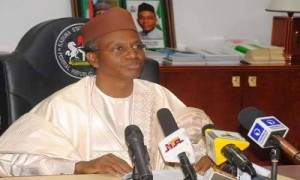
Kaduna State internal security outfit, Operation Yaki in northwest Nigeria, says it has arrested six notorious kidnappers terrorizing Kaduna-Abuja highway.
The suspects were picked Thursday by the Surveillance Patrol Teams in a joint operation with the Inspector General of Police Intelligence Response Teams (IRT), with the support from the Technical Intelligence Unit (TIU).
Senior Special Assistant on Media and Publicity to governor of Kaduna State, Samuel Aruwan in a statement said, “The arrest of the kidnappers is sequel to the massive deployment of more police assets and patrol vehicles in the area in the last one week.
“These efforts led to the arrests of the suspects including the leader of the gang, Adamu Mamman, a 35-year old ofAmana village in Igabi Local Government Area, Ali Rabo, also known as Blakky, of Liman Ibada village in Chikun Local Government Area and Awwalu Ahmad, aka Mota, of Rijana village in Kachia Local Government Area who is the main informant of this gang of kidnappers along the Abuja – Kaduna highway.
“Others arrested are Shehu Idris Shagari, a 27-year old of Gadan Gayan village in IgabiLocal Government Area, and Umar Antijo, also a 27-year old, of Rijana village in Kachia Local Government Area. Also in the net is Babangida Abdullahi of Rijanavillage in Kachia Local Government Area who is the receiver of stolen cattle, phones and laptops.”
The statement quotes Yakubu Yusuf, a retired colonel and Coordinator of Operation Yaki, saying that the security operations against kidnapping is funded by Kaduna State Government, disclosing that Governor Nasir El-Rufai of Kaduna State has been encouraging and supporting interagency cooperation in the fight against crime.
“Governor El-Rufai has pressed for a sustained onslaught against kidnapping. The Kaduna State Government is assisting security agencies with operational funds to support these efforts. The governor commends the communities that have been contributing to the security effort reporting suspicious activities.
“The suspects were arrested at various locations, including Maraban Jos, UngwanPama, Sabon Gayan and Rijana villages respectively, all in Kaduna State.
“All the suspects arrested confessed to several kidnappings of motorists along Kaduna – Abuja highway and further confessed that because of the massive deployment of security forces to their area of operations, most of their gang members have started relocating from Rijana village to their respective home towns.
“The suspects and the items recovered from them have been handed over to the Criminal Investigation Department (CID) of the State Police Command for further investigation,” the statement added.
The Islamic Movement in Nigeria, IMN, [a Shiite Islamic sect] has expressed dismay over the unlawful continued detention of its Leader, Sheikh Ibrahim El-Zakzaky by Nigerian government despite courts orders, and the excuses advanced by the government.
Nigeria’s Minister of Information, Lai Mohammed Thursday spoke on privately owned Channels TV, saying the Shiite leader was in “protective custody” with his family.
In total disagreement to the government’s point of view, the Movement said it found the statement “absurd and an insult” on the collective intelligence of the good people of Nigeria and the international community.
The President Media Forum of IMN, Ibrahim Musa, in a statement Sunday said, “Why should the executive arm of the government still insist on “protective custody” defence of their contemptuous posture, when the Federal High Court in Abuja had rejected that notion categorically and set our leader, Sheikh Zakzaky free?
“The judiciary was emphatically against the argument by the government of “protective custody” alibi, insisting that it has no place in the constitution or any laws known to man.
“A further insult on the intelligence of Nigerians was when Lai went on to claim that Sheikh Zakzaky is not being detained by the known detaining authorities in Nigeria because he is not in prison or in Department of State Services (DSS) or police cell but in a “house” with his family.
“This blatant lie should make the Minister bury his head in shame. Firstly, what do you call detention if the detainee’s liberties are curtailed so much as to deny him free movement and association? Sheikh Zakzaky is being denied his rights to freely move and associate. He is being denied access to even medical care of his choice and the last time he saw his lawyers was over a year ago.
“Secondly, what the world knows is that he is in the custody of DSS, and that is the fact. To say anything that would suggest that he isn’t in the custody of DSS is extremely dishonest. The assertion by the Minister even went to the extreme of implying that the Sheikh is in a house built for him by the Federal government as ordered by the court. This fraudulent lie by Lai is felonious to put it mildly.
“We challenge the Federal government to open the gates of the house and invite journalists, his supporters and the international community to visit him in the house to gauge the degree of his freedom!
“Mr Lai’s shameless lies were simply inexhaustible. He went further to suggest that the Federal government attempted to obey the court order by building a house for him, but was deterred by people not wanting to accept to be his neighbours.
“This is a gross perversion of truths by the Minister. In the first place, the Federal High court had ordered the Federal government to build a house for the Sheikh in Kaduna or any town of his choice in northern Nigeria.
“As far as we know, neither the Sheikh nor his solicitors were approached by the government to enquire about the Sheikh’s choice of his new residence. So how did the government go about looking for where to build the house?
“Secondly, we again challenge the government to publicise the places it went about seeking for the new residence and were turned back by neighbours, and we would in turn show people who are more than willing to be Sheikh’s neighbours in such places.
“Our response therefore to the sarcastic rhetoric by Lai that where they will release Sheikh Zakzaky to since nobody wants to be a neighbour is to simply say that they should release him and see the millions of willing neighbours from among his followers and sympathisers.
“Notwithstanding these recent somersaults by the Federal government through Lai and Garba Shehu on the continued unjustifiable detention of the Sheikh and his wife in contempt of the court, we will not relent in our unequivocal call for the immediate and unconditional release of both and all the other members of the Islamic Movement being detained in various detention facilities including underground cells.”
People living with disabilities in Kaduna State northwest Nigeria, have vowed to continue with street begging in spite of the constant harassment and threat of arrest by the security operatives.
They noted that they would not stop street begging in the state unless Governor Nasir El-Rufai fulfills his campaign promise of empowering them.
They also appealed to the governor to always make provision for people with disability whenever there was an opening for employment to enable them contribute their own quota in the development of the state and Nigeria at large.
They disclosed this Thursday at the Ramadan Iftar (Muslims breaking of fast), organized by wife of the State Governor, Hadiza Isma El-Rufai for 200 disabled women in the state.
Speaking at the occasion, one of the women leader of the Association of Crippled People, Kaduna State, Isha Musa, said the governor during his 2015 campaign, promised to take the physically challenged people, especially those who are involved in street begging, off the streets by providing shelter, as well as empowerment if they support and voted him to become governor.
She noted that since he became governor, instead of fulfilling his promise, he rather made security men arrest them and locked them in one place with nothing doing, hence, the need for them to go back to the street begging in order to survive.
According to her, street begging was the only work that puts food on their table as well as pay their children’s school fees, saying that they would continue to beg no matter how the security men intimidate them unless jobs are provided to them.
She however appealed to the wife of the governor to intervene by pleading with her husband to keep to his campaign promises, noting that it is never their wish to beg.
In their separate remarks, women leaders of other disability associations, Ramatu Ahmed of the cripples, Ruth Maigida of the Blind; Isha Salisu, Happy of the mentally challenged but able; among others who spoke during the occasion, expressed gratitude to Mrs. El-Rufai for inviting them to feast with her in the month of Ramadan.
The women Leaders while describing the gestures as rare, going by the way people always look at them as beggars, lamented over their inability to gain employment, access to health facilities, government programmes; education among other social amenities because they don’t have people to help them.
According to them, they were not allowed to access loans, even at the Micro Finance Banks because of their disability at a time they were ready to venture into businesses.
While appealing to the state governor through his wife to come to their aid, the women leaders assured of their full support to governor El-Rufai and prayed for president Muhammadu Buhari’s quick recovery.
Responding, Mrs. El-Rufai, advised them to liaise with the Ministry of Women Affairs to direct them on how they could access loans and other government programmes which she said are open to everybody in the state.
The wife of the Governor, while stressing the need for people with disability to be self employed, noted that government cannot employ everybody, but provide the enabling environment for private sectors to strive.
On the street begging, Isma urged them to be law abiding citizens, assuring them that everything the government was doing was to return Kaduna State to be great again.
Cousins Lydia, left, and Joy, right, pose for a portrait showing off their diplomas and university scholarships to Southeastern University in Florida (where they plan to attend college in the fall of 2017) after their graduation ceremony at Canyonville Christian Academy, in Canyonville, Oregon, on June 3, 2017. CHIBOK Erin Trieb Photography
Retouched high res
As Lydia Pogu and Joy Bishara slept in their beds on the night of April 14, 2014, terrorists were hurtling toward their boarding school in the Nigerian town of Chibok.
The girls, both teenagers in their senior year of high school, were resting after a festive evening — dinner, dancing, playing the drums, “just having fun,” Joy tells PEOPLE.
Suddenly two men burst into the school, claiming to be soldiers who would protect the girls. Frightened, the girls did as they were told, gathering into a group. Then more men arrived, firing guns into the air and shouting, “Allahu akbar!” (“God is great” in Arabic.) The girls recognized it as the battle cry of Boko Haram, the terrorist group that has killed thousands of Nigerians in recent years in a bid to create an Islamic state and wipe out Western education from schools.
“I was thinking, ‘Am I ever going to see my mom again?’ ” says Joy.
Boko Haram kidnapped nearly 300 girls that night, threatening to sell them as slaves. The news rocketed around the world, sparking the viral hashtag “Bring Back Our Girls.” A few dozen girls managed to escape. In recent months, more than 100 girls have been set free as a result of government negotiations with Boko Haram, but more than 100 girls remain missing.
Cousins Lydia, left, and and Joy, right, pose for a portrait wearing traditional Nigerian outfits on the campus of Canyonville Christian Academy, in Canyonville, Oregon, on June 3, 2017. CHIBOK Erin Trieb Photography Retouched high res
On the night of the attack, the terrorists torched the school, then ordered the girls to march down a dusty back road and pile into open-air trucks. Joy’s truck was so high off the ground, she recalls, she had to use a small car as step-up to get in.
Watch Lydia Pogu and Joy Bishara on the series People Features: Boko Haram: Our Journey To Freedom, available now, on the new People/Entertainment Weekly Network (PEN). Go to people.com/PEN, or download the PEN app on your favorite device.
As the trucks roared off into the night, the terrified girls frantically discussed jumping. Lydia recalls a friend saying it was better to take the risk than to disappear forever — right before she jumped. Lydia prayed, then followed her friend, landing hard on the ground, a searing pain in her hips as she scrambled up and headed blindly into the thick, thorny bushes, with her friend. “We ran and ran,” she says.
Joy was debating whether to jump as well. She heard a girl say it would be better to die there—at least their parents would find a corpse. She felt a surge of courage: She could do this. Then she looked down at the ground far below. “Something is like, ‘Joy, you cannot. And I’m like yes I can.’ ” She leapt, landing on her stomach in a cloud of dust from the dirt road, before catching her breath and fleeing with two of her classmates into the brush.
After that, they just kept running. Lydia and her friend were covered in blood from thorns, their clothes torn. They came upon a village where people had spent the night hiding in the bushes, fearing their homes would be burned, as Boko Haram had been there just hours before. The villagers pointed the girls toward home and told them to “run in a zigzag,” says Lydia, because it would be harder for anyone to shoot them.
Meanwhile, Joy and her two classmates—exhausted and afraid to stop, especially now in daylight—had found a road, where they encountered a man on a motorcycle. “We ask him to please take us back home. He ask, ‘Who are you?’ We were scared. We don’t want to tell,” says Joy, who ultimately confided in the man, and he took them home. Lydia and her friend lucked out as well, coming to a road and stopping a man who drove them back to Chibok.
Over the next few months, they worried that Boko Haram would come back to get them — sometimes sleeping outside where they felt it would be easier to hide. When they heard about an opportunity to finish school in America, they didn’t hesitate.
For more on Lydia Pogu and Joy Bishara and their heroic escape, pick up a copy of this week’s PEOPLE, on newsstands Friday.
With help from a human rights group in Virginia, the Jubilee Campaign, they came to the U.S. in August 2014. After attending boarding school for two years in Virginia, they transferred last summer to the Canyonville Christian Academy, a scenic boarding school in Oregon surrounded by soaring redwoods and pines. “They kept our tutors busy and worked nonstop,” says Doug Wead, president of the academy. “When they encountered scary new challenges, they kept jumping off that truck.”
Cousins Lydia, left, and Joy, right, pose for a portrait showing off their diplomas and university scholarships to Southeastern University in Florida (where they plan to attend college in the fall of 2017) after their graduation ceremony at Canyonville Christian Academy, in Canyonville, Oregon, on June 3, 2017. CHIBOK Erin Trieb Photography Retouched high res
This month, Joy, 20, and Lydia, 19, graduated from high school, and this fall, they will attend college at Southeastern University in Lakeland, Florida. (They have a GoFundMe page to help with expenses.) Both young women are looking forward, describing their education opportunities as “a dream.”
During her emotional graduation speech, Joy said, “I forgive the people who hurt me. I have nothing against them. I am praying for the return of my classmates to their parents.”
To mark World Environment Day 2017, Youth advocate, Radio Presenter and environmentalist, Wonne Afronelly, organized a ‘#1000ManMarch #WithNature’ on Monday 5 June, 2017 in Port Harcourt, Nigeria. The event which brought together stakeholders around the country to commemorate World Environment Day was aimed at engaging the youths in environmental restoration efforts, celebrate earth and ‘connect with nature’. In this interview with ALLI ABIOLA, Afronelly talks on her motivation, the challenges and the aftermath of the event. Excerpts below:
How were you able to convince yourself that organizing the recently concluded #1000ManMarch was the right way to connect with nature to mark World Environment Day 2017?
Defacing the environment is becoming a norm in the society especially when those you would easily classify as the elite and educated see nothing wrong in flipping trash from their beautiful expensive vehicle windows; the people approach to littering and indiscriminate disposal of refuse was gradually going from bad to worse.
Having knowledge about a 2008 online publication that revealed Port Harcourt placed Nigeria 25th position on the World list of most dirty cities gave the conviction to start all afresh with the basics – Awareness and Advocacy . It wasn’t difficult convincing the team of young advocates and we decided to take the radio advocacy program off air to the streets!.
You had so much support to pull this through. Knowing that sourcing funds and/or getting sponsorship for events like this is difficult. How did you get around this?
Lol, o yes we had moral support especially from our young advocates in primary schools who kept reminding us of the big day, determination and passion from members of the team “My Environment, My Wealth” BUT in reality NO funding (from Government, Corporate bodies or United Nations) as many had presumed and accused. The #1000ManMarch #withnature was NOT sponsored.
Our sincere appreciation goes to our supporters and they include: Divine Angels School, Titare Academy, G-Asabuja Entertainment, Mr Nigeria UK- Teedum Nke-ee, Amaris House- Tina Awuse, Teggy Concepts photography, Face of Port Harcourt City, management and staff of Radio Rivers 99.1FM, Director of Admin RIWAMA, The Team (Prince, Echika Wonne, Joy Ogbonna, Ibe Horisson Joe, Adah Andrew, Chris Biebele, Wejinya Michael, Koote Destiny, Seyi Adebote, Alli Abiola and others) family, friends and the public.
Share with us some of the unforeseen that could have ruined the #1000ManMarch and how you managed them
On some occasions the #1000ManMarch would have been cancelled.
First after the event had been registered on UNEP site May 8, another event was registered days later using the state ministry of environment as a partner convener. However we pushed on because we had our unique strategies and target audience different from the proposed conference. In the long run that program did not hold for lack of funds as confirmed by the convener who was seeking partnership from the ministry.
Secondly, most youths we invited for the campaign were more eager to know how much mobilization fee would be given. We even approached a top Nollywood celebrity who mentioned that mobilizing youths to come out en masse would be very easy as long as we are paying. This wasn’t enough to discourage us since our target was to reach out to those who have common sense to be responsible for their environment.
Thirdly, few days to June 5, NDDC embarked on a street carnival, this would have discouraged us but then we didn’t feel the kind of impact we had planned so we were even more determined.
Finally on the big day June 5, the procession was to take off at 8am, suddenly the rains came, the downpour was so fierce, it seemed like the Environment was angry and crying out for help. Some participants suggested we reschedule to the next day, about 3 schools could not get to the venue; it rained 3 hours non stop. We eventually started 3 hours behind schedule and reckoned a huge success.
What are your favorite nature apps?
The Ripple app introduced by Ocean Conservancy in 2012.
Technology is often seen as anti-environmental in many climes. What are your thoughts on this and how can the environmental and technological industry agree with each other? If possible
Without technology, there would be no built or social environment. What man needs to do is engage in more environmental friendly practices that promote anthropocentric values and easily allows for natural replenishment of the environment by itself.
Judging by the influence of civilization especially in urban areas. How relevant are game reserves, natural sanctuary, national parks and other protected areas in this part of the world?
Relevance comes with understanding. When people are not aware what reserves, parks and the likes are, they would not know their importance. All humans are after in this part of the world are ways to stay away from poverty and hunger. Even the educated persons would tell you food first before reserves; in essence we can consume everything as long as we don’t stay hungry.
Then we can say there is a huge difference between Education and SDG #4Quality Education (Green Education). These issues top the UN list of Sustainable Development Goals and developing countries need to find lasting solutions as soon as possible.
2017’s World Environment Day has come and gone, so as #1000ManMarch. Do you think their objectives are justified? What else should we know to keep us on track?
2017 WED may have come and gone, but the impact of the #1000ManMarch is a huge foundation as far as regaining Green Gardencity is concerned, as well as support and awareness for United Nations Sustainable Development Goals.
Like I mentioned earlier, despite the unforseen, we pushed on because of our target audience
– the procession took off from the Rivers State Waste Management Agency (RIWAMA) to Rivers state University to mile 3 market, up to mile 1 market connecting Rivers state House of Assembly down to Radio Rivers FM. We had to concentrate on these routes because of the markets mentioned, they are very popular in trades as well as defacing the environment; the market users and those living around who always use the road medians as dump sites.
We were able to sensitize the marketers and road users in various dialects (Pidgin, Ikwerre, Ogoni, Igbo, Akwa ibom) on proper waste disposal and management,
– Another objective was to get across to all stakeholders of the environment and interestingly we were able to indulge the Entertainment Industry (music artists, actors, comedians, dancers) and get them committed to environment advocacy. We also had Pageantry kings and queens, models from various platforms join the team.
We are now in partnership with some of them to work on Green Projects
– Every House a Tree was one of our campaigns. Haven sensitized the public on the importance of tree planting as a way to connect to nature; the next phase is to ensure people start making nurseries and planting trees. We intend to start with our partner schools and ensure the students do it themselves.
Other community cleanups and projects have been lined up. Connecting to nature should be a daily activity and not once a year event.
Disclaimer: AFRCA PRIME NEWS encourages freedom of speech and the expression of diverse views. The views expressed by opinion writers are therefore their own and do not necessarily represent the views of AFRICA PRIME NEWS
The Gender Awareness Trust, on Friday urged the Kaduna State Government to legislate against early marriage, so as to provide adolescent girls with opportunities to live productive and meaningful lives.
The group made the call in Kaduna while unveiling a new tool kit in Hausa language developed to guide faith leaders preach against early marriage and providing opportunities for adolescent girls to excel in life.
The event was organised as part of activities to mark the Day of the African Child. The group said that the government must intervene to delay the time for marriage and allow girls acquire meaningful education.
Tida Leo, the group’s Project Officer, called for the domestication of the Child Right Act in the state, to insure the welfare and safety of children, as well as protect them from violence.
“The Kaduna State Government, CSOs and other concerned citizens should support institutions to give proper care to children with disabilities and children caught up in violence.”
Leo stressed that Muslim and Christian leaders should use scriptural evidence to influence the attitude of their congregation to stop early marriage and allow girls access to educational and empowerment opportunities.
On the tool kits, the project officer said it was developed “as a guide for faith leaders to adequately address specific issues that negatively affect the social and economic growth of girls in Northern Nigeria.”
She explained that the group had targeted 12 communities in Kaduna State to ensure that faith leaders there use the Hausa tool kits to campaign for better lives for girls.
The tool kit is tagged in Hausa as `Inganta yin zabi da bada dama ga “yan mata masu matsakaitan shekaru -Kundin aiki ga Shugabannin Addini.’
Leo stressed that the main message was to highlight the increasing challenges faced by young girls due to lack of economic empowerment and education.
She stressed that culture had played significant role in denying young girls opportunities to explore their potentials in life, with some forced to abandon school and marry early.
“Religious and traditional leaders can significantly influence the behaviour of the society and individuals to ensure that girls have better opportunities in life,” she said.
The measure had long been expected. Soon after the Kaduna State government set up a committee to address the administration of districts and village units in the state, there were fears, going by the committee’s terms of reference, that the government was going to reduce the number of traditional rulers in the state.
The seven-member committee chaired by the Permanent Secretary in the Ministry of Local Government, Ibrahim Sabo, went about its work quietly and for the period it sat, the salaries and allowances of the district and village heads were put on hold.
When the committee later submitted its report to Governor Nasir El-Rufai in January, the its content leaked and it became public knowledge that many of the district and village heads would be dropped in line with the recommendations.
The committee recommended that 194 district heads, 2,927 village heads and 643 council members and staff of the traditional institutions in the state should go.
The state government, sensing danger when the recommendations quickly became public, arranged for a meeting with the traditional rulers to give them an opportunity to express their views.
This served to douse tension as the traditional rulers felt they were taken along and the government was going to take some of the suggestions they made.
But when the government came out with its position on Sunday, it turned out that it had thought better than to go about the exercise in phases and decided on a clean break by going back to what the institutions used to be before 2001.
A source in the Government House said the suggestion of conserving the merits of some of the newly created stools would put the government in dilemma as retaining even a single stool while scrapping another would not be understood by those adversely affected, hence decided that the best thing was to go back to the pre-2001 structure.
Prior to 2001, the state had only 77 districts and 1,429 village units. Subsequent governments starting with that of Ahmed Makrafi created 313 more districts from 2001 and increased the number of district heads to 390. The six oldest first class emirates and chiefdoms had 37 districts which ballooned to 152 districts after 2001.
With the creation of 313 additional districts in 2001, the state had 390 districts and 5,882 village units and the number of district heads for the six oldest first class chiefdoms more than tripled.
The district and village heads in turn employed personnel to help them with the running of their domains, employing an average of seven persons per head which added more than 2,700 employees to the payroll of the local government councils.
Alhaji Jafaru Ibrahim Sani, the Commissioner for Local Government Affairs, said this meant that the cost of maintaining the district heads automatically tripled.
“All our 23 local government councils since then had to bear this imposed burden,” he said.
The government said it needed to reduce the burden that a bloated payroll imposed on local government councils and empower the councils to be able to undertake capital projects and deliver public goods and reverted to the 77 districts and 1,429 village units that existed prior to 2001.
“One of the problems this government inherited is the practical insolvency of many local government councils. Some councils are unable to pay their bills, especially salaries, without support from the state government. The bloated wage bills of these councils indicate that they are carrying more than they can bear. That is why for two years many local government councils were unable to pay their district and village heads. Due to the governor’s kind intervention, at least 85% of these district and village heads have now been paid two years salaries,” he said.
The commissioner said while the state government was comfortably discharging its obligations to the 32 chiefs, the local government councils were not able to do same for their district heads.
“Zazzau Emirate alone has 86 districts. But Kano State, with a much larger population, has only 44 districts. Katsina State too has only 33 districts. What accounts for this proliferation in the number of district heads appears to be nothing other than political expediency. Government has not seen any objective criteria or a strategic consideration that concluded that the proliferation of districts was either sustainable or crucial to delivering public goods or promoting harmony at the grassroots.
“This government has decided to resolve the situation in the long term interest of the state. Our local governments must be freed from the stranglehold of bloated payrolls so that they can devote more of their resources to providing public goods.
“All the current District and Village heads that will be disengaged are to be paid three months’ salary in lieu of notice. Our royal fathers shall nominate three persons for appointment as district heads for the 77 districts from within the current 390 and from without, at their discretion. The process of nominating the heads of the 77 restored districts is being opened up and will be initiated by the emirs and chiefs to enhance the prospects of selecting persons that best meet the criteria,” he added.
Reacting to the sack, the chairman of Centrum Initiative for Development and Fundamental Rights Advocacy (CEDRA), Dr. John Danfulani, said he was not in support of the move, noting that districts and village heads were created and appointed to solve longstanding aspirations of the people.
He said districts and village heads also help in dispute settlement in their domains.
“The district heads are an important part of local government security architecture. They help local governments in terms of reporting and maintaining security. Their dissolution has created a void. I had expected the state government to plead with the district and village heads to bear with the government on the non-payment of their salaries and undertake to pay when the situation improves,” he said.
But the government says it is not out to please anybody but to do the right thing.
The National president of Southern Kaduna Peoples Union (SOKAPU), Barrister Solomon Musa, said the re-structuring was misplaced.
He said this was because the traditional institutions did not just spring up but were part of very serious agitations by various communities and came into being for the purpose of development.
“The traditional institutions came into being with several new chiefdoms created, this development was well provided for by the government of Makarfi at that time. After him, when Architect Namadi Sambo came into power, he did not make the move to tamper with the existing structure they met on ground, after then again, the government of late Patrick Yakowa came into power and he also did not tamper with these institutions, so also the government of Muktar Ramalan Yero.
It is important to note that government is a continuum, it is not about the feelings of an individual but a continuation,” he stressed.
“You cannot say because Kano State has 44 LGAs and very few traditional institutions. Kano is largely homogenous but Kaduna State is not like that. There are no fewer than 60-65 tribes from Southern Kaduna alone not to talk of the northern part of the state where we have the Hausa, Fulanis and others. So we have close to or over 70 ethnic nationalities. So you can’t compare Kaduna with Kano or Katsina State,” he stated.
The Secretary General of Civil Rights Congress, Nasir Abbas, also condemned the sack of the traditional rulers, saying the manner it was done was unacceptable.
“They said it was a re-structuring because there was no money to pay them. In the past, these district heads were paid salaries as at when due. The Revenue Mobilization Allocation and Fiscal Commission sends in money for local governments and advertises on the pages of newspapers, so we begin to wonder what the monies are used for that salaries cannot be paid.
“We have come to a conclusion that what government wants to achieve is to bring in new persons to man the thrones. We also observed that the state government is out to create confusion by dabbling into an institution that is a custodian of peace, progress and unity. Our position remains that in this circumstance, these rulers have contributed to the success story of ensuring peace and security in their domains, and anything that will joepardize that success story is unacceptable,” he said.
Another stakeholder, Ephraim Goje, expressed said the philosophy behind the creation of chiefdoms and districts is similar to that of creating local government areas.
Nigeria has released two short anti-smoking video ads. targeting second hand smokers.
According to the adverts, about 10% of the 6 million annual tobacco-related deaths are people who do not directly smoke a cigarette or use tobacco.
The first video (link below) shows people moving on as others smoke in prohibited public places and it ended with a poignant message “Tobacco Kills. Pay Attention! Don’t trivialize second-hand smoke.”
The second video (link below) is about how tobacco exposes individuals to harmful diseases such as lung cancer over time. A wheezing sound could be heard which fades gradually till the hospital life support beep. It says Tobacco is the major cause of all cancer and that it kills but only a matter of time.
According to Director Media & Public Relations in the Federal Ministry of Health, Mrs. Boade Akinola, “Data from Nigeria’s 2012 Global Adult Tobacco Survey (GATS) show that 4.5 million adults in Nigeria (5.6%) currently use tobacco products out of which 4.1 million are men and almost 0.5 million women. In addition, 6.4 million adults (29.3%) are exposed to second-hand tobacco smoke when visiting restaurants, hotels and other public settings. Of the adults surveyed, 82.4% believe that smoking causes serious illness.”
At the launch of the #TobaccoFreeNigeria communications campaign, Nigeria’s Minister of Health Adewole remarked, “Tell those people who are smoking it is dangerous. Tell the next person that is smoking in the vehicle or other public place that it is illegal,”


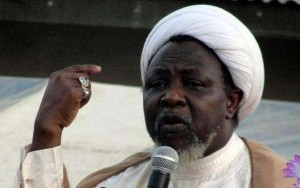 The Islamic Movement in Nigeria, IMN, [a Shiite Islamic sect] has expressed dismay over the unlawful continued detention of its Leader, Sheikh Ibrahim El-Zakzaky by Nigerian government despite courts orders, and the excuses advanced by the government.