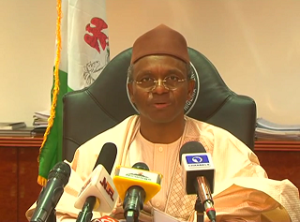
There are indications that Kaduna State College of Education, located in Gidan Waya, Southern Kaduna fails to secure accreditation owing to huge infrastructural gap and inadequate lecturers.
Most of the college buildings are dilapidated, leading to shortage of office accommodation for academic and other staff.
The development has led to high migration of senior lecturers to other schools with better facilities.
Administrator of the College, Prof Emmanuel Chom, gave the indication Thursday, at the inauguration of renovated Staff School of the institution at Kafanchan.
“Most of the equipment and machines especially in vocational and technical education programmes were obsolete. Laboratories of the science programmes were inadequate and the little we have are not well equipped.
“More so, we do not have enough Chief Lecturers to meet the National Commission for Colleges of Education minimum standard, “he said.
He called on the government to urgently address these issues to enable the college meet its mandate of developing manpower for the education sector.
Also lamenting the situation, Chairman of College of Education All-Staff Union (COEASU), COE Gidan Waya Chapter, Noah Danlami, noted that some secondary schools were better equipped than the college in terms of infrastructure.
“We, therefore, appealed to the state government to meet up with strategic and critical needs of the college, especially infrastructure, manpower and other facilities.
“This must be addressed within the shortest possible time especially considering that the NCCE accreditation team would soon visit the college, “Danlami said.
He appealed for the immediate reopening of the college, stressing that peace has returned to the area.
Also speaking, the Emir of Jema’a, Alhaji Isa Mohammed Isa II, called in the government to reopen all schools in southern part of the state that were closed in 2016 for security reasons.
According to him, there is now peace in the area, and as such, the schools should be reopened in the interest of the students future.
Responding, Kaduna State Commissioner for Education, Science and Technology, Prof. Andrew Nok said issues affecting the college would soon be addressed to facilitate the accreditation of programmes and provide serene environment for learning.
He challenged the college lecturers on academic research to attract research grants to the college.
The commissioner promised that the college, the Kafanchan Campus of the Kaduna State University and College of Nursing Kafanchan, would be reopened soon.
Kaduna State Commissioner for Education, Science and Technology, Andrew Nok says the state government had spent over N6.5 billion on development of infrastructure in schools in Southern Kaduna, adding that part of the money was spent on renovation to improve the quality of teaching and learning.
“Addressing school infrastructure is key in influencing the standard of education in the state and students’ performance is central to government policy on education,” he said.
Mr. Nok stated this at the flag-off of textbook distribution to secondary schools at Government Girls Science Kwoi, Southern Kaduna, saying N200 million was spent on phase one renovation of G.G.S.S. Kwoi, the venue of the event.
“This is why we are making every effort to provide all the needed facilities to enhance teaching and learning in our schools,” he said.
While assuring that all schools would be renovated and provided chairs and other learning materials that would ensure quality teaching, he also said all laboratories in secondary schools would be modernised.
“We will no longer have multi-user laboratories but specific laboratories for all science subjects,” he announced.
According to him, all books being distributed cover the core subjects and were procured at the cost of N600 million.
In a remark, Principal of the school, Ruth Dowoh, said all classes and laboratories in the school had been renovated, adding that four of the school’s six hostels had also been renovated.
“I swear by the Almighty Allah to do justice. We are all human beings and not God, we must be fair and just,” – Umar Danladi
By Yushau Shuaib
Those were the words of the Chairman of Code of Conduct Tribunal (CCT), Umar Danladi at the resumed hearing on the trial of Bukola Saraki on May 17, 2016. He said he was under “serious influence” during the trial of Asiwaju Bola Tinubu in the same court in 2011, when President Goodluck Jonathan was in power. He, however, said he defied the excessive pressure and discharged Tinubu, an opposition leader, over allegations of false assets declaration. (https://goo.gl/tH6tu9)
The same judge recently discharged and acquitted Senate President Bukola Saraki over an asset declaration case. Immediately after the judgement, the Economic and Financial Crimes Commission (EFCC) was said to have threatened to invite the Chairman of the CCT over alleged corrupt practices. (https://goo.gl/Wfv3pL)
The said corruption charge which anti-corruption agency wants to probe Danladi had already been cleared by the same EFCC under Ibrahim Lamorde in 2015 (https://goo.gl/tnPTVV).
Not only that, on April 20, 2016, the EFCC under current Acting Chairman Ibrahim Magu further cleared CCT boss through an official letter with reference number EFCC/P/NHRU/688/V.30/99 which stated inter alia, ‘‘We would like to reiterate the Commission’s position in regard to this matter as earlier communicated to you and state that the allegations levelled against Justice Umar were mere suspicion and consequently insufficient to successfully prosecute the offence”. The spokesperson for the EFCC, Wilson Uwujaren even confirmed the clearance too. (https://goo.gl/nvvPSB)
The case of Saraki just like that of Tinubu is believed in many quarters to be politically motivated. The miraculous manner he emerged the Senate President against all odds and his strong opposition to a Muslim-Muslim ticket for the APC in the build-up to the 2015 general elections were major reasons for Saraki’s persecution and prosecution, based on his claims. (https://goo.gl/HYkBkR)
While many were disappointed with the judgement of CCT over Saraki’s case to the extent that some groups were cursing his family and his associates, it is necessary to look at the grounds for the acquittal. A mere allegation of offence does not guarantee a conviction for guilt. It is a popular saying in law that “he who alleges must prove that the accused actually committed the crime before the court can make any pronouncement.”
The main function of the EFCC is to fight economic and financial crimes but not to usurp the power of Code of Conduct Bureau (CCB) which is constitutionally empowered to prosecute cases under false declaration of assets. In prosecuting their case against Saraki, the government through its prosecutors called for only 4 witnesses and tendered 48 exhibits during the trial.
The first witness, Michael Wetkas, who is an EFCC operative admitted that he neither obtained any statement from Saraki nor interviewed him on the charges before the court. Meanwhile, Wetkas admitted that there was no evidence to show that Saraki did not declare a piece of property in London. Adding that he had no detailed information regarding the alleged undeclared property. https://goo.gl/b4HUnF
The second witness, Amazu Nwachukwu invited by EFCC to be its witness was emphatic that he knew nothing about the purported foreign account operated by Saraki. He added that the bundle of documents in his possession at the tribunal was presented to him by the prosecution and that he was just asked to read the documents and not that he knew anything about them since he was not the author. (https://goo.gl/ucn2aJ)
The third witness who is the Head of Investigation of the CCB, Samuel Madujemu admitted that Saraki indeed declared his assets and that of his wife and his children when he held office as Kwara State Governor. (https://goo.gl/fzusGL)
He further claimed that his agency had no formal report of the investigation carried out on the assets of Saraki. According to him, it was EFCC’s investigation after Saraki becomes Senate President that led to the arraignment on asset declaration. He further dropped a bombshell when he said: “On the documents so far tendered at the tribunal against Saraki, the documents were sourced by the EFCC operatives on the joint investigative team and I cannot speak for them here. In fact, I am not familiar with every aspect of the exhibits tendered because we in the CCB did not generate them.” (https://goo.gl/CBkniW)
In a desperate move for damage control after the contradictory evidence by the three witnesses, another banker, the fourth witness Mr. Bayo Dauda of GTB denied ever seeing any foreign account allegedly operated by Saraki. The Banker said he had never worked with foreign banks to know how they open accounts for their customers. He boldly stated that the documents presented to him to give evidence were handed over to him by EFCC when he reached Abuja and that he was neither the maker nor the signatory to the documents and as such, he will not be in a position to verify documents prepared by another person. At the last hearing day, he told the Tribunal that the contentious document inquired by the Tribunal patterning the transaction of the defendant cannot be found.” (https://goo.gl/cGr7f4)
Meanwhile, as all the EFCC witnesses gave contradictory and weak evidence, the Justice Danladi Yakubu Umar, and his colleague on the bench, Agwadza Atedze upheld the no-case submission of the Senate President and consequently discharged and acquitted him. The tribunal stated that the evidence of the prosecution witnesses was manifestly unreliable and that no court could attach value to such let alone convict on it. The tribunal also stated that the testimony of the CCB Staff, who admitted that his report was based on information from his team members, rendered the whole evidence linking the defendant to the alleged offences invalid, adding that no conviction could be made on hearsay. (https://goo.gl/J5453B)
The tribunal explained that the admittance of the EFCC staff under cross-examination that Saraki was not invited for clarification on the grey areas in his assets form, grossly affected the competence of the charges, adding also that the claim by another banker that all documents it had linking Saraki to the alleged offences were lost in a fire accident further neutralised the evidence. https://goo.gl/GFmxJ6
Since the case is going to the Appeal court for further judicial review, it is now time to allow the judges to perform their constitutional roles before we further engage in distractive media trial over a simple legal matter. (https://goo.gl/ajd2uQ)
The two members of CCT panel deserve commendations and not knocks for their bold and courageous adjudication on this matter in spite of the intense pressures and distractions from powerful political forces.
Kaduna State government in northern Nigeria has frowned at reports that it spent N3bn on drainage works.
The state government explained that upon the review of the state of the projects, it has not paid anything beyond N119.2m KAPWA expended prior to the drainage project being suspended.
Samuel Aruwan, Senior Special Assistant on Media and Publicity to Governor Nasir El-Rufai, said, “The Kaduna State Government rejects the narrative that Sahara Reporters has woven around the execution of drainage works in the major metropolitan centres of our state.
“There was no contract bazaar. Neither was N3bn spent on the drainage works. Malam Nasir El-Rufai, his family and senior officials of this government are not involved in sharing contracts or using fronts. Rather, the KDSG stepped in to stop one of its agencies going rogue on the drainage works, stopped the project, reviewed it and took disciplinary action.
“Upon review of the state of the projects, KDSG has not paid anything beyond the N119.2m KAPWA expended prior to the drainage project being suspended. Investigations have verified further outstanding payments of N626m.
“It is regrettable that the actions that were taken to prime our local economy through massive public works executed in small lots, and drawing in many of our citizens is now being used to scandalize the government and prominent citizens.
“Kaduna State is thorough about advertising its contracts. Its tenders are regularly published in national newspapers. In 2016, KDSG published 72 adverts for tenders and employment opportunities. Thus far, in 2017, we have advertised 19 tenders and vacancies.
“The default mode for the government is a rigorous insistence on open, competitive tendering. But not every contract meets the threshold for this. The Public Procurement Law of the state requires that only contracts above N5m be advertised.
“The government of Kaduna State and its leadership donot use fronts or engage in violations of its public procurement regulations. Sahara Reporters is being unduly sensational. In alleging the use of fronts, it obviously escaped the blog to interrogate if anybody that intends to use fronts would actually put down their names or offices next to the contracts. Even for a blog that claims that it is not bound by the journalistic obligation to verify its assertions, this is unfortunate.
“KDSG investigations revealed that many of the names on the list have no connection to the drainage works. Many of the names are of non-existent people with surnames attached to them to justify the use of fronts by the same officials of KAPWA whose services have been dispensed with. Others that exist have denied knowledge of the contracts and the names of those they were supposed to have sponsored. The dismissed AGM who was the architect of the madness was unable to produce evidence linking the so-called contracts to most of the names of existing and living persons
“KDSG supports investigative journalism because it can throw so much light on what is opaque and help to improve the quality of our public life. That obligation is best exercised with diligent attention to details, verification and not rushing to sweeping conclusions.”
The state government explained that, “Kaduna State has not spent N3bn on drainage works. Rather it took timely action to stop irregularity in one of its agencies in January 2017, dismissed the acting AGM of KAPWA and reviewed the entire project.
“Drainage works were undertaken in the major metropolitan areas of Kaduna State to protect roads and assuage flooding.
“The public works agency, KAPWA, is a direct labour agency, and is prohibited by law from awarding contracts. Therefore, the issue of advertising contracts does not arise for KAPWA.
“The nature of the works were such that influential persons introduced members of the public to secure the works. And the identities of these sponsors were recorded as an additional guarantee that the contracts would be delivered by the beneficiaries. This is not the use of fronts.
“It is simply the energizing of the local economy through public works that were allotted to local companies. Is it reasonable behaviour for someone intending to use fronts to also unmask themselves?
“It was most unfortunate that the safeguard above was abused by the dismissed AGM who proceeded to add fictitious and non-existent names, or put down names of known persons without their knowledge and consent to ‘award’ contracts to persons of his choice.
“This action and failure to substantiate many of the records led to his dismissal. The government would not have acted as such if its officials or relations were truly complicit in the madness.
“The drainage works began in December 2016. They proved popular, creating jobs and new markets for traders in construction goods. But by the end of January 2017, the massive scale of the works and appeals to the Governor by many senior politicians to promote and confirm the acting AGM to the position of GM of KAPWA, indicated that something was amiss. The Governor therefore directed that some investigation of the state of affairs be undertaken immediately.
“If there was self-interest on the part of government officials, would they have acted to stop a project in which they are supposedly beneficiaries? How can a project suspended since January 2017 be cast as a bazaar?
“A government investigation revealed that the then management of KAPWA went out of its lawful bounds, and had potentially committed the state to a bigger than intended liability. The project was accordingly reviewed.
“Disciplinary action followed the investigation. In February 2017, the government fired Hayatudeen Lawal Makarfi, the acting AGM of KAPWA, for this and ordered a wholistic review of the drainage works. During the investigation, the sacked AGM was unable to provide any documentary evidence of valid contracts, the technical justification and links to the persons he named as having introduced the individuals and companies purportedly engaged.
“The investigation also revealed that the dismissed AGM did not comply with the 16-step process he was given to guide the road maintenance and drainage projects.
“Since then, KDSG has sent a bill to the House of Assembly to abolish KAPWA for these and other reasons, and establish a new agency with a totally different modus operandi.
“Sahara Reporters took a list of contracts, entertained no skepticism, invented the cost and went on to concoct a bazaar and needlessly taint the names of innocent persons, in and out of the government.
“The Kaduna State Government acted in January 2017 to stop a potential crisis of cost overruns and suspended the drainage works, at great political cost. The works will resume, based on a verified list, when the rainy season is over this year. However, intervention works are going on to safeguard buildings, fences and culverts, and allow for free flow of water.
“Tenacious efforts taken by KDSG to remedy and correct deficits in an agency six months ago should not be twisted to eke a scandal out of nothing. The dismissed AGM was a political appointee who came from the campaign structure. But that did not stop the government from applying sanctions against one of its own.”
If the rest of Africa expect Nigeria and South Africa to chart a pathway and provide some sort of economic leadership, they would have to look elsewhere for the time being. Africa’s two biggest economies, with a combined Gross Domestic Product (GDP) of nearly $800 billion are both in recession at the same time, for the first time ever in the modern history of the continent.
The time of arrival at this recessive destination may be different for both Nigeria and South Africa, but the navigation patterns bear a striking resemblance. The combined forces of corruption, public finance profligacy and in the case of South Africa, political instability, have stripped both countries of veneer of economic growth over the last one decade.
For the average Nigerian and South African, currently bearing the brunt of the reckless economic decisions and financial mismanagement of those entrusted with power, endless debates and analysis offer little or no reprieve.
Nigeria slipped into recession in Q2 2016, a year after the historic election that produced Muhammadu Buhari, a former military leader and staunch anti-corruption advocate, as president. Buhari’s predecessor, a former governor from the oil-producing Niger Delta, presided over what observers say is one of the most corrupt regimes in the history of the country.
Corruption has proved to be a recalcitrant encumbrance to the development of Africa’s most populous nation. A recent report by Chatham House, an independent policy institute based in London, puts the amount stolen from Nigeria’s treasury between 1960 and 2014 by corrupt public officials at $400 billion.
South Africa is not without its own corruption challenges, even if the amounts involved are not as staggering as the ones in Nigeria. Diversion of public funds by politicians and public officials away from service delivery into private pockets is rife. President Jacob Zuma for example is alleged to have diverted R246 million of public funds to upgrade his private home.
Since 2009, South Africa has dropped 17 places on Transparency International’s Global Corruption Perception Index, 34 places since 2001. Between R25 billion and R30 billion is lost to loopholes and imbalances in government procurement processes each budget year according to a 2011 report by Willie Hofmeyer, former head of the Special Investigation Unit.
Economic analysts did not foresee Africa’s most industrialized economy going into a recession this year, but they should have. South Africa’s GDP contracted 0.3 percent in the last quarter of 2016, and its government needed to initiate short-term reforms to stem the tide. Instead, President Jacob Zuma fired the country’s finance minister, further compounding the political turmoil with economic uncertainty already prevalent in the country.
The ill-guided and mistimed ousting of Pravin Gordhan, who was in London meeting with investors and South Africa’s economic partners, sent the Rand tumbling against the US dollar. The erstwhile economic minister is credited with stabilizing South Africa’s economy since his appointment in December 2015 after President Zuma had sacked two other finance ministers within a month.
Gordhan is a vocal critic of corruption in state-owned companies and is thought to have clashed with Zuma over the operations of enterprises owned by the South African government. Most of South African SOEs have been operating at a loss over the years, and the bailouts required to keep them insolvent have been a massive strain on the economy. In 2015 alone the South African government spent nearly 10 percent of its total annual budget in servicing debts and paying money to help these companies.
State-owned national career, South African Airways, reported a R1.5 billion loss for the 2015/2016 financial year, after losing R5.6 billion the year before. The airline is being kept in the skies with R20 billion by the South African government. Money that should be put to good use elsewhere.
It is a similar story with state-owned regional airline, South African Express, and low-cost carrier, Mango. Both companies reported huge losses in the 2015/2016 financial year, and the year before that. Indeed, over the past 10 years these three airlines, South African Airways, South African Express and Mango, have made a combined R35 billion in operational losses and state bailouts.
The unhealthy obsession of the South African government with SOEs transcends airlines. Broadbrand Infraco needed a R500 million from the government to sustain its operations in 2015 and has consistently made losses since 2010. Passenger Rail Agency of South Africa ran into a R600 million loss in 2015, and R1.2 billion in the year before that. South African Post Office posted a loss of R1.4 billion in 2015. PetroSA however takes the cake for the biggest ever loss incurred by a state company in the history of South Africa with R14.5 billion.
As Africa’s largest oil producer, Nigeria has little infrastructure to show for the hundreds of billions earned from crude oil sales over the years. Humongous sums have been lost to questionable subsidy regimes that should never have existed but for gross incompetence and corruption. The nation’s petroleum minister recently revealed that $65 billion was spent on petrol and kerosene subsidies between 2011 and 2015. That amount is higher than the GDP of Kenya, and much of it ended up lining private pockets while the masses still bought fuel at higher prices.
To get out of recession and return to the path of economic growth, both Nigeria and South Africa will have to implement key reforms in departure from the archaic and unprofitable way of running government. Nigeria’s Vice President, Yemi Osinbajo, had to publicly reject the offer of a new official residence at the cost of N7 billion. While that is commendable, the offer should never have been on the table to start with.
Malusi Gigaba, South Africa’s fourth finance minister in less than 18 months, and his Nigerian counterpart, Kemi Adeosun, are faced with the task of convincing their respective governments that recession provides an opportunity to turn a new leaf in public expenditure.
Nigeria has made some progress in improving the ease of doing business and creating an enabling environment for investors and business owners. More needs to be done. The 2017 budget, expected to be financed largely through loans, contains too many frivolous items gulping funds that should be ploughed into developmental projects.
The appetite of the South African government for controlling enterprises that are best operated by private ventures will have to be curbed. The cost of running government remains high at the detriment of the economy. Investors’ confidence, eroded in no small measure by the abrupt removal of the former finance minister, has to be regained.
Size matters, a combined GDP and population of nearly $800 billion and about 230 million people, matter to the rest of Africa. But if size is not put to good use, it becomes a burden. The highest unemployment rate in the history of South Africa, and nearly 10 million out-of-school children in Nigeria are handwritings on the wall for this fact.
South Africa in particular must watch out for the effects of the political wrangling bound to get worse around the leadership tussle in the ruling African National Congress, the ANC and the 2019 general elections. While the feelers indicate Nigeria may be getting out of the recession soon, the country must understand that it cannot build a thriving economy based on the rules of the past. Africa’s largest countries and by far its most important economic hubs must do better to help move the country in the direction of economic freedom and prosperity.
For Mrs. Tina Lanre, 28, her marriage for twelve years has not been a smooth journey, largely due to the pile she suffered from during pregnancies. According to her, “carrying my first pregnancy was a reminiscence of the “Smiling and suffering” song, by Afro beat legend, Fela Anikulapo Kuti, which saw her frequenting the hospital throughout her pregnancy.
“I never knew what I will go through as a result of the BP and the pile; I was in pain and I felt like crying, and that’s what I did — I cried. Soon, I realised I needed special care”.
The story of Mrs Lanre is not peculiar, as a large number of women in Nigeria suffer from the same medical condition.
Ironically, a vast number of them have no idea what it takes to carry a pregnancy with high blood pressure and pile before going into labour.
Lanre said, “In December last year, I took it upon myself to educate and create awareness to women in my community on how to manage high blood pressure and pile during pregnancy . Joy and laughter filled the air as I explain to them my experience as a case study.”
“During my experience, the first thing I did was to immediately register for ante-natal in two different hospitals, I forced myself to face the reality of going through pains while defecating which consists of coagulated blood.
“This led to fatigue, dizziness, tiredness, and weakness after doing some work, no matter how brief.
“I was placed on blood capsule throughout the period, to avoid shortage of blood during delivery”
Medically, Piles are swollen blood vessels in or around the anus and rectum. The haemorrhoidal veins are located in the lowest part of the rectum and the anus.
Sometimes they swell so that the vein walls become stretched, thin, and irritated by passing bowel movements. Haemorrhoids are classified into two general categories – internal and external.
According to webmd.com Internal haemorrhoids lie far enough inside the rectum that one can’t see or feel them. They don’t usually hurt, because there are few pain-sensing nerves in the rectum. Bleeding may be the only sign that they are there.
Sometimes internal haemorrhoids prolapsed, or enlarged and protrude outside the anal sphincter. If so, one may be able to see or feel them as moist, pink pads of skin that are pinker than the surrounding area. Prolapsed haemorrhoids may hurt because they become irritated by rubbing from clothing and sitting. They usually recede into the rectum on their own; if they don’t, they can be gently pushed back into place. according to Webmd.com.
A gynaecologist , Dr. Michael Brown, says external haemorrhoids which lie within the anus, are often uncomfortable due to pain.
“If an external haemorrhoid prolapses to the outside (usually in the course of passing a stool), you can see and feel it. Blood clots sometimes form within prolapsed external haemorrhoids, causing an extremely painful condition called a thrombosis. If an external haemorrhoid becomes thrombosed, it can look rather frightening, turning purple or blue, and could possibly bleed.
“Despite their appearance, thrombosed haemorrhoids are usually not serious and will resolve themselves in about a week. If the pain is unbearable, the thrombosed haemorrhoid can be removed with surgery, which stops the pain,” he said.
A website called webmd.com took out time to explain Anal bleeding and pain of any sort is alarming and should be evaluated – it can indicate a life-threatening condition, such as bowel cancer. Haemorrhoids are the main cause of anal bleeding and are rarely dangerous, but a definite diagnosis from a Doctor is essential.
Anyone at any age can be affected by piles. They are very common, with about 50% of people experiencing them at some time in their life. However, they are usually more common in elderly people and during pregnancy. Researchers are not certain what causes haemorrhoids. “Weak” veins – leading to haemorrhoids and other varicose veins – may be inherited.
Speaking on the high blood pressure experiences, she said “it started when men of the underworld (armed robbers) visited our home at about 1am, the shock, the trauma I faced made me developed the BP.
“I got good treatment for my high blood pressure during pregnancy, they include close monitoring of the baby through scanning, my lifestyle was changed and I was always checking my BP in case it rises unexpectedly.
Some pregnant women with high blood pressure develop preeclampsia, that is, the sudden increase in blood pressure after the 20th week of pregnancy. It can be life-threatening for both the mother and the unborn baby.
Medical science say there is no proven way to prevent this, Most women who have signs of preeclampsia are closely monitored to avoid complications. it is only solved when the baby is born.
“It was not easy for me to experience these two conditions in all my three pregnancies, it was just by the grace of God.
“Another thing was during labour and delivery; after the 40 weeks, the two weeks before and after, contraction hardly starts after the EDD [Expected Delivery Date] was over.
Mrs Lanre was always made to undergo delivery through inducement. The Doctor had to schedule another delivery date and induce the labour.
Speaking on the type of the world she wants to leave behind, she said, it is “one where no woman or girl is ashamed to talk, because she grew up with pile or having BP; where all women stay on track during their pregnancy period; and where girls escape the shadows of victimhood and claim their places as future leaders they are.”
Lanre had a mother who knew nothing about what she went through, but was very observant and took good care of her throughout the experience.
“I survived the three labour, but my second child could not survive the process as she died less than twenty four hours after birth.
Most of her memories centred around the feeling that her BP and pile made her not to have the number of children she wanted in life, “On my own path, I felt it was not my fault to take the decision of quitting pregnancy because of what I always go through.
“Many women I spoke with, confessed to having loss a friend as a result of complications that would have been averted. Five in ten told me that they have no idea of this, but promised to also educate other women, no child or mother deserve to die during pregnancy or labour.
Though it has not been easy talking to ladies one on one, Lanre said “I am determined to change the mindset and rewrite the stories of so many ignorant women in my community, especially with the great help and partnership of the media.”
British imperialists created Nigeria in 1914 through amalgamation of Southern and Northern protectorates for the ultimate goal of reducing the cost of administering the merged protectorates.The political wedlock the colonial masters solemnized in 1914 was not with the express or tacit permission of the parties involved. Because they were out for political domination, economic exploitation,socio-cultural subjugation they consciously deployed the corrosive antics of divide and rule to make relationship between the amalgams babelous.
Integration and unity was not promoted throughout the one century of colonialism in Nigeria because unity between and amongst the colonized will rocked the boat.Knowingly or not the colonized swam their ignorant political fins into the colonizers’ net of divide and rule. Some of the manifestations of this game was constant rejection of each constitution introduced by the colonialists.Even the official date of lowering of the Union Jack was a subject of tense debate and issuing of threats by some regions.
While bidding goodbye, to the colonized,imperialists could not outrightly terminate the unholy political wedlock they engineered nor forged a separation.By implication, they handed over a political setting of three regions and a federal government under a Westminster designed parliamentary system to Nigerians.
In 1967 the junta of General Yakubu Jack Gowon introduced the phenomenon of States in the political firmament of Nigeria.He dismantled the four existing regions and replaced them with 12 states.Subsequently, the juntas of Murtala/Obasanjo, Babangida and Abacha created additional states that enlarged the number to 36 and the Federal Capital Territory(FCT). This is the current order in Nigeria today.
From January 1966 to May of 1967 the juntas of Generals Aguironsi and Gowon via the unification decree and creation of states liquidated the Nigeria fiscal federalism and supplanted it with a hybrid of Federal/Unitary political system.Their actions changed the bottom-top revenue remittance order to top-bottom because of the takeover of all natural resources – especially oil from regions( later states) by the federal government.
The juntas thought,very erroneously,that the unification decree and dismantling of regions was the best way of addressing aged all question of unity and peace between the regions.Unfortunately,their actions boomeranged thereby rising more questions than answers.One of the recurring question while discussing their decision has always been:which yardstick guided the calving out of the states and local government in Nigeria?
Of the many backlashes concomitant with their actions was the destructive 30 months civil war(1967-1970) that was full of undying conflicting narrations from major and minor players. Added to this is the sinking of the political structures that were self sustaining and living up to their constitutional schedules.The most disturbing repercussion is the complete lost of hope in the entire “Nigeria Project” by majority of Nigerians.
Aside inherent contradictions of the unification decree and States creation, there is the problem of scarcity of; credible, purpose driven, progressive, nationalistic, and God fearing leadership.The country’s leaders ala the colonial masters played the game of divide and rule to divert the attention of the masses from their kleptomaniac,lootocratic and anarchronistic “primitives accumulation”. When their mischievous backs are push to the political wall, they invoke the beast of religion, region or ethnicity to create escape routes. This strategy is old, but it is still an effective joker in the hands of our political class.
A combination of these events instigated individuals and groups to continue to express their desire to restructure, conduct referendum or outright Balkanization of the 103yrs old political wedlock solemnised by the colonial masters.Recently, this centrifugal voices are echoing louder and becoming visible in all the nook and crannies of Nigeria. Most of the pan cultural groupings of Southern Nigeria are talking of restructuring or referendum. Some groups and individuals in the north have just added their voices in the agitation of tearing-apart of Nigeria.
Whilst admitting the Herculean nature embedded in any move to restructure or conduct a referendum, it seems our surest and safest way out of this quagmire. We have pretended far too long and it’s “moronish” to keep playing the ostrich by plying this path. Elsewhere climes that were accidentally or incidentally hemmed as single political entities peacefully balkernized. Some of these countries are: Yugoslavia, Chekoslavakia, USSR, Eritrea,Cremea and South Sudan.
We were not one before, during and after colonial rule.And can’t be one in the future because of some sharp socio-cultural and political differences.In this 1914 contraption and political babel called Nigeria, there are quarters that don’t believe in democracy, all they desire is a theocratic system predicated in some centuries old religious philosophies while others believe in moving along with the realities of the contemporary world.
In this Republic(1999 to date) we had federal lawmakers that stood in the lower and upper chambers to disagree with globally acceptable ages on marriage. And brazenly said, their religion do not barre them marrying girl child. What these lawmaker are saying is; when their religious beliefs clash with the constitution, the constitution will make way for their religious beliefs.The quintessential question here is; if everybody in the country prefers observing his religious rites instead of our 1999 constitution, what will Nigeria look like?
Between 2003-2011 we witnessed a very disgraceful decision by a state governor on polio vaccine.Religious sentiment not tested and proven scientific facts was launched against a vaccine that was invented in the 50s and accepted globally. That derailed remarkable progress made towards eradicating of five child killer diseases. Within that period the country witnessed fresh cases of polio, a development that we didn’t see in countries neck-deep in civil wars. After much hullabaloo the same man certified the vaccine, but that only those manufactured in Indonesia were permitted. His position painted a picture like; those made in his preferred country have different chemical combination than the ones manufactured in Europe and Americas.
Between 2007 to date the country saw the rise of militancy in the Niger Delta region. The main mission of these groups is to inflict injuries to the nation’s main economic base by damaging and setting ablaze oil facilities in their region. At a point, their destructive activities led to a sharp drop on the daily crude production and far off OPEC’s approved quota for Nigeria . That affected the revenue base of all the three layers of authorities in the country. Though they have lowered down their activities, issues they pillared their protests on i.e.environmental pollution/degradation and resource control are still on the lips of most of their political and community leaders.
Just recently, we saw how a lady that lived the better part of her life in a state was beheaded.Her head was barbarically chopped-off not because a court of competent jurisdiction so ruled, but because some hoodlums and miscreants believed she violated tenants of their holy book. In that clime and others, it is not the constitution that guides ones conduct, it is religious books.Is that action not saying that the 1999 constitution does’nt hold in their enclaves? Is that not the highest form of crime against the state? We all know that charges against the lady’s killers had been dropped by the state prosecutors, they are walking free today.
Again, several states established uniform brigades akin to state police. Their task is not to maintain law and order nor carry out community service, but to enforce religious codes of conduct to both adherence and non believers of a particular religion. These faith-based brigades have victimized citizens enjoying their natural and social rights guaranteed in our 1999 constitution and other international and regional bills of rights. Those with a voice and eyes have muted and consciously refused to see the danger in this.
Still, we recently saw ruckus a simple issue like grazing ignited across the nation .Some ultra-conservatives enclaves want a pre-modern world system of wandering with cattle to persist despite multifaceted disadvantages associated with it.All attempts to draw their attention to the fact that it is no longer a norm criss-crossing internal and international borders with cattle fell on deaf ears.Sad enough,in mixed states like Kaduna, the same forces and government that is receptive to grazing is not equally magnanimous to the idea of creating reserves for people rearing pigs and dogs. Their selfish and one-sided action is saying; what is good for the goose is not good for the gander.
Nigeria spent gargantuan quantum of finances and human capital to strangulate to death the evil racial discriminatory Apartheid system in Southern Africa. But the same country that contributed immensely to annihilating apartheid is today practicing its modified specie of apartheid . In Nigeria of 29th May 2015-June of 2017, ones religion and ethnic background determines which right he/she enjoys. Peaceful protesters of Independent People of Biafra(IPOB)were massacred- including their peaceful solidarity rally of the swearing-in of President Donald John Trump on 20th January 2017. We also saw a lopsided arrest and prosecution of only Yorubas in the Ife clashes despite the fact that it was an all-out skirmishes that other ethnic groups precipitated and participated. Compatriots are also seeing how Governor Nasir Ahmad El-rufai of Kaduna State is maltreating and persecuting the people of Southern Kaduna because of their ethnic background and faith.All the people El-rufai has so far arrested and persecuted don’t share his faith and are from a different ethnic extraction.
On 3rd and 21st December of 2016 we read and heard a governor saying he hunted, communed and compensated killers of Southern Kaduna people in Mali, Chad, Cameroon, Senegal and Niger Republics. That was a foreign policy decision and action.The 1999 constitution placed foreign policy under the exclusive list. Legally, that action was felonious because it was out of his constitutional jurisdiction.More to this, the action is morally bankrupt because you don’t and can’t compensate terrorist.Pundits have drawn the attention of the federal government to that coup d’état by a governor , and also petitioned the National Assembly. As I script this piece,their fronts is dead quiet like the Western Front during the Second World War.
With these irreconcilable differences stemming from some peoples feeling of ethno-religious cum regional superiority, it is practically impossible to continue to exist as a single political entity. Those quick to referring us to the provisos of the 1999 constitution that affirmed that Nigeria is indissoluble and indivisible needs the services of a psycho. Are they claiming ignorance of the fraud in the preamble of our 1999 constitution that piqued ” We the people of the Federal Republic of Nigeria,having firmly and solemnly resolve, to live in unity and harmony as one indivisible and indissoluble sovereign nation under God, dedicated to the promotion of inter-African solidarity, world peace, international co-operation and understanding,and to provide for a Constitution for the purpose of promoting the good government and welfare of all persons in our country, on the principles of freedom, equality and justice, and for the purpose of consolidating the unity of our people,do hereby make, enact and give to ourselves the following Constitution:…”. Where and when did Nigerians sit and spewed such absurdities called resolutions? A nation that its binding laws started with a fat pit of hell lie can’t not honestly and justly stand.
I don’t succumb to clamours for restructuring because there is nothing left to restructure in Nigeria. Is it possible to restructure a rotten and partly collapsed structure? I yearn for a complete balkernization of this unholy, unsolicited and semi-apartheid state through an internationally supervised referendum. The right to self-determination must come to play, right away. Now is time to get it done(with speed of light) else we will all slip-down the rocky and rough cliff that will consume all of us and spread an apocalyptic disaster that the world can’t handle. It is said,”a stitch in time saves nine”.
Coalition of Northern Nigeria Groups, have insisted that the only enduring solution to the present political scourge that is being visited on the nation is the complete separation of the states presently agitating for Biafra from the Federal Republic of Nigeria through a peaceful political process.
They noted that urgent steps must be taken to facilitate the actualization of the Biafran nation in line with the principle of self-determination as an integral part of contemporary customary international law.
In an open letter addressed to the Acting President, Professor Yemi Osinbajo signed by Amb. ShettimaYerima, Joshua Viashman, Aminu Adam, Abdul-Azeez Suleiman and Nastura Ashir Sharif, said, “The principle of self-determination has, since world war II become a part of the United Nations Charter which states in Article 1(2), that one of the purposes of the UN is “to develop friendly relations among nations based on respect for the principle of equal rights and self-determination of peoples.”
Below is the open letter:
His Excellency, Professor Yemi Osinbajo, Acting President, Federal Republic of Nigeria, Aso Rock Presidential Villa Abuja
OPEN LETTER
Your Excellency,
APPRECIATION
On behalf of this coalition and all the peace-loving people of Northern Nigeria, we begin this letter by commending your efforts towards finding a lasting solution to the lingering Igbo-induced crisis that is undoubtedly overheating the polity.
We sincerely believe Your Excellency’s good intentions as shown by your prompt and genuine actions towards ensuring peace and stability in holding talks with leaders of the North and the South-East.
Though we do not doubt Your Excellency’s bona fide concerns for the peaceful resolution of the crises, we nevertheless have reservations as to the efficacy of this approach in ensuring lasting solutions.
Our doubts are informed by the following historical antecedents that have characterized the behavior and conduct of the Igbo in Nigeria and previous efforts at containing them.
PAST EXPERIENCES
1. The Igbo of Eastern Nigeria manifested their hatred for Nigeria’s unity barely five years after we gained our independence from the British when on January 15, 1966, their army officers carried out the first-ever mutiny that marked the beginning of a series of crisis which has profoundly altered the course of Nigeria’s history.
2. By that ill motivated, cowardly and deliberate action, the Igbo killed many northern officers from the rank of lieutenant colonel upwards and also decapitated the Prime Minister and the political leadership of the Northern and Western regions but left the zenith of Igbo leadership at the Federal level and the Eastern region intact.
3. In line with the Igbo plan, General Aguiyi-Ironsi took advantage of the vacuum and, instead of returning power to the remnants of the First Republic government, he appropriated the coup and attempted to consolidate it for his people.
4. Army officers of the Northern Region were eventually compelled to execute a counter coup on July 29, 1966 following a coordinated series of brazen provocations from the Igbo who taunted northerners on northern streets by mocking the way leaders of the region were slain by the Igbo. This unfortunately resulted in mob action which resulted in the death of many Igbos.
5. And when Lt. Col. Yakubu Gowon, from the North took over as Head of State following the counter coup, the Igbo through Lt. Col. Ojukwu, characteristically refused to recognize Gowon.
6. Ojukwu declared the secession of the Igbo people from Nigeria and the formation of the republic of Biafra on May 30, 1967 resulting in a civil war that led to the tragic deaths of more than 2 million Nigerians.
7. It is important to note here that the Igbo eventually capitulated and conceded defeat in an unconditional surrender, not an armistice, on January 15, 1970 which renders any talk about Biafra at any other time, a repudiation of the terms of that surrender signed by Phillip Effiong and other Biafran leaders.
BIAFRA REINCARNATED
1. In a shot out of the blues, the Igbo have over the last 2 years regrouped and fiercely and openly started discussing Biafra again under Ralph Uwazuruike of the Movement for the Actualization of the Sovereign State Of Biafra MASSOB.
2. This was given greater impetus by a more furious Igbo rogue group called the Indigenous People Of Biafra IPOB under Nnamdi Kanu who even operates an illegal radio station spreading hate and war messages across the nation, calling other ethnic groups all sorts of names and threatening them with violent extermination. (Ref: https://youtu.be/KIaMJU_bdbs,https://youtu.be/ozgQtmZu614 andhttps://youtu.be/MGwoq26nsIk ).
4. KANU and IPOB have declared full allegiance to a “Republic of Biafra” and continue to preach hatred and war virtually every day, and not for once did any Igbo leader call them to order. Instead, many of the leaders including Mr Ike Ekweremadu, the deputy senate president, the most senior elected Igbo, pay Kanu courtesy calls to prove that he is speaking for the entire Igbo. It is glaring to all that Kanu has serially breached all the terms of his stringent jail conditions in total disregard to the sanctity of our justice system .
6. While all this is going on, neither the Igbo political and cultural leaders nor other regional leaders of the North or West nor the international community or any religious body ever found it necessary to call these renegade groups to order or in the very least admonish their leaders to do so.
Furthermore, none of the Igbo leaders holding various positions in this government ever disowned IPOB or condemned its operations until lately with Governor Rochas Okorocha’s mild condemnation after the Kaduna Declaration by our Coalition .
GROUNDS FOR SUSPICION
Given the unrepentant antecedents exhibited by the Igbo as highlighted above, we strongly believe that the gruesome picture that the Biafran agitation represents is beyond a few people showcasing to Your Excellency that the Igbo will eventually heed the call for peace and desist from their dangerous campaign against Nigeria.
1. Despite the fact that the Igbo have been the most accommodated and tolerated of all the ethnic groups of Nigeria, the renewed incessant, spiteful and vile threats and insults on Northern leaders and their people, culture and religions that are the targets of this venomous agitation for Biafra, can hardly be addressed through a series of two hours dialogues.
4. The situation continues to be baffling and alarming and therefore unacceptable – especially with the Igbo political and opinion leaders openly legitimizing the violent comments, insults, threats, hate speeches and call to anarchy that the Biafrans led by Nnamdi Kanu are making against the North and the Nigerian state in general.
5. South-East leaders have instead, enthusiatically given Kanu the platform, patronage and symbolic legitimacy through an ignominious display of homage, reception and open embrace.
OUR CONCERNS
1. Concerned by the fact that the Biafrans have confessed to arming themselves for a violent breakup, we feel that it is risky for the rest of the country particularly the North to go on pretending that it is safe for us to co habitate with the Igbos given how deeply they are entrenched in our societies .
2. And since evidently the Igbo have not been sufficiently humbled by their self imposed bloody civil violence of 1966, we are strongly concerned that nothing short of granting their Biafran dream will suffice.
3. And since the Igbo have virtually infiltrated every nook and cranny of Northern Nigeria where they have been received with open arms as fellow compatriots, we strongly believe that the region is no longer safe and secure in the light of the unfolding threats and the fact that for a long time, the Igbo have gone to extra ordinary lengths to ensure that in their domain in the South East, Northerners and Westerners are as much as possible disenfranchised from owning any businesses whereas in Kano alone, they own not less than 100, 000 shops across all the business districts.
4. That since the younger generation of Nigerians makes up for more than 60 percent of the nation’s population, it is our hope that they inherit this country in better shape so that they can build a much better future for themselves and their offsprings in an atmosphere that is devoid of anarchy, hate, suspicion and negativity that characterize the polarized, and clearly irreconcilable differences forced on us by the Biafran Igbos.
5. To make a bad situation even worse, their leaders have continued to show support for this treacherous cause and thus giving credence to our concern that what they say against us is what they truly mean and intend – “Kill everyone in the Zoo” (North). Your Excellency, we cannot afford to discard this as mere mischief as the utterances that caused the terrible Rwandan genocide still resonates in our minds.
6. Lastly Sir, it is quite impossible to expect that other nationalities would simply stand by and watch while a certain ethnic group perpetrates all the above heinous misconducts that involve threats, call to violence and extermination, insults and songs of war without responding.
OUR STAND
CWhile we unequivocally restate that we are not waging war or calling anyone to violence, we nevertheless are also not willing to continue tolerating the malicious campaign and threats of war that the Igbos have continued to wage against us. Neither can we afford to continue giving the keys to our cities to a people whose utterances, plans and arrangements are clearly geared towards war and anarchy. We therefore demand that the only enduring solution to this scourge that is being visited on the nation is complete separation of the states presently agitating for Biafra from the Federal Republic of Nigeria through a peaceful political process by:
1. Taking steps to facilitate the actualization of the Biafran nation in line with the principle of self-determination as an integral part of contemporary customary international law.
2. The principle of self-determination has, since world war II become a part of the United Nations Charter which states in Article 1(2), that one of the purposes of the UN is “to develop friendly relations among nations based on respect for the principle of equal rights and self-determination of peoples.
3. We submit that this protocol envisages that people of any nation have the right to self-determination, and although the Charter did not categorically impose direct legal obligations on member States; it implies that member States allow agitating or minority groups to self-govern as much as possible.
4. This principle of self-determination has since been espoused in two additional treaties: The United Nations Covenant on Economic, Social, and Cultural Rights and the United Nations Covenant on Civil and Political Rights. Article 1 of both international documents promote and protect the right of a people to self-determination. State parties to these international documents are obliged to uphold the primacy and realization of this right as it cements the international legal philosophy that gives a people the right to self-determination.
5. As the Igbo agitations persist and assume threatening dimensions, we submit that there is need to ensure that they are given the opportunity to exercise the right to self-determination as entrenched under the aforementioned international statutes to which Nigeria is a signatory.
PRAYERS:
1. Aware that the right of self-determination in international law is the legal right for a “people” that allows them to attain a certain degree of autonomy from a sovereign state through a legitimate political process, we strongly demand for a referendum to take place in a politically sane atmosphere where all parties will have a democratic voice over their future and the future of the nation.
2. The Igbo from all over the country and in the Diaspora should be advised to converge in their region in the South-East for a plesbisite to be organized and conducted by the United Nations and other regional bodies for them to categorically to decide between remaining part of Nigeria or having their separate country.
3. That government should at the end of the plesbite implement whatever is agreed and resolved in order to finally put this matter to rest.
4. Lastly, we pray His Excellency to study the references forwarded with this letter dispassionately and decide who is more in the wrong between those who openly pledge allegiance to a country other than Nigeria backing it up with persistent threats of war and those of us whose allegiance remains with the Nigerian state but simply urge that the secessionists be allowed to actualize their dream peacefully throw universally entrenched democratic options.
CONCLUSION
Your Excellency, we want to reiterate our high respect for your office and acknowledge the efforts you are making to lower tensions. We assure you, as well-brought up northerners, we listen to the advise and cautions of our elders, and in particular, their concerns that we do not create the impression that any Igbo or any Nigerian will be harmed in the North.
We assure you that we will defend the rights of every Nigerian to live in peace and have their rights protected. While we do not see this clamour for Biafra as an issue over which a single drop of blood should be shed, we at the same time, insist that the Igbo be allowed to have their Biafra and for them to vacate our land peacefully so that our dear country Nigeria could finally enjoy lasting peace and stability.

 There are indications that Kaduna State College of Education, located in Gidan Waya, Southern Kaduna fails to secure accreditation owing to huge infrastructural gap and inadequate lecturers.