Home Blog Page 1541

Kenya’s Eldoret Hospital Opens Comprehensive Cancer Centre

0
Map of Kenya
Map of Kenya

By Amos Tauna

A Comprehensive Cancer Centre has officially been opened in the fast-growing agricultural and trade town of Eldoret in Western Kenya.

The facility will serve a broader population of 20 million people across Western Kenya, Uganda and parts of Rwanda; many of whom previously would have had to fly or travel over five hours by road to Nairobi for treatment.

The Eldoret Comprehensive Cancer Centre could treat up to 60 patients a day and brings advanced cancer treatment to the doorstep of a region that is largely under-served in terms of advanced radiotherapy.

Cited on the campus of the Eldoret Hospital, the Centre is the first facility in Western Kenya with a linear accelerator was equipped with a modern dual photon energy linear accelerator from Varian Medical Systems.

The Eldoret Comprehensive Cancer Centre first opened its doors for oncology consultations, chemotherapy services and 24-hour in-hospital care in August 2016, and began offering comprehensive radiotherapy, a first for Western Kenya, at the beginning of April 2017.

Mr. Erhardt Korf, Chief Executive Officer of Equra Health Kenya Limited, the owners and operators of the facility, notes that Equra Health had also invested significantly in infrastructure to deliver stable power supplies to the facility.

“We have implemented additional surge protection and powerful UPS systems to ensure reliable power and stable levels of service,” he says.

Mr. Korf said Eldoret was selected as the site of the latest Equra Health radiotherapy facility due to its extensive regional population and the fact that the town already has a strong medical referral infrastructure and oncology experts such as Dr. Jesse Opakas, now the main treating Clinical and Radiation Oncologist at the new Centre.

“Our company philosophy has always been to take comprehensive oncology services closer to where people live and work. In South Africa too, we invest in centres outside of the major metros to deliver advanced cancer treatment to those who cannot easily travel to the major cities,” he explained.

He notes that patients may require radiotherapy daily for up to seven weeks. When they have to travel long distances for treatment, they must incur travel costs, the costs of board and lodging for the duration of treatment, and they must be away from work during treatment. “By bringing this treatment closer to people, we enable them to continue working and benefit from the support of their families, as well as eliminating the costs of travel and accommodation in a major metro,” he observed.

Dr. Opakas says: “The opening of the new centre represents a new dawn of quality cancer care in this region. The start of radiotherapy services is the fruit of many people’s hard work over the last 24 months, and we are looking forward to serving the community in Kenya and surrounds with our quality service and excellent patient care.

“We believe that positive clinical outcomes matter most, and that value in healthcare is always a function of both the outcomes achieved and the cost paid for the services.”

The new Eldoret Comprehensive Cancer Centre was officially launched on 6 July, 2017.

Youth Population Valuable To Nigeria’s Development, Osinbajo Says

141
Osinbajo
Vice President Yemi Osinbajo of Nigeria

By Iliya Kure

Nigeria’s Acting President, Yemi Osinbajo, has described the youth as priceless resources for development and sustenance of any country, stressing the need for meaningful investment in them.

He said, realising the potentials and critical role of the youth in nation building, the Buhari administration has introduced programmes aimed at impacting on them positively.

“Young people and not oil are the most valuable resource we have as a nation,” Osinbajo said in Abuja, at the National Summit on Demographic Dividends in Nigeria. The event also featured the launch of Nigeria’s 4th National RAPID — Resources for the Awareness of Population Impacts on Development, an evidenced-based document that showcases social and economic gains for a country, when it harnesses the potentials of its population, especially in sectors like labour, education, health, urbanization, and agriculture.

Osinbajo cited NPower and Social Investment Initiatives, among plans aimed at harnessing potentials of Nigerian youth, in line with the African Road Map on demographic dividends saying, “In 2016 African Heads of States and Governments devoted the year 2017 to harnessing the demographic dividends through investments in Youth, and have since got funds to adopt the African Union road map on harnessing demographic dividends through investment in youth.”

Represented by the Minister of Budget and National Planning, Senator Udoma Udo Udoma, the Acting President said government will not disappoint the youth, but rather provide them opportunity to display their talents.

In an address, Minister of Health, Isaac Adewole, emphasized the need for Nigerians to embrace child spacing for the country to address its high fertility rate, which currently stands at 5.5%.

He called for concerted efforts to attain levels where other African countries like Rwanda and Gabon have reached, which places their fertility rates at 3.90% and 3.91% respectively.

Adewole said, if Nigeria achieved her desired goal on population management, the country would attain a per capital ratio of $5800 by the year 2050.

Country Director for Palladium’s USAID-funded project, Health Policy Plus (HP+), Onoriode Ezire, who made a presentation on the RAPID model, called on Nigeria to plan for its growing population before it is too late.

Key stakeholders at the meeting included representatives of the World Bank, USAID, Population Council, UNFPA, Pathfinder International, Government Ministries, Departments and Agencies, among others.

With the launch of the 4th National RAPID and the Roadmap on Achieving Demographic Dividends, Nigeria has indicated a commitment to implementing the right policies that would address future population growth and sustainable development.

Dear El-Rufai, Truth Needs To Be Told

0
Gov. El-Rufai
Gov. Nasir El-Rufai of Kaduna State

Kaduna State is my home. I was born there, and wherever in the world I go, I always yearn to return there. Indeed, the only investment, property-wise, which I have, is landed there. I have family and friends who I love so much, who will always be part of my life. So, it is with great pain I write this letter, most especially to my governor, Malam Nasir el-Rufai, who was an excellent FCT minister in his day. I have a very good idea of the intellectual level of the governor, and if I’ll be so foolish as to hazard a rating, I’d score him very high, maybe on genius levels. And that’s exactly why I’m pained to write this letter, like I mentioned earlier.

I visited Kaduna last week, and to be honest, I expected much more from the legendary el-Rufai. I drove round Ungwan Rimi, Malali, Ungwan Sarki and others, and all I could see was half-done road construction. There was red mud everywhere, and Kaduna looked like a twin of the red planet Mars. I asked what was going on and I was told that the work had begun many, many months ago, suddenly stopping. Dry season passed, along with the red dust that plagued people then, and now it’s the red mud. Haba, Malam! This isn’t the el-Rufai I knew and adored, even on social media.

Schools, too, still remain eyesores. Many primary schools within the town all have halfway-done work, abandoned. Don’t even let me start talking about hospitals. Is it money? Can’t the state borrow? What of Paris Club funds? There are many, many ways which a government can raise money for development. It is the governor’s job – and that of his team – to figure that out. Don’t even mention the sale of government houses, alienating hard-working civil servants and teachers in the ‘deal’. Seriously?

One of my biggest heartaches, also, is the seemingly widening chasm between Kaduna North and Southern Kaduna. I think el-Rufai needs to examine his strategy for our kin in the Southern part of our dear state. Whoever is advising him about that is doing a terrible, terrible job and needs to be replaced. Please, sir, do something about it. Kaduna is Kaduna because of all that rich diversity, and you would do well by helping it thrive, not by watching it get torn apart.

Also, to my dismay, I saw that a new uniformed group of people have been appointed to do law enforcement work, too. I tried to understand it all, but all I see is duplication of the services of police, VIOs, road safety corps, etc. And they look miserable in their uniforms too, most likely underpaid, since they’re most likely under-skilled. Also, the Kaduna Book and Arts Festival, while being a welcome social event, seems poorly organised. How were artists chosen? Who did the choosing? Most likely non-indigenes or non-residents of Kaduna, who know nothing about the real citizens or art or culture of the state, save what they can find on the internet.

Contrary to what may be perceived by reading my letter to el-Rufai, I’m writing out of respect, and out of a need to see him succeed. Only he who loves you would tell you your mouth is smelling, as the adage goes. El-Rufai, in that regard, you need toothpaste, and fast. We will continue to pray for you, for God’s guidance and strength to continue what you’ve started, and for wisdom to do what’s right, as difficult as that may be. Thank you for your time.

Jameel S. Turaki wrote in from Malali, Kaduna.

Curled from Daily Trust

Nigeria: Kaduna State Estate Surveyors and Valuers Pay Tribute To Their Founding Father

0
Map of Nigeria showing Kaduna State

By Amos Tauna

The Nigerian Institution of Estate Surveyors and Valuers  Kaduna state branch paid a condolence visit to the family of late Pa, Akilu Musa Idris, a founding father and an advocate of the Estate Surveying and Valuation Profession in Nigeria.

Late Pa Idris was the man that introduced Nigerian Institute of Estate Surveyors and Valuers, NIESV, to northern Nigeria in 1972. He was the first secretary of its northern states branch and the first chairman of Kaduna State branch.

Kaduna State branch chairman, Hassan Baba prayed for the soul of the deceased and the fortitude for the family to bear the irreparable loss.

He assured that members of NIRSV in Kaduna State would be inspired with the vision and dream of late Pa Idris, stressing that members would remain steadfast in their prayers for stronger bond among practitioners in ensuring they give their best to Kaduna State and the country in general.

The State chairman described late Pa Idris as advocate of the Estate Survey and Valuation profession in Nigeria, adding that it is a profession that is solely charged with the determination, estimation and ascribing of monetary worth or value to assets, both tangible and intangible.

Born in Dutsin Ma in Katsina State on Saturday,  13th June, 1936, late Pa Idris attended four elementary schools in Faskari, Katsina, Jos and Jema’a due to constant movement of his parents.

He attended the Pankshin Central and Keffi Secondary Schools between 1950 and 1953. He obtained a certificate in land administration at the University of Cambridge in 1971.

Late Pa Idris worked as a Custom officer between 1954-55, and as an accounts clerk with United Africa Company (UAC), the John Halt and the Northern Nigeria government.

He obtained first position in land officers course and was posted to Jos as the Provincial Lands officer in 1962. He was transferred to Kano in 1967 and subsequently to North Central State to take charge of the Lands Divisions there and also organise other Northern States when Northern Nigeria was divided into six autonomous States by the General Yakubu Gowon regime.

Late Pa Idris was a fellow of the Nigerian Institute of Estate Surveyors and Valuers and of Corporation of Estate Agents in the United Kingdom, CEA, he was a member of Commonwealth Association of Surveyors and Land Economy, CASLE, the Commonwealth Foundation (New Towns) and an Executive of the International Real Estate Federation of which he attended meetings and conferences in Paris, Humberg, Athens, London, Rome, Vienna and Tokyo.

Nigeria: Police Confirms Killing Of Two Officers, One Civilian By Armed Bandits In Kaduna

0

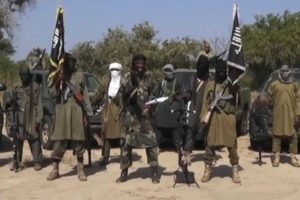
Armed Bandits suspected to be cattle rustlers have killed two policemen and a civilian in the Maigana District of Soba Local Government Area of Kaduna State, northwestern Nigeria.

Channel Television reported that the incident occurred early morning on Friday when the policemen engaged the bandits, who have been terrorizing communities in the region, in a gun battle.

Confirming the incident, the Kaduna State Commissioner of Police, Agyole Abeh, said the policemen were on a routine patrol in the area when they were ambushed by the gunmen who opened fire on them.

According to him, the two officers and the civilian lost their lives before they could be rushed to the hospital, adding that, some of the gunmen escaped into the bush with bullet wounds.

122 Countries Adopt Global Treaty Banning Nuclear Weapons

0

A global treaty banning nuclear weapons was adopted at the United Nations on Friday despite opposition from the United States, Britain, France and other nuclear powers that boycotted negotiations.

The treaty was adopted by a vote of 122 in favour with one country — NATO member The Netherlands voting against —while Singapore abstained.

Loud applause and cheers broke out in the UN conference hall following the vote that capped three weeks of negotiations on the text providing for a total ban on developing, stockpiling or threatening to use nuclear weapons.

Nuclear-armed states have dismissed the ban as unrealistic, arguing it will have no impact on reducing the global stockpile of 15,000 atomic weapons.

“Is there anyone that believes that North Korea would agree to a ban on nuclear weapons?” asked US Ambassador Nikki Haley when negotiations began in March. “There is nothing I want more for my family than a world with no nuclear weapons, but we have to be realistic.”

But supporters hailed a historic achievement.

“We have managed to sow the first seeds of a world free of nuclear weapons,” said Costa Rica’s ambassador, Elayne Whyte Gomez, the president of the UN conference that negotiated the treaty.

None of the nine countries that possess nuclear weapons — the United States, Russia, Britain, China, France, India, Pakistan, North Korea and Israel — took part in the negotiations or the vote.Led by Austria, Brazil, Mexico, South Africa and New Zealand, 141 countries joined in drafting the treaty that they hope will increase pressure on nuclear states to take disarmament more seriously.

Even Japan — the only country to have suffered atomic attacks, in 1945 — boycotted the talks as did most NATO countries.

Nuclear powers argue their arsenals serve as a deterrent against a nuclear attack and say they remain committed to the nuclear Non-Proliferation Treaty (NPT).

The decades-old NPT seeks to prevent the spread of atomic weapons but also puts the onus on nuclear states to reduce their stockpiles.

Impatience however is growing among many non-nuclear states over the slow pace of disarmament as are worries that weapons of mass destruction will fall into the wrong hands.

Disarmament campaigners say the treaty will go a long way in increasing the stigma associated with nuclear weapons and will have an impact on public opinion.

Culled from Hindustan Times

Lassa Fever: One Student Died In Plateau, Three Others Affected

0

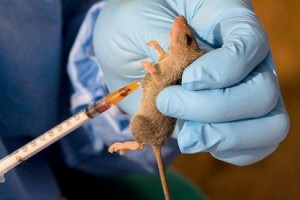
One student of the Federal Government Girls’ College, Lantang in Plateau State – north-central Nigeria has been confirmed dead following a fresh outbreak of Lassa fever in the institution.

The case is the first to be in the state.

According to Punch, out of the four students that were tested for the disease, results of three were positive while the fourth who died was buried on Friday.

Plateau state Commissioner for Health, Dr. Kamshak Kudeng, while confirming the outbreak, assured that a team of Doctors would be sent to Lantang community check the spread of the disease.

He said those who came in contact with affected students, including Doctors and Nurses who attended to them at Jos University Teaching Hospital would be placed on 21-day surveillance.

12 Most Dangerous Countries In The World – Nigeria, Kenya Inclusive

0

El Salvador has been named as the least safe and secure country in the world, according to a report by the World Economic Forum.

The epicentre of central America’s gang crisis, it has one of the highest crime rates in the world, and last year became the most deadly country outside a warzone after its murder rate soared to 104 per 100,000 citizens.

Latin American countries dominate the list, with Honduras, Guatemala and Mexico suffering from similar gang-related issues to El Salvador, and Colombia and Venezuela also included in the top 10.

Four African countries rank among the most dangerous, including Kenya, Nigeria and Egypt, who are struggling with active Islamist insurgencies on their fringes.

And the top 12 is completed by Yemen in the Middle East and Pakistan, which continues to battle the Taliban.

The list makes up part of the WEF’s Global Competitiveness Report 2016/17, which ranks 138 countries based on a broad range of factors to assess their relative productivity and prosperity.

As such, countries like Syria, Iraq and South Sudan do not appear on the list at all, because they have been so ravaged by war that they no longer have functioning economies.

Finland ranked top of all countries for security, followed by the United Arab Emirates, Iceland and Rwanda, a country which has undergone a remarkable transformation since the 1994 genocide.

The UK ranks 34th for security in the list, sandwiched between Bahrain above and Malta below, and some way ahead of Germany in 58th.

The US ranks 60th, France is down in 62nd, and the lowest European country is Ukraine, in 123rd.

Klaus Schwab, the founder of the WEF, said on the release of the report at the end of last month that the world had undergone a 10-year fall in openness, seen across a range of factors, which was damaging the world’s ability to innovate and grow “at all stages of development”.

“Declining openness in the global economy is harming competitiveness and making it harder for leaders to drive sustainable, inclusive growth,” he said.

Culled from Independent.co.uk

Currency Exchange Rates

USD - United States Dollar
ZAR
0.06
EUR
1.17
CAD
0.73
ILS
0.31
INR
0.01
GBP
1.34
CNY
0.14
Enable Notifications OK No thanks