Members of Association of Mega Filling Station Owners of Nigeria, AMFSON, have concluded plans to embark on peaceful protest to shut down headquarters of Nigerian National Petroleum Corporation (NNPC) in Abuja.
The filling station owners, had in a letter addressed to the Group Managing Director, GMD, of NNPC, Maikanti Baru, notified him of their intention to embark on the protest.
The letter which was made available to journalists in Kaduna Sunday, said the mass protest has become necessary in view of alleged, “Persistent and gross abuse of office by top management staff of the NNPC Retail limited vis-a-vis the terms of engagement with our members.”
The letter dated July 11, signed by the National Secretary of the association, Kenneth Nwachukwu, explained that the alleged abuse of office had inflicted untold hardship on its members and the general public.
It also copied Minister of State for Petroleum Resources, Emmanuel Ibe Kachikwu for his information and necessary action.
“We have hereby resolved to embark on a peaceful pubic protest.
“We have finally resolved to explore this process of public protest to further drive home our points with the hope of bringing the issue to the attention of both the authorities and the general public.
“The protest is scheduled to take place next month in Abuja at the Eagle Square through the federal secretariat complex to the NNPC Towers.
“We consider it necessary embarking on this action due to the fact that we have already exhausted all peaceful reconciliatory means.
“We have taken several diplomatic measures to ensure that we resolve the problem amicably but it has always proved abortive.
“This can only be attributed to the attitude of these officials in collaboration with the Head of the Downstream.
“You will recall that we even wrote to you on at least three occasions seeking for audience in order to intimate you on our ordeal but we only got a response once.
“That was an invitation to meet with the Chief Operating Officer (COO), Downstream, and even then, after allowing our members to travel down to Abuja for the meeting from different parts of the country, he wilfully absented himself without any form of apology.
“Our members felt greatly humiliated during that incident,” the letter explained.
Nigerian Police in Katsina on Sunday released a northern Nigeria based journalist, Danjuma Katsina, arrested Saturday night over a post on a Facebook page he runs — Katsina City News.
The police did not issue a statement on the journalist’s arrest. But a top ranking police official told an official of the Nigerian Guild Of Editors, official, NGE that Danjuma was arrested following a petition by a member of Katsina State House of Assembly.
According to the police, the journalist was picked up over complaints by a lawmaker alleging an injurious publication.
Despite the pressure on the police by the official, the journalist was kept in detention overnight.
The persistent NGE pressure yielded some fruits as Danjuma regained his freedom from police cell on Sunday Morning.
He is expected to report to the police on Monday along with the lawmaker, NGE official who mounted pressure for the journalist’s release disclosed.
The latest move by the NGE appears to be an indication of a fresh wave of activism by the officials in the face of growing dangers faced by journalists in northern Nigeria and the country as a whole.
Last week, the Nigeria Union of Journalists (NUJ) headquarters issued a warning to Governor Naisr El-Rufai of Kaduna state, also in northern Nigeria, for his intolerance and jailing of journalists over stories, which the governor feels uncomfortable about.
The press freedom index for Nigeria, as measured by the committee to protect journalists (CPJ), dropped six places in the last two years, over growing intolerance of journalists by northern Nigeria governors, especially Kaduna state, where five people, including journalists have been picked and remanded in custody by government and security agencies.
Israeli Prime Minister Benjamin Netanyahu is in Paris to commemorate the victims of a mass arrest of Jews in Nazi-occupied France in 1942.
More than 13,000 Jews were rounded up and detained at a cycling stadium, the Velodrome d’Hiver, before being deported to Nazi death camps.
Mr Netanyahu also held direct talks for the first time with French President Emmanuel Macron.
He is the first Israeli prime minister to attend the Vel d’Hiv commemorations.
“I’m here to mourn the victims,” Mr Netanyahu told an audience in Paris, which included Jewish groups and Holocaust survivors.
“Seventy-five years ago, a heavy darkness descended on this city… It seems the values of the French revolution – equality, fraternity, liberty – was crushed brutally under the boot of anti-Semitism.”
He hailed the “great, great human beings” who had risked their lives to save Jews in France during Nazi occupation, and warned of a rise in “extremist forces” in modern society.
What was the Vel d’Hiv round-up?
More than 13,000 Jews were arrested by French police on 16 and 17 July 1942. About 4,000 were children.
The families were taken to the Velodrome D’Hiver, a cycling stadium near the Eiffel Tower, or an internment camp set up just outside the capital at Drancy.
They were then deported by train, mostly to Auschwitz concentration camp. Fewer than 100 people survived.
What was interesting about Mr Macron’s comments on the tragedy?
The episode remains controversial in France. Marine Le Pen, Mr Macron’s far-right opponent in this year’s election, drew strong criticism on 9 April when she suggested France was not responsible for the tragedy.
But speaking at the ceremony on Sunday, President Macron reaffirmed that “it was France that organised” the mass arrest, deportations and therefore “the death of 13,152 people of Jewish faith”.
“Not a single German” took part, he said.
What else did the leaders discuss in their talks?
After the ceremony, Mr Netanyahu and Mr Macron met for direct discussions on subjects including security and the fight against extremism.
Mr Netanyahu’s last official visit to France was to attend the unity march following the attacks on satirical magazine Charlie Hebdo, police officers, and a kosher supermarket in January 2015.
On Sunday Mr Netanyahu said he would like to see greater cooperation between the two countries and “expressed his concerns about the Iranian regime”.
At a joint news conference, Mr Macron assured his visitor of his “vigilance” regarding the nuclear accord reached by Western powers with Iran in 2015.
Calling for a resumption of peace talks between Israel and the Palestinians, he reiterated France’s support for a two-state solution and opposition to Israel’s building of settlements in occupied territory.
President Macron met Palestinian leader Mahmoud Abbas in Paris earlier this month.
What’s happening in the Israel-Palestinian conflict?
The meeting with Mr Netanyahu comes amid concerns of another increase in violence.
Two Israeli policemen were killed and a third wounded by three Israeli Arabs in a gun attack close to the compound in Jerusalem known to Jews as the Temple Mount and to Muslims as Haram al-Sharif on Friday. The attackers were later killed by security forces.
The holy site was closed after shooting but it reopened on Sunday.
Israel and the Palestinians have not held peace talks for three years.
Even from his detention facility, incarcerated former National Security Adviser(NSA), Col. Sambo Dasuki (rtd), has spoken highly of the prompt intervention of the regime of President Goodluck Jonathan in tackling the Boko-Haram menace and recovering dozens of towns and villages which led to the smooth conduct of 2015 general elections in the North-Eastern part of Nigeria.
Dasuki stated this in his foreword to a 308-page new book titled: “Boko Haram Media War- An Encounter with the Spymaster” written by Yushau A. Shuaib.
“In the war-front are evident success stories which Shuaib has mentioned in some of the articles that featured in this book, especially on media relations, self-censorship, gallantry in recovering dozens of cities and towns among other declassified revelations,” he said.
Dasuki said: “In fact, without our intervention in ensuring the defeat of Boko Haram, the electorates could not have had the opportunity to exercise their franchise. It is a fact that we provided peace and stability that afforded Nigerians, especially in the North-East in voting for their governors, legislators and others in the 2015 elections.”
He noted that apart from the Soft Approach Programme initiated for countering terrorism through de-radicalization without the use of force, the administration also introduced and implemented programmes for economic empowerment, education, communication, rehabilitation and counselling in the North-East.
According to the former National Security Adviser, “Crisis Communication, as one of the components of general campaigns, was initiated to win the heart of the citizens, boost the morale of the troops and weaken the fighting spirit of the terrorists.”
He said: “On the media campaign, Yushau Shuaib who came highly recommended had been disengaged from the public service but was immediately re-engaged by the system to act as Chief Consultant on Crisis Communication. From the theories of Mass Communication, we deployed practical aspects of Crisis Communication throughout the Campaign period, especially between June 2013 to May 2015”.
He posited that Sensitive security issues were handled in a most professional manner, with strict adherence to confidentiality to avoid compromising national security.
He further said that “In strategic communication for crisis management, especially in confronting the Boko Haram, the media was a major tool in the campaign against the insurgency. There was thorough, timely and responsible reportage of the campaign. Some of the media played very strategic roles at great risk to their lives in the successes recorded, especially by our forces in the war against terrorism”.
He said as part of efforts in ensuring the mutual relationship with the media stakeholders, a 17member Forum of the Spokespersons of Security and Response Agencies (FOSSRA) was established with representatives from the military, security, intelligence and response agencies, adding that through the media component of the War on Terror, which Yushau Shuaib and his team carried out various activities including issuance over 3000 media contents including newsworthy items and publications, exclusive News placements and Editorial control of sensitive reports, hosting of timely and regular Press Briefings, Social Media engagements and Production of specialized Publications amongst others.
Dasuki stated that while Shuaib’s narration covers only one of the great strides in the media campaigns, he appealed to media practitioners to embrace the challenge to examine other areas of the interventions such as the Soft-Approach Programmes, Strategic Alliances and Military Operations that the erstwhile regime carried out successfully.
He commended the author for his courage and boldness in the face of the current situations in the country and for his principle and consistency in stating the obvious and indeed the facts in the book.
Yushau Shuaib is an award-winning Public Relations professional whose stock-in-trade is nothing else, but writing. Meanwhile, in 2013 he ran into trouble over one of his writings and was compulsorily retired from the public service when a cabinet minister lodged a complaint.
After his unceremonious exit from the public service, a presidential adviser hired him to serve as a consultant on strategic communication to security agencies in Nigeria.
Four years in his compulsory retirement, Shuaib has published over 50 articles and assisted many organisations in crisis communication strategies. His professional initiatives and platforms have garnered recognitions and commendations.
They include, but not limited to the African Excellence Award for the best PR Platform in Africa, SABRE Award on Public Affairs hosted by African Public Relations Association (APRA) and Golden World Award (GWA) on Crisis Management from International Public Relations Association (IPRA).
The book provides a first-hand information on the politics behind the author’s premature retirement from the Federal Public Service and his strategic re-engagement by the system in serving the same government as a consultant.
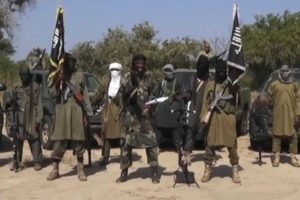
Boko Haram members have strapped two fulani boys, Gambo Bukar and Umar Bukar, of Dalti village in Jere LGA, in Borno state, who went out with cow for grazing.
Reports say the incidence occurred Saturday at about 10 am.
The boys, Gambo and Umar, 10 years and 8yrs respectively, were said to come in contact with Boko Haram terrorists at Baram and Tamsongamdu villages in Mafa LGA.
Gambo Bukar was strapped with IED vest and set free.
They returned home at about 4pm of same day, but failed to disclose their encounter with the terrorists.
In the process of unstrapping the vest, the IED exploded killing Gambo Bukar, while Umar Bukar sustained injuries and was hospitalized.
Police have visited the scene and the area is rendered safe. Normalcy has since been restored to the area.
Gombe (Nigeria) — Tangale Community Development Association (TCDA), Youth Wing has accused Gombe State government in northeast Nigeria for inaction over the lingering crisis of 26 years in the areas in the state.
Caretaker chairman of TCDA, Youth Wing, Mr. Maikwada Maikenti made the accusation at a press briefing in Billiri town on Sunday, saying the state government has failed to implement various committee reports on the demarcation of traditional boundary between Tangale and Kaltungo chiefdoms.
The Tangale youth said, lack of political will on part of state government to implement various recommendations on boundary issues dating back to 1960, is basis for continued crisis between the Tangale and Shongom speaking people.
This, according to the youth has led to the loss of several lives, as well as the destruction of property worth millions of naira.
They cited the late Shehu Awak Committee recommendations, the late Justice Suleiman Darazo’s Board of Inquiry Report of 1991 and the establishment and composition of the State Boundary Committee as provided by the National Boundary Commission Act, as sufficient to put an end to the lingering crisis, but for which the government failed to implement.
The TCDA Youth Wing therefore called on the state government and their political representatives to immediately demand that the National Boundary Commission in conjunction with the Gombe State Boundary Committee, “to without further delay, commence the physical implementation of the said boundary report in the interest of peace” in the area.
They also demanded that adequate compensation for the internally displaced persons of the recent attacks should be imposed on both Shongom and Kaltungo LGAs “from their purse to avoid further occurrence.”
While appreciating the Tangale paramount traditional ruler, the ‘Mai Tangle’, Abdu Buba Maisheru, as well as the chairman of Billiri local government area for their calls on the youth to remain calm and not to retaliate, the Tangale youth want government to arrest and punish anyone found wanting.
In June and July this year, farmers of Kumana village in Kufai community of Billiri local council area were chased away from their farms, before the community was attacked the following day, leading to the burning down of over 41 houses in Kufai and Kentenkereng.
A police sergeant also lost his life in the crisis.
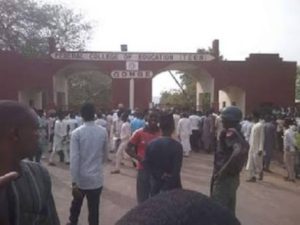
Gombe (Nigeria) — Management of Federal College of Education (Technical) Gombe in northeast Nigeria, says it is invoking the no work, no pay policy in response to the indefinite strike action embarked upon by lecturers of the college.
This was contained in a statement issued Sunday by Ibrahim Shehu, Director, Establishment and Council Affairs on behalf of the registrar of the college and made available to AFRICA PRIME NEWS in Gombe.
The statement describes the strike action embarked upon by lecturers of the college, under the College of Education Academic Staff Union (COEASU) as uncalled for, adding that the management of the college has no option but to apply the policy in line with directives of the Nigerian government.
The management of the college has accused the lecturers of insensitivity to its constraints, especially with the prevailing financial situation in the country.
In the statement, Shehu explains that the crisis leading to the indefinite strike began shortly after the present executive of COEASU were inaugurated in April this year.
He said that precisely on April 19, 2017, the union spproached the college management with some demands which include the isssue of salary shortfalls from February to date, outstanding payment of Peculiar Academic Allowance (PAA) arrears and inclusion of same in their monthly salaries among others.
“The college management informed COEASU that the college finances cannot accomodate their demands at the moment. However, one month PPA and 25 percent of the Conference Attendance Allowance (CAA) were paid to the academic staff. It was agreed that when the federal government releases the funds for 2015 promotion arrears and salary shortfalls, these would be paid without delay,” the statement added.
Shehu added that barely a month after, fCOEASU wrote the management requesting for the payment of the balance of 50 percent of the CAA, PAA as well as the shortfalls in salaries and 2015 promotion arrears.
He said to that end, the college management set up a committee to negotiate with COEASU but could not reach conclusive agreement as the lecturers insisted that they must be paid the balance of the PAA and atleast one month of the CAA despite the financial constraint faced by the college.
The statement further explained that the college governing council, in its inaugural meeting held on June 20, 2017, met with COEASU and made an offer to pay 25 percent of the CAA for 2016/2017 session.
“COEASU decided to embark on three days warning strike beginning from Wednesday, July 5, to Friday, July 7. On the expiration of the 3 days warning strike, COEASU declared an indefinite strike with effect from Tuesday, July 11, 2017,” it said.
In reaction to news report suggesting that lecturers at the college are demanding for the sack of the provost and bursar, Shehu in the statement says, the matter was never discussed at any time with COEASU either at council, management or COEASU congress.
The management further denies that the college was investigated by any panel, stressing that claims by COEASU that the bursar of the institution was indicted by a panel “is a figment of their imagination.”
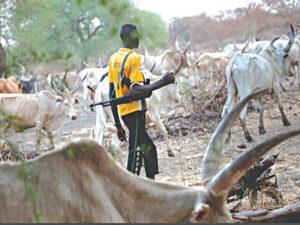
Miyetti Allah Cattle Breeders Association of Nigeria, MACBAN, has expressed dismay that the porous nature of Nigerian borders is responsible for the free entry and exit of the foreign killer fulani herdsmen attacking parts of Nigeria.
The association noted with concern that something urgent need to be done to arrest the ugly situation before it develop to a different thing in the country.
Addressing newsmen in Kaduna, Saturday, MACBAN Assistant National Secretary General, Ibrahim Abdullahi, said, “In Nigeria, our borders are porous, people come in anytime and go out anytime they want, infact it is a shameful thing today that we don’t even know those that are indigenous Fulanis or the trans-human Fulanis.
“We don’t know and that is why people mixed things up, you begin to suspect the Fulani man that you grew up with when anything happens. He has not traveled far where did he get the AK 47.
“It is either Nigeria opts out of the ECOWAS protocol or we should apply the conditions. We should ensure that anybody coming into the country, we know when he is coming, where he is going and control what they are coming with.
“Another problem we have that you people don’t know is that, these migratory Fulanis that come into the country with all forms of weapons, many at times they come in with less than 50 cattle, but when going back they go with thousand cattle rustled from our own Fulanis here. So our economy is also affected.
“One other issue we need to know again is that, some of these countries that Fulanis come from in Africa have crises, like Chad or central African Republic were there is rebellion. Weapons have become like pure water or bread, so people from there see it as normal to hang AK 47.
“So it is left for the government to do the right thing, let us decide who comes in because it is our country, let us decide the terms for the person coming, let us not because of ECOWAS protocol leave everything to fate, that is not going to help us.
“The truth is that that when you go to your village today you will see Fulanis that have been there since, apart from the knife and the stick that they have and maybe Dane gun for hunting they don’t have AK 47. The truth is that these people coming from other countries we have to control them.”
Abdullahi who was addressing the press on the alleged killings of four of their members by Kadara and Gwari communities in Kajuru local government areas of Kaduna state said, a kidnap incident took place in the area allegedly by Fulani herdsmen, but instead of trying to get to the root of the matter the communities descended on the nearest Fulani community, a development he said was not good enough.
According to him the communities, federal and state governments need to do a lot to stem the tide of violence.
He insisted that there was need for people to understand the different types of Fulanis, saying, Fulanis are categorized into three, one you have the settled Fulanis every part of the north you have Fulanis that are indigenous to that area. Then you have the semi settled Fulanis, they move but the movement is not constant and is not very far.
“Then you have the trans human Fulanis, those that are constantly on the move and they can also be categorized into two, some of them are Nigerians, some are foreigners from our neighboring countries like Cameroun, Chad and even Niger. Those Fulanis are constantly on the move and there is a law that provides for that movement.
The ECOWAS protocol on nomadic transhuman movement, the unfortunate thing is that all the signatories to those protocols, there are conditions governing people entering into your country or going out of your country.
“If you are to move from Niger to Nigeria, at the border there must be what we called control post, Benin Republic here they have a control post with Custom, SSS immigration and other related agencies, so that you don’t come into that country with sophisticated weapons or anything that is considered contraband to that country, they check that.
“Also you must ensure that your animals are vaccinated from all other killer diseases so that you don’t go into the country and infect their animals and so on.
“There is also the Gambian approach, Gambia is a signatory to this protocol, but anybody from any part of West Africa who want to go into Gambia to graze his animals, his home country must write officially to the Gambian government telling them that due to drought or dry season or any other reason we want to come into your country for grazing, you will tell them the number of animals you are coming with and the route you want to come in through.
“At the border you meet the officials and do the necessary checks and then agree that you will not come in with weapons because the Gambian security system will protect you,” he explained.

 Members of Association of Mega Filling Station Owners of Nigeria, AMFSON, have concluded plans to embark on peaceful protest to shut down headquarters of Nigerian National Petroleum Corporation (NNPC) in Abuja.