Home Blog Page 1505

Nigeria: Malnutrition Cases On The Rise In Gombe Due To Non Release Of Funds

0

By Auwal Mohammed

Gombe (Nigeria) — Northern Nigeria has been described as the most affected with malnutrition in Nigeria. According to NDHS 2013 report, malnutrition is more critical in North West and North East with a global acute malnutrition prevalence of 13 and 12 per cent respectively.

The other four zones in the country, according to the report, have  global acute malnutrition prevalence were all below 5 per cent, and severe acute malnutrition below 2 per cent.

The creation of community Management of Acute Malnutrition, CMAM, in eighteen Health centres in four local government areas of Nafada, Dukku, Gombe and Kaltungo of Gombe State, northeast Nigeria in 2009 has contributed immensely to the fight against malnutrition where women advocate to one another to engage themselves with CMAM.

Our investigation revealed that non released of funds by the state government to the all line ministries, agencies and Departments for malnutrition treatment has made the situation very alarming.

During a visit to some of the community Management of Acute Malnutrition, CMAM, apart from poor equipments, there was total absence of trained health workers such as Midwives, Nurses and Doctors to handle critical and emergency cases.

The approved budget in 2016 and 2017, allocated to the health sector is grossly inadequate. From 2016 analyses, the percentage allocated to health was 9.7 per cent. This was grossly inadequate, looking at the growth rate of 3.2 per cent and the influx of internally displaced persons in the state.

Findings revealed that Gombe State is doing very poorly in the area of exclusive breast feeding, whereby mothers give only breast milk to children in the first six months, with statistics showing that only eight per cent of children in the state are exclusively breast fed.

Exclusive breastfeeding for children from birth to eighteen or twenty four months is important because it contains all the nutrients needed by a child as the intestine is not strong enough for any other substance.

Detailed statistics released by the Gombe State Nutrition Officer, Suleiman Mamman, revealed that from January to December 2016, a total of 13,059 children (6,483 male and 6,570 females) aged 6 – 59 months were admitted out of which 11,031 were treated, 833 defaulted, 149 non-recovered and 105 died.

Mamman said, from January to June this year, 6,330 malnourished children were admitted, 4,470 treated, 25 deaths while 101 defaulted, their major challenge was the inability to go round and monitor health centres operating CMAM programmes.

He explained that transporting of RUTF to CMAM centres in operating local government areas, as well as manpower on nutrition programme were part of the challenges.

Speaking to Journalists, the Chairman, Gombe State Primary Health Care Development Agency, GSPHCDA, Yahya Hammari, urged the State government to increase its budgetary allocation to the health sector, in order to ensure proper development of the state.

He enjoined the government to ensure timely release of all budgetary allocations so as to improve the health indices of the state, especially in relation to Malnutrition, family Planning and maternal, newborn and adolescent health.

He said the government needed to make health its top priority, stressing that the population cannot adequately exploit the opportunities provided by education or develop meaningfully without being in the right frame of mind.

The Chairman further drew the government’s attention to do the right thing now that most of the international donors, which make up for some of the lapses in the health sector were at the verge of leaving the country.

Some of the development partners who spoke to our correspondent urged the State government to release funds allocated for food and nutrition in this year’s budget, to reduce the increasing rate of malnutrition in the state.

Dr. Raymond Dankoli of the World Health Organisation, Gombe office, said, nutrition programme or provision of food was not part of their mandate in the state, but provide support for supervision through immunization.

He said malnutrition was on the increase and the government needed to do more to tackle the menace in the state.

Also speaking, the State UNICEF Nutrition Consultant, Olufumilayo Adebambo, said, UNICEF, in collaboration with the state government, provided the Ready to use Therapeutic Foods, RUTF, since the commencement of the nutrition programme in the state in 2009.

She added that last year, the state government provided 17 million naira as counterpart funding and UNICEF put 83 million naira for the purchase of the Ready to use Therapeutic Foods RUTF in the state.

Also, the State Programme Manager of Save the Children International, Altine Lewi, advocated for the scaling up of the nutrition programme to the remaining seven local government areas of the state and the need to increase in budgetary allocation for nutrition from one hundred and twenty million naira budgeted this year.

She added that the creation of budget allocation and timely release of funds to some key ministries and agencies of the state to fight against the disease would reduce the spread of the scourge.

The Permanent Secretary, Gombe State Ministry of Economic Planning, Mr. Steven Ayuba, said the ministry had a budget line on nutrition for the last four years, with some funds being allocated but was fluctuating due to some challenges which from last year they try to address.

All the Coordinating Ministries and Agencies in the aspect of Nutrition in the State decried non-release of funds budgeted for nutrition activities as the major issue affecting the treatment of the disease in the state.

Other factors include non-inclusion of nutrition intervention funds to coordinating ministries and agencies, refusal to scale up the programme in the remaining seven local government areas of the state, lack of sensitization and awareness.

Others are  poverty and cultural beliefs, as well as non-improvement on the Community Infant and Young Child Feeding.

Investigations revealed that the Gombe State government in 2009 played a key role in supplying routine drugs in ensuring the fight against malnutrition before declining in 2012 to date.

Nigeria: Kaduna State In Deficit Of 25,000 Teachers, N93bn Worth Infrastructure Deficit

0
Nasir-el-Rufai
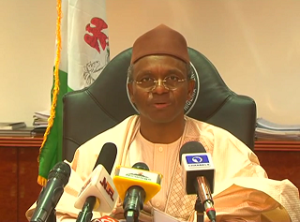
Governor of Kaduna State, Nasir-el-Rufai

By Amos Tauna

The Executive Chairman, Kaduna State Universal Basic Education Board, SUBEB, Nasiru Umar, says the state has a deficit of about 25,000 teachers based on the current primary school enrolments.

He added that N93 billion is needed to address infrastructural deficit in the state’s primary schools.

Speaking when the National Assembly Committee on Basic Education, led by Istifanus Gyang, visited the board as part of its oversight function, he said that the figure was based on the survey conducted in 2014 to ascertain the level of infrastructural decay in the basic education sector.

He said that 3,000 classrooms were overstretched by the current 2.2 million enrolments in primary schools with only 37,004 teachers.

Mr. Umar explained that in some schools, particularly in the urban areas, teacher/student ratio was a teacher to over 200 pupils, in contrast to a teacher to 40, or 50 pupil ratio in rural areas.

He said the state accessed N2.8 billion from the 2013 to 2015 Universal Basic Education Commission capital grant.

“The projects for 2013 were 100 per cent executed; 2014 is ongoing, while contracts for 2015 capital projects will soon be awarded.

“Contract for the provision of school chairs is already about 60 per cent completed.

“So far, in the basic education, more than N9.6 billion was spent on school renovation, provision of furniture, teachers training and other basic infrastructure during the emergency period.”

He also said that the state government had in 2015, declared a state of emergency in the education sector to address the decay in the sector.

Earlier, Mr. Gyang explained that the purpose of the committee’s visit was to assess the utilisation of UBEC intervention funds as appropriated by the National Assembly.

“We are here to see how Kaduna State has fared in terms of accessing UBEC funds and how such funds have been utilized.

“This is to ensure that every kobo appropriated is well utilized to improve the standard of basic education in the country.

“We would, therefore, carry out on-the-spot visit to schools to assess the level of performance in the implementation of UBEC capital grant in the state.

“We want to see what has been done and what needs to be done to address the poor state of education in the country, particularly basic education,” Gyang said.

During interactive session, some of the committee members sought to know why the funds for the 2015/2016 capital projects had not been utilized.

Responding, Mr Sunday Madaki, the Director, Physical and Project Monitoring Department of the board, explained that the government was constrained by lack of space to provide adequate structures that could accommodate all pupils.

He further said that government had decided to construct storey buildings and that the contracts would soon be awarded.

Nigerian Islamic Group Condemns Killing of Rohingya Muslims in Myanmar

0
By Auwal Mohammed
Gombe (Nigeria) — Da’awah Coordination Council of Nigeria (DCCN) has condemned the killing of Rohingya Muslims in Myanmar.
This was contain in a press statement signed by Ahmad Yakubu Jumba Secretary General of the organization and made available to AFRICA PRIME NEWS in Gombe northeast Nigeria.
The statement, incident is far more harrowing and scandalizing is the criminal silence of the international community over the genocidal attacks on the helpless Muslims of Myanmar.
” Even the international media is maintaining a felonious muteness while the cleansing goes on under a suffocating ambience of impunity.
“If the Muslims were the supposed culprits here, the same international media would have been a washed with endless streams of condemnation of this mindless killings.
DCCN also observed that the silence of the international community and media is not just betoken of knavery, but indicative of the fact that the blood of Muslims is not worth even the earth upon which it is shed. People are more likely to rise in protest over the killing of mosquitoes, than worry over the criminal decimation of the Muslims in Burma.
“This bloodshed must stop. The international community, particularly the United Nations and the international criminal court must raise to condemn the senseless killings going in Burma. In addition, the leaders and those behind this genocide against an innocent and peace loving Muslims of Burma must be brought to trial for crimes against humanity.
DCCN further calls on the international community to mobilize help and support for the suffering Muslims in Myanmar.
” Let the world show them some love and sense of humanity may the Almighty Creator come to the rescue of the suffering Muslims in Burma and everywhere in the globe.
“The soul of humanity is bleeding with our silence. Let the world act to end this impunity and restore hopes to the already despondent Muslims of Burma.

Nigerian President’s Committee Distributes Relief Items To IDPs In Gombe

0
Map of Nigeria showing Gombe State

By Auwal Mohammed,

Gombe (Nigeria) — Presidential Committee on North East Initiative (PCNI), has handed over relief materials to a Committee for distribution to Internally Displaced Persons (IDPs) and people affected by July floods in Gombe State northeast Nigeria with mandate to ensure equitable distribution of the relief materials.

Chairman of the Committee Lt. Gen T.Y Danjuma (rtd) who was represented by the former Gombe State University Registrar, Aliyu Kamara, disclosed this to journalists on Thursday, saying the Chairman ordered immediate distribution of the relief materials to IDPs .

According to Mr. Kamara, the committee comprise officials of the National Emergency Management Agency (NEMA), Gombe State Emergency Management Agency (SEMA), the Red Cross Society as well as local and international non-governmental organizations for onward distribution to affected individuals and communities.

Receiving the materials on behalf of the committee, Danlami Rukuje, Executive Secretary of SEMA, said the materials, which comprises food, and non food items would be distributed among IDPs, victims of recent floods and host communities.

“In our wisdom, we decided what to give to individual beneficiaries based on their immediate needs. For instance, we will give host communities building materials while the IDPs will be given food and other relevant materials,” he said.

Details of the relief materials consisting of 25 different items include 2000 bags of rice, millet, maize, 1, 500 bags of sugar, 1000 pieces of roofing sheets, plastic plates, spoons, bucket, wax print, packet of pampers, blankets and brocade materials.

Others are, 1000 gallons of vegetable oil, 1000 cartons of noodles, 1, 500 bags of beans, 1000 pieces of nylon mat, 400 pieces of mattresses, and 1000 pieces of ceiling boards among others.

PR firm Bell Pottinger ‘nearing collapse’

0
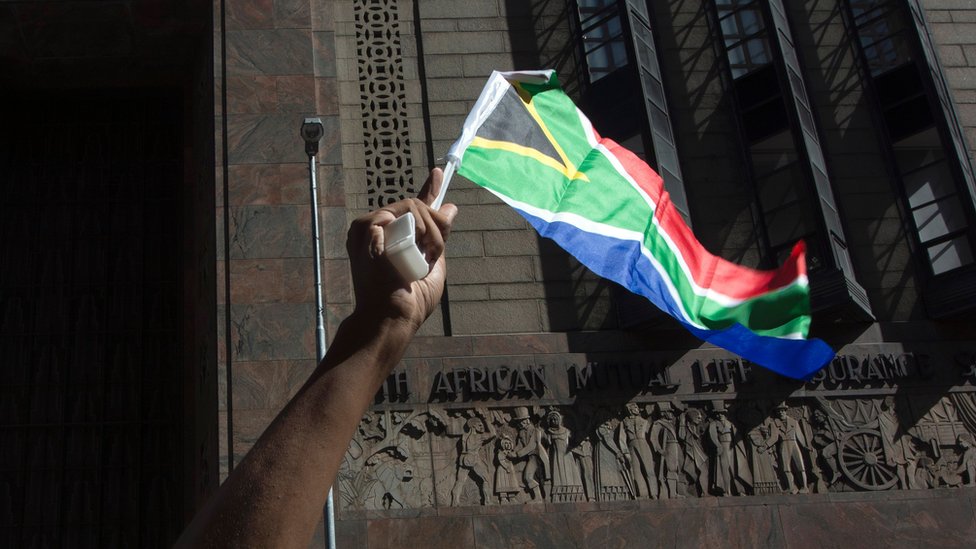
South African flagImage copyright Getty Images
Image caption Bell Pottinger’s troubles began with a controversial South African campaign

Bell Pottinger’s Asian unit has said it will separate from its British parent, amid reports the public relations firm is nearing collapse.

Bell Pottinger’s UK business is expected to go into administration as early as next week, the firm said.

The Asian business will begin trading under a new name “in the coming days”.

The PR firm was expelled from the industry trade body after being accused of stirring up racial hatred in South Africa.

The company’s Asian business is seeking to distance itself from the scandal.

“The Asia business is entirely ringfenced and solvent,” Asia Chief Executive Ang Shih Huei said in a statement sent to clients on Friday seen by the BBC. “Our teams are intact, we continue to serve our clients and it is entirely business as usual.”

Bell Pottinger Asia said it would soon re-launch with a new ownership structure and operate under the name Klareco Communications.

Nearing collapse

Late on Thursday an announcement was made to UK staff saying the firm could go into administration next week, according to the Financial Times and other media outlets.

The meeting was attended by a representative of accountants BDO, hired to advise on a potential sale, reports said.

However, BDO did not respond to a BBC request for a comment.

The company’s founder, Lord Bell, who resigned last year, has admitted to the BBC that it is probably “near the end”.

Risk-takers

A string of big names have already cut ties with the firm since it was expelled from the Public Relations and Communications Association earlier this week.

The company’s work on the campaign for Oakbay Capital, a South African company owned by the wealthy Gupta family, was accused of inciting racial hatred.

Bell Pottinger and its founder, Lord Bell, have a reputation in the PR industry for taking risks.

The firm represented the South African Olympic athlete Oscar Pistorious after he was charged with murder.

Belarusian dictator Alexander Lukashenko has used the firm’s services, as well as Syria’s first lady Asma al-Assad.

In the late 1990s the PR firm worked on a campaign to release the former Chilean dictator, General Pinochet, who had been arrested in London on a warrant from Spain requesting his extradition on murder charges.

Lord Bell, who founded Bell Pottinger in the 1990s, resigned last year, partly due to his unease with the company’s deal with the Guptas.

When asked on BBC2’s Newsnight this week if he thought the PR company would survive the scandal, he replied: “I think it is probably getting near the end.”

This story is auto-generated from ‘BBC News’ syndicated feed and has not been edited by Africa Prime News staff.

Prosecco v champagne: Which one tastes better?

0

As prosecco is now outselling champagne in the UK, the BBC asked fans of the Italian sparkling wine to taste test it against champagne in a Manchester bar. Note: This story is auto-generated from BBC syndicated feed and has not been edited by AFRICA PRIME NEWS

Boko Haram and al-Shabab recruits ‘lack religious schooling’

0
A female student stands in a burnt classroom at a school in Maiduguri, Nigeria, on 12 May 2012Image copyright AFP
Image caption Boko Haram, whose name means “Western education is forbidden”, has often attacked schools in northern Nigeria

Many young Africans drawn to extremist groups know “little to nothing” about religious texts and interpretations, a UN study has found.

The survey, the first of its kind in Africa, profiled nearly 500 voluntary recruits to militant groups including al-Shabab and Boko Haram.

Finding a job is “the most acute need at the time of joining a group,” the report finds.

It also points to government action as a “tipping point”.

Most of those surveyed reported unhappy childhoods and a lack of parental supervision.

Researchers from the UN Development Programme (UNDP) spoke to recruits in Kenya, Nigeria, Somalia, Sudan, Cameroon and Niger to compile the report.

Al-Shabab is based in Somalia but often stages attacks in Kenya, while Nigeria’s Boko Haram group has also spread to neighbouring Niger and Cameroon.

The researchers also interviewed people of similar backgrounds to those recruited, but who did not become radicalised.

Based on these sample groups, they say that receiving “at least six years of religious schooling [is] shown to reduce the likelihood of joining an extremist group by as much as 32%”.

Image copyright AFP
Image caption The UN estimates that 33,300 people in Africa have lost their lives to violent extremist attacks between 2011 and early 2016

Recruitment is “predominantly face-to-face” rather than online as outside Africa, and the report says that many recruits come from borderland areas that have “suffered generations of marginalisation”.

The killing or arrest of a family member or friend is a key trigger, according to the report, with over 70% of interviewees saying this or another form of government action was the “tipping point” before the final decision to join a militant group.

Image copyright AFP
Image caption A solider in Somalia stands guard while engineers search the area for explosives planted by al-Shabab

Intervention at a local level is the best way to prevent young people from being radicalised, the UNDP report authors say.

They suggest “community-led initiatives aimed at social cohesion” and “amplifying the voices of local religious leaders who advocate tolerance”.

“The messenger… is as important as the message,” says UNDP Africa Director Abdoulaye Mar Dieye.

“That trusted local voice is also essential to reducing the sense of marginalisation that can increase vulnerability to recruitment,” he adds.

This story is auto-generated from ‘BBC News’ syndicated feed and has not been edited by Africa Prime News staff.

Nigeria: Rejecting Corp Members On Primary Assignment Not in the Interest of Youth Development – Dalung

0
NYSC Corps Members
NYSC Corps Members in a parade formation

By Longtong Ibrahim

Nigeria’s Minister of Youth and Sports, Barrister Solomon Dalung has frowned at the incessant rejection of Corps members by government agencies, saying such rejection is not to the interest of youth development and empowerment.

Barrister Dalung stated this while reacting to the refusal of the Budget Office of the Federation to accept a Corps member from Rivers state who had been posted on primary assignment to the office in Abuja.

According to him, “Government agencies cannot reject members of the National Youths Service Corps (NYSC). It is unacceptable. Why will government agencies reject corps members? Do you pay them or is it that there is no work to be done?” he queried.

The Minister reminded Government agencies that it is a government policy not to reject corps members posted to their offices.

“The National Youth Service Corp scheme is a creation of the federal government and is intended to involve the country’s graduates in the development of the country. They are posted to states far from their states of origin intended for them to learn the culture of the indigenes in the place they are posted to. This is aimed at bringing about unity in the country and giving them an opportunity to learn about higher ideals of National achievement.”

The Minister however appealed to government agencies and private organizations to assist in absorbing Corps members so that they can be engaged positively and empowered.

Currency Exchange Rates

USD - United States Dollar
ZAR
0.06
EUR
1.17
CAD
0.73
ILS
0.31
INR
0.01
GBP
1.34
CNY
0.14
Enable Notifications OK No thanks