Equatorial Guinea has signed a memorandum of understanding with Burkina Faso to supply LNG and build critical infrastructure to import, store and transport gas.
The initial three-year agreement requires both sides to negotiate and sign an LNG sales and purchase agreement (SPA) and a terminal use agreement (TUA) that will be the basis for their first LNG exchange. The MoU also calls for Equatorial Guinea to explore and produce oil and gas in Burkina Faso.
“We are very pleased to strike this agreement and be given the opportunity to supply our African brothers in Burkina Faso with crucial gas resources,” said H.E. Gabriel Mbaga Obiang Lima, Minister of Mines and Hydrocarbons of Equatorial Guinea. “This collaboration with Burkina Faso, part of our LNG 2 Africa initiative, highlights the important responsibility of African countries to cooperate in the energy sector and build the necessary infrastructure to strengthen our economies.”
We are very pleased to strike this agreement and be given the opportunity to supply our African brothers in Burkina Faso with crucial gas resources
As part of the agreement, both sides will commission a technical study for the construction of regasification and LNG storage terminals and will exchange knowledge and data. They will also work to build regasification and storage terminals in Burkina Faso and transport infrastructure, either by pipeline or LNG carrier.
Equatorial Guinea is one of Africa’s biggest LNG producers, exporting 3.4 million tonnes per annum of LNG to destinations worldwide. It is committed to significantly expanding its export capacity through the 2.2 million tonnes per annum Fortuna FLNG project (APO.af/79wdvA), which is on track to reach final investment decision by the end of the year. When it goes online in 2020, Fortuna will be Africa’s first deepwater FLNG project.
In May, Equatorial Guinea entered into a binding agreement with the OneLNG joint venture to explore the liquefaction and commercialization of natural gas in offshore blocks O and I. Bringing online new LNG volumes will enable Equatorial Guinea to sell gas to higher priced markets in Africa and beyond while retaining a share in profits for onward marketing.
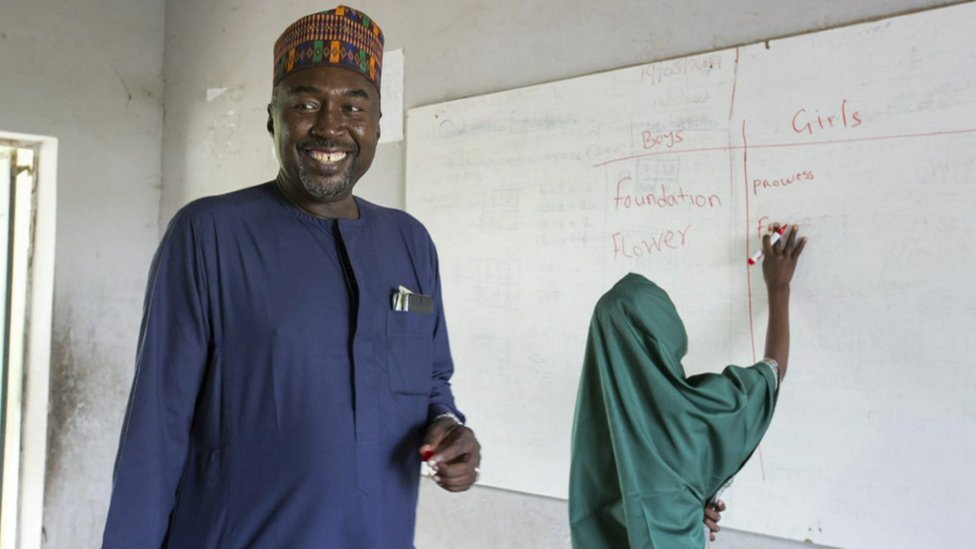
A former barrister, Mr Mustapha played a crucial role mediating between the Nigerian government and the Islamists for the release of the abducted schoolgirls.
More than 100 of the 276 girls kidnapped from their school in Chibok in 2014 are still unaccounted for, and are presumed to still be in the custody of Boko Haram.
Image copyrightReutersImage caption More than 100 ‘Chibok girls’ freed from Nigeria’s Boko Haram were reunited with their families last week and will soon return to school
At Future Prowess Islamic Foundation School, the volunteer teacher provides the students with a free education, as well as free meals, uniforms and healthcare.
Previous winners include Graça Machel, Luciano Pavarotti and Eleanor Roosevelt.
“Education is one of the most powerful tools for helping refugee children overcome the horrors of violence and forced displacement,” said UN High Commissioner for Refugees Filippo Grandi.
“The work [Mr] Mustapha and his team are doing is of the utmost importance.”
Mr Mustapha will be presented with his award at ceremony in the Swiss city of Geneva on 2 October.
This story is auto-generated from ‘BBC News’ syndicated feed and has not been edited by Africa Prime News staff.
Media captionYour round-up of the Emmys 2017 in two minutes
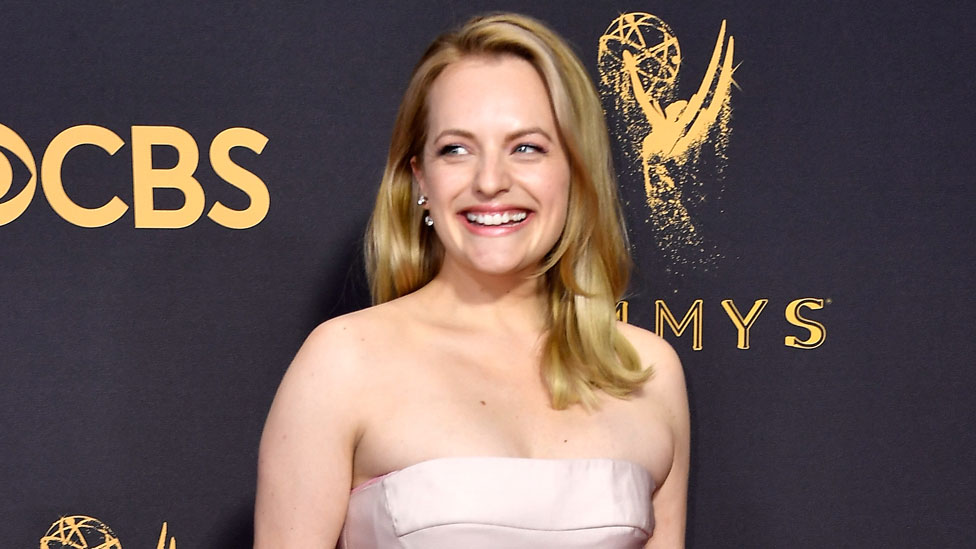
Dystopian TV series The Handmaid’s Tale has scooped the top drama honours at this year’s Emmy Awards.
The show won five awards including best drama series, best actress for Elisabeth Moss and best supporting actress for Ann Dowd.
Big Little Lies took five prizes in the limited series categories, including wins for Nicole Kidman and Laura Dern.
The British winners included Riz Ahmed, who took best lead actor in a limited series or movie for The Night Of.
Image copyrightGetty ImagesImage caption Riz Ahmed and Charlie Brooker were among the British winners
Other British winners included Charlie Brooker, who won best writing for a limited series for his Netflix show Black Mirror.
One of the episodes, San Junipero, also won the trophy for best TV movie. Brooker said it “was a story about love, and love will defeat hate, it will win”.
British comedian John Oliver and his writing team scooped two prizes for satirical show Last Week Tonight.
The Handmaid’s Tale’s win for best drama series means Hulu has become the first streaming service to win that award, beating the likes of big hitters Netflix and Amazon.
Image copyrightGetty ImagesImage caption Elisabeth Moss won best actress in a drama series for The Handmaid’s Tale
Bruce Miller – who won two trophies as the show’s writer and executive producer – thanked author Margaret Atwood, “who created this world for all of us”. The show is adapted from Atwood’s 1985 novel.
In the limited series categories, HBO’s Big Little Lies won best lead actress, (Nicole Kidman), supporting actress (Laura Dern), supporting actor (Alexander Skarsgard), director (Jean-Marc Vallee) and best limited series.
Image copyrightReutersImage caption Nicole Kidman and Reese Witherspoon star in Big Little Lies
Accepting the award for best limited series, Kidman, who played an abused wife, said that “as much as the show has the entertainment value, it’s about the issues”.
She told the Emmys audience: “We’ve shone a light on domestic abuse. It’s a complicated, insidious disease. It exists far more than we allow ourselves to know.”
Julia Louis-Dreyfus won best actress in a comedy series for Veep for the sixth year in a row – breaking the record for the most Emmys won by a lead actor for the same role.
Veep, which was created by Armando Iannucci, also won one the prize for best comedy series.
Image copyrightGetty ImagesImage caption Julia Louis Dreyfus has played the lead role in Veep in all six of its seasons
Sterling K Brown’s win for best lead actor in a drama series marked the first time an African-American actor had won in the category in almost 20 years.
Atlanta star Donald Glover scored another historic first by becoming the first black person to win an Emmy for directing a comedy show, while Master of None’s Lena Waithe became the first African-American woman to win for comedy writing.
Political references became a running theme during the night – with host Stephen Colbert and several winners poking fun at US President Donald Trump.
“At long last, Mr President, here is your Emmy,” said Alec Baldwin as he collected his prize for supporting actor in a comedy series, mocking the president’s frustration at never having won for The Apprentice.
Baldwin regularly portrays President Trump on comedy sketch show Saturday Night Live, which won four awards including best variety sketch series and best supporting actress in a comedy series for Kate McKinnon.
Image copyrightAFPImage caption Spicer appeared with a podium resembling the one he used to use as press secretary
And after he was named best lead actor in a comedy series, Glover said: “I want to thank Trump for making black people number one on the most oppressed list.”
Jaws also dropped when Mr Trump’s former press secretary Sean Spicer came on stage to joke that the ceremony would attract “the largest audience to witness an Emmys” – a reference to disputed claims he made over numbers attending the president’s inauguration in January.
In the competition, several high-profile series failed to live up to expectations, including Westworld and Stranger Things, which both went home empty-handed.
Game of Thrones, a big winner at previous Emmys, wasn’t eligible this year because episodes from its last series didn’t air during the Emmys eligibility window.
Likewise, the new series of Twin Peaks will have to wait until next year to be considered.
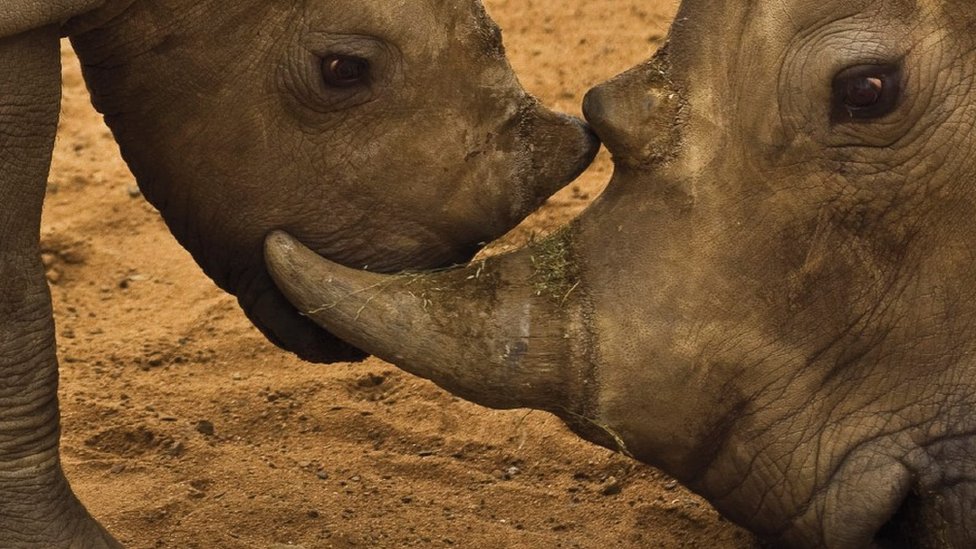
Criminal networks smuggling rhino horn out of Africa are turning it into jewellery to evade its detection in airports, an investigation has found.
Wildlife trade monitoring network Traffic revealed an “emerging trend” of making and smuggling beads, bracelets and bangles and rhino horn powder.
The lead investigator told BBC News the trade in rhino horn was now “morphing” into a market for luxury items.
At least 7,100 rhinos are estimated to have been killed in Africa since 2007.
Today, about 25,000 of the animals remain.
Julian Rademeyer from Traffic explained that the production of rhino horn “trinkets” mirrored some of the patterns seen in the trade in ivory.
“It’s very worrying,” he told BBC News. “Because if someone’s walking through the airport wearing a necklace made of rhino horn, who is going to stop them?
“Police are looking for a piece of horn and whole horns.”
Status symbol
The primary destinations for smuggled rhino horn remain the same; the largest markets are in China and Vietnam. But this investigation also found that smuggling routes constantly changed and adapted, becoming more complex in order to avoid countries and airports where law enforcement resources were being focused.
This shift in how horn is processed before it is moved could make it more difficult to detect.
“This is quite a preliminary assessment,” explained Mr Rademeyer, “but it’s vital that there’s information sharing about these new trends – particularly with law enforcement.”
He added that the market for medicinal rhino horn – believed by many to be a cure for a range of illnesses, from rheumatism to cancer – seemed to have “reduced somewhat”.
But owning rhino horn – particularly for wealthy men in Vietnam – is also seen as a status symbol.
“It’s about power – about showing off your wealth,” said Mr Rademeyer. “It’s been called the Ferrari factor – having something says you are wealthy and that you’re untouchable [by the law].”
Image copyrightTRAFFIC
Susie Offord-Woolley, managing director of the charity Save the Rhino International, said this kind of information was “essential” in order that law enforcement officers could be trained to identify rhino horn jewellery.
“The fact they’re carving [the horn] up now means these gangs are getting more concerned about security, and that’s a good sign,” she added.
At the current rate of poaching, Save the Rhino says that rhinos could be extinct in the wild within the next 10 years.
“That’s what we’re all trying to avoid,” said Ms Offord-Woolley.
And while this is a fight to save a species, she added, “this also affects so many people”.
She added: “In last 10 years, 1,000 rangers have been killed in Africa while on patrol protecting rhinos.
“So this is an issue for people’s lives, as well.”
This story is auto-generated from ‘BBC News’ syndicated feed and has not been edited by Africa Prime News staff.
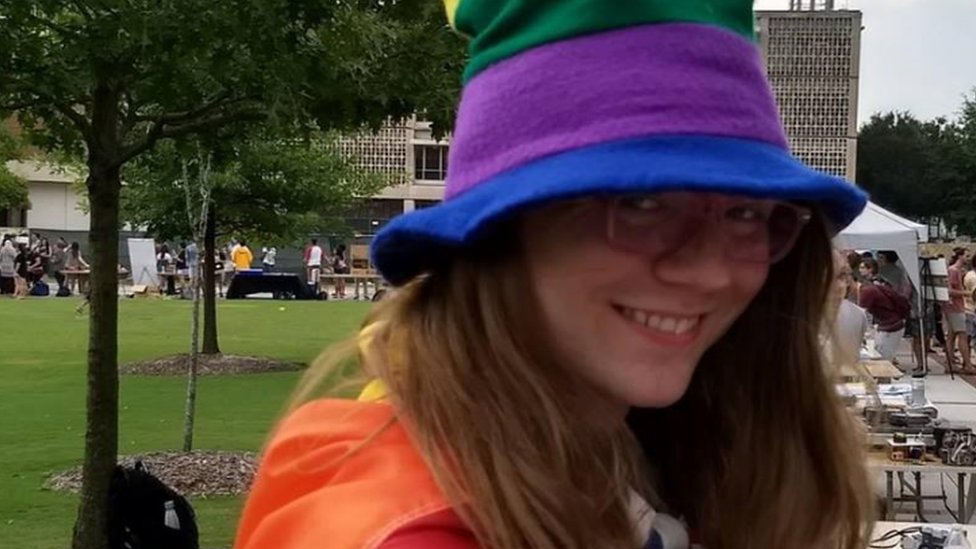
Image copyrightFacebookImage caption Scout Schultz was the president of the Pride Alliance at the Georgia Institute of Technology
Police in the US state of Georgia have shot and killed an LGBT student activist, leading to an independent investigation.
Police encountered Scout Schultz at a campus in Atlanta after a call about “a person with a knife and a gun” late on Saturday, officials say.
Footage has emerged apparently showing Schultz, 21, refusing to obey several police commands to drop a knife.
Schultz’s mother said police should not have used lethal force.
In a video filmed by fellow students at the Georgia Institute of Technology, Schultz is heard saying “Shoot me!” while continuing to advance on the officers. One of them then opens fire.
Schultz – who identified as neither male nor female – did not appear to be holding a gun, investigators said, despite what had initially been reported to police.
She added that Schultz had numerous medical issues, suffered from depression and had attempted suicide two years ago.
“Why didn’t they use some nonlethal force, like pepper spray or Tasers?” she was quoted as saying by the newspaper.
Schultz was the president of the Pride Alliance at Georgia Tech.
“We are all deeply saddened by what has occurred,” the group said in a statement.
“They have been the driving force behind Pride Alliance for the past two years,” the group said, using Schultz’s preferred pronoun. “They pushed us to do more events and a larger variety events.”
Note: This story is auto-generated from BBC syndicated feed and has not been edited by AFRICA PRIME NEWS
It paved the way for the expansion drive in Africa and Asia.
“We know that there is a great deal of hunger for audiences in Ethiopia and Eritrea to access a broad range of high quality content in Amharic, Afaan Oromo and Tigrinya,” said Ross, head of the new services.
Eritrea won independence from Ethiopia in 1993 after a 30-year war.
Tensions with Ethiopia remain high across a closed and heavily fortified border.
An estimated 80,000 people died during a 1998-2000 border war between the two states.
Ross said he believed that the potential audience in the two countries – which have a combined population of more than 100 million – was huge, and social media would play a key role in helping to target a younger audience.
“There is also a significant diaspora, which retains strong links with ‘home’. The political situation in both countries has triggered the development of a large vocal, activist presence in the diaspora,” he said.
“The current news choice for many in Ethiopia is either a pro-government platform at home or a vehemently anti-government offer from the diaspora.”
The new Facebook pages in the three languages have already generated a lot of interest. The Afaan Oromo site had more than 30,000 likes after just three days.
However, internet penetration is currently very low in both states, and the planned launch of radio programmes would be a vital part of the BBC’s “rich mix of content” for Ethiopians and Eritreans, Ross said.
“A major aim of the output will be to help Ethiopians and Eritreans better understand their place in the world. The new language services will also provide the BBC’s global audience with a far better perspective and understanding of the Horn of Africa,” he added.
African languages:
Afaan Oromo: Language of Ethiopia’s biggest ethnic group
Amharic: Ethiopia’s official language
Tigrinya: The main working language of Eritrea, along with Arabic. Also spoken in Ethiopia
Igbo: An official Nigerian language. Also spoken in Equatorial Guinea
Yoruba: Spoken in south-western Nigeria and some other parts of West Africa, especially Benin and Togo
Pidgin: A creole version of English widely spoken in southern Nigeria, Ghana, Cameroon and Equatorial Guinea
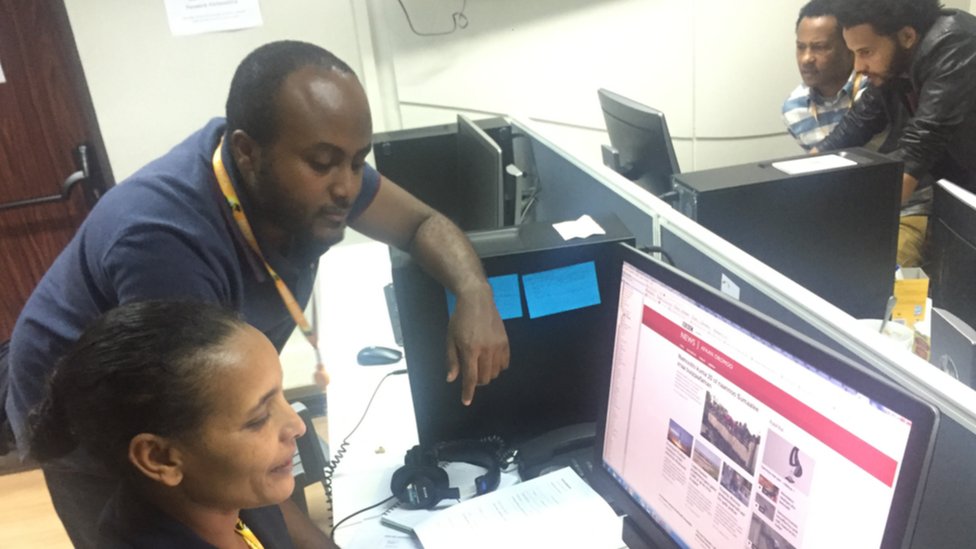
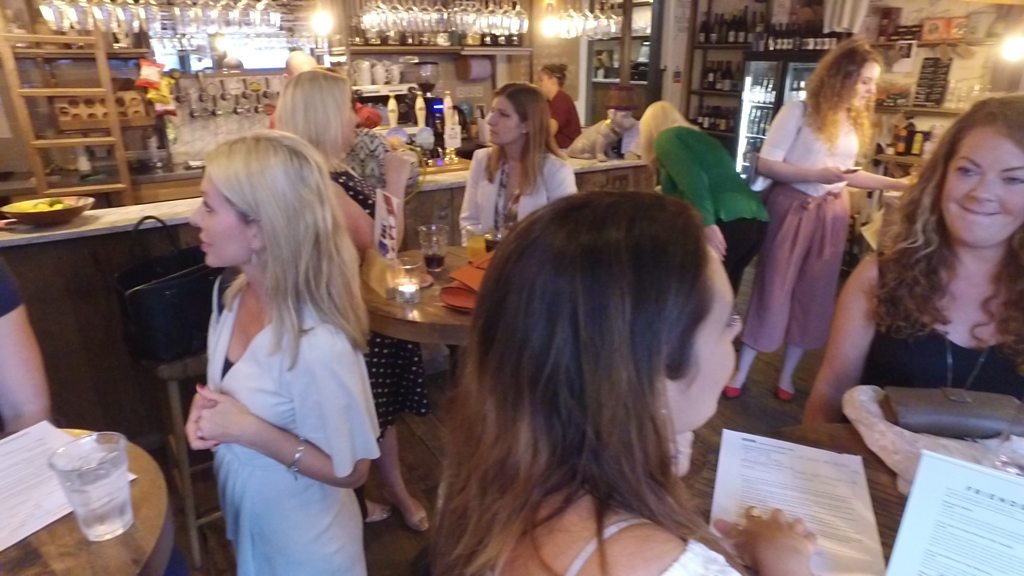
Catherine has created ‘tribes’ of business women to help them form a network to connect with each other. Note: This story is auto-generated from BBC syndicated feed and has not been edited by AFRICA PRIME NEWS
There is a putrefying disagreement among farmers and other stakeholders on Biosafety before and after it became a law in Nigeria in 2015; Odimegwu Onwumere uncovers that whereas the rivalry lasts, in some quarters such as OFAB, there is insistence that Biotechnology contributes significantly to surplus food output and has no health hazard
The dark and scintillating woman with an adorable height mounts the rostrum at a media gathering of the Open Forum for Agricultural Biotechnology (OFAB), Wednesday 30th August 2017, at Sheraton Hotels and Towers, Ladi Kwali Way, Wuse Zone 4, Abuja, by 7pm to teach Nigerians on the need to embrace biotechnology as a fresh means of farming.
The gathering was characterized by OFAB Media Awards to honour journalists, who had written and broadcasted agriculture and biotechnology stories in Nigeria. The dazzling woman is Dr. Rose Maxwell Gidado, the country coordinator, OFAB.
Gidado harangues that biotechnology is fad in 7 African countries. She, however, inertly feels apologetic that this novel technology that has been aiding countries of the world to boost Agriculture is severely being looked down on, in Nigeria.
“Apart from our numerous efforts through enlightening OFAB workshops to educate farmers on this striking, lucrative and sustainable means of farming known as biotechnology,” Gidado says, adding, “it behooves on all of us to question how long we would endure food crises given that Nigerian farmers are dealing with insufficient farming; but Biotechnology contributes significantly to surplus food output.”
While those at the OFAB might mean well since the medium started operating in Nigeria just about a decade ago and being instrumental to seeing that Nigeria embraced Biosafety as countries like Kenya, Togo, Tanzania, Mali, Republic of South Africa, Burkina Faso and Egypt already had Biosafety laws and were growing and consuming GMO crops, many stakeholders are yet not hiding their voice to show their uneasiness against Biosafety before and after Monday, April 21, 2015, the then President Goodluck Jonathan signed the National Biosafety Agency Bill into law, after the National Assembly passed the bill.
Loggerheads On Biotechnology
Recently, some stakeholders under the auspices of Civil Society Organisations (CSOs) expressed fear that biotech giants are cunningly taking over food production in Nigeria in guise that they are on the development of bio-fuel in the country. One of the organisations, the Alliance for Food Sovereignty in Africa, AFSA, and its Chairman, Mariann Bassey Orovwuje said that biotechnology giants are ostensibly economical with the truth.
“Promoting Genetically Modified Organisms (GMOs) crops for bio-fuel demonstrates the hypocrisy of the biotech giants, who are always quick to summit that GMO crops are necessary to produce more food for the growing world population,” Orovwuje said, adding, “They make the case that relying only on natural crop varieties would create food deficits and lead to forests being cleared for cultivation, to meet rising food demand. Yet, the same companies think nothing of diverting large areas of arable land for cultivation of crops to develop ethanol for fuel, to feed the voracious machines of the North.”
However, institutions such as the National Root Crops Research Institute (NRCRI), Umudike; Institute for Agricultural Research, Zaria (IAR); the Federal University of Technology, Akure and, the National Biotechnology Development Agency (NABDA), were said to benefit immensely from the biotechnology development. Apart from OFAB’s position on food sufficiency in the country with Biotechnology, the then Minister of State for Agriculture, Alhaji Bukar Tijani in one of his public presentations, said that the GMO would ensure Nigeria is self sufficient in the production of rice and would boost the countries revenue in other areas of agriculture.
While in Addis Ababa for the High Level Meeting of AU Heads of State and Government on “unified approach to end hunger in Africa by 2025”, Dr. Akinwumi Adesina who, as Minister of Agriculture and Rural Development, said that the Nigerian Government had announced plans to swell the use of bio-fortified crops, such as pro-vitamin `A’ cassava and orange-flesh sweet potato to address the hunger situation being faced by some 13 million people.
According to Adesina, “Much progress is being made, we are mindful that we still have challenges of malnutrition and micro-nutrient deficiencies to tackle. Nigeria still has 13 million people suffering from hunger, and malnutrition is still high.”
But before now, many persons and groups had opposed the launching of GMOs products into the country’s agricultural segment, saying that this might be a threat to indigenous production, environment and health of the citizens. One such persons and groups is Nnimmo Bassey, Director, Health of Mother Earth Foundation (HOMEF). Bassey has unremittingly made it clear that the introduction of GMOs would be detrimental to local consummation and economic wellbeing of the people. He said, “Entry of GMOs into Nigeria will lower the possibilities of our food products being accepted in many parts of the world, especially in Europe where outright ban of such products are in place in several countries. This would spell economic disaster for our farmers.”
In a statement mutually signposted by Bassey’s HOMEF; Mariann Bassey-Orovwuje, Food Sovereignty Manager/coordinator, ERA/FoEN and Friends of the Earth International (FoEI); and Gbadebo Rhodes-Vivour, convener of Nigerians Against GMOs, the groups fingered the National Bio-safety Management Agency (NBMA) of playing double standard in its official duty of regulation and allowed the introduction of GMOs by Monsanto Agriculture Nigeria Limited.
According to them, “We restate our stand that the so-called permit issued to Monsanto to introduce GMOs into Nigeria should be overturned and the bio-safety law itself should be repealed. We also call on the National Assembly to urgently investigate the process leading to the granting of the permit on Sunday, May 1, 2016, to assure Nigerians that we are not pawns in a commercial game to open Africa to toxic technologies.”
Buttressing his point, Bassey was of the view that GMO is better in monoculture unlike in Nigeria where more than 80 percent of farmers are small possessors, who are best at varied cropping. According to Bassey, “Most of these farmers are women and expansion of monoculture in Nigeria would mean displacement of farmers from their farmlands, entrenchment of poverty and deepening of hunger and nutrition problems.”
Against this influence, there is apprehension that the call to reject GMO in the country is that NBMA once asked Monsanto to legitimately sell its GMO products in Nigeria. Correspondingly, Dr. James Marsh, Global President for James Marsh & Associates, said that the trepidation is because of Monsanto’s contentious background. According to Marsh, “Due to Monsanto’s controversial background and tainted reputation in the United States where it operates from, it should not be allowed to take over the Nigeria’s agricultural sector as their migration into Nigeria will stifle the small scale farmers.”
Again, “It would also mean dependence on Monsanto and other seed companies for regular supply of seeds and chemicals. It means surrendering our food sovereignty to a commercial entity. It would spell disaster on many fronts.” Consequently, those who know better have said that examinations looking to “GMOs crop yields have often failed to isolate the effects of GMOs technology from other factors or to compare like-for-like farms. Conversely, reduced yields have been attributed to the GMOs insertion process.”
More Groups Show Nervousness On GMOs
Against GMOs, was the call by the CSOs on Wednesday, June 7 2017, while on a nonviolent protest at the National Assembly Complex, Abuja, advising NASS to revoke the Biosafety Act. Gbadebo told News Agency of Nigeria (NAN), “It is a technology that harms the body; it is a technology that harms the economy, and it is a technology that is not in the interest of Nigerians and the citizens on the long term.” The source added that they were on protest to urge the National Assembly to re-examine the National Biosafety Act.
According to Gbadebo, “This is because GMOs do not assure the safety of Nigerians.” He further enthused that the authorities and regulatory agencies that were supposed to man how the technology was being used in the country have ‘conflict of interest’ on their boards, which is not for the interest of Nigerians. The source added, “We restate here that Monsanto’s applications were approved without due diligence and that the law setting up NBMA is extremely flawed in that it gives individuals in the agency the latitude to toy with the health of Nigerians, our environment and food systems.”
Investigation revealed that contrary to Monsanto’s claims of GMOs being harmless, “The International Agency for Research on Cancer (IARC) concluded that there was strong evidence of genotoxicity and oxidative stress for glyphosate entirely from publicly available research, including findings of DNA damage in the peripheral blood of exposed humans.” Checks further revealed NBMA saying it was “Convinced that there are no known adverse impacts to the conservation and sustainable use of biodiversity taking into account risk to human health.”
Double Stance On GMOs
Nonetheless, while at a workshop organised by NBMA and Program for Biosafety Systems (PBS) on May 8, 2017, in Abuja, to kindle the teamwork of regulatory agencies, the Minister of State for Environment Ibrahim Jibril broke a gremlin, saying that Nigeria has become a dumping ground for inferior food items. Hear Jibril, “Nigeria has been marginalised and ostracised by many rich nations in the European Union which suspended some of our agricultural products, citing high volume of dichlorvos pesticide as its reason. This is a reflection of our inability to adhere to global standards, which have come to hunt us at the international level.”
Equally, on January 26 2017, a coalition of CSOs with its coordinator as Edel-Quinn Agbaegu, brought the Federal Government (FG) to the cleaners when the group cautioned the government on what it said, was the double standard of Minister of Agriculture and Rural Development, Chief Audu Ogbe “on his ‘anti-GMOs”’. According to the source, “We have great respect for the Honourable Minister and Elder statesman and a stakeholder in agriculture and had expected that he would refute the report as it is a contradiction of many statements he had earlier made in support of modern biotechnology and GMOs as a scientific and globally accepted method of improvement on agriculture, food production and fight against hunger, malnutrition towards sustainable development in the country.”
The group therefore regretted that both the ministries of Science and Technology and Environment, according to the group, that had the direct influence to instruct the government on GMOs, have allowed the powers that be to wallow in misinformation. This is even as the group added that, had Ogbe been properly advised by the two ministries, perhaps, he would not had gaffed at a forum in December 2016, where he made his rivalry to GMOs clear, and stated that “the country would stick to use of hybrid products.”
The group hence advised, “The Minister needs to familiarise himself more with the position of Food and Agriculture Organization (FAO) on GMOs. He should be proactive to save Nigeria from imminent hunger that is threatening the African continent, going by the current drought that is ravaging Somalia, Kenya and the Horn of Africa.”
According to an account by some members of Ife Biotechnology Group, Obafemi Awolowo University, Ile-Ife, “The Food and Agriculture Organisation reported that about 852 million people were estimated to be undernourished in 2010 — 2012 and face the risk of food insecurity. More than 70 per cent of this estimate reside in sub-Saharan Africa in which Nigeria is the most populous country among others. For Nigeria to adequately feed her ever increasing teeming population, innovations in agriculture must be given a priority in quick successions.“
Government Denies
As if that was not enough, on August 27 2017, the CSOs numbering 87 that were on-behalf-of over 5 million Nigerians who were members heralded that there was a clandestine move by the International Institute of Tropical Agriculture, IITA, to establish GMOs Cassava in Nigeria. They supposed that the NBMA should not give a nod to such cassava but rather ask IITA to revert to Switzerland where the GMOs cassava was developed to carry out the test.
In the words of Bassey, “The IITA has been a respected institution in Nigeria and Africa on whom farmers depend for good quality and safe crops. Now they have decided to drive on the GMOs road, Nigerian and African agriculture face a mortal danger. If NBMA approves this application, we can as well say good bye to food safety in Nigeria. Even if the IITA presents the Frankenstein cassava as a crop for the production of bio-fuel and not food, there is no way to stop our farmers from planting the GMOs cassava for food. We call on the NBMA to do the needful and reject this application outright. We don’t need GMOs cassava. We don’t need GMOs.”
Although, while there were speculations that there were dangerous GMOs in the country, the NBMA on July 13 2016, said that there were no dangerous GMOs in circulation in the country. A Director of the agency, Mr. Rufus Ebegba disclosed this in Abuja. According to Ebegba, “We are presently carrying out survey of possible GMOs suspects that have come into the country unofficially. We want to know whether they are safe or not. The importers of those products, we are going to invite them to check whether they have any permit with the agency. The GMOs currently in the markets do not have adverse effects on humans and the environment. The media should ensure they give the right information to the public. Do not help the rumour mongers to promote wrong information.”
This is even as the source from Ile Ife added, “Many countries in the world have been applying this technology to become food sufficient and also generate huge wealth from the export of their agricultural produce. A few among these are the United States, Canada, Brazil, India, Australia, China, South Africa and Burkina Faso. The best recourse to achieve this status is by earnestly adopting and sustaining the recent government efforts in promoting and adequately regulating agricultural biotechnology practice in the country.“
On the supportive, Gidado has insisted, saying, “Nigeria must promote and support this technology that is efficient, inclusive, climate-smart, sustainable, nutrition-and health-driven, and business-friendly in order to ensure that no Nigerian goes to sleep hungry by 2025.”
It is however hoped that the authorities concerned would dig further to clear the storm of uncertainty surrounding the use of Biotechnology in the country.
Odimegwu Onwumere is an award-winning journalist based in Rivers State, Nigeria. He contributed this piece via: apoet_25@yahoo.com

 Equatorial Guinea has signed a memorandum of understanding with Burkina Faso to supply LNG and build critical infrastructure to import, store and transport gas.