Home Blog Page 1495

Crisis In School Feeding Financing Puts Pupils In West & Central Africa At Risk, Says WFP

0

Lack of financing for nourishing school meals from the United Nations World Food Programme (WFP), has put more than 1.5 million vulnerable children across West and Central Africa risk going to school hungry or dropping out altogether.

The WFP’s regional programme faces an US$76 million funding gap, the agency warned as experts were meeting in Montreal for an annual forum on child nutrition, co-sponsored and hosted by the Global Child Nutrition Foundation, WFP’s Centre of Excellence against Hunger and the Breakfast Club of Canada.

The repercussions are dramatic, since the hearty and nutritious WFP-provided lunches and snacks are the only meal many youngsters eat all day. More broadly, the funding crunch puts at risk a whole generation, with broader spill-over effects on national economies and development.

“By failing to fully fund school meals, we are collectively short-changing the next generation and Africa’s future,” said WFP West and Central Africa Regional Director Abdou Dieng. “School meals are one of the best investments the international community can make to ensure a head start for young children in some of the world’s poorest countries.”

That’s the case in conflict-torn Central African Republic, where WFP’s school meals programme, aimed to reach more than 200,000 youngsters, is only half funded. Yet more critical is the case of Burkina Faso’s programme, reaching nearly 83,000 children – and 0 percent financed.

In Niger, where WFP school meals reach more than a quarter of a million pupils, the programme is only 19 percent funded, while Senegal’s programme only five percent. Other particularly at-risk countries include Liberia, Mali, Mauritania and Niger, but the funding dearth stretches across the region.

“We are talking about some of the hungriest and most vulnerable children,” Dieng said. “This is a crisis for education, but also a crisis for nutrition and food security which are the fundamental pillars of development.”

Overall, the programme plans to reach nearly 2.2 million youngsters over the 2017-2018 academic year, often in areas with extremely high levels of hunger and malnutrition. Without proper financing, most of these young students will end the school year hungry.

Studies show the meals help improve attendance and performance rates. They are also a key incentive for parents to send their children – particularly girls– to school and to keep them there.

While some governments and agencies lead or complement WFP’s programme in the West and Central Africa, in many areas the agency is the sole or main provider of school meals. Over the years, however, WFP has shrunk its coverage for lack of funds.

Source: APO

Kenyan voting system ‘won’t be ready’

0
Image copyright AFP
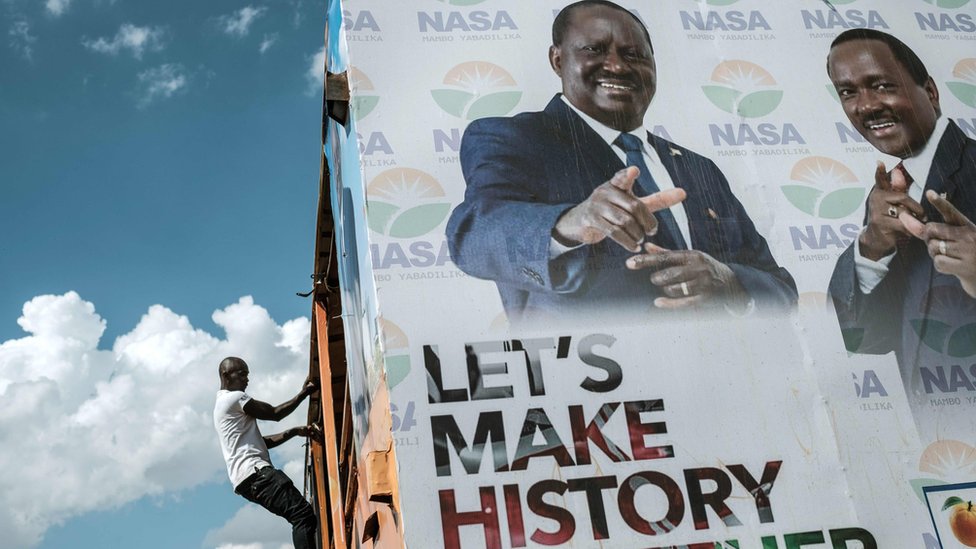
Image caption Opposition leader Raila Odinga (left on poster) successfully challenged August’s result in court

The company providing the voting system for the re-run of Kenya’s presidential election says the equipment will not be ready in time, putting the planned date in jeopardy.

The Supreme Court annulled last month’s vote, citing irregularities. It was won by the incumbent Uhuru Kenyatta.

French firm OT-Morpho says it needs to reinstall the complex voting system for the scheduled re-run on 17 October.

But it said the “significant amount of work” cannot be finished in time.

Details of the potential delay for October’s re-run emerged in a letter from OT-Morpho to the electoral commission, obtained by Reuters news agency. An election official also confirmed the potential delay to the BBC.

The letter, dated 18 September, said two different electronic systems used in the vote would have to be reinstalled for a re-run.

More than 45,000 computer tablets were provided to Kenyan officials to identify voters – using fingerprints and photos – before allowing them to vote.

The tablets were also responsible for the secure transmission of election results, the company said in an April press release.

Irregularities in the transmission of results was one of the problems referenced by the Supreme Court when it annulled the August poll’s results. But more precise details have yet to be released ahead of the court’s full report, due on Thursday.

In addition to the technology problems, opposition candidate Raila Odinga – set to contest the election against Mr Kenyatta – has said he will not take part in the re-run unless members of the country’s electoral commission are replaced.

The commission has reportedly arranged a meeting with both candidates on Wednesday to discuss potential problems ahead of the poll.

This story is auto-generated from ‘BBC News’ syndicated feed and has not been edited by Africa Prime News staff.

Federal land chief moves to shrink four national monuments

0
Media playback is unsupported on your device

Media captionIs Trump threatening the US wilderness?

The US interior secretary recommends reducing the size of at least four of 27 national monuments, reports say.

Ryan Zinke wants to shrink Utah’s Bears Ears and Grand Staircase Escalante, Oregon’s Cascade-Siskiyou and Nevada’s Gold Butte, a leaked report states.

Mr Zinke also proposes lifting restrictions on activities such as logging and mining at 10 sites.

The White House refused to comment on leaked documents – “especially internal drafts which are still under review”.

In April, President Trump ordered a review of national monuments – which protect lands for their natural beauty and historical significance – as part of his campaign promise to develop federal land.

He accused previous presidents of improper “land grabs” in establishing the monuments, singling out President Obama who placed 553 million acres under protection during his presidency – more than any other US president.

Environmentalists say reducing restriction, and the size of protected areas, would harm the ecosystems the monuments are intended to protect.

Image copyright Reuters
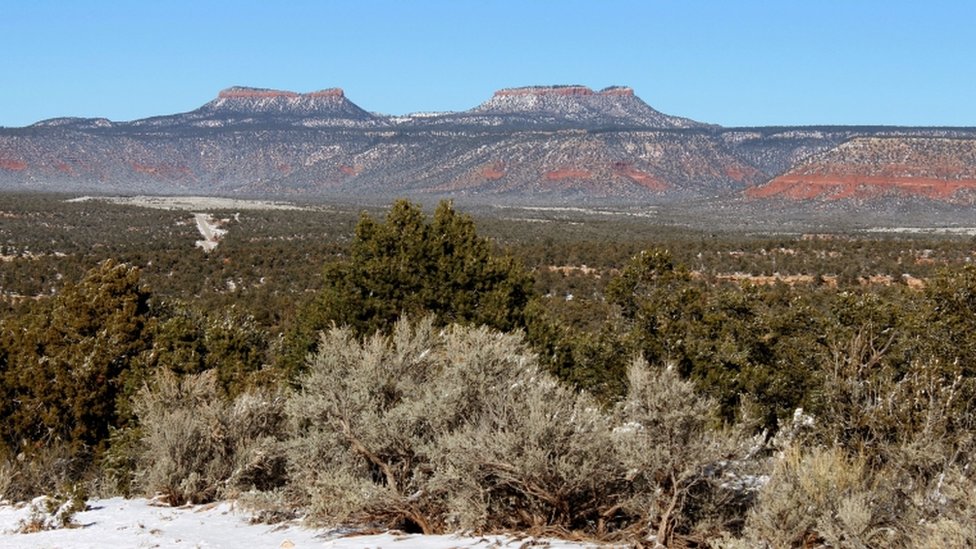
Image caption Bear’s Ears National Monument was created during the last days of Obama’s presidency

The Wilderness Society said the reported recommendations were “an unprecedented assault on our parks and public lands”.

The leaked report was submitted to the White House last month.

Mr Zinke told the Associated Press news agency that none of the sites under review would be transferred to new ownership, but increased public access for activities such as fishing and hunting would be a priority.

The Department of Interior had previously announced no changes would be made to six national monuments in Mr Zinke’s home state of Montana, Colorado, Idaho, California, Arizona and Washington.

In the leaked copy of the recommendations Mr Zinke reportedly calls for the easing of regulations on grazing, logging, coal mining and commercial fishing.

Media playback is unsupported on your device

Media captionHas Obama wrecked these men’s livelihoods?

He suggests reducing the size of two marine monuments in the Pacific Ocean, the Pacific Remote Islands and Rose Atoll, as well as changing how some monuments are managed.

The report also calls for altering Maine’s Katahdin Woods and Waters, New Mexico’s Organ Mountains-Desert Peaks and Rio Grande del Norte as well as another marine monument off the New England coast.

Grand Staircase Escalante and Bears Ears, which sits on sacred ground, stretch across a total of more than 3.2 million acres of land while Katahdin spans at least 87,500 acres.

According to Mr Zinke’s report, the Grand Staircase Escalante contains “an estimated several billion tons of coal and large oil deposits”.

Mr Zinke also suggests exploring the possibility of recognising three new national monuments: Kentucky’s Camp Nelson, an 1863 Union Army outpost where African American regiments trained; the Mississippi home of murdered civil rights leader Medgar Evers; and the Badger-Two Medicine area in Montana, which is sacred ground for the Blackfeet Nation.

Note: This story is auto-generated from BBC syndicated feed and has not been edited by AFRICA PRIME NEWS

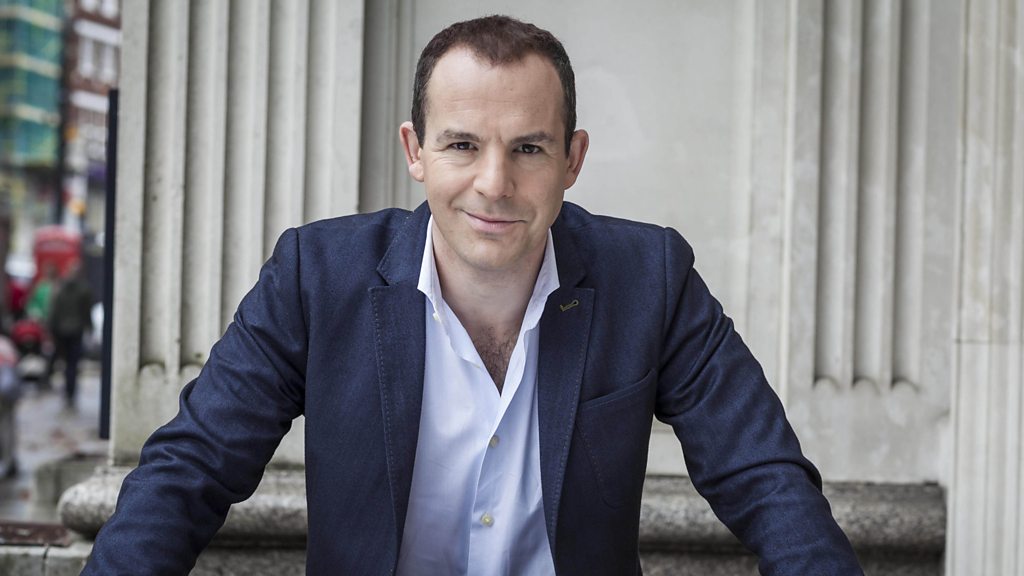
Martin Lewis explains your Ryanair cancellation rights.

0

Personal finance expert Martin Lewis explains what rights consumers have during the Ryanair pilot shortage.

Note: This story is auto-generated from BBC syndicated feed and has not been edited by AFRICA PRIME NEWS

Hurricane Maria to become major storm near Caribbean islands

0
Image copyright EPA/NASA
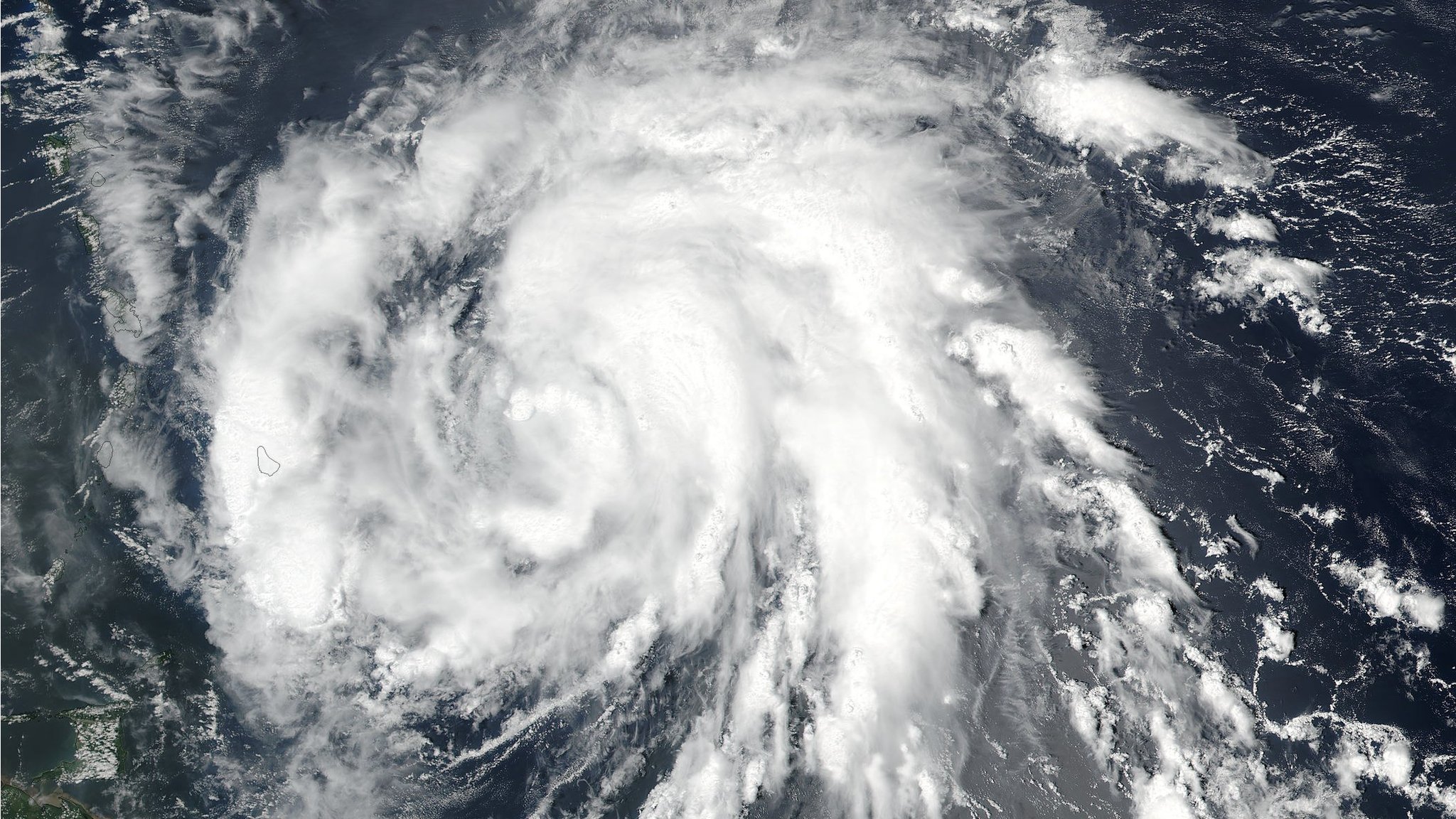
Image caption Hurricane Maria is expected to hit the Leeward Islands late on Monday

Hurricane Maria is expected to strengthen further as it nears the Leeward Islands in the Caribbean.

It has been upgraded to a category two hurricane, and is forecast to hit the islands late on Monday, the US National Hurricane Center (NHC) says.

It is moving roughly along the same path as Irma, the hurricane that devastated the region this month.

Hurricane warnings have been issued for Guadeloupe, Dominica, St Kitts and Nevis, Montserrat and Martinique.

A hurricane watch is now in effect for Puerto Rico, the US and British Virgin Islands, St Martin, St Barts, Saba, St Eustatius and Anguilla.

Some of these islands are still recovering after being hit by Irma – a category five hurricane which left at least 37 people dead and caused billions of dollars’ worth of damage.

In its latest update on Monday, the NHC said that Maria had maximum sustained winds of 175 km/h (110mph).

The eye of the storm is 100 miles east of Martinique, and Maria is moving west-northwest at about 13mph.

“Preparations to protect life and property should be rushed to completion,” the NHC said.

The centre said it expected Maria to grow into a “major” category three hurricane later on Monday.

In the French territory of Guadeloupe, schools, businesses and government buildings have all been closed and severe flooding is predicted in low-lying parts of the islands.

Preparations have also begun in Puerto Rico, where Maria is expected to bring strong winds on Tuesday.

The most southerly point of the Leeward Islands – where Maria will first strike – includes Antigua and Barbuda. The latter island was evacuated after being devastated by Irma.

The NHC says that “a dangerous storm surge accompanied by large and destructive waves will raise water levels by as much as 1.5-2.1m (5-7ft) above normal tide levels near where the centre of Maria moves across the Leeward Islands”.

It also forecasts a maximum potential rainfall of 51cm (20in) in some areas of the central and southern Leeward Islands – including Puerto Rico and the US and British Virgin Islands – through to Wednesday night.

“Rainfall on all of these islands could cause life-threatening flash floods and mudslides,” it warned.

The destruction of Barbuda

Drone footage of Saint-Martin after Irma

Earlier this month, Irma left more than two-thirds of homes on the Dutch side of the island of St Martin (known as Sint Maarten) uninhabitable, with no electricity, gas or drinking water.

The French government has said its side of St Martin – known as Saint-Martin – sustained about €1.2bn ($1.44bn; £1.1bn) in damage, with nine deaths across Saint-Martin and nearby St Barts.

Media playback is unsupported on your device

Media captionA BBC team visited Caribbean islands that have been devastated by Hurricane Irma

On the British Virgin Islands, entire neighbourhoods were flattened.

After a visit to the area, British Foreign Secretary Boris Johnson described the damage as something “you see in images from the First World War”.

In pictures: Irma devastates British Virgin Islands

Virgin boss Richard Branson, who has a home in the Virgin Islands, has been tweeting ahead of the Maria’s predicted arrival, warning people to stay safe.

The Puerto Rican government has issued a statement saying it expects the hurricane to make landfall there as a category three on Tuesday.

The US territory escaped the worst of the damage from Irma – although it experienced widespread power cuts – and it has been an important hub for getting relief to islands that were more badly affected.

“Puerto Rico is our lifeline,” Judson Burdon, a resident of Anguilla, told Reuters news agency. “We had two volunteer flights cancel because of the weather that is coming.”

Image copyright Reuters
Image caption American military units were evacuated from the US Virgin Islands on Sunday

Irma also hit the US, with 11 deaths being linked to the hurricane. Nearly 6.9 million homes were left without power in Florida, Georgia, North Carolina, South Carolina and Alabama.

A second hurricane, Jose, is also active in the Atlantic, with maximum sustained winds of 90mph.

The centre of the storm was about 335 miles south-east of Cape Hatteras in North Carolina, the NHC said in its advisory at 21:00 GMT on Sunday.

Tropical storm watches have been issued for parts of the north-eastern US.


Are you in an area that is braced for Hurricane Maria? If it’s safe to do so, you can share your experience by emailing haveyoursay@bbc.co.uk.

Please include a contact number if you are willing to speak to a BBC journalist. You can also contact us in the following ways:

Note: This story is auto-generated from BBC syndicated feed and has not been edited by AFRICA PRIME NEWS

Irishman Ibrahim Halawa acquitted over Egypt protests

0
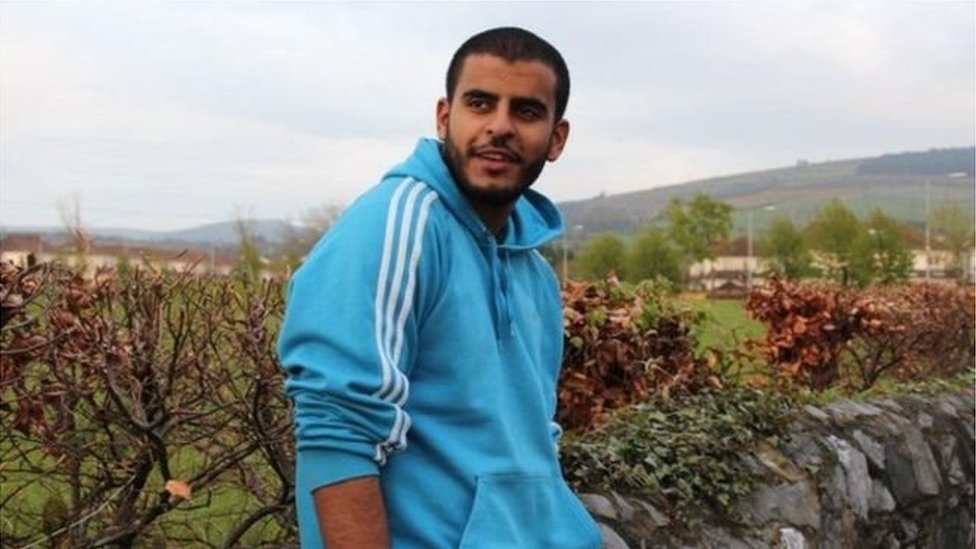
Ibrahim Halawa
Image caption Ibrahim Halawa was 17 when he was imprisoned in 2013

Irishman Ibrahim Halawa, 21, has been acquitted on all charges he faced in Egypt.

Mr Halawa, who is from Dublin, was arrested during a siege at the Al-Fath mosque in Cairo in 2013.

He was accused along with 500 others, including his three sisters, of inciting violence, riot and sabotage.

Mr Halawa’s three sisters were released after about three months and were allowed to return home to Dublin, but he remained in jail.

In an interview with RTÉ News‏ at One, his sister Nosayba Halawa, said the family was “delighted” by the news.

She said they had been watching the trial online: “We couldn’t believe it. After all that suffering, it’s really come to the end.

“We don’t know when he’ll be released and when he’ll be home but I hope it will be soon. He has suffered a lot,” she said.

Image copyright PA
Image caption Ibrahim Halawa was arrested along with his sisters Fatima, Omaima and Somaia

‘Distressing’

Amnesty International welcomed the verdict, adding that “a mass trial alongside 493 other defendants can never be a fair trial”.

It added: “We hope he will soon be reunited with his family in Ireland.”

The President of Ireland Michael D. Higgins also welcomed the news, describing the last four years as “a prolonged, distressing and draining experience”.

He added: “Today’s decision brings to an end a long ordeal that Ibrahim, his family, friends and legal team have been put through.

“I am sure Ibrahim’s family are looking forward to the moment that Ibrahim will return to his home and loved ones.”

Irish Foreign Affairs Minister Simon Coveney tweeted that he would “work to get him home asap”.

Image copyright Twitter

In a statement, he added: “Ibrahim Halawa’s name has been cleared and his innocence is confirmed.

“I look forward to him being released from custody without delay.”

Mr Halawa’s trial got under way in August, having been adjourned more than 20 times.

Hunger strikes

In April, the Irish government arranged for a doctor to visit the Irishman in jail following concerns about his health.

He has staged a series of hunger strikes in protest against his imprisonment.

In March, his lawyer said he was so weak that jail staff used a wheelchair to take him to family visits.

Mr Halawa is the son of the most senior Muslim cleric in the Republic of Ireland.

At the time of their arrests, the Halawas were on a family holiday in their parents’ homeland.

Their trip coincided with violent anti-government protests in Cairo, staged in support of the ousted President Mohammed Morsi.

The family were arrested, along with many others, when Egyptian security forces stormed the Al-Fath mosque in August 2013.

Image copyright Family picture
Image caption Ibrahim Halawa has been held in an Egyptian prison for four years

Mr Halawa’s three sisters were released after about three months and were allowed to return home to Dublin, but he remained in jail.

For several years, Mr Halawa was told he would face the death penalty if he was convicted at a mass trial.

However, in January this year, the Egyptian president told a delegation of Irish politicians that he would offer a pardon Mr Halawa once his trial was over.

The family has always denied claims that Ibrahim is a member of the Muslim Brotherhood, which is Egypt’s oldest and largest Islamist organisation.

The current Egyptian government has declared it a terrorist group, a claim it rejects.

The Halawa siblings are Irish citizens whose family moved to the Republic of Ireland a year before Ibrahim was born.

Their father, Sheikh Hussein Halawa, is the Republic of Ireland’s most senior Muslim cleric.

Negotiating his release

The family lives in south County Dublin, where Mr Halawa is the imam at Ireland’s biggest mosque, in Clonskeagh.

The Irish government provided diplomatic support to the family since the four were arrested by the Egyptian authorities on 17 August 2013.

However, the Halawas repeatedly said their government could do more to negotiate his release.

In 2015, it was revealed that Ibrahim Halawa had once shared a cell with Australian journalist Peter Greste.

The former BBC correspondent spent more than 400 days in prison in Egypt after he was arrested along with two colleagues while working for al-Jazeera.

This story is auto-generated from ‘BBC News’ syndicated feed and has not been edited by Africa Prime News staff.

St Louis: More than 80 arrested in Sunday protests

0
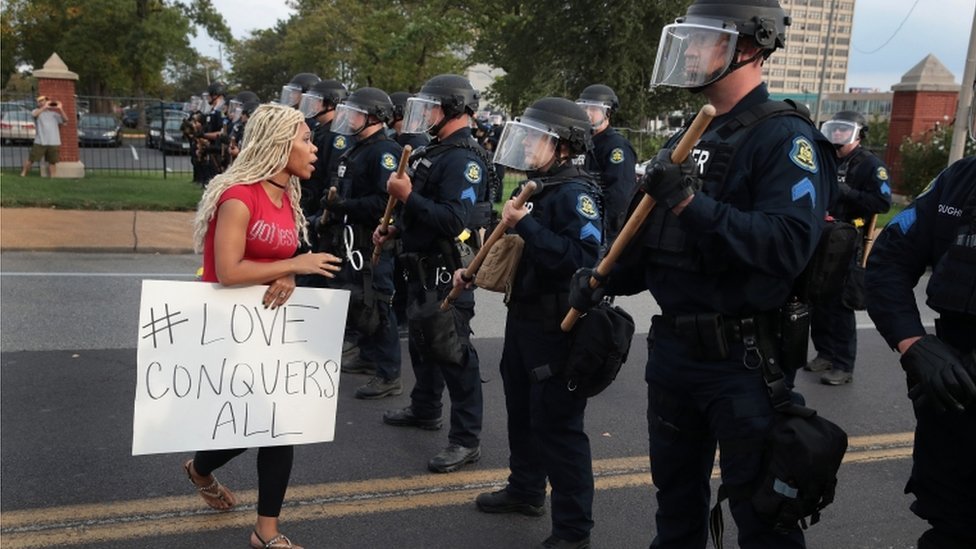
Police officers with riot gear march in St Louis streetImage copyright Reuters
Image caption The protests began on Friday over the acquittal of former police officer Jason Stockley

More than 80 people have been arrested in the US city of St Louis during a third night of violent protests over the acquittal of a police officer who shot dead a black man.

Jason Stockley, 36, was cleared on Friday of murdering Anthony Lamar Smith, 24, who was fatally shot after a police pursuit in 2011.

Daytime protests have been non-violent, but tensions have escalated overnight.

St Louis Police said some officers had chemicals and rocks thrown at them.

Their injuries were described as “minor or moderate” and the perpetrators as a “group of criminals”.

“Today we saw again the vast majority of protestors are non-violent,” St Louis Mayor Lyda Krewson said.

“But for the third day in a row the days have been calm but the nights have been destructive.”

Police posted images to Twitter of weapons reportedly confiscated in the city.

The protests began on Friday immediately after the court verdict. Weekend concerts by the Irish rock band U2 and British artist Ed Sheeran were cancelled due to security concerns.

Mr Smith was a new father and engaged to be married when he was killed on 20 December 2011.

Image copyright CBS
Image caption Anthony Lamar Smith failed to follow police commands, defence lawyers argued in court

The St Louis Metropolitan Police Department initially deemed the killing justifiable.

Mr Stockley left the police department and moved to Texas in August 2013.

But the investigation continued and he was charged last year after prosecutors cited unspecified new evidence.

Image copyright Reuters
Image caption The city’s mayor said the “vast majority of protestors are non-violent”

Mr Stockley and his partner said they believed they had seen Mr Smith engaging in a drug deal outside a restaurant.

Police dashcam video and surveillance footage showed Mr Smith reversing his car into the police vehicle twice during his attempt to drive off.

After a three-minute high-speed chase, Mr Stockley told his partner, who was in the driver’s seat, to ram Mr Smith’s car.

Dashcam video from the police cruiser recorded him saying he was “going to kill this [expletive]”.

Mr Stockley then ran to Mr Smith’s window and fired five shots, hitting him each time.

His defence team argued the recording could not prove intent and Mr Stockley testified in court that he could not remember making such a statement.

The cases where US police have faced killing charges

The case has inflamed racial tensions in St Louis, which has one of the highest murder rates in the US.

Rioting erupted in 2014 in nearby Ferguson, Missouri after the fatal police shooting of an unarmed black teenager, Michael Brown.

Note: This story is auto-generated from BBC syndicated feed and has not been edited by AFRICA PRIME NEWS

Equatorial Guinea Partners Burkina Faso On Liquified Natural Gas

0

Equatorial Guinea has signed a memorandum of understanding with Burkina Faso to supply LNG and build critical infrastructure to import, store and transport gas.

The initial three-year agreement requires both sides to negotiate and sign an LNG sales and purchase agreement (SPA) and a terminal use agreement (TUA) that will be the basis for their first LNG exchange. The MoU also calls for Equatorial Guinea to explore and produce oil and gas in Burkina Faso.

“We are very pleased to strike this agreement and be given the opportunity to supply our African brothers in Burkina Faso with crucial gas resources,” said H.E. Gabriel Mbaga Obiang Lima, Minister of Mines and Hydrocarbons of Equatorial Guinea. “This collaboration with Burkina Faso, part of our LNG 2 Africa initiative, highlights the important responsibility of African countries to cooperate in the energy sector and build the necessary infrastructure to strengthen our economies.”

We are very pleased to strike this agreement and be given the opportunity to supply our African brothers in Burkina Faso with crucial gas resources

As part of the agreement, both sides will commission a technical study for the construction of regasification and LNG storage terminals and will exchange knowledge and data. They will also work to build regasification and storage terminals in Burkina Faso and transport infrastructure, either by pipeline or LNG carrier.

Equatorial Guinea is one of Africa’s biggest LNG producers, exporting 3.4 million tonnes per annum of LNG to destinations worldwide. It is committed to significantly expanding its export capacity through the 2.2 million tonnes per annum Fortuna FLNG project (APO.af/79wdvA), which is on track to reach final investment decision by the end of the year. When it goes online in 2020, Fortuna will be Africa’s first deepwater FLNG project.

In May, Equatorial Guinea entered into a binding agreement with the OneLNG joint venture to explore the liquefaction and commercialization of natural gas in offshore blocks O and I. Bringing online new LNG volumes will enable Equatorial Guinea to sell gas to higher priced markets in Africa and beyond while retaining a share in profits for onward marketing.

Source: APO

Currency Exchange Rates

USD - United States Dollar
ZAR
0.06
EUR
1.17
CAD
0.73
ILS
0.31
INR
0.01
GBP
1.34
CNY
0.14
Enable Notifications OK No thanks