Home Blog Page 1482

Battered island

0
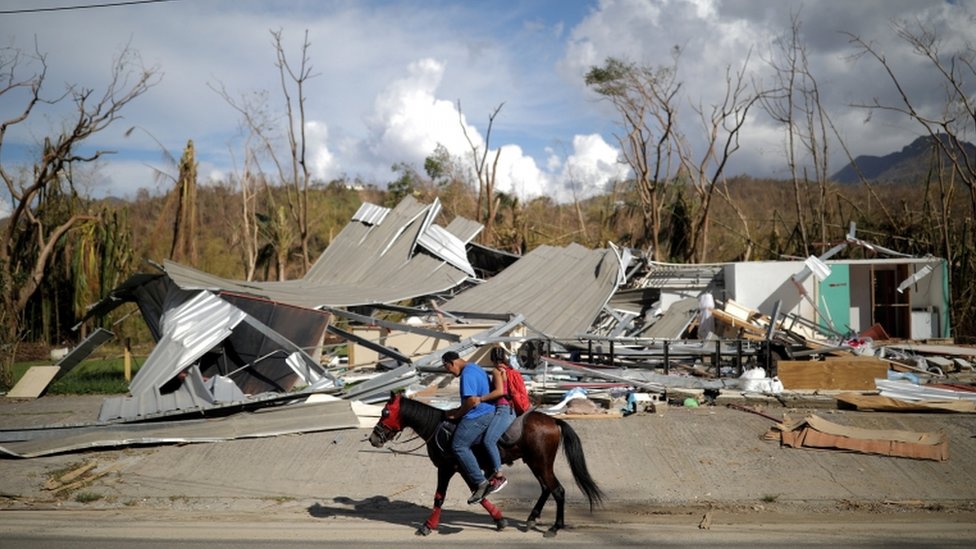
people ride a horse passed a destroyed buildingImage copyright Reuters

For nearly 3.5 million people on Puerto Rico, there is a new way of life to get used to.

Without electricity, the day now starts closer to sunrise and comes to a halt once it gets dark. Communications are near impossible; there is little sense of what is happening in the outside world without TV or the internet.

Credit card machines don’t work and cash dispensers do no dispensing. In the tropical heat and humidity, the air conditioners no longer hum.

The current projection is that a quarter of Puerto Rico might have its electricity supply back by December.

It is truly extraordinary that this is happening in a territory belonging to the most powerful economy in the world.

The island may not be a “state” of the USA, but Puerto Ricans are natural-born American citizens. They can travel back and forth to the US mainland as they please and everyone I met in Puerto Rico had connections with the continental USA.

Image copyright Reuters
Image caption It may be December before Puerto Ricans have electricity again

Lesley Quinones, 33, whom we found after her home in the town of Loiza was destroyed, had spent years living in Syracuse in New York state until her mother asked her to come back to Puerto Rico so the two could be closer.

Lesley, her five children and her granddaughter Camilla are now sleeping in a school classroom. She told us she felt the US government had forgotten people like her.

Media playback is unsupported on your device

Media captionThe Quinones family show the BBC what’s left of their home after the hurricane struck.

Luciano Delgado, who is in his 60s, was in his home in the southern town of Ponce when the hurricane brought it crashing down around him – mercifully sparing his life and his wife’s.

He had lived in several cities on the US mainland, including Chicago, where he stayed for years before retiring to the island on which he was born.

Luciano’s son Angel serves in the US Navy. He’s currently deployed in east Asia and the two have been trying desperately to get over the massive logistical hurdles to talk to each other since the hurricane, so far without success.

Many of the US troops who are now working in Puerto Rico to help after the disaster are themselves Puerto Rican. At the emergency US command centre, it appeared there was as much Spanish spoken as English by those in uniform.

Those troops serve America in whatever way their commanders see fit.

But in spite of their sacrifices, many Puerto Ricans feel this disaster has been a reminder that they are not viewed as American as those on the mainland.

Money and troops were committed to the relief effort but it took time and there was not the same preparation by federal agencies in Puerto Rico ahead of Hurricane Maria as there was, for example, in Florida before Irma, a few weeks earlier.

Image copyright Getty Images

Nine days passed before Lesley and her children received a mattress to sleep on in the school in Loiza. And Luciano says he has still not laid eyes on a single American emergency worker since the hurricane.

In the normally bustling old part of the capital San Juan, is the Paseo de los Presidentes or Walkway of Presidents. There, looking out onto the empty street, are nine life-sized statues of the US presidents who visited Puerto Rico while in office.

Franklin D Roosevelt sits in his bronze wheelchair, his beloved Scottish terrier beside him. JFK is dressed in a fashionable bronze blazer and slacks… and a tall, slim Barack Obama reaches out a bronze hand.

A 10th statue will be added to the walkway – presumably when Puerto Ricans don’t have more urgent issues to deal with – of a man who has been widely criticised here for his response to the hurricane.

Image copyright Reuters
Image caption Trump distributed aid during his five-hour visit to the island

On his visit here, the President Trump joked about how much Puerto Rico was costing the US government because of the emergency and compared the Puerto Rican plight to what he called a “real catastrophe” like Hurricane Katrina.

And there was outrage from local journalists and officials at the way he flung paper towels at storm refugees like T-shirts at a campaign rally.

Puerto Ricans never chose Donald Trump. But they never chose JFK or Barack Obama either. They are not eligible to vote in presidential elections, or decide their own foreign policy. They are, though, entitled to the same emergency response as people in Texas or Florida or Louisiana.

Many feel they simply didn’t get that, and put it down to being viewed as second-class American citizens.

Media playback is unsupported on your device

Media captionPuerto Rico isn’t a “real catastrophe like Katrina”
Image copyright Reuters
Image caption Puerto Ricans in New York rally for more aid for the Caribbean island territory

There have been several referenda here on the island’s status; most recently showing Puerto Ricans lean more towards wanting to be America’s 51st state rather than complete independence or remaining a US territory.

In the end, though, all those votes were little more than an opinion poll – it is Washington that will decide the island’s future.

But for many Puerto Ricans we spoke to, the response to Hurricane Maria made them feel Washington is simply not interested in bringing them more into the American fold.

Note: This story is auto-generated from BBC syndicated feed and has not been edited by AFRICA PRIME NEWS

Ivory trade to be banned in UK ‘to protect elephants’

0
ivoryImage copyright Getty Images
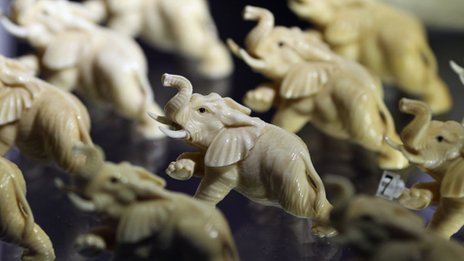
Image caption Tiny elephants carved from ivory are the type of product that would be banned under the proposals

The sale and export of almost all ivory items would be banned in the UK under plans set out by the government.

Environment Secretary Michael Gove has announced a consultation to end the trade in ivory of all ages – previous attempts at a ban would have excluded antique ivory produced before 1947.

The government says there will be some exemptions, for musical instruments and items of cultural importance.

Conservation groups have given a guarded welcome to the plan.

Growing market

While the UK has had a ban on the trade in raw ivory tusks, it has become the world’s leading exporter of legal ivory carvings and antiques in recent years.

According to an Environmental Investigation Agency report, there were more than 36,000 items exported from the UK between 2010 and 2015, more than three times that of the next biggest exporter, the US.

Conservationists argue that these sales stimulate the demand for the product, and are linked to increased elephant poaching across Africa.

Image copyright Getty Images
Image caption Prince William condemned illegal wildlife trading during a trip to China in 2015

Prince William has long been a campaigner against against ivory trade and in 2016 urged the UK to pass a total ban on domestic sales.

At a wildlife conference in Vietnam, he said: “Ivory is not something to be desired and when removed from an elephant it is not beautiful.

“So, the question is: why are we still trading it? We need governments to send a clear signal that trading in ivory is abhorrent.”

Previous attempts in the UK by the Conservative Party to limit sales of ivory have failed to get off the ground.

A ban on sales of ivory produced after 1947 was announced by then Environment Secretary Andrea Leadsom in 2016 but a follow-up consultation never materialised.

However, a 12-week consultation on Mr Gove’s proposals is due to start immediately, and draft legislation covering a ban on sales and exports is likely in the new year.

Image copyright Getty Images
Image caption Campaigners have been pushing hard for government action on UK ivory sales

The government says that the proposals are being driven by concern for the 20,000 elephants that are killed by poachers every year.

“The decline in the elephant population fuelled by poaching for ivory shames our generation,” said Mr Gove in a statement.

“The need for radical and robust action to protect one of the world’s most iconic and treasured species is beyond dispute.”

He said the proposals will put the “UK front and centre of global efforts to end the insidious trade in ivory”.

While the government says the plans are driven by concerns over elephants, there are other factors at play.

Image copyright Getty Images
Image caption Many countries have moved to end the trade in ivory by destroying stocks such as in Kenya

Britain will host a major illegal wildlife conference in 2018 and it would be embarrassing if the UK was continuing to allow a domestic market in ivory while countries like China were moving to close theirs as they have promised to do by the end of this year.

“The key thing is, we hope, they will have committed to the ban before this conference,” said Heather Sohl from WWF UK.

She said it would allow the UK to have a greater standing in how China enforces its own ban and also strengthen its hand in dealing with countries with legal markets.

While environmental groups have welcomed the government’s new stand, there are concerns over the size and scale of exemptions to the ban.

Mr Gove says there should be four categories of ivory items allowed for sale:

  • Musical instruments
  • Items with only a small proportion of ivory
  • Items of significant historic, artistic or cultural value
  • Sales between museums

Some conservationists are worried that if these exemptions are too broad, they could become loopholes and undermine attempts at a ban.

Others, though, believe that clear and strong restrictions can be put in place.

But those involved in the antiques business are not happy about the proposed ban.

Noelle McElhatton from the Antiques Trade Gazette said those involved in the trade abhor poaching and are disgusted by what is happening to the African elephant.

However, she said she expected art and antique sellers to argue that a ban on trade in objects made pre-1947 – which she said could include Georgian chests of drawers, Victorian pianos or Art Deco figures – “will not save a single living elephant”.

“We feel strongly that an outright ban would be an over-reaction and would be very detrimental to the honest and legitimate trade of pre-1947 ivory.”

The consultation will run until 29 December.

Follow Matt on Twitter and on Facebook

Note: This story is auto-generated from ‘BBC News’ syndicated feed and has not been edited by Africa Prime News staff.

Fire at Nairobi’s Gikomba clothes market ‘suspected arson’

0
Nairobi market fire

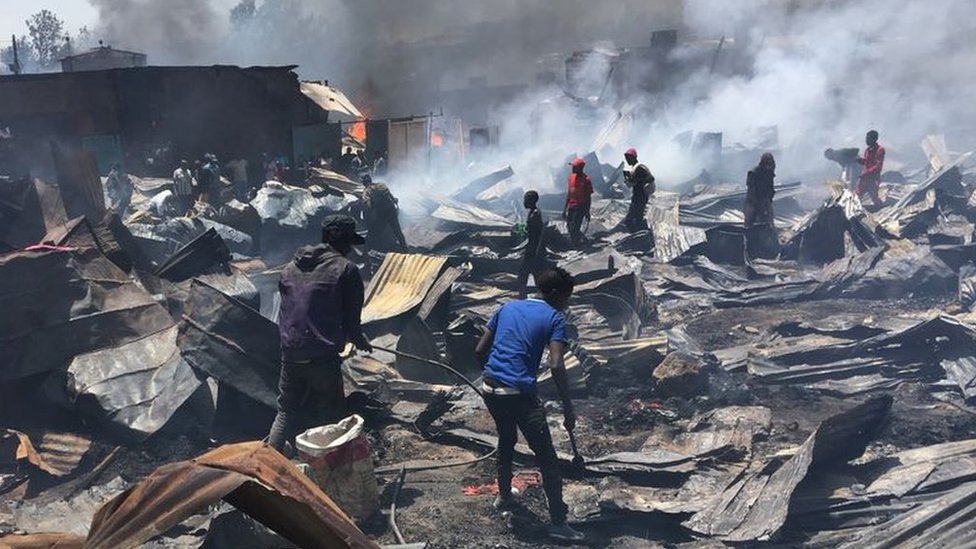
President Uhuru Kenyatta has ordered an investigation into a fire that swept through Kenya’s largest open-air market and carried on burning for eight hours, destroying goods worth thousands of dollars.

Devolution Minister Mwangi Kiunjuri says the fire at the market on Friday morning, one of several in the past five years, could be the result of arson.

The BBC’s Ferdinand Omondi in Nairobi says Gikomba is one of the largest open-air markers in East Africa, and it specialises in second-hand clothes from the West, which would be otherwise unaffordable to the ordinary Kenyan.

One vendor told the BBC he had lost 250 bales of clothing, worth an estimated $23,000 (£17,600).

Our reporter says the city’s fire department fought for hours to bring the fire under control in the confined spaces between the crammed stalls.

Firefighters were also reportedly hindered by congestion and bad roads in the market.

Local media also say city authorities appealed to private operators of fire engines to assist in putting out the fire.

The traders now want their wooden and corrugated-iron stalls replaced with more permanent structures to help to prevent future fires.

They also want a fire station built close by.

Africa Live: Updates on this and other stories

Note: This story is auto-generated from ‘BBC News’ syndicated feed and has not been edited by Africa Prime News staff.

Sudan sanctions: US lifts most economic restrictions after two decades

0
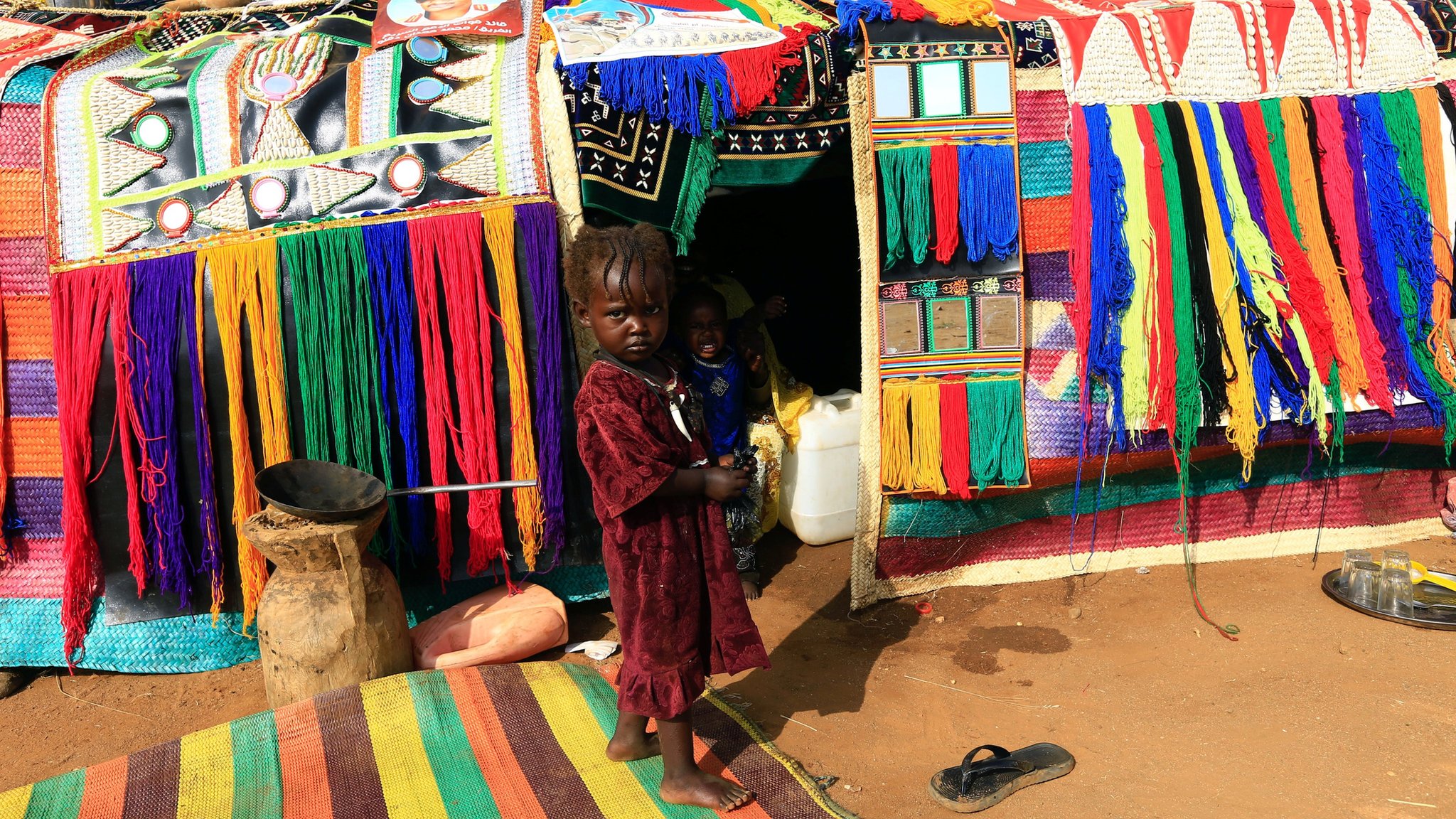
A child stands in front of a decorated house during the Sudanese president's visit to the war-torn Darfur region at Rapid Support Forces Headquarter in Umm Al-Qura, Darfur, Sudan (September 23, 2017)Image copyright Reuters
Image caption Sudan’s president visited villages, such as this one in Darfur last month, ahead of the US announcement

The US is lifting most of the economic and trade sanctions it first imposed on Sudan two decades ago.

However Sudan will remain listed as a state sponsor of terror.

US officials said Sudan had made progress in counter-terrorism and human rights issues. The process of lifting the sanctions began under the Obama administration earlier this year.

Sudan’s President Omar al-Bashir remains wanted by the International Criminal Court for alleged war crimes.

Human rights groups have opposed the easing of sanctions.

Sanctions were first imposed on Khartoum in 1997, and a further round were put in place in 2006 in response to Sudanese forces’ actions in the Darfur conflict.

Citizens of Sudan were removed from the US travel ban restrictions last month.


An eagerly anticipated move

By Mohanad Hashim, BBC Africa

This move has been eagerly anticipated in Khartoum since President Obama partially eased the punitive measures before he left office.

It is expected to boost sectors in the Sudanese economy that have suffered from the trade embargo – these include aviation, agriculture, oil and technology.

The move will be celebrated by some as a victory for the ruling National Congress Party, but it remains to be seen how the average Sudanese will benefit.

For decades, Khartoum has blamed the sanctions for all sorts of ills that befell the Sudanese economy, rather than confronting the chronic mismanagement and the rampant corruption.

Note: This story is auto-generated from ‘BBC News’ syndicated feed and has not been edited by Africa Prime News staff.

Trump rolls back access to free birth control

0

Media playback is unsupported on your device

Media captionWill Trump let Obamacare ‘implode’?

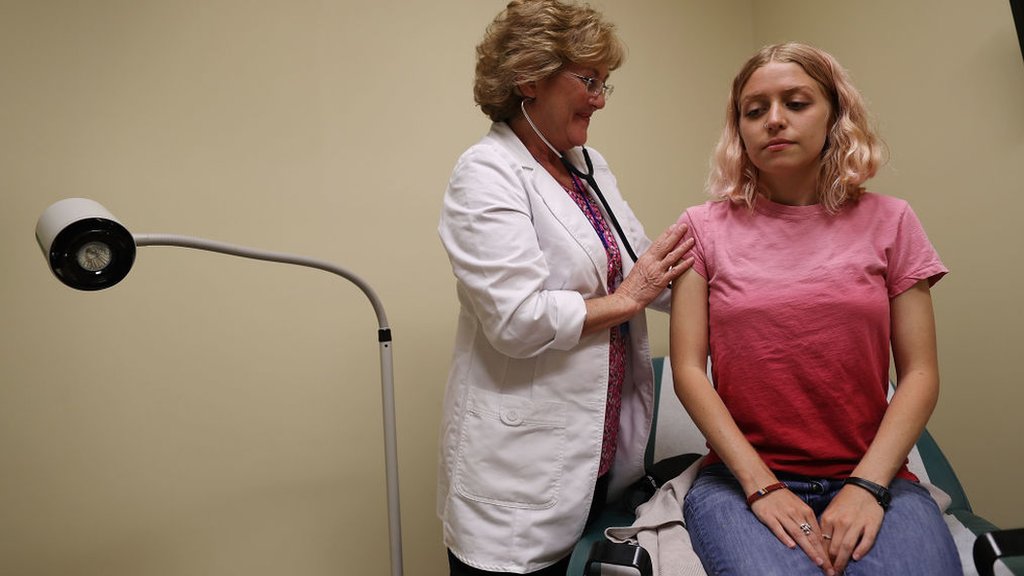
Donald Trump’s government has issued a ruling that allows employers to opt out of providing free birth control to millions of Americans.

The rule allows employers and insurers to decline to provide birth control if doing so violates their “religious beliefs” or “moral convictions”.

Fifty-five million women benefited from the Obama-era rule, which made companies provide free birth control.

As a candidate, Mr Trump had pledged to eliminate that requirement.

The mandate had been a key feature of so-called Obamacare – President Obama’s efforts to overhaul the US healthcare system.

It included a provision that permitted religious institutions to forego birth control coverage for their employees.

But the Department of Health and Human Services (HHS) said on Friday it was important to expand which organisations can opt out and deny free contraceptive coverage.

“We should have space for organisations to live out their religious ideas and not face discrimination because of their religious ideas,” said one HHS official, who did not wish to be named.

The new rule, which is effective immediately, was criticised by women’s rights groups and Democrats in Congress.

Speaker of the House Paul Ryan, the top Republican in Congress, praised the decision as “a landmark day for religious liberty”.

The American Civil Liberties Union (ACLU) and the National National Women’s Law Center have announced that they will sue the federal government over the decision.


An outcry from women’s groups

Nada Tawfik, BBC News, New York

The American Congress of Obstetricians and Gynecologists was blunt. They said the decision undermined the best interests of their patients and turned back the clock on women’s health.

Another women’s advocacy organisation, UltraViolet, said employers and insurers now needed to pick a side, asking if they stood “with Donald Trump and his attacks on women,” or “the women who depend on your coverage?”

The administration says only a limited number of women will be affected.

Whether or not that is true, the president is being criticized for politicising women’s bodies and health to score political points with his base.


Image copyright Getty Images
Image caption Protesters outside the Supreme Court in March when lawsuits were filed against the Obama-era rule

In announcing the rule change, HHS officials cited a study claiming that access to contraception encourages “risky sexual behaviour”.

The department disputes reports that millions of women may lose their birth control coverage if they are unable to pay for it themselves.

Roger Severino, the director of the HHS Office of Civil Rights, argued that only a small percentage of employers will choose to opt out, and therefore only a limited number of women will be affected.

But many health policy analysts say employers that do not wish to pay for their employees’ contraceptive coverage will now be able to.

Note: This story is auto-generated from BBC syndicated feed and has not been edited by AFRICA PRIME NEWS

Canada settles with indigenous ‘Sixties Scoop’ victims

0
Lead claimant Marcia Brown Martel
Image caption Lead claimant Marcia Brown Martel

Canada has reached a reached a major settlement with indigenous victims of the so-called Sixties Scoop.

The federal government has announced a payout of C$800m ($635m; £488m) to some 20,000 victims.

Starting in the 1960s, child welfare agencies removed thousands of indigenous children from their homes and placed them with non-indigenous families.

Canada has been involved in years of litigation over the practice.

Crown-Indigenous Relations Minister Carolyn Bennett said on Friday the agreement reached in principle will see $750m spent on direct compensation and another $50m spent to fund an Indigenous Healing Foundation with a counselling, healing and education mandate.

A further $75m will go to legal fees related to the national settlement.

A tearful Ms Bennett called the agreement an essential step “to begin to right the wrong of this dark and painful chapter”.

The full details of the settlement must still negotiated and it has to be approved by the court.

In February, an Ontario court sided with indigenous plaintiffs in a “Sixties Scoop” class-action lawsuit against the Canadian government.

The plaintiffs had argued that they suffered emotional, psychological, and spiritual harm from the broken connection to their heritage.

A compensation hearing was set to take place on 11 October but lead claimant Marcia Brown Martel chose to adjourn the court date to pursue pan-Canadian agreement discussions with the government.

“It was important to me that we got recognition and justice, not just for some, but for as many people as possible,” she said.

Similar lawsuits have been filed in British Columbia, Manitoba, Alberta, and Saskatchewan.

The agreement is the first step in resolving the remaining Sixties Scoop litigation.

Over the course of about two decades, thousands of indigenous children were sent to mostly non-indigenous homes in Canada, the US, New Zealand, and Australia – often without the consent of their families.

In Ontario, an estimated 16,000 indigenous children were taken from their families and communities and put up for fostering or for adoption.

Many of the children had no contact with their families and communities after their removal.

By the 1980s, Canadian provinces began changing their adoption policies after indigenous leaders and others condemned the practice as a form of “cultural genocide”.

Note: This story is auto-generated from BBC syndicated feed and has not been edited by AFRICA PRIME NEWS

Hospital horror

0

[unable to retrieve full-text content]Note: This story is auto-generated from BBC syndicated feed and has not been edited by AFRICA PRIME NEWS
Storm Nate: At least 22 dead in Costa Rica, Nicaragua and Honduras

0
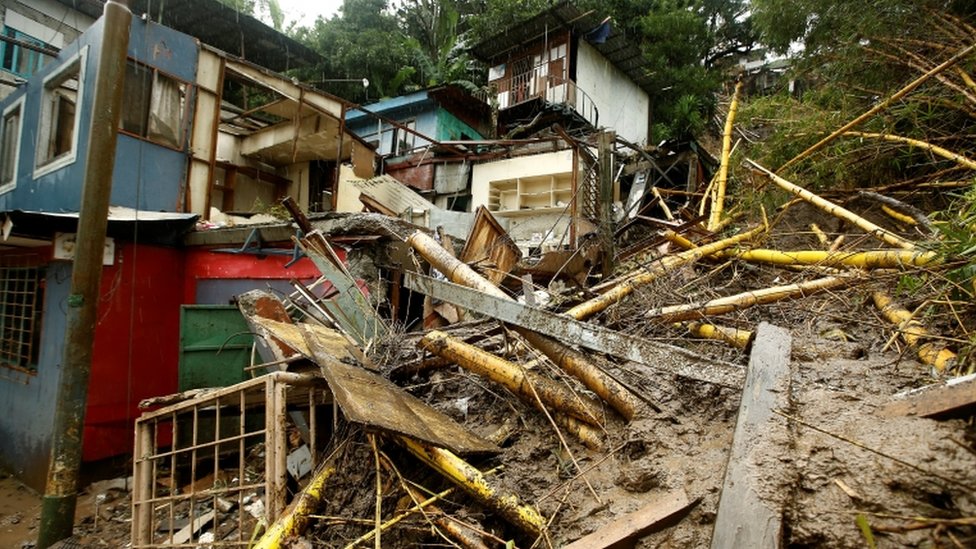
A man recovers some zinc sheets after a mudslide damaged their homes during heavy rains by Tropical Storm Nate in San Jose, Costa Rica October 5, 2017Image copyright Reuters
Image caption Heavy rain has swollen rivers and affected towns across Costa Rica

Tropical Storm Nate has killed at least 22 people in Costa Rica, Nicaragua and Honduras.

It caused heavy rains, landslides and floods which blocked roads, destroyed bridges and damaged houses.

In Costa Rica, nearly 400,000 people are without running water and thousands are sleeping in shelters.

The eye of the storm has since moved over the sea, heading towards Mexico and the United States, where it could become a hurricane.

At least eight people died in Costa Rica, while another 11 were killed when Nate moved north and reached Nicaragua, where as much as 15ins (38cm) of rain had been predicted to fall by the US National Hurricane Center.

Three people were killed in Honduras, including two youths who drowned in a river, and several are reported missing.

One man was killed in a mudslide in El Salvador, according to emergency services.

Oil companies have been evacuating staff from platforms in the Gulf of Mexico that lie along the predicted path of the storm.

In Costa Rica, people were trapped on a stretch of the Inter-American Highway known as the Mountain of Death, after the bus in which they were travelling got stuck between two landslides on Wednesday, according to La Nación newspaper.

There are also concerns crocodiles may be lurking around the overflowing Tárcoles river, and could appear in places where they are not normally expected.

“Please do not kill crocodiles,” said officials, according to news site CRHoy.com. The advice was to avoid standing in overflowing water, to protect children and pets, and to call emergency services if one was spotted.

Image copyright Reuters
Image caption Some 5,000 people are sleeping in temporary shelters in Costa Rica

All train journeys were suspended in Costa Rica and dozens of flights cancelled on Thursday, when the weather worsened.

More than a dozen national parks popular with tourists have been closed as a precaution.

The storm also caused extensive damage to infrastructure in Nicaragua.

“Sometimes we think we think we can cross a river and the hardest thing to understand is that we must wait,” Vice-President Rosario Murillo said on state radio.

“It’s better to be late than not to get there at all.”

Forecasters say the storm could become a category one hurricane before it makes landfall on the southern coast of the United States on Sunday.

Residents from Florida to Texas have been told to prepare for Nate, which, if it does strike, would be the third major storm to hit the southern coast this year.

Image copyright AFP
Image caption Most of the damage in Nicaragua has been along its Caribbean coast

Texas and Florida are recovering from the damage inflicted by Hurricane Harvey, which hit the former in August and caused “unprecedented damage”, and Hurricane Irma, which made landfall in Florida in September.

A state of emergency has been declared in 29 Florida counties, and in New Orleans.

The city’s mayor told people who live on low-lying ground to evacuate.

“There is no need to panic,” Mitch Landrieu tweeted. “Be ready and prepare. Get a plan. Prepare to protect your personal property.”

Note: This story is auto-generated from BBC syndicated feed and has not been edited by AFRICA PRIME NEWS

Currency Exchange Rates

USD - United States Dollar
ZAR
0.06
EUR
1.17
CAD
0.73
ILS
0.31
INR
0.01
GBP
1.34
CNY
0.14
Enable Notifications OK No thanks