Since last October, the Democratic Republic of Congo’s Kasai region has been wracked by violence, leading to the deaths of many civilians.
These fatalities are the result of clashes between the army and a government-backed militia known as the Bana Mura, and a rebel group called Kamuina Nsapu.
Many villages have been burned down and it is estimated that more than a million people have been displaced in the region in the past year.
Photographer John Wessels travelled to the region and met those who have been caught up in the fighting.
Bernadette
Image copyrightJohn Wessels / Oxfam
“I was stabbed, children were drowned and because we fled after the houses were burned down, we lost everything.
“The people of Tshikapa city were kind enough to help us. We stay here on the floor, but we have neither a bed nor sheets.
“Because of the ethnic conflict it is impossible to go back home. They will recognise our language and kill us.”
Emmanuel
Image copyrightJohn Wessels / Oxfam
“Our enemies came in the middle of the day, they told us they were going to kill us and burn our houses.
“They finally came with their machetes a few days ago. I lost everything, my wife, my boy, my daughter. They also killed my older brother.”
Image copyrightJohn Wessels / Oxfam
“When they came they burned everything and I also lost my two diplomas. That was all I had. I can never get them back.
“Now I do not know where to go or what to do.”
Anny, 30
Image copyrightJohn Wessels / Oxfam
“The militia of Kamuina Nsapu came during the night while we slept. We had already heard rumours that we would be attacked so I had prepared a package of food.
“I fled with my husband and five children, ranging from 11 years to six months old. They fired on my husband during the flight.
“I would like to join my family in the capital, Kinshasa but it is impossible because the trip costs 60,000 Congolese francs (£28.50) per head and we have no money; I will never leave my children alone.
“Today, I no longer have strength because I am weakened by the malaria that I caught in the forest and because of the lack of food.”
Raphael
Image copyrightJohn Wessels / Oxfam
Raphael Kabulewu has been a pastor since 1999, and sits outside the Biyega Health Clinic in Tshikapa.
“Since April I have welcomed many orphaned children who arrived at the health centre covered in blood. We now have 200 residents.
Image copyrightJohn Wessels / Oxfam
“They have seen their parents die before their eyes, they have lost everything.
“Now I would like to be able to feed them and give them medicines against diarrhoea and fever.”
Sara, 33
Image copyrightJohn Wessels / Oxfam
“My son was born a week ago. When I fled my village with my two children, my husband was killed by beheading. I think of it all the time.
“When I arrived, here the nurses and the pastor helped me.
“I hope that my children will be able to return to school and that they will have a better life.”
Anne
Image copyrightJohn Wessels / Oxfam
“I was hit on the head with machete blows. I fell to the ground and they thought I was dead.
“My two children were only spared because they did what I told them to do, they lay down in the blood and played dead.
“This centre is the only place where I feel that we are safe.”
Astride, 39
Image copyrightJohn Wessels / Oxfam
“I come from the town of Senge, with my two daughters and my boy.
“They were very ill on the way and when we arrived here, after walking for two weeks in the bush, they were very sick.
“When we arrived here the pastor helped us a lot. We were able to find some food and then clothes.
“I am a teacher but unfortunately I lost my diploma. My dream would be to build a school for children who had to flee their home.”
Image copyrightJohn Wessels / Oxfam
All photographs subject to copyright.
Note: This story is auto-generated from ‘BBC News’ syndicated feed and has not been edited by Africa Prime News staff.
Image copyrightAFPImage caption Abubakar Shekau (centre) pledged allegiance to the Islamic State group but it later disowned him
Nigeria’s militant Islamist group Boko Haram – which has caused havoc in Africa’s most populous country through a wave of bombings, assassinations and abductions – is fighting to overthrow the government and create an Islamic state.
Boko Haram promotes a version of Islam which makes it “haram”, or forbidden, for Muslims to take part in any political or social activity associated with Western society.
This includes voting in elections, wearing shirts and trousers or receiving a secular education.
Boko Haram regards the Nigerian state as being run by non-believers, regardless of whether the president is Muslim or not – and it has extended its military campaign by targeting neighbouring states.
Image copyrightAFPImage caption Boko Haram has attacked many schools in northern Nigeria Image copyrightAFPImage caption The group launched its insurgency in 2009
The group’s official name is Jama’atu Ahlis Sunna Lidda’awati wal-Jihad, which in Arabic means “People Committed to the Propagation of the Prophet’s Teachings and Jihad”.
Resisting British rule
But residents in the north-eastern city of Maiduguri, where the group had its headquarters, dubbed it Boko Haram.
Loosely translated from the region’s Hausa language, this means “Western education is forbidden”.
Boko originally meant fake but came to signify Western education, while haram means forbidden.
Boko Haram at a glance
Image caption Boko Haram’s founding leader Mohammed Yusuf was killed in police custody in 2009
Founded in 2002
Official Arabic name, Jama’atu Ahlis Sunna Lidda’awati wal-Jihad, means “People Committed to the Propagation of the Prophet’s Teachings and Jihad”
Initially focused on opposing Western education
Launched military operations in 2009 to create Islamic state
Designated a terrorist group by US in 2013
Declared a caliphate in areas it controlled in 2014
Since the Sokoto caliphate, which ruled parts of what is now northern Nigeria, Niger and southern Cameroon, fell under British control in 1903, there has been resistance among some of the area’s Muslims to Western education.
Many still refuse to send their children to government-run “Western schools”, a problem compounded by the ruling elite which does not see education as a priority.
Against this background, charismatic Muslim cleric Mohammed Yusuf formed Boko Haram in Maiduguri in 2002. He set up a religious complex, which included a mosque and an Islamic school.
Many poor Muslim families from across Nigeria, as well as neighbouring countries, enrolled their children at the school.
But Boko Haram was not only interested in education. Its political goal was to create an Islamic state, and the school became a recruiting ground for jihadis.
Media playback is unsupported on your device
Media captionBoko Haram in 60 seconds
In 2009, Boko Haram carried out a spate of attacks on police stations and other government buildings in Maiduguri, capital of Borno state.
This led to shoot-outs on Maiduguri’s streets. Hundreds of Boko Haram supporters were killed and thousands of residents fled the city.
Nigeria’s security forces eventually seized the group’s headquarters, capturing its fighters and killing Mr Yusuf.
His body was shown on state television and the security forces declared Boko Haram finished.
Image copyrightAFPImage caption A regional coalition has recaptured much territory from Boko Haram
But its fighters regrouped under a new leader, Abubakar Shekau, and stepped up their insurgency.
Boko Haram’s trademark was originally the use of gunmen on motorbikes, killing police, politicians and anyone who criticised it, including clerics from other Muslim traditions and Christian preachers.
The group then began to carry out more audacious attacks in northern and central Nigeria, including bombing churches, bus ranks, bars, military barracks and even the police and UN headquarters in the capital, Abuja.
Amid growing concern about the escalating violence, the government declared a state of emergency in May 2013 in the three northern states where Boko Haram was strongest – Borno, Yobe and Adamawa.
Image copyrightAFPImage caption A global campaign was launched for the release of the Chobok girls Image copyrightAFPImage caption Thousands of reinforcements have been sent to Maiduguri
It draws its fighters mainly from the Kanuri ethnic group, which is the largest in the three states. Most Kanuris have distinctive facial scars and when added to their heavy Hausa accents, they are easily identifiable to others Nigerians.
As a result, the militants operate mainly in the north-east, where the terrain is also familiar to them.
Foreign links
The deployment of troops and the formation of vigilante groups drove many of them out of Maiduguri, their main urban base and they retreated to the vast Sambisa forest to the south and the Mandara Mountains, close to the border with Cameroon.
From there, the group’s fighters launched mass attacks on villages and towns, looting, killing, abducting women and children and conscripting men and boys into their army.
In April 2014, Boko Haram drew international condemnation by abducting more than 200 schoolgirls from Chibok town in Borno state, saying it would treat them as slaves and marry them off – a reference to an ancient Islamic belief that women captured in conflict are considered war booty.
And it switched tactics, starting to hold on to territory rather than retreating after an attack.
In August 2014, Mr Shekau declared a caliphate in areas under Boko Haram’s control, with the town of Gwoza its seat of power.
“We are in an Islamic caliphate,” said Mr Shekau, flanked by masked fighters and carrying a machine gun. “We have nothing to do with Nigeria. We don’t believe in this name.”
Image copyrightAFPImage caption The violence has forced millions from their homes
Later, Mr Shekau formally pledged allegiance to the Islamic State (IS) group, turning his back on al-Qaeda.
IS accepted the pledge, naming the territory under Boko Haram’s control as the Islamic State of West Africa Province and as being part of the global caliphate it was trying to establish.
Chronic poverty
But by March 2015, Boko Haram had lost all the towns under its control as a regional coalition – made up of troops from Nigeria, Cameroon, Chad and Niger – was formed to fight it.
Once again, Boko Haram retreated to the Sambisa forest, where the Nigerian military pursued it, freeing hundreds of captives.
Image copyrightBoko Haram videoImage caption IS has declared Abu Musab al-Barnawi Boko Haram’s new leader Image copyrightAFPImage caption Regional forces have stepped up border patrols to curb infiltration by militants
In August 2016, the group apparently split, with an IS video announcing that Mr Shekau had been replaced with Abu Musab al-Barnawi, believed to be a son of Boko Haram’s founder.
Mr Shekau disputed this, insisting he was still in charge.
And in a big surprise, 21 of the Chibok girls, seen as prized assets for Mr Shekau, were freed in October 2016 following talks involving the militants, the Nigerian and Swiss governments and the International Committee of the Red Cross.
But with Amnesty International saying that some 2,000 children remain in captivity, many more are still to be freed.
And while many fighters have been killed and weapons seized, some analysts say it is too early to write off Boko Haram.
Boko Haram has outlived other militant groups in northern Nigeria, and has built a presence in neighbouring states where it has carried out attacks and has recruited fighters.
It has a force of thousands of men – CIA officials have estimated around 9,000 – and cells that specialise in bombings. Through its raids on military bases and banks, it has gained control of vast amounts of weapons and money.
So, the chances of it being routed anytime soon – despite Mr Buhari’s claim that it had been “technically defeated” – are slim, with the region’s chronic poverty and poor education system helping it gain new recruits.
Note: This story is auto-generated from ‘BBC News’ syndicated feed and has not been edited by Africa Prime News staff.
Image copyrightBlue Security via ReutersImage caption A container ship blocked the harbour mouth after drifting away
Moored ships were blown away as a “supercell thunderstorm” swept through South Africa’s KwaZulu-Natal region, killing at least eight people.
The dead include a child swept away by rising waters and two patients killed when a wall collapsed at the Prince Mshiyeni Memorial Hospital, near Durban, the region’s main city.
Image copyrightRescue Care via ReutersImage caption Motorists were stranded for hours as gale force winds and heavy rains hit the coastal region
KwaZulu-Natal and other parts of the country were hit by a “supercell thunderstorm”, the South African Weather Service said.
Such storms are characterised by a persistently rotating updraft like a tornado.
Image copyrightRescue Care via Reuters
“Satellite pictures show lightning over the sea and it seems to be moving off the coastline,” Weather Service spokesman Hannelee Doubell was quoted by South Africa’s TimesLive news site as saying.
The storm forced the closure of the Port of Durban, one of the busiest in Africa, on Tuesday.
Three vessels were grounded while others broke mooring lines and drifted in the channel, the port authority said in a statement.
Image copyrightReutersImage caption The storm caused widespread destruction
Emergency rescue worker Paul Herbst said a little girl had been washed away by floodwaters in Umlazi, a residential area south of Durban.
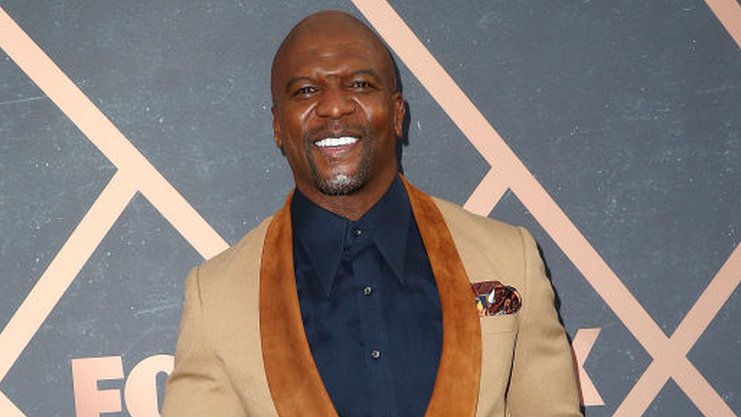
Image copyrightGetty ImagesImage caption Terry Crews (right) says he was with his wife Rebecca (left) when the alleged incident occurred at a Hollywood function last year
US actor Terry Crews has said he was sexually molested by a Hollywood executive last year.
In a series of tweets, Crews said the executive, whom he did not name, had groped his “privates” in front of Crews’s wife at a function.
But the actor said he had neither retaliated nor taken further action as he had feared repercussions.
Crews said he had been spurred to speak out by the claims of sexual harassment made against producer Harvey Weinstein.
Weinstein lost his job and his wife has left him after actresses made a string of allegations against him.
Crews is a former football player who went into acting in the 1990s and is currently appearing in the Fox sitcom Brooklyn Nine-Nine. He is married with five children.
Crews said Weinstein was not the man who had allegedly assaulted him.
The executive in question “knows who he is”, he said, and had apologised for his behaviour. But Crews appeared not to discount future action against him, saying “sumtimes Uhav2 wait & compare notes w/ others who’ve been victimized in order 2gain a position of strength”.
Crews began his thread of 16 tweets by saying the “thing with Harvey Weinstein is giving me PTSD” (post-traumatic stress disorder):
Image copyrightTaobaoImage caption ‘Instant puddings’ made from donkey-hide gelatine are popular among Chinese consumers
The world’s donkeys are facing a population crisis because of the huge demand for their skins in China, where they are used to make health foods and traditional medicine.
Donkey meat is also a popular food, but a huge drop in the number of Chinese donkeys and the fact they are slow to reproduce, has forced suppliers to look elsewhere.
Africa has been badly hit because the animals are such an important part of life for transport and farming – particularly in poorer communities.
Image copyrightGetty ImagesImage caption In Zimbabwe, a “state-of-the-art” donkey meat abattoir costing $150,000 (£114,000) is due to open in October
In many places the price of a donkey has doubled in the past few years, and as thieves cash in, families are left unable to afford a new animal.
‘I woke up and my donkey was gone’
Water deliveryman Anthony Maupe Wanyama, 29, from Kenya had his donkey Carlos for four years and was doing well.
“I bought land up-country, bought a house, paid school fees and looked after my family,” said the father of two.
Media playback is unsupported on your device
Media caption‘I woke up and my donkey was gone’
He and his donkey were such a part of life in Ongata Rongai, just outside Nairobi, that Anthony’s nickname is “Carlos”.
“I woke up one morning and Carlos was missing. I looked around the area, and then found him dead, his skin had been removed,” said Anthony, tears rolling down his cheeks as he talked about his much-loved animal.
He now rents another donkey to pull a cart-load of blue plastic jerry cans he uses to deliver water, but has to give the owner half of the three or four dollars he makes on a good day.
Image caption Anthony Wanyama attaches a harness to his rented donkey Image caption “Carlos”, the name of Andrew’s dead donkey and the nickname now given to him, is still listed on his cart
“Now I don’t have enough money. I haven’t paid my rent, I haven’t paid school fees, and I have people who depend on me,” Anthony said.
He can’t afford to buy a new Carlos.
Donkey trade – the facts:
Image caption Donkey hides piled up ready for export
China’s donkey population dropped from 11m in 1990 to 3m today, based on government data
Ejiao, the gelatine produced by boiling donkey skins, can sell for up to $388 (£300) per kilo
Uganda, Tanzania, Botswana, Niger, Burkina Faso, Mali, and Senegal have banned donkey exports to China
Suffering
The surge in price and demand in Kenya has been encouraged by three donkey abattoirs, which have opened across the country.
They can each slaughter around 150 animals a day, packing and freezing the meat and salting the skins for export.
At the Star Brilliant Donkey Export Abattoir in Naivasha, the latest arrivals are being dragged onto flat metal scales – they are sold by “live weight”.
Image caption Staff lead donkeys to an abattoir in Kenya
They are shot in the head with a bolt gun before their meat and skins are processed.
Chief executive John Kariuki says he was the first in Kenya, and in Africa, to get official permits to open a donkey slaughterhouse.
“Before, there was no market for the donkeys. People used to sell their cows, people used to sell their goats to pay their school fees for the children,” he said.
“But now I find that people in the market are selling donkeys more than cows.
“We are happy with the Chinese, because before there was nothing coming from donkeys, but so many people are benefitting from the donkey now today.”
Chinese buyers monitor the process – making sure everything is properly packed and prepared.
When the skins are boiled, they produce a brown gelatine, which is the essential ingredient in Chinese “ejiao” products – popular health foods and traditional medicines.
Image caption Donkey gelatine – or ejiao – is marketed in a variety of liquid and paste forms
But the way donkeys are being treated has been criticised.
A British donkey charity and environmental investigative journalists from South Africa-based group Oxpeckers have uncovered cases of animal abuse among those waiting to be killed in appalling conditions.
“This is the biggest crisis donkeys have ever faced,” said Mike Baker from The Donkey Sanctuary, which is leading an international campaign to halt the trade in donkey products until it can be properly regulated.
“We are seeing millions being taken and we are seeing suffering on the scale I have never witnessed before.
Image caption A mound of donkey carcasses dumped in Botswana after the animals’ flesh was removed
“We are talking about donkeys being starved to death to make it easier to skin them, or bludgeoned to death.”
But Mr Baker says the international pressure is starting to have an impact.
Countries including Uganda, Tanzania, Botswana, Niger, Burkina Faso, Mali, and Senegal have banned China from buying their donkey products.
“Over a dozen governments have now taken action to stop this trade, and that’s because they know this is impoverishing their people as well as being massively cruel to animals,” Mr Baker says.
Image caption Donkey hides are laid out to dry in Ghana
They are being killed on a dramatic scale across the continent – and places further afield like Brazil and Peru.
And life is certainly a lot harder for Anthony Wanyama and his family, with rent arrears and unpaid school fees.
Many thousands of people trapped by terrible drought have been forced to sell their only assets, while others have lost their donkeys to thieves and can no longer afford to buy another animal.
Note: This story is auto-generated from ‘BBC News’ syndicated feed and has not been edited by Africa Prime News staff.
Image copyrightGallo ImagesImage caption President Zuma’s son Duduzane (r) has strong business ties to the Gupta brothers (l)
The reputations of major international firms Bell Pottinger and KPMG have been badly damaged by their work relating to the controversial Gupta family in South Africa. BBC Africa Business Report editor Matthew Davies looks at whether the family’s business can survive.
The embattled Gupta family, who own a range of businesses in South Africa, have had all their accounts with a number of banks closed supposedly because of alleged dubious business dealings.
And without banks they cannot pay their staff, which they have put at nearly 8,000.
But how did we get here?
When the Gupta brothers, close friends of President Jacob Zuma, arrived in South Africa as ordinary immigrants from India in the 1990s, they established a computer business Sahara, later going on to buy up stakes in mining and engineering companies, a luxury game lodge, a newspaper and a 24-hour news TV station.
But those very lucrative businesses are now at the heart of their fall from grace in what has been termed “state capture” here – allegations that the family, through a slew of corrupt deals, have used their influence to access millions of dollars worth of government contracts.
Image copyrightAFPImage caption There have been massive demonstrations against the Guptas
The three brothers, Atul, Rajesh and Ajay have always strenuously denied the allegations.
South Africa’s four big banks, ABSA, FNB, Standard and Nedbank told the Guptas in March 2016 that they would no longer provide banking facilities to the Gupta-owned Oakbay company and its subsidiaries.
Some have said the scandal points to a bigger problem for South Africa and its governing African National Congress (ANC).
Questions about wealth
South Africa Communist Party head Blade Nzimande pointed to “parasitic patronage networks” in the government. He added that it takes two to tango:
“We can’t only blame the Guptas. We must also blame their collaborators inside our movement and government as well‚ and unless we deal with that‚ we are on a slippery slope.”
The principal connection between the brothers and Mr Zuma came through the president’s son, Duduzane.
He has worked for the Guptas for 13 years, starting out as a trainee at Sahara Computers.
He recently told the BBC the reason the Guptas chose to go into business with him was that he was a “likeable guy”.
Media playback is unsupported on your device
Media captionDuduzane Zuma denies that his relationship with the Guptas is improper
Corporate documents show that he and the Guptas have served together on at least 11 company boards.
One of President Zuma’s wives worked for a Gupta-controlled mining company and his daughter was a director at Sahara Computers.
The family is worth billions of South African rand, and based on the Johannesburg Stock Exchange figures for 2016, Atul Gupta is South Africa’s 7th richest person with a net worth of around $770m (£600m).
In recent years, questions have been asked about how one family came to amass such wealth in such a relatively short period of time and the negative attention surrounding the Gupta brand began to make those doing business with them jittery.
The Zumas and the Guptas – ‘the Zuptas’
• Bongi Ngema-Zuma, one of the president’s wives, used to work for the Gupta-controlled JIC Mining Services as a communications officer
• Duduzile Zuma, his daughter, was a director at Sahara Computers
• Duduzane Zuma, a son, was a director of some Gupta-owned companies but stepped down in 2016 following public pressure
By July, the Guptas were reduced to using just two banks operating inside South Africa, the Bank of China and the Bank of Baroda – both of which have now bailed on them.
There was really only one thing to do: Sell up.
So in August, the family put a “For Sale” sign on Oakbay and its other companies.
Within two days, its media assets – the 24-hour news station ANN7 and The New Age newspaper – had gone for a combined $34m to former government spokesperson Mzwanele Manyi, an avid supporter of Mr Zuma.
But this was a vendor-financed deal – essentially with the seller lending the money to the buyer.
The deal was followed with the sale of mining company Tegeta for $228m (£175m) to Charles King.
Charles King is based in Switzerland, and until July had no clear track record in the mining sector. It was registered to trade in fashion.
Leaving South Africa?
The Guptas announced that they would be selling all of their South African assets by the end of the year:
“As a family, we now believe that the time is right for us to exit our shareholding of the South African businesses which we believe will benefit our existing employees,” they said in a statement.
But how detached the Guptas’ business empire becomes from South Africa remains to be seen.
Many observers feel that they will continue, in some fashion, to pull the levers and call the shots.
Again, this is something they and their associates deny.
Image copyrightReutersImage caption President Jacob Zuma has been accused of allowing members of the Indian-born Gupta family to wield undue influence
But back to their undoing.
“There will come a point, however, when they are properly dumped by their backers in the ANC [the Zuma faction] but this is unlikely yet and might only happened closer to 2019,” says Peter Attard Montalto, an expert on emerging markets.
“We have seen some public distancing of the Zuma faction and the Guptas but behind the scenes, I’m not sure much has changed yet,” he adds.
Corporate South Africa has been hit by an earthquake because of its links to the family and it will suffer the aftershocks for some time to come.
Several large companies have been shaken to the core and senior staff have resigned or been suspended.
British public relations giant Bell Pottinger is in administration, while international accounting firm KPMG has found itself in the firing line, along with financial consultants McKinsey.
Media playback is unsupported on your device
Media captionAndrew Harding reports on allegations of high-level corruption in South Africa involving a British PR company
German software company SAP has suspended four of its managers in South Africa while an internal investigation is conducted into alleged kickbacks.
At this stage, the long-term reputational damage to all is hard to gauge.
Having said that, Daniel Silke at Political Futures Consultancy believes the whole saga has actually strengthened the position of South Africa’s private sector:
“There are enough top-notch companies who are politically and morally beyond reproach and this is a relatively isolated political incident. The private sector has shown that it can take action quickly.”
What happens next? It’s a question many South Africans are asking.
Image copyrightPAImage caption Global accountancy firm KPMG removed the leadership team of its South African arm after an internal investigation into work it did for the Gupta family
Opposition politicians and parties are calling for inquiries and investigations.
In the country’s parliament, four committees have been ordered to conduct investigations.
Only one has scheduled public meetings so far. The National Prosecuting Authority says its investigations are ongoing, but has been thin on any details.
Chief prosecutor Shaun Abrahams told parliament: “My silence does not mean that no work is being done.”
As yet, no-one has been arrested or charged in connection with any allegation of corruption linked to the Guptas.
They remain resolute in their denials, saying there are no cases to answer and that they are now in the process of clearing their name “in the face of unfounded media allegations”.
Whether the Guptas quit South Africa completely is, at this point, a future only known to them.
Selling up completely and moving the proceeds offshore would take some time, even if they wanted to.
Still, their dealings in South Africa have affected a wide range of people, companies and institutions both within and beyond the borders of South Africa.
When this saga is over and the music stops, where everyone will be left standing is a complicated call to make at the moment.
The full picture may take years to emerge.
Note: This story is auto-generated from ‘BBC News’ syndicated feed and has not been edited by Africa Prime News staff.
Image copyrightAISHA AHMAD/FACEBOOKImage caption Aisha Ahmad’s profile photos angered conservative religious elements in Nigeria – but the online attacks also sparked a backlash
The appointment of a Muslim woman to the post of deputy governor of Nigeria’s central bank kicked off a debate when some conservative Muslims from her home region accused her of dressing “immodestly” – but others immediately leapt to her defence.
Aisha Ahmad is an executive at Diamond Bank, one of Nigeria’s leading financial institutions. She was picked by President Muhammadu Buhari to replace Sarah Alade, a deputy governor at the central bank, who retired in March after 23 years in the job.
The 40-year-old Ahmad is from Niger state in northern Nigeria, an area where girls are often poorly educated in comparison with the south of the country, and where opportunities for women in business can be limited. Despite this, local reports note that she earned several degrees, including one from the UK’s prestigious Cranfield School of Management, and embarked on a career with several top banks.
However immediately after the news of her appointment filtered out, the discussion turned from her qualifications – with some questioning her relative youth – to her wardrobe. Specifically, photos taken from her social media accounts prompted criticism from conservative religious figures in her native northern Nigeria.
Image copyrightAISHA AHMAD/FACEBOOKImage caption Aisha Ahmad in one of the pictures that caused the storm
Some clerics with big online followings quoted the Koran and insisted that women should dress “decently” – the photos they object to show her in a dress, with her hair uncovered.
One critic, Abubakar Almajiri, called Ahmed a “sex worker” on Facebook and said her appointment was “a disservice to us Muslims.” Almajiri slammed President Buhari and said: “We expect him to choose, if not a good seed among us Muslims, but a little bit better Muslim for that position.”
Most of Ahmad’s critics appear to be men, and several expressed anger at the banker’s success simply because she is a woman. But some female social media users jumped in. One, Saratu G Abdul, commented that Ahmed should be a “role model” and that various Koranic verses “prevent women from exposing their flesh”.
But just as the comments about the photos started gaining traction on social media, a backlash formed against the religious conservatives.
You might also be interested in:
Gimba Kakanda, a Nigerian writer, was one of those who came to the banker’s defence. Speaking to the BBC he said the critics went too far. He and others pointed out that Nigeria, particularly the north of the country, has serious problems that has nothing to do with how women dress.
“It’s embarrassing that we are actually debating the body and dress of a woman, with over ten million of our children out of school, the largest on a planet that has China and India, places with over a billion people,” Kakanda told the BBC.
“Imagine if we had channelled the energy and outrage we put on to demonise Mrs Ahmad into addressing our systemic poverty, low literacy rate, political corruption, and decaying infrastructure,” he said.
Ahmad now faces a confirmation vote by the Nigerian senate.
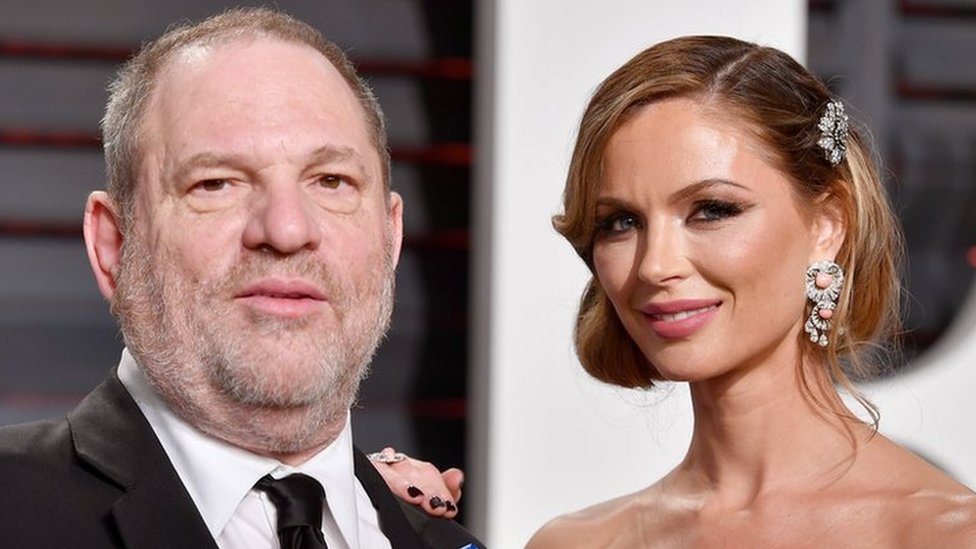
Image copyrightGetty ImagesImage caption Ms Chapman, pictured here with her husband, said his actions were “unforgivable”
The wife of producer Harvey Weinstein has said she is leaving him following allegations of sexual harassment from a string of actresses.
Georgina Chapman, 41, described Weinstein’s actions as “unforgivable”.
Angelina Jolie and Gwyneth Paltrow are the latest women to come forward. Both said the incidents happened early in their careers.
On Tuesday, Weinstein also denied allegations of rape made in The New Yorker magazine.
Weinstein was fired on Sunday from his own film studio. The Weinstein Company board said on Tuesday that they would help any criminal investigation.
“My heart breaks for all the women who have suffered tremendous pain because of these unforgivable actions,” Georgina Chapman, 41, told People magazine.
Chapman and Weinstein, 65, have two children together.
Media playback is unsupported on your device
Media captionModel Zoe Brock tells Radio 4’s Today that she was one of Harvey Weinstein’s victims
Meanwhile, ex-President Barack Obama and his wife Michelle have joined the growing public condemnation.
In a statement, they said they were “disgusted by the recent reports about Harvey Weinstein” and added that they “celebrate the courage of women who have come forward”.
Weinstein was a big donor to the Democratic party under Obama’s leadership. The Obamas’ eldest daughter Malia worked as an intern at The Weinstein Company in New York earlier this year.
Weinstein also donated to Hillary Clinton’s 2016 presidential campaign. Mrs Clinton said she was “shocked and appalled” by the revelations.
Image copyrightGetty ImagesImage caption Angelina Jolie said she had a “bad experience” with Weinstein
Paltrow and Jolie both sent statements about Weinstein’s behaviour to the New York Times, which first reported allegations against him last week.
Jolie said in an email: “I had a bad experience with Harvey Weinstein in my youth, and as a result, chose never to work with him again and warn others when they did.
“This behaviour towards women in any field, any country is unacceptable.”
Image copyrightGetty ImagesImage caption Gwyneth Paltrow said she was “terrified” when Weinstein made advances on her
In a statement, Paltrow alleged that, after Weinstein cast her in the leading role in Emma, he summoned her to his hotel suite, where he placed his hands on her and suggested massages in his bedroom.
“I was a kid, I was signed up, I was petrified,” she told the newspaper.
She said she told her then-boyfriend Brad Pitt about the incident, and said he confronted Weinstein.
“I thought he was going to fire me,” she said.
Image copyrightAFPImage caption Asia Argento, pictured in 2009, has spoken to the New Yorker magazine
Others to have spoken out about their experiences with Weinstein include:
Three women who told The New Yorker they had been raped by the producer. Italian actress and director Asia Argento told The New Yorker she was forced into a sexual act with Weinstein and had not spoken out until now because she feared it would have harmed her career
Lucia Stoller, now Lucia Evans, told the magazine that Weinstein approached her in 2004 and also forced her into a sexual act
The third woman was not named by the magazine but said Weinstein “forced himself on me sexually”
Mira Sorvino, who won an Oscar in 1996 for her role in Mighty Aphrodite for Weinstein’s Miramax studio, told The New Yorker that Weinstein had tried to pressure her into a relationship
Rosanna Arquette said she rejected Weinstein’s advances and believes her acting career suffered as a result
Heather Graham said in a Variety interview that Weinstein implied she had to sleep with him to appear in one of his films
British actress Romola Garai says she was left feeling “violated” when she was auditioned by Weinstein as an 18-year-old. She said the producer came to the door wearing a bathrobe, describing his behaviour as an “abuse of power”
The initial New York Times report, which broke the story, said actresses Ashley Judd and Rose McGowan had accused Weinstein of serious sexual misconduct
Zoe Brock, a writer and model, said Weinstein took his clothes off in a hotel room and asked her for a massage
The New Yorker report also said 16 former and current employees at Weinstein’s companies “witnessed or had knowledge of unwanted sexual advances and touching at events associated with Weinstein’s films and in the workplace”.
Image copyrightEPAImage caption Mira Sorvino said Weinstein tried to pressure her into a relationship
Weinstein’s spokeswoman Sallie Hofmeister issued a statement in response to the article.
“Any allegations of non-consensual sex are unequivocally denied by Mr Weinstein,” she said. “Mr Weinstein has further confirmed that there were never any acts of retaliation against any women for refusing his advances.
“Mr Weinstein obviously can’t speak to anonymous allegations, but with respect to any women who have made allegations on the record, Mr Weinstein believes that all of these relationships were consensual. Mr Weinstein has begun counselling, has listened to the community and is pursuing a better path.”
Meanwhile, actress Lindsay Lohan posted an Instagram story – which she later deleted – appearing to defend Weinstein, saying: “I feel very bad for Harvey Weinstein right now. I don’t think it’s right what’s going on.”
Buzzfeed reporter Lauren Yap did a screen grab and posted Lohan’s video, in which she also posted an angel emoji under Weinstein’s name, on Twitter. Lohan also said Chapman should “be there for her husband” – although it’s not clear if she knew at the time that Chapman had said she was leaving him.
Follow us on Facebook, on Twitter @BBCNewsEnts, or on Instagram at bbcnewsents. If you have a story suggestion email entertainment.news@bbc.co.uk.
Note: This story is auto-generated from BBC syndicated feed and has not been edited by AFRICA PRIME NEWS

 Image copyright John Wessels / Oxfam