[unable to retrieve full-text content]Note: This story is auto-generated from BBC syndicated feed and has not been edited by AFRICA PRIME NEWS

[unable to retrieve full-text content]Note: This story is auto-generated from BBC syndicated feed and has not been edited by AFRICA PRIME NEWS

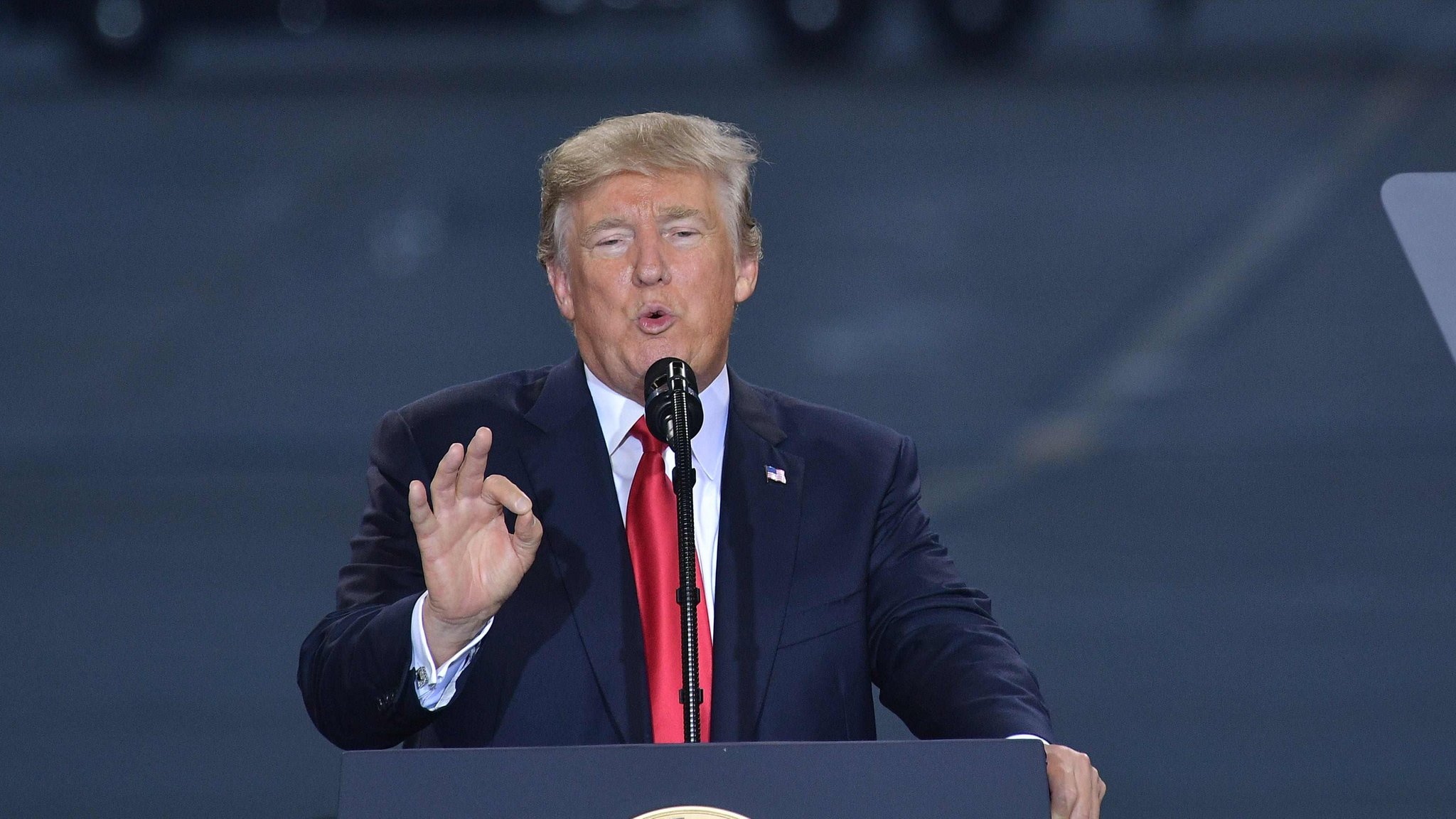

President Trump made a number of claims about the economy in his first answer on Sean Hannity’s programme on Fox News on Wednesday.
This is what he said:
“The country – we took it over, it owed $20 trillion. As you know, the last eight years they borrowed more than it did in the whole history of our country. So they borrowed more than $10tn, right? And yet, we picked up $5.2tn just in the stock market. Possibly picked up the whole thing in terms of the first nine months, in terms of value. So you could say in one sense, we’re really increasing values. And maybe in a sense we’re reducing debt.”
Let’s go through that one claim at a time.
The Treasury handily gives daily updates on the level of debt, which is the total amount owed by the US government.
On 20 January 2017, the date of the president’s inauguration, the total outstanding public debt was $19.95tn (£15.2tn).
So he’s right on that one.
Nearly right.
On 20 January 2009, when President Obama was sworn in, the debt was $10.63tn. The difference is $9.32tn, which is not more than $10tn, but is still a lot of borrowing.
Comparing figures with the amount of debt borrowed in the whole history of the country is a bit tricky.
We have to assume he means since 1789, because that’s when the US Treasury’s records go back to.
Clearly there are problems with this comparison, because the economy in the late 18th Century is in no sense comparable with the one today.
If we take the outstanding debt on inauguration day in 2009 as the total amount borrowed since 1789, then President Obama did not borrow more than that, he borrowed $1.31tn less than that.
Of course, that net debt figure is not the total amount borrowed. The total amount borrowed will be considerably more than that because some debt will have been repaid over the last few hundred years.
And if it’s not quite true in cash terms over that period then it will certainly not be true using any measure that takes into account the growth of the economy.
Bloomberg’s US exchange market capitalisation (measuring the value of all listed companies) puts the current value at $28.39tn, while the value the day after the inauguration was $25.55tn, so that’s an increase of $2.84tn.
But we know from President Trump’s Twitter account that he was actually comparing with the level on election day.
On 8 November, the market capitalisation was $23.89tn, so it has grown by $4.5tn.
That’s not quite $5.2tn but it’s still growth of about 19%, which is pretty hefty.
This bit is harder to interpret, but it sounds like he is comparing the US debt with the value of the shares on the US stock exchange.
Market capitalisation is not the government’s money – it is shareholders’ money.
It might lead to more taxes being paid eventually, but the two figures do not belong in the same category.
Remember, on inauguration day, the debt was $19.95tn.
Well, the Treasury’s latest figure for 10 October was $20.38tn, so that’s gone up by $430bn.
Debt did actually fall in the early months of the presidency, but it jumped on 8 September when the president signed a bill raising the debt ceiling.

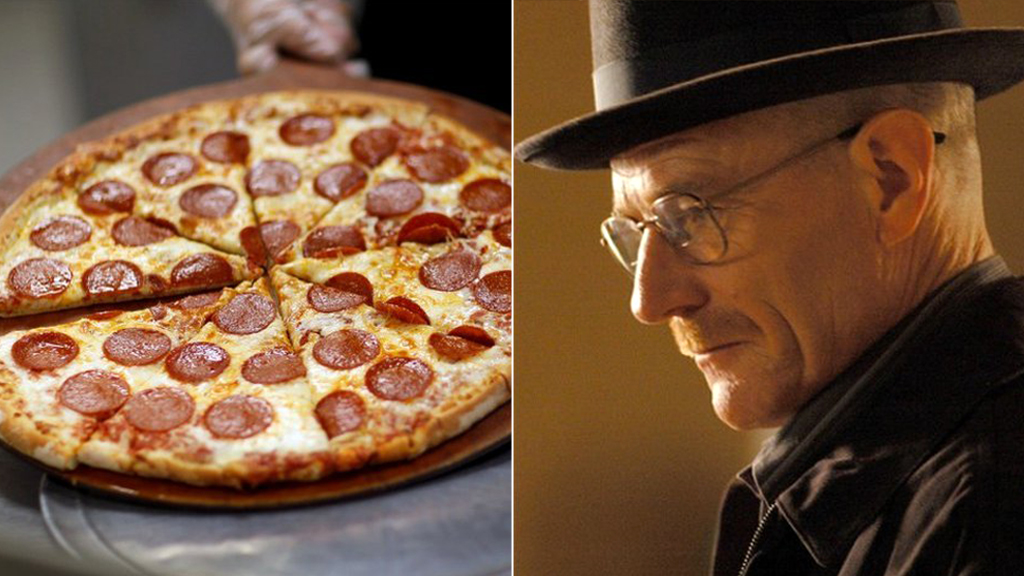
 Image copyright Amc/ Alex Proimos
 If you have seen the popular TV series Breaking Bad, you probably remember a scene in which Walter White angrily tosses a pizza onto his own roof.
In the years since, fans have travelled to recreate the stunt, landing the real-life owner with hours of cleaning.
The show’s creator even stepped in in 2015, asking the pranksters to stop.
Now the owner has reached breaking point, according to local media, building a 6ft iron fence to keep people, and their pizzas, out.
In the programme, actor Brian Cranston chucks the pizza after his wife discovers his drug-dealing alter-ego and refuses to let him in the house.
Frank Sandoval, who runs a local Breaking Bad tour company, told local news station Kob4 that he has had to climb onto the roof to pull pizzas thrown by tourists down.
Joanne Quintana said her mother, the owner of the house, has had to deal with hundreds of people over the last few years trespassing, taking photographs and even attempting to steal rocks as souvenirs.
“We feel like we can’t leave because when we, do something happens and that’s ridiculous,” she said.
The crime-thriller ended four years ago but creator Vince Gilligan scolded fans on a 2015 podcast about their behaviour while sightseeing.
“There is nothing original, or funny, or cool about throwing a pizza on this lady’s roof,” Gilligan said.
“It’s been done before, you’re not the first.”

By Iliya Kure
 An International Non-Governmental Organisation, Sightsavers, is calling for increased financial support to treat over a million cases of cataract in developing countries of the world.
In a statement to mark the 2017 World Sight Day, its Chief Executive Officer, Caroline Harper, expressed concern over untreated cases, as well as possible rise in avoidable blindness and visual impairment across the globe.
“I am very concerned to hear that the levels of avoidable blindness, which had been steadily declining, are now projected to increase significantly over the next few decades,” the statement says.
A Research published by ‘The Lancet’ on the 2017 World Sight Day, cautions that unless efforts are stepped up, the number of people who are blind will triple within the next four decades. The biggest cause according to the publication will be cataract.
In a campaign for the fundraising tagged “final push”, Sightsavers says, “through the UK Aid Match scheme, donations to this appeal will be matched pound for pound, doubling the impact of the UK public’s support”.
According to Sightsavers, the highest levels of blindness is found in developing countries, with parts of sub-Saharan Africa amongst the worst affected areas.
In Nigeria, across all ages 1.09% are blind and 4.23% are blind and across all ages’ 1.09% are blind and 4.23% have a severe or moderate visual impairment.
Statistics reveals that, “the leading causes of blindness and visual impairment are uncorrected refractive errors (123.8 million people worldwide) and cataract (65.2 million worldwide), followed by age-related macular degeneration and glaucoma.
Cataract is treatable, but many countries don’t have facilities readily available to handle the cases.
“This means we must redouble our efforts, especially to treat cataracts which are the biggest cause of blindness in developing countries. Our partnership with the UK government will put fresh impetus into our ‘A Million Miracles’ campaign,” says Sightsavers document.
“We are over 75% of the way there so this is the final push to reach our target.”

The Nigerian Army says it is collaborating with local defence manufacturers to produce armoury needed for its use.
This is to “promote local industries, economic growth and save foreign exchange for Nigeria” says a statement by Army spokesperson, Brigadier General Sani Kukasheka Usman.
According to the statement, an indigenous company, Proforce Limited has presented locally made armoured personnel carrier and armoured plated vehicles, as well as other military products at the Army Headquarters Abuja on Wednesday, the 11th October 2017.
The statement further says, the Nigerian Army is procuring some units of the vehicles for immediate deployment to the North East.


By Amos Tauna
 Kaduna (Nigeria) — Governor Aminu Waziri Tambuwal of Sokoto State, north west Nigeria, says northern part of Nigeria is not against restructuring, contrary to the notions in certain parts of the country.
Speaking as chairman at the ongoing 2-day conference on “The North and the Future of the Nigerian Federation, “Governor Tambuwal declared that the North wants restructuring like any other part of Nigeria.
He said the notion that the North was against restructuring because it benefits most from the current state of things, is circumscribed and patently false.
“The fact that some people continue to parrot such a lie only help to give credence to the flawed argument. Let us be clear: the North wants restructuring as much as anyone else. However, as a people we do not easily jump unto the bandwagon because we are always there for the long haul. We believe that any decision we take must be inclusive, and respect procedures and processes so that the outcome is sustainable.
“Only recently, the Northern States Governors’ Forum and Northern Traditional Leaders Council Committee on Restructuring of the Nigerian Federation which I chair inaugurated a technical committee reflecting the amazing diversity of Northern Nigeria to look at the issues surrounding the call for restructuring and get the aggregate views of the North and present same to the committee for use during the proposed Town Hall/Public Hearings across the 19 Northern States.
“We have ensured that the technical committee members are personalities who have proven themselves in various fields, people with the intellectual ability and experience to contrast, aggregate and analyse the views of the North and how they impact on the growth and development of this country.
“I think we should first, as a country, agree on a mutual definition of the term restructuring. In my view, if restructuring means taking stock of our arrangement to ensure that no State takes a disproportionate amount of the resources, or most of the available space in the education or job sector, or subjugate the others’ culture or religion, or lords it over the other so that the number of the poor and uneducated whose future is circumscribed by their circumstance is shared proportionately, then we are game.
“We all want a country where there is peace and progress, where justice is a given, where all lives are safe and people can pursue their legitimate livelihoods wherever they choose. I believe each state in this Nigeria has areas of comparative advantage and life is a cycle so that what was once the largest revenue earner can in time become less while something else takes ascendancy.
“As a country we must look to the future and agree on what in the long run will benefit us all. I must give kudos to the organisers for choosing such an appropriate theme for this conference, ‘The North and the future of the Nigerian federation.’
“I am glad to see that the organisers have noted the critical role that education must play in any part that the North eventually chooses to take. The truth is that the modern world is one that puts premium on human capital rather than natural resources. The development of that capital therefore must take precedence over anything else we want to do as a people.
He assured the participants that the outcome of the conference would form a critical part of the aggregate views of Northern States on restructuring, adding that it will be useful to the region’s current effort at ensuring that it does a thorough job on behalf of the people.
Tambuwal called on everyone who has any view on the matter or any suggestion that would make the great country move forward and strengthen its unity, to come forward and express those views.
The convenor, Dr. Usman Bugaje, said the main objective of the conference was to bring clarity, accuracy and precision to the debate on the future of the Nigerian Federation.
He added that the conference was also meant to get experts to guide the North in identifying its priorities as it goes into the debate and negotiations.
“The North has a history and has come a long way, sharing values and aspirations and has therefore a collective responsibility to chart its future together.
“In this respect, it is important to say that the knowledge generated in this conference will feed into the committee of Northern Governors and Traditional Rulers,” he explained.


[unable to retrieve full-text content]Note: This story is auto-generated from BBC syndicated feed and has not been edited by AFRICA PRIME NEWS

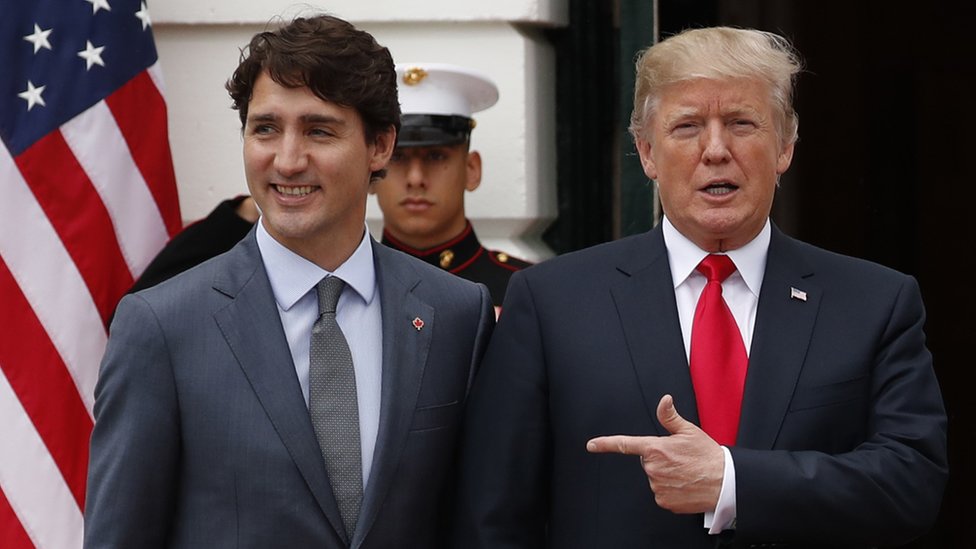
 Image copyright Reuters
 President Trump says if talks to reform Nafta fail, he could envisage a US-Canada trade pact, excluding Mexico.
The US president said if there was no deal on the North American Free Trade Agreement, it would be terminated.
He was speaking at the White House with visiting Canadian PM Justin Trudeau.
Replying to a question, Mr Trump said he said he would consider a trade pact with Canada minus Mexico, adding that both the US and Canada wanted to protect their workers.
The current round of talks on renegotiating the trade bloc is reported to be stalling, with Mexico opposing a US move to increase the percentage of US-made components in car manufacturing.
Mr Trump’s stance has however been criticised by US businesses,
And Mexican foreign minister Luis Videgaray, speaking ahead of the latest round of talks, said terminating Nafta could harm US-Mexico relations and damage co-operation on issues like fighting drug-trafficking.
Mr Trudeau said he believed the Nafta talks could still end in a “win, win, win”.
But he said that Canada had to “be ready for anything” if the attempts to modernise the 23-year-old deal faltered.
Overall trade between the three Nafta partners reached $1.1 trillion (£832bn) in 2016.
American and Mexican officials say they want a renegotiated deal by December.
This week the influential US Chamber of Commerce warned it was time to “ring alarm bells” over the Nafta talks.
The business lobby group said there were “several poison pill proposals” put on the table by the US that could tank the renegotiations.
Those include US demands to adjust the rules of origin, which would increase the percentage of the content of car parts and other materials that would come from Nafta countries in order for a good to qualify as duty free – a specific concern for the North American auto industry.
The US and Canadian leaders also discussed the Bombardier-Boeing trade dispute.
Canada and the UK are sparring with the US over Canadian aerospace giant Bombardier.
The Trump administration has imposed hefty duties on Bombardier’s C-Series jetliner.
American aerospace firm Boeing claims Bombardier received unfair government subsidies to produce its showcase passenger jet.
Bombardier is a significant employer in Northern Ireland and Canada.
Mr Trudeau said he “highlighted to the president how much we disagree vehemently” on the decision to impose anti-dumping duties.
Note: This story is auto-generated from BBC syndicated feed and has not been edited by AFRICA PRIME NEWS