Home Blog Page 1468

Desperate picture

0
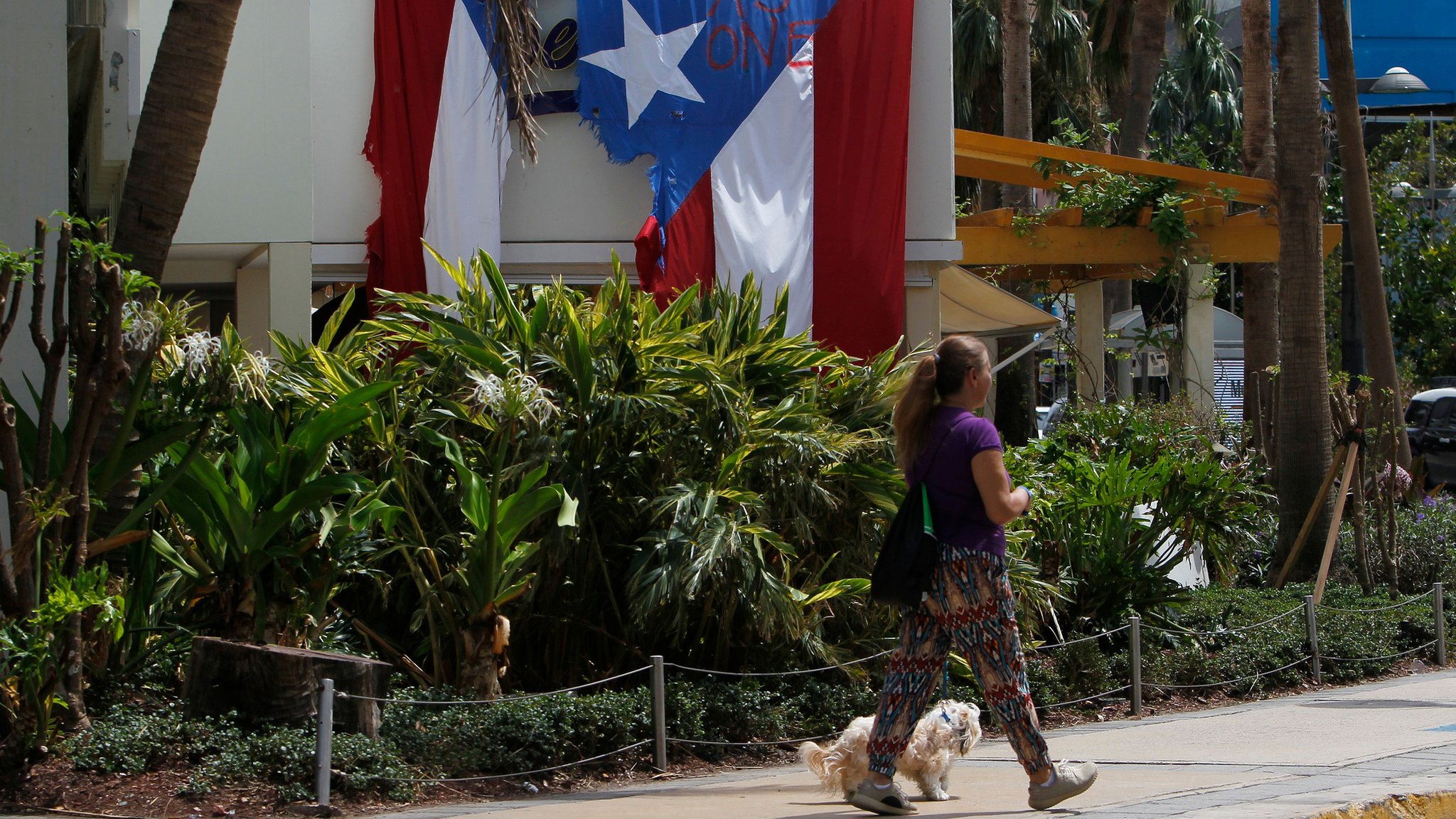
Many interior roads are still heavily damaged, as officials prioritised mending coastal roadsImage copyright Getty Images
Image caption Many interior roads are still heavily damaged, as officials prioritised mending coastal roads

The island of Puerto Rico was devastated by the worst hurricane in its history over three weeks ago.

Parts of the Caribbean island – home to 3.4 million US citizens – remain isolated, and phone networks have been catastrophically ruined, making it difficult to confirm the picture on the ground.

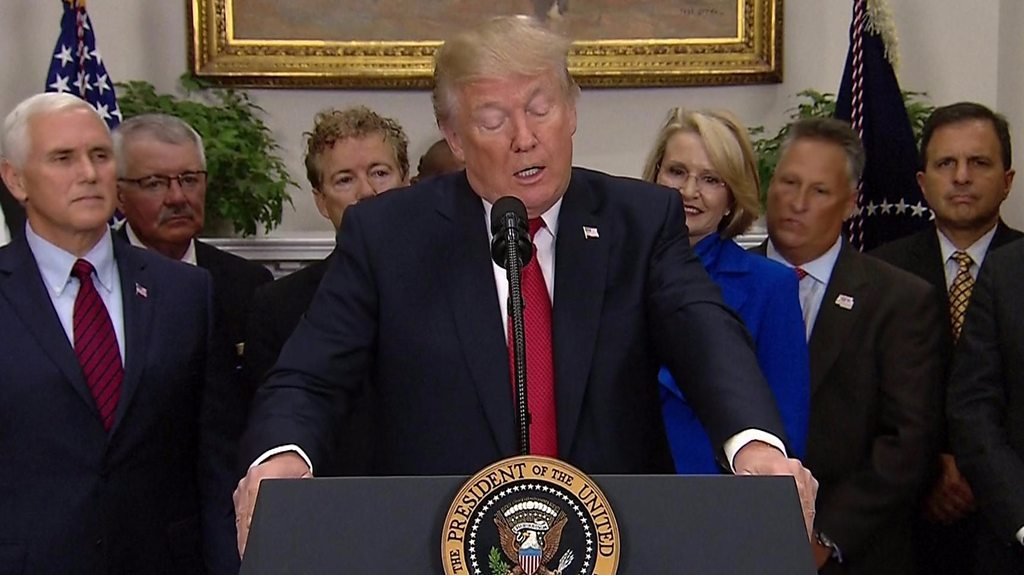
US President Donald Trump, who visited the island two weeks after Hurricane Maria hit, has pledged a quick recovery but experts say it could take months to complete.

Meanwhile – three weeks after the disaster – only about 10% of Puerto Ricans have electricity and many are fleeing for the mainland United States.

Path of Hurricane across Puerto Rico

What does Puerto Rico’s recovery look like three weeks after Maria?

Part of the reason Puerto Rico’s recovery has been slowed is the island’s reliance on air and sea ports to bring fuel, water and food. Runways needed to be cleared of debris and supplies were stuck in the island’s ports because of a US law that limits shipping between parts of the US to US-flagged vessels.

Puerto Rico pressed the US to lift the act, and President Trump waived the act for 10 days to help with the recovery.

Mr Trump has also blamed local truck drivers for not getting back to work delivering supplies more quickly.

Among the most lingering dangers of the hurricane is the lack of clean water on the island, which has forced residents to gather from natural springs and ponds wherever possible.

Public health experts worry that this problem will make the recovery even more deadly as sanitary conditions worsen.

The USNS Comfort hospital ship, which arrived on 3 October, came bearing 500 medical personnel and 250 hospital beds onboard.

Image copyright Getty Images
Image caption Puerto Ricans have been gathering water anywhere they can

While agriculture is no longer a primary driver of Puerto Rico’s economy, the destruction of the vast majority of crops on the island means growers in the coffee, plantains and other popular agricultural industries have lost their entire livelihoods in a single storm.

Loss of crops also means Puerto Ricans will need to import more of their food, an effort made more complicated by the nearby exporting countries in the Caribbean who have also been hit by hurricanes.

The storm knocked much of Puerto’s Rico communications infrastructure, splitting a crucial link between family members that live in the continental US and on the island, as well as mobile phone networks that could be used to organise the recovery response.

Rebuilding the mobile phone network is expected to take many months.

Residents of Puerto Rico are American citizens, although they have no voting representative in Congress and cannot send electors to vote in US presidential races.

Only about half of mainland Americans in a recent poll know Puerto Ricans are fellow Americans. In a survey, knowledge of their citizenship meant respondents were slightly more likely to support relief aid.

Note: This story is auto-generated from BBC syndicated feed and has not been edited by AFRICA PRIME NEWS

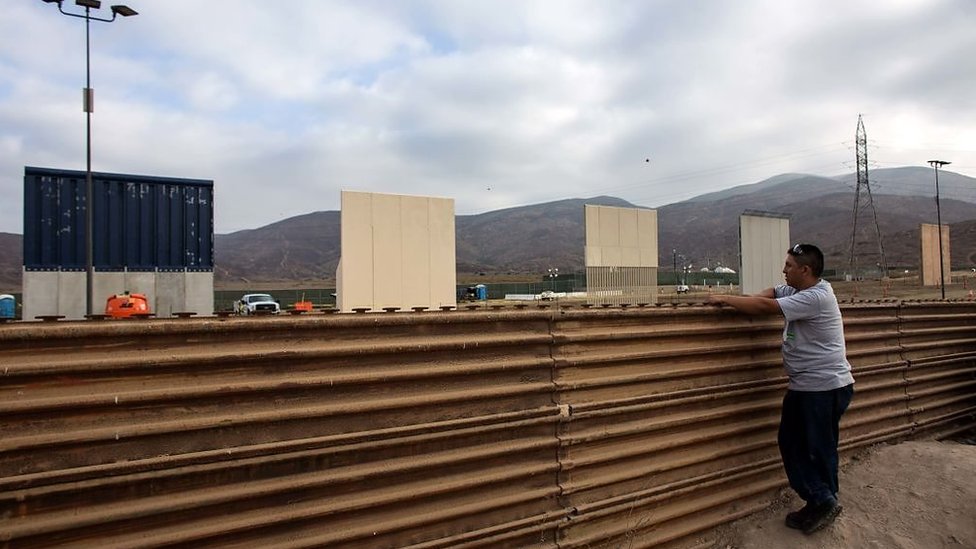
Trump wall designs at Mexico border

0

[unable to retrieve full-text content]Note: This story is auto-generated from BBC syndicated feed and has not been edited by AFRICA PRIME NEWS

Restructuring Of Nigeria: Arewa Consultative Forum Calls For Justice, Fairness

0

By Amos Tauna

Kaduna (Nigeria) –  Arewa Consultative Forum, ACF, a sociàl political organisation for northern Nigeria has said that any restructuring of  Nigeria  must be based on justice, fairness and equity in order to improve the unity, stability and balanced development of the country.

A communique after its national executive council meeting in Kaduna north west Nigeria, the Forum lamented that most agitations are not based on facts, but threaten the national cohesion by generating more controversies.

“It is in this light that the meeting agreed to set up a committee on restructuring that will examine all aspects and suggest a common perspective on what represents the interest of the North within the Nigerian project without prejudice to other national interest,” the communique said.

The communique which was signed by the Forum’s  National Publicity Secretary, Muhammad Ibrahim Biu noted that many claimed that the present democratic system as being practiced , was unnecessarily expensive and counterproductive to the economic growth and development of the country, as about 70 per cent of the annual budget was being spent on recurrent expenditure.

“Furthermore, there have been claims of marginalization by one section of the country against the other, which have created anxiety, fear and mistrust among the various components of the Nigerian project,” it lamented.

On NNPC, the Communique expressed concern over the open alterations between the Minister of State Petroleum,  Ibe Kachikwu and the Group Managing Director, Nigerian National Petroleum Corporation (NNPC), Maikanti Baru over allegations of contract awards bordering on managerial imperfections and acts of insubordination made by the Minister against the Group Managing Director.

“The meeting notes with regret the continued accusations and counter accusations by the two public officers, which are precisely avoidable and unnecessary, considering the important role of the Petroleum industry under their watch to the nation’s economy,” it observed.

ACF National Executive Council appealed to President Buhari to call the officers concern to order, adding that the minister and the GMD resolve their differences amicably in the interest of the oil industry and the nation.

The meeting observed with concern the bad conditions of the nation’s road network, rail trucks and other facilities due to the pressure on the facilities as a result of old age, lack of proper maintenance, and the rapid growth in population without corresponding increase in infrastructure over the years.

It called on government at all levels to intensify efforts by making adequate budgetary provision for the resuscitation and maintenance of the overstretched facilities in the country to facilitate economic growth.

On drug addiction among youth, the communique noted the alarming rate it has among the youth in the Nigeria stressing that it is disturbing and worrisome.

It said, “The figure of about 3 million youth said to be involved in illegal consumption would have on the future generations of Nigerians.

Consequently, the meeting agreed to set up a committee that will critically examine the remote and immediate causes of this menace and suggest practical solutions to the problem.”

Harvey Weinstein: Jane Fonda on sexual assault allegations

0

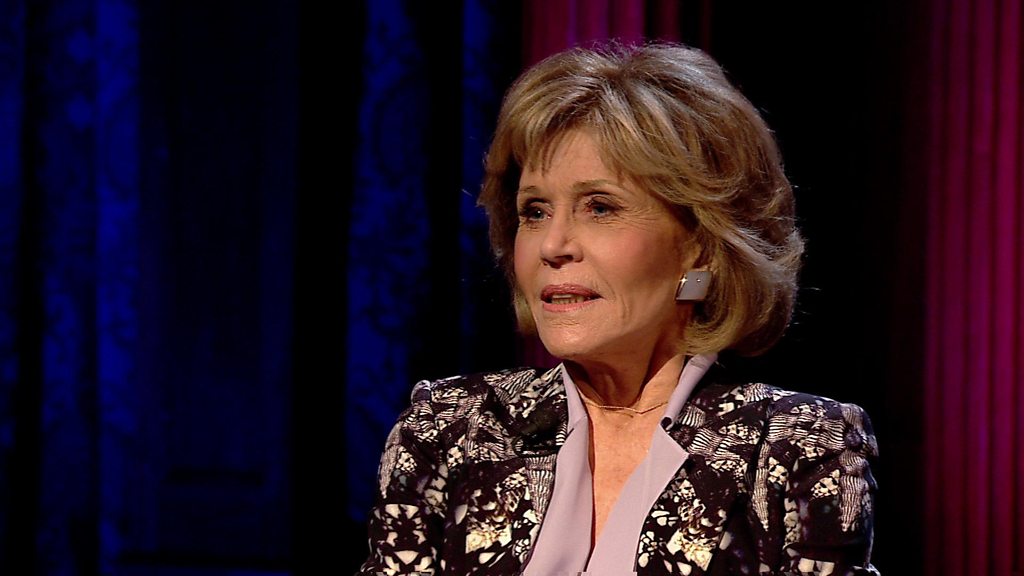
Jane Fonda says she regrets not speaking out sooner about allegations of sexual harassment against Harvey Weinstein.

The film producer has “unequivocally denied” any allegations of non-consensual sex.

Speaking to BBC Hardtalk’s Stephen Sackur, the actress said she “should have been braver” and revealed what she had heard about the film producer a year ago.

Watch the full interview on Monday 16 October 2017 on BBC World News and the BBC News Channel.

Note: This story is auto-generated from BBC syndicated feed and has not been edited by AFRICA PRIME NEWS

Sea of troubles

0
A girl stands near her house in an area without grid power or running water about two weeks after Hurricane Maria swept through the island on October 5, 2017 in San Isidro, Puerto Rico.Image copyright Getty Images
Image caption The wreckage from Hurricane Maria has returned Puerto Rico’s debt to the spotlight

President Donald Trump has been bellyaching about Puerto Rico’s parlous finances, as the US territory struggles to regain its footing after Hurricane Maria.

His focus on the Caribbean island’s more than $70bn (£53bn) debt mountain has renewed questions about how it is to be solved.

So what’s the plan for Puerto Rico?

The Puerto Rican government can’t borrow money on the private market to rebuild due to the debt problems.

Hurricane Maria, which brought economic activity to a halt, has also created an immediate fiscal crisis: the government is running out of money.

Congress has just approved more than $36bn in disaster funding, including a $4.9bn loan to keep Puerto Rico operating.

But the remainder will be divided up among all areas affected in recent storms, including Texas and Florida.

Does Trump care about Puerto Rico’s hurricane victims?

Puerto Rico debt crisis: How did we get here?

Lawmakers in Congress have said they will consider additional funds for more long-term building efforts, but it’s not clear how much that might be.

Moody’s Analytics estimates property damage from Hurricane Maria could reach as high as $55bn, with total losses hitting $95bn.

Governor Ricardo Rossello has said the island of 3.4 million people, many of whom live in poverty, faces an “exodus” without a strong aid package.

Already Puerto Rico’s population has plunged by more than 10% since 2006 amid a years-long recession precipitated in part by the end to tax benefits for manufacturers on the island.

Image copyright AFP/Getty
Image caption Puerto Rico’s economy has been in recession for years

Representative Rob Bishop, whose committee oversees US territories, including Puerto Rico and the US Virgin Islands, said he expects funding for recovery on Puerto Rico to be “significant”.

He added that he is focused on legal changes to ease deployment of that money and encourage private investment.

“The federal government by itself is not going to just rebuild two territorial economies [including the Virgin Islands]… going forward,” he said.

What are the politics?

Puerto Rico’s power in Congress is limited by its status as a territory and not a state.

It has traditionally found its strongest allies among Democrats, many of whom have slammed the Trump administration’s response to Hurricane Maria as slow and inadequate.

The White House has said it is committed to the island and President Trump has dismissed the criticism as political posturing.

Puerto Rico’s population swap: The middle class for millionaires

Puerto Rico: ‘Why did help take nine days to arrive?’

But the president has shown reluctance to help Puerto Rico before.

In a tweet this spring, he described funding for Puerto Rico as a “bailout” proposed by Democrats.

On Thursday, he laid responsibility at the door of lawmakers, tweeting that it is for “Congress to decide what to spend”.

Image copyright AFP/Getty
Image caption President Trump visited Puerto Rico after criticism of the federal response

Matt Fabian, a partner at the research firm Municipal Market Analytics, said he doesn’t see appetite for major rebuilding funds for Puerto Rico, especially given constraints created by the Republican push for major tax cuts.

“This is not the Congress that is going to provide large unfettered aid for Puerto Rico,” he said.

What about the debt?

In 2016, Congress tried to address Puerto Rico’s fiscal crisis through the so-called Promesa law.

The law put the island’s finances under the control of a federal oversight panel and created a way to restructure the debts under cover of a kind of bankruptcy protection.

The storm leaves negotiation of those questions back at square one.

Image copyright Getty Images

Hurricane Maria could give negotiators for Puerto Rico a stronger hand in debt-restructuring talks, bolstering the argument that the government and its agencies cannot pay the debts, Mr Fabian said.

He said the destruction may have also created new opportunities to create deals with bondholders, if the government moves to privatise infrastructure and publicly owned utilities as part of the rebuilding effort.

Can US just wipe out the debt?

President Trump earlier this month appeared to raise the tantalising possibility, when he told broadcaster Fox News: “We have to look at their whole debt structure.”

“You know, they owe a lot of money to your friends on Wall Street, and we’re going to have to wipe that out. You can say goodbye to that.”

The prices of Puerto Rican bonds plunged after the remarks.

But White House advisers swiftly walked back the statement, saying the administration will stick to the path established by Promesa, and that Wall Street shouldn’t take the president’s comments “word for word”.

Image copyright Getty Images
Image caption Kids bike in San Isidro, Puerto Rico, one of many without grid power or running water about two weeks after Hurricane Maria swept through

The president cannot unilaterally eliminate the debt – the subject of court battles that are just getting started – and while the federal government could, theoretically, step in and pay off the debts, analysts say politics makes that unlikely.

Some hope aid can lift the economy, ultimately generating tax revenue – and easing repayment of its debt.

But others say the storm will accelerate the island’s economic contraction, as people leave for the mainland.

Note: This story is auto-generated from BBC syndicated feed and has not been edited by AFRICA PRIME NEWS

Trump confirms hostage family’s release from Taliban

0

US President Donald Trump has confirmed that American Caitlan Coleman, her Canadian husband Joshua Boyle and their three children have been rescued from Taliban captivity in Afghanistan.

They were found by the Pakistani military during an operation near the Afghan border after a tip-off by US intelligence.

The couple were kidnapped while backpacking in Afghanistan in 2012.

Note: This story is auto-generated from BBC syndicated feed and has not been edited by AFRICA PRIME NEWS
US priest, 84, vows to defy N Korea travel ban

0
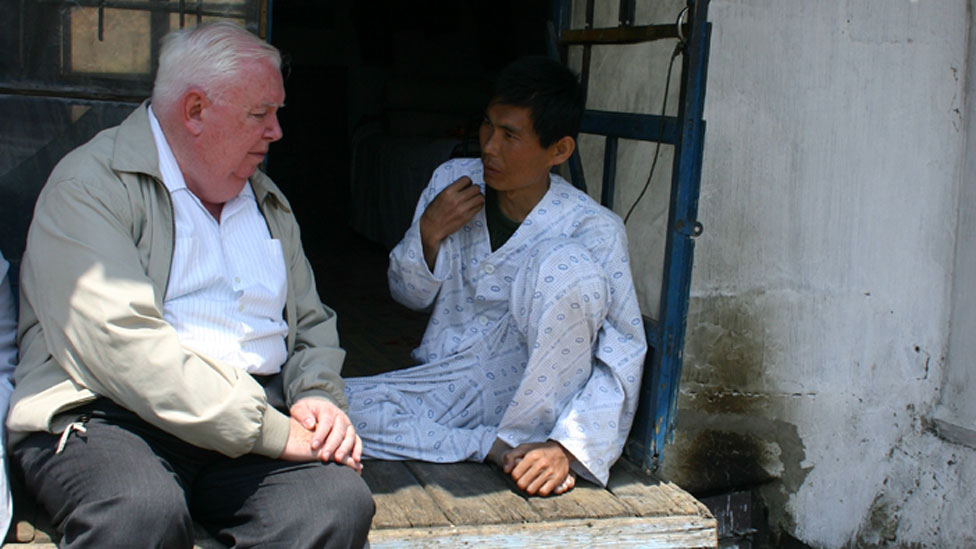
Hammond with TB patientImage copyright Submitted
Image caption Mr Hammond helps TB patients in North Korea

A Catholic priest who has been to North Korea 52 times on a humanitarian mission says a new US travel ban will not stop him from going again.

Father Jerry Hammond has been travelling to North Korea since 1995, helping to treat people suffering from tuberculosis.

But in July, the state department introduced a travel restriction amid growing concerns over the detention of Americans.

The regulation came into effect on 1 September except for those with special permits.

Father Hammond says he will push ahead with another trip in November, even though going against the ban could cost him his passport.

The 84-year-old, who lives in South Korea, has sent a permit request but has not heard back. “If I don’t hear from them, I am going to take that as a yes,” he says.

“The thing is, if they don’t want me to go, I think they should tell me that. So if I don’t hear from them, I am going to go.”

In an email response to the BBC, the state department said it can “revoke a passport for misuse”. Depending on the circumstances, criminal penalties may also apply.

Father Hammond travels to the North for the first three weeks of May and November each year. At age 84, the lifelong cleric says he is only driven by the end goal of saving lives.

Image copyright Submitted

“In all reality, I am a Catholic priest, I have been working in South Korea, I am 84 years of age, so it seems strange [that the North Koreans would want me there.]” he says.

“They don’t even have to give me a visa.”

Father Hammond is part of Maryknoll, an American Catholic Church overseas missionary organisation, and is one of 20 people in a North Korea delegation organised by the Eugene Bell Foundation, a US-based non-profit.

The foundation provides medical assistance to four regions in the North, focusing on delivering medicine that combats multidrug-resistant tuberculosis.

A typical multidrug-resistant tuberculosis patient requires about $5,000 of medication for 18 months.

Father Hammond says this is why groups like the World Health Organization are not able to step in. It is simply too expensive.

If the priest is banned from travelling to the North, the foundation will find it difficult to find another contributor to fund the biannual trip.

The Eugene Bell Foundation is the “transporter” of the medicine, but all the expenses tied to the humanitarian work comes from volunteers themselves. Father Hammond, like other clergy in the delegation, finances his own trips.

Image copyright Submitted

When North Korea first reached out for help from Maryknoll, they were going through a famine.

The Catholic agency’s work began with treating regular tuberculosis patients but later moved into solely treating multidrug-resistance patients.

Father Hammond has spent so much time on the peninsula that his Korean name Ham Chae-do is familiar on both sides of the border.

When he first visited North Korea, the locals called him their “comrade,” which means a mate in the communist North.

As time went by, “mate” transitioned into “haraboji” or grandfather: a popular way to address a male figure past middle age.

“So now I am at a point where I answer, ‘Yes, grandchild,'” he says.

With nothing to gain by breaking the travel ban, what motivates the priest to travel to the North?

“If you saw an accident on the road, you would not ask that person what religion they are or anything else,” he says. “You’d try to help them out.”

Note: This story is auto-generated from BBC syndicated feed and has not been edited by AFRICA PRIME NEWS

Bond trading slump hits Citigroup and JP Morgan Chase

0
JP Morgan Chase HQ in New YorkImage copyright Reuters

Two of America’s biggest banks have been hit by a drop in bond trading revenue in the three months to September, but profits still rose.

JP Morgan Chase profits rose 7% to $6.7bn (£5.1bn) compared with the same period last year, while Citigroup profits were up 8% at $4.1bn.

The banks had warned that trading revenues would be weaker compared to a post-Brexit surge last year.

The banks’ shares slipped in early trade on the news.

Executives at both banks said they were encouraged by increasing strength in the global economy and were seeing benefits from gradually rising interest rates.

However, both banks took a hit from recent natural disasters. JP Morgan said it expected recent hurricanes in the US to lead to about $55m in losses, while Citigroup predicted about $100m in losses, including the impact from earthquakes in Mexico.

The two are also setting more money aside to cover credit losses, although executives at both banks told analysts they were not worried about the economic health of consumers.

JP Morgan chief executive Jamie Dimon said: “The global economy continues to do well and the US consumer remains healthy with solid wage growth.”

Increased lending

Revenues at JP Morgan rose 2.7% to $26.2bn, as revenue from trading fell 21% year-on-year.

However, profits were lifted by its consumer and retail lending division, which benefited from higher interest rates and strong credit card sales and payment processing.

At Citigroup, revenues were $18.2bn, up 2% from a year earlier, helped in part by its international consumer business.

The bank said revenue from fixed income trading fell 16%, but unlike JP Morgan its revenue from equities trading was higher.

Both banks beat profit expectations, but analysts were not expecting their shares – which have gained this year – to change significantly.

Citigroup share prices have increased 20% since January, while shares in JP Morgan have risen by about 10%.

Note: This story is auto-generated from BBC syndicated feed and has not been edited by AFRICA PRIME NEWS
Currency Exchange Rates

USD - United States Dollar
ZAR
0.06
EUR
1.17
CAD
0.73
ILS
0.31
INR
0.01
GBP
1.34
CNY
0.14
Enable Notifications OK No thanks