[unable to retrieve full-text content]Note: This story is auto-generated from BBC syndicated feed and has not been edited by AFRICA PRIME NEWS

[unable to retrieve full-text content]Note: This story is auto-generated from BBC syndicated feed and has not been edited by AFRICA PRIME NEWS

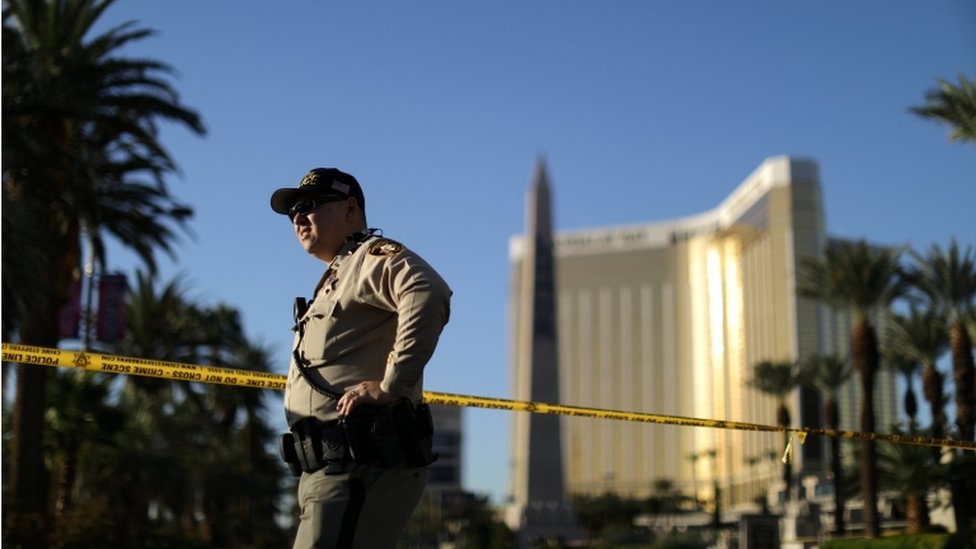
 Image copyright Getty Images
 A hotel worker has said he alerted staff to report a gunman had opened fire before the suspect shot dead 58 people at a Las Vegas music festival.
Stephen Schuck said he was responding to a jammed fire door on the 32nd floor when he heard gunfire and spotted a colleague who had been shot.
He called dispatchers and told them to call police as the gunman sprayed bullets down the hallway, he said.
His account has intensified questions about why the gunman was not stopped.
“As soon as I started to go to a door to my left the rounds started coming down the hallway,” Mr Schuck said on Wednesday.
“I could feel them pass right behind my head.”

Media playback is unsupported on your device
Mr Schuck said he encountered hotel security guard Jesus Campos, who had been shot in the leg by gunman Stephen Paddock.
Mr Campos told the maintenance man to take cover.
“It was kind of relentless so I called over the radio what was going on,” said Mr Schuck.
“As soon as the shooting stopped we made our way down the hallway and took cover again and then the shooting started again.”
Soon afterwards, Paddock, 64, sprayed bullets upon a nearby crowd at the Route 91 country music festival, perched above in his suite on the 32nd floor of the Mandalay Bay hotel.
Paddock apparently took his own life after the attack, the deadliest mass shooting in modern US history, leaving 58 dead and 500 wounded.
According to CBS News, gunfire could be heard as Mr Schuck told a dispatcher on his radio: “Call the police, someone’s firing a gun up here. Someone’s firing a rifle on the 32nd floor down the hallway.”
The BBC has asked the Las Vegas Metropolitan Police Department for comment.
Mr Schuck’s account adds more questions about why police were unaware of the shooting on the 32nd floor before Paddock opened fire on concert-goers below.
Police initially said Mr Campos, the injured security guard, interrupted the gunman as he was firing upon the crowd from his hotel suite.
But on Monday police revised the timeline to clarify that Mr Campos was actually shot in the leg and wounded six minutes before Paddock began shooting at the music festival.
However the 3,200-room Mandalay Bay hotel disputed the police chronology, telling the BBC that the official police timeline is based on an erroneous initial report compiled by hotel staff.
“We are now confident that the time stated in this report is not accurate,” a spokesperson for the hotel said in a statement.
“We know that shots were being fired at the festival lot at the same time as, or within 40 seconds after, the time Jesus Campos first reported that shots were fired over the radio.”
“Metro officers were together with armed Mandalay Bay security officers in the building when Campos first reported that shots were fired over the radio,” the statement continued, adding that the police and armed hotel security guards “immediately responded to the 32nd floor”.
Police said Paddock, who had placed security cameras outside his room, shot Mr Campos through the door of his suite, firing 200 rounds into the hallway.
21:40 (04:40 GMT) Route 91 Harvest festival begins its closing act
21:59 Paddock shoots security guard Jesus Campos outside his 32nd floor room. The hotel says they are “confident” this is not the accurate time.
22:05 Paddock opens fire on concert-goers below after smashing his window with a hammer
22:15 Paddock stops firing
22:17 The first police arrive on the scene and find the wounded security guard near Paddock’s room a minute later
22:38 Police publicly confirm an active shooter
23:20 Swat team breaks into Paddock’s room and finds him dead from a suspected self-inflicted gunshot
Source: Clark County sheriff‘s office


Media playback is unsupported on your device
Pakistani soldiers have freed a North American family of five who were being held hostage by the Afghan Taliban.
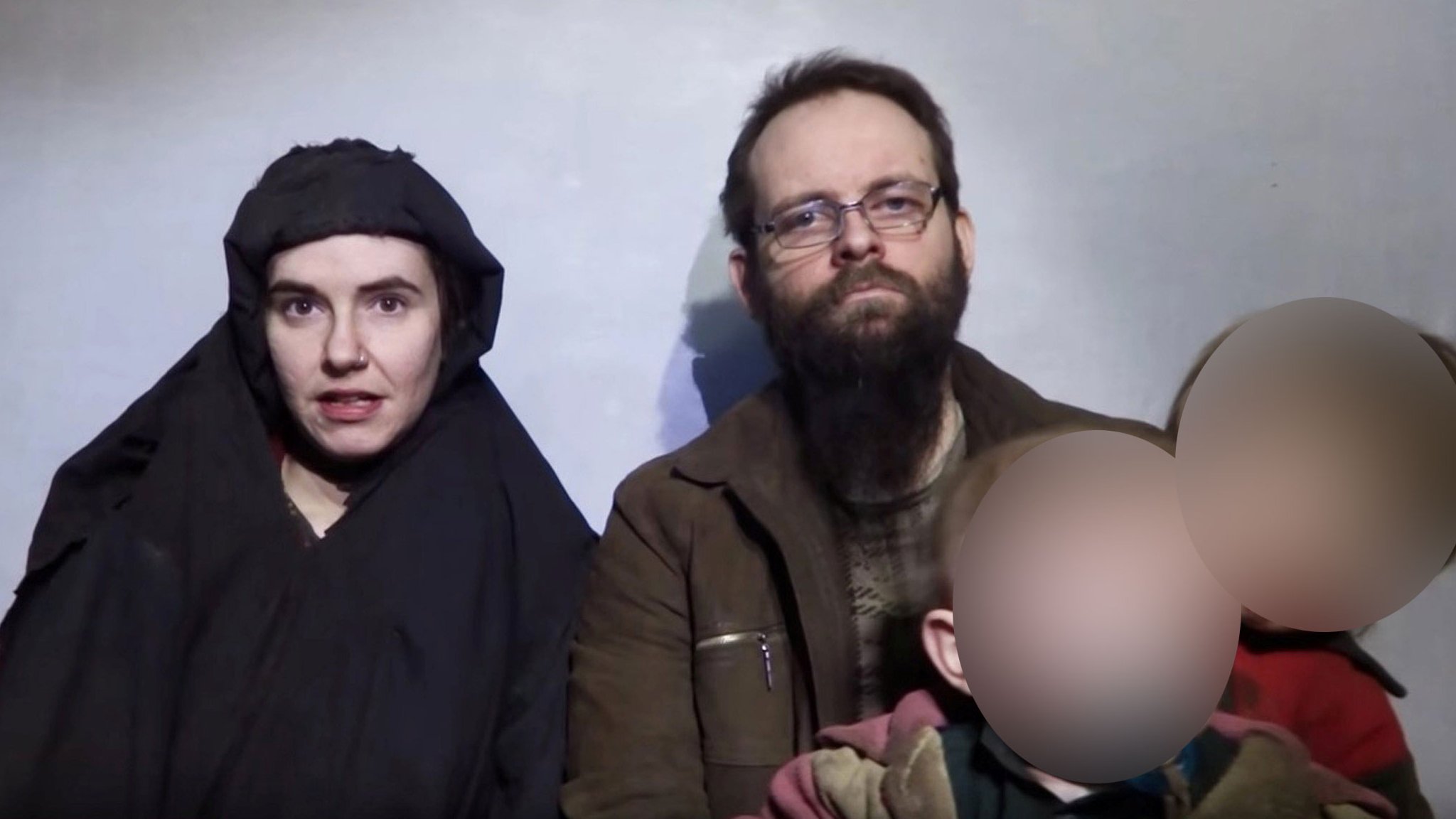
Canadian Joshua Boyle and his US wife Caitlan Coleman were kidnapped while backpacking in Afghanistan in 2012. They had three children while in captivity.
They were rescued after a US tip-off during an operation near the Afghan border, the Pakistani army said.
US President Donald Trump said it was a “positive moment” for US-Pakistan ties.
“Ms Coleman gave birth to the couple’s three children while they were in captivity,” Mr Trump said in a White House statement. “Today, they are free.”
He added: “The Pakistani government’s co-operation is a sign that it is honouring America’s wishes for it to do more to provide security in the region.”
Videos of the couple were released by their captors, the Taliban-aligned Haqqani network, during their captivity. The insurgent group has been demanding the release of three of its prisoners in Afghanistan.
The latest video, released last December, showed the couple with two young boys. In it, Ms Coleman – who was pregnant when she and Mr Boyle were abducted – begged for an end to what she called their “Kafkaesque nightmare”.

Media playback is unsupported on your device
The Pakistani army said US intelligence agencies had been tracking the family in Afghanistan, and reported that on 11 October they had moved across the border into the Kurram tribal district of Pakistan.
In a statement it said: “The success underscores the importance of timely intelligence sharing and Pakistan’s continued commitment towards fighting this menace through co-operation between two forces against a common enemy.”
In a video statement released to the Toronto Star newspaper, Linda Boyle said she and her husband Patrick had spoken to their son Joshua by telephone after his release.
“That’s the first time in five years we got to hear his voice,” she said. “It was amazing.”
The couple offered thanks to the Pakistani soldiers who had “risked their lives” to rescue the family.
They said Joshua had said his children were looking forward to meeting their grandparents, and that he hoped to see them within days.

Media playback is unsupported on your device
However, Reuters news agency quotes anonymous US officials as saying that the US military had been ready to fly the family out of Pakistan – but Mr Boyle had refused to board the aircraft.
Mr Boyle was once married to a woman who espoused radical Islamist views and is the sister of a former Guantanamo Bay inmate, Omar Khadr. CNN suggested he might fear prosecution by the US authorities.
Asked about this, Canada’s Foreign Affairs Minister Chrystia Freeland said: “Joshua Boyle is not the subject of an investigation. Our focus is very much on the safety and the security of this family.”
Ms Freeland also said Canada did not pay any ransom for their release.
Earlier, she had said her government was “greatly relieved” the family had been released and was safe, and thanked the US, Afghanistan and Pakistan.
“Joshua, Caitlan, their children and the Boyle and Coleman families have endured a horrible ordeal over the past five years. We stand ready to support them as they begin their healing journey,” she added.
By Gary O’Donoghue, BBC Washington correspondent
Relations between Washington and Islamabad have been fraught for years.
The US believes that Pakistan allows groups such as the Haqqani network to shelter within its borders, and that Pakistan’s intelligence services have close links to the Taliban and other hostile groups inside Afghanistan.
In August, President Trump said: “We have been paying Pakistan billions and billions of dollars at the same time they are housing the very terrorists that we are fighting. But that will have to change, and that will change immediately.”
For its part, Pakistan accuses the US of failing to understand the sacrifices it has made in terms of lives through terrorist attacks on its soil.
Nevertheless, both sides need one another and so some kind of transactional relationship remains important.
Mr Trump went out of his way to thank Pakistan for its role in the rescue of the family, drawing a direct connection between his approach and the happy outcome.
But Washington will want to see further evidence over time that Pakistan is willing to continue co-operating before anything like real trust can exist between the two countries.
Note: This story is auto-generated from BBC syndicated feed and has not been edited by AFRICA PRIME NEWS

By Amos Tauna
 Kaduna (Nigeria) – A Nigerian Journalist, Luka Binniyat, has regained freedom after spending over 90 days in prison. His freedom came after meeting a relaxed bail conditions set by the court, where three sureties presented a bank statement of not less than ten million Naira credit each.
In addition, Chairman of the Nigeria Union of Journalists (NUJ) Kaduna State Council was included to stand as a surety for the accused.
Justice Bashir Sukola of Kaduna High Court had initially ruled that two sureties should produce their international passports to be deposited in the Court, with N10m each and a bank bond to that effect in the same sum.
The journalist is being charged for breach of public peace and injurious falsehood punishable under sections 114 and 393 of the penal code laws of Kaduna State.
The former Bureau Chief of Vanguard Newspapers in Kaduna wrote a story on alleged killings of five students of College of Education, Gidan-Waya published on the 22nd January, 2017.

[unable to retrieve full-text content]Note: This story is auto-generated from BBC syndicated feed and has not been edited by AFRICA PRIME NEWS

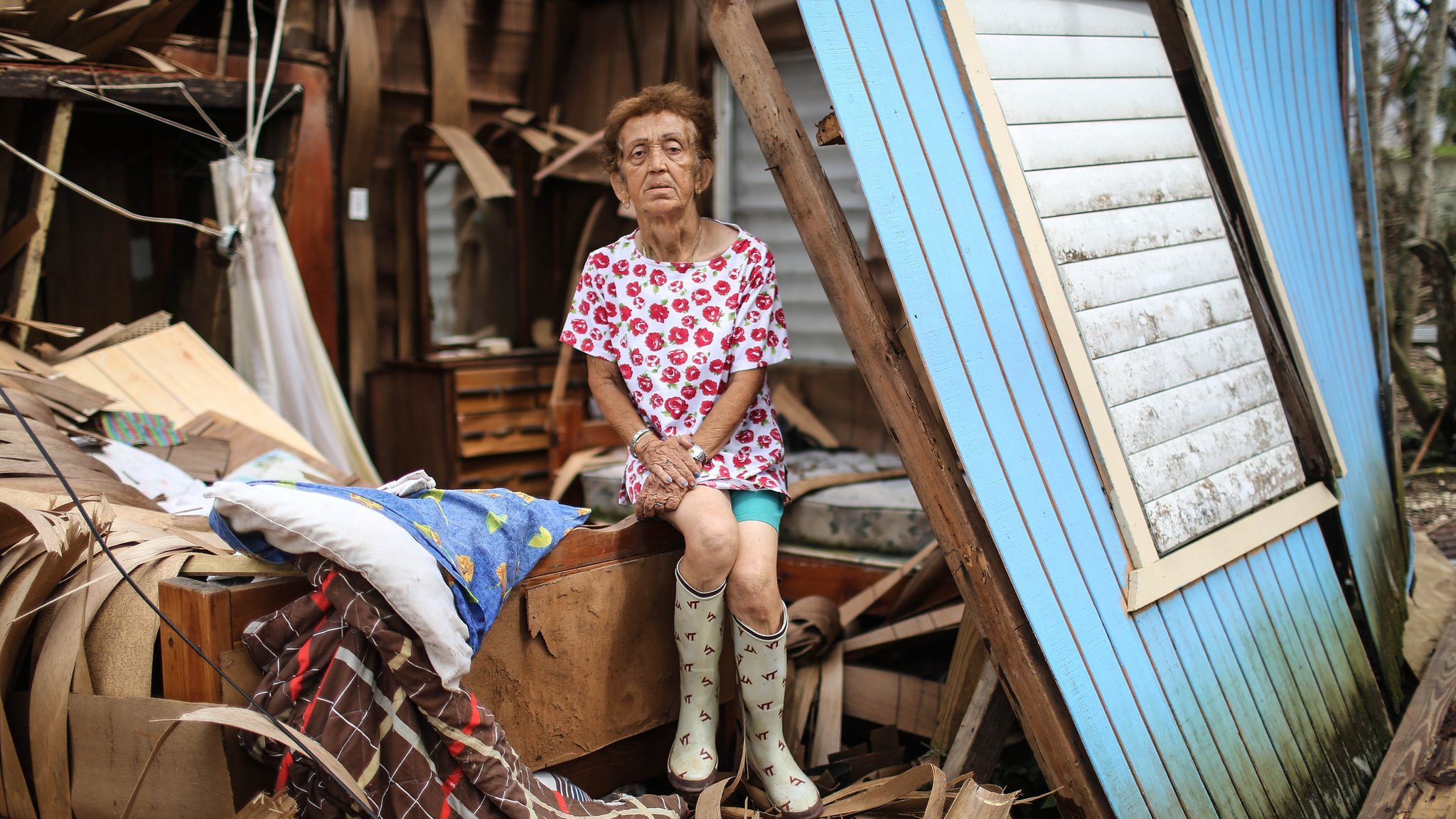
 Image copyright AFP
 US President Donald Trump has griped about emergency relief efforts in hurricane-ravaged Puerto Rico, saying federal aid cannot continue “forever”.
In tweets, he accused Puerto Rico of a “total lack of accountability”, adding that “electric and all infrastructure was disaster before hurricanes”.
The island, whose 3.4 million residents are US citizens, is 90% without power, some three weeks after Hurricane Maria.
On Thursday, Congress approved a $36.5bn (£28bn) disaster relief bill.
The cross-party bill, which still requires Senate approval, provides emergency storm relief for Puerto Rico, Florida, Texas and the US Virgin Islands, as well as wildfire-ravaged California.
In Thursday’s morning tweets, the US president noted it was up to “Congress to decide how much to spend”.
But he added: “We cannot keep FEMA, the Military & the First Responders, who have been amazing (under the most difficult circumstances) in P.R. forever!”
The mayor of Puerto Rican capital San Juan said Mr Trump’s tweets highlight his “desperation” and the “inadequacy” of the hurricane response.
“It is not that you do not get it,” Carmen Yulin Cruz added, “it is that you are incapable of empathy and frankly simply cannot get the job done.”
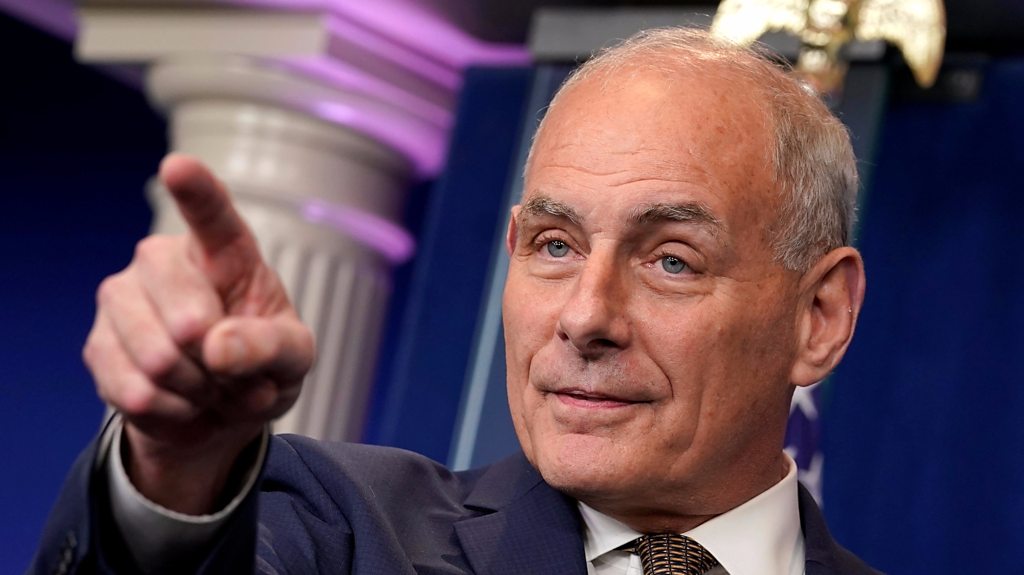
White House chief of staff John Kelly said later the US would stand with Puerto Rico “until the job is done”.
He also said the president was “exactly accurate” to assert that federal personnel are “not going to be there forever”.

Media playback is unsupported on your device
The storm killed at least 45 people in the US territory, while more than 100 others remain unaccounted for, say Puerto Rico officials.
The island is saddled with about $72bn in pre-hurricane debt that is being overseen by a federally created oversight board.
Analysis by Anthony Zurcher, BBC North America reporter
Imagine a devastating hurricane hits New York City, and the president repeatedly notes how bad things were there before the disaster. Or, three weeks after an earthquake levels Los Angeles, he says the government won’t provide aid “forever”.
There would be outrage. It’s difficult to even imagine such responses.
That, however, is how Donald Trump is handling hurricane-ravaged Puerto Rico. For the president, the US territory – occupying a political no-man’s land between US statehood and independence – is different.
When the chequebook comes out, empathy ends and reality sets in. The administration and Congress are in the middle of tough negotiations over government spending and tax reform. Coming up with billions for Puerto Rico relief is an unwelcome challenge.
So the president has said there is a limit to the help available for these taxpaying US citizens. Things were bad before – and they may stay that way.
Mr Trump’s tweets also provoked a backlash from some Democratic lawmakers, who accused him of preparing to abandon US citizens.
“There is still devastation, Americans are still dying. FEMA needs to stay until the job is done,” Senate Democratic Leader Chuck Schumer replied on Twitter, using the acronym for the Federal Emergency Management Agency.
Puerto Rico-born congresswoman Nydia Velazquez, another New York Democrat, tweeted that Mr Trump’s comments were “outrageous, indefensible and irresponsible”, adding: “We will not allow our government to abandon our fellow citizens.”
She has written to the Department of Homeland Security to request an investigation into the official death toll, which she says may be vastly under-reported, and could be as high as 450.
“The federal response is woefully adequate and now we are seeing numerous reports that the death toll is unknown or not being reported accurately,” she wrote in a letter co-authored with Congressman Bennie Thompson of Mississippi.
“The whole nation deserves to know what is happening to our fellow citizens.”
President Trump visited the US territory last week, where he told residents that recovery efforts had “thrown our budget a little out of whack”.

Media playback is unsupported on your device
He also said the islanders should be “very proud” the death toll was not as high as a “real catastrophe” like Hurricane Katrina, which devastated New Orleans in 2005.
The US president was pilloried by local officials after he threw rolls of paper towels at residents during his trip.
The San Juan mayor described that incident as “abominable”.
But Mr Trump later depicted the outrage as confected, insisting to the Trinity Broadcasting Network that the crowd “were having fun” as he distributed “these beautiful, soft towels”.
Note: This story is auto-generated from BBC syndicated feed and has not been edited by AFRICA PRIME NEWS

 Image copyright Reuters
 Equifax has taken down a customer help web page amid concerns over malware linked to the site.
The firm said it took down the link for credit report assistance “out of an abundance of caution”.
The problem did not compromise its systems or affect the dispute portal, the firm added in a later update.
Equifax is still reeling from discovery of a breach that compromised personal data of more than 145.5 million Americans and about 8,000 Canadians.
Equifax has also said a file containing names and birthdates of 15.2 million people in the UK were accessed. The firm is contacting nearly 700,000 of them, because more serious information was compromised.
The new issue involved a webpage that asked visitors to download fraudulent Adobe Flash updates, according to Ars Technica.
The problem was first publicly identified by an independent security analyst.
Equifax said it had traced the problem to a third-party vendor it used to track website data and removed that vendor’s code from the site.
“Equifax can confirm that its systems were not compromised and that the reported issue did not affect our consumer online dispute portal,” the company said.
Note: This story is auto-generated from BBC syndicated feed and has not been edited by AFRICA PRIME NEWS

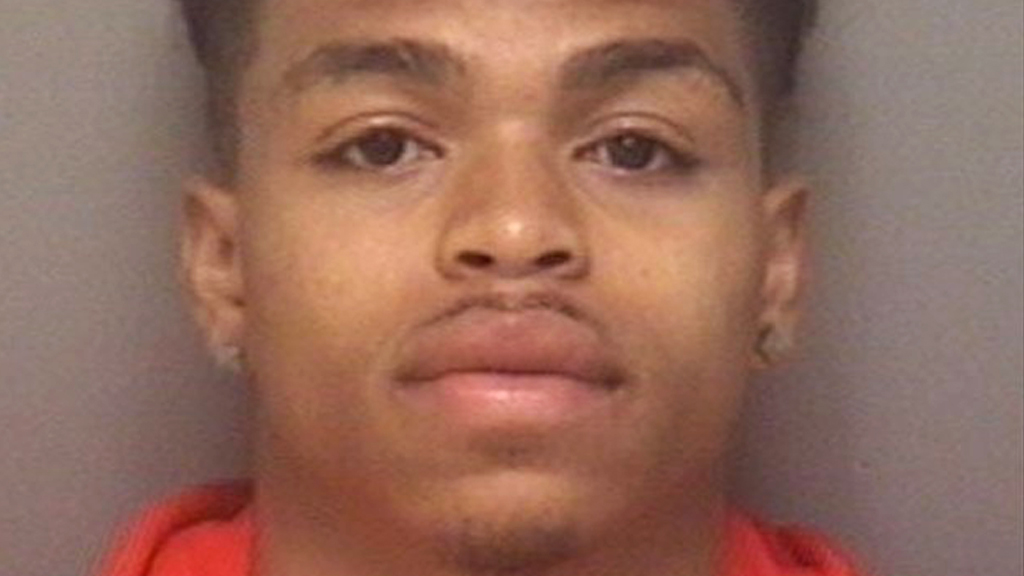
 Image copyright Charlottesville Police Department
 A black man who was beaten at a far-right rally in Virginia has turned himself in to be formally charged in connection with the incident.
DeAndre Harris, who is accused of unlawful wounding at the 12 August Charlottesville protest, was released on an unsecured bond.
Photos and video of Mr Harris, 20, being attacked by white men at the event were widely shared online.
Two alleged assailants were charged with malicious wounding in September.
But many are incredulous that an African-American set upon by white attackers at a far-right demonstration could himself face a criminal case.
Another individual alleged that Mr Harris attacked him, prompting the arrest warrant to be issued on Tuesday.
Mr Harris’s lawyer, S Lee Merritt, said his client did nothing wrong and authorities did not have probable cause to prosecute him.
Mr Harris could face up to five years in prison and a $2,500 fine (£1,880).
The attorney said his client, a former special-education instruction assistant, suffered a concussion, a knee injury and a fractured wrist.
The assault also left him with a head laceration that required stitches.
“We find it highly offensive and upsetting,” Mr Merritt told the Washington Post newspaper, “but what’s more jarring is that he’s been charged with the same crime as the men who attacked him.”
Footage of the attack spread quickly on social media, showing at least five white men beating and kicking Mr Harris to the ground in an indoor car park next to the police station during the “Unite the Right” rally in Charlottesville.
Mr Harris’ lawyer said his client was accused of wounding a man named Harold Ray Crews.
Video of the incident appears to show a scuffle between the two in which Mr Harris swings a torch at a man identified by US media as Mr Crews, who lunges at him with the pole of a Confederate flag.
Mr Harris’ attorney maintains the torch did not “make significant contact” with Mr Crews, who describes himself on Twitter as a “Southern Nationalist, Attorney”.
In the US, alleged crime victims can go to a magistrate after filing police reports.
The magistrate only needs probable cause based on the alleged victim’s testimony to grant an arrest warrant.
Mr Harris surrendered on Thursday a day after police charged a man identified as Jacob Scott Goodwin, 22, in connection with the car park brawl.
Police said Mr Goodwin, of Ward, Arkansas, could be seen on camera carrying a large plastic shield and kicking Mr Harris, who was on the ground.
Daniel Borden, 18, of Ohio, and Alex Michael Ramos, 33, of Georgia, were also charged with malicious wounding last month in connection with the attack.
Mr Harris was working as a full-time teacher’s assistant in Charlottesville before the rally.
But his lawyer told US media his client had been unable to continue in the job because he now suffers fear-and-anxiety attacks in crowded public spaces.
A counter-protester, Heather Heyer, 32, was killed when a driver ploughed a car into a crowd.
White nationalist protesters returned to Charlottesville on 8 October for a brief, torch-lit rally.
The demonstrators gathered near the same statue of Confederate General Robert E Lee that was at the centre of the August deadly clashes.
The statue has since been covered up while a legal challenge to its removal is under way.
Note: This story is auto-generated from BBC syndicated feed and has not been edited by AFRICA PRIME NEWS