Home Blog Page 1462

Working for Harvey

0

Media playback is unsupported on your device

Media captionFormer office assistant Lisa Rose: Weinstein mentioned a massage as he invited me to another room

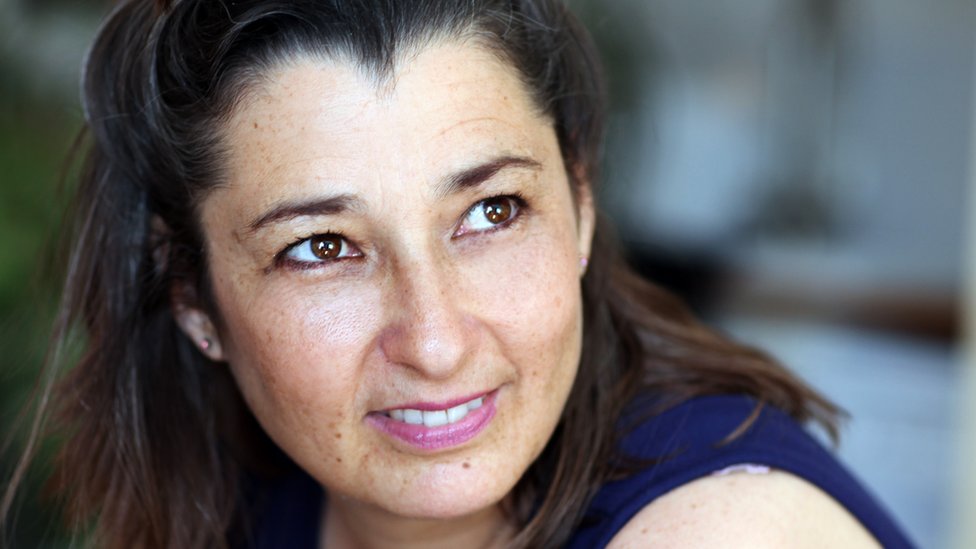
When Lisa Rose was 22 she got a job with Miramax in London. It was 1988.

Before she started, she was given a warning: “Harvey will answer the door in a towel. He will ask you for a massage. You say no, you ignore him and you make sure you walk away so you’re not too close.”

Lisa is one of several people to come forward to the BBC with claims of harassment by the film producer.

Harvey Weinstein denies any sexual assault.

This is Lisa’s story:

It was exciting. I’d just left drama school and it felt glamorous. I met producers, gave feedback on films.

I went to parties and screenings of Hear My Song and Nasty Girl in Soho with actors, writers, directors.

I did admin for Miramax – bookings, calls, scouted a new penthouse in Belsize Park. I delivered a script to Daniel Day-Lewis. I even booked Concorde flights for Harvey.

I remember meeting him, feeling like “oh, I need to make a good impression, maybe he’ll get me an acting job”.

Image copyright Alamy

When he came into town, everything focused on him.

It’s like you knew this hurricane force was coming for a short period of time and everybody took a deep in breath and then everybody knew that he would be gone in a couple of days.

He used to get a different suit tailored for his meetings in London, from under the Savoy hotel, and just leave it in the wardrobe when he left. I used to think “what a waste of money”.

He’d leave half-empty coke cans all over the place and the room where he slept was left in a total mess. It was disgusting.

Everyone became anxious and scared – on tenterhooks because he would rage and shout. People didn’t really talk about it – they were just trying to get on.

One time in the hotel, he exploded at a casting person – he screamed, shouted, swore. Hours later he told me to send them flowers, to make a big apology.

But while he was at meetings, I could sit in the Savoy and order room service. I remember eating chips, looking out of the window, thinking “oh, wow, this is cushy”.

Despite knowing his reputation, I still chose to work there – it was paid well, hours were flexible and it felt like a good job. But I knew things weren’t right.

‘I ended up in a situation with him’

When you got taken to the Savoy, you knew that Harvey was there.

Then I ended up in a situation with him.

I was sent to the hotel in a taxi. They just said, “you’ll work out of the Savoy today”. Everyone was so busy, so I just went and did it – I was answering the phone and ordering things, it all felt very normal.

I was alone in the room with him.

He asked me for a back rub, to give him a massage. But I had been forewarned – and I said no. Because of the warning I could really focus on getting out of the situation.

He huffed and puffed and said, “well other people do it”.

I moved into a suite room immediately – I could see where the door was from there.

I was really frightened, my heart was beating, and I was thinking, “this is what it’s like having so much power – he’s a man who’s got a lot of power”.

He didn’t touch me. He said nasty things but he didn’t touch me.

I told friends about it but no-one really said much. People giggled or looked embarrassed, and some said, “well, that’s just something that happens”.

Image copyright AFP/GETTY
Image caption Police forces in the US and UK are investigating Harvey Weinstein

Every week I wrote a cheque of a whopping £900 to a woman, who was supposedly a writer – I knew she wasn’t. One woman who worked very closely with him kept a diary detailing all the things going on. When I saw people come in, when I saw someone on his arm in a picture, I thought, “oh, that poor person”.

I resigned.

No-one I worked with would consciously put someone in his path. No-one would willingly say “go be a victim, be prey to this ogre, we’ll sacrifice you to him”. But people were scared stiff of him.

Do I feel guilty for not reporting anything? Who could I have gone to – the police? Who would have listened? No-one has ever said go report it.

‘A monster’

I was a little tiny person against a huge corporation. I thought people would laugh or say it didn’t happen.

He’s a scary and big man – a monster. I thought if I say something, I’ll never get an acting job because he runs the industry.

His amazing talent also made me question if I was wrong. I thought maybe this is just how it is, and I’m not a strong enough woman to play the game. Sexual harassment is shameful, embarrassing, humiliating. You keep it in for many years because you think, why would I want to be reminded of that?

Image copyright Lisa Rose
Image caption Lisa Rose was hoping to make it as an actress in the late 1980s

But now all these people are coming forward, and I want to speak out.

I want women to be able to to say this is wrong and know that they’ll be heard. This is about exposing abuse of power and bullying. It all needs to stop.

Holding it all in all these years affected me. I became very cynical about the film industry. It made me think that only certain types of women can survive it, you have to be very tough to put up with things like that.

I think I didn’t really get on in my acting career because I refused to do what he wanted – I wouldn’t play sexy and seductive and do what men wanted, so I wonder sometimes if that’s why I didn’t go far.

I see his picture in the newspapers on the bus and it makes me feel sick. Even now I feel scared. I’m battling that fear that speaking out could hurt me.

I wish I had had the chance to pass on a warning, like the one I was given, to people who never got that chance, and who ended up in compromising situations.

I could have stopped that happening to other people.

As told to Georgina Rannard, BBC UGC & Social News team

Note: This story is auto-generated from BBC syndicated feed and has not been edited by AFRICA PRIME NEWS

Jason Aldean plays first gig since Las Vegas shooting

0
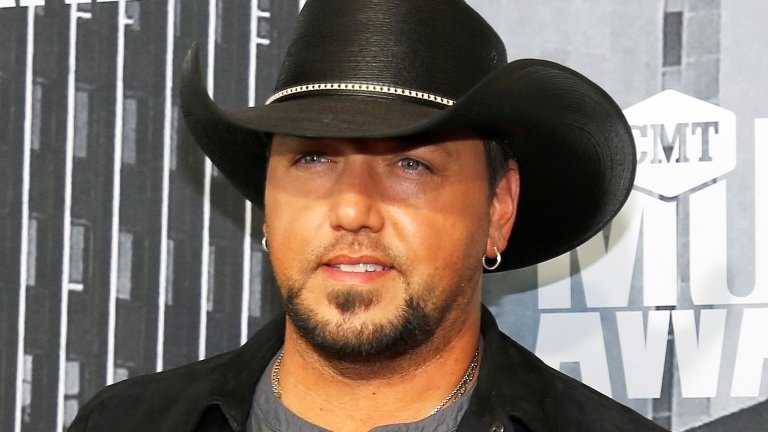
US country singer Jason Aldean performs in Tulsa, Oklahoma, for the first time since the Las Vegas shootingImage copyright YouTube/Vanessa Baker
Image caption Aldean had previously cancelled three shows in California out of respect for the victims of the Las Vegas shooting

Country star Jason Aldean has returned to the stage for the first time since the mass shooting in Las Vegas which left 59 dead and hundreds wounded.

Playing at the BOK Center in Tulsa, Oklahoma, last night, he made an emotional statement about the victims of what is now the worst mass shooting in recent US history.

The singer was performing at the Route 91 festival on 1 October when Stephen Paddock fired into the crowd from his suite on the 32nd floor of the Mandalay Bay Hotel.

Aldean, 40, subsequently cancelled three shows in Los Angeles, San Diego and Anaheim out of respect for the victims.

“I just want to say that, you know, every day that goes by we think about the 58 people who lost their lives,” the singer said to the crowd in a statement on stage in Tulsa.

“I hope none of you guys ever experience anything like that. It’s been a really tough thing to deal with for all of us up here. I think the one thing that’s probably going to help us more than anything is playing for you tonight.”

He added: “I want to play this show for you guys that the people of Las Vegas came to see and didn’t get a chance to.”

Image copyright YouTube/Jason Cope
Image caption The crowd cheered and waved the US flag during Aldean’s statement

Aldean, one of the best-known country singers in the US, went on to call for national unity and praised the outpouring of support after the shooting.

“Sometimes this country can be really divided, it seems really divided a lot of times and that’s a really unfortunate thing to see. But it’s been really cool to see all the support, all the love that has been going on over the last 10 days or so because of what happened in Las Vegas.”

Aldean reminded the crowd not to “live in fear” or “be scared and not go out and do what it is that we want to do; whether it’s go to a concert or go to a ball game or go to the mall or go to a movie.”

Aldean finished, to massive cheers, by saying: “This is the best country in the world, and I’m glad to be here, glad to be a part of it. “

Last Sunday, the singer and his wife, Brittany, visited the victims of the attack who are still in hospital.

Afterward, posting on Instagram, Brittany described the experience as “surreal”.

One day before visiting the victims, Aldean – who has sold 15 million albums and recorded 17 number one songs – performed on the comedy show Saturday Night Live to honour the late rock star Tom Petty.

By the UGC and Social News Team

Note: This story is auto-generated from BBC syndicated feed and has not been edited by AFRICA PRIME NEWS

Santa Rosa and Napa wildfire destruction from above

0

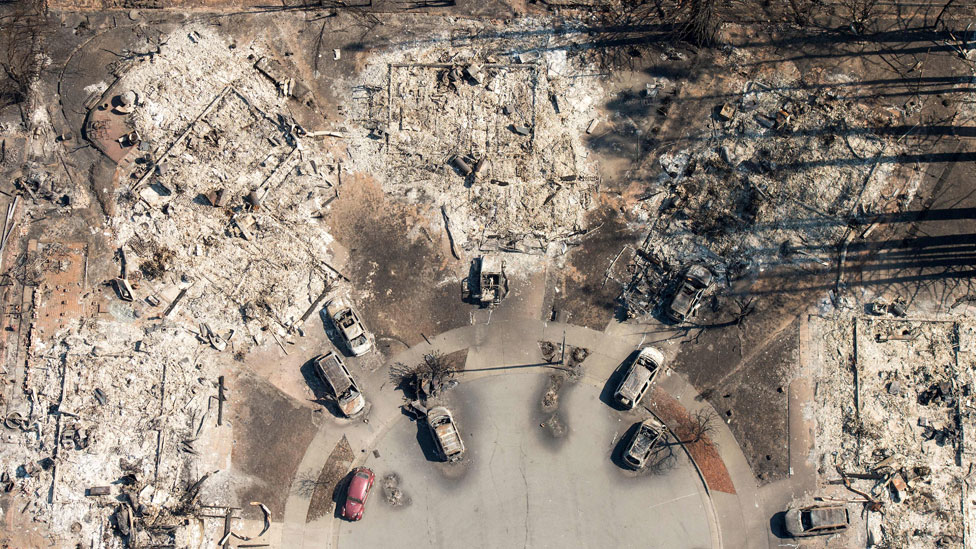
Deadly wildfires in northern California have destroyed more than 3,500 buildings and forced 25,000 people to leave their homes.

Firefighters are still battling the fires which have at least 31 dead and left scars across 170,000 acres (265 square miles) of land. Satellite images show the extent of the around the city of Santa Rosa.

Nasa satellite image showing wildfires in California

The fires have been fanned by north-easterly winds known as Diablo winds.

Santa Rosa

Remains of houses destroyed by fire in Santa RosaImage copyright Getty Images

The Tubbs fire – between Santa Rosa and Calistoga turned housing estates to rubble and ash in some parts of Santa Rosa.

A K-mart supermarket was burned out in the Sanata Rose blaze

Hundreds of people are still missing and thousands of firefighters are working to stop the fires spreading.

Mobile homes were destroyed at the Journey's End Mobile Home Park on 11 October, 2017Image copyright Getty Images

Interactive Slide the button to see how a Santa Rosa community was devastated

After

Google satellite image of Coffley Lane area of Santa Rosa after fire

Before

Google satellite image of Coffley Lane area of Santa Rosa earlier in 2017

Napa County

Wildfires also raged through the hills of the Napa County wine growing regions, burning estates, ranches and farmland.

Satellite image shows scorched hills in Napa County

Interactive Slide the button to see how fires have scorched Napa wine country

After

Satellite image shows scorched earth in Napa county after wildfires

Before

Google satellite image of Napa wine growing area in United States

Before now, California’s deadliest fire was in October 1933, when 29 people died in the Griffith Park fire in Los Angeles.

Among the dead this week are reported to be 100-year-old Charles Rippey and his 98-year-old wife, Sarah, in the Napa area.

The remains of the Signorello Estate Winery are seen from the air in Napa, CaliforniaImage copyright Getty Images

.

Note: This story is auto-generated from BBC syndicated feed and has not been edited by AFRICA PRIME NEWS

Death of the Nile

0

The River Nile serves as a lifeline to millions of people across East Africa and Egypt but is under threat from population growth, pollution and climate change.

Some Egyptian fishermen say the water is now so toxic that they dare not eat the fish they catch.

TAP HERE to find out more.

Image copyright Jonathan Rashad

Note: This story is auto-generated from ‘BBC News’ syndicated feed and has not been edited by Africa Prime News staff.

Strutting their stuff

0

A selection of the best photos from across Africa and of Africans elsewhere in the world this week.

Somali children dive, play and swim in front of the ruins of an old building on the coastal district of Hamarweyne, in Mogadishu on Friday.Image copyright AFP

Somali boys take time out on Friday to dive, play and swim in front of the ruins of an old building in the coastal district of Hamarweyne, in Mogadishu.

A man in a traditional costume performs ahead of the Rugby test match between South Africa (Springboks) and New Zealand (All Blacks) at Newlands Rugby stadium on October 7, 2017 in Cape Town. / AFImage copyright AFP

In South Africa, a man dressed in traditional costume performs before a rugby match between the Springboks and New Zealand’s All Blacks in Cape Town on Saturday.

A picture taken on October 8, 2017 in Accra shows burnt vehicles on the site where a gas tanker caught fire, triggering explosions at two fuel stations on the evening of October 7, 2017. At least three people were killed and dozens injured after a tanker truck carrying natural gas caught fire in Ghana"s capital, Accra, triggering explosions at two fuel stations, emergency services said on October 8, 2017. / AImage copyright AFP

The aftermath of a fire on Saturday after a truck carrying natural gas caught fire in the Ghanaian capital, Accra, triggering deadly explosions.

Models presents creations by Ivorian designer Miss Zahui during the Afrik Fashion Show in Abidjan 07/10/2017Image copyright EPA

Models don designs by Ivory Coast designer Miss Zahui at the Afrik Fashion Show in Abidjan on Saturday.

A model shows off a creation by Angolan fashion designer Nadir Tati on Sunday during her show at Lisbon Fashion Week in LisbonImage copyright EPA

Another continent, another show. This time Lisbon, where an outfit by Angolan fashion designer Nadir Tati graces the catwalk during Fashion Week on Sunday.

Women watch Egypt play Congo in a 2018 World Cup Qualifier in Stadium, Alexandria, Egypt - 08/10/2018Image copyright Reuters

The 2018 World Cup qualification match between Egypt and Congo Brazzaville gets rapt attention at the Borg El Arab Stadium in Alexandria on Sunday…

Egyptian men watch their natiional team play Congo Brazzaville on a big TV screenImage copyright EPA

To Egyptians’ delight, their side won 2-1, meaning a place in the finals for the first time in nearly two decades.

Morocco Mohamed el-Morabity, pours water on his face as he runs to win the first edition of the Ultra Mirage El Djerid marathon in the desert near the southwestern Tunisian city of Tozeur on October 7, 2017. The Ultra Mirage El Djerid marathon is a 100 kilometres ultra marathon across the largest salt pan of the Sahara Desert.Image copyright AFP

Some athletes spent the weekend covering 100km in the deserts of Tunisia. Morocco’s Mohamed el-Morabity, who won, gets much-needed liquid refreshment here.

Supporters of Georgia Weah's Coalition for Democratic Change party listen for results from Liberia's presidential and general elections on the radioImage copyright EPA

A day after Tuesday’s vote in Liberia, supporters of Georgia Weah’s Coalition for Democratic Change are glued to the radio to find out who is their new president.

Riot policemen stand guard as supporters of Kenyan opposition National Super Alliance (NASA) coalition protest in Nairobi, Kenya 11/10/2017Image copyright Reuters

Riot policemen stand guard as supporters of Kenyan opposition National Super Alliance (Nasa) protest in Nairobi on Wednesday…

Supporters of Kenya's President Uhuru Kenyatta are dispersed along a street in Nairobi, Kenya 11/10/2017Image copyright Reuters

….and the forces of law and order are also keeping an eye on supporters of Kenya’s President Uhuru Kenyatta, too.

A man walks past a huge graffiti artwork depicting elephants in downtown Johannesburg, South Africa, 10 October 2017. The artwork by "Falko" is part of the newly formed graffiti tours that take people through the streets of the city to introduce them to the graffiti and who painted them.Image copyright EPA

A huge work in central Johannesburg by graffiti artist “Falko”, snapped on Wednesday, forms part of new tours that show people round the city and introduce the painter.

Ballet dancers from the Joburg Ballet prepare backstage to enter the show during the final rehearsal for Snow White-The Ballet, Johannesburg, South Africa, 12 October 2017.Image copyright EPA

Still with the arts in South Africa, dancers with the Joburg Ballet prepare on Thursday to go on stage during the final rehearsal for Snow White-The Ballet,

Images courtesy of AFP, EPA, PA and Reuters

Note: This story is auto-generated from ‘BBC News’ syndicated feed and has not been edited by Africa Prime News staff.

Yousra Elbagir: Big and beautiful in Sudan

0
Two plastic bottles containing small pink and white pills.Image copyright Yousra Elbagir/BBC
Image caption Pills with fattening side-effects are widely available from illegal vendors in Sudan

In our series of letters from African journalists, Yousra Elbagir looks at how some Sudanese women are turning to black market substances in their quest for beauty.

While skin bleaching is a long-standing cosmetic staple across Sudan, a newer craze is sweeping the nation.

Many young women are turning to prescription pills in order to gain weight, and hopefully gain the curvaceous figures they see as the standard of beauty.

Away from the regulation of trained pharmacists, fattening pills are illegally dispensed by the same small shops which sell topical bleaching creams and other popular beauty fixes.

Sold individually, in small bags and emptied sweet containers, they are completely devoid of any information about medical risks.

An open secret

It is difficult to estimate how many women in Sudan use these products to gain weight, because many are reluctant to admit to it.

“Pills are handed out in the village like penny sweets,” says Imitithal Ahmed, a student at the University of Khartoum.

“I’ve always been scared [to use them] because I’ve seen family members fall ill and close friends become dependent on appetite stimulants.

“My aunt is on the brink of kidney failure and has blocked arteries from taking too many fattening pills, trying to get a bigger bum.

“Everyone in the family knows why she’s sick, but she won’t own up to it. She’s had to stop taking the pills on doctor’s orders.”


Yousra Elbagir:

Image copyright Douglas Fry

“Fattening pills are a popular niche within a much bigger trend”


‘My Mama Suspects’

Pills are often rebranded and given catchy street names which allude to their effects.

From The Neighbours’ Shock to Chicken Thighs and My Mama Suspects, the clinical name of pills are forgotten and replaced by promises of a bigger bottom, shapely thighs and a belly that will have your mother concerned that you might be pregnant.

Tablets range from standard appetite stimulants to allergy medicines containing the steroid hormone, cortisone.

Image copyright AFP
Image caption “The ultimate Sudanese woman [is] full-bodied and light-skinned”

The side-effects of taking cortisone are now a cash cow for pill peddlers. It is known to slow the metabolism, increase appetite, trigger water retention and create extra deposits of fat around the abdomen and face.

Using unregulated steroids without supervision can damage the heart, liver, kidneys and thyroid, says Dr Salah Ibrahim, Head of the Pharmacists’ Union in Sudan.

He explains that cortisone is a naturally occurring hormone in the body, helping to regulate vital bodily functions. But when a man-made, concentrated version enters the body in the form of pills or topical bleaching creams, the brain gives the body a signal to stop production.

If a user suddenly stops taking the substance, their major organs can spiral into dysfunction.

Deadly consequences

Young women in Sudan are dying from kidney and heart failure caused by sudden steroid withdrawal, medical professionals say.

Fatalities are especially common among new brides, who traditionally undergo a month of intense beautification before their wedding day and then abruptly stop using fattening pills and steroidal bleaching creams. Their deaths are put down to sudden organ failure.

Yet these horrifying beauty trends continue to gain traction.

Prescription pill abuse is taking off in Sudan’s conservative society, partly because it lacks the social stigma and pungent, giveaway odour of alcohol and cannabis.

University students flock to buy the potent painkiller Tramadol, which is sold for 20 Sudanese pounds ($1; 80 pence) per pill.

Some of Khartoum’s roadside tea-sellers are even known to drop the painkiller in a cup of tea, upon a coded request.

Image copyright YouTube
Image caption Many Sudanese women view Nada Algalaa as an ideal beauty

Awareness campaigns have so far had very little impact.

Dr Ibrahim, Head of the Pharmacists Union, has made numerous appearances on national television to warn of the dangers of prescription pill abuse.

At university level, pharmacists are taught vigilance and trained to act in keeping with ethics and pharmaceutical law.

But in a country where pharmacists and doctors are paid very little, the temptation to sell pills to illegal vendors is overwhelming for some.

“Last time I went to the beauty shop I go to for my creams, the shop owner brought out a chocolate box full of different fattening pills,” says Ms Ahmed, the Khartoum student.

“Girls are too scared to ask pharmacists and doctors about the pills they buy from beauty shops, for fear of being publicly shamed.”

Police may arrest traders and block smuggling routes, but the profits for rogue pharmacists keep growing regardless. Fattening pills are poured into the black market, deemed to be the lesser evil.

Sudan isn’t the only African society where being overweight is a symbol of prosperity and power, boosting the “marriageability” of young women.

But in this country, it embodies an ideal.

It defines the ultimate Sudanese woman – full-bodied and light-skinned – epitomising beauty and coveted as a wife.

The iconic status of Nada Algalaa, a Sudanese singer whose looks are widely praised and emulated, is testament in itself.

For some women, it is an ideal to be acquired by any means necessary.


  • More from Yousra Elbagir:

Sudan’s rulers ‘shirking action on cholera’

Sudanese fight for their African identity

How poets are fighting censorship in Sudan

Why Sudanese people still feel like pariahs


Follow us on Twitter @BBCAfrica, on Facebook at BBC Africa or on Instagram at bbcafrica


Note: This story is auto-generated from ‘BBC News’ syndicated feed and has not been edited by Africa Prime News staff.

Elizabeth Ohene: London’s coconut fad

0
Pedestrians in the LondonImage copyright Getty Images

In our series of letters from African writers, Ghanaian journalist and former government minister Elizabeth Ohene reflects on how London has changed and how it compares to Accra.

On a short visit to London, I have been looking at the city with a fresh eye.

For 19 years, the UK capital was what I called home. It was kind to me when I arrived here suddenly, uninvited, and I learned to love it.

There were certain idiosyncrasies that I confess I never got used to, but London grew on me.

I went back to Ghana 17 years ago and during that period I have visited London quite regularly.

This time around, I have returned after more than a year and this may explain why I am noticing certain things I might not otherwise have done.

‘Professional pallbearers’

There seems to be so many people smoking on the streets and on doorsteps. If I were a new reporter in town I might have named it: London, the smoking city.

I reminded myself that anti-smoking laws have been tightened and the smokers are obviously having a hard time.

In Ghana’s capital Accra, smoking of cigarettes has simply lost its appeal. You could be on the streets of Accra all day and not see a single person smoking, apart from obvious “tourist types”.


Elizabeth Ohene

Image copyright Elizabeth Ohene

“Coconut water is the latest fad in town. Apparently, London has overtaken New York and Los Angeles as the largest coconut drinking city in the whole wide world”


London streets are narrow, they have always been, but they look even narrower and I wondered how I drove in this city and on the wrong side as well.

On the narrow streets, they have managed to carve out cycling lanes. I simply marvel at how the London bus drivers navigate their way through the city.

I came upon a funeral cortege in north London, the procession consisted of probably 15 people, apart from the professional pallbearers.

Image copyright Getty Images
Image caption Funerals in the UK are understated in comparison with those in Ghana

In Ghana, funeral corteges are made up of hundreds of people. Yes, yes, some of the things I never got used to like the quiet understated funerals.

I have been in despair about our loud, and extravagant funerals and here I am, thinking it is worth mentioning that a funeral cortege had 15 people in it.

City of sanctuary

I went to what used to be my local supermarket in north London and there on the shelves were Star and Gulder beers and Guinness and Malta Guinness.

I took a second look and noticed they were imported from Nigeria. The Nigerian population in town must be more powerful economically than I had thought.

The natives themselves have discovered coconut in a big way. Coconut water is the latest fad in town.

Apparently, London has overtaken New York and Los Angeles as the largest coconut drinking city in the world, and the UK comes third after the US and Brazil.

It is being sold here as having truly magical powers, as a cure for hangover and as a diet aid.

Drinks purporting to be coconut seem to be available everywhere and people are prepared to pay very fancy prices for them.

Even though I have never been entrepreneurial in outlook, I suddenly had images of exporting planeloads of truly fresh coconuts from Ghana to London.

Image copyright AFP
Image caption In Ghana, fresh coconuts are cut open for customers to drink

This, after all, is the city that took me in when I needed sanctuary.

I had left Ghana in a hurry when an announcement came on the radio that I should report to a military barracks.

Yes, those were the days of coups and military rule in Ghana; but that is an old story. These days, we are a shining example of a stable democracy on the continent.

All the same, I shall never forget the place that gave me sanctuary, and I feel the least I can do is provide Londoners with real coconut water because much of what is being drunk here cannot qualify for it.

In most street corners in Ghana, you can find the real thing and it is cut open for you whilst you wait.

Brexit confusion

Then there is what the UK is in the headlines for these days: Brexit. Journalists and politicians are fixated about it.

The old arguments about the UK’s place in Europe that had contributed to the undoing of two Conservative prime ministers during my time, Margaret Thatcher and John Major, had finally done it for David Cameron.

Last year, the UK voted to leave the European Union and I get the impression that it is a case of needing to be careful what you pray for, as you might just get it.

I tried to listen to some of the endless discussions on Brexit and I confess I could not understand them and I gave up.

Image copyright Getty Images
Image caption Most people in London voted against Brexit

I decided to concentrate on the gardens, parks and pavements that make London a truly attractive city.

Workmen are digging up the streets again and the water company explains that they are lining the water pipes to prevent future leaks.

I saw a notice on a lamp post that said the council had received a planning application from someone who wanted to build a porch and if those on the street had opinions or objections, they were invited to a hearing.

A 14-storey apartment building is currently going up next door to my home in Accra. There had been no information from the city authorities that something so dramatic and life-changing was going to take place on my street.

Then there is the icing on the cake: The ease of walking and taking buses and trains in London.

It all made me realise that I had almost forgotten the things I had grown to love and which makes London a place to come back to over and over again.


More from Elizabeth Ohene:


Follow us on Twitter @BBCAfrica, on Facebook at BBC Africa and on Instagram at bbcafrica.

Image copyright AFP

Note: This story is auto-generated from ‘BBC News’ syndicated feed and has not been edited by Africa Prime News staff.

Joseph Warungu: Bible-bashing in Kenya’s election

0
Kenya's opposition National Super Alliance (NASA) coalition leader Raila Odinga reacts to supporters during a political rally at Jacaranda grounds in Nairobi on September 17, 2017Image copyright AFP
Image caption Kenya politicians on the campaign trail are adept at quoting from the Bible

In our series of letters from African journalists, Joseph Warungu reflects on how the Bible has taken centre stage in the battle for the Kenyan presidency.

If opposition leader Raila Odinga contests and wins the presidential election re-run on 26 October, a large chunk of the Kenyan population will be about to enter the biblical land of Canaan.

This is because Mr Odinga has succeeded in boiling down the entire manifesto of his umbrella group of opposition parties into a single memorable phrase – “tunaenda Kanani” – Swahili for “we’re going to Canaan”, the land that flows with milk and honey.

Presidential elections in Kenya have become a complex affair.

In the past it was enough to shout yourself hoarse on campaign platforms, lock up or silence your critics, change the constitution at will, distribute a few goodies to supporters and you would wake up at State House.

Image copyright AFP
Image caption Kenya is a deeply religious society

Now you need a multi-million dollar budget to hire helicopters, control the media, buy out political parties, patrol the digital space viciously and consult the best traditional herbalists.

In addition, you have to know your Bible well in the search for special anointing.

And so Mr Odinga – the presidential candidate of the National Super Alliance (Nasa) – has carefully studied the Book of Joshua and cast himself in the role of the famous hero who succeeded Moses, and led the fight to liberate enemy territory and settle the Israelites in the new land.

Mammoth prayer sessions

Meanwhile, President Uhuru Kenyatta and his deputy William Ruto, who are seeking re-election, must be suffering from sore knees, as they have moved from church to church kneeling before men of God, who lay hands on them and give them the anointing.

Mr Ruto has been at the centre of a spiritual storm as leaders of the Pentecostal Assemblies of God try to interpret what his recent donation to them of 10m Kenyan shillings ($68,00, £51,000) could mean.

Some say it was gift for the development of the church, while others argue it was a political tithe to sway them to vote for his Jubilee Party.


Joseph Warungu:

Image copyright BBC Sema Kenya

“With the rival presidential candidates keeping their Bibles close to their chest, Kenyans have been on the look out for any divine sign that could help them decide which of the two is the anointed one”


In a country where people’s hopes for a better future have often been crushed by bad politics, endemic corruption and deep-seated tribalism, many Kenyans have always put their faith in God.

He is the only constant and unchanging force for good.

When faced with any calamity, Kenyans have been known to go on their knees to seek God’s intervention in mammoth prayer meetings that are broadcast live on the media.

The politicians have woken up to the fact that they live in a nation of believers and to reach them you need to be seen to be God-fearing.

In May, newspapers published a photo of Mr Odinga praying at the historic Western Wall in Jerusalem, during a visit to Israel.

Mr Odinga explained that the Wailing Wall was more than 5,000 years old and was sacred to all three Abrahamic religions – Islam, Judaism and Christianity – and that to him it was a very strong symbol of strength and unity.

Attacked by bees

With the rival presidential candidates keeping their Bibles close to their chest, Kenyans have been on the look out for any divine sign that could help them decide which of the two is the anointed one.

Earlier this year, President Kenyatta caused an online tremor when he became a “rainmaker”.


Image copyright AFP

On a voter registration drive in Nyeri in central Kenya, the crowd urged the president to pray for rain in the area, which had experienced a drought.

Minutes after he reluctantly prayed, there was a heavy downpour, prompting animated reactions on social media. One contributor said: “Our president is not only a leader but a prophet!”

To counter Mr Odinga’s metaphorical journey to Canaan, supporters of President Kenyatta, who is left-handed, have also delved into the Bible for inspiration and likened their candidate to King David.

The Jubilee Party faithful have gone to the Book of Judges, which refers to 700 left-handed soldiers from the tribe of Benjamin being excellent in the use of the sling as a tool of war.

David too was an expert with the catapult and some therefore argue he must have been left-handed. And so images of President Kenyatta writing with his left hand have done the rounds on WhatsApp to confirm his leadership credentials.


Image copyright EPA

The Bible was at the centre of a political storm again when angry bees attacked police and protesters outside the Supreme Court on 20 September, as judges gave their full ruling for annulling the August election, saying that it was marred by irregularities.

In response to the incident, opposition supporters quickly began to share a verse from the Book of Exodus that says: “And I will send the bees ahead of you to drive your enemies out of your way.”

With the electoral commission announcing a new date for the presidential poll, social media platforms, especially WhatsApp, are again awash with biblical messages and prayers for the two main candidates.

‘Love life’

A famous Kenyan comedian has often joked about the dramatic nature of some of the prayers offered by some extreme church pastors: “May God knock you down with his favour, may he lift you and throw you into a pool of prosperity, may he embarrass you with his riches!”

But now it is no longer a laughing matter.

Image copyright AFP
Image caption Many Kenyans have been praying for a peaceful re-run of the presidential vote

I have seen a number of prayers shared on WhatsApp from both sides of the political divide that are Bible-based but with violent overtones. The intention is to stir up ethnic hatred and use the Bible as a legitimate weapon of war.

President Kenyatta entered the race with a prayer from the Book of Nehemiah that he shared in a live radio interview: “Remember me with favour, my God, for all I have done for these people.”

Mr Odinga ended his Supreme Court battle with the Book of Joshua: “Our journey to Canaan is unstoppable,” he said.

“On 8 August we crossed the River Jordan to reach the city of Jericho. We are marching on to the city of Jerusalem, and we shall get there.”

I am not quite sure what Israeli Prime Minister Benjamin Netanyahu will make of the Kenyan invasion, but presumably Israel’s intelligence agency, Mossad, has armed him with the appropriate Bible verses.

However, whether it is Joshua, in the form of Mr Odinga, or King David, in the form of Mr Kenyatta, who wins the re-run, many Kenyans will hope and pray that the candidates will heed the Gospel of Peter: “Whoever would love life and see good days must keep his tongue from evil… he must seek peace and pursue it.”

Amen.


More from Joseph Warungu:

Should degrees be necessary for leaders?

How to stop exam cheats

Kenyans beg for mercy


Note: This story is auto-generated from ‘BBC News’ syndicated feed and has not been edited by Africa Prime News staff.

Currency Exchange Rates

USD - United States Dollar
ZAR
0.06
EUR
1.17
CAD
0.73
ILS
0.31
INR
0.01
GBP
1.34
CNY
0.14
Enable Notifications OK No thanks