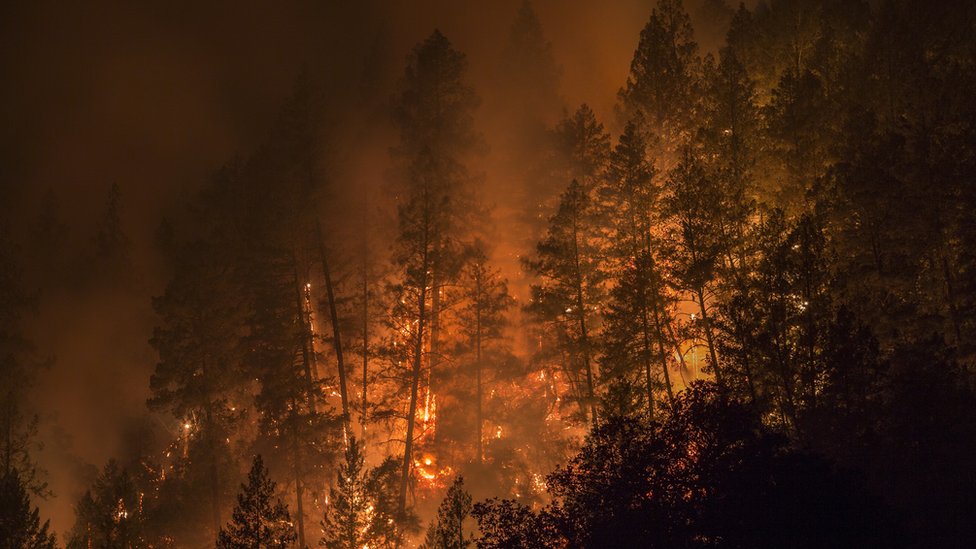
Bodycam footage from a Sonoma County deputy shows officers rescuing a disabled woman who had yet to evacuate Santa Rosa, California. The number of people confirmed dead in wildfires sweeping northern California has climbed to 31, as officials warned that conditions would worsen.
Note: This story is auto-generated from BBC syndicated feed and has not been edited by AFRICA PRIME NEWS
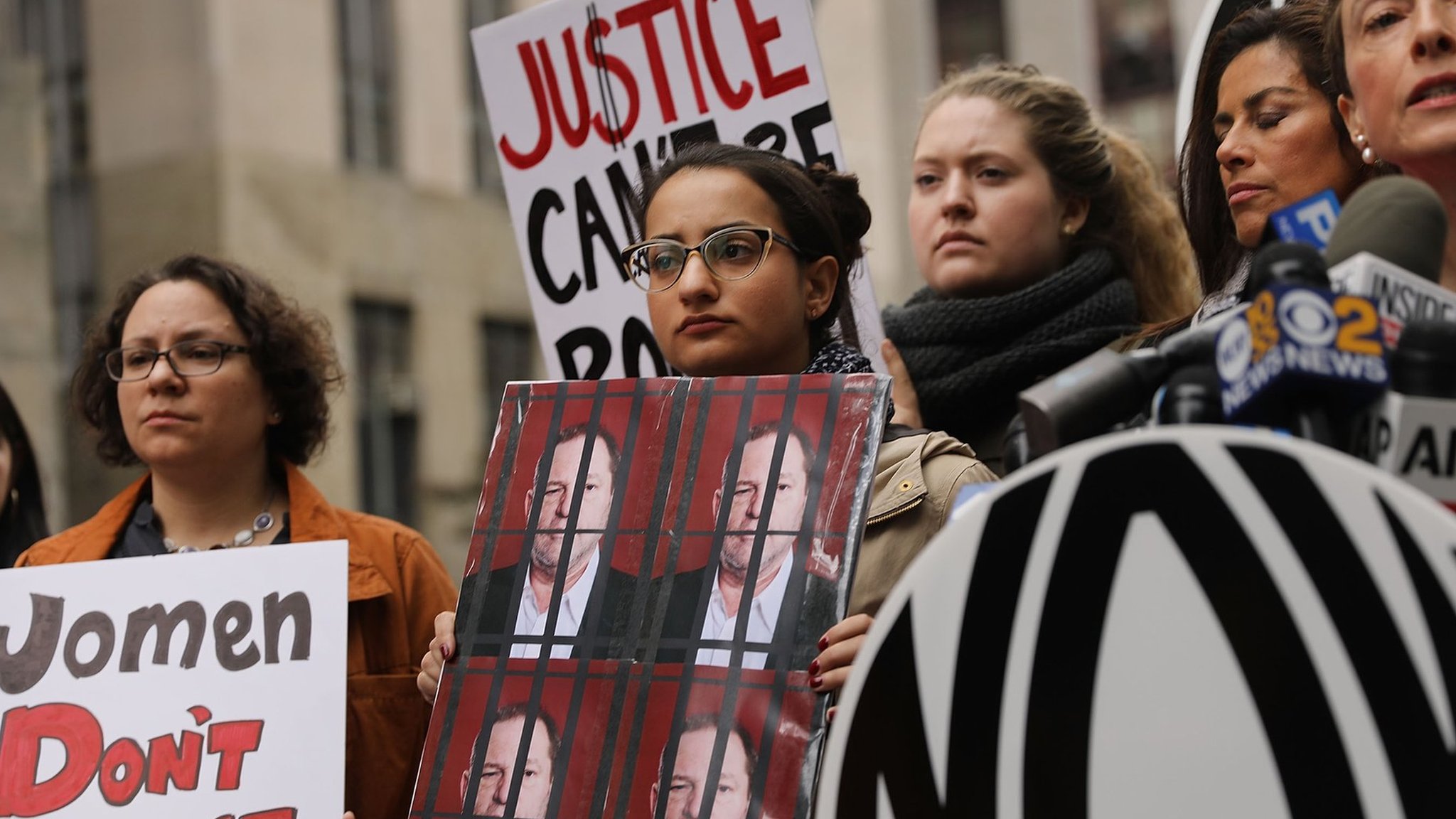
On Friday, the scandal surrounding Weinstein – who produced films including Pulp Fiction, Shakespeare in Love and Crouching Tiger, Hidden Dragon – deepened when he was accused of rape by US actress Rose McGowan.
Image copyrightGetty ImagesImage caption Bob Weinstein co-founded the studio with his brother in 2005
He was already facing claims of rape, sexual assault, groping and harassment.
Weinstein, who is believed to be in Europe seeking therapy, has insisted through a spokeswoman that any sexual contacts he had were consensual.
Since the avalanche of claims began, the company has been trying to disassociate itself from its co-founder and save the business, reports say, with efforts made to buy Harvey Weinstein out, rebrand and keep creative partners on board.
But reports in the Los Angeles Times said that financers had begun to pressure the company to sell and potential buyers were circling.
The Wall Street Journal also reported the company was “exploring a sale or shutdown” and was “unlikely to continue as an independent entity”.
Image copyrightAFPImage caption The Weinstein Company fired Harvey Weinstein last weekend, but there remains intense speculation about its future
The company is thought to be worth hundreds of millions of dollars but before the recent allegations had already faced questions about its future prospects amid increasing competition from media streaming services.
Investment bank Goldman Sachs said on Friday it was investigating options to sell the small stake it holds, citing the reported “inexcusable behaviour”.
On Saturday, the organisers of the Oscars film awards will hold emergency talks amid speculation it could suspending Harvey Weinstein’s membership. Bafta, the British Academy of Film and Television Arts, has already done so.
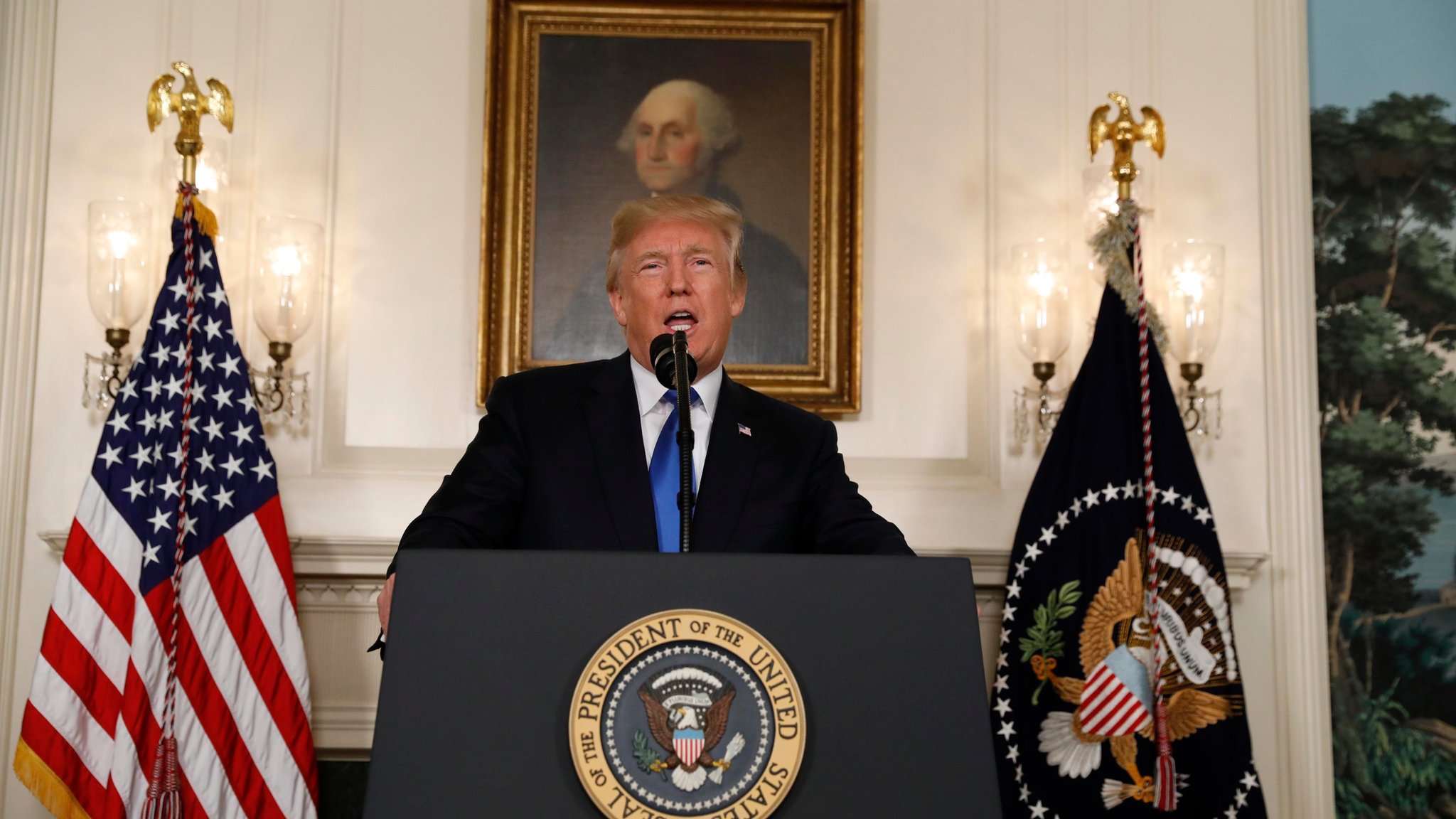
“We will not continue down a path whose predictable conclusion is more violence, more terror, and the very real threat of Iran’s nuclear breakout,” he said.
What does Trump’s refusal to sign mean?
Congress requires the US president to certify every 90 days that Iran is upholding its part of the agreement. Mr Trump had already recertified twice, but refused to sign a third time ahead of a Sunday deadline.
Media playback is unsupported on your device
Media captionEU foreign policy chief Federica Mogherini said Iran was implementing the deal
Congress now has 60 days to decide whether to pull out of the nuclear deal by re-imposing sanctions.
Some advocates of the deal, signed between Iran and six international powers – the UK, US, Russia, France, Germany, and China – had feared that Mr Trump would withdraw the US entirely.
Instead he essentially passed the ball to Congress, which will now decide whether to rewrite the framework in accordance with Trump’s wishes. The president made it clear that if it did not, he would cancel the deal.
“In the event we are not able to reach a solution working with Congress and our allies, then the agreement will be terminated,” he said. “It is under continuous review and our participation can be cancelled by me, as president, at any time.”
What changes does he want?
Mr Trump is seeking is the end to the nuclear deal’s so-called “sunset clauses”, one of which allows for the lifting of restrictions on Iran’s nuclear enrichment programme after 2025.
He also called for new sanctions on Iran’s elite Revolutionary Guards, which he called the “corrupt personal terror force of Iran’s leader”, and restrictions on Iran’s ballistic missile programme, which is not covered by the deal.
The president said that congressional leaders were already drafting amendments that would curb the ballistic missile development and eliminate expiry dates on restrictions to Iran’s nuclear development.
How did key players respond?
Iranian President Hassan Rouhani said the US was “more than ever isolated” and could not change the nuclear deal.
“As long as our rights are guaranteed, as long as our interests are served, as long as we benefit from the nuclear deal, we will respect and comply with the deal,” Mr Rouhani said.
Yukiya Amano, head of the International Atomic Energy Agency (IAEA), said Iran was implementing the deal and was subject to “the world’s most robust nuclear verification regime”.
Image copyrightAFPImage caption Worshippers shouted anti-US slogans during Friday prayers in Tehran
European diplomats warned that any such unilateral changes to the agreement were likely to trigger the deal’s collapse and a return to a nuclear standoff in the Middle East.
EU foreign policy chief Federica Mogherini called the deal “robust” and said there had been “no violations” by Iran. She said it was not in the power of “any president in the world” to terminate the agreement.
In a joint statement, the UK, Germany and France said they were “concerned” by Mr Trump’s move but remained committed to the deal. They said they “shared concerns about Iran’s ballistic missile programme and regional activities”.
Russia said it remained committed to the deal and was opposed to the use of “aggressive and threatening rhetoric in international relations”.
Israeli Prime Minister Benjamin Netanyahu congratulated Mr Trump, who he said had “boldly confronted Iran’s terrorist regime”. Saudi Arabia also backed the US president’s “firm strategy”.
What has changed?
By Lyse Doucet, chief international correspondent
President Trump has recast the list of Middle East threats, with Iran replacing Islamic State as Enemy Number One.
That world view is shared by his strongest supporters in the region, including Israel and Gulf Arab leaders who have long seen Iran as their primary threat, and a rival with vast sway across the Middle East.
They resented Washington’s focus on the Iran deal during President’s Obama administration. Like President Trump, they want to undo his legacy. The new approach imposes new sanctions but stops short of designating Iran’s elite Revolutionary Guards as a terrorist group – a step Iran says would be tantamount to a declaration of war.
The urgent question now is whether the new strategy will embolden Iran’s hardliners including the Revolutionary Guards. Like US forces, they’re involved in battles to defeat IS in Iraq and Syria, and may also see a new enemy.
Trump hands Congress a hot potato
By Anthony Zurcher, BBC News Washington
Donald Trump, trying to reconcile a bluntly delivered campaign promise with the tricky realities of governing, is taking a half-step – and handing the mess to Congress.
Image copyrightGetty ImagesImage caption After railing against it for years, President Trump announced he would refuse to recertify the Iran deal
Legislators do not make for great caretakers, however, and without firm White House guidance Iran may prove a daunting challenge. The president has decertified Iran’s compliance, but Congress will have to decide how to fix the deal to his liking.
The administration recommends establishing “triggers” that would automatically impose penalties on the Iran. That will take a lot of legislative manoeuvring, not Washington’s strong suit lately.
There are signs of progress in Congress, but with tax reform and budget negotiations continuing, the schedule is packed. At some point Mr Trump could again be on the spot. He says if there’s no further action, he will officially nix the deal.
The original Iran deal legislation was a way to allow congressional Republicans to object to the agreement without killing it. Now, it seems, Mr Trump wants new provisions that will allow him to kill it – or keep it – without getting his hands dirty.
What is the nuclear deal?
Formally known as the Joint Comprehensive Plan of Action, it is designed to prevent Iran developing a nuclear weapon.
It lifted some sanctions that stopped Iran from trading on international markets and selling oil.
The lifting of sanctions is dependent on Iran restricting its nuclear programme. It must curb its uranium stockpile, build no more heavy-water reactors for 15 years and allow inspectors into the country.
Media playback is unsupported on your device
Media captionPresident Trump and Iran’s President Rouhani traded insults at the UN
Note: This story is auto-generated from BBC syndicated feed and has not been edited by AFRICA PRIME NEWS
Image copyrightOntario Lottery and Gaming Corporation
All may be fair in love and war, but love and money? That’s up for the courts to decide.
A Canadian couple is heading to court after a winning lottery ticket drove a C$6m ($5m, £4m) wedge between them.
Denise Robertson got a court injunction on 28 September to prevent her ex, Maurice Thibeault, from cashing-in.
Mr Thibeault had moved from their shared apartment in Chatham, Ontario just five days after winning part of the 20 September jackpot.
The dispute was first reported by the Toronto Star on Thursday.
The couple had been living together for two-and-a-half years, according to an affidavit sworn by Ms Robertson and provided to the BBC.
“Maurice and I have been buying Lotto 649 tickets together for almost our entire relationship. Sometimes he would purchase the tickets and sometimes I would. Sometimes I would give him money and he would buy the tickets when he went to pick up cigarettes,” she said in the affidavit.
“We always agreed that if we had a winning ticket, the proceeds would be ours, together as a couple.”
Mr Thibeault was one of two winners of the Lotto 649 draw worth $12m total, but when Ms Robertson asked him if he had won, she says he denied it, the affidavit claims.
Days later, on 25 September, Ms Robertson says she came home to find that all of Mr Robertson’s belongings were gone and that he had quit his job.
“When I look back, I recall that he did approximately 15 loads of laundry of all his clothes the night prior, and didn’t put them into the drawers and closets, as if he was preparing to pack up and leave,” Robertson said in the affidavit.
Sources close to Mr Thibeault told the Star that he had been planning on leaving her for months, and the lottery gave him the means to do so. They said he is “laying low” in an undisclosed location until the this issue is sorted out.
In Ontario, the province where the couple lives, the length one must live with a partner to be considered common-law varies on what type of application one is filing.
An application for spousal support requires that the couple live together for three years, but Ms Robertson is arguing that since they had a prior agreement to share all lotto winnings, she is entitled to her share of the ticket.
Note: This story is auto-generated from BBC syndicated feed and has not been edited by AFRICA PRIME NEWS
Gombe (Nigeria) — National Association of Proprietors of Private Schools (NAPPS), Yobe State Chapter in Northeast Nigeria, has described the increasing proliferation of unregistered private schools, as a great challenge to the advancement of education in the State.
Chairman of Potiskum Local Government Chapter of NAPPS, Usman Alhaji Saleh stated this while speaking with Journalists shortly after the 2017 Private Schools Day celebration held at Chiroma Ibrahim School, Potiskum.
“You know we are operating on democracy, everyone feels free to do what he likes without severe depression, we initiated a moves of carrying everybody along for the development of the education but they resist.
The meeting brewed a communique which part of it reads ‘government should check unnecessary establishments of private schools so as to provide quality education to the teeming populace ‘.
“We have over 51 private schools here in Potiskum town are faced with financial constraints, yet we are not deterred from providing services to compliment the efforts of the State Government
“As am speaking to you now, we are lacking access to grants and loans from the government. We are not able to access loans from Banks simply because most of the private schools do not have government recognition to operate”, he said.
Saleh, blamed the Parents for their inability to pay their Children’s school fees timely, adding that they forgetting that it’s from that school fees that was sustain the routine services, in the schools
The NAPPS Chairman further appealed to Yobe State government to consider them in accessing SME grants.
Abuja (Nigeria) — In its determination to ensure sanity on roads in Nigeria’s Capital Territory, the Federal Road Safety Corps has said that it apprehended and referred for psychological evaluation, over 4,000 traffic offenders within the last 3 months.
The new Federal Capital Territory Sector Commander of the Corps, Ayuba Gora Wobin made this known when he paid a working visit to the FCT Minister, Muhammad Musa Bello.
The Commander used the occasion to assure FCT residents of the preparedness of the Command to ensure safety on the roads these ember months.
Wobin who was recently deployed to FCT conveyed the appreciation of the Corps to the Federal Capital Territory Minister for his interest and contributions to road safety issues in the Territory.
“Since my assumption of office as the Sector Commander in the FCT, I have taken keen interest to observe the great contributions of the administration to the efforts to reduce road crashes and safeguard the lives of road users here”, he said.
“Permit me to mention a few of the initiatives that have positively contributed to road safety in the FCT. These include; the pragmatic efforts of the Minister towards clearing obstructions on the roads, provision of walkways and enforcement of the use of the pedestrian bridges, as well as the prompt response of concerned FCT agencies to emergencies and others.”
Wobin however appealed for the support of FCT Administration towards the execution of its patrol activities during the ember months, while pledging his support to the Administration towards ensuring safer roads
The Minister, while appreciating the sector commander for the visit, said the relationship between the Command and the FCTA is a very long and close one
Malam Bello noted, particularly, the collaboration with the Sector Command for the enforcement of the use of pedestrian bridges in the city, which has saved uncountable lives.
“In Dei Dei, if you check your records, you will see what it used to be before the enforcement on the use of the pedestrian bridges. Pedestrians were being run over on a daily basis, but today that ugly experience has been stemmed.”
The Minister expressed concern over the spate of violation of traffic regulations and the challenge of traffic management in Abuja, which he said, informed the appointment of the new Secretary of Transport, Kayode Opeifa.
Bello stated, “He (Opeifa) served as Commissioner in Lagos for quite some time. So, he is among the experts in this field. A lot of our interventions we wanted to embark upon were deliberately kept on hold because we wanted to get the right personnel. I hope that you would work closely together with him to evolve dynamic solutions to the challenge of traffic violations in the FCT.”
Uber has backed down from its threat to leave the Canadian province of Quebec over new rules it felt were too restrictive.
The ride-sharing company, based in San Francisco, was due to halt its operations in the province on Saturday.
Uber Quebec says it sees a chance to start a “constructive dialogue” with the province’s new transport minister.
The company was concerned about regulations that will require drivers to undergo police background checks.
Uber drivers will also need to complete 35 hours of training, before being allowed to pick up passengers.
Those rules came out in September, almost a year after the provincial government agreed to let Uber operate in Quebec on a trial basis.
New provincial transport minister Andre Fortin said on Friday that current Uber drivers will now have up to two years to get police background checks, as opposed to going through a criminal check with a private company.
Drivers who sign on after 15 October will need to complete the check within eight weeks.
All Uber drivers will still need to complete the extended training course, placing them on par with taxi drivers in Quebec.
Mr Fortin said in a statement that “this simple change does not change Uber’s obligations” and that it was an issue of “fairness for all market partners and for user safety”.
Uber has 50 office staff and about 10,000 drivers across Quebec, which includes Canada’s second largest city, Montreal.
Media playback is unsupported on your device
Media captionTwo Uber drivers take opposing views on how the company should treat them
London transport authorities refused Uber a new private hire licence, saying the ride-hailing firm was not fit and proper on the grounds of “public safety and security implications”.
Uber has been roiled by a string of controversies in recent months.
In July, chief executive Travis Kalanick, who helped found the company in 2009, resigned following a series of scandals and criticism of his management style.
In June, 20 staff were sacked in the US after a law firm investigated complaints made to the company about sexual harassment, bullying and retaliation for reporting problems.
Last year, Uber lost a landmark employment tribunal in the UK which ruled drivers should be classed as workers rather than being self-employed.
Note: This story is auto-generated from BBC syndicated feed and has not been edited by AFRICA PRIME NEWS