Gombe (Nigeria)- In order to strengthen the country’s democracy and create true federalism, People Democratic Party (PDP) Nigeria Speakers’ Forum, has insisted on Constitution amendment process that must be holistic.
This is contained in a communique issued after their maiden meeting in Gombe State, north east Nigeria at the weekend signed by John Gaul Lebo, Speaker, Cross Rivers State House of Assembly .
They said these positions were necessitated by the economic, political and social development coupled with the agitations arising from the different quarters of the country.
They explained that devolution of powers had been unanimously considered as a priority during one of the Constitutional review meetings, but were surprised that the National Assembly later kicked against it.
“The Constitutional review process has been on since the last two years. In these two years , we’ve had not less than four meetings and the last one was in Lagos.
“It was resolved unanimously that one of the most prominent issues in the Constitutional review process was the issue of devolution of power.
“The Speakers’ Forum has called on the National Assembly to as a matter of urgency and necessity revisit the issue of devolution of powers in the current Constitutional amendment process.
“Devolution of powers was priority to all of us and we resolved on the basic items that must form the devolution of powers. So we were surprised when members of the National Assembly voted differently and rejected devolution of powers.
“Certain other items like the autonomy of the state legislature, autonomy of local governments were there
“We don’t want to be selfish by protecting our interests against the interests of the country; that is why we said this devolution of powers must be part of the process,” he explained.
The PDP Speakers’ Forum also resolved to fully support the party during its December 9, 2017 National Convention holding in Lagos.
Among other resolutions reached by the Forum was the adoption of the Speaker of Cross Rivers State House of Assembly , John Gaul Lebo as Head of its caretaker committee, with the Speaker of Taraba State House of Assembly as Secretary.
In attendance were Speakers of Abia, Akwa Ibom, Cross Rivers, Delta, Ebonyi, Enugu, Gombe, Rivers and Taraba states.
Kaduna (Nigeria) — The Chairman of a Non-Governmental Organization, Knowledge For The Blind Initiative (KFBI), Andrew Gani-Ikilama, has asked Nigeria to start harnessing potentials of the physically challenged persons for the overall development of the country.
“In Nigeria, the physically challenged people are not seen with any dignity or value and so they are seen as people that have nothing to offer the country but a nuisance to the society.
“My father, late Dr Bitrus Gani during his life time was a renounced medical doctor as a blind person, but because he was trained, he end up being useful to himself, family and the society. WE his children attained schools to the highest levels,” he explained.
Speaking at the State Special Education School, Kaduna, northwest Nigeria, in commemoration of the 2017 World Sight Day on the theme, “The power of vision,” Gani-Ikilama argued that unless government at all levels recognized the potentials that are being wasted away in the country among the physically challenged persons, most of them would end up as perpetual beggars throughout their lives time.
He expressed gratitude to Kaduna State Ministry of Education for the privilege to hold the lecture in the State Special Education School to enlighten the children and make them understand the potentials that are in them, adding that they have come to assure them that they can be great men and women if they work hard.
Jummai Bako, a graduate who lost her eyesight in the late 90s said it was not easy with the hurdles she had to pass in life before becoming what she is today. . “While in Secondary School, l received a lot of victimization, at times l keep on crying but l made up my mind not to give up the dream l have for myself to achieve.
Speaking on the topic ” Greatness is a Choice'” Jummai Bako called on the students to see themselves as being privileged to be in school and enjoined them to use every opportunity to prove to the world that they have special talents in them to be great.
The speaker, Joshua Jydson who spoke on the power of personal vision, enjoined the students to always have a personal vision of who they want to be in future and work hard towards achieving their goals.
He reminded the students of the contributions of Dr Bitrus Gani, though a blind man, who touches the lives of people in different ways. “Don’t allow yourselves to be discouraged because of your present situation but you should desire in your hearts to make a very good use of the opportunities given to you to excel in life,” he added.
Jydson called on the Kaduna State government to introduce modern equipment that would help the students compete favourably with their colleagues from other parts of the world.
Some of the students interviewed expressed gratitude with the motivation given to them by the various speakers, saying their earlier perceptions have been changed to work hard to achieve greatness in future.
Image caption Becky (aged 11) meeting Thomas Sankara in Ouagadougou in 1987, shortly before his assassination
One picture brings it all back home to me again: Me, an 11-year-old London school pupil, gazing up smiling into the eyes of Thomas Sankara, then president of Burkina Faso.
The picture is too dark; it isn’t particularly well composed – the sound engineer is in the way, getting my fellow interviewer, 14-year-old Dan Meigh, ready to film our encounter.
But it’s the kindly warmth in Capt Sankara’s eyes as he looks back at me that takes me back; the sense of calm composure, of someone at ease with himself, and at ease with his young, potentially unpredictable young interlocutors.
It’s the simple furniture, the lack of opulence, the lack of Western power-dressing in favour of African fabrics and bare arms.
Little did we realise at the time that we would become the last non-Africans to interview the Burkina Faso leader.
On 15 October 1987, he was assassinated in a coup led by his erstwhile brother-in-arms and best friend Blaise Campaoré – who went on to lead the country for the next 27 years.
We had been in Burkina Faso as winners of a competition run by the BBC news programme for children, Newsround – sent to look at projects run by Sport Aid, a famine-relief fundraising campaign.
Image caption The interview took place in the spartan presidential palace
Hearing the news of Capt Sankara’s death back home in London, as editing of our programme was still under way, I was saddened and shocked, but the shock was soon superseded by the interview requests that came flooding in from prime-time chat shows, where I was jokily quizzed about bagging a “scoop” at such a young age.
It was only as I grew older that I began to appreciate the legendary status of the man I had interviewed – despite some criticism of his rule, his admirers remain numerous and ardent – and of the symbolism of his murder in the political context of post-colonial Africa.
Thomas Sankara – ‘Africa’s Che Guevara’
Image copyrightAFP
A captain in army of Upper Volta, a former French colony in West Africa
Instrumental in the coup that ousted Col Saye Zerbo as president in 1982
Took power from Maj Jean-Baptiste Ouedraogo in an internal power struggle and became president in August 1983
Adopted radical left-wing policies and sought to reduce government corruption
Changed the name of the country from Upper Volta to Burkina Faso, which means “the land of upright men”
Criticised by some as an undemocratic authoritarian
Killed in mysterious circumstances by a group of soldiers in October 1987, aged 37
The anti-imperialist revolutionary is still hugely popular across Africa.
For Capt Sankara was pursuing a political project described as revolutionary in scope. And unlike many other African icons, such as South Africa’s Steve Biko, he did – at least for a time – have the power to begin trying to make his vision a reality.
Tree planting
I witnessed some of it for myself when I was there.
As I have said, he did away with the ornaments enjoyed by many leaders.
We saw few guards at the presidential residence, something Capt Sankara may have come to regret.
Outside there were no luxury cars – we heard he had given them to the national lottery as prizes, replacing the fleet with cheap Renaults.
One of Capt Sankara’s priorities was fighting the desertification of his country.
Image caption People built “diguettes” to fight desertification and improve crop yield
He told us he wanted to make it a commonplace that everyone should plant a tree on their birthday – we planted our own.
He had sent 200,000 people to plant trees and cordon off land, preventing nomadic animals from stripping the land of vegetation.
We saw home-grown solutions being implemented to problems of malnutrition and poverty – for instance, people building “diguettes”, stone walls which stop fertile topsoil running off arid agricultural land when it rains, permitting more abundant crops to be grown.
Statistics suggest that the policies Capt Sankara implemented during his short four years in office yielded some startling results.
Image copyrightAFPImage caption Many more children went to school under Thomas Sankara’s rule
School attendance went from 6% to 22%, millions of children were vaccinated and 10 million trees were planted. The number of women in government soared, female genital mutilation was banned, and contraception was promoted.
Like me, Lamine Konkobo, a Burkinabé journalist with BBC Afrique, was only a child when Capt Sankara was killed – and, like me, he only came to fully understand his political importance as he grew up.
“I was growing up in a village where Sankara was seen as a challenging figure in terms of the ideas he promoted, in terms of women’s independence and empowerment, for instance,” he told me.
“That did not sit well in the countryside.”
Exercise made compulsory
Capt Sankara had challenged the old centres of power in Burkina Faso: Traditional leaders and big business.
So among them there was a sense of relief when his rule was over, a relief shared by Lamine’s father.
Most young people supported Capt Sankara, but misgivings about his rule even extended to progressive figures, including some intellectuals, who felt his quest to develop the country had an overly paternalistic, authoritarian edge.
Media playback is unsupported on your device
Media captionA look back at Thomas Sankara’s time in power
President Sankara made physical exercise mandatory, for example, so he could harness the powers of the population for his projects and do it without relying on external aid.
Workers accused of not pulling their weight were sometimes tried in “revolutionary tribunals”, which were supposed to target corruption.
But the perceptions of Capt Sankara changed after Mr Campaoré came to power.
Under President Campaoré’s programme of “rectification”, power was restored to traditional leaders and businessmen.
Image copyrightAFPImage caption “Justice for Sankara” became a rallying cry decades after his demise
Opponents were assassinated and a market economy was implemented that many blamed for impoverishing the majority and enriching a tiny elite, including Mr Campaoré and his own family.
These changes brought about a reappraisal of Capt Sankara’s achievements among many – including Lamine’s father.
“After [Sankara] died, we discussed his integrity, his public service, and my dad said everyone had been defending their own interests and had not been not open enough to hear him. ‘Now I understand he was much better than what we have now,’ my dad said. He died a repentant man.”
Although Mr Campaoré, who was overthrown in 2014, erased Capt Sankara’s project, ultimately he failed in his aim to erase his vision, Lamine believes.
“This is the real legacy of Thomas Sankara. The ideas he tried to promote remain despite all the efforts of Blaise Campaoré to get people to forget.
“Ultimately those ideas were what spurred people to rise up in 2014 against Blaise Campaoré: They confronted armed police officers and soldiers and they made their point.
“The uprising would not have been possible without young people being driven by this powerful belief within them – the belief that they were pursuing a vindication, that the regime that killed their hopes would go.”
Note: This story is auto-generated from ‘BBC News’ syndicated feed and has not been edited by Africa Prime News staff.
Image copyrightJacklyn Reierson, MAFImage caption The family lives in a remote village in western Democratic Republic of Congo, in Africa
Conjoined twins born in a remote village in the Democratic Republic of Congo have survived a 15-hour journey on the back of a motorbike to be separated.
They were then flown to the capital, Kinshasa, where they were operated on by a team of volunteer surgeons.
In total, the one-week-old girls had to endure an 870-mile (1,400km) round trip across jungle, on treacherous roads and by air.
The twins are now being monitored.
The babies – Anick and Destin – will return to their village in three weeks. They were born at 37 weeks in August, were joined at the navel, and did not share any internal organs.
Image copyrightJacklyn Reierson, MAFImage caption Conjoined twin girls Anick and Destin survived their birth before being separated
About one in every 200,000 live births results in conjoined twins and their survival is never certain, especially in remote areas where no medical help is available.
But to the astonishment of doctors, these twins were born naturally in the village of Muzombo, in the west of the African country.
Realising that the babies needed surgery, their parents Claudine Mukhena and Zaiko Munzadi wrapped the babies in a blanket and set off on an epic journey through jungle to their nearest hospital in Vanga.
Without the equipment or experience to carry out the complex separation surgery in the small hospital, doctors transferred them to a hospital in Kinshasa more than 300 miles away.
Image copyrightJacklyn Reierson, MAFImage caption An emergency plane flew the family to the capital city for surgery
To get there, the family was flown by MAF, a humanitarian airline which operates in remote regions, rather than risk another long journey over dangerous roads.
Dr Junior Mudji, who is now caring for them at Vanga Evangelical Hospital, said he was delighted.
“At 37 weeks, conjoined twins born naturally – it’s unheard of,” he said.
“They are doing fine, they sleep well and eat well. In general, they are doing well.
“We will keep them here for three more weeks to be sure everything is normal.”
Dr Mudji believes the operation was the first to separate conjoined twins in the Democratic Republic of Congo.
Note: This story is auto-generated from ‘BBC News’ syndicated feed and has not been edited by Africa Prime News staff.
Organisers say the club would play at New York’s Red Bull Arena
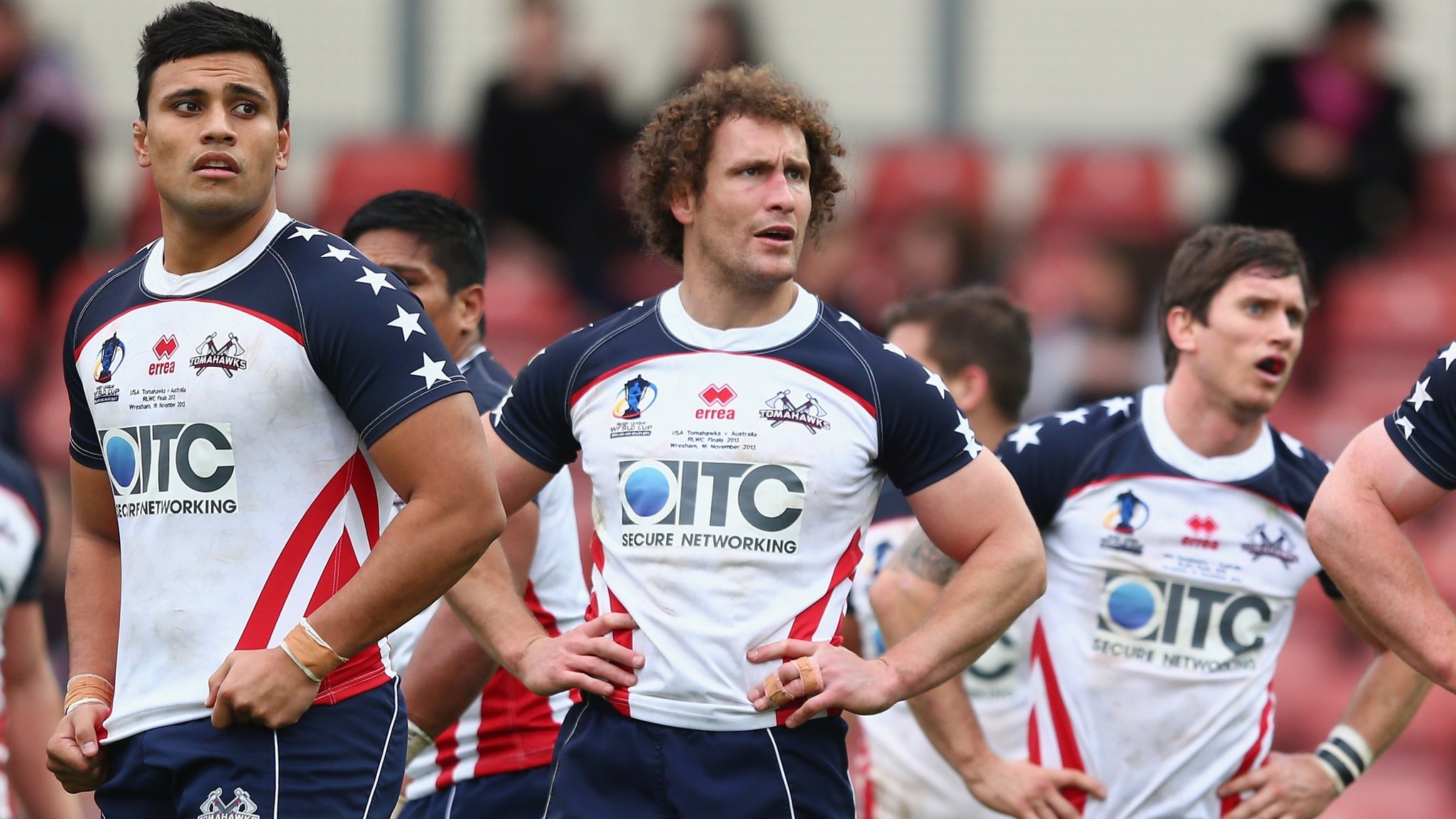
Plans for a New York rugby league team to follow Toronto Wolfpack into the English game have been submitted to the Rugby Football League.
Toronto were promoted from Ligue 1 to the Championship, the game’s second tier, at the first attempt last season.
The consortium for the New York club hopes to get the go-ahead in time to enter the competition in 2019 at Championship level.
They are confident of building a fan base of 10,000 in the first year.
“We have a small consortium of high-networking individuals, one member of which has made New York his home, and all have a significant love for the game,” said co-founder Tom Scott.
Like Toronto, who drew crowds of 7,000 last season, the New York club would not seek central funding and say they have already secured a $10m (£7.51m) investment.
The New York organisers say the team would also cover all travel and accommodation costs of visiting teams and play in blocks of home and away fixtures.
“We want to grow the sport in North America and increase the pool of players which would ultimately increase the chances of success for the USA national team,” said the club’s other co-founder Ricky Wilby.
The team would play at the 25,000-seater Red Bull Arena in New Jersey, with the consortium confident of attracting a television deal and having pledged to spread the game into schools and the local community.
Toronto founder Eric Perez says he will launch a second Canadian club in the next six months and predicts there could be up to six North American teams within five years.
Note: This story is auto-generated from BBC syndicated feed and has not been edited by AFRICA PRIME NEWS
Hertha Berlin finished sixth in the Bundesliga in the 2016-17 season
Hertha Berlin’s players and officials “took a knee” to show their support for “an open-minded world” before their 2-0 loss against Schalke on Saturday.
The Bundesliga club copied the protests, started by San Francisco 49ers NFL quarterback Colin Kaepernick, against treatment of black Americans.
The tweet also said the club stands for “a tolerant Berlin and an open-minded world, now and forevermore”, before adding the hashtag #takeaknee.
“We are living in the 21st century, not the 18th century, but there are some people who haven’t developed their ideologies accordingly,” Hertha player Sebastian Langkamp told Sky Sports.
“If we can give them a bit of help in doing so, then that’s good.”
Schalke won the match thanks to second-half goals from Leon Goretzka and Guido Burgstaller after Hertha Berlin had Genki Haraguchi sent off for a bad challenge on Burgstaller in the 44th minute.
Kaepernick started his protest last year when he sat down as the American national anthem was played during a pre-season American football game in 2016.
He explained his gesture, which later became known as “taking the knee”, was meant to highlight racial injustice and police brutality against African Americans.
President Trump said NFL players who refused to stand during the national anthem should be fired, comments that led to a large number of protests involving American football teams and owners.
NFL commissioner Roger Goodell said disputes over the protests threaten “to erode the game’s unifying power” and called on clubs to resolve the issue.
Note: This story is auto-generated from ‘BBC News’ syndicated feed and has not been edited by Africa Prime News staff.
Cape Town took the lead on 23 minutes through Sibusiso Masina, before Thabo Mnyamane was injured when equalising with ten minutes of normal time left.
Former Bafana Bafana forward McCarthy was appointed Cape Town City coach in June
Mnyamane’s injury left his side with 10 players for the remainder of regular time, plus extra time, as they had used all three substitutes.
But McCarthy’s side could not capitalise on the numerical advantage and the match finished 1-1 at Moses Mabhida Stadium in Durban, before being settled on spot-kicks.
“It was harder than hard to win this trophy,” Tinkler said, after beating the club he managed last season.
“My boys were great. They showed character and resilience. Many were suffering from cramp, but we urged them to keep going.”
The MTN8 is the first of three annual domestic knock-out competitions and involves the best eight finishers from the previous South African league season.
Note: This story is auto-generated from ‘BBC News’ syndicated feed and has not been edited by Africa Prime News staff.
The tournament for locally-based players is scheduled to take place in January and February 2018.
The decision to move the competition was made at an emergency Caf executive committee meeting in Lagos, Nigeria.
Third candidates, Ethiopia, were not considered, after not providing a letter of guarantee from the country’s government.
The awarding of the tournament to Morocco also benefits Egypt, who were awarded Morocco’s place – now freed up as hosts – after being initially knocked out by their fellow North Africans in qualifying.
It will be Egypt’s first appearance in the competition.
Kenya’s preparations were deemed unsuitable for the biennial 16-team tournament – which runs from 12 January to 4 February 2018 – leading them to be stripped of the hosting rights last month.
Morocco have not hosted a senior continental competition since the 1988 Africa Cup of Nations.
They were due to stage the Nations Cup in 2015, but lost the hosting rights, after expressing fears over the spread of the Ebola virus.
Note: This story is auto-generated from ‘BBC News’ syndicated feed and has not been edited by Africa Prime News staff.

 Gombe (Nigeria)- In order to strengthen the country’s democracy and create true federalism, People Democratic Party (PDP) Nigeria Speakers’ Forum, has insisted on Constitution amendment process that must be holistic.