Home Blog Page 1444

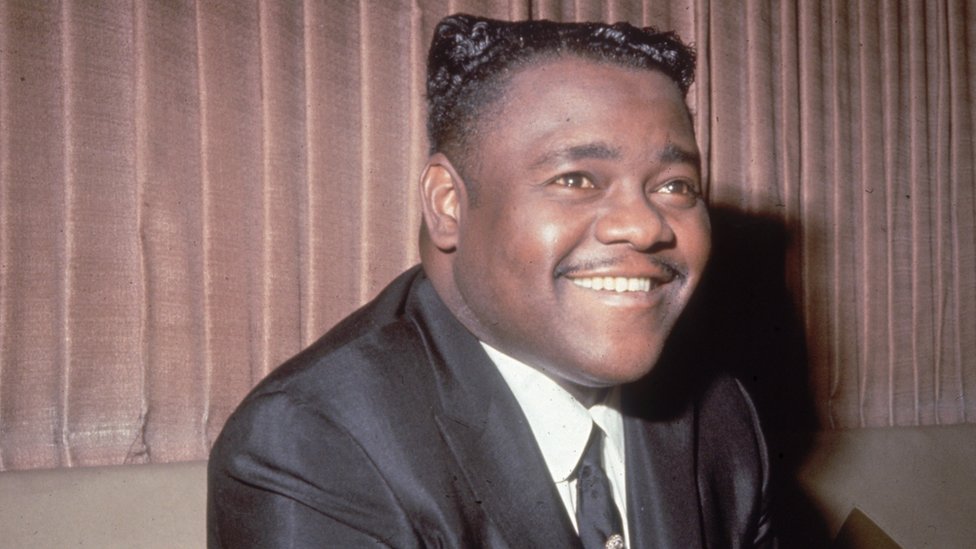
Fats Domino: Rock and roll legend dies aged 89

0
Fats DominoImage copyright Getty Images

Fats Domino, one of the most influential rock and roll performers of the 1950s and 60s, has died aged 89.

The American rock and roll artist was best known for his songs Ain’t That A Shame and Blueberry Hill.

The New Orleans singer sold more than 65 million records, outselling every 1950s rock and roll act except Elvis Presley.

His million-selling debut single, The Fat Man, is credited by some as the first ever rock and roll record.

An official from New Orleans coroner’s office confirmed the death, which was earlier announced by Domino’s daughter to a local television station.

Image copyright Clive Limpkin
Image caption Fats Domino had more than 30 hit singles

Fats Domino – whose real name was Antoine Domino Jr – was one of the first rhythm and blues artists to gain popularity with a white audience and his music was most prolific in the 1950s.

Domino had a string of number ones and more than 30 top 40 hits.

His music is also credited as a key influence on artists during the 1960s and 70s.

Elvis Presley referred to Fats Domino as “the real king of rock n roll” and Paul McCartney reportedly wrote the Beatles song Lady Madonna in emulation of his style.

In 1986 he was among the first inductees into the Rock and Roll Hall of Fame, but by his later life Domino would no longer leave his Louisiana hometown – not even to accept the award.

New Orleans-born musician and actor Harry Connick Jr is among those who have paid tribute to Domino on Twitter, saying he had “helped pave the way for New Orleans piano players”.

Rapper LL Cool J paid tribute to Domino for being an inspiration to so many:

And Samuel L Jackson cited the lyrics of one of Domino’s best loved songs:

Fats Domino: A life in music

Image copyright Getty Images

Antoine “Fats” Domino Jr was born in New Orleans on 26 Feb 1928, the son of a violinist. His parents were of Creole origin, and French Creole was spoken in the family.

He was musically inclined from an early age and learned piano from his brother in law, the jazz banjo player, Harrison Verrett.

He was given his nickname by bandleader Bill Diamond for whom he was playing piano in honky-tonks as a teenager. He said the youngster’s technique reminded him of two other great piano players, Fats Waller and Fats Pichon.

Domino left school at the age of 14 to work in a bedspring factory by day, and play in bars by night. He was soon accompanying such New Orleans luminaries as Professor Longhair and Amos Milburn.

In the mid-1940s, he joined trumpeter Dave Bartholomew’s band, and the two co-wrote Domino’s first hit The Fat Man. Suddenly, the New Orleans sound became popular nationwide.

Image copyright Getty Images
Image caption “Clean living keeps me in shape. Righteous thoughts are my secret…And New Orleans home cooking”

In an interview with the BBC in 1973, Domino spoke about his early life.

He said: “I was 17 when I made my first record in 1949. I never thought about being professional. I used to work in a lumberyard and that’s where I first heard a number on a jukebox and I liked it. It was a piano number. It was called ‘Swanee River Boogie’ by Albert Ammonds.”

Despite both musical heavyweights coming from New Orleans, Fats Domino said he only met Louis Armstrong twice in his life.

He told the BBC in a later interview: “I liked the way he was singing ‘Blueberry Hill’. See, a lot of people think I wrote ‘Blueberry Hill’ but I didn’t.

“That number was wrote in 1927 and I recorded that song in 1957. We just put a different background and I just sing it the way it would fit me and it came out great for me.”

Follow us on Facebook, on Twitter @BBCNewsEnts, or on Instagram at bbcnewsents. If you have a story suggestion email .

Note: This story is auto-generated from BBC syndicated feed and has not been edited by AFRICA PRIME NEWS

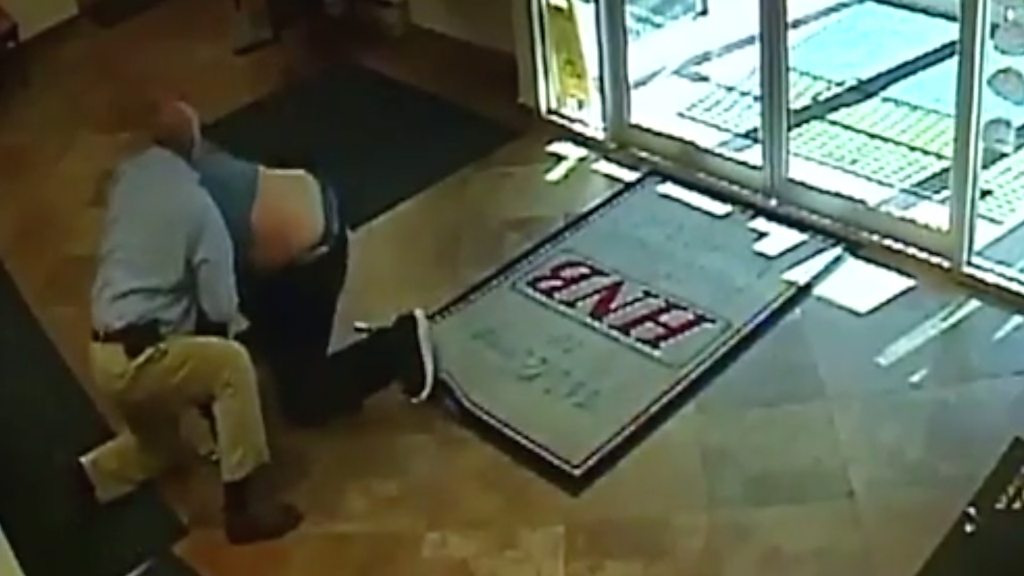
The moment a US man’s heroic tackle stops bank robber

0

[unable to retrieve full-text content]Note: This story is auto-generated from BBC syndicated feed and has not been edited by AFRICA PRIME NEWS

Canada bans Soylent meal replacement over nutrition claims

0
SoylentImage copyright Soylent
Image caption Soylent

The makers of Soylent, an on-the-go meal replacement powder for busy professionals, say they are no longer allowed to sell the product in Canada.

The Canadian Food Inspection Agency told the company the food does not meet their standards for “meal replacement”.

The powdered substance is advertised as providing all the nutrients a person needs, without the hassle of chewing.

It was developed in 2013 for busy Silicon Valley-types who do not have the time for proper meals.

“Our products do not meet a select few of the CFIA requirements for a ‘meal replacement,'” Rob Rhinehart, founder and chief executive of Soylent-maker Rosa Foods, said on the product’s website.

“Although we feel strongly that these requirements do not reflect the current understanding of human nutritional needs, we respect the CFIA’s regulations and will fully comply with any regulatory action they deem appropriate.”

Media playback is unsupported on your device

Media captionThe story behind Soylent

The product is named after the dystopian 1973 science fiction film Soylent Green, in which overpopulation and global warming have forced the human race to subsist on engineered food, including a product made from human remains.

The company says each bottle contains 20% of your daily nutrients and 400 calories, and is made from soy protein and other natural supplements.

It has grown rapidly over the past few years, with about 300% growth in sales between 2015-16.

After a successful crowdfunding campaign, the company has gone on to raise $74.5m (£56m) in funding.

Note: This story is auto-generated from BBC syndicated feed and has not been edited by AFRICA PRIME NEWS

Sandy Hook shootings: Four things revealed by FBI files

0
A woman holds up a memorial collage with pictures of the twenty child victimsImage copyright Getty Images
Image caption Amongst those killed were 20 children aged six and seven years old

Almost five years on, the FBI has declassified 1,500 pages relating to the Sandy Hook school shootings in Newtown, Connecticut.

Adam Lanza killed 20 elementary school children, six adults and his mother on 14 December 2012 before turning the gun on himself.

While details of 20-year-old Lanza’s declining mental health were already known, new details about the attack and his possible motive have been revealed within the still heavily censored documents.

The FBI’s behaviour analysis unit concluded in its report that evidence suggested “the shooter had an interest in children that could be categorised as paedophilia” before his attack on the school.

Other new revelations include further details on Lanza’s online behaviour and his intense obsession with mass shootings before he carried out one of the worst in US history.

1. The gunman himself

Image copyright Getty Images
Image caption The gunman was an introvert who reportedly spent most of his time in his room online

Lanza expressed an interest in Japanese techno music and had reportedly been taking some language and college courses. He held National Rifle Association safety qualifications after visiting shooting ranges with his mother, Nancy.

A vegan who said he did not like the texture of food, he was only 111lb (50kg) when he died.

He owned some video games that could be classified as “violent” but expressed a love of fantasy role-playing ones. In fact his apparent favourites included an interactive dancing game and Mario Kart.

Image copyright Handout/ getty
Image caption Multiple gaming devices, accessories and computer equipment were uncovered in the Lanza home

The FBI concluded there was “no evidence” he viewed his killings as a “video game” or a contest.

Authorities uncovered multiple gaming devices and computers when searching the Lanza family home – including a hard drive that had been “significantly damaged by force trauma” and “scratched with an implement”.

2. The depths of his killing obsession

Image copyright Handout/GETTY
Image caption Police found a staggering amount of weapons near Lanza’s body

In his online activity authorities uncovered his obsession with previous mass shootings and spree killings, including the 1999 Columbine High School shooting.

Documents revealed Lanza had created a meticulous spreadsheet of previous mass murders.

The files reveal one woman, whose identity was redacted, had an “online relationship” with him for more than two years after meeting him through a website where players adopt the roles of the Columbine shooters, Eric Harris and Dylan Klebold.

She never knew Lanza’s name or true identity, only speaking under usernames, but described him as “the weirdest person online” who spent almost all of his time researching and discussing mass murders.

Image copyright Jefferson County Sheriff’s Dept via Getty Images
Image caption The FBI documents catalogue Lanza’s obsession with the Columbine perpetrators

The woman said it was clear he was “depressed” and had a cynical and negative view of the world. She told authorities he had expressed some suicidal thoughts, but did not think he was capable of actually killing himself or others.

The FBI however concluded that he had done “careful, methodical planning and preparation” for the massacre, and could have been considering it since March 2011.

“The shooter was fascinated with past shootings and researched them thoroughly. The shooter shared many similar characteristics and behaviours with other active shooters,” one report concluded.

3. His mother and mental health

Image copyright Handout via Getty images
Image caption This photograph was recovered released by police – but Lanza’s estranged father reportedly denied it was of him

The FBI reports and interviews paint a picture of an increasingly isolated individual in the run-up to the shooting.

He had been removed from school in his mid-teens by his mother after being “not excessively” bullied for his social awkwardness and low weight.

Image copyright ABC
Image caption Lanza was home-schooled after 9th grade

Lanza had been diagnosed with Asperger’s syndrome, and interviews suggest how much he struggled with accepting and medicating his condition.

He was “unable to maintain any relationships”, even with people with similar interests with him at his old school’s computer technology club.

All five weapons and the ammunition recovered by police after the shooting were obtained legally by his mother, who was described by one person they interviewed as a “gun nut”.

Some people blamed her for not intervening to improve her son’s mental health and for having weapons in the house. Although a victim herself, she was not referred to in a memorial address by President Barack Obama.

Image copyright Getty Images
Image caption Then President Barack Obama lobbied for gun control measures after the shooting

Reports about how close they were before the shootings were conflicting. But a medical professional said she was not allowed in his bedroom.

The reports suggest Lanza sometimes may have slept on the floor instead of in a bed, and demonstrated other “strange behaviours”.

He reportedly liked to go on walks, including by the school, but also expressed an aversion to bright and natural light.

Many neighbours interviewed knew little to nothing about the family, and some said they had not seen Adam for years.

4. Sexuality and feelings toward children

Image copyright Handout VIA gETTY
Image caption He shot his way into his former school, killing six staff members

The woman he spoke to regularly said Lanza had expressed some details about his sexuality, including a notion that he may have been asexual.

She told investigators he had written “at least one lengthy email” to her expressing his views on paedophilia.

In that he expressed his hatred towards it, but she said he had also described adult and child sexual relationships as “possibly beneficial to both parties”.

In 2014 the FBI concluded in a behavioural analysis report concluded there was “evidence to suggest the shooter had an interest in children that could be categorised as paedophilia”. But they found no evidence that he had acted on any potential sexual feelings toward children.

It was not clear if further evidence of this was redacted from the publically released documents.

The online friend said he described feeling “pity” for children because he believed people in authority were “improperly controlling” them.

She said that she suspected Lanza probably thought he was “saving” or “protecting” the children that he killed by “taking them away from harmful influences” including parents and teachers.

Lanza had reportedly expressed his belief that death was “an escape from the pressures of life”.

Note: This story is auto-generated from BBC syndicated feed and has not been edited by AFRICA PRIME NEWS

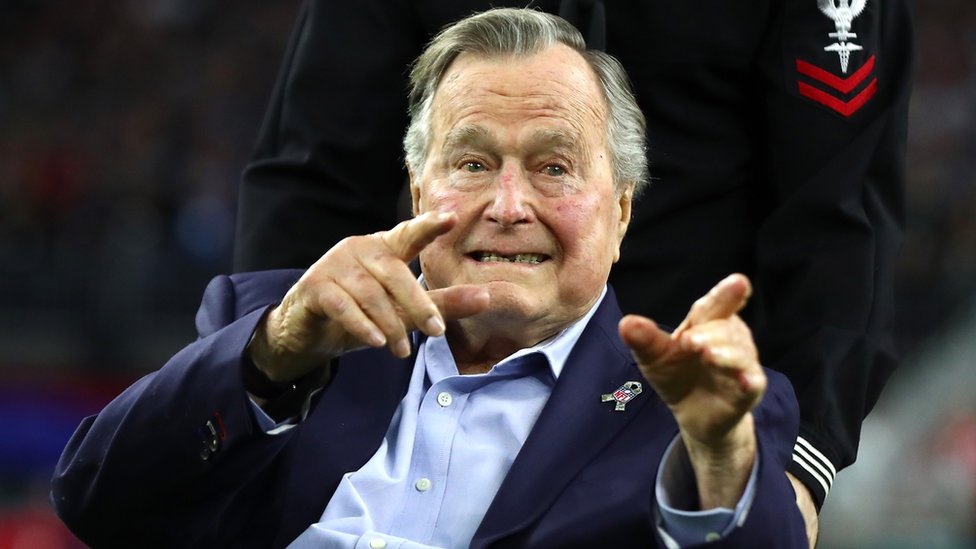
George Bush Senior apology to Heather Lind after sex assault claim

0
Actress Heather Lind, photographed on June 15, 2017Image copyright Getty Images
Image caption Ms Lind said the alleged incident took place in 2014

Former US President George Bush Senior has apologised for any distress caused after an actress accused him of sexual assault.

Heather Lind said the 93-year-old former president had “touched me from behind from his wheelchair” and told a “dirty joke” while posing for a photo.

Ms Lind made the allegation on social network Instagram, in a post which has since been deleted.

A spokesman for Mr Bush said the incident was an attempt at humour.

“President Bush would never – under any circumstance – intentionally cause anyone distress, and he most sincerely apologises if his attempt at humour offended Ms Lind,” a statement supplied to outlets including the Daily Mail and People magazine said.

Both websites preserved the contents of Ms Lind’s post before it was deleted.

Mr Bush served one term as US president from 1989 to 1993, and is the father of George W Bush, who served two terms in the office between 2001 and 2009.

He suffers from a form of Parkinson’s disease.

Image copyright Getty Images
Image caption Ms Lind said a photo of Barack Obama shaking Mr Bush’s hand had disturbed her

The incident allegedly took place during an event for the television show Turn: Washington’s Spies, in which Ms Lind is one of the main cast members.

In her Instagram post, Ms Lind said she was spurred to make the claim after seeing a photo of Barack Obama shaking Mr Bush Senior’s hand at a recent fundraiser for hurricane victims, which she said had “disturbed” her.

“He sexually assaulted me while I was posing for a similar photo. He didn’t shake my hand. He touched me from behind from his wheelchair with his wife Barbara Bush by his side,” she wrote, according to the Daily Mail’s transcript of the deleted post.

“He told me a dirty joke. And then, all the while being photographed, touched me again,” she added.

Ms Lind finished her post with the hashtag #metoo, which has seen widespread use by victims of sexual assault to share their experiences in the wake of the Harvey Weinstein Hollywood scandal.

“What comforts me is that I too can use my power, which isn’t so different from a president really,” she said.

“I am grateful for the bravery of other women who have spoken up and written about their experiences.”

Note: This story is auto-generated from BBC syndicated feed and has not been edited by AFRICA PRIME NEWS

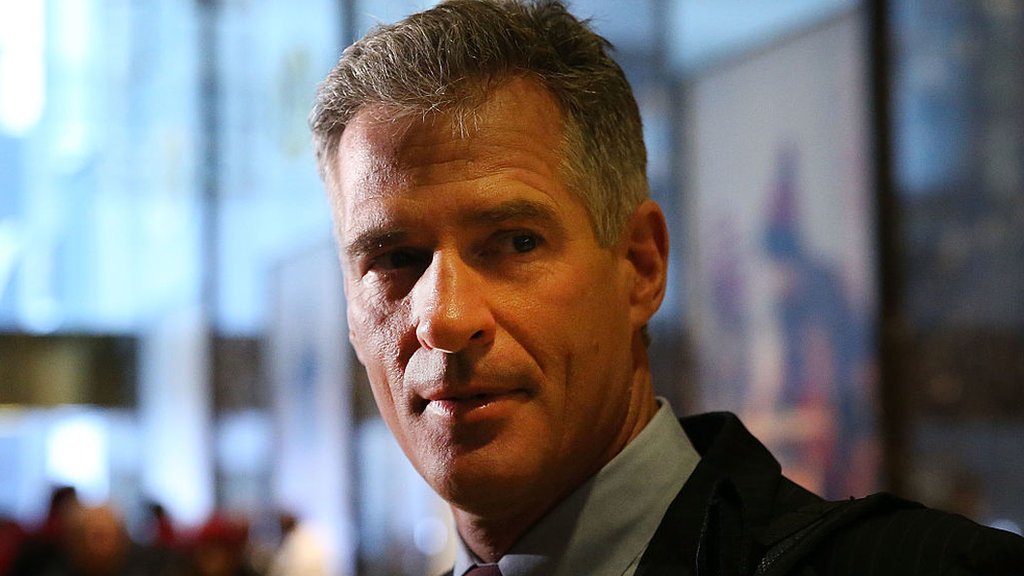
US envoy to NZ investigated over remarks to women

0
Scott Brown and TrumpImage copyright Getty Images
Image caption Scott Brown was appointed ambassador to New Zealand and Samoa in June

The US ambassador to New Zealand has revealed he was investigated for remarks he made at a government event.

Scott Brown said in a video statement that he did not know his comments in Samoa, where he is also the US ambassador, would be deemed offensive.

He called guests at the Peace Corps event in July “beautiful” and told one woman she could “make hundreds of dollars” as a waitress in the US.

Mr Brown suggested that the complaints may have been politically motivated.

New Zealand media report that the State Department sent investigators to Wellington.

Mr Brown said in a video statement released on Wednesday that he wanted to address “rumour and innuendo” reports of an “administrative investigation” into his comments in Samoa, an independent state in the Polynesian islands.

Mr Brown said the reason he had commented on the guests’ appearances in Samoa was because people he had seen prior to the event “were all dirty and grungy, and when we walked in, they were all dressed to the nines; they looked great”.

“Apparently someone took offense to that,” he told the news website, seated beside his wife. “Fine. I did say that.”

The former Republican senator from Massachusetts added the comments to about 250 Samoan dignitaries were meant as a compliment.

One guest told a New Zealand news channel that the ambassador had behaved “obnoxiously”.

“Would I say it again? Probably not,” Mr Brown said on Wednesday.

He said he was told by US government employees to be more “culturally aware of different cultures’ and he “welcomed” the advice.

Mr Brown, who was among the first lawmakers to endorse US President Donald Trump’s 2016 campaign, has served as ambassador to New Zealand and Samoa since June.

In his statement he suggested that there was an political element to the complaints, as some members of the crowd did not like the US president.

“Sadly it’s politics and it is what it is,” he said, adding that “politics is a blood sport”.

The US embassy in Wellington said they had nothing to add to the ambassador’s statement.

The revelations about the inquiry into Mr Brown’s comments come in the wake of a string of allegations of sexual assault against movie executive Harvey Weinstein and other men in high-ranking positions.

Note: This story is auto-generated from BBC syndicated feed and has not been edited by AFRICA PRIME NEWS

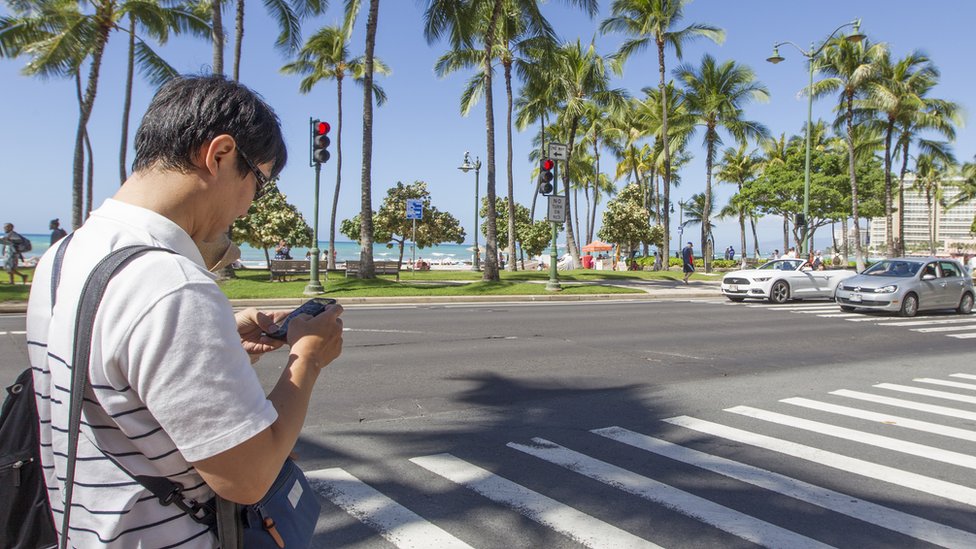
Honolulu first world city to ban texting while crossing road

0
man texting at a zebra crossing in HonoluluImage copyright Getty Images
Image caption Mobile phones have contributed to thousands of injuries in the US since 2000

Honolulu in Hawaii has become the first city in the world to ban people from looking at their phones or other digital devices while crossing roads.

The law, passed in July in an attempt to reduce injuries and deaths that occur while people are distracted, came into force on Wednesday.

First offenders will face fines of up to $15-$35 (£11-£26) while repeat offenders face fines of up to $99.

Urgent calls to the emergency services are exempt from the ban.

The Distracted Walking Law states that “no pedestrian shall cross a street or highway while viewing a mobile electronic device”.

The National Safety Council in the US added “distracted walking” to a list of injury risks in 2015, the same year a study in the Journal of Safety Studies found that hundreds of American pedestrians a year were injured while engrossed in their phones.

Other countries have tried to find technological ways of dealing with the problem of “smartphone zombies”, from an app that scans the area to warn phone users of oncoming traffic, to pavement lights that change colour with the traffic lights but, crucially, are in the line of sight of someone looking at a phone.

Note: This story is auto-generated from BBC syndicated feed and has not been edited by AFRICA PRIME NEWS
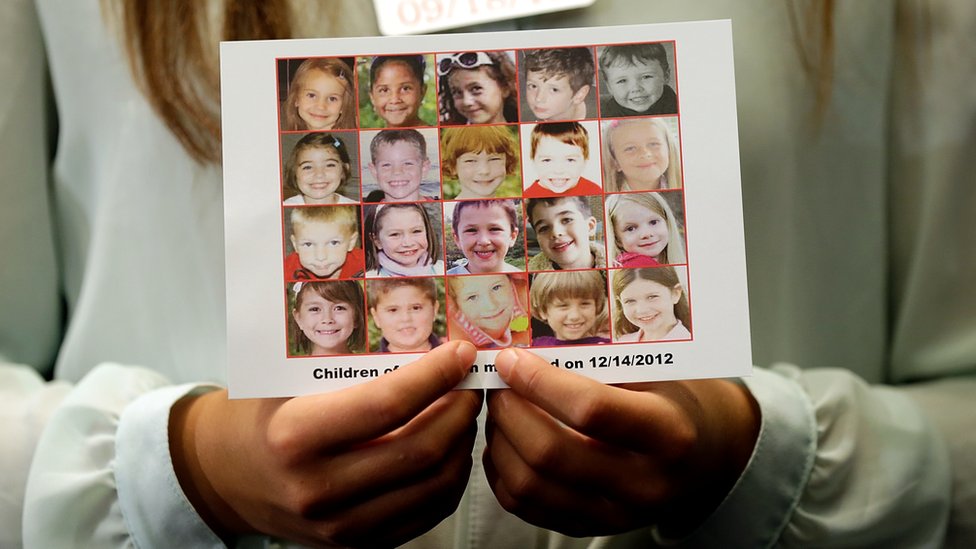
Court: Undocumented teen must be allowed an abortion

0
Protests from ACLUImage copyright ACLU
Image caption ACLU protests in support of Jane Doe

The Trump administration cannot prevent a teenage undocumented immigrant from obtaining an abortion in Texas, an appeals court has ruled.

The 17-year-old, identified only as Jane Doe, is 15 weeks pregnant.

She requested an abortion at the government-funded shelter where she was placed after being apprehended near the Mexico border.

However, a new policy implemented by the Trump administration has denied her access to a clinic.

According to the American Civil Liberties Union (ACLU), Jane Doe came from an abusive home in an unnamed country in Central America.

Not long after crossing the border on 7 September, she was stopped by US border officials.

The ACLU says because she is an unaccompanied minor Jane Doe was transported to a government-funded shelter in Brownsville, Texas, under the jurisdiction of the Office of Refugee Resettlement (ORR).

While in ORR custody, Jane Doe was given a physical and told she was nine weeks pregnant.

She asked the shelter staff to help her arrange an abortion.

Under Texas law, minors must obtain parental consent in order to have the procedure.

The shelter connected Jane Doe with lawyers and in late September she obtained a judicial waiver and had an appointment at a local abortion clinic for 28 September.

But the day before her appointment, she was denied transportation to the clinic after ORR officials intervened.

“The federal government is holding Jane Doe hostage and preventing her from having an abortion,” said Brigitte Amiri, senior staff lawyer for the ACLU. “It is blatantly unconstitutional.”

According to a new policy implemented by the Trump administration, no federally funded shelters can assist a minor in their custody to obtain an abortion without written authorisation from E Scott Lloyd, the director of the Office of Refugee Resettlement.

In March, Mr Lloyd wrote in an email to colleagues that shelters receiving federal dollars “should not be supporting abortion services pre- or post-release; only pregnancy services and life-affirming options counseling”.

Mr Lloyd has long been a staunch pro-life advocate. The lawsuit alleges that he has personally contacted pregnant minors in ORR custody to persuade them not to go through with abortion procedures.

According to court filings, Jane Doe was taken to a so-called “crisis pregnancy centre” where she was given an ultrasound and advised on alternatives to abortion.

Her mother was also notified about the pregnancy, against Jane Doe’s wishes.

Meanwhile, her pregnancy is at 15 weeks – abortions are illegal in the state of Texas after 20 weeks.

Lawyers for the US government argued that they were not preventing Jane Doe’s access to an abortion.

They said she could leave the country or be placed in the care of a sponsor.

According to her lawyers, no viable sponsor has been approved for the teenager after a seven-week search.

On 18 October, US District Court Judge Tanya Chutkan agreed with the ACLU, and ordered that the teenager be transported “promptly and without delay” to a clinic.

“I’m astounded that the government is going to make this 17-year-old girl who has received judicial authorisation for a medical procedure to which she is constitutionally authorised choose between a pregnancy that she does not want to go forward with to term or returning to the country from which she left,” said Judge Chutkan.

However, after the federal government appealed, a DC Circuit Court of Appeals panel of judges ruled 2-1 that the government is not preventing Jane Doe’s access to an abortion, because she should find a sponsor to take her out of government custody.

Her lawyers argued that the sponsorship process could take months.

The ACLU filed an emergency appeal to a full panel of 10 judges, which ruled that the original district court’s ruling should stand, and Jane Doe should be transported from the shelter to have the abortion.

Jane Doe was able to have the abortion on 25 October after a nearly one month delay, and immediately afterward released a statement through her court appointed guardian.

“People I don’t even know are trying to make me change my mind. I made my decision and that is between me and God. Through all of this, I have never changed my mind,” she wrote.

“No one should be shamed for making the right decision for themselves.”

Lawyers for the ACLU said they would proceed with a class-action lawsuit on behalf of all undocumented minors in federal custody who may seek abortion services.

Note: This story is auto-generated from BBC syndicated feed and has not been edited by AFRICA PRIME NEWS

Currency Exchange Rates

USD - United States Dollar
ZAR
0.06
EUR
1.17
CAD
0.73
ILS
0.31
INR
0.01
GBP
1.34
CNY
0.14
Enable Notifications OK No thanks