Home Blog Page 1443

Typhoid vaccine set to have ‘huge impact’

0
Child in dirty waterImage copyright Getty Images
Image caption Typhoid is spread through dirty water and contaminated food.

A new vaccine that could prevent up to nine-in-10 cases of typhoid fever has been recommended by the World Health Organization.

Experts say it could have a “huge impact” on the 22 million cases, and 220,000 deaths, from typhoid each year.

Crucially it works in children, who are at high-risk of the infection, unlike other typhoid vaccines.

It is hoped the vaccine could eventually help countries eliminate typhoid.

Typhoid fever is caused by Salmonella Typhi bacteria and patients have:

  • prolonged fever
  • headache
  • nausea
  • loss of appetite
  • constipation
  • in one-in-100 cases it causes fatal complications

The bacteria are highly contagious and spread through contaminated food or water.

The infection is most common in countries with poor sanitation and a lack of clean water, particularly in south Asia and sub-Saharan Africa.

Two typhoid vaccines already approved to help reduce the number of cases, but none are licensed for children under the age of two.

The decision to recommend the new conjugate typhoid vaccine was made by the WHO’s Strategic Advisory Group of Experts on Immunization (Sage).

Prof Alejandro Cravioto, the chairman of Sage, said: “For the first time I think we do have a very effective vaccine.”

Sage recommended the vaccine should be given to children aged six-months old and said catch-up campaigns focusing on children up to 15 years old should also take place.

Prof Cravioto said the vaccine was vital as the world was “reaching the limit” of current treatments due to the “crazy amount” of antibiotic resistance the typhoid bacterium had acquired.

‘A valuable weapon’

Data from a clinical trial of the vaccine, carried out by the University of Oxford, was published just last month in the Lancet medical journal.

The “challenge study” gave the vaccine to 112 people and then deliberately infected (challenged) them with typhoid-causing bacteria.

Such an approach gives a clear picture of a vaccine’s effectiveness without having to immunise thousands of people. It showed the vaccine was up to 87% effective.

Prof Andrew Pollard, who ran those trials, told the BBC News website: “It could have a huge impact.

“If it can be rolled out in all communities, it must be possible to prevent the majority of cases and if it also interrupts transmission, which hasn’t been shown yet, then it could be eliminated from those regions.”

Gavi, the global body that pays for vaccines in 68 low and middle-income countries, is now considering whether to add the typhoid vaccine.

Dr Seth Berkley, the chief executive of Gavi, said: “Not only could this vaccine save lives, it could also prove to be a valuable weapon in the fight against antimicrobial resistance.”

Before antibiotics, typhoid killed one-in-five people infected. Now there is growing levels of typhoid that is resistant to drugs.

Follow James on Twitter.

Note: This story is auto-generated from ‘BBC News’ syndicated feed and has not been edited by Africa Prime News staff.

Kenya’s repeat election gets green light after court collapses

0

Media playback is unsupported on your device

Media captionKenya’s election re-run explained

Kenya will hold a controversial repeat presidential election on Thursday as planned, the head of the election commission has announced.

Uhuru Kenyatta, who is seeking a second term, won in August but the poll is being held again over irregularities.

Amid reports of unrest, he urged Kenyans to vote and remain peaceful.

Opposition candidate Raila Odinga has called on his own supporters to join him in boycotting the ballot, which he wants to hold later.

A bid to delay the election fell apart after only two out of seven Supreme Court judges showed up for a hearing.

One judge, Deputy Chief Justice Philomena Mwilu, failed to appear after her bodyguard was shot and wounded by unknown gunmen on Tuesday.

The Supreme Court annulled the original election in August by a 4-2 majority, saying there had been “irregularities and illegalities”.

Some international observers have reduced their involvement in the poll because they say the conditions are not conducive for a free and fair election.

There have been running battles between police firing tear gas and stone-throwing protesters in the city of Kisumu, an opposition stronghold.

‘Resistance movement’

Election commission chief Wafula Chebukati said the polls would open at 06:00 (03:00 GMT) after being given assurances by the authorities.

“Based on assurances given to this commission by the relevant authorities and security agencies… the elections as scheduled will go on tomorrow, 26 October 2017,” said Mr Chebukati.

Media playback is unsupported on your device

Media captionPolice fire tear gas at protesters in Kisumu

But he also complained of threats to the electoral commission’s staff and said he could not guarantee their security while at work.

In a televised address, President Kenyatta said the security forces would ensure the safety of voters on Thursday.

Urging people to vote, he said: “Our forefathers fought and died for the right of the African to vote, we dare not reject this inheritance.”

Image copyright AFP
Image caption Raila Odinga addressed supporters in Nairobi

In a speech in Nairobi, Mr Odinga called for “free, fair and credible elections” within 90 days.

He said: “From today we are transforming the Nasa [National Super Alliance] coalition into a resistance movement.”

“Do not participate in any way in this sham election,” he told cheering supporters. “Convince your friends, neighbours, and everyone else not to participate.”

Reversing an earlier call for massive demonstrations, he asked people to stay at home or pray because the government was a “bloodthirsty regime” which would “massacre” them.

Earlier, Chief Justice David Maraga announced that a petition to delay the vote could not be heard because only two of the court’s seven judges had shown up.

In addition to Ms Mwilu, one judge was said to be ill and receiving treatment abroad, another was out of the capital Nairobi and could not get a flight back, and two others were unavailable for undisclosed reasons.

The main opposition party says this is no coincidence and is a sign of the intimidation of the country’s independent institutions, the BBC’s Tomi Oladipo reports from Nairobi.


Where were the judges?

Image copyright AFP

Judges who voted to annul August poll

  • Chief Justice David Maraga – present in court
  • Deputy Chief Justice Philomena Mwilu – absent. Her bodyguard was shot by gunmen on Wednesday
  • Justice Smokin Wanjala – absent. “Unable to come to court”
  • Justice Isaac Lenaola – present

Judges who dissented, saying results should be respected

  • Justice Jackton Ojwang – absent. “Unable to come to court”
  • Justice Njoki Ndung’u – absent. Missed her flight to Nairobi

On sick leave

  • Justice Mohamed Khadhar Ibrahim – receiving treatment abroad

The government had declared Wednesday a national holiday to allow people to travel to places where they were registered to vote.

Political tensions have sparked fears of unrest. After the 2007 poll, violence left over 1,600 people dead and thousands displaced.

Note: This story is auto-generated from ‘BBC News’ syndicated feed and has not been edited by Africa Prime News staff.

Trump defies Republican critics with Senate ‘love fest’

0

Media playback is unsupported on your device

Media captionRepublican Senator Jeff Flake announces his retirement

US President Donald Trump has described his meeting with Republican senators as a “love fest”, despite attacks on his character by members of his own party.

He mocked his critics on Twitter, adding that Republicans had given him a “standing ovation” at a Capitol Hill lunch on tax reform on Tuesday.

His visit was largely overshadowed by public denunciations from Republican Senators Bob Corker and Jeff Flake.

Mr Trump said the retiring senators “had zero chance of being elected”.

President Trump told reporters on the White House lawn on Wednesday that “we actually have great unity in the Republican party”.

“We’re really unified on what we want to do,” he added, before boarding Air Force One for a trip to Dallas, Texas.

“The meeting with Republican Senators yesterday, outside of Flake and Corker, was a love fest with standing ovations and great ideas for USA!” Mr Trump had tweeted earlier on Wednesday.

“The reason Flake and Corker dropped out of the Senate race is very simple, they had zero chance of being elected. Now act so hurt & wounded!” the president continued.

On Tuesday Mr Flake took to the Senate floor to deliver a fierce attack on the US president while announcing his resignation.

In announcing his decision to not seek re-election in 2018, the Arizona Republican decried the “reckless, outrageous and undignified behaviour” at the top of the US government, which he said was dangerous to democracy.

Mr Trump said on Wednesday Mr Flake “was against me from before he ever knew me”, adding that he “did the smart thing for himself” by deciding not to run next year.

“This way he can get out somewhat gracefully,” Mr Trump said. “I wish him well”.

Mr Flake’s speech came as the US president already found himself embroiled in a row with another Republican Senator, Bob Corker from Tennessee.

Before confirming his decision in a speech to the Senate, Mr Flake told the Arizona Republic newspaper “there may not be a place for a Republican like me in the current Republican climate or the current Republican Party”.


Business as usual

Anthony Zurcher, BBC News, Washington

Senators at Tuesday’s private luncheon with the president could have given him a standing ovation or stood on their heads, for all it matters. Actions, as they say, speak louder than words (or applause).

And while Senators Bob Corker and Jeff Flake may say their fellow senators are quietly grumbling about Mr Trump’s performance as president, those colleagues aren’t doing anything about it.

In fact, most still seem to be working from the same playbook, trying to pull together a majority to pass sweeping tax cuts.

The reality is that opposition to the president in Republican quarters, at least at this point, is stylistic. They think Mr Trump’s bluster is hindering efforts to advance their shared priorities.

Where there are differences – on topics like trade and immigration – they seem content to let the president use his executive power, but any sort of supporting legislation just isn’t going to happen. And up to this point, there’s been no serious attempts to rein in the president’s authority.

So the ragtag band of anti-Trumpers can rail against the president. Mr Trump can boast of his standing ovations. The legislative results – or lack thereof – will tell the real story.


Taking to the floor, he said he did not enjoy criticising the president but felt it was “a matter of duty and conscience”.

Media playback is unsupported on your device

Media captionA protester threw Russian flags at Donald Trump as he headed for a meeting with Republicans

“We must never regard as ‘normal’ the regular and casual undermining of our democratic norms and ideals,” he said.

“I have children and grandchildren to answer to, and so, Mr President, I will not be complicit,” he added.

White House press secretary Sarah Sanders said it was “probably a good move” Mr Flake was standing down, suggesting he would not win re-election.

Following the speech, Mr Flake wrote in an opinion piece for the Washington Post: “There is a sickness in our system – and it is contagious.”

“We can no longer remain silent, merely observing this train wreck, passively, as if waiting for someone else to do something.”

Another prominent party critic of Mr Trump, Senator John McCain, was quick to pay tribute to Mr Flake.

US Republican majority leader Mitch McConnell said he had “witnessed a speech from a very fine man”.

Mr Flake has long been a vocal opponent of Mr Trump, refusing to endorse him during the presidential campaign.

Although he largely voted in line with the party, his comparatively moderate views and critiques of the direction of the Republicans under Mr Trump have left him out of kilter with voters who made Mr Trump president.

For his part, Donald Trump has long wanted to oust Mr Flake, even offering to spend millions of his own money to see him unseated in primaries.

Media playback is unsupported on your device

Media captionLashing out: What Bob Corker really thinks of President Trump

In a series of television interviews earlier in the day, Mr Corker accused the president of lying, adding that he had debased the US and weakened its global standing.

Mr Trump fired back on Twitter, calling the Tennessee senator a “lightweight” who “couldn’t get re-elected”. Mr Corker is also not seeking another term in elections next year.

The feud overshadowed efforts by Mr Trump to build support for his proposed tax cuts. He met Republican senators for a lunch time meeting.

Note: This story is auto-generated from BBC syndicated feed and has not been edited by AFRICA PRIME NEWS

Clinton team and Democrats ‘bankrolled’ Trump dirty dossier

0
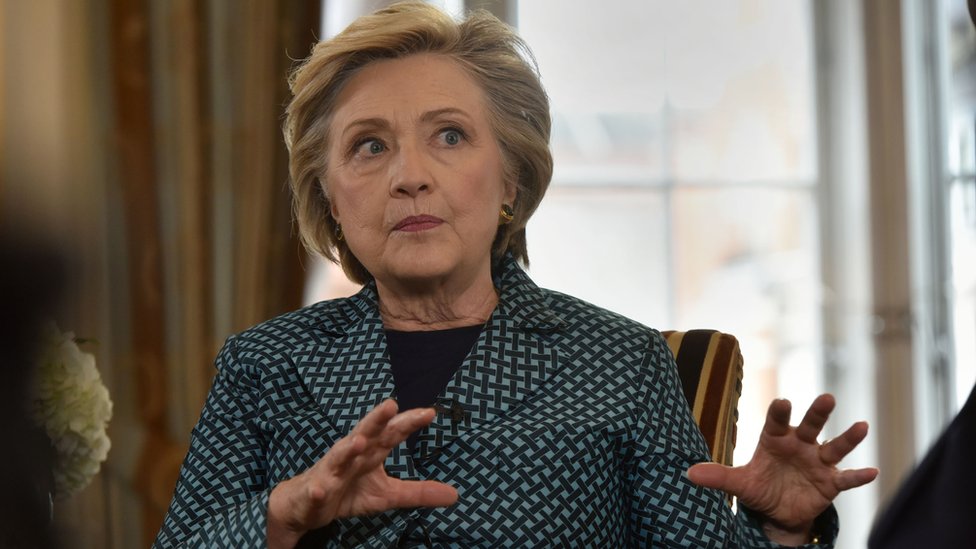
Hillary Clinton
Hillary Clinton
Hillary Clinton

US President Donald Trump has seized on reports that Hillary Clinton’s team bankrolled a sleazy dossier of allegations linking him to Russia.

Unfounded claims that Mr Trump had been filmed with prostitutes in a Moscow hotel surfaced in the closing stretch of last year’s White House race.

Mrs Clinton’s presidential campaign and the Democratic National Committee (DNC) reportedly helped fund the research.

“The victim here is the President,” Mr Trump tweeted on Wednesday.

According to US media reports, Perkins Coie, a law firm representing the Clinton campaign and DNC, hired intelligence firm Fusion GPS in April 2016.

Fusion GPS, based in Washington DC, was paid to dig up dirt on Mr Trump, who was then Mrs Clinton’s rival for the presidency.

The intelligence firm subcontracted Christopher Steele, a former British spy who previously worked in Russia, to compile the research.

Attributed to unnamed sources, it claimed that Mr Trump had colluded with Russian officials during the election campaign.

The unsubstantiated dossier also alleged that Kremlin intelligence had filmed Mr Trump with prostitutes at Moscow’s Ritz-Carlton hotel in 2013.

Image copyright PA
Image caption Christopher Steele, a former British spy who worked in Russia, compiled the research

The opposition research was initially funded by an unknown Republican consulting firm, which pulled the plug once Mr Trump captured the party’s nomination.

The Clinton campaign then picked up the tab, according to the reports.

As he headed off to Dallas, Texas, on Wednesday, President Trump told reporters on the White House lawn: “It’s very sad what they’ve done with this fake dossier.

“It was made up and I understand they paid a tremendous amount of money.”

He added: “Hillary Clinton always denied it, the Democrats always denied it.

“I think it’s a disgrace, it’s a very sad commentary on politics in this country.”

He dismissed the dossier shortly before his inauguration as “fake news”.

White House press secretary Sarah Sanders tweeted on Tuesday: “The real Russia scandal? Clinton campaign paid for the fake Russia dossier, then lied about it & covered it up.”


Government outsourcing

Anthony Zurcher, BBC News, Washington

Political campaigns have been in the business of digging up dirt on their rivals since the dawn of democratic elections. A choice bit of “opposition research”, deployed at an opportune moment, can be a decisive factor in a close election.

So it should come as little surprise that supporters of a Republican candidate went to work building a file on Donald Trump during the party primaries or that Democrats took the baton as the general election geared up.

What’s unusual – and what will pique the interest of investigators and fuel the suspicions of conservatives – is that after the election, once Hillary Clinton was defeated, the FBI would pick up funding for this investigation.

A topic as sensitive as this – allegations of foreign influence on a presidential campaign – doesn’t seem like something the US government should be outsourcing.

There have been plenty of accusations, on both sides of ideological divide, that the FBI has become politicised. Stories like this won’t help diminish those concerns.

In fact, they will almost certainly be cited to undermine the results of ongoing inquiries into Mr Trump’s possible Russia ties, whether or not the eventual findings have a connection to this now-infamous dossier.


The DNC said its new leadership had nothing to do with creation of the dossier.

A spokeswoman told the Washington Post, which broke the story: “But let’s be clear, there is a serious federal investigation into the Trump campaign’s ties to Russia, and the American public deserves to know what happened.”

Some of Mr Steele’s allegations began circulating in Washington in the summer of 2016 as the FBI began looking into whether there were any links between Trump aides and the Kremlin.

Special counsel Robert Mueller and several congressional panels are investigating the same alleged connections, but to date have found no evidence.

Note: This story is auto-generated from BBC syndicated feed and has not been edited by AFRICA PRIME NEWS

Nigerian Youth Can Be Groomed To Contribute To National Development — Sule Lamido

0
Former Governor of Jigawa State in Nigeria, Sule Lamido

By Amos Tauna

Kaduna (Nigeria) — People’s Democratic Party (PDP), Presidential aspirant and former governor of Jigawa State, Sule Lamido, has observed that there is the urgent need by the leadership of the country to address youth involvement in social vices in the country.

Speaking in Kaduna on Wednesday when he came to inspect his presidential campaign office, north west zone, Sule Lamido explained that it is a worrisome situation that most youth have allowed themselves to be used as thugs instead of contributing to the development of the country.

He opined that he aspires to reorient the minds of Nigerian youth from practicing social vices to potential future leaders of the country.

He said, “As a young Nigerian coming up, l was taught to respect elders, contribute positively to the development of the country. I hope if elected to ensure that the youth of the country have a place in the government and are properly guided in shaping their minds towards the development of the country.

“Today in Nigeria, social vices is becoming the biggest problem we are faced with, is it kidnapping,  armed robbery, raping, hate speech,  among others are fast gaining ground in all nooks and crannies of the country.”

He explained that steps must be taken by the leaders of the country to carry the youth along in all scheme of things as the only way to mold future leaders that would sustain the yearnings and aspirations of the country’s founding fathers.

He noted that as a public figure, he has traveled to other countries and seen the way democracy is being practiced,  stressing, “You can not see in any other country where thuggery is used not even in African countries.

“It is a shameful thing that thugs are being used in our democratic set up. What we are saying is that politics should be done in an orderly manner where every politician is free to express he or herself in a more civilized manner. “

He lamented that the country has been divided into two, with PDP members being regarded as the worst set of politicians and APC members as saints.

“Unfortunately, most of those in APC  are the same people that were in PDP that ruled the country in the 16 years of PDP leadership, that is alleged to be the most corrupt in the country,” he noted.

American Airlines accused of racism after ‘disturbing incidents’

0
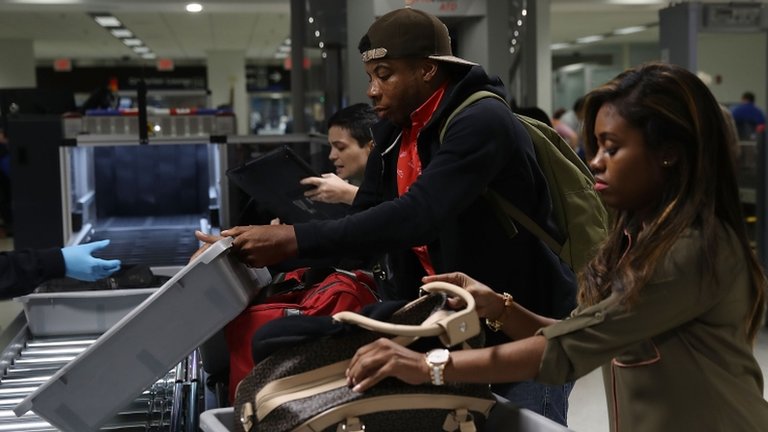
a passenger in an airport terminalImage copyright Getty Images

A top African-American rights group has warned black flyers to exercise caution when flying American Airlines after a string of “disturbing incidents”.

The National Association for the Advancement of Colored People (NAACP) issued a “national travel advisory”.

The organisation warned the airline “could subject [travellers to] disrespectful, discriminatory or unsafe conditions”.

The airline insisted it does “not tolerate discrimination of any kind”.

The NAACP “national travel advisory” was issued as the advocacy group cited a series of incidents suggesting a “corporate culture of racial insensitivity and possible racial bias” at the airline.

It warned black travellers that American Airlines could subject them to “disrespectful, discriminatory or unsafe conditions”.

Image copyright Getty Images

American Airlines replied in a statement: “We are disappointed to hear about this travel advisory as our team members – a diverse community of gate agents, pilots, and flight attendants – are proud to serve customers of all backgrounds.”

In the advisory, the NAACP listed four incidents in which black passengers said they were discriminated against by AA employees.

One incident on a Washington DC to Raleigh, North Carolina, flight involved a NAACP state chapter president, who sued the airline.

He said he had been required by flight attendants to give up his seat after he responded to “disrespectful and discriminatory comments directed toward him by two unruly white passengers”.

In another incident, a black woman was moved to the coach section at the ticket counter despite having booked first-class tickets for herself and a travelling companion.

The woman’s travelling companion, who was white, remained assigned to a first-class seat, according to NAACP.

Media playback is unsupported on your device

Media captionCan removing Confederate statues help heal a nation?

Another incident involved a black woman who was ordered removed from a New York to Miami flight after a pilot overheard her complain to a gate agent about a change to her seat assignment without her consent, said NAACP.

American Airlines, which has 120,000 employees, has invited NAACP representatives to meet at the company headquarters in Fort Worth, Texas, for “a meaningful dialogue”.

The organisation, which has historically issued travel advisories “when conditions on the ground pose a substantial risk of harm to black Americans”, said the allegations they cite may represent “only the tip of the iceberg”.

The NAACP, which was founded in 1909, bills itself as the nation’s oldest and largest nonpartisan civil rights organisation.

Note: This story is auto-generated from BBC syndicated feed and has not been edited by AFRICA PRIME NEWS

Cooperative Societies Life Wire Of Nigeria’s Economy, Says A Vice Chancellor

98
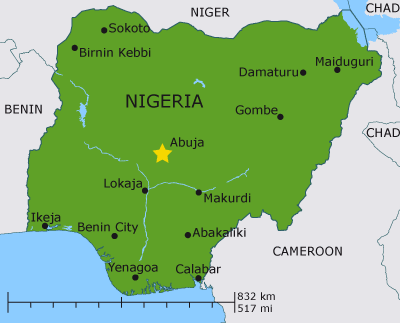
Map of Nigeria
Map of Nigeria
Map of Nigeria

 By Amos Tauna

The Vice Chancellor of the Kaduna State University, Professor Mohammad Tanko, has said that cooperative societies are the life wire of the economy of Nigeria if properly harnessed.

He observed that it is only in cooperative societies that one could be given loan the would his or her life, stressing that government should back the activities of cooperative societies with a law that will enhance the living standards of the people.

The vice Chancellor who spoke through Professor Set Akutson at the 1st Kaduna’s Cooperative Societies and Academia interaction held at the University with a theme ‘Advancing the frontiers of Cooperative Societies in Kaduna State’ said cooperatives should unite to compete toward building the country’s economy.

According to him, “Cooperatives should be studied in technical  Schools. In Canada Nurses are the highest paid workers and Nursing profession started from nowhere in Nigeria. Cooperative should be studied up to degree level, hope we’ll have professors in cooperatives in Nigeria in the near future.

“Cooperative Societies should be giving proper attention because there is no bank that can give commiserate loan than cooperative societies give, that is why we we’ll always advocate for them to come together.

“Government should give impetus through the instrumentality of the court. I advised that Cooperative University should be established for degrees, Masters and PhD programmes should be run.”

The Commissioner for Ministry of Rural and Community development, Balaraba Aliyu Inuwa, said, “Government  will always be there to provide an enabling environment for private initiatives to thrive.

“Cooperative Societies as a sector has a very important place in this government. It’s enormous potential for community and economic development’, El-Rufai’s administration has set in motion a mechanism that will review the operations of Cooperative Societies in Kaduna State.

“One of the immediate things required is to address the structural space for effective running and oversight of Cooperative Societies. The restructuring exercise resulted in the movement of the cooperatives department from the ministry of Agriculture to the Ministry of Rural and Community Development,” se explained.

She added, “The state Governor having considered a report of survey conducted by the Department for International Development (DFID)  in Kaduna State on cooperative societies approved the recommendation for the creation of the Kaduna State Cooperative Societies Commissioning.

“The bill is aimed at addressing major structural issues in the development of Cooperative Societies in the State is currently receiving attention at the Kaduna State House of Assembly.”

One in five Canadians is immigrant, highest in 95 years

0
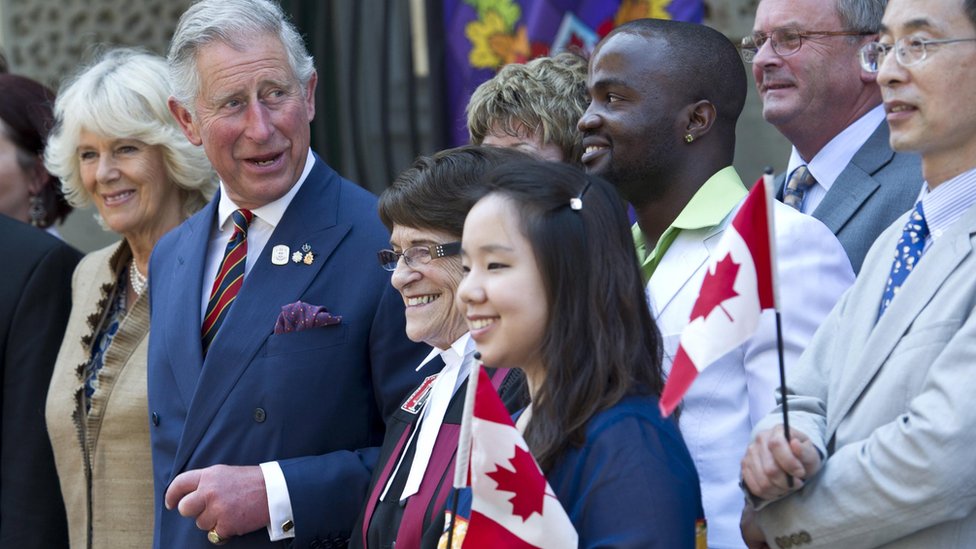
Prince Charles and his wife Camilla pose for a photograph with newly sworn in Canadian citizens following a swearing-in ceremony in Saint John, New BrunswickImage copyright AFP/Getty Images
Image caption Prince Charles and Camilla watch as new Canadian citizens pose for a photograph after their swearing-in

Canada is growing increasingly diverse and its share of immigrants is the highest in almost a century.

New census figures show over one in five Canadians report being immigrant, some with permanent residency.

Over 1.2m people settled permanently in Canada between 2011 and 2016, most coming in as skilled economic immigrants.

The proportion of visible minorities has also grown and is now over 22% of the population.

Figures released by Canada’s statistics agency on Wednesday give a snapshot from the 2016 national census of the country’s increasing diversity and growing share of newcomers.

The country is also becoming more culturally diverse, with immigrants increasingly coming from Africa, Asia, and the Middle East.

Statistics Canada is predicting that if population trends continue, by 2036 up to 30% of the country’s population could be made up of immigrants.

The agency also predicts that within 20 years up to 35% of the population will be made up of visible minorities.

Most newcomers still settle in the big cities of Toronto, Vancouver and Montreal, though more are beginning to move into prairie and maritime provinces.

Toronto, Canada’s biggest city, is still the primary destination for newcomers. Over 46% of the city’s population are immigrants and over 51% of the city’s residents identify as being a visible minority.

The increase in the percentage of new Canadians is linked to immigration policies as well as the relatively low birth rate and aging population.

Between 1951 and 1991, the share of immigrants fell as low as 14.7%, but slowly began to increase in the early 90s.

The majority of newcomers come to Canada under economic immigration programmes for skilled workers. About three in 10 came in under the family reunification category.

One in 10 came to Canada as refugees, though that was number increased slightly between January and May 2016 when over 25,000 Syrian refugees were admitted into the country.

Note: This story is auto-generated from BBC syndicated feed and has not been edited by AFRICA PRIME NEWS

Currency Exchange Rates

USD - United States Dollar
ZAR
0.06
EUR
1.17
CAD
0.73
ILS
0.31
INR
0.01
GBP
1.34
CNY
0.14
Enable Notifications OK No thanks