Image copyrightGetty ImagesImage caption The women – and their dogs – survived thanks to a water purifier and a store of dry food
Two US yachtswomen and their two dogs have been rescued by the US Navy after spending nearly five months adrift in the Pacific Ocean, officials say.
Jennifer Appel and Tasha Fuiaba had set off in a small sailing boat from Hawaii on a trip to Tahiti when their engine, damaged by the bad weather, failed.
Their boat then drifted in the open seas about 1,500km (930 miles) southeast of Japan.
They were rescued after a fishing vessel alerted US authorities.
The pair, who set off in May, originally thought that they could reach land by relying on wind and sails, the US Navy’s Seventh fleet said in a statement.
“Two months into their journey and long past when they originally estimated they would reach Tahiti, they began to issue distress calls,” the statement added.
The US Navy said the two women continued with the calls daily, but that their signals were not picked up because they “were not close enough to other vessels or shore stations”.
Image copyrightEPAImage caption The women had set off from Hawaii with their dogs in May Image copyrightGetty ImagesImage caption Jennifer Appel is welcomed on board the USS Ashland by Command Master Chief Gary Wise
But on 24 October, a Taiwanese fishing vessel spotted the boat bobbing in the ocean and contacted authorities on the US territory of Guam.
The USS Ashland, which was in the area, arrived early the following day to rescue the sailors – both from Honolulu – and their dogs.
You may also be interested in…
“They saved our lives,” Ms Appel said, adding: “The pride and smiles we had when we saw [the US Navy] on the horizon was pure relief.”
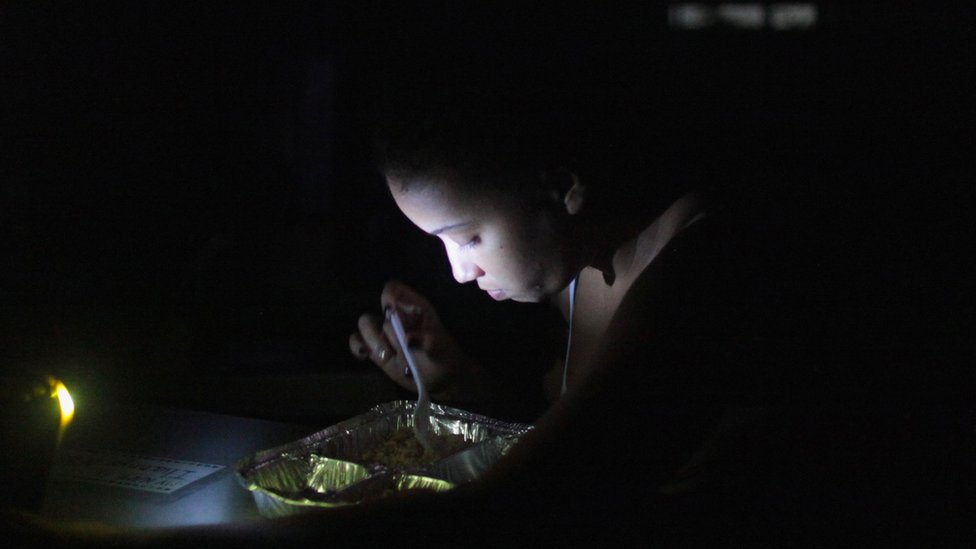
The four-member crew managed to survive the lengthy ordeal thanks to a water purifier and a large store of dry goods such as oatmeal and pasta.
Image copyrightGetty ImagesImage caption The USS Ashland arrived to assist the sailors a day after they were spotted by a fishing vessel
Note: This story is auto-generated from BBC syndicated feed and has not been edited by AFRICA PRIME NEWS
Media caption“I learned because of Fred,” Trump said of his brother, who was addicted to alcohol
US President Donald Trump has called America’s painkiller-addiction crisis a “national shame” as he declared it a public health emergency.
Mr Trump announced a plan to target the abuse of opioids, which kill more than 140 Americans each day.
The president has previously promised to declare a national emergency, which would have triggered federal funding to help states combat the drug scourge.
The move instead redirects grant money to be used in dealing with the crisis.
Mr Trump said on Thursday at the White House: “More people are dying from drug overdoses today than from gun homicides and motor vehicles combined.
“These overdoses are driven by a massive increase in addiction to prescription painkillers, heroin and other opioids.”
He added: “The United States is by far the largest consumer of these drugs using more opioid pills per person than any other country by far in the world.”
Mr Trump signed a presidential memorandum directing his acting health secretary to declare a nationwide public health emergency and ordering all federal agencies to take measures to reduce the number of opioid deaths, according to senior White House officials.
The order will also ease some regulations to allow states more latitude in how they use federal funds to tackle the problem.
But the White House plans to fund the effort through the Public Health Emergency Fund, which reportedly only contains $57,000 (£43,000).
The Trump administration will then work with Congress to approve additional funding in a year-end spending package, senior officials said.
Other elements of the directive include:
Allow patients further access to “telemedicine” so they can receive prescriptions without seeing a doctor
Make grants available to those who have had trouble finding work due to addiction
The Department of Health and Human Services will hire more people to address the crisis, particularly in rural areas
Allows states to shift federal funds from HIV treatments to opioids, since the two are linked as drug users often share infected needles
Proponents suggest Mr Trump’s announcement is a critical step in raising awareness about the nationwide epidemic, while some critics argue the move does not go far enough.
“The lack of resources is concerning to us since the opioid epidemic presenting lots of challenges for states’ budgets,” Michael Fraser, executive director of the Association of State and Territorial Health Officials, told Politico.
“My hope is people will realise with no new money the ball is going to be in Congress’s court,” he added.
Senator Bernie Sanders later tweeted that while Mr Trump was “right that the opioid crisis is a national emergency”, Friday’s announcement was “nothing more than an empty promise”.
“Millions depend on Medicaid [healthcare funding] for opioid treatment. Trump’s solution is to cut Medicaid by $1 trillion. That is a disgrace,” wrote the Vermont senator.
Addiction to painkillers and heroin has blighted so many communities across the US – both urban and rural.
As I travelled the country reporting on last year’s election, I remember the hairdresser in Arkansas whose ex-husband died from medicines he’d been given for his bad back, the family in New Hampshire who’d lost a teenage daughter to an overdose and heard stories of doctors who’d become hooked on the very pills they’d prescribed.
President Trump has stopped short of declaring this crisis a national emergency, despite earlier indications he would.
Instead his public health emergency is more of a short-term measure which doesn’t allocate as much funding. Recovering addicts and charities I’ve talked to say more investment in round-the-clock rehab and treatment is what is needed to make a difference.
But while today’s announcement is welcome, many will now be looking to Congress to take more action and secure more money to deal with this crisis.
Since 1999, the number of deaths involving opioids have quadrupled, reaching 33,000 deaths in 2015, according to the Presidential Commission on Combating Drug Addiction and the Opioid Crisis, citing data from the US Centers for Disease Control and Prevention (CDC).
The CDC first declared opioids, a class of pain medications as well as some street drugs, to be an “epidemic” in 2011.
Mr Trump first announced his intention to declare opioid abuse a “national emergency” in August.
“The opioid crisis is an emergency, and I’m saying officially right now: It is an emergency. It’s a national emergency,” he said at the time.
Media playback is unsupported on your device
Media caption“We’re going to spend a lot of time, a lot of effort and a lot of money on the opioid crisis”
Experts had urged Mr Trump to use his presidential power under the Stafford Act to declare a national emergency, which would have given states access to money from the federal Disaster Relief Fund.
States would have had immediate access to funding, much like they would after a natural disaster.
But senior officials told reporters that declaring that sort of emergency was not a good fit for an ongoing crisis.
The announcement comes after Mr Trump’s pick for drug czar withdrew his nomination following a report that he helped neuter government attempts to tackle the opioid crisis.
Image copyrightReutersImage caption Five weeks after the storm most of the US-controlled island is still without power
A US utility firm whose $300m (£227m) contract to reconstruct hurricane-ravaged Puerto Rico is under scrutiny has ended up in a Twitter spat.
Whitefish Energy has apologised after threatening to withdraw its employees from the US territory’s capital.
The comments were made in an online feud with San Juan’s mayor, who has sparred with President Donald Trump.
Some 80% of Puerto Ricans still do not have electricity five weeks after the storm.
Questions have been raised over the deal Whitefish Energy – a Montana company connected with the Trump administration – signed with the Puerto Rican authorities quickly after Hurricane Maria.
Mayor Carmen Cruz told Yahoo! News on Wednesday that “the contract should be voided right away, and a proper process which is clear, transparent, legal, moral and ethical should take place”.
“It seems like what the Puerto Rican people are going to be paying for, or the American people are going to be paying for, is an intermediary that doesn’t know what is at stake here and that really has to subcontract everything,” she said.
In response, Whitefish Energy tweeted a statement calling her comments “misplaced”.
A Twitter tit-for-tat ensued in which the company at one point told the mayor: “We’ve got 44 linemen rebuilding power lines in your city & 40 more men just arrived. Do you want us to send them back or keep working?”
It said their comments “did not represent who we are and how important this work is to help Puerto Rico’s recovery”.
Mayor Cruz rose to national prominence when she engaged in a war of words with President Trump shortly after Hurricane Maria hit the island last month.
Image copyrightReutersImage caption Whitefish Energy says it has more than 300 workers on the island
The US House of Representatives Natural Resources Committee is scrutinising the agreement between Whitefish Energy and Puerto Rico’s power authority, known as Prepa.
He told him “the federal government is reviewing additional measures to ensure federal taxpayer dollars are spent in the most effective manner and that the island’s recovery is effective and sustained”.
At the same time, several congressional Democrats have called for the US interior department’s inspector general to investigate.
The oversight came after critics pointed out a Whitefish investor had made political donations to the Trump campaign and its supporters.
Whitefish’s chief executive and Interior Secretary Ryan Zinke come from the same small Montana town that is the company’s namesake, and know one another.
Mr Zinke has denied any wrongdoing or involvement in the deal.
Puerto Rican authorities said on Tuesday that a US government agency, the Federal Emergency Management Agency (Fema), will foot the bill.
Fema said it was not involved in the deal-making process, but that it is reviewing the contract.
However, a Fema spokesperson said they could not put a release date on the results of the evaluation.
What will happen if the contract is not found to meet Fema standards isn’t totally clear.
Walt Green, a former director of the US National Center for Disaster Fraud, told BBC News that Fema could decide to reimburse part or none of the expenses.
Earlier this week, Puerto Rican Governor Ricardo Rossello ordered an audit of the deal.
But he balked at news that a federal oversight board planned to appoint a manager to oversee the island’s highly indebted power company.
Prepa is about $9bn in debt and went into bankruptcy in July.
Note: This story is auto-generated from BBC syndicated feed and has not been edited by AFRICA PRIME NEWS
US Border Patrol’s arrest of a 10-year-old Mexican girl with cerebral palsy as she was on her way to hospital for emergency surgery has provoked outcry.
Texas immigration agents stopped an ambulance carrying Rosamaria Hernandez for gall bladder surgery at 02:00 local time on Tuesday.
The armed officers waited near her bedside and detained her when she awoke, family members told US media.
Rosamaria is now being held at an immigration centre for young migrants.
She was brought to the US illegally by her family when she was three months old, and had been living in Laredo, Texas, near the border with Mexico, according to her mother.
When she was apprehended, the girl was being transported from a medical facility in Laredo to a children’s hospital in Corpus Christi for an operation.
Media playback is unsupported on your device
Media captionWhere do America’s undocumented immigrants live?
The ambulance was stopped at a Border Patrol “interior checkpoint” – a check station set back many miles from the US southern border – where agents reportedly allowed her to continue on to the hospital under police supervision.
Her cousin, who was travelling with her, told activists working on her legal case that agents tried to pressure the family to sign documents in order to transfer Rosamaria to a hospital in Mexico, but she refused.
The entire time Rosamaria was in hospital, armed Border Patrol agents waited outside her hospital room, the US citizen cousin, Aurora Cantu, told US media.
After she awoke, she was transferred to a detention centre in San Antonio, Texas, for undocumented migrant children who arrive in the US unaccompanied by an adult.
Media playback is unsupported on your device
Media caption‘Trump is deporting our parents’
Her mother, Felipa de la Cruz, 39, told the New York Times she had brought the girl to the US seeking better treatment for Rosamaria’s cerebral palsy – a neurological disorder that affects body movements.
The family could not afford treatment in Mexico, she said, adding that she hoped Texas would help pay for her daughter’s medical care.
“I’m a mother,” said Ms de la Cruz, who also is undocumented. “All I wanted was for her to get the surgery that she needed.
“It never crossed my mind that any of what is happening right now could happen. When you’re a mother, all you care about is your child.”
A lawyer for the family says that Rosamaria wept as she spoke to her mother over the phone on Thursday.
Media playback is unsupported on your device
Media captionA routine night patrol for Pinal County police in Arizona turns into a man hunt
“‘Mom, where are you? I miss you. Why aren’t you here?” the girl said to her mother, before they both broke down in tears, according to the attorney, Alex Galvez.
Mr Galvez told Time magazine: “She said, ‘Don’t worry. We’re going to see each other soon. Everything’s going to be fine. Hang in there.’
“She was trying to make her smile.”
He said that because the mother also has no legal status in the US, she does not want to visit Rosamaria at the jail 150 miles (240km) away in case she is herself detained and deported.
For that same reason Ms de la Cruz did not get in the ambulance with her daughter on the night of the arrest, said the lawyer.
Note: This story is auto-generated from BBC syndicated feed and has not been edited by AFRICA PRIME NEWS
“You could say she’s a little overweight, but she has a pretty face, huh?” the judge said of the victim during the trial, according to a recording obtained by the Journal de Montreal.
He also spoke about the different degrees of consent required to kiss someone, saying it was “not the same” as the consent required to grab a person’s rear end, the newspaper reported.
The judge also reportedly mused the victim might have been flattered by the attention from the taxi driver because “it was perhaps the first time that he was interested in her”.
It is not the first time Mr Braun has come under scrutiny.
He was criticised in 2013 for saying the case of a telecom technician who verbally harassed a 19-year-old and grabbed her breasts was not “the crime of the century”.
On Twitter, the head of the Quebec Bar Association, Paul-Matthieu Grondin, called Judge Braun’s remarks “deplorable” and said they do not have a place in today’s justice system.
Quebec’s magistrate’s council, which handles ethics complaints about provincially appointed judges, said it does not comment on complaints it receives.
The council reviews complaints before determining whether to launch an investigation. If necessary an inquiry committee decides on possible sanctions.
In May, the province of Ontario made sexual assault training mandatory for newly appointed provincial judges.
Note: This story is auto-generated from BBC syndicated feed and has not been edited by AFRICA PRIME NEWS
Another actress, Heather Lind, had already come forward to say the former president had “touched me from behind”.
Mr Bush’s spokesman said it was supposed to put people “at ease”.
“At age 93, President Bush has been confined to a wheelchair for roughly five years, so his arm falls on the lower waist of people with whom he takes pictures,” the spokesman said in a statement supplied to media outlets.
“To try to put people at ease, the president routinely tells the same joke – and on occasion, he has patted women’s rears in what he intended to be a good-natured manner.
“Some have seen it as innocent; others clearly view it as inappropriate. To anyone he has offended, President Bush apologises most sincerely.”
Like Ms Lind, Ms Grolnick shared a photo of the moment the alleged assault took place on social media platform Instagram.
The picture, taken during the interval of a play Ms Grolnick was performing in, appears to show Mr Bush’s hand on her bottom.
Image copyrightGetty ImagesImage caption Heather Lind was the first actress to come forward with allegations
She told Deadspin: “He reached his right hand around to my behind, and as we smiled for the photo he asked the group, ‘Do you want to know who my favourite magician is?’
“As I felt his hand dig into my flesh, he said, ‘David Cop-a-Feel!'”
Ms Lind made a similar allegation against Mr Bush, who served one term as president starting in 1989, saying he had “touched me from behind from his wheelchair” and told a “dirty joke” while posing for a photo in an Instagram post which has since been deleted.
The incident allegedly took place during an event in 2014 for the television show Turn: Washington’s Spies, in which Ms Lind is one of the main cast members.
Ms Lind finished her post with the hashtag #metoo, which has seen widespread use by victims of sexual assault to share their experiences in the wake of the Harvey Weinstein Hollywood scandal.
In his initial apology, Mr Bush’s spokesman said the wheelchair-bound former president “most sincerely apologises if his attempt at humour offended Ms Lind”.
Mr Bush, the father of George W Bush, who served two terms in the office between 2001 and 2009, suffers from a form of Parkinson’s disease.
Note: This story is auto-generated from BBC syndicated feed and has not been edited by AFRICA PRIME NEWS
Speaker, Nigeria’s House of Representative, Yakubu Dogara
By Joseph Edegbo
Kaduna ( Nigeria ) — Speaker of Nigeria’s House of Representatives, Yakubu Dogara, has commended President Muhammadu Buhari for signing the North East Development Commission Bill into law.
In a terse statement personally signed, the Speaker commended the President’s sensitivity to the plight of the highly traumatised people of the North East.
“I expect that the expeditious coming into force of the commission will remedy the long years of underdevelopment suffered by the region. The recovery and redevelopment of the zone devastated by terrorism is expected to last decades.”
The North East Development Commission establishment Bill was sponsored by the Speaker in 2015.
He had also moved a motion for which the House passed a resolution calling for the recovery, resettlement, and rebuilding of the violence ravaged region and the convocation of an international donor conference for total reconstruction and rebuilding of the region.

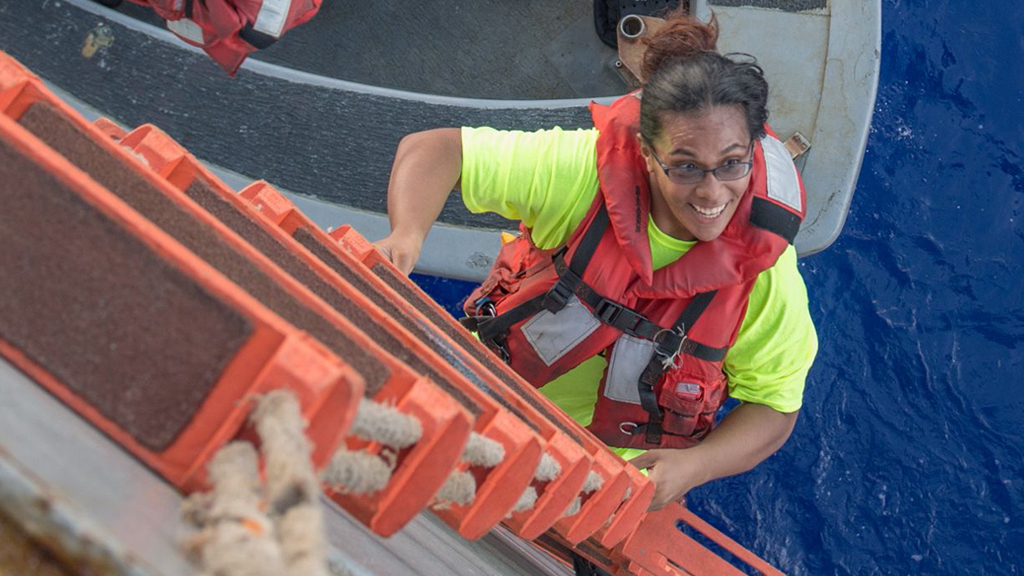
 Image copyright Getty Images