Home Blog Page 1437

JFK files: FBI anxious to ‘convince public’ about Oswald

0
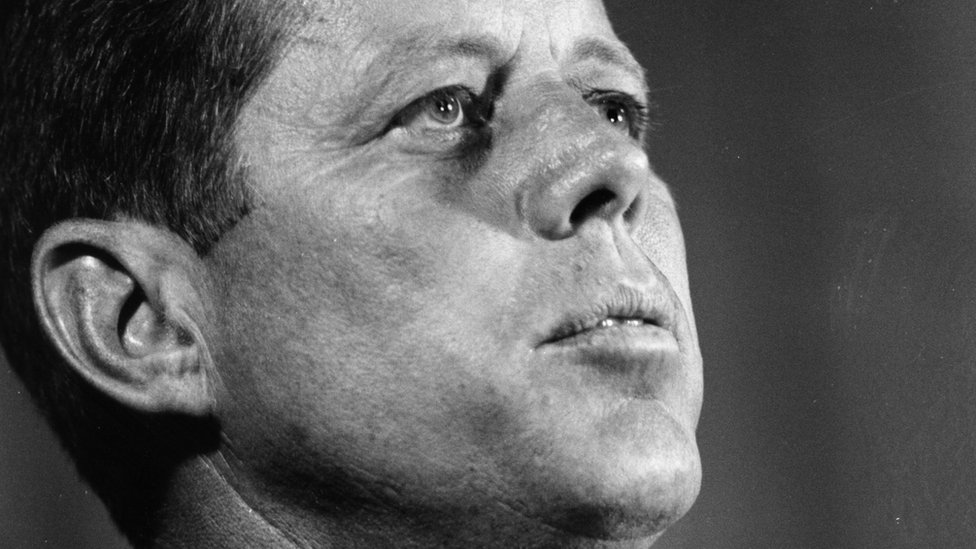
President KennedyImage copyright Getty Images
Image caption President Kennedy was shot dead in Dallas on 22 November 1963

Thousands of previously classified documents relating to the assassination of President John F Kennedy in 1963 have been released by the US government.

Since the publication, President Donald Trump has said he will release all remaining files other than the names and addresses of anyone mentioned who is still living – some of the documents have been withheld at the request of government agencies.

As people examine all 2,800 files so far released, here are the most interesting points so far. NB many files contain unverified raw intelligence.

FBI concerned about conspiracy theories

In a memo written the day assassin Lee Harvey Oswald was killed, FBI director J Edgar Hoover expressed concern about the spread of conspiracy theories.

“The thing I am concerned about is having something issued so that we can convince the public that Oswald is the real assassin,” he said.

Oswald spoke to a KGB officer

A memo from the CIA, based on an intercepted phone call, suggests Oswald spoke with a KGB officer at the Russian embassy in Mexico City.

It says that on 28 September 1963 he spoke with Valery Vladimirovich Kostikov, an “identified KGB officer” who worked for a department “responsible for sabotage and assassination”.

Oswald later called the embassy and, in “broken Russian”, asked if there was “anything new concerning the telegram to Washington”.

Media playback is unsupported on your device

Media captionWhat will top-secret JFK files tell us about Kennedy’s killer?

FBI warned police to protect the killer

Oswald, who shot and killed President Kennedy, was quickly arrested and charged. But two days later Oswald was shot dead in the basement of the Dallas police department by Jack Ruby, a local nightclub owner.

But could more have been done to protect him?

One memo reveals the FBI had warned Dallas police of a death threat made against Oswald.

FBI director J Edgar Hoover said: “We at once notified the chief of police and he assured us Oswald would be given sufficient protection. However, this was not done.”

Media playback is unsupported on your device

Media captionA British nurse was in the Dallas hospital when JFK was shot

Kennedy’s death worried the USSR

The idea of a leaderless United States did not appeal to some Soviet officials.

They “were fearful that without leadership, some irresponsible general in the United States might launch a missile at the Soviet Union”, according to one memo.

It also says the Soviets were “convinced the assassination was not the deed of one man” but rather a “carefully planned campaign in which several people played a part”.

RFK’s ‘Marilyn Monroe suicide plot’

The FBI warned the president’s brother, US Attorney General Robert F Kennedy, his alleged affair with Marilyn Monroe would be exposed in a book.

A letter on 7 July 1964 from the bureau to the younger Kennedy said the paperback, The Strange Death of Marilyn Monroe, would allege he had “an intimate relationship with Miss Monroe”.

Image copyright Getty Images
Image caption Monroe died at the age of 36 in Los Angeles in 1962

According to the FBI, the author would suggest the film star “was led to believe his intentions were serious” and that RFK had promised to divorce his wife and marry the sex symbol.

But when he refused to do so, Monroe “threatened to expose their relationship” and ruin his presidential ambitions.

The FBI said the book would allege that RFK took “drastic action” by plotting to have Monroe killed and make it look like a suicide.

The letter advised RFK the book would also allege he was at her apartment on the night of her death.

Agents wrote that RFK “was actually in San Francisco with his wife at the time Marilyn Monroe committed suicide”.

The actress died at the age of 36 in Los Angeles in August 1962 from a barbiturate overdose, according to the city coroner’s office.

Private detectives tried to spy on Kennedy

An FBI memo from before Kennedy was elected president describes attempts by a private detective to spy on the then senator.

It says a “high priced Hollywood call girl” told FBI agents that private detective Fred Otash had contacted her to ask about Senator Kennedy’s involvement in “sex parties”.

Media playback is unsupported on your device

Media captionJFK’s bodyguard explains to Radio 4’s Today how he ‘was just a few steps short’ of saving the president

The private detective also suggested equipping the woman with “a recording device” to take down any “indiscreet statements” from Senator Kennedy.

She refused, and said she was unaware of any “indiscretions”.

British paper received an anonymous call

One memo describes how a British local newspaper, the Cambridge News, received an anonymous call about “some big news” in the US, just 25 minutes before the assassination.

“The caller said only that the Cambridge News reporter should call the American embassy in London for some big news and then hung up”, it says.

A copy of the memo was released by the National Archives in the US in July, but had gone unreported.

Plans to kill Fidel Castro

One document reveals an operation to assassinate top Cuban leaders and offers of up to $100,000 for “killing or delivering alive” government officials. But for Fidel Castro the payment offered was of only $0.02.

Image copyright AFP
Image caption Fidel Castro moments after he toppled Fulgencio Batista in January 1959

Another document, however, suggests that the price for killing Castro was $150,000 and that there were alleged contacts between Cuban exiles and the mafia.

Government ideas about how to kill Castro included contaminating Mr Castro’s diving suit with disease-causing bacteria or poisoning his food.

Was a US president in the Ku Klux Klan?

An FBI report alleges that President Lyndon B Johnson, who took office after President Kennedy was killed, may have been a member of the KKK.

An informant said the white supremacist group had “documented proof that President Johnson was formerly a member of the Klan in Texas during the early days of his political career”.

However, no proof was provided.

Fond memories of Lee Harvey Oswald

Note: This story is auto-generated from BBC syndicated feed and has not been edited by AFRICA PRIME NEWS

Facebook to show who buys political ads

0
Facebook
Facebook
Facebook logo is seen at a start-up companies gathering in ParisImage copyright Reuters
Image caption Tech giants are under pressure to improve transparency of political ads

Facebook has announced measures to make political advertising on the social media platform more transparent.

Political advertisers will have to verify their identity and location and their posts will carry a disclosure saying “paid for by”.

The steps come amid allegations that Russian-backed groups used social media ads to interfere in the US election.

Executives from Facebook and other internet giants will testify before a Senate hearing on Tuesday.

“When it comes to advertising on Facebook, people should be able to tell who the advertiser is and see the ads they’re running, especially for political ads,” Rob Goldman, Facebook’s vice president of ads, said in a blog post.

By clicking on the “paid for by” disclosure, users would be able to see more details about the advertiser, he added.

Facebook said it was expanding the transparency measures to all ads, and that they would all have to be linked to a page. Users would also be able to view the ads any page was running, it added.

Tests for the new tools would start in Canada, with a goal of having them in place in the US ahead of the midterm elections, in November 2018.

Tech giants are keen to show they can self-regulate after it was found that Russian-backed groups were exploiting their ad platforms.

Image copyright EPA
Image caption Mr Trump has denied that there was any collusion between his campaign and Russia

On Tuesday, Twitter announced similar transparency measures, including labels for election-related ads and more details about who funded them.

It also banned two of Russia’s biggest media outlets – Russia Today (RT) and Sputnik – from buying advertising amid fears they attempted to interfere with the 2016 US presidential election.

Russia has repeatedly denied claims that it interfered in the election, but the allegations have sparked an investigation into possible links between Russia and US President Donald Trump. He denies there was any collusion.

Note: This story is auto-generated from BBC syndicated feed and has not been edited by AFRICA PRIME NEWS

White House distances itself from Whitefish power grid deal

0
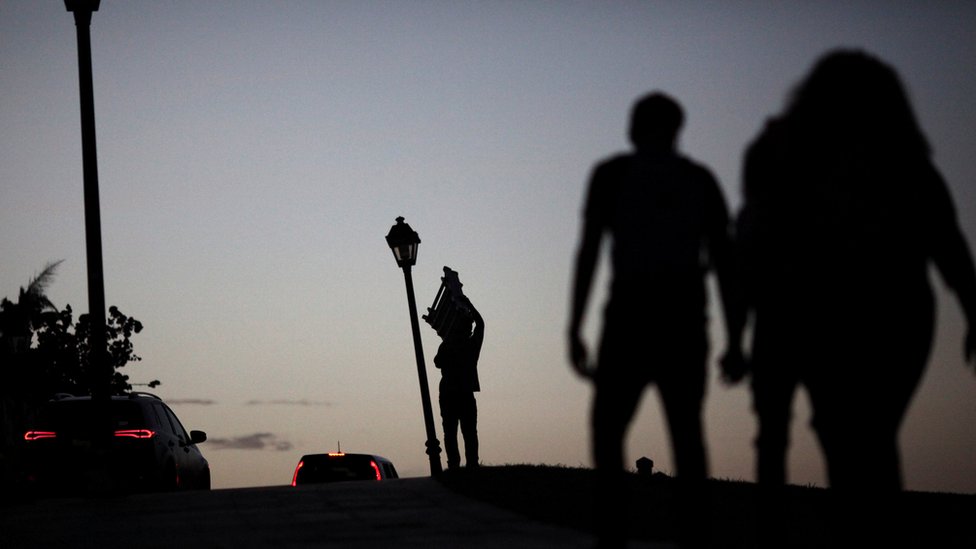
People walking in the darkImage copyright Reuters
Image caption More than five weeks after Storm Maria, most Puerto Ricans are still in the dark

The White House has distanced itself from a $300m (£228m) contract awarded to a tiny Montana firm to help reconstruct Puerto Rico’s power grid.

The press secretary spoke out as President Donald Trump asked his Interior Secretary Ryan Zinke if he had any role in the Whitefish Energy deal.

Federal authorities have expressed “significant concerns” about the contract, and are reviewing it.

Some 75% of Puerto Ricans have no power five weeks after Hurricane Maria.

At Friday’s daily White House briefing, questions persisted over why a little-known, two-year old firm with no experience of work on this scale was awarded the contract so quickly.

Press Secretary Sarah Huckabee Sanders told reporters the “federal government has nothing to do with this contract”.

She said they would look forward to the results of an ongoing audit.

Media playback is unsupported on your device

Media captionHurricane Maria: Puerto Rico faces long road to recovery

The press secretary deflected a question about campaign donations made by a major Whitefish investor to the Trump campaign and allied groups during the 2016 election.

Ms Sanders also revealed that Mr Trump asked Mr Zinke at the White House earlier on Friday “just for clarification purposes” if he had any role in the process.

Mr Zinke “reiterated once again that we have no role – the federal government, and specifically he had no role in that contract”, according to the press secretary.

Earlier this week, Mr Zinke’s office acknowledged that he knows Whitefish Energy’s chief executive – they hail from the same small town in Montana.

But he denied any involvement in the Puerto Rico deal, or taking any meetings on behalf of the company.

On Friday, Mr Zinke issued a new statement saying that “after the initial contract was awarded, I was contacted by the company, on which I took no action”.

He said he welcomed an investigation by his agency’s inspector general.

In a statement, Whitefish Energy said it would “cooperate with any and all information requests”.

Image copyright Reuters
Image caption More than five weeks after Storm Maria most light on the island is generator-driven

Claims by Prepa, the US territory’s main utility, that the Federal Emergency Management Agency (Fema) reviewed the deal have been contradicted.

The contract states that “Prepa hereby represents and warrants that Fema has reviewed and approved of this Contract”.

It also says Fema “confirmed this Contract is in an acceptable form to qualify for funding from Fema or other US Governmental agencies”.

But in an email to reporters on Thursday night, Fema denied that.

It said “any language in any contract between Prepa and Whitefish that states Fema approved that contract is inaccurate”.

Fema also said it “has significant concerns with how Prepa procured this contract and has not confirmed whether the contract prices are reasonable”.

Its review is ongoing, but the disaster agency warned that contracts not in compliance with their regulations “risk not being reimbursed by Fema for their disaster costs”.

Critics have queried why Puerto Rican authorities did not seek aid from other public utility companies – as is custom during disasters.

Image copyright Reuters
Image caption Little-known Whitefish Energy has raised eyebrows for possible links to the Trump administration

It is unclear what would happen if Fema refused to pay.

Walt Green, a former director of the US National Center for Disaster Fraud, told BBC News it is “impossible” to say at this stage who is responsible for costs.

“Any dispute may result in appeals, administrative hearings and lawsuits,” he added.

Puerto Rican authorities initially said Fema would pay for the deal.

They are now seeking to assure the public there is “nothing illegal” about the contract.

Prepa and the Puerto Rican government are saddled with massive debts. The power authority declared bankruptcy in July.

Neither Prepa nor the Puerto Rican governor’s office returned multiple BBC emails requesting comment.

The US House of Representatives Natural Resources Committee, which has jurisdiction over the Caribbean island, is also scrutinising the contract.

On Friday, top Democrats from that panel and the Transportation and Infrastructure Committee sent a letter requesting the Department of Homeland Security’s inspector general launch an investigation.

The correspondence follows similar requests from other members of Congress to the interior department’s inspector general.

Puerto Rico’s governor has also ordered an audit.

Note: This story is auto-generated from BBC syndicated feed and has not been edited by AFRICA PRIME NEWS

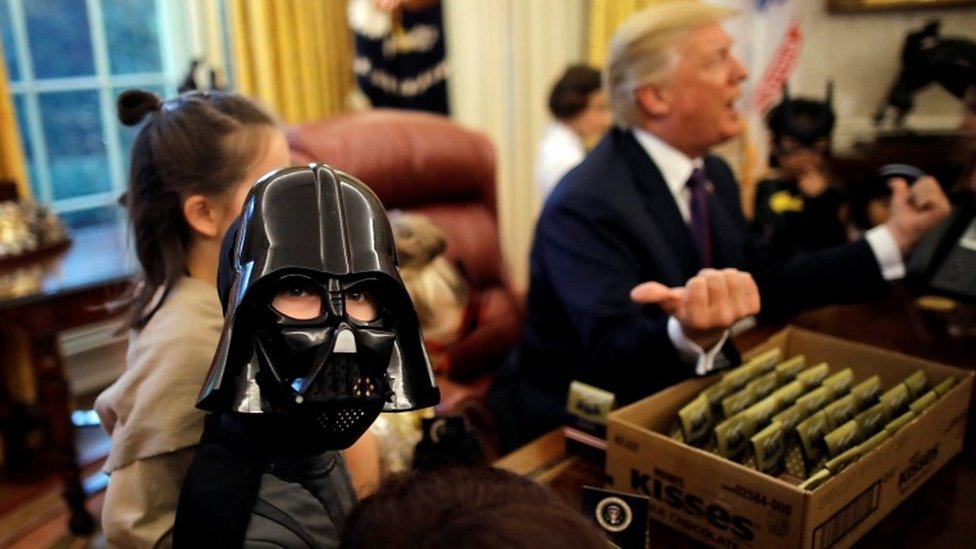
Trump teases Halloween trick-or-treaters

0

[unable to retrieve full-text content]Note: This story is auto-generated from BBC syndicated feed and has not been edited by AFRICA PRIME NEWS
Under water

0

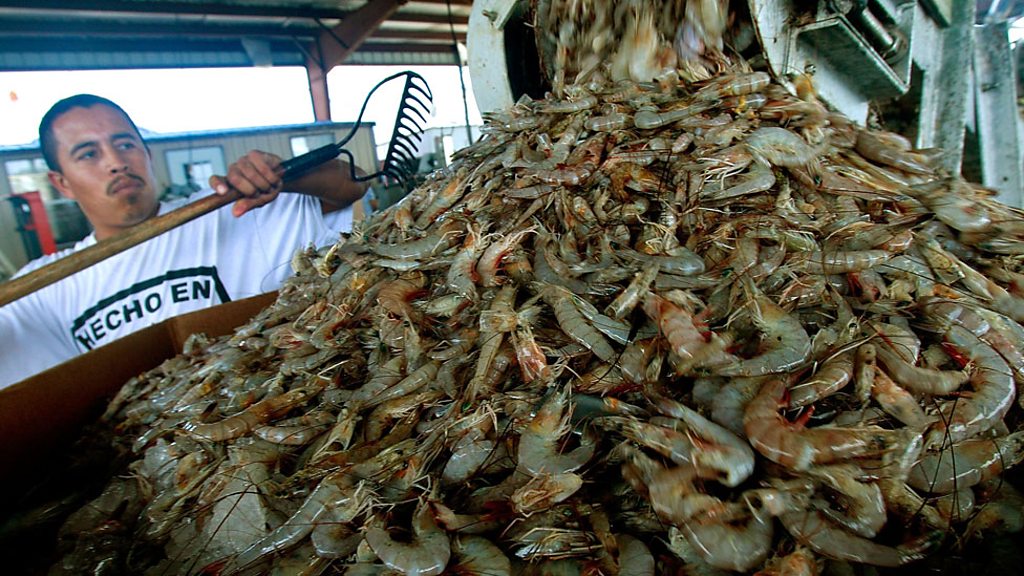
Shrimping has been an ingrained part of South Carolina’s culture for decades, but global competition has some fishermen looking to Trump for help.

Video by Olivia Lace-Evans, as part of a Global Questions special in South Carolina. Watch it on BBC iPlayer

Note: This story is auto-generated from BBC syndicated feed and has not been edited by AFRICA PRIME NEWS

Ghana Black Queens coach defiant despite 8-0 loss

0
Ghana did find the net against France but the goal was ruled out for a foul by Elizabeth Addo

Ghana women’s coach Mas-Ud Didi Dramani is putting the positives on the 8-0 defeat by France on Monday night.

The defeat by the 2019 Women’s World Cup hosts in Reims was the second heaviest in the Black Queens’ history.

“Matches like this provide us with a lot of positives to work on to improve,” said Dramani, whose team host the 2018 African Women’s Nations Cup.

“I have no doubt everyone will see a different team before the big tournament in Ghana.”

Last year, the Black Queens suffered an 11-0 humiliation when beaten by Germany in a friendly in Paderborn in July 2016 – their heaviest ever defeat.

Despite Monday’s drubbing, Dramani believes his side will be back to their very best in time for the African tournament scheduled for November 2018.

“While the scoreline would suggest they gave us a battering, I don’t think that was the case,” Dramani told BBC Sport.

“To test your readiness for any event, you have to come up against a tough test – we’ve been doing that and picking up valuable lessons.”

“I showcased seven youth players, with four in the starting line-up and two uncapped players. This is a good game to expose them to what to expect as they grow and learn.”

The four youth players were Abambila Ernestina, Ampah Faustina, Jane Ayieyam and Lily Lawrence, while Mukarama Abdulai and Kundork Peterson won their first caps.

Ouleymata Sarr’s goal gave the 2019 Women’s World Cup hosts a 1-0 lead into the break before Amandine Henry, Eugenie Le Sommer and Viviane Asseyi all scored twice, with Valerie Gauvin adding a late eighth.

The Black Queens did have the ball in the net but Jane Ayeyiam’s headed goal after 25 minutes was disallowed after Elizabeth Addo was adjudged to have fouled an opponent in the build-up.

France women’s coach Corinne Dacre is preparing her side for the 2019 World Cup on home soil

Since the loss, Dramani has travelled to Denmark to pick up tips.

“I am watching sessions and exchanging ideas about modern trends,” he explained. “I was in a meeting with the head coach of FC Nordsjaelland on the African players and how to get the best out of them.

“I will be here for one month exchanging knowledge and ideas with my counterparts, which will help improve and impact our game.”

Three-time African Women’s Nations Cup runners-up, Ghana exited in the group stage of the tournament in 2008, 2010 and 2014 – either side of failing to qualify for the 2012 finals.

At last year’s event, the Black Queens were knocked out by hosts Cameroon in the semi-finals.

At their three Fifa Women’s World Cups, meanwhile, Ghana have never progressed beyond the group stage.

Note: This story is auto-generated from ‘BBC News’ syndicated feed and has not been edited by Africa Prime News staff.

100 Women: Noëlla Coursaris Musunka, school founder, DR Congo

0

Noëlla Coursaris Musunka is the founder and director of Malaika School in south-eastern Democratic Republic of Congo.

The model, philanthropist, entrepreneur and mother explains why she is passionate about improving the lives of African children through education – and shares her advice for young girls.

Video producers: Genevieve Sagno and Rupert Waring

What is 100 Women?

BBC 100 Women names 100 influential and inspirational women around the world every year. In 2017, we’re challenging them to tackle four of the biggest problems facing women today – the glass ceiling, female illiteracy, harassment in public spaces and sexism in sport.

With your help, they’ll be coming up with real-life solutions and we want you to get involved with your ideas. Find us on Facebook, Instagram and Twitter and use #100Women

Note: This story is auto-generated from ‘BBC News’ syndicated feed and has not been edited by Africa Prime News staff.

The Zimbabwe seed firm taking on the multinationals

0

Mukushi Seeds is pioneering hybrid maize seed varieties that it hopes will improve farmer yields. It’s a sector that has been dominated by big multinational companies, but Mukushi is confident there’s a market.

Africa Business Report went along to the northern village of Centenary to find out more.

Note: This story is auto-generated from ‘BBC News’ syndicated feed and has not been edited by Africa Prime News staff.

Currency Exchange Rates

USD - United States Dollar
ZAR
0.06
EUR
1.17
CAD
0.73
ILS
0.31
INR
0.01
GBP
1.34
CNY
0.14
Enable Notifications OK No thanks