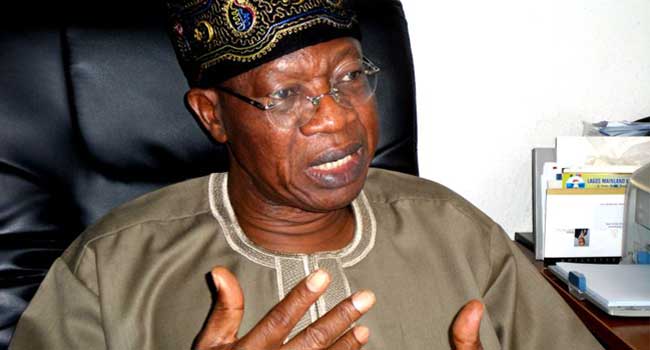
Lai Mohammed, Nigeria's Minister of Information and Culture
Lai Mohammed ( Nigeria’s Minister of Information and Culture)
By Amos Tauna
Kaduna (Nigeria) — Minister of Information and Culture, Alhaji Lai Mohammed, has advised government at all levels to evolve measures towards protecting school children from all forms of accidents.
“I agonise every time I see school children coming out of school. Very young people, they have nobody to guide them, they depend on kind motorists who will stop. Most times people don’t stop for them and it’s not a task that CAPI can do alone. I think the society must take ownership of this initiative because if our children are not safe then our future is not guaranteed,” he said.
Segun Adeyemi, Special Adviser to the Minister of Information and Culture in a statement said the Minister made the call in Abuja, the nation’s capital while receiving officials of the Children Accident Prevention Initiative (CAPI), an NGO working with the Federal Ministry of Education on the Safe School Initiative.
The minister said, “I think the various tiers of government need to take their responsibility more seriously. The various tiers of government must be able to provide vehicles and buses for school children.
“I think we must ask our local governments and state governments in particular to provide these means of transportation for our children.”
He noted that more efforts should be made towards the provision of emergency services, clinics, and ambulances in every nook and cranny of the country to save the lives of school children involved in accidents.
He expressed concern that school children have become extremely vulnerable and endangered, particularly while crossing the road, due to the unruly activities of some motorcyclists and motorists.
The Minister observed that the worth of a country is usually evaluated on the basis of how much it takes care of the most vulnerable people in the society, including children, the physically challenged, elders and women.
The Minister commended CAPI for the laudable initiative and enjoined them to widen their partnership to include the National Union of Road Transport Workers, Association of Commercial Motorcyclists, Vehicle Inspection Officers, Federal Road Safety Commission, Neighbourhood Watch, Health Workers and the Nigerian Security and Civil Defence Corps.
He pledged the collaboration of the Federal Ministry of Information and Culture and its parastatals with CAPI, especially in the area of advocacy, to educate Nigerians on the need to obey traffic regulations.
In his remarks, the National Coordinator of CAPI, Elder Stephen Akujobi, said the initiative, which has been endorsed by the Federal Ministry of Education, was as a result of the high number of school children killed in road accidents.
He said as part of efforts to curb the unfortunate situation, CAPI is advocating the use of reflective jackets and hand bands by school children to ensure greater visibility and caution on the part of motorcyclists and motorists.
The CAPI Coordinator also used the occasion to decorate the Minister and the Permanent Secretary of the Ministry, Deaconess Grace Gekpe, as Patrons on the Initiative.
Soulama Abdoulaye won 42 caps for Burkina Faso’s national team
African football is mourning the death of former Burkina Faso goalkeeper Soulama Abdoulaye who died from a long illness in hospital in Bobo-Dioulasso aged 37.
Soulama won 42 caps for his country and played twice as the Stallions finished runners-up at the 2013 Africa Cup of Nations.
His last professional club – Accra Hearts of Oak – led the tributes, announcing plans to observe a minute’s silence before their Ghanaian FA Cup final against Asante Kotoko on Sunday.
“We are shocked to learn of the passing of our former goalkeeper Soulama Abdoulaye. We extend our deepest commiserations to his family,” Hearts announced.
Rivals Asante Kotoko of Kumasi, for whom Abdoulaye also played, expressed their condolences.
“We are saddened to confirm the passing of Soulama Abdoulaye. Our thoughts and prayers go out to the family and the Porcupine fraternity,” Kotoko tweeted.
Some of Burkina Faso’s top stars and notable Africans have also been playing tribute to the veteran goalkeeper.
“You were the best goalkeeper in Burkina,” said Stallions international Mohammed Koffi.
“You were a big brother and a team-mate…RIP Abdoulaye Soulama,” Koffi added.
Tributes have been pouring in from across Africa for Soulama Abdoulaye who died aged 37
Ghana international goalkeeper Razak Brimah spoke of his shock at hearing the news of Soulama’s death.
“It’s sad news. Africa has lost a great goalkeeper. Allah knows. Rest in peace Soulama,” said Brimah.
Former Ghana defender Anthony Baffoe, who is a leading member of the FifPro African body, described the goalkeeper as a “great guy with leadership qualities.”
“What sad news, he was a leader, very outspoken,” said Baffoe.
“He was a talented goalkeeper and our condolences to his family.”
Soulama began his international career at 19 as Burkina Faso’s third goalkeeper at the 1998 Africa Cup of Nations tournament on home soil.
He started as first choice during the 2013 tournament in South Africa but he was sent off against Ethiopia in the second group game.
His club career started at home with Comoé Sports Union (USCO), then Bobo-Dioulasso Sports Association (ASFB) and the ASFA Yennega.
He has also played in Algeria (CA Batna) and Turkey (Denizlispor).
Note: This story is auto-generated from ‘BBC News’ syndicated feed and has not been edited by Africa Prime News staff.
Image copyrightUS Embassy, MaliImage caption Staff Sgt Melgar was found at US embassy housing in Bamako
Two elite members of the US Navy are being investigated for murder after a 34-year-old special forces serviceman was found dead in Mali in June, officials have told US media.
Army Staff Sergeant Logan J Melgar, from Texas, was found at US embassy housing in Mali on 4 June.
Reports in US media suggest officials believe the officer died of asphyxiation after being strangled.
No-one has been charged in connection with the death.
US forces have been deployed to the country to help with counterterrorism.
The newspaper said the death was only passed on to the Naval Criminal Investigative Service in September. They said the organisation refused to comment on ongoing investigations.
The officers being investigated are reportedly from the Navy’s elite Seal Team Six – the same unit which carried out the mission that killed al-Qaeda leader Osama bin Laden.
US media said the dead soldier’s family declined to comment on the reports.
Note: This story is auto-generated from ‘BBC News’ syndicated feed and has not been edited by Africa Prime News staff.
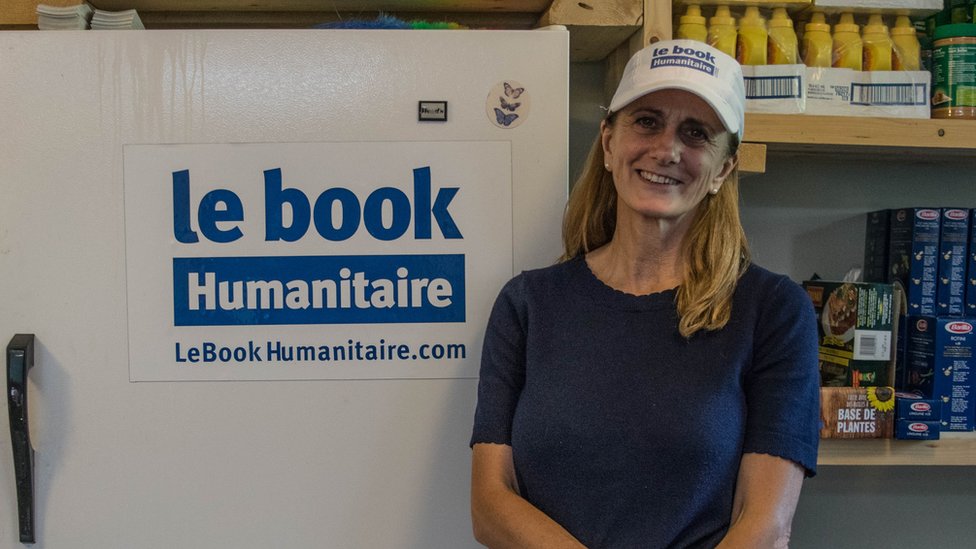
Image copyrightAFPImage caption Rachel Lapierre set up Le Book Humanitaire after winning the lottery
What would you do if you won the lottery? Buy a new house, a sports car, or travel the world perhaps?
But how many of us would use our winnings to set up a charity?
That is exactly what Rachel Lapierre, a former Miss Quebec, did back in 2013.
The Canadian always loved volunteering, and after running her own modelling agency and working as a nurse, she was looking for a way to follow her idol, Mother Theresa, and dedicate her life to charity.
Then fate came knocking when she won a lifetime salary of C$1,000 (£605) a week in the Quebecois lottery “Gagnant à vie”, or “winner for life”.
Image copyrightAndreane WilliamsImage caption Ms Lapierre meets a family of Congolese refugees living in Quebec
“At first I couldn’t believe it, but I didn’t celebrate or shout it from the rooftop because I had made a promise to the universe and I was determined to keep it.
“I wanted to do something I loved for the rest of my life. I wanted to help others,” she says.
It took Ms Lapierre only two months to quit her nursing job and launch her own charity, Le Book Humanitaire.
Her non-profit organisation, which is located in Saint-Jerome, about 60km north west of Montreal, uses social media to connect those in need with people who can help.
Image copyrightRachel LapierreImage caption Ms Lapierre became Miss Quebec in 1982
On its Facebook page, which has 22,000 followers, those who are struggling can let the community know about their plight.
At the same time, members of the public can advertise services or goods they want to donate.
“Let’s say that you have clothes to give away. We will put you in contact with a family that needs those clothes and will allow you to go give them yourself,” Ms Lapierre explains.
“It’s not only about material things. You might end up driving a cancer patient to a doctor’s appointment.”
More stories from the BBC’s Business Brain series looking at interesting business topics from around the world:
It’s a far cry from Ms Lapierre’s former career in the more glamorous, and some might argue consumerist, world of modelling.
In the early 1980s she joined a local modelling school where she was encouraged to enter the Miss Quebec beauty pageant. To her surprise, the then-21-year-old won the contest.
“I thought modelling was for tall blondes with blue eyes and I was short and brunette… But I am so glad I entered, it was a great experience.”
The following year she toured Canada as Miss Quebec and even got to meet Rene Levesque, the then-premier of Quebec.
Image copyrightAndreane WilliamsImage caption Ms Lapierre meets with a family of Syrian refugees in Saint-Jerome
It inspired her to set up her own modelling school in 1984, to teach young women how to build careers in the industry. It had about 10 staff.
“Running my own business taught me about accounting and how to manage employees,” Ms Lapierre says.
She closed the business in the late 1980s to focus on bringing up her four children, but also dedicated herself to voluntary work – making numerous trips with humanitarian organisations to places like India and Haiti.
It was this passion that led her to set up Le Book Humanitaire four years ago.
This year, the charity has made 15,000 “direct actions” in Quebec, ranging from furnishing an apartment for a family of Syrian refugees, to finding a home for a homeless mother who had just given birth.
Image copyrightAndreane WilliamsImage caption The charity donates food to those in need
She has also funded the organisation – which has 10 full-time volunteers and its own board – entirely by herself, investing $70,000 to date.
“This weekly C$1,000 I get from the lottery allows me to not go to work anymore and finance my organisation,” she says.
“I pay for things such as our office rent and other administrative costs.”
There are limits to Ms Lapierre’s budget, though. After she was interviewed by a popular Quebecois television station earlier this year, Le Book Humanitaire saw a huge increase in its Facebook followers, from around 4,000 to more than 20,000.
It led to an influx of requests for help, as well as donations, and the charity has struggled to keep up.
Image copyrightAndreane WilliamsImage caption A volunteer, Ms Lapierre and her sister Guylaine discussing strategy at the charity’s offices
It needs to open several new facilities to store donated items, but Ms Lapierre can’t afford to do this alone.
“We are counting on municipalities to lend us offices and make donations,” she says.
“But there are always ways to make things work.”
Growing pains
Jean-Pierre Tchang, the founder of IRIS Mundial, a non-profit group that works to improve visual health in developing countries, says that building a successful charity is not easy.
“The main difficulty is money and getting funding,” says Mr Tchang, who worked with Ms Lapierre earlier in her volunteering career.
“You also have to know your limits. You can start feeling overwhelmed by all the work and forget oneself… I am sure Rachel’s nights must be very short.”
Despite the challenges, Ms Lapierre shows no sign of slowing down. She is also taking a workshop class on managing non-profit organisations to get better at what she does.
She continues to get joy from her work, which, she says “is nothing like running a regular business” and instead “feeds her soul”.
“Volunteering work represents billions of unrecorded dollars across the world. Without it, the world would not function.”
Note: This story is auto-generated from BBC syndicated feed and has not been edited by AFRICA PRIME NEWS
Image copyrightGetty ImagesImage caption US Army Sgt La David Johnson was killed in Niger
US senators are asking cabinet secretaries about the campaign against extremist groups in Niger and other places – and whether a new law authorising the use of military force should be written.
Secretary of State Rex Tillerson and Defence Secretary Jim Mattis are speaking on Monday about the president authority to wage war – the first time this has been debated publicly.
The hearing, convened by the foreign relations committee, will shine a spotlight on Mr Trump’s efforts to combat extremist organisations in Niger.
To add to the tension, the committee is chaired by Bob Corker, a Republican from Tennessee who’s been engaged in an intense social-media war with the president.
Under scrutiny is the 2001 authorisation to use military force (AUMF), which was passed shortly after the 11 September 2001 al-Qaeda attacks.
Here are some key questions:
Why is the AUMF so important – and controversial?
The president relies on this law to conduct life-or-death operations.
As commander-in-chief, the president can send troops to battle. Yet the US Constitution says that only Congress can declare war for an extended time.
White House officials found a workaround in the days after the al-Qaeda attacks, however. Lawmakers approved a resolution that gave President George W Bush authority to track down and destroy al-Qaeda and the Taliban.
Members of congress approved a second resolution in 2002, allowing Bush to wage war against Iraq.
In recent years, the authorisation began to seem limited. “It said: ‘Destroy al-Qaeda,'” says Jens David Ohlin, a Cornell Law School professor.
Image copyrightGetty ImagesImage caption US soldiers return home after a seven-month tour of the western Pacific Ocean, the Middle East, and the Horn of Africa
“Well, that’s not really applicable.”
President Barack Obama maintained that the laws gave him the authority that he needed for the campaign against the Islamic State (IS) group, an organisation that didn’t exist when the laws were written.
Mr Trump has continued to carry out an aggressive campaign against the militants, whether in Niger or other countries.
Obama and Trump, says Ohlin, have both “shoehorned” their military efforts into the antiquated authorisations.
Image copyrightGetty Images
Most people pay little attention to the president’s authorisations or the military campaigns themselves, though, until something happens.
In October three staff sergeants, Bryan Black, Jeremiah Johnson and Dustin Wright, as well as Sgt La David Johnson, were killed in Niger.
“All of a sudden people are saying: ‘What are we doing there?'” says Carnegie Mellon’s Melanie Marlowe, a scholar who writes about presidential power.
Even senators were taken aback. “I didn’t know there was a thousand troops [in Niger],” said Lindsey Graham, a Republican from South Carolina, on NBC’s Meet the Press.
The US troops were training local forces in West Africa so they could fight extremist groups in a more efficient manner.
Image copyrightGetty ImagesImage caption Gen Joseph Dunford briefed reporters on the Niger mission two weeks after the fatal skirmish
The senators and ordinary US citizens wanted to know why these men were fighting and dying in remote parts of Africa and how their efforts helped to promote the interests of the US.
On Monday senators will discuss these questions with Tillerson and Mattis – and will also examine the president’s authority to send US soldiers into villages in Niger and other countries around the world.
Is a new AUMF necessary?
Many people think so.
In September Republican Senator Rand Paul tried to repeal the current authorisations. He said the laws allowed the president to engage in war “anywhere, anytime, any place on the globe”.
Most senators agree – in theory – that these resolutions should be modernised. They believe that a new law would help the president and ordinary citizens clarify their goals as a nation and determine what they hope to achieve through military action.
Administration officials have said they’d support a new law.
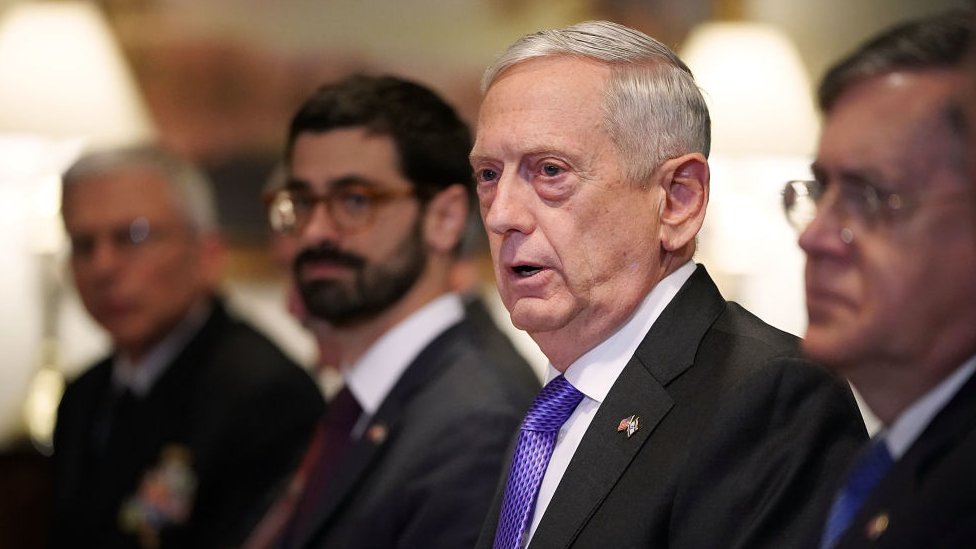
Image copyrightGetty ImagesImage caption Jim Mattis has said he is in favour of a replacement law
Mattis told members of congress earlier this year that a new law would help to create a united front against extremist groups. “It’d be a statement of the American people’s resolve,” he said.
But the senators disagree about what the new law should look like.
Some want the law to impose a time limit for military operations as well as list the countries where they’d take place. Others think the law should clarify that the military campaign will be limited in scope, conducted without ground troops.
What are the prospects for a new AUMF?
The current authorisations are rife with problems, but they’ve remained in place.
It seems unlikely that a new law will be written – at least not soon.
Creating a new one means that the president, lawmakers and people across the country would all have to agree on how the US should wage war.
It’s a broad mandate – one that senators and cabinet secretaries will debate on Monday.
It’s more gripping than any box set we can get our hands on right now.
The investigations into Russian interference in the US election, and whether the Trump campaign colluded with the Kremlin, continue to deliver daily developments and drama worthy of anything seen in House of Cards.
There are several ongoing investigations into the Trump campaign’s ties with Russia, and reports of imminent arrests.
Here is your viewer’s guide to the main characters in the first three seasons of the only political drama that matters.
(Note: links to the key players do not work in the BBC News app)
Season One – The Election
This is the season in which Donald Trump, the reality TV star, takes centre stage in his own political drama by launching a presidential campaign. He’s supported by his family and gets the attention of the Russians. The season ends with a cliffhanger – could Trump the outsider actually win?!
It’s been a while since all of this happened, so let’s remind you of the key players in this season.
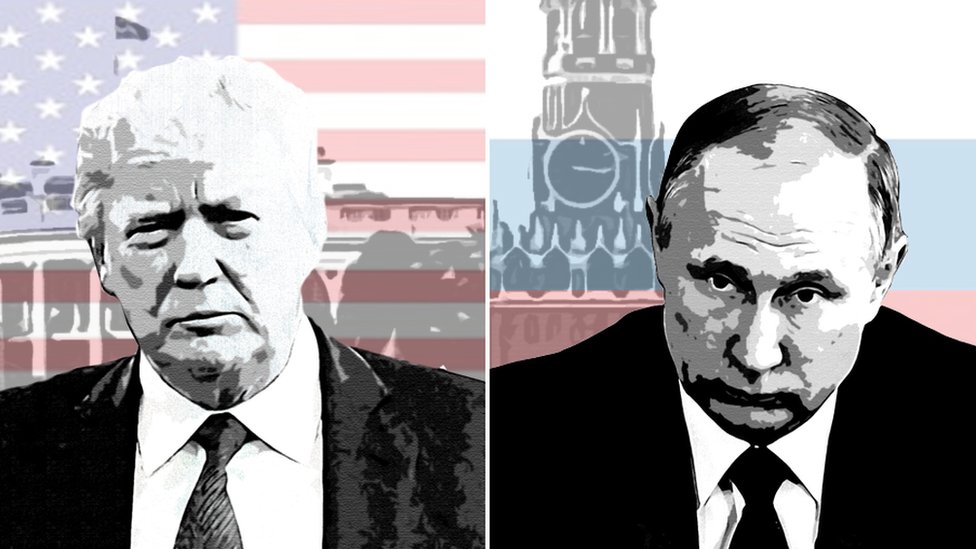
Who is he? Donald Trump, the billionaire candidate (who by Season Three is the 45th president of the United States). If you really need a refresher, here’s his life story.
Key plot line As Donald Trump was busy traversing the country canvassing for votes, US intelligence officials said Russia hacked into the emails of his Democratic rivals.
The question is why? Was the Kremlin trying to alter the outcome of the election, and what did Trump and his campaign know?
What, if anything, did Donald Trump do to try to cover things up in the ongoing Russia investigation?
Who is he? He was Trump’s campaign chairman before being forced to quit over his ties to Russian oligarchs and Ukraine.
Key plot line Paul Manafort spent more than a decade as a political consultant in Ukraine. He resigned from the campaign in August 2016, after he was accused of having links to pro-Russian groups there. He also sat in on a crucial meeting with a Russian lawyer who may have been trying to feed the Trump team classified information (more on that later).
We’ll meet him again in Season Three, when the FBI raids his house as part of its investigations.
Who is he? The president’s eldest child. The Trump who we know did meet the Russians – the big question is why.
Key plot line The role of Donald Trump Jr in this unfolding saga all comes down to a meeting he had with a Russian lawyer, which was set up by a music publicist (the full details of which come out in Season Three). If it sounds random, then in many ways it is.
In June 2016, the publicist, Rob Goldstone▼, offered him a meeting with lawyer Natalia Veselnitskaya▼ promising Trump Jr dirt on Hillary Clinton. “This is obviously very high level and sensitive information but is part of Russia and its government’s support for Mr Trump,” Goldstone wrote. “I love it” Trump Jr replied, and so he invited the pair to Trump Tower, where they met Trump staff Jared Kushner▼ and Paul Manafort▼
This meeting is the key to much of our plot line because it raises several key questions. Did this amount to the campaign colluding with a foreign government? Why did he agree to the meeting? Don Jr says the meeting was about Russian adoption policy, and Veselnitskaya says she’s not an agent of the Russian government. But it’s the scene investigators will be playing over and over again as they try to work out if there was any impropriety.
Donald Trump confounds his critics by winning the presidency. But the transition is as gripping as the season before it as Trump picks his cabinet, introducing key characters to the mix. The season ends with Trump taking the oath of office on a cold January morning – but there are more twists to come.
Who is he? The granite-faced former general who later became the shortest-serving member of Donald Trump’s cabinet. He was forced to resign after not being honest about his contact with a Russian official – what did he know and who did he tell?
Key plot line Michael Flynn was appointed national security adviser just days after the election, against the advice of then-President Obama, who warned Trump not to hire him. Flynn’s starring role came in December 2016, when he spoke to the Russian ambassador, Sergei Kislyak▼.
The Washington Post and New York Times said the men discussed Russian sanctions, and that Flynn later lied to the Vice President Mike Pence about the conversation (Kislyak said the men discussed only “simple things”).
The FBI is now investigating Flynn. And here’s where the president comes in – the agency is also looking at whether Trump tried to get it to back off this inquiry.
Who is he? Many roads in this drama lead back to Sergei Kislyak, the jolly and charismatic figure, who up until July 2017 was the Russian ambassador to Washington.
Key plot line Kislyak’s role in this drama is unclear – but he makes several appearances as the man many of our cast have had meetings with. The key questions for investigators are – why were they drawn to him, and what was said? The Russian ambassador spoke to both Flynn▼ and Sessions▼ – meetings which both Trump officials didn’t initially acknowledge took place.
Anything else we should know? Well, Russia fiercely fought back against claims on CNN that Kislyak was a “top spy and recruiter of spies”.
Who is he? Jefferson Beauregard Sessions III hovered in the background during Season One, when he was an Alabama senator and a trusted Trump adviser, but we really got to know him during Season Two, when he became Trump’s nominee for attorney general.
Key plot line Sessions is one of a number of Trump’s team to meet the Russian ambassador, Sergei Kislyak▼ and there are question marks over the nature of those meetings.
Since the FBI investigation focused on the Trump campaign, Sessions stood down from the inquiry. That decision led to plenty of tension, with Trump taking potshot after potshot at Sessions on Twitter.
Sessions has said any suggestion he colluded with Russia is “an appalling and detestable lie”.
This is where the drama really picked up and all the plot lines came together. A lot of the background characters we saw in Season One came back with a vengeance and the infighting got nasty – and, don’t look now, but the police are circling.
Who is she? A Russian lawyer who has fought against US restrictions on Russia, with a fearsome reputation and a propensity for drama. But is she a Kremlin stooge? She says no.
Key plot line Hers is a small but crucial role – she’s the one who Trump Jr▼, Kushner▼ and Manafort▼ met in June 2016, the details of which were disclosed a year later once Trump became president. She says the meeting was to discuss adoptions – but those who helped set it up said she was offering dirt on the Democrats and Hillary Clinton’s campaign. That meeting would never have happened without…
Who are they? Emin Agalarov is Azerbaijan’s biggest pop star, of course. Have you not heard Love is a Deadly Game? Emin helped bring ▼Donald Trump‘s Miss Universe competition to Russia and the two are close enough to send each other birthday messages. His dad, Aras, is a billionaire who mixes in the highest circles of influence in Moscow.
Key plot line Emin is the man who set the wheels in motion on that Trump Jr▼ meeting. An email sent to Trump Jr suggests Emin was offering information on the Democrats (Emin says he didn’t). The email also says Aras Agalarov had apparently met the “crown prosecutor” of Russia – a role that weirdly doesn’t exist – and got information on Hillary Clinton. Are you keeping up?
Who is she? One of those supporting characters who came from nowhere to play a massive role in the rest of the season. She was the acting attorney general, until Sessions▼ was confirmed in his role. And then she was fired…
Key plot line She’s the one who informed the White House that Flynn▼ had not been truthful about his meetings with the Russians. She argued that the fact the Russians knew about these meetings, and that the White House didn’t, made Flynn vulnerable to blackmail. Her reward? Donald Trump▼ fired her over an unrelated matter weeks later. She’s been a persistent critic of the president ever since.
Who is he? He became deputy attorney general under Jeff Sessions▼ In the TV drama of the Russia scandal, this is the sort of role that would go to a solid Broadway actor you recognise but can’t put a name to.
Key plot line Given Sessions stood down from leading the main investigation into the Trump-Russia ties, it fell to Rosenstein to do that job. In a major plot development, he appointed a special investigator▼ – not a popular move with the White House. He’s also the guy who recommended in a letter that FBI chief Comey▼ be fired. That move proved to be a bit more popular with the president.
Who is he? Married to Trump’s daughter, Ivanka, Kushner is the character who is seen but very rarely heard.
Key plot line Amid cries of nepotism, he was given a plum White House job as senior adviser to the president with a wide-ranging portfolio. It’s his contacts with the Russians during the election campaign and beyond that have led to investigators circling him. In June 2016, Kushner attended THAT meeting with Donald Trump Jr▼ and the Russian lawyer▼. He says he was so bored he messaged his assistant to call him so he could leave.
Kushner is also another cast member who had contact with Russian ambassador Sergei Kislyak▼ – including, reportedly, phone calls (he denies this), and a December 2016 meeting, where it’s claimed he discussed setting up a secret back channel with Moscow. He denies this too – but investigators want to know why he failed to disclose these meetings initially.
Who is he? When the White House says “we refer all your questions to Mr Trump’s lawyer”, this is the guy they mean.
Key plot line Washington DC is a city full of lawyers, but none is as important as Jay Sekulow, the president’s personal counsel. Like many political types, he also has a talk show on the side, but is often seen on the airwaves defending the White House from the latest revelations in this ongoing investigation.
Who is he? A British former tabloid journalist, with a penchant for selfies in silly hats, is perhaps an unlikely addition to the cast, but in most good dramas there’s always room for the slightly out-of-place eccentric.
Key plot line Rob Goldstone finds his way into Donald Trump’s circle of trust thanks to his connections with Russian pop star Emin Agalarov▼.
Goldstone manages the pop star, and it was he who contacted Donald Trump Jr▼ on behalf of his client to set up that now-infamous meeting at Trump Tower in June 2016. Goldstone sent an email to Trump Jr promising dirt on Hillary Clinton, in an email exchange that is a key piece of evidence in this inquiry.
Another highlight on Goldstone’s CV is his work bringing the Miss Universe contest to Russia, and it is through these connections he once met Donald Trump himself.
Who is he? At 6ft 8in (just over two metres), James Comey is a towering figure, the character who gives little away about himself personally, but has a huge personal role in this story.
Key plot line He first entered this drama in Season One, when as head of the FBI he reopened the investigation into Hillary Clinton’s emails – just weeks before the election. Democrats blamed him for her loss, Republicans hailed him a hero. That, we thought, was the last we’d seen of him.
Cue Season Three, when months into the Trump presidency, Comey was fired by the new president. In true television drama style, he learned of his sacking as he was watching TV news during a trip to LA. By this point, Comey was heading up an investigation into possible ties between the Trump campaign and Russia. Was this why he was given the heave-ho?
His testimony to the Senate was one of the most gripping scenes in this drama so far, as – under oath – he told politicians he was asked to pledge loyalty to the president – but refused. He also said he was told by Trump to “let go” of the investigation into Michael Flynn▼. A character whose stock is still high – it’s unclear when he’ll next make an appearance.
Who is he? The man who could decide the fate of the Trump presidency.
Key plot line Some characters wield a lot of power, but don’t have a starring role, such as Robert Mueller, the tall chiselled figure who was appointed as “special counsel” to take over the Russia investigation in the wake of the dismissal of James Comey▼. Mueller comes from the same stock as Comey – both are former heads of the FBI. It’s led some to accuse Mueller of not being impartial.
There have been reports that the president has considered firing Mueller – but he’s still in the job. With a team of more than 15 lawyers, and a staff of more than three dozen, he’s working quietly behind the scenes amassing evidence. There are now reports criminal charges have been filed and arrests will take place soon.
Mueller’s inquiry runs alongside similar ones being conducted by politicians in Congress – but he’s the only one who can press charges against anyone.