Gombe (Nigeria)– In order to ensure transparency and accountability, an All Progressives Congress stalwart in Gombe state northeast of the country, Abubakar Habu Muazu has urged President Muhammadu Buhari to appoint people with integrity to manage the Northeast Development commission.
Speaking with Journalists on Wednesday in Gombe, Habu applauded the President over the establishment of the commission with a strong call to appoint individuals that would meet the expectations and objectives for which it was established.
He noted that it was important for the President to look out for men and women with integrity, experience and an excellent record to prevent mismanagement of public institution.
“Appointing people with proven integrity will not only help in boosting the economy of the zone but it will also help in addressing the current challenges facing the region for the benefit of all”, he said.
He further advised the President not to appoint persons whose names had been mentioned in any scandal, unless he or she has been cleared by the court or a board of inquiry.
While commending the President for the speedy consideration of the bill, he observed that the commission will help remedy the long years of underdevelopment suffered by the region as a result of the activities of insurgents.
“This is one of the most wonderful developments to the people of the northeast in particular and the north in general. The President has demonstrated his love and interest in ensuring rebuilding the region. He started by tackling the problem of insurgency and now a commission to rebuild the states in the region, this is indeed commendable.” he added.
Habu also advised all stakeholders in the region to pray and support the Commission in ensuring that it succeeds in the task ahead.
The leader of Zambia’s opposition party has told BBC Hardtalk’s Stephen Sackur about the conditions he faced in prison, describing them as “degrading”.
He said he had been left for eight days in solitary confinement in a room without electricity, water or a toilet.
Mr Hichilema was released from prison in August.
Sources say the charges against Mr Hichilema and five aides were dropped after international mediation. He and his aides have “strongly” denied the charges against them.
Watch the full interview on BBC World News and the BBC News channel on Wednesday, 1 November 2017, or watch again on BBC iPlayer (UK only).
Note: This story is auto-generated from ‘BBC News’ syndicated feed and has not been edited by Africa Prime News staff.
Media captionMark Lehner: “A space that the builders left to protect the grand gallery?”
The mysteries of the pyramids have deepened with the discovery of what appears to be a giant void within the Khufu, or Cheops, monument in Egypt.
It is not known why the cavity exists or indeed if it holds anything of value because it is not obviously accessible.
Japanese and French scientists made the announcement after two years of study at the famous pyramid complex.
They have been using a technique called muography, which can sense density changes inside large rock structures.
The Great Pyramid, or Khufu’s Pyramid, was constructed during the reign of Pharaoh Khufu between 2509 and 2483 BC.
At 140m (460 feet) in height, it is the largest of the Egyptian pyramids located at Giza on the outskirts of Cairo.
ScanPyramids has already detected a smaller void on the northern face
The new cavity is perhaps 30m long and several metres in height
All three muon technologies sense the same feature in the same place
Khufu famously contains three large interior chambers and a series of passageways, the most striking of which is the 47m-long, 8m-high Grand Gallery.
The newly identified feature is said to sit directly above this and have similar dimensions.
“We don’t know whether this big void is horizontal or inclined; we don’t know if this void is made by one structure or several successive structures,” explained Mehdi Tayoubi from the HIP Institute, Paris.
“What we are sure about is that this big void is there; that it is impressive; and that it was not expected as far as I know by any sort of theory.”
Image copyrightSCANPYRAMIDSImage caption The newly found void is directly above the Grand Gallery
The ScanPyramids team is being very careful not to describe the cavity as a “chamber”.
Khufu contains compartments that experts believe may have been incorporated by the builders to avoid collapse by relieving some of the stress of the overlying weight of stone.
The higher King’s Chamber, for example, has five such spaces above it.
The renowned American archaeologist Mark Lehner sits on a panel reviewing ScanPyramids’ work.
He says the muon science is sound but he is not yet convinced the discovery has significance.
“It could be a kind of space that the builders left to protect the very narrow roof of the grand gallery from the weight of the pyramid,” he told the BBC’s Science In Action programme.
“Right now it’s just a big difference; it’s an anomaly. But we need more of a focus on it especially in a day and age when we can no longer go blasting our way through the pyramid with gunpowder as [British] Egyptologist Howard Vyse did in the early 1800s.”
Image copyrightSCANPYRAMIDSImage caption The muon detectors have to be placed under the region of interest
One of the team leaders, Hany Helal from Cairo University, believes the void is too big to have a pressure-relieving purpose, but concedes the experts will debate this.
“What we are doing is trying to understand the internal structure of the pyramids and how this pyramid has been built,” he told reporters.
“Famous Egyptologists, archaeologists and architects – they have some hypotheses. And what we are doing is giving them data. It is they who have to tell us whether this is expected or not.”
Much of the uncertainty comes down to the rather imprecise data gained from muography.
This non-invasive technique has been developed over the past 50 years to probe the interiors of phenomena as diverse as volcanoes and glaciers. It has even been used to investigate the failed nuclear reactors at Fukushima.
Muography makes use of the shower of high-energy particles that rain down on the Earth’s surface from space.
When super-fast cosmic rays collide with air molecules, they produce a range of “daughter” particles, including muons.
These also move close to the speed of light and only weakly interact with matter. So when they reach the surface, they penetrate deeply into rock.
But some of the particles will be absorbed and deflected by the atoms in the rock’s minerals, and if the muon detectors are placed under a region of interest then a picture of density anomalies can be obtained.
Image copyrightSCANPYRAMIDSImage caption It is for the experts to debate the significance of the finding
The ScanPyramids team used three different muography technologies and all three agreed on the position and scale of the void.
Sébastien Procureur, from CEA-IRFU, University of Paris-Saclay, emphasised that muography only sees large features, and that the team’s scans were not just picking up a general porosity inside the pyramid.
“With muons you measure an integrated density,” he explained. “So, if there are holes everywhere then the integrated density will be the same, more or less, in all directions, because everything will be averaged. But if you see some excess of muons, it means that you have a bigger void.
“You don’t get that in a Swiss cheese.”
The question now arises as to how the void should be investigated further.
Jean-Baptiste Mouret, from the French national institute for computer science and applied mathematics (Inria), said the team had an idea how to do it, but that the Egyptian authorities would first have to approve it.
“Our concept is to drill a very small hole to potentially explore monuments like this. We aim to have a robot that could fit in a 3cm hole. Basically, we’re working on flying robots,” he said.
Image copyrightAFPImage caption The Fulani herdsman travel vast distances tending their cattle
Nigeria has implemented a controversial ban on cattle grazing they say will bring peace to the area, but opponents have decried as a recipe for anarchy.
The ban, in the south-eastern Benue state, follows years violent and often deadly clashes between nomadic Fulani herdsman and local farmers.
The herders accuse farmers of killing their cattle while the farmers say the animals are destroying their crops.
The new law would require everyone to keep their livestock on ranches.
Those breaking the law face the possibility of a five year jail sentence.
The Fulani herdsman say it unfairly targets their nomadic way of life, but the Benue state government says its aim is to restore peace, reports the BBC’s Chris Ewokor from the capital, Abuja.
Destruction of communities
The herders have been forced from their more traditional grazing lands in the north by the Boko Haram insurgency, and the encroaching desert.
It has put them in direct conflict with local farmers, resulting in death and the destruction of entire communities.
It considers the herders’ raids as the second-biggest threat to peace in the country after the Islamist Boko Haram militants.
However, the Fulani insist they are only trying to defend themselves and preserve their way of life.
Who are the Fulanis?
Image copyrightGetty ImagesImage caption Nigeria has suffered for years with communal violence, often linked to cattle raiding
They are believed to be the largest semi-nomadic group in the world and are found across West and Central Africa – from Senegal to the Central African Republic
In Nigeria, some continue to live as semi-nomadic herders, while other have moved to cities
Unlike the more integrated city dwellers, the nomadic groups spend most of their lives in the bush and are the ones largely involved in these clashes
They herd their animals across vast areas, frequently clashing with farming communities
They are often linked with another group, the Hausas, having lived together for a very long time. Some refer to the Hausa-Fulanis but they are different groups
The Fulanis played a key role in 19th Century revival of Islam in Nigeria
Note: This story is auto-generated from ‘BBC News’ syndicated feed and has not been edited by Africa Prime News staff.
Media captionNew York truck attack: Who is Sayfullo Saipov?
US President Donald Trump has repeated calls for the suspect in the New York truck attack to get the death penalty.
But Mr Trump backed away from his call a day earlier to send Sayfullo Saipov to Guantanamo Bay, saying “that process takes much longer”.
The suspect told police he “felt good” about Tuesday’s Halloween attack and wanted to kill as many as possible.
The 29-year-old allegedly drove a rented pick-up along a Manhattan bike path, killing eight people.
The victims were five Argentines who had travelled to New York to celebrate 30 years since their high school graduation, a young mother from Belgium and two Americans.
Mr Saipov, an Uzbek immigrant, was shot at the scene by police, according to officials. Investigators say he told them he was inspired by the Islamic State militant group (IS).
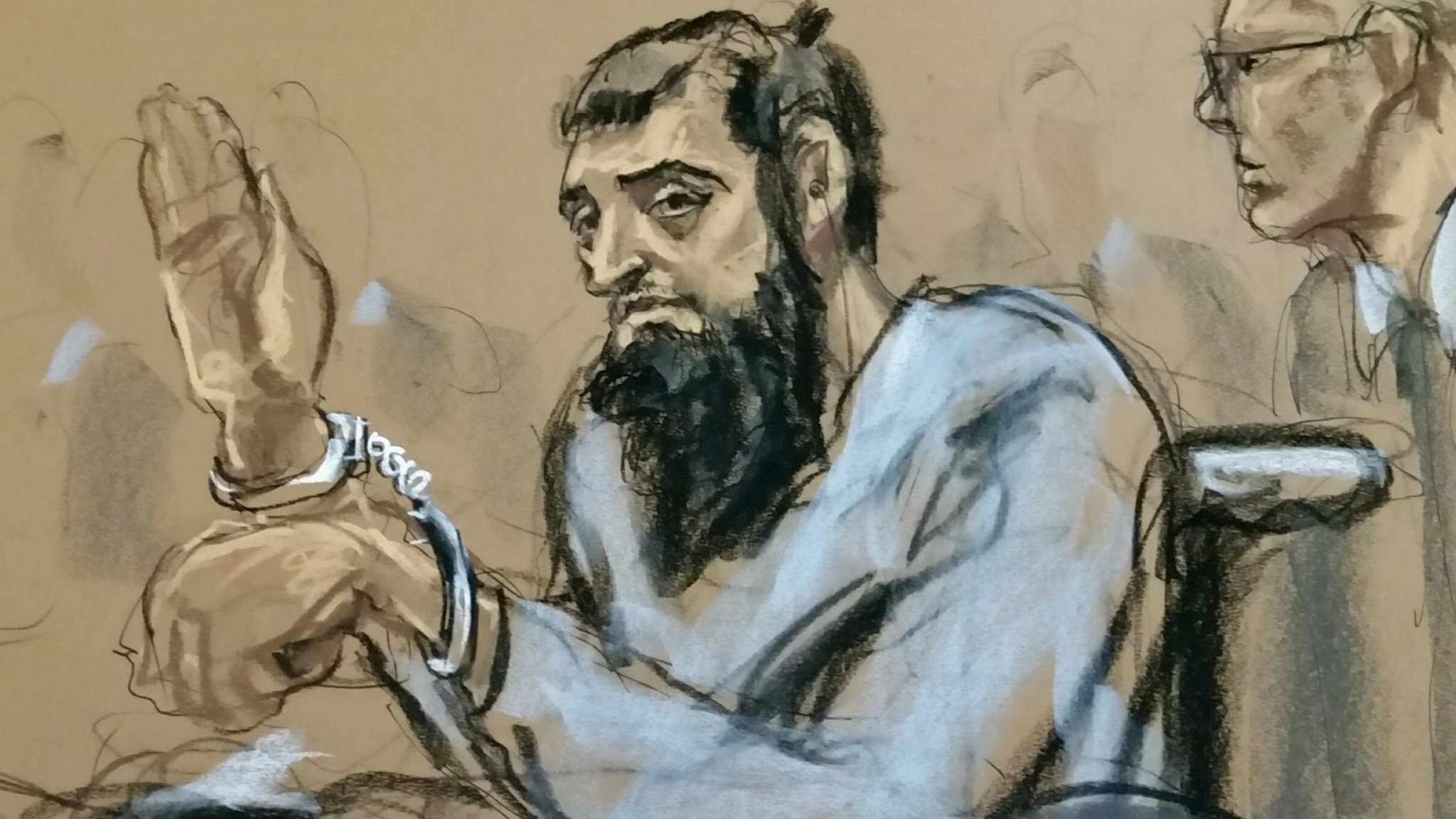
Mr Saipov, who appeared in court on Wednesday in a wheelchair, faces federal terrorism charges, which means the government could override New York state’s ban on capital punishment.
“There is also something appropriate about keeping him in the home of the horrible crime he committed,” tweeted the Republican president, a native New Yorker, on Thursday morning.
Repeating his initial call tweeted overnight for Mr Saipov to be executed, Mr Trump added: “Should move fast. DEATH PENALTY!”
However, some legal commentators suggest that Mr Trump’s comments could be seen as prejudicial to a trial.
Earlier this week, a military judge said he would consider a lighter sentence for Bowe Bergdahl, a US soldier who deserted his Afghan base, because of Mr Trump’s previous urging for that defendant to face the death penalty.
Is there a precedent for this?
It is unusual for US presidents to hold forth on pending criminal cases, but not unheard of.
Image copyrightReutersImage caption Mr Saipov, who was shot and injured by police, appeared in court in a wheelchair
In 1970, lawyers for mass murderer Charles Manson called for a mistrial after President Richard Nixon declared the cult leader guilty – in the middle of his trial.
Nixon backtracked and the judge allowed the case to go ahead.
Mr Trump has previously called for capital punishment to be applied in high-profile cases.
In 1989, when a group of five black and Latino men were charged with a particularly brutal rape of a woman in New York City, Mr Trump paid $85,000 for an ad in city newspapers with the headline “Bring Back the Death Penalty!”
The five defendants were later cleared by DNA evidence.
What did New York suspect say?
Prosecutors say Mr Saipov spoke freely to them, waiving his right to avoid self-incrimination while in custody.
According to federal court papers, he said:
The attack was a year in the planning and he carried out a trial run with a rental truck last month
He originally planned to target the Brooklyn Bridge as well
He wanted to display IS flags on the truck, but decided not to draw attention to himself
He was inspired by 90 graphic and violent propaganda videos found on his phone – in particular, one in which IS leader Abu Bakr al-Baghdadi asks what Muslims are doing to avenge deaths in Iraq.
Mr Saipov was charged with one count of providing material support and resources to IS and another count of violence and destruction of motor vehicles.
CBS News quotes an intelligence source as saying Mr Saipov was known to US authorities after his name was associated with the subjects of FBI counter-terrorism investigations in 2015.
The source says the suspect had some contact with individuals who were considered radicalised extremists, at least one of whom was Uzbek. It is unclear whether those being investigated were in the US or overseas.
Media playback is unsupported on your device
Media captionBabtunde Ogunnyi describes the moment a truck hit people on a cycle path in Lower Manhattan
It is not known if Mr Saipov, who was not the main focus of the investigation, was interviewed at that time by the FBI.
The FBI meanwhile says they have located a second Uzbek man, 32-year-old Mukhammadzoir Kadirov, who was wanted for questioning in connection with Tuesday’s attack.
Image copyrightAFPImage caption This image of the Argentine friends was taken moments before they flew to New York. Hernán Ferrucci (far left), Alejandro Damián Pagnucco (second from left), Ariel Erlij (third from left), Hernán Mendoza (third from right) and Diego Angelini (second from right) were all killed
The five Argentines – all men aged 48 or 49 – were named as Hernán Diego Mendoza, Diego Enrique Angelini, Alejandro Damián Pagnucco, Ariel Erlij and Hernán Ferrucci.
Belgian officials said Anne-Laure Decadt, a 31-year-old mother-of-two from Staden in Flanders, was also killed. Three Belgians were wounded.
The two Americans have been identified as Darren Drake, 32, and Nicholas Cleves, 23.
Twelve others were injured, four of whom remain in critical condition.
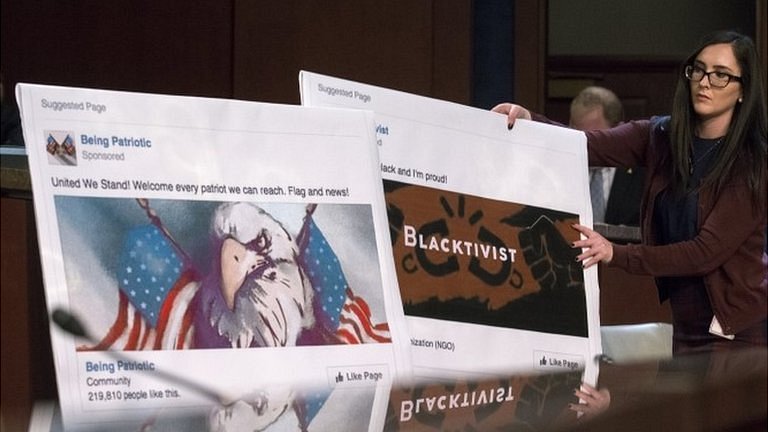
Image copyrightReutersImage caption Senators have opted to release some, but not all, examples of the posts thought to have been posted by Russia-backed trolls
Further instances of social media posts and ads thought to be part of Russian propaganda efforts to influence the last US presidential election and divide its society have been shared with the public.
The US Senate Select Committee on Intelligence released the imagery following a hearing at which Facebook, Twitter and Instagram were criticised for having underestimated the problem.
The examples are a fraction of the number of posts that have been flagged as being suspicious by the tech companies themselves.
Image copyrightUS CongressImage caption A total of 14,706 roubles ($253; £191) was spent to promote this advert to Facebook users in New York – it was shown to 15,255 people Image copyrightUS CongressImage caption This ad was targeted at people who had shown interest in Christianity, the Bible and/or Andrew Breitbart, the founder of the Breitbart news site Image copyrightUS CongressImage caption This post attracted 13,182 likes and 4,306 shares Image copyrightUS CongressImage caption This post was liked 12,978 times and commented upon 1,032 times Image copyrightUS CongressImage caption This image was uploaded in January 2017 and was shared 235,329 times Image copyrightUS CongressImage caption This post was shared 55,812 times and attracted 1,477 comments Image copyrightUS CongressImage caption A total of 53,425 roubles ($818; £694) was spent promoting this page – it was shown to 201,428 users and was clicked on 12,127 times Image copyrightUS CongressImage caption This post was uploaded in October 2016 and was shared 29,328 times Image copyrightUS CongressImage caption This ad had 48,306 roubles ($830; £628) spent on it and was targeted at gun owners. It was shown to 301,608 people Image copyrightUS CongressImage caption This ad was run in two separate campaigns and had 160,315 roubles ($2,752 £2,080) spent on its promotion, which generated 20,286 clicks Image copyrightUS CongressImage caption This advert was targeted at US-based Facebook users that had shown an interest in being patriotic Image copyrightUS CongressImage caption Paid promotion of this advert caused it to be seen by 100,031 users Image copyrightUS CongressImage caption This advert was promoted to US-based users that had shown interest in the Muslim scholars Zaid Shakir and Abu Eesa Niamatullah Image copyrightUS CongressImage caption A total of 3,981 roubles ($68; £52) was spent to promote this ad Image copyrightUS CongressImage caption A total of 14,607 roubles ($251; £190)was spent promoting this petition, which resulted in 6,276 clicks Image copyrightUS CongressImage caption This ad was targeted at friends of people who had already liked the same account Image copyrightUS CongressImage caption This promotion of an anti-bigotry rally was shown to 4,798 people and was clicked 240 times Image copyrightUS CongressImage caption Only six roubles (10 cents; 8p) was spent advertising this post that was shown to 11 people as a result Image copyrightUS CongressImage caption This Instagram advert – whose image was redacted – invited Americans to share pictures and videos of their children supporting President Trump in April 2016 Image copyrightUS CongressImage caption A total of 17,307 roubles ($297; £225) was spent promoting this ad to Instagram users, and was shown to 108,433 users Image copyrightUS CongressImage caption This post was promoted to Texas-based users who had shown an interest in independence and/or patriotism Image copyrightUS CongressImage caption This video was promoted to African Americans but instructed to exclude Hispanics and Asian Americans Image copyrightUS CongressImage caption This post was promoted to Tea Party supporters and gun owners among others, and was clicked on 85 times Image copyrightUS CongressImage caption A total of 500 roubles ($8.58; £6.50) was spent promoting this ad to Bernie Sanders supporters, which led it to be shown to 1,938 users Image copyrightUS CongressImage caption This ad, which described Hillary Clinton as Hitlery, was shown to 16,168 users Image copyrightUS CongressImage caption This ad – which referred to Clinton as Killary – was targeted at military veterans of the Iraq, Afghanistan and Vietnam wars Image copyrightUS CongressImage caption This anti-Trump ad ran between September and December 2016, but only had 113 roubles ($1.94; £1.47) spent on its promotion Image copyrightUS CongressImage caption This ad was targeted at users who had shown an interest in the black rights activists Martin Luther King and Malcolm X
Note: This story is auto-generated from BBC syndicated feed and has not been edited by AFRICA PRIME NEWS
Media captionOnly childhood videos of Hamza bin Laden had been seen before this wedding footage
Osama Bin Laden’s personal diary, video of his son Hamza’s wedding and documentaries about himself were among files found on the al-Qaeda leader’s computer, the CIA has revealed.
Nearly half a million of the files have been released, the fourth such tranche.
Some contents are being withheld over security or because they are corrupted or pornographic, the CIA said.
CIA director Mike Pompeo said the release included 18,000 documents, 79,000 audio files and images and more than 10,000 videos which shed light on the “plans and workings of this terrorist organisation”.
What do we learn about Bin Laden’s son Hamza?
The videos include a clip from the wedding of his son Hamza – thought to be his favourite son. Hamza has been mooted as a future al-Qaeda leader. Analysis of objects shown in the video suggest it was filmed in Iran. Previously only childhood videos of Hamza had been publicly seen.
Bin Laden himself is not seen in the video but one of the wedding attendees says that the “father of the groom, the prince of the mujahideen” is joyous at his son’s marriage and his joy will “spread to all the mujahideen”, AP said.
Image copyrightGetty ImagesImage caption Osama Bin Laden was killed during a raid by US special forces
Other senior al-Qaeda figures can also be seen in the footage, according to analysts from the Foundation for Defense of Democracies (FDD) who have been studying the newly released files. The militants include Mohammed Islambouli, the brother of the man who killed Egyptian leader Anwar Sadat in 1981, the FDD says.
In recent years al-Qaeda has released audio messages from Hamza Bin Laden threatening the US, calling for the Saudi government to be overthrown and encouraging jihadist action in Syria.
An image of him as a boy was superimposed onto a picture of the New York World Trade Center on the recent anniversary of the 9/11 attacks.
What was in Bin Laden’s video collection?
The al-Qaeda leader had a series of animated films on his hard drive including Antz, Cars, Chicken Little and The Three Musketeers.
There were also several YouTube videos, including a viral clip from the UK called “Charlie bit my finger” and videos about crocheting, including one entitled “How to crochet a flower”. The role-playing computer game Final Fantasy VII was also on the computer.
Bin Laden also had copies of three documentaries about him, including one called Where in the World is Osama bin Laden, as well as National Geographic documentaries including Kung Fu Killers, Inside the Green Berets and World’s Worst Venom, AP reported.
The al-Qaeda leader lived in the walled compound with several members of his family. Three other men – one of Bin Laden’s sons and two couriers – and a woman were also killed in the raid.
What do the other documents show?
The 228 pages of Bin Laden’s handwritten notes cover an array of topics, including the 2011 Arab uprisings, which Bin Laden did not see coming, the FDD says.
The documents also show that Bin Laden was still in charge of al-Qaeda up until his death and was in regular communication with subordinates around the world.
He spent time trying to understand US strategy in Afghanistan and Iraq and had parts of the investigative journalist Bob Woodward’s book Obama’s Wars translated for him.
Another document written by a senior militant examines al-Qaeda’s relationship with Iran, according to the FDD analysts, saying that despite disagreements their “interests intersect”, particularly because they are both “enemies of America”.
The CIA said the released documents also gave an insight into ideological differences between Bin Laden’s al-Qaeda and the more recently formed so-called Islamic State (IS) group, as well as disagreements within al-Qaeda itself over tactics.
Previous releases of Bin Laden documents:
Image copyrightAFPNote: This story is auto-generated from BBC syndicated feed and has not been edited by AFRICA PRIME NEWS
Image copyrightGetty ImagesImage caption The actor won Oscars in 1996 and 2000
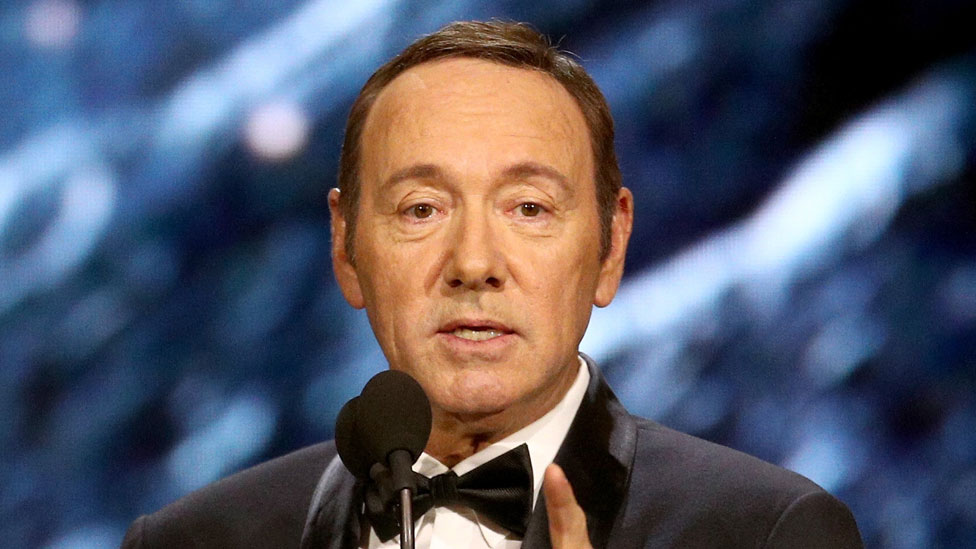
Kevin Spacey has said he is seeking treatment after facing allegations of sexual misconduct from a string of men.
A representative for the actor said he “is taking the time necessary to seek evaluation and treatment”.
They did not give any information about what kind of treatment he wants.
He is one of several Hollywood figures who have been accused of sexual misconduct. Dustin Hoffman has issued an apology while director Brett Ratner has been accused by six women.
A lawyer for Ratner, the director of the Rush Hour films and X-Men: The Last Stand, has “categorically” denied all of the accusations.
The allegations have been sparked by multiple women speaking out against the Hollywood mogul Harvey Weinstein, and a subsequent campaign encouraging victims to share their stories of sexual harassment under the #metoo hashtag.
So who has been accused of misconduct?
Image copyrightGetty Images
Kevin Spacey
New allegations have emerged from a number of men accusing Kevin Spacey of sexual misconduct.
US filmmaker Tony Montana claims he was groped by the actor in a Los Angeles bar in 2003. He says he was left with PTSD for six months after Spacey “forcefully” grabbed his crotch.
Incidents regarding Spacey are also alleged to have taken place in the UK while the two-time Oscar winner was the artistic director at the Old Vic in London between 2004 and 2015.
Mexican actor Roberto Cavazos, who acted in several plays at the theatre, claims Spacey “routinely preyed” on young male actors.
One man told the BBC about his experience of being invited to spend the weekend with Spacey in New York when he was a teenager in the 1980s.
Six women have accused Hollywood filmmaker Brett Ratner of sexual harassment or misconduct.
The women, including The Newsroom actress Olivia Munn, made the allegations in the Los Angeles Times.
Natasha Henstridge, who appeared in Species and The Whole Ten Yards, claimed she had been forced into a sex act with Ratner as a teenager.
The actress, now 43, was a 19-year-old model at the time she alleges Ratner stopped her from leaving a room at his New York apartment and then made her perform a sex act on him.
“He strong-armed me in a real way,” she told the LA Times. “He physically forced himself onto me.”
Ratner’s lawyer “categorically” denied all of the accusations on his behalf in response to the article.
Dustin Hoffman has been accused of sexually harassing an intern on the set of one of his films in 1985.
Anna Graham Hunter, a writer, says that when she was 17, the Oscar-winning actor groped her and made inappropriate comments about sex to her.
She told The Hollywood Reporter: “He was openly flirtatious, he grabbed my ass, he talked about sex to me and in front of me.”
Hoffman apologised, and said he was sorry if he “put her in an uncomfortable situation”.
In a statement to the magazine, Hoffman said: “I have the utmost respect for women and feel terrible that anything I might have done could have put her in an uncomfortable situation. I am sorry. It is not reflective of who I am.”
The BBC has contacted representatives of Dustin Hoffman for his response to these allegations.
Image copyrightAFP
Michael Oreskes
Senior editor Michael Oreskes has resigned following accusations he kissed female colleagues without their consent during business meetings.
The 63-year-old was asked to step down by the National Public Radio (NPR) network in response to the allegations. He has previously worked for the Associated Press and the New York Times.
One of the women said that while she met Mr Oreskes in the hope of getting a job with the New York Times, he suggested that they eat room service lunch in a hotel, before he unexpectedly kissed her and “slipped his tongue into her mouth”.
He has not commented publicly on the allegations, and journalists at NPR report that they have tried to contact him for comment, without success.