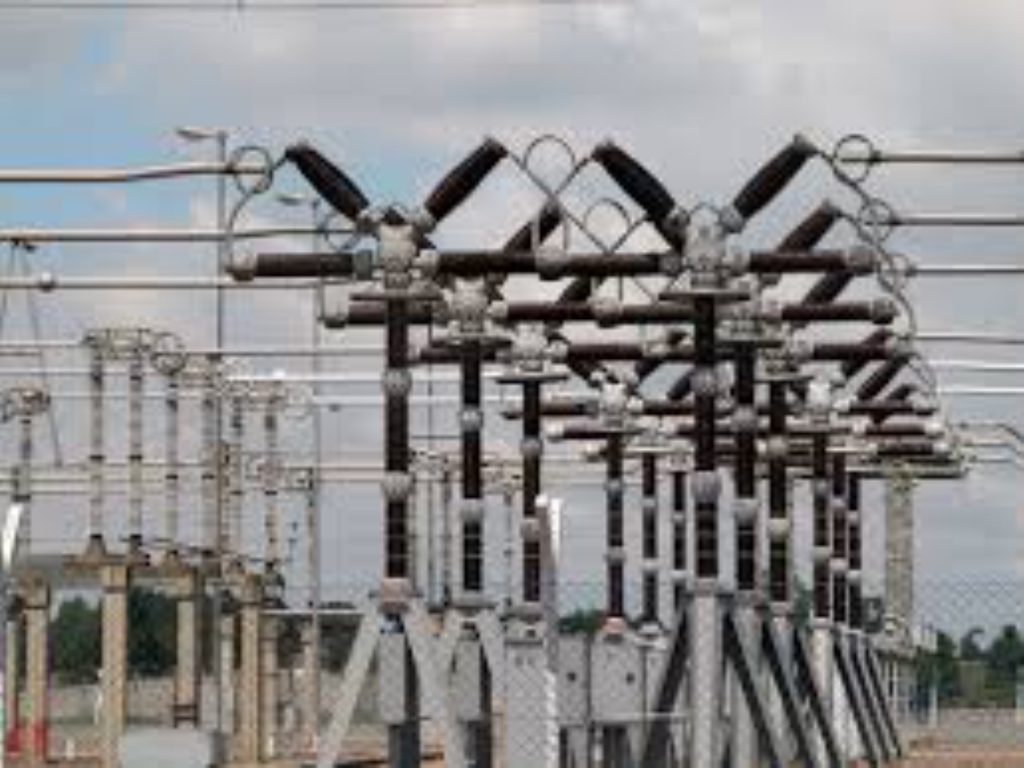
Lagos (Nigeria) — Some parts of Lagos, southwest Nigeria, will experience interruption of power supply beginning Friday, this will last a week time.
A statement by Head, Corporate Communications, of Ikeja Electric Plc, Felix Ofulue, says, the outage is to enable the company carry out rehabilitation of Maryland Injection Substation, as part of strategic efforts to improve power supply to consumers.
“The rehabilitation will affect power supply to Mende, Anthony, Maryland, Ikeja GRA, Shonibare Estate, parts of Ojota, Ketu, Ikosi, Demurin and environs,” it says.
He said this would involve the replacement of obsolete switch gear panels at the switch room.
“We solicit the understanding and cooperation of all our consumers that would be affected by this outage,” it said.
The statement further says, arrangements have been made to ensure completion of the rehabilitation on schedule.
It also says, regular update on situation would be made available to consumers through various channels of communications, especially to the Community Development Area chairmen and other stakeholders.
Kaduna (Nigeria)– Deputy Country Director of Save the Children, a Non-Governmental Organization in Nigeria, Tunde Ojei, has advocated creation of better space and funding for children at IDPs camps, especially those in northeast Nigeria, describing hostile environment as big challenge militating against brighter future for the Nigerian child.
“The future of the Nigerian child is very bright, but the environment if not checked could pose a serious challenge that impedes the realization of that dream.”
Ojei who was speaking at a two day training workshop for journalists and Civil Society Organizations in Kaduna, northwest Nigeria, called on government and other stakeholders to ensure proper funding of nutrition of children.
Save the Children, he explained, protects the right of the child with a view to ensuring that each child grows in an enabling environment that would help them showcase their potentials in all spheres of life.
The Deputy Country Director reaffirmed that the organization would continue to engage relevant agencies to ensure that children have access to education and live their dreams.
He noted that the NGO had done well in ensuring that children in the northeast of the country were protected while those in the various IDPs get good treatment and are well fed.
“Children in the country especially in the northeast need adequate care and protection in ensuring their up bringing and their educational pursuit,” he said.
The NGO, he explained, encourage initiatives that improve the lives of orphans and vulnerable children; support Primary Health Care facilities to new born babies and increase the efficiency and effectiveness of health workers in administering quality healthcare delivery in the State.
Newly Inducted Bell 412 Helicopter of the Nigerian Air Force
By Iliya Kure
Lagos (Nigeria) — Nigerian Air Force has inducted into its fleet a new ‘Bell 412 Helicopter’ handed over to it by the Federal Government earlier this year. The helicopter is one of the 2 kept in containers for about 2 years.
Prior to the induction, major systems of the 2 helicopters, and the surveillance cameras had to be sent to the USA and Canada for overhaul and repairs to restore their airworthiness. The second Bell 412 Helicopter is undergoing reactivation at the NAF’s 631 Aircraft Maintenance Depot (ACMD) Lagos.
Speaking at the induction ceremony, Chief of Air Staff, Air Marshal Sadique Abubakar, said, the new helicopter has a night vision capability, amongst other capabilities, adding that the NAF had already trained its pilots, engineers and technicians to operate and maintain the new helicopter.
He said, adequate arrangements had been made to ensure the availability of spares and Ground Support Equipment for the Bell 412 Helicopters.
According to him, the new helicopter would be deployed to the Northeast, as part of efforts to strengthen counterterrorism campaign.
Governor Abdullahi Ganduje of Kano, northern Nigeria
By Iliya Kure
Lagos (Nigeria) — Governor Abdullahi Umar Ganduje of Kano state, in northern Nigeria, has assented to the Kano State Health Trust Fund Law (KHETFUND).
The Law is meant to provide sustainable financing window to the health sector in the state, to be funded via a monthly 5% deduction of the total revenue generated from taxation and 1% monthly from total statutory allocation to the 44 LGAs of state.
The KHETFUND Bill received an overwhelming support from Assembly Members when they voted on it in July.
A Non-Governmental Organisation, Community Health and Research Initiative (CHR), estimates that despite Nigeria’s economic recession, the Fund will generate at least N2.5billion yearly to the Kano State health sector.
A statement by CHR says, the organisation “has led a successful, rigorous and back to back 10 months advocacy and technical support upon a formal written invitation by the Kano State Legislative Assembly to develop and pass the bill into law”.
The Statement signed by Asmau Ahmad, further says, “Governor Abdullahi Ganduje has expressed his passionate and final commitment to assent the law this week during his council meeting, at the end of a closed-door meeting that ended at the early hours of Monday 30th October 2017, precisely 3am, with his Commissioner of Health, Dr Kabir Ibrahim Getso and Dr Aminu Magashi Garba, the Chair, Board of Trustees of Community Health and Research Initiative (CHR)”.
Governor Ibrahim Dankwambo of Gombe State, northeast Nigeria
Hassan Dankwambo, Governor, Gombe State
By Ahmad Umar
Gombe (Nigeria) — Gombe State Government, northeast Nigeria is to spend over 8 million naira on procurement of anti-snake venom .
Governor Ibrahim Hassan Dankwambo stated this on Thursday at the fourth State Council on Health meeting organised by the state ministry of health in collaboration with international NGOs, Save the Children, MamaYe E4A, Society for Family Health, Marie Stopes Nigeria, Pact and Cihp held in Federal College of Education (T) Gombe on Thursday.
He said that the state government already has released the funds to the Snake Bite Treatment Center in Kaltungo for the procurement of the venom to cater for snake bite victims from within and out site the state as well as neighbouring countries..
Dankwambo disclosed that the Treatment Centre received an average of 10 victims per day on regular bases and 19 per day during peak periods.
“It is due to this population increase, that the state government pay priority to the health sector through construction and reconstruction of more hospitals and clinics, as well as renovating and equipping the existing ones”, he said.
“I am also aware, that today 2ndNovember 2017 is a day set aside by the global community to commemorate World Pneumonia Day. The essence of the celebration is to create awareness and educate people on the fact that child death from pneumonia is preventable
“Regrettably, pneumonia is responsible for the deaths of many children. I am therefore pleased to be part of this celebration of triumph over one of the diseases that cause high mortality
“I assure you of government commitment to reducing maternal mortality and morbidity to the barest minimum in the state and we would continue to pay our counterpart funds to ensure attainment of the sustainable Development Goals as enshrined by the United Nation”, he said
The Governor commended the state ministry of health and development partners for organising the meeting aimed to improved health care service delivery in accordance with best practices.
Yakubu Dogara, Speaker House of Representatives, Nigeria
By Joseph Edegbo
Kaduna (Nigeria)– Speaker, House of Representatives, Yakubu Dogara, has asked the Peoples Republic of China to open more opportunities for Nigeria to benefit from the bilateral trade agreement between the two countries.
Speaking when he received a delegation from Chinese Ministry of Foreign Affairs, led by Mr Ji Pieding in his office, Dogara said at the moment, Nigeria is barely getting economic benefits from the partnership between the two countries, while China, on the other hand, enjoys patronage from the government and people of Nigeria.
While acknowledging that both countries are not at par when it comes to production, the Speaker urged China to help Nigeria develop its market by bringing more of its production plants to the country.
“As representatives of the people, we must always point out the fact that the balance of trade between Nigeria and China is really, I don’t want to use the word skewed, but for want of better word, I will say it is tilted in favor of China and for obvious reasons. We can’t pretend to compete with China when it comes to production. We are just starting, we are building the foundation and the infrastructure that we need to be able to produce things we can export and earn foreign exchange but China has a dominant position when it comes to the issue of trade between China and Nigeria and we want that to be better.
“As we serve as consumers, we should be able to export some things to China. In my engagement with the Ambassador I told him that for those things that economics of scales determine Chinese businesses can make in Nigeria, we should encourage or open a corridor by which we can attract those businesses into Nigeria and there is huge market. Even if we are not exporting to any part of Africa, 180 million people is a market you will find very difficult to saturate with products.
“And I said if we start looking towards this, it is going to help our relationship move forward. China, of course, is very strong. In Africa, we speak with adages and proverbs, and we say a strong man doesn’t run alone. When he runs, he pulls others along. Anytime you see a strong man running alone, it is a sign of weakness.
Like they say in other places, together we are stronger and so, China should try to pull others alongside as they move forward and I hope Nigeria will be one of those countries China will pull along.”
The Speaker also informed the delegation that Nigeria has made far reaching changes towards sanitising its business environment and making it attractive to investors.
“Nigeria, with the elections in 2015, has been able to sanitise our business environment, we’ve cleaned up our statutes books; some of the laws that were major hindrances, we’ve eliminated them. I think even in the area of ease of doing business, Nigeria is doing very well because there is a presidential committee chaired by our vice president and they’ve taken a look at those bottlenecks, red-tapism and all those things that dragged us back when it came to business and they are being addressed and Nigeria has moved in the ranking of ease of doing business by almost 44 places and that is commendable.
“So the point I am trying to make is that for your business community, for your corporate citizens, there are places for them in Nigeria. Obviously, there are Chinese nationals involved in the mining sector which is very informal right now, it is not organised. We have them playing key roles in the energy sector as well as other sectors of the economy. You are already aware of the railway situation in Nigeria. “
Earlier, the head of the delegation of Chinese Foreign Affairs ministry
Mr Ji Pieding, expressed gratitude for the One China policy of the federal government, adding that China is ready to embrace African continent in general and Nigeria in particular for development.
Kaduna (Nigeria)– Speaker House of Representatives, Yakubu Dogara has commiserated with the national leader of the ruling All Progressives Congress, Senator Bola Ahmed Tinubu over the demise of his son Jide.
In a condolence message which was signed by Dogara himself expressed shock over the sad news of the sudden death of Jide Tinubu.
“The late Jide was a lawyer of high repute who cut his teeth in the maritime sector and was hardworking and enterprising.
“It is saddening that a father buries his son. I can only imagine your pain and grief at this time.
“I pray God almighty to grant you and your family the fortitude to bear the irreparable loss.”
Farmers and Fulani herdsmen crises linger as a chief problem to the development of agriculture among local farmers in Nigeria. Odimegwu Onwumere uncovers that as a result of this, hundreds of thousands of lives, billions of Naira worth of property and farm produce are lost to the clashes, and the authorities seem not stoical in applying lasting restrictive measures against the nuisance
“When we talk to the Fulani herdsmen over the gratuitous destruction of our crops by their cows, they would point guns and arrows at us. And this is why we hardly question them in our farms, because we do not want to die.”
Those were the words of Mrs. Nkechinyere Nwosu, the wife of the Ekwu I of Umuekwune-Ohoro, Igbo-Etche, Etche Local Government Area (LGA) of Rivers State, while leading the women of the community in a peaceful protest recently, to the palace of the monarch to register their plight in the hands of Fulani herdsmen and correspondingly call on Governor Nyesom Wike of the State, not to tarry in saving them and their crops.
Known as nomads from the northern part of Nigeria traversing towns and villages in the southern part of the county with their cattle for the purpose of grazing, some school of thoughts were of the scrutiny that the Fulani herdsmen resorted to violence, when rustlers started making a career of rustling their cows. Investigations by this writer, conversely, showed that the incessant reports by the herdsmen to the authorities in the hands of rustlers, which were attended to with wave of the back hand, pushed them to be carrying arms, not minding that illegal possession of arms is outlawed in Nigeria.
According to a source that would prefer to remain anonymous, “The herdsmen have reportedly encountered cattle rustlers as they move from place to place and made complaints to the relevant authorities who fail to investigate the issue, hence their purported reason for carrying arms about.”
The source further tinted, “During their journey, they frequently trespass farmlands owned by locals in their host communities, destroying crops and valuables. Attempts by farmers to prevent them from causing havoc are met with stiff and violent resistance.
“Most times, the farmers are overpowered, injured and killed, while others are evicted from their homes. Sometimes, the herdsmen are accused of taking these opportunities to steal, rape, raze houses and kill innocent members of the communities they pass through.”
Against this backdrop, a former Military Head of State, Abdulsalami Abubakar, at a forum organised by Search for Common Ground, Nigeria, in collaboration with Abdulsalami Abubakar Institute for Peace and Sustainable Development on October 30, 2017, said that Nigeria loses 13.7 billion dollars annually as a result of farmers-herdsmen conflicts in Benue, Kaduna, Nassarawa and Plateau States.
Farmers And Their Ordeals
While some women and men farmers who have encountered Fulani herdsmen in Igbo-Etche have stories of alleged rape, killing, destruction of their crops meted out to them to tell, the senator representing Nasarawa West Constituency in the National Assembly, Senator Abdullahi Adamu equally noted in a public presentation, saying that disputes between famers and herdsmen typically arise from disagreement over the use of possessions such as farmland, grazing areas and water.
A former Secretary to the Government of the Federation (SGF), Chief Olu Falae experienced this “disagreement over the use of possessions” when he was abducted by some Fulani herdsmen during his 77th Birthday on September 21, 2015, at his Ilado farm in Akure North Local Government Area of Ondo State. Sources said that until the conviction of the abductors in April 2017 in the persons of Abubakar Auta, Bello Jannu, Umaru Ibrahim, Masahudu Muhammed, Idris Lawal and two others, Falae was released after paying N5m ransom four days after his abduction. Farmers in Igbo-Etche nonetheless believe that the herdsmen have ulterior motive, because they prefer their cows feeding on crops than grass. This, however, has led to incessant complaints by the villagers.
Cry Of Farmers Across The Country
Across the country, farmers have been lamenting the deadly stumbles-upon with Fulani herdsmen in their farms. Many of the farmers weep about the sorrowful attacks the Fulani herdsmen have made as a career against them.
For example, in Ogun and Oyo communities, especially in Yewa North Local Government Area of Ogun State, there has been heightened tension for over 12 years, when herdsmen numbering nearly one thousand started using the Eggua boundary every December to April for grazing.
In most cases, the herdsmen authoritatively venture into homes of their host communities and open the barns to feed the cows with maize, yam, cassava and others found in the barns. Like the women of Igbo-Etche, if the inhabitants of Ogun and Oyo communities ask questions, the herdsmen would pull out their guns and cause troubles.
School Farms Not Left Out
Then-again, just in September 2017, the Vice Chancellor, Adekunle Ajasin University, Akungba Akoko, Ondo State, Prof. Igbekele Ajibefun lamented what he described as illegal moves by the Fulani herdsmen in grazing their cattle in the institution’s farm sites.
Ajibefun disclosed this while speaking at a security forum organized by the “Ondo State Police Command to interact with stakeholders including security agencies, heads of institutions, royal fathers, religious leaders, artisans, students, farmers, cattle rearers, hunters and other concerned persons and groups, in Akoko South West Local Government area of the State.”
In his words, “We are aware that the issue of security is very complex. And because we don’t want to make it more complex, we have been trying to manage our experience with Fulani herdsmen each time they intrude on our campus.
“It is a very bad situation the way they invade our farm and destroy the place. I would like to appeal to our security agencies to come to the aid of the university by finding a lasting solution to the problem.”
Heads Roll For Cows To Feed
Reason for this is not farfetched: In some views, the Fulani herdsmen when interviewed have said that they’d no option than making sure that their cows feed.
The outcome of this is in the statistics provided by the Institute for Economics and Peace, saying, “1,229 people were killed in 2014, up from 63 in 2013 and Benue State seems to be the hardest hit in the farmers and Fulani herdsmen conflicts in recent times.
“Barely five days to the end of Governor Gabriel Suswam’s administration in May 2015, over 100 farmers and their family members were reportedly massacred in villages and refugee camps located in the Ukura, Per, Gafa and Tse-Gusa local government areas of the state.”
It was further noted that in July 2015, “Suspected herdsmen attacked Adeke, a community on the outskirts of the state capital, Makurdi. Last December, six persons were killed at Idele village in the Oju local government area. A reprisal attack by youths in the community saw three Fulani herdsmen killed and beheaded.”
Counting Of Damages Continues
In some localities like Asa, Agon-Ojodun, Ayetoro, Ogunpa, Kodera and Igbonla, the locals said that they have been sacked in many occasions by the herdsmen when they resisted them feeding their cows with their farm produce.
From Ayete, a lethargic town in Ibarapa North Local Government Area, Oyo State, to the 10 local government areas in Oke-Ogun, the story is the same. In many occasions, the authorities’ interventions have yielded little or no result.
The House of Representatives had encouraged all stakeholders to an open hearing in order to tackle what it once illustrated as “incessant clashes between herdsmen, farmers and their host communities’’.
However, explorations revealed that just in February 2016, “40 more people were killed (as a result of a clash between herdsmen and farmers in Benue State); about 2,000 were displaced and not less than 100 were seriously injured.”
The source added, “Most recently, more than 92 Nigerians were massacred by suspected Fulani herdsmen in Benue and Niger states. Also, before this time, there have been reported attacks by the Fulani Herdsmen in southern states of the country, including Enugu, Ekiti and Ondo States.”
Calling Herdsmen To Leave
There is a belief that some farmers in some communities across the country have said that they do not want the herdsmen in their communities. This, though, has generated some rebuttals suggesting that since every Nigerian has a right to reside in any part of the country without prejudice, the call against Fulani herdsmen is uncalled for.
According to a source that would not want the name mentioned, “The solution is not for the herdsmen to leave the communities. There are a lot of political intrigues attached to the development and some people create mischief out of it.”
The source enthused that some elements want to create an impression that the clashes between herdsmen and farmers are prevalent in the present administration forgetting that from time immemorial, before democracy, herdsmen and farmers have been fighting.
Among All Odds
Some communities and their traditional rulers are not sleeping on their oars in making sure that agriculture is boosted in the country, no matter the over $13.7b that have been reported lost to farmers and herdsmen conflicts yearly.
The Otaru of Auchi, Alhaji Aliru H. Momoh, Etsako West Local Government Area of Edo, even with the fears of farmers and herdsmen clashes, braced up on Sunday, June 18 2017, to advise all the 25 village heads in the kingdom to influence their wards, to embrace farming. In the highlight of this, Momoh motivated that his traditional council had donated 5,000 hectares of land: Being their support to the federal government agricultural project, in order to revolutionise agriculture.
According to the monarch, “We have allocated some hectares of land to the Federal Government for the planting of cashew, cassava, maize and groundnut, and we are expecting them to come and inspect the land.’’
Checks revealed that over 200 women have been encouraged in Auchi to go back to agriculture in the tone of N5 million. According to Momoh, “Because of the Fulani herdsmen issue, we gave out some money to farmers to ease them of the threat of Fulani herdsmen who threaten them in the farm.”
Dissenters OverRanches
In making sure that the stalemate between farmers and herdsmen are resolved across the country, the Minister of Agriculture and Rural Development Audu Ogbeh had assured that some States, which included Plateau, Kaduna, Kano, Gombe, Katsina, Taraba, Niger, Adamawa , Jigawa, Sokoto and the FCT, among others, had provided hectares of land for the business of ranches to control clashes between farmers and herdsmen in their States.
According to the Honourable Minister, “The way forward is to strive to attain self-sufficiency in animal protein by checking constant exposure of our cows to long distance trekking in search of pasture which affects their productivity.
“This administration has therefore set out to establish ranches to be planted with high quality improved tropical grass and legume species. We shall provide irrigation for all year commercial fodder production to enhance settlement of pastoralist and ensure cattle, sheep and goat improvement through an expanded breeding programme that would use artificial insemination.’’
But Dr Mohammed Ahmed, a former Chief Executive Officer of the National Veterinary Research Institute, Vom, Plateau, was afraid that a typical Fulani herdsman wouldn’t accept the initiative.
According to him, “Ranches are capital intensive; government must ensure that there is enough water and all-year-round grass for grazing. The herdsmen must also be encouraged to cut grass in the rainy season and store same for use during the dry season in addition to being educated on how to manage limited space.
“I am not sure that the typical Fulani man in Nigeria will happily embrace a ranch, but with the current realities, settling them in one place is the best way out, especially if they can have what they want where they are settled.’’
While government has taken a move for ranches, Alhaji Sale Bayeri, the spokesman of Miyetti Allah Cattle Breeders’ Association of Nigeria (MACBAN) in Plateau, the sunshade body of the Fulani herdsmen, said, “The herdsmen will not accept ranches; we shall prefer to explore our traditional grazing routes/reserves.”
That was contained in a media chat last year with MACBAN’s National Legal Adviser, Mohammed Bello Tukur, saying, “stakeholders should rather demarcate routes and cattle resting points with support from technical and financial partners.”
According to the source, “MACBAN rejects the setting up of ranches and supports the establishment of grazing reserves; we want government to create a ministry of livestock development to ease the establishment of the reserves.’’
Local Farmers Must Be Included In Ranches
Some farmers nevertheless said that if government wants the scheme to succeed, local farmers must be included.
In the views of Sen. Jerry Useini representing Plateau South, “We just woke up and heard that cattle ranches will be established in parts of Plateau. Such decision cannot be popular because no one was consulted and neither was any wide enlightenment carried out.’’
This was even as Governor Simon Lalong of Plateau said, “No human policy or plan can be perfect, but we want those with reservations about the ranches to suggest something better. It is not enough to just oppose what is being worked out since what we are doing is in the interest of peace.’’
According to Mr. Timothy Golu representing Pankshin/Kanke/Kanam in the House of Representatives, “Ranches are far better than grazing reserves if we are to check incessant clashes between farmers and herdsmen, but we must be able to listen to what the ordinary farmers feel about what is being worked out.
“We must carry the farmers and traditional rulers along in carving out the affected areas. We must carefully work out and ensure payment of compensations; otherwise we shall only be breeding another recipe for even worse crises.”
Against this influence, the Minister of Interior, retired Lt.-Gen. Abdulrahman Dambazau was of the view that herdsmen and farmers’ gridlocks are a threat to national peace.
According to him, “The effect of this conflict has been loss of life, dislocation of people and communities and the disruption of socio economic activity. Even more importantly, it is a threat to the integrity and peaceful co-existence of the Nigerian state. The objective, therefore, is to identify any laws and regulations that impact on the conflict; this will in turn inform the design of a definitive policy intervention.”
On the contrary, the authorities have done little or nothing to arrest the farmers and herdsmen standoffs. Once more, the standoffs have infused fears into the women and men farmers in the areas to attend to their farms, thereby causing a setback to their agricultural productivities. This is due to unyielding peace agreements that some states have signed in respect to farmers and Fulani herdsmen conflicts. There’re also the rejected cattle ranches proposed by the Major General Muhammadu Buhari government.
However, for Governor Samuel Ortom of Benue, “The ranches remain the generally acceptable practice and will serve as the permanent solution to the unending clashes between the herdsmen and farmers.’’