Image copyrightEPAImage caption Ebola claimed at least 10,000 lives across West Africa
The Red Cross has confirmed that more than $5m (£3.8m) of aid money was lost to fraud and corruption during the Ebola epidemic in West Africa.
Auditors found overpriced supplies, salaries for non-existent aid workers and fake customs bills.
The disease, which raged between 2014 and 2016, claimed at least 10,000 lives.
It required a massive humanitarian operation costing hundreds of millions of dollars to bring it under control.
As Ebola spread across Liberia, Sierra Leone and Guinea, the Red Cross Federation in Geneva was dispersing cash donations to the national Red Cross societies in each of those countries – altogether a sum of about $100m.
An investigation by Red Cross auditors has revealed that in Liberia $2.7m disappeared in fraudulently overpriced supplies, or in salaries for non-existent aid workers.
In Sierra Leone, Red Cross staff apparently colluded with local bank workers to skim off over $2m while in Guinea, where investigations are ongoing, around $1m disappeared in fake customs bills.
The Red Cross told the BBC’s Imogen Foulkes in Geneva that it is deeply sorry for the losses.
The organisation adds that it has introduced stricter financial rules, and promised to hold any Red Cross staff involved to account.
Media playback is unsupported on your device
Media captionTulip Mazumdar’s video diary of her day with the burial team
Fraud involving donor money is every aid agency’s nightmare, our correspondent says.
The Red Cross is the world’s best-known humanitarian organisation, and this revelation will be damaging, she adds.
Note: This story is auto-generated from ‘BBC News’ syndicated feed and has not been edited by Africa Prime News staff.
Image copyrightGetty ImagesImage caption Turnout in the re-run vote was just 39%
A controversial bill amending Kenya’s election law has come into effect, which makes it more difficult for the Supreme Court to annul elections.
Uhuru Kenyatta won last week’s re-run of the election, after the Supreme Court declared August’s poll invalid.
President Kenyatta said on Monday that he did not agree with the new election law, however he did not send it back to parliament.
Opposition leader Raila Odinga pulled out of the re-run, calling it a “sham”.
The Supreme Court said there had been “irregularities and illegalities” in the original poll, which was also won by Mr Kenyatta.
Mr Odinga said the necessary reforms had not been put in place before the re-run, which was boycotted by his supporters.
Mr Kenyatta won 98% of the vote in the re-run, with turnout at just under 39% – less than half that recorded in August’s vote, according to the election commission.
Image copyrightGetty ImagesImage caption Kenya’s President-elect Uhuru Kenyatta (L) with his running mate William Ruto hold up their certificates of election
Among the changes in the new law is a clause forbidding any court from invalidating election results for non-compliance with any laws, if this “did not substantially affect the result of the election”.
When taking the unprecedented step to annul the August election, the Supreme Court did not make any mention of whether the overall outcome had been affected, but it said the correct procedures had not been followed.
Another change makes it possible for the head of the election commission – the IEBC – to be replaced by a deputy or another member of the commission if the position becomes vacant.
Just days before the re-run, IEBC chairperson Wafula Chebukati said he could not guarantee a credible vote, and criticised political parties for interference in the process.
A senior member of the IEBC also fled to the US in the days before the re-run, saying she had received death threats. Roselyn Akombe claimed the IEBC was under political “siege”.
The amendments have been condemned by the opposition as well as Kenya’s foreign allies.
Because Mr Kenyatta did not send the bill back to parliament within two weeks, it automatically became law.
Note: This story is auto-generated from ‘BBC News’ syndicated feed and has not been edited by Africa Prime News staff.
South African prosecutors are appealing for a longer sentence for Olympic athlete Oscar Pistorius for murdering girlfriend Reeva Steenkamp.
They told the Supreme Court of Appeal the six-year sentence was “shockingly light” and he should get 15 years.
Defence lawyers say the sentence handed down by a lower court is appropriate.
Pistorius claimed he shot dead Ms Steenkamp on Valentine’s Day in 2013 after mistaking her for a burglar at his home in the capital Pretoria.
The lower court justified deviating from the prescribed 15-year sentence by saying mitigating circumstances such as rehabilitation and remorse outweighed aggravating factors such as his failure to fire a warning shot.
But prosecutor Andrea Johnson said the sentence did not match the gravity of the crime.
Pistorius, 30, is not in the court in Bloemfontein. He is being held at the Atteridgeville Correctional Centre prison in Pretoria.
He was initially given a five-year term for manslaughter in 2014, but was found guilty of murder on appeal in 2015.
Image copyrightGetty ImagesImage caption Ms Steenkamp was a model and celebrity
Pistorius shot Reeva Steenkamp four times through a locked toilet door in February 2013.
Previously, the six-time Paralympic gold medallist had made history by becoming the first amputee sprinter to compete at the Olympics, in 2012 in London, running on prosthetic “blades”.
He had his legs amputated below the knee as a baby.
Rise and fall of Oscar Pistorius
Media playback is unsupported on your device
Media captionPistorius becomes the first amputee sprinter to compete at the Olympics
August 2012: Competes in London Olympics and Paralympics, where he won a gold medal
February 2013: Shoots dead his girlfriend Reeva Steenkamp
March 2014: Trial begins
September 2014: Judge finds Pistorius guilty of culpable homicide
October 2014: Begins five-year sentence
October 2015: Transferred to house arrest
December 2015: Appeal court changes verdict to murder
July 2016: Sentenced to six years in jail for murder
Note: This story is auto-generated from ‘BBC News’ syndicated feed and has not been edited by Africa Prime News staff.
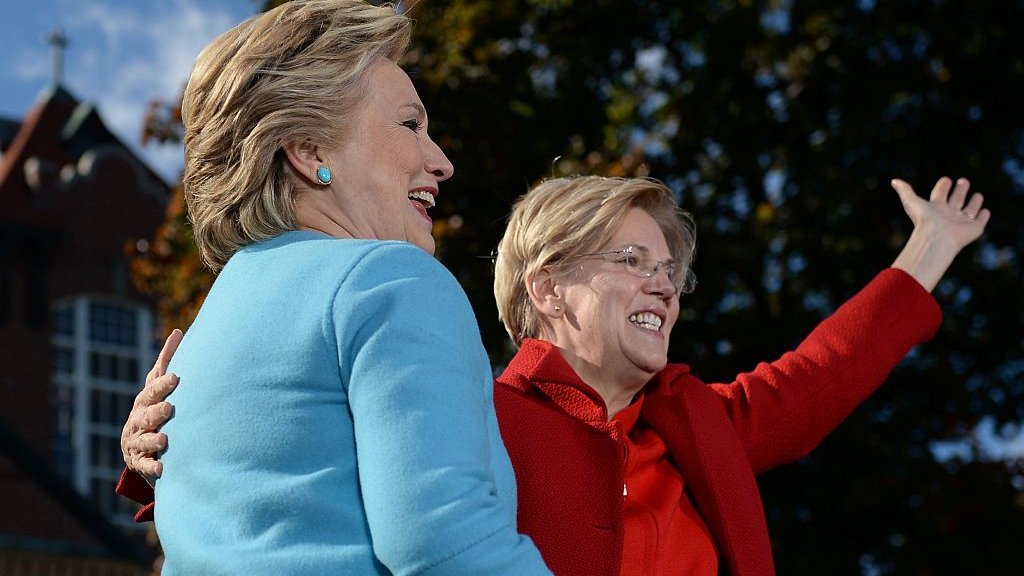
Image copyrightGetty ImagesImage caption Elizabeth Warren was a strong supporter of Clinton during her campaign
US President Donald Trump has called for an investigation after a Hillary Clinton supporter said the Democratic party “rigged” its primary for her.
CNN asked Senator Elizabeth Warren if Mrs Clinton’s contest against Democratic rival Bernie Sanders was rigged, and she said: “Yes.”
Another Democratic official writes in a new book about the party’s “unethical” agreement with the Clinton campaign.
President Trump said the American public “deserves” an inquiry.
Ms Warren, a progressive senator from Massachusetts who campaigned for Mrs Clinton, was reacting to allegations by former Democratic National Committee (DNC) chairwoman Donna Brazile.
Ms Brazile writes in a new book that the cash-starved DNC signed a joint fundraising agreement with the Clinton campaign in August 2015, four months after the former secretary of state launched her candidacy.
Ms Brazile writes that Mrs Clinton’s “campaign had the DNC on life support, giving it money every month to meet its basic expenses”.
Excerpts from her book – Hacks: The Inside Story of the Break-ins and Breakdowns that Put Donald Trump in the White House – were released by Politico magazine.
The DNC was meant to be neutral in the contest between Mrs Clinton and her Democratic challenger Bernie Sanders, a Vermont senator.
But supporters of Mr Sanders have long claimed the party showed preference to Mrs Clinton.
Ms Brazile says the deal was “not a criminal act”, but “compromised the party’s integrity”.
Media playback is unsupported on your device
Media captionClinton laments Comey letter in explaining her loss
However, Mrs Clinton’s defenders have pointed out the Sanders campaign signed its own joint fundraising agreement with the DNC.
Ms Warren, who has been touted as a possible 2020 presidential contender, nevertheless called the Clinton revelations “a real problem” for the party.
“But what we’ve got to do as Democrats now, is we’ve got to hold this party accountable,” she said.
Congressman Keith Ellison – who backed Mr Sanders and is now the deputy chairman of the DNC – said in a statement “it is our responsibility to acknowledge that millions of Americans still feel hurt and betrayed by the events of the 2016 presidential primary”.
“We can’t allow this idea to persist that any candidate has an inside track.”
Image copyrightGetty ImagesImage caption Donna Brazile (centre) says the deal was “not a criminal act,” but “compromised the party’s integrity”
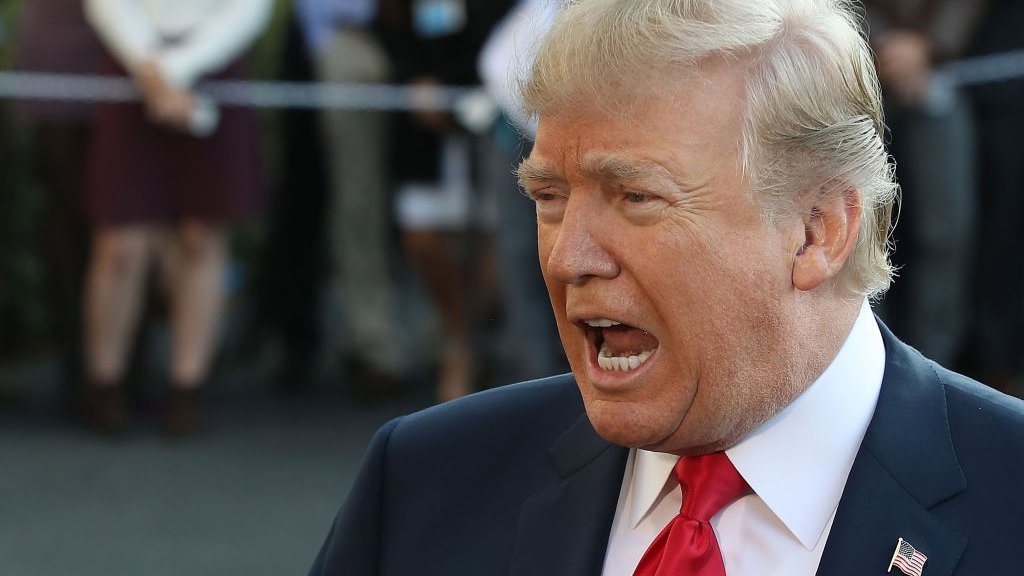
“She basically bought the DNC and stole the election from Bernie,” Mr Trump told reporters before departing on a trip to several Asian countries.
He tweeted: “Pocahontas just stated that the Democrats, lead [sic] by the legendary Crooked Hillary Clinton, rigged the Primaries! Lets go FBI & Justice Dept.”
Mr Trump calls Ms Warren “Pocahontas” because political rivals accused her in 2012 of claiming Native American ancestry to gain an unfair advantage when applying for jobs at Harvard Law School, without proof of such lineage.
Her predecessor at the DNC, Debbie Wasserman Schultz, resigned during the election after her leaked emails appeared to show a co-ordinated effort to aid Mrs Clinton’s campaign.
Mr Trump is himself under scrutiny in a Justice Department investigation into whether his campaign aides colluded with Russians in an effort to sway last year’s election.
Note: This story is auto-generated from BBC syndicated feed and has not been edited by AFRICA PRIME NEWS
Media captionTrump to IS: ‘We hit them 10 times harder’
President Donald Trump has said the US is hitting so-called Islamic State “10 times harder” in retaliation for the New York truck attack on Halloween.
“Every time they hit us, we know it’s Isis, we hit them like you folks won’t believe,” Mr Trump told reporters at the White House.
US military figures appear to show no major change in strikes against the militants’ strongholds.
The so-called Islamic State has claimed credit for the Manhattan rampage.
“What we’re doing is every time we are attacked from this point forward, and it took place yesterday, we are hitting them 10 times harder,” Mr Trump told reporters on Friday before departing on a 12-day tour of five different Asian nations.
Media captionReality Check: Who are Trump’s mystery ’23 people’?
“So when we have an animal do an attack like he did the other day, on the west side of Manhattan, we are hitting them 10 times harder.”
On Friday, the Pentagon announced that it had just carried out two airstrikes against IS militants in northeastern Somalia. It is unclear if the strikes are related to the attack in New York, which was allegedly carried out by a man from Uzbekistan.
The BBC has asked the Pentagon for a comment.
What does the US military say?
Mr Trump’s claim was difficult to immediately verify, but daily strike figures released by US Central Command – which oversees the mission against IS in Syria and Iraq – showed no significant change since the attack on 31 October.
According to Central Command, 13 strikes were launched against IS on 31 October, the same number launched on Thursday – two days after the attack.
However, the figures provided by Central Command fail to show the amount or intensity of the bombs used, or how those weapons were launched.
“For example, a single aircraft delivering a single weapon against a lone ISIS vehicle is one strike, but so is multiple aircraft delivering dozens of weapons against a group of ISIS-held buildings”, says a Central Command news release.
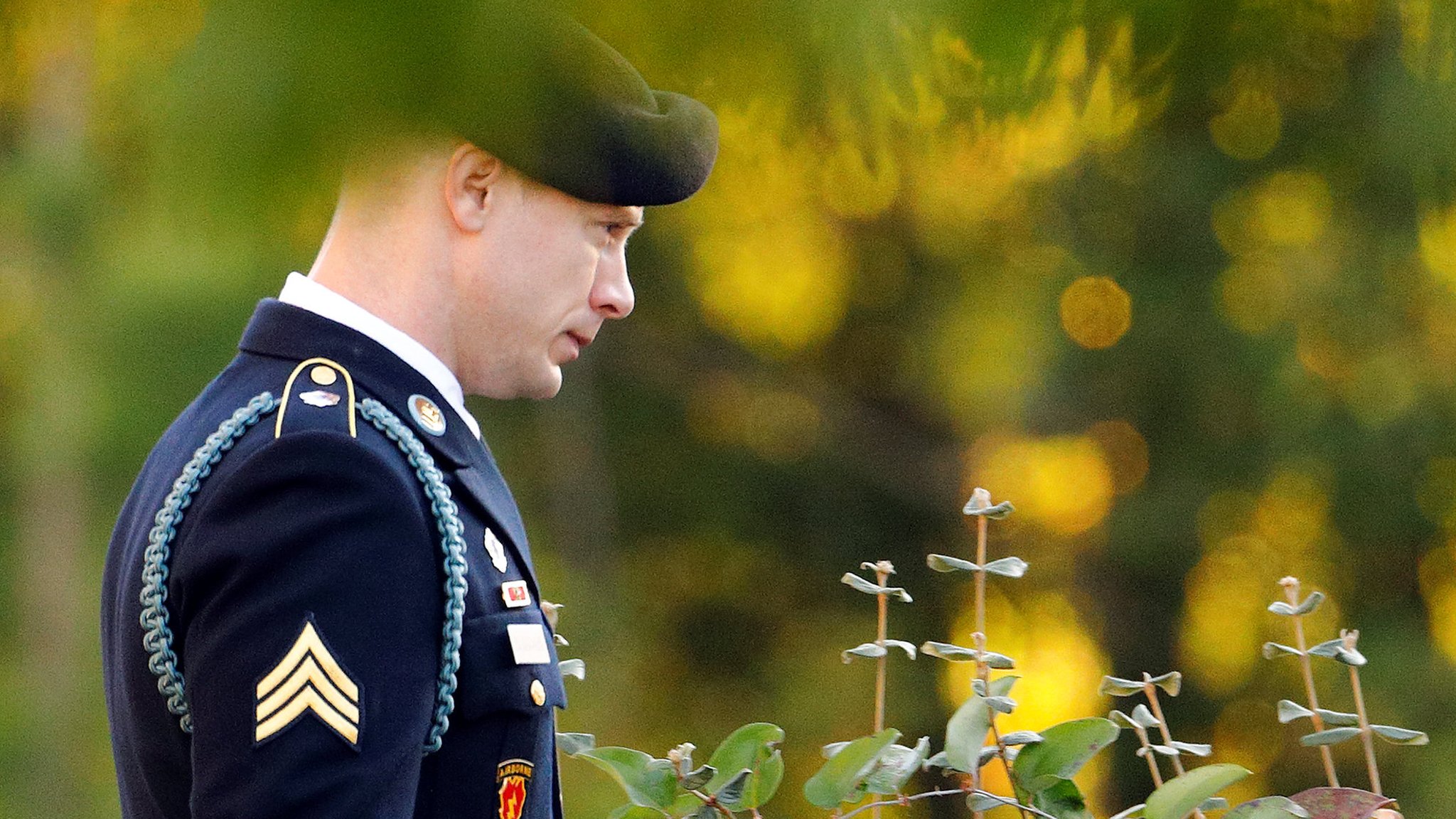
But Captain Nina Banks, for the defence, said that when he deserted Bergdahl had not yet been diagnosed with schizotypal personality disorder, which includes grandiose thinking.
The soldier said he had walked away from his outpost in Paktika province to report problems in his unit.
On Monday, Bergdahl took the stand to apologise to the troops who were wounded in the search for him.
Image copyrightReutersImage caption Shannon Allen’s husband was shot in the head in the search for Bergdahl
“I made a horrible mistake,” he said in the courtroom at Fort Bragg, North Carolina. “Saying I’m sorry is not enough.”
Master Sergeant Mark Allen was shot in the head during a July 2009 mission to find Bergdahl.
His wife, Shannon Allen, was a prosecution witness this week, describing the impact of her husband’s debilitating brain injury.
“Instead of being his wife, I’m his caregiver,” she said.
“Which doesn’t mean I love him any less, but it’s a very different dynamic.
“We can’t even hold hands anymore without me prying open his hand and putting mine in.”
Bergdahl testified that his Taliban captors had locked him in a cage after he briefly escaped.
He said he received little food, water or sleep and was forced to watch beheading videos.
Bergdahl was freed in a politically contentious 2014 Taliban prisoner swap brokered by former President Barack Obama’s administration.
US President Donald Trump weighed in on the sentence on Twitter, calling it a “total disgrace”.
Mr Trump has repeatedly denounced Bergdahl as “a traitor” and criticised the Obama-era prison exchange.
The judge, Army Col Jeffery R Nance, considered the president’s remarks as a mitigating factor in sentencing Bergdahl, whose lawyers argued he could not receive a fair trial because of the comments.
Note: This story is auto-generated from BBC syndicated feed and has not been edited by AFRICA PRIME NEWS
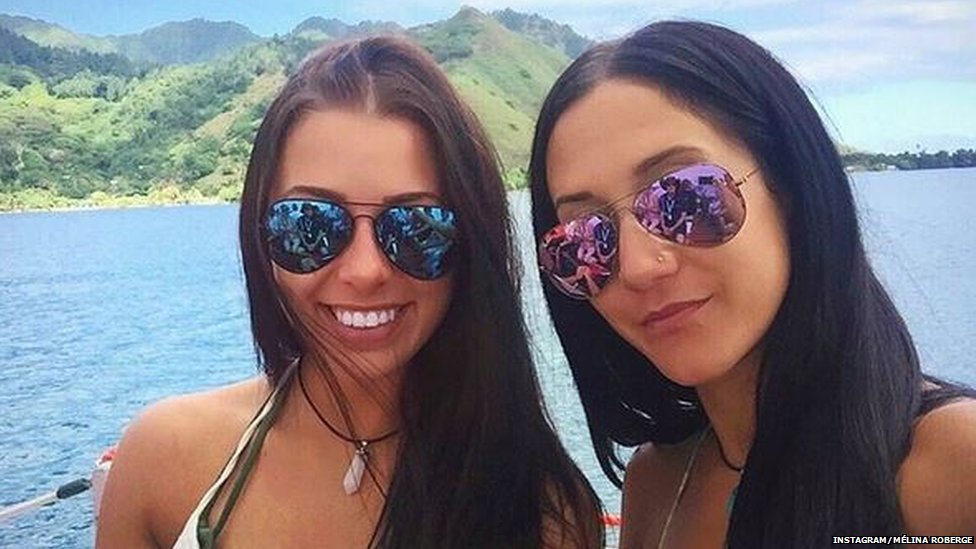
Image copyrightInstagram/Mélina RobergeImage caption Melina Roberge (left) and Isabelle Lagace before they were arrested
A Canadian woman who pleaded guilty to smuggling cocaine into Australia has been jailed for seven and a half years.
Isabelle Lagacé, 29, of Quebec, was facing a life sentence. Two other Canadians have also been charged.
Australian police dogs discovered C$20m ($16m; £12m) of cocaine in their cabins after the cruise ship they were on docked in Sydney on 29 August 2016.
Lagacé’s cabin mate, Melina Roberge, 22, claims she did not know about the drugs and is also facing trial.
Police found 35 kg (77 lbs) of cocaine in a suitcase in the cabin shared by Ms Roberge and Lagacé. They found an additional 60 kg in the room of Andre Tamine, a 63-year-old from Quebec.
It is not known if or how the girls knew him. Mr Tamine has pleaded not guilty and is also on trial.
According to Australian Border Force commander Tim Fitzgerald, the bust was the largest drug seizure Australia has ever had on a boat or plane.
“It pains me to know my defining moments of womanhood will be spent in prison halfway around the world,” she said.
The women from Quebec had boarded the luxury cruise ship MS Sea Princess in Southampton, England, two months earlier, and regularly posted photos of their travels on social media.
Note: This story is auto-generated from BBC syndicated feed and has not been edited by AFRICA PRIME NEWS
“I was pregnant through IVF already and at about six, seven weeks they found another embryo and they labelled it that the one embryo that they transferred split and turned into twins.
“My body naturally still ovulated while I was already pregnant – that’s very rare – no one really knows about it but obviously, with my situation, more people are learning about it.
“It’s called superfetation – it has a medical term to it, so why this process is not explained to surrogates, I don’t know. They don’t give this as a possibility.”
‘We definitely want our son’
Mrs Allen said she did not see the babies when they were born last December, but the other mother then texted her pictures of the babies when they were a few weeks old.
The intended mother also said she was waiting for Mrs Allen to feel well before revealing that she had doubts about the origin of one of the babies.
“I immediately freaked out and I asked my case worker, ‘what’s going on, how can this be, what’s happened, how did this happen?’ and she didn’t have any answers for me,” Mrs Allen told Newsday.
“So she [the case worker] said the next thing we need to do is to get me to have a DNA test.”
The intended mother also took the baby for a DNA test and within a fortnight asked Mrs Allen for a Skype call.
“That’s when she announced that the results indicated that I was his genetic mother,” Mrs Allen said.
“During the Skype call she did suggest that we could give him up for adoption and they already had a couple thinking about adopting him.
“At this point we had no idea what to do, so by the end of the call we told her we were going to talk about it, because we needed to figure out how we’re going to get ready for a baby literally overnight.”
However, the next day Mrs Allen told the woman: “We definitely want our son.”
Not on the birth certificate
But Mrs Allen and her husband ran into difficulties because – legally – they were not the parents.
They were told that because the intended mother signed the baby’s birth certificate, she was his legal mother and then if she wanted to give him up for adoption, she could
“I’m not on his birth certificate but I am his genetic mother, my husband is his genetic father and we have that proof through DNA,” said Mrs Allen, who added she and her husband were also asked to pay back part of the fee to the couple because they had paid her to carry more than one child.
They had also incurred fees for a lawyer they had hired to help them get custody of their son.
The Allens were finally reunited with their baby boy, who is now 10 months old.
When she met her son, Mrs Allen said she was a nervous wreck.
“When she [the case worker] pulled him out of her car and walked towards me, I just snatched him from her and said ‘give me my baby’ and I was just kissing him and trying to look at his face for the first time.
“I sat in the back seat with him so I could see him and talk to him and stuff.”
Note: This story is auto-generated from BBC syndicated feed and has not been edited by AFRICA PRIME NEWS

 Image copyright EPA