Image copyrightEPAImage caption Ford recently appeared in Bladerunner 2049
Film star Harrison Ford has been praised for rescuing a woman whose car rolled off a motorway and hit a tree in California.
The star was in Santa Paula, north of Los Angeles, with a friend when they heard the crash and went to assist.
Local police officer Matt Alonzo said: “He acted as a good Samaritan, just like everybody else, and tried to help before emergency services arrived.”
Ford and others helped the female driver out of the vehicle he said.
The woman, who was the only occupant of the saloon car, escaped with minor injuries, authorities told local newspaper Ventura County Star.
‘Lost control’
According to the California Highway Patrol (CHP), the 63-year-old was driving eastbound in the fast lane of Highway 126 at about 10.55am local time when, for unknown reasons, her car drifted left into the central reservation.
Officer Tom Kirkland, a spokesman for the CHP, said that when the woman put on the brakes, she lost control of the car and it swerved right across all the eastbound lanes and down an embankment.
Ford checked the woman was all right before leaving. He was not a witness to the crash and didn’t provide any statements, officer Kirkland said.
The officer added that Santa Paula police and the local fire brigade also attended the scene.
Follow us on Facebook, on Twitter @BBCNewsEnts, or on Instagram at bbcnewsents. If you have a story suggestion email entertainment.news@bbc.co.uk.
Note: This story is auto-generated from BBC syndicated feed and has not been edited by AFRICA PRIME NEWS
Ghana–The Gender Ministry is set to launch a new programme to demonstrate its commitment to putting children first by stopping all abuses against children in Ghana.
A press statement in commemoration of World Children’s Day, the Minister Otiko Afisa Djaba said, “it is not good enough to pay lip service to the protection and well-being of our children.”
The Child Protection Social Drive in Ghana will be launched on the theme: “Ghanaians Rallying Against Abuse of Children”.
“Indeed children are our loved ones and we must treasure and invest in them by developing a holistic approach to understanding them and change our attitudes in how we perceive, nurture and involve them.”
She believes that Ghana 60 years on must have a total paradigm shift to appreciate children as human beings and not as charlatans, as co-owners, shareholders and key stakeholders of their own development and as partners in community, regional and nation-building.
According to her, “the Ministry is currently through the Department of Children has begun a process of reviewing laws which include Development of shelters, Human Trafficking Secretariat, Human Trafficking Fund, Prosecution of offenders, the Children’s Act, 1998 (Act 560) the Juvenile Justice Act, 2003 (Act 653), the child and family welfare policy, the FCUBE, National Strategic Framework for Ending Child Marriage, and other related laws which will deter people from perpetuating violence against children.”
Read her statement below:
CELEBRATION OF UNIVERSAL CHILDREN’S DAY 2017
The Ministry of Gender, Children and Social Protection wishes to congratulate all our children to mark the anniversary of the celebration of the Universal Children’s Day globally. The United Nations’ Universal Children’s Day was established in 1954 and is celebrated on November 20th each year to promote and strengthen international togetherness, awareness among children worldwide, and children’s welfare. November 20th is an important date because it was this day in 1959 when the UN General Assembly adopted the Declaration of the Rights of the Child. In addition, today has special significance because in 1989 the UN General Assembly adopted the Convention on the Rights of the Child (CRC), which Ghana signed into the Children’s Act 560 in 1998.
The Ministry of Gender, Children and Social Protection is, thus, pleased to commemorate this Universal Children’s Day in collaboration with Ministry of Local Government, UNICEF and wife of the wife President Samira Bawumia this year with an event on November 21st at the College of Physicians and Surgeons at 9 am. The general public is invited.
This program is the launch of the Child Protection Social Drive in Ghana, with the theme: “Ghanaians Rallying Against Abuse of Children”. It is the beginning of a mass movement of Ghanaians to demonstrate our commitment to putting children first by stopping all abuses against children in Ghana. It is not good enough to pay lip service to the protection and well-being of our children.
Indeed, children are our loved ones and we must treasure and invest in them by developing a holistic approach to understanding them and change our attitudes in how we perceive, nurture and involve them. Ghana 60 years on must have a total paradigm shift to appreciate children as human beings and not as charlatans, as co-owners, shareholders and key stakeholders of their own development and as partners in community, regional and nation-building. The adage that children must be “seen and not heard” should be reviewed because, children have a voice, and that voice must be heard.
Children should be respected and not seen as property to be sold off into child trafficking, servitude, child labour and child prostitution. Ghana 60 Years on cannot afford to leave any child out or behind. No child can wait, all children of Ghana, able and disabled must have gender equality and equity for full productive inclusion. The Ministry will not relent in its pursuit of the best interest of the Ghanaian child and we are working hard to strengthen and introduce initiatives that would ensure that the various laws and policies to protect children and prevent abuse and violence against them are implemented and enforced.
We are determined to collaborate with law enforcement agencies, CSOs, NGOs, CBOs, faith-based organizations, the media, traditional rulers and development partners to intensify grassroots-based sensitization and advocacy to ensure that theory meets practice in terms of implementation of our laws to protect our children from abuse.
Community fora, town hall meetings, durbars, reporting channels, rapid response systems, better case management and follow up mechanisms, counselling, naming and shaming perpetrators and enforcement of legal punitive sanctions of offenders who abuse children must become a collective responsibility of all Ghanaians and implementing agencies and departments, with leadership and coordination from the Ministry of Gender, Children and Social Protection.
According to UNICEF, every year, millions of children around the world become victims of untold violence. Children in every country, of every culture and at every social level face various forms of abuse, neglect, exploitation and violence in the form of trafficking, physical assault, humiliating punishment, defilement, harmful traditional practices (including early marriage and genital mutilation/cutting), child labour, child prostitution, begging and recruitment into armed groups. The abuse takes place at home, in school, in institutions, at work, in the community, during armed conflicts, across borders and natural disasters.
Growing up is not easy but growing up with violence and abuse makes childhood miserable because they seriously affect a child’s development, dignity physical and psychological integrity negatively. The prevalence of Female Genital Mutilation (FGM) recorded in 2015 was 3%, reported defilement cases of girls in 2015 was 1,187 and 16 for boys.
Child marriage is 21% as per Demographic and Health Survey 2014 (DHS). However, children of Ghana, have been resilient, tenacious and courageous in spite of the various challenges and abuse they face. As we celebrate this 2017 Universal Children’s Day, the Ministry is making a passionate call to action for all parents, teachers and careers of children to be more vigilant over their children especially, girls who are believed to be more prone to sexual abuse and exploitation.
In these modern times, where invariably most parents are working, divorce and single parenting is on the increase, the extended family system is weakening because of migration, television, internet, social media and peer influence are increasingly replacing parenting. This is affecting our children negatively and opening them to more risks, so good parenting is needed by children now more than ever.
Currently, the Ministry through the Department of Children has begun a process of reviewing laws which include Development of shelters, Human Trafficking Secretariat, Human Trafficking Fund, Prosecution of offenders, the Children’s Act, 1998 (Act 560) the Juvenile Justice Act, 2003 (Act 653), the child and family welfare policy, the FCUBE, National Strategic Framework for Ending Child Marriage, and other related laws which will deter people from perpetuating violence against children.
The Ministry of Communication and the Attorney General’s Office are working on cyber protection. So Government’s commitment to improving the legislative environment to reduce violence and abuse against children and other young people online is demonstrated through the Cyber Security Policy and the ratification of the Convention on Cyber Crime by the end of 2017.
As future leaders, young people must be educated to be more responsible, to be disciplined and to practice positive lifestyles that would minimize their exposure to sexual abuse and violence. In recent times, more young people use the internet for entertainment, education, and communication purposes which has positive implications. However, because of the risks and dangers, it is important that appropriate steps are taken to promote the safe and innovative use of new technology including utilizing mobile devices and other online social networks.
There is the need to create a safe environment that protects children from all forms of violence not only when they are online, but wherever they find themselves; at home, school, institutions, workplace, and community. Children need to be schooled about their rights and responsibilities, safe touching and unsafe touching and early socialization about their sexuality and reproductive health care to provide further protection against abuse.
The Ministry would like to express our gratitude to all contributors for their valuable efforts, commitment, resources and dedication in helping to raise awareness to child abuse and violence over the years. We hope that the partnership, cooperation, alliances and collaboration between the Ministry and its partners, children and parents will be further strengthened to achieve the best interest of our children. We also wish to assure all children that government will take all the appropriate steps to protect their interest by putting children first, so that together, in celebration of this year’s Universal Children’s Day we can “Prevent Child Abuse, Promote Child Wellbeing and
Image copyrightAFPImage caption Most of the victims were women and elderly people
At least 15 people have been killed and five others wounded in a stampede in Morocco while food aid was distributed.
The incident occurred in the town of Sidi Boulaalam in Essaouira province. The aid was being handed out by a private local charity.
Some reports indicate that up to 40 people were injured in the crush. Local media reported that most of the victims were women and elderly people.
Pictures on social media showed bodies of women laid out on the ground.
Witnesses told local media that this year’s annual food aid distribution at a local market in Sidi Boulaalam, an impoverished town with just over 8,000 inhabitants, attracted a larger crowd than usual.
“This year there were lots of people, several hundred people,” a witness who asked to remain anonymous told AFP news agency.
“People shoved, they broke down the barriers,” he said, adding that the injured had been evacuated to a hospital in Marrakesh.
Morocco’s interior ministry said that King Muhammed VI had instructed the local authorities to help those affected, adding that he would personally cover all medical and funeral costs.
An unverified video shot by a bystander before the incident showed a large crowd gathered at the open-air market, waiting for the food distribution.
It is not clear what triggered the stampede, and an investigation is now under way.
Note: This story is auto-generated from ‘BBC News’ syndicated feed and has not been edited by Africa Prime News staff.
The poll was held after the Supreme Court annulled elections held in August, saying the poll was marred by “irregularities and illegalities”.
Civil society groups wanted the new poll to be annulled as well, arguing that the electoral commission had violated the law by failing to call for fresh nominations.
Handing down the verdict on behalf of six judges, Chief Justice David Maraga said: “The court has unanimously determined that the petitions are not merited”
The aftermath of the poll has been fraught with tension.
Last week, five people were killed as police tried to break up a convoy of the opposition National Super Alliance (Nasa) in the capital, Nairobi.
Nasa candidate Raila Odinga refused to take part in the re-run, saying the electoral commission had failed to take steps to ensure that mistakes of the August election would not be repeated.
“We in Nasa had repeatedly declared before this Supreme Court ruling today that we consider this government to be illegitimate and do not recognise it. This position has not been changed by the court ruling,” Mr Odinga’s adviser, Salim Lone, said in a statement.
Kenyans take to the streets
Tomi Oladipo – BBC Africa security correspondent, Nairobi
Image copyrightAFP
The Supreme Court ruling has sent supporters from across the political divide to the streets in different parts of Kenya, albeit for contrasting reasons.
In ruling party strongholds, there’ve been celebrations, while followers of the main opposition alliance have been demonstrating.
The decision to dismiss these cases paves the way for Uhuru Kenyatta’s swearing in for another five-year term.
But this is by no means the end of the controversy.
Mr Kenyatta will face an uphill task of uniting a fractured nation.
Note: This story is auto-generated from ‘BBC News’ syndicated feed and has not been edited by Africa Prime News staff.
Image copyrightEPA / The HeraldImage caption President Mugabe is under pressure from the public and his own Zanu-PF party
Zimbabwe’s former vice-president, whose sacking led to last week’s army takeover, has urged President Robert Mugabe to resign immediately.
Emmerson Mnangagwa said he fled abroad two weeks ago when he learned of a plot to kill him, and he would not return until he was sure of his security.
The ruling Zanu-PF party is expected to begin impeachment proceedings in parliament later on Tuesday.
Mr Mugabe is accused of allowing his wife to “usurp constitutional power”.
Speaking from an undisclosed location on Tuesday, Mr Mnangagwa said the 93-year-old president should heed the “clarion call” of his people and step down.
“I told the President that I would not return home now until I am satisfied of my personal security, because of the manner and treatment given to me upon being fired,” he said in a statement.
Mr Mnangagwa’s dismissal earlier this month was seen by many as clearing the way for Mr Mugabe’s wife Grace wife to succeed him as leader.
The move riled top army officials, who stepped in and put Mr Mugabe under house arrest, though he nominally remains the president.
Image copyrightAFPImage caption Many in Zanu-PF want Emmerson Mnangagwa to be the next president
Vicious power struggle
Andrew Harding, BBC News, Harare
Emmerson Mnangawa more or less accused President Mugabe of trying to have him killed. The statement from the former vice-president gave an extraordinary insight into the vicious power struggles that preceded last week’s military intervention here.
Mr Mnangagwa said his security guards had warned him of plans to “eliminate” him, after he was sacked earlier this month. He promptly fled to South Africa.
On Monday night Zimbabwe’s army generals claimed that Mr Mnangagwa had agreed to return home as part of a transitional roadmap.
That roadmap now sounds like wishful thinking, as parliament here prepares to impeach the president, and Mr Mnangawa angrily demands that his former boss respects the will of the people or faces humiliation.
Media playback is unsupported on your device
Media captionZimbabwe reacts: “We need him to resign… our lives are terrible right now”
What is President Mugabe accused of?
Impeachment proceedings are set to go ahead after a deadline set by the party for Mr Mugabe to stand down came and went.
Speaking outside a party meeting on Monday, member of parliament Paul Mangwana said of the president: “He is a stubborn man, he can hear the voices of the people, but is refusing to listen.”
Impeachment in Zimbabwe can only occur in specific scenarios, on grounds of “serious misconduct”, “violation” of the constitution or “failure to obey, uphold or defend” it, or “incapacity”.
“The main charge is that he has allowed his wife to usurp constitutional power when she has no right to run government,” Mr Mangwana said.
“He has refused to implement the constitution of Zimbabwe – particularly we had elections for the provincial councils, but up to now they have not been put into office.”
Media caption‘Government for his relatives is not the government for us’, say locals in President Mugabe’s home town
How does impeachment work?
Votes are expected to be held in both the National Assembly and the Senate – Zimbabwe’s two parliamentary houses – on whether to begin impeachment proceedings.
If they pass by a simple majority, a joint committee from both chambers will be appointed to investigate removing the president.
Then, if the committee recommends impeachment, the president can then be removed if both houses back it with two-thirds majorities.
Media playback is unsupported on your device
Media captionZimbabwe’s week of upheaval in under two minutes
The opposition has tried and failed to remove Mr Mugabe using this process in the past. But now that the president has lost the support of his own ruling party and its overwhelming majority in both houses, reaching a two-thirds majority is achievable.
The vice-president would then take over Mr Mugabe’s position.
The military, which supports Mr Mnangagwa, would like to see him step into that role.
But when he was removed from office, Phelekezela Mphoko – a known supporter of Grace Mugabe – became vice-president, and in theory would assume the presidential role.
It is not clear if Mr Mnangagwa could be restored to his former position, and military leaders simply said the public would “be advised on the outcome of talks” between Mr Mugabe and his former deputy.
Image copyrightSky AtlanticImage caption Time Warner owns HBO, the company behind Game of Thrones
The US Department of Justice has filed a lawsuit to block telecoms giant AT&T’s acquisition of Time Warner, the owner of CNN and HBO.
The department said the merger would reduce competition and lead to higher consumer prices.
AT&T vowed to fight the move, calling it a radical departure from US competition practice.
US President Donald Trump objected to the deal during his campaign last year, fuelling the controversy.
AT&T chief executive Randall Stephenson said he thought the acquisition had been on a good path “until recently”.
He referred to concerns about possible political influence as the “elephant in the room”. President Trump is a vocal critic of CNN which is owned by Time Warner.
Mr Stephenson said: “There’s been a lot of reporting and speculation whether this is all about CNN. And frankly I don’t know. Nobody should be surprised the question keeps coming up.”
‘Higher bills’
In its lawsuit, the Department of Justice claimed that the deal – valued at more than $85bn when it was announced last year – would harm American consumers.
Assistant attorney general Makan Delrahim of the Department of Justice’s antitrust division, said: “It would mean higher monthly television bills and fewer of the new, emerging innovative options that consumers are beginning to enjoy.”
He said the combination would hurt the emergence of new online television options and give AT&T the power to force rival pay TV companies to pay “hundreds of millions of dollars more” for Time Warner content.
The department has also denied political interference.
The decision to take legal action sets up a high-profile fight over US anti-trust law, which has rarely been tested in cases involving companies that do not directly compete.
‘Concentration of power’
George Hay, a professor of law and economics at Cornell, said there was “no question” the merger’s potential competitive impact merited serious review.
However, he said the lawsuit was noteworthy given the president’s comments during the presidential campaign.
“There would be nothing unusual if you didn’t have all of this political background,” he said.
Image copyrightPoolImage caption AT&T chief executive Randall Stephenson (L) and President Donald Trump
During his presidential campaign last October, Mr Trump said that the deal would not be approved “in my administration because it’s too much concentration of power in the hands of too few”.
But challenges of vertical mergers – when firms operating at different levels within an industry’s supply chain combine – have been rare, since at least one of the parties involved must have a major market position to raise concerns, Professor Hay said.
In the past, competition officials have also been open to settlements in such cases, assuming the deals will create efficiencies that could benefit the consumer. In those cases, companies can merge but face restrictions on their behaviour.
That happened in 2011, when the department allowed a merger between Comcast and NBCUniversal.
Last year, Mr Delrahim said he did not see major issues with the merger.
‘Radical and inexplicable’
AT&T called Monday’s lawsuit “a radical and inexplicable departure from decades of antitrust precedent”.
The company’s general counsel, David McAtee, said: “Vertical mergers like this one are routinely approved because they benefit consumers without removing any competitor from the market. We see no legitimate reason for our merger to be treated differently.”
AT&T also denied that the deal would lead to higher charges and said it had been willing to negotiate.
Previously, US media reported that the Department of Justice was pushing AT&T to sell some of its assets as a condition for approval. The options included Turner Broadcasting or its satellite network.
Mr Stephenson has said he is unwilling to sell CNN, which is part of Turner.
Professor Hay said it was not clear how the case would fare in court and it could still get resolved with a settlement.
He said it was surprising that the challenge was coming under a Republican administration, since Republicans and their appointees have historically been more business friendly.
But he was “sceptical” the decision to bring the case would turn out to be entirely political, given how much Department of Justice staff prize their independence. If it were, he said, it would harm the department’s case.
Note: This story is auto-generated from BBC syndicated feed and has not been edited by AFRICA PRIME NEWS
Media caption‘Crying every day’: Haitians could be sent home under Trump
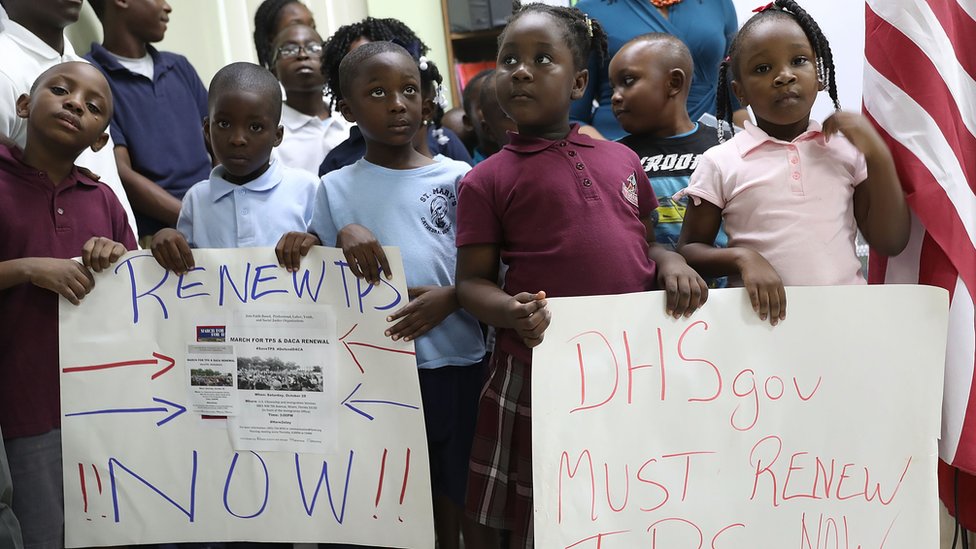
The US is to terminate a programme that gives more than 50,000 immigrants from Haiti protection against deportation.
Immigrants from the Caribbean nation received protected status in 2010 after a devastating earthquake.
But the Trump administration says conditions there have now improved and its nationals can return safely.
It says their protected status will end in July 2019, giving Haitians 18 months to return or otherwise legalise their immigration status in the US.
“Those extraordinary but temporary conditions caused by the 2010 earthquake no longer exist,” a statement from the US Department of Homeland Security said.
“Significant steps have been taken to improve the stability and quality of life for Haitian citizens, and Haiti is able to safely receive traditional levels of returned citizens,” the statement added.
Image copyrightAFPImage caption The Haiti earthquake left 220,000 dead and 1.5 million people displaced
But campaigners say the Trump administration has unfairly singled out small numbers of the most vulnerable people as part of its tougher stance on immigration.
In a statement, House Democrat Leader Nancy Pelosi said: “Deporting tens of thousands of men and women back into the nation will only deepen the suffering in Haiti.”
“I completely disagree with the characterization that the situation in Haiti has improved”, she added.
The Temporary Protected Status (TPS) programme grants temporary visas to more than 435,000 people from 10 countries ravaged by natural disasters or war.

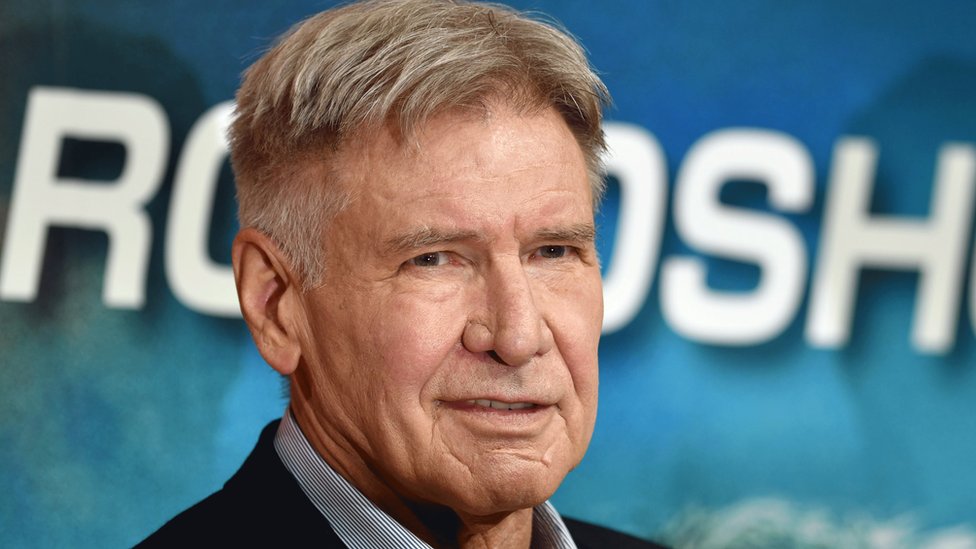
 Image copyright EPA