Media captionWatch: Emmerson Mnangagwa set to be sworn in
Crowds are gathering at a 60,000-seat stadium in Zimbabwe’s capital, Harare, to witness the swearing-in of Emmerson Mnangagwa as the country’s president.
It follows the dramatic departure of Robert Mugabe after 37 years of authoritarian rule.
The former vice-president’s dismissal earlier this month led the ruling Zanu-PF party and the army to intervene and force Mr Mugabe to quit.
Mr Mnangagwa, who had fled the country, returned from exile on Wednesday.
The opposition is urging Mr Mnangagwa, who has been part of the ruling elite, to end the “culture of corruption”.
Media playback is unsupported on your device
Media caption“We need fairness not corruption”
How will the inauguration unfold?
The ceremony will be at the National Sports Stadium and organisers have called on Zimbabweans to come and witness a “historic day”.
After Mr Mnangagwa and his wife Mai enter and the national anthem is played, Bishop Mutendi will lead the stadium in prayer.
Mr Mnangagwa will take his oath of office at about 11:30 local time (09:30 GMT), before a flypast and a gun salute. The new president will speak at about noon local time.
Will Mr Mugabe be there?
He is not expected to attend Mr Mnangagwa’s inauguration, the BBC’s Andrew Harding reports.
The official explanation for the former president’s absence is that the 93-year-old needs to rest.
But the fact he is not attending is a stark reminder that this is no ordinary transition, our correspondent adds, that despite his official resignation he was forced out by the military.
On Thursday, several reports suggested Mr Mugabe had been granted immunity from prosecution.
Local media are reporting that Mr Mnangagwa has offered the Mugabe family “maximum security and welfare”.
The former president “expressed his good wishes and support for the incoming president,” the Herald newspaper reports.
How did Zimbabwe get to this point?
The news on Tuesday that 93-year-old Mr Mugabe was stepping down sparked wild celebrations across the country.
It came in the form of a letter read out in parliament, abruptly halting impeachment proceedings against him.
In it, Mr Mugabe said he was resigning to allow a smooth and peaceful transfer of power, and that his decision was voluntary.
Image copyrightReutersImage caption President Mugabe was accused of preparing the presidency for his wife Grace
Neither Mr Mugabe nor his wife Grace have been seen in public since Sunday, and their whereabouts are unknown.
Ahead of the swearing-in, Mr Mnangagwa urged Zimbabweans to “remain patient and peaceful and desist from any form of vengeful retribution”.
He fled to South Africa two weeks ago – only to return home on Wednesday to a hero’s welcome.
Image copyrightReutersImage caption Emmerson Mnangagwa helped direct Zimbabwe’s 1970s war of independence
Mr Mnangagwa pledged to create jobs in a country where some estimates say 90% of people are unemployed.
“We want to grow our economy, we want peace, we want jobs, jobs, jobs,” he told cheering crowds in Harare.
Will the change be good for the economy?
Zimbabwe’s main industrial index has slumped by 40% since last week’s military intervention. The stock market has shed $6bn (£4.5bn) in a week.
On Thursday, Zimbabwe’s main opposition MDC party called for deep-rooted political reform to dismantle the repressive apparatus that sustained Mr Mugabe’s regime.
Media playback is unsupported on your device
Media captionLeader of the opposition MDC party, Morgan Tsvangirai, warns of a “power retention agenda”
“As MDC, we are saying, after so many years of Zanu-PF misrule, the first thing that needs to be transformed is the culture. The culture of violence, the culture of corruption. We need to change that culture,” MDC leader Morgan Tsvangirai said.
“And for President Mnangagwa, he must realise that it is not an easy walk in the park.”
It is unclear whether Zanu-PF will govern alone ahead of scheduled elections next year, or whether a coalition government of national unity that includes opposition groups will be formed.
Note: This story is auto-generated from ‘BBC News’ syndicated feed and has not been edited by Africa Prime News staff.
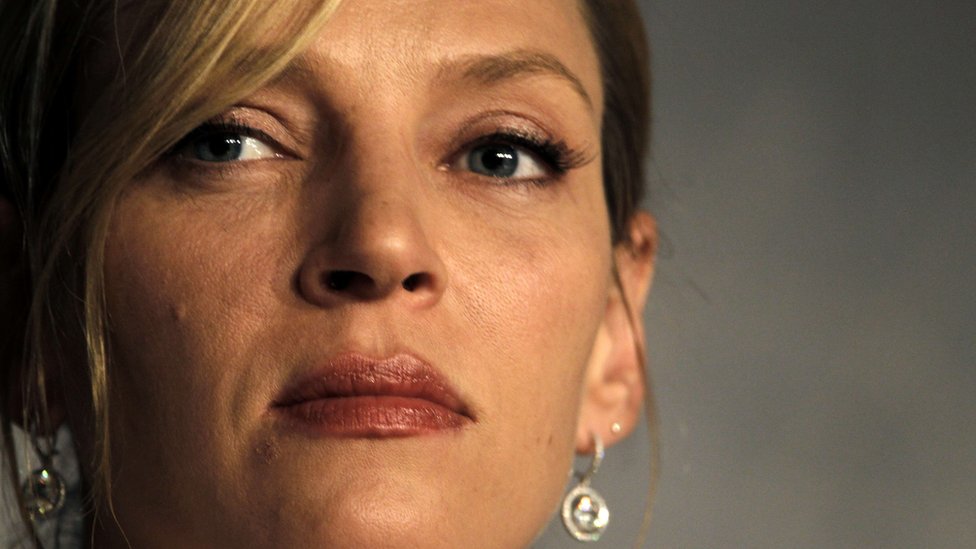
Image copyrightAFP/GettyImage caption Thurman has appeared in a number of films produced by Weinstein
US actress Uma Thurman has sent out a Thanksgiving message venting anger at movie mogul Harvey Weinstein, who has been accused of sexual harassment and assault by dozens of women.
She did not detail any personal issues but added: “When I’m ready, I’ll say what I have to say… stay tuned.”
Her message wished a happy Thanksgiving to everyone “except you Harvey and all your wicked conspirators”.
“I’m glad it’s going slowly – you don’t deserve a bullet,” she added.
Weinstein denies all allegations of non-consensual sex.
Writing on Instagram, Thurman said she had “a few reasons” to be angry.
In an earlier interview, Thurman said it was commendable that women were speaking out about harassment and assault.
“I have learned, I am not a child and I have learned that… when I’ve spoken in anger, I usually regret the way I express myself,” she said.
“So I’ve been waiting to feel less angry. And when I’m ready, I’ll say what I have to say.”
Thurman has appeared in a number of films that were produced by Weinstein, including Pulp Fiction and Kill Bill.
Dozens of actresses, including Rose McGowan, Asia Argento, Angelina Jolie, Gwyneth Paltrow and Cara Delevingne have accused Mr Weinstein of harassment or assault.
Note: This story is auto-generated from BBC syndicated feed and has not been edited by AFRICA PRIME NEWS
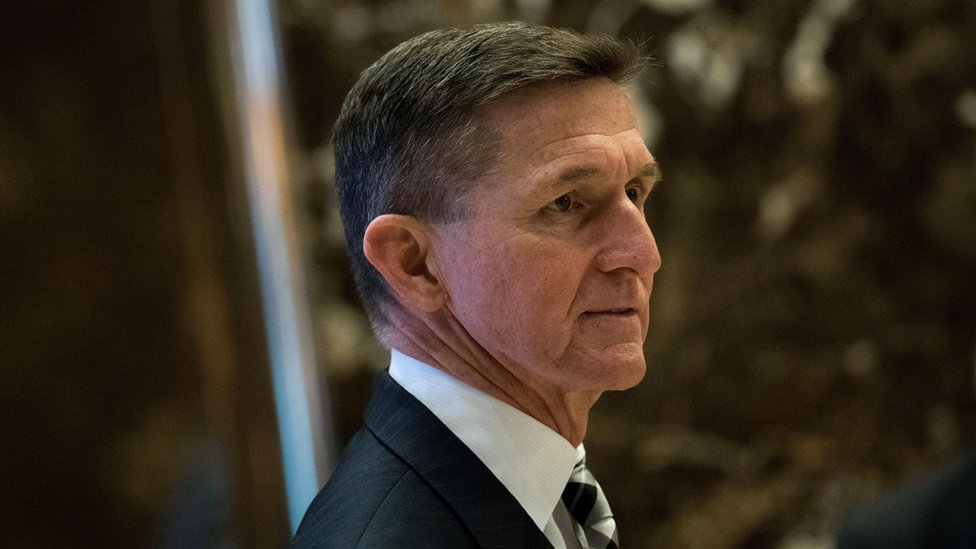
Image copyrightGetty ImagesImage caption Michael Flynn resigned as President Trump’s national security adviser after just 23 days
Lawyers for former top White House aide Michael Flynn have told Donald Trump’s legal team they can no longer discuss the investigation into alleged Russia interference in the 2016 US election, media reports say.
The move suggests Mr Flynn may be cooperating with prosecutors, The New York Times and CNBC reported.
Special counsel Robert Mueller is looking into any links between Russia and the Trump campaign.
Both deny there was any collusion.
Lawyers for Mr Flynn, who is a key figure in Mr Mueller’s investigation, had been sharing information about the probe with President Trump’s legal team.
It indicates Mr Flynn may be cooperating with prosecutors or may be negotiating a deal, reports say. This is because lawyers must stop sharing information when one client is cooperating with prosecutors and another is still under investigation.
Mr Flynn resigned as President Trump’s national security adviser after just 23 days on the job over contacts he had made with Russia before Mr Trump took office.
The controversy surrounding alleged Russian interference in last year’s election has hung over the Trump administration since earlier this year, when US intelligence agencies said the Russian government sought to help Donald Trump win.
Congressional committees were set up to investigate the matter and, in March, then-FBI director James Comey confirmed the bureau had its own inquiry.
President Trump later sacked Mr Comey, citing his reason as “this Russia thing”, in a move that shocked Washington and fuelled claims of a cover-up.
However, it did not halt the investigation. On 18 May, the department of justice appointed Mr Mueller as special counsel to look into the matter.
The IRB data confirms that Haitians are by far the biggest group of asylum seekers, filing 6,304 claims with the refugee board over that period.
However, of the small number of claims by Haitians processed so far, 298, only about 10% have been accepted. Failed claimants face removal to Haiti.
The IRB notes that the new figures represent a small sample – 1,572 of 14,467 total claims – and that “caution should be exercised in drawing conclusions regarding trends”.
The Canadian Press reported that PM Justin Trudeau said on Thursday that Canada’s refugee system is not meant for those merely seeking a better economic future but for those not being protected by their home country.
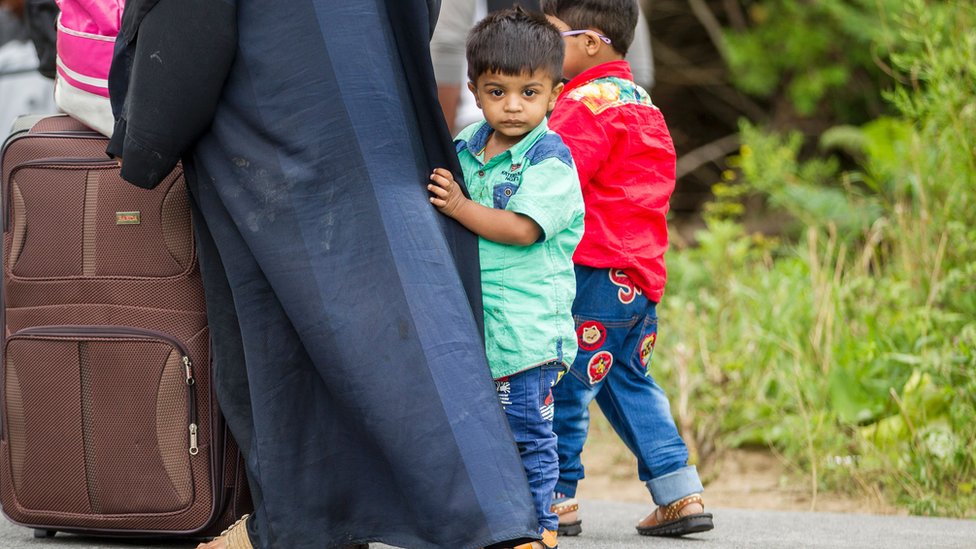
Many Haitians had been living in the US for years but chose to seek asylum in Canada due to fears of deportation.
The Trump administration hinted in May it would terminate a programme that gives over 50,000 Haitians in the US protection.
It was officially scrapped this week.
Image copyrightAFP
The programme grants temporary US visas to more than 435,000 people from 10 countries ravaged by natural disasters or war.
Canada is planning for another possible wave of migrants as a consequence of the policy change.
Canada completely lifted its own protected status for Haitians over a year ago.
In terms of numbers, Haitians migrants were followed by Nigerians, who have made 1,911 claims in Canada so far this year.
The other top countries in order are Turkey, Syria, Eritrea, Yemen, the US, Sudan, Djibouti, and Pakistan.
Canadian officials say US citizens included in the figures are mainly US-born children of migrants.
IRB spokesperson Anna Pape said that refugee claims made by Americans are “by and large dependents born in the USA and accompanying parents who are alleging persecution against a different country”.
In total, 652 Americans have made refugee claims in Canada this year, including 366 who made claims at an official border crossing and those who came through illegally.
Between 2013 and 2016, the numbers ranged from 69 to 129.
Note: This story is auto-generated from BBC syndicated feed and has not been edited by AFRICA PRIME NEWS
A Health Coalition, Kaduna State Maternal New born and Child Accountability Mechanism (KADMAM), has condoled Nigerian Health Authorities, as well as Medical and Health Workers’ Union of Nigeria (MHWUN), over the death of seven health workers.
The health workers died Wednesday in an auto crash near Likoro village, along Kano-Kaduna expressway, in northern Nigeria.
Co-chairman of KADMAM, Mustapha Jumare, in a message on Thursday, described the death as shocking, saying, “they are fallen heroes who died in the struggle to contribute to improved health care services in the country.
“Their death, has no doubt left a vacuum that will take a long time to fill in the health profession. Our heart goes to the family, their colleagues, Federal Ministry of Health and indeed Nigerians,” he added.
Mr. Jumare, a former director, Nursing Services, Kaduna State Ministry of Health, prayed to God to grant them eternal rest and the family, their colleagues, the Ministry and Nigerians the fortitude to bear the loss.
MHWUN Chairman, Kaduna State chapter, Ayuba M. Suleiman, had told journalists that the bus belonging to National Orthopaedic Hospital, Kano, was conveying 14 officials involved in the accident. The bus lost control and somersaulted while trying to avoid a pothole around 2pm near Likoro.
“Seven of them died, five sustained injuries and are receiving treatment at Ahmadu Bello Teaching Hospital (ABUTH), Shika, Zaria, while two others, who escaped unhurt, even helped us in evacuating the dead and those injured to ABUTH.
“They were on their way to Keffi, Nasarawa State to attend a two-day meeting of MHWUN of National Tertiary Institutions across the country,” he explained.
Image copyrightReutersImage caption Incoming new leader Emmerson Mnangagwa has promised “jobs, jobs, jobs” but analysts say rescuing Zimbabwe’s economy is a huge challenge
Zimbabwe must act quickly to dig its economy out of a hole and access international financial aid, the International Monetary Fund has warned.
Government spending and foreign debt are too high and it needs structural reform, Zimbabwe mission chief Gene Leon told Reuters news agency.
The country’s incoming leader Emmerson Mnangagwa has pledged to grow the economy and provide “jobs, jobs, jobs”.
The once-thriving economy is now seen as a regional basket case.
“The economic situation in Zimbabwe remains very difficult,” Mr Leon told Reuters.
He said high government spending should be reined in and Zimbabwe should address the large international debt it has defaulted on.
“Immediate action is critical to reduce the deficit to a sustainable level, accelerate structural reforms, and re-engage with the international community to access much needed financial support,” Mr Leon said.
Robert Mugabe, who led Zimbabwe for 37 years, stepped down earlier this week under pressure from the military and his own Zanu-PF party.
His policies, including disastrous land reforms and printing too much money, are blamed for the calamitous state of Zimbabwe’s economy.
On Thursday, Zimbabwe’s main opposition called for deep-rooted political reform to dismantle the repressive apparatus that sustained Mr Mugabe’s regime.
The Movement for Democratic Change (MDC) said it was cautiously optimistic that a Mnangagwa presidency would not “mimic and replicate the evil, corrupt, decadent and incompetent Mugabe regime”, reported AFP news agency.
It is unclear whether Zanu-PF will govern alone ahead of scheduled elections next year, or whether a coalition government of national unity that includes opposition groups will be formed.
Economic slide
Zimbabwe’s economy is half the size it was at the turn of the millennium.
Zimbabwe has not had a currency of its own since 2009, when the old Zimbabwean dollar buckled under hyperinflation – which is said to have reached 231 million per cent, worse even than the notorious levels in Germany following World War One.
Image copyrightAFPImage caption With bribe-taking police replaced – at least for the time being – by the military, some Harare residents report a fall in crime
Cash shortages mean Zimbabweans can often be seen queuing at banks. Economists say Zimbabwe needs a cash injection, but it has been barred from borrowing internationally since it began defaulting on its debt in 1999.
Some residents of the country’s capital, Harare, say they have already seen an improvement in their daily lives since the army came into the streets and Mr Mugabe was forced from office.
One benefit, they say, is the absence of police road blocks on the streets where officers demanded bribes from those travelling around.
“There used to be so many police roadblocks, with the driver having to pay $1 or $2 (75p-£1.50)” Spiwe Azvigumi, 31, an unemployed mother of three, told AFP.
“With the police off the roads, crime is actually down – they were so corrupt and now we are living free.”
Note: This story is auto-generated from ‘BBC News’ syndicated feed and has not been edited by Africa Prime News staff.

 Image copyright Reuters