Home Blog Page 1384

Nigeria: Suspension Of PDP Lawmakers, Protesters Storm Kaduna Assembly Demanding Reinstatement

0
kaduna-state-house-of-assembly
Kaduna State House of Assembly Complex

By Juliana Katung

Kaduna (Nigeria)–Protesters on Tuesday stormed the Kaduna State House of Assembly, northwest  of the country, demanding the House leadership to reinstate two PDP members who were recently suspended.

The demand is contained in a document issued by the Joint Stakeholders of People’s Democratic Party (PDP) in  Zangon Kataf and Kaura Constituencies, who staged a peaceful protest to the Assembly where they were received by the Clerk of the Assembly, Bello Zubair on behalf of the Speaker, Aminu Abdullahi .

The protesters said they were out to express their anger and pains over the suspension of Danladi Angulu Kwasu and Bityong Yakubu Nkom, From Zangon and Kaura Kataf respectively.

“this is a call to fairness, Justice and respect for the rule of of law. It is also not only a statement of the PDP stake holders but the entire electorate in these constituencies who stand victim of this development.” they noted.

According to the document presented to the assembly, the actual reason for the motion and suspension is totally undisclosed to both the suspended members and the general public, because facts have shown that immediately the motion was moved for the suspension of the two above, the Speaker granted no investigations, no room for counter motion, no debate as well as no point of order was allowed. The speaker only swiftly asked “is that the wish of the Hon. House?” which he had asked three good times.

“It is worthy to note that it is only customary that for a decision as such to take effect there must be a voting where a total of at least one third (1/3) majority of the members presence is needed to take a decision. The method of voting used by the Rt. Hon. Speaker does not indicate that the standard was adhered to as it is on record that the Speaker used voice note. We may need to ask the legitimacy of that voting  method and we may also need to establish how the Speaker got his one-third through the voice voting to allow the motion gain favour”.

The implication here is that Kaura Constituency which Hon.Dr.Bityong Yakubu Nkom is representing and Zangon Kataf Constituency which Hon. Danladi Angulu Kwasu is representing shall lack representation in state legislative matters till only God knows when since the suspension is said to be indefinite. This we find unsatisfactory and unacceptable. There was a quick reaction in favour of the motion, putting this and some other facts side by side, it is evident that there is more to the cause of the suspension than the motion moved. Hence we are left with no option than to see the suspension as an act of conspiracy against goodwill and the People’s Democratic Party PDP. It is also an abuse of powers and a disregard to the rule of law’ it’s added

The PDP stakeholders of the affected constituencies after a careful understanding of the entire matter hereby resolve that:

“the suspension of the two members of the kaduna state House of Assembly is unfair,unjust and unconstitutional and therefore condemn in strong terms.

 “The act of suspension is not done in a  goodwill to the PDP Zangon Kataf and Kaura constituency and of course Kaduna State as a whole.

 “Speaker should call off the suspension with immediate effect and an apology tendered to the suspended members and their respective constituencies and should as a matter of urgency announce the change of leadership as communicated to him in the letter from the State PDP Chairman dated 21stNovember,2017” the document noted.

 It however called on all well meaning people of Kaduna State and the general public to  stand strong against the suspension and all other unjust actions that are inimical to fairness, justice, the rule of law and peaceful coexistence.

https://www.africaprimenews.com/2017/11/29/news/nigeria-kaduna-house-assembly-gives-reasons-suspension-two-pdp-members-orders-vacate-govt-qtrs/

Commenting on the suspension, a former minority leader of the  Assembly, Florence Aya (kaura) who was among  the protesters said they are appealing to the Speaker to go back and act according to the rule of the House as they all are aware of what these rules are and how they are applied.

” we are appealing to the Speaker to act according to the rules of the House as they did not follow the proper procedures as we know that should any problem develops, it is first referred to a committee and then the committee will conduct an investigation before the suspension takes place. We did not want this to happen but as it has happened we have come to appeal that our representatives should be returned as they represent us well in the Assembly” she stressed.

Also speaking the PDP Chairman Kaura Local Government,  Donatus Shemang also said that the party  has taken its decision as they want these members returned with immediate effect and their offence be made known to the public as it is not possible to have an Assembly without a constituency being represented by anyone.

Also the team leader from Zangon Kataf Joseph Bainta who spoke on behalf of members of his constituency said  they should be told of the offence that warranted the suspension, as failure to do so, will cause more pain to the people of both constituencies.

” we are aware that the letter which was written at the assembly for the suspension of Hon.Bityong Yakubu Nkom and Hon. Danladi Angulu Kwasu was signed by Hon.Kantiok Irimiya Ishaku, he is not representing the party well at the state Assembly, this is why we want Barr. Kantiok removed as the minority Leader,” Leadership is not compulsory, if he cannot represent us well, then he should step aside and let us assign those who will do it better” the leader noted.

Zanzibar-born artist wins Turner Prize

96
Lubaina Himid, Goldie and Maria BalshawImage copyright PA
Image caption The artist was congratulated by presenter Goldie and Tate director Maria Balshaw

Lubaina Himid has become the oldest winner of the Turner Prize, and the first black woman to pick up the art award.

The 63-year-old Zanzibar-born, Preston-based artist won the £25,000 prize for work addressing racial politics and the legacy of slavery.

The judges praised her “uncompromising tackling of issues including colonial history and how racism persists today”.

She was named the winner at a ceremony in Hull, currently UK City of Culture.

Media playback is unsupported on your device

Media captionLubaina Himid talks to the BBC about her win

Who is Lubaina Himid?

Described in February by the Daily Telegraph as “the under-appreciated hero of black British art”, Himid made her name in the 1980s as one of the leaders of the British black arts movement – both painting and curating exhibitions of similarly overlooked artists.

But she has now got the recognition she deserves. Her section of the Turner Prize exhibition in Hull contains work from the 1980s to today, including wooden figures, pottery and newspapers that she has painted on.

The centrepiece is 1987’s A Fashionable Marriage, based on William Hogarth’s Marriage A-la Mode, which features a cast of cut-out characters including a flirting Margaret Thatcher and Ronald Reagan.

Image copyright David Levene
Image caption Himid’s 1987 work A Fashionable Marriage was inspired by William Hogarth

There are also porcelain dinner sets, found in junk shops. Himid has painted images of black slaves on some and aristocrats – some of whom are vomiting at the news of the abolition of slavery – on others.

She has also painted over parts of newspaper pages to show how they “used black people in a very subtle way which could be said to undermine their identity.”

She is professor of contemporary art at the University of Central Lancashire and was made an MBE in 2010 for services to black women’s art.

Image copyright David Levene
Image caption She painted over pages of the Guardian in a comment on the way black people are depicted in the media

What the judges said

The Turner Prize panel said they admired Himid’s “expansive and exuberant approach to painting which combines satire and a sense of theatre”.

They also said they “acknowledged her role as an influential curator and educator who continues to speak urgently to the moment”.

Image copyright David Levene
Image caption This painting was inspired by the story of a slave ship on which all but one slave went blind

Himid said she was “thrilled” to win, and thanked a list of long-time supporters in her acceptance speech.

She said: “To the art and cultural historians who cared enough to write essays about my work for decades – thank you, you gave me sustenance in the wilderness years.”

Analysis by Will Gompertz, BBC arts editor

Image copyright David Levene
Image caption Images relating to the slave trade painted on a 100-piece dinner service

Lubaina Himid’s Turner win is being put down to the well-documented rule change that did away with its 50-or-younger age restriction, which had been in place since 1991.

Clearly, the 63-year-old artist wouldn’t – couldn’t – have won without the removal of the age cap. But there was another, less publicised rule change this year that also benefited her.

For the first time the jurors were allowed to take into account the work each artist displayed in the Turner Prize exhibition.

“What?” you may ask. “Hasn’t that always been the case? Why wouldn’t they take the exhibition the public see – and therefore judge by – into account?”

Goodness knows why, but they didn’t. Which might help explain some of the previous winners, and certainly makes sense of Himid receiving the contemporary art award for an exhibition packed with work she made some time ago.

Her tableau A Fashionable Marriage, a satirical and political 1980s take on a scene from Hogarth’s 18th Century series Marriage A-la Mode, was the single best work of art in the entire Turner Prize exhibition.

It would have been a worthy winner when she made it in 1986 and – thanks to the rule change – it was a worthy winner last night.

Speaking to BBC News afterwards, Himid said some of the art establishment was now catching up with her.

“I was overlooked by critics, by press, but I was never overlooked by art historians or curators or other artists,” she said.

She said her win probably wouldn’t change people’s perspectives and attitudes, but added: “I think it will get people talking, which is the point of my work.”

Asked how she would spend the £25,000 cheque, she said: “I spend quite a lot of my money working with other artists, sometimes asking them to make things or helping them to make things when maybe they didn’t get a grant or whatever.

“So I’ll do a bit of that. And I’ll buy some shoes.”

After a change in the rules, this was the first time since 1991 that artists over the age of 50 were eligible for the prize, which used to be infamous for rewarding outrageous YBAs [Young British Artists].

As well as Himid, 52-year-old Birmingham painter Hurvin Anderson made it on to this year’s shortlist.

Tate Britain director Alex Farquharson, who chaired this year’s jury, said there was a desire to celebrate artists who had previously been neglected by the mainstream.

And there was a very international feel to the shortlist, which also included Stuttgart-born Andrea Buttner and film-maker Rosalind Nashashibi, who was born in Croydon to Palestinian-Irish parents.

Their work is on show at the Ferens art gallery in Hull until 7 January.

Follow us on Facebook, on Twitter @BBCNewsEnts, or on Instagram at bbcnewsents. If you have a story suggestion email entertainment.news@bbc.co.uk.

Note: This story is auto-generated from ‘BBC News’ syndicated feed and has not been edited by Africa Prime News staff.

Little Foot skeleton unveiled in South Africa

0
Little Foot's skeleton
Image caption The skeleton was discovered in the Sterkfontein caves

One of the oldest and most complete skeletons of humankind’s ancestors has been unveiled in South Africa.

A team spent more than 20 years excavating, cleaning and putting together the skeleton of Little Foot.

Its exact age is debated, but South African scientists say the remains are 3.67 million years old.

This would mean Little Foot was alive around 500,000 years before Lucy, the famous skeleton of an ancient human relative found in Ethiopia.

Both Little Foot and Lucy belong to the same genus – Australopithecus – but they are different species.

Scientists believe this shows humankind’s ancestors were spread across a far wider area of Africa than had previously thought. It also suggests there was a diverse number of species.

Little Foot was discovered in the Sterkfontein caves, north-west of South Africa’s main city Johannesburg, by Professor Ron Clarke.

It is thought that she was a young girl who fell down a shaft of one of the caves.

“It might be small, but it might be very important. Because that’s how it started, with one little bone. And it helps us to understand our origins,” Prof Clarke said.

Image copyright Paul Myburgh
Image caption The research team spent years cleaning and excavating the bones

The process of removing the bones from the caves was painstaking, as the fossil had “very fragile bones”, which were “extremely soft” and “buried in a natural concrete-like material”, he added.

“We used very small tools, like needles to excavate it. That’s why it took so long. It was like excavating a fluffy pastry out of concrete,” Prof Clarke said.

Note: This story is auto-generated from ‘BBC News’ syndicated feed and has not been edited by Africa Prime News staff.

DR Congo displacement crisis ‘worse than Middle East’

0
RefugeesImage copyright AFP
Image caption More than seven million people are struggling to feed themselves, aid workers say

Conflict has forced 1.7 million people to flee their homes in the Democratic Republic of Congo this year, causing “a mega-crisis”, aid agencies say.

This means that for the second consecutive year, DR Congo is worst-affected by conflict displacement in the world, the agencies add.

DR Congo has been hit by years of instability, with rival militias fighting for control of territory.

The conflict has been worsened by the failure to hold elections last year.

“It’s a mega-crisis. The scale of people fleeing violence is off the charts, outpacing Syria, Yemen and Iraq,” the Norwegian Refugee Council’s DR Congo director, Ulrika Blom, said.

In a new report, the Internal Displacement Monitoring Centre said that an average of 5,500 people fled their homes every day this year.

The reasons include new armed conflicts, a rise in existing conflicts and the delay in holding elections, the report said.

Despite there being four million displaced people, as well as more than seven million struggling to feed themselves, international aid has been slow to materialise, Ms Blom said.

“If we fails to step up now, mass hunger will spread and people will die. We are in a race against time,” she warned.

Image copyright NRC/Christian Jepsen
Image caption Many parts of DR Congo are lawless

DR Congo is a vast country with immense economic resources, but years of conflict has meant that most people live in poverty and there is little infrastructure.

President Joseph Kabila took power in 2001 following the assassination of his father, Laurent Kabila.

He has won two elections and the constitution bars him from running for a third term.

His critics say the poll has been delayed so that he can remain in office.

Mr Kabila’s government has been battling new conflicts in the last year, including in the central Kasai region where violence broke out after the government refused to recognise a traditional chief.

At least 400 people have been killed in the conflict in the region, which is regarded as an opposition stronghold.

Note: This story is auto-generated from ‘BBC News’ syndicated feed and has not been edited by Africa Prime News staff.

Person of the Year: Time honours abuse ‘silence breakers’

0
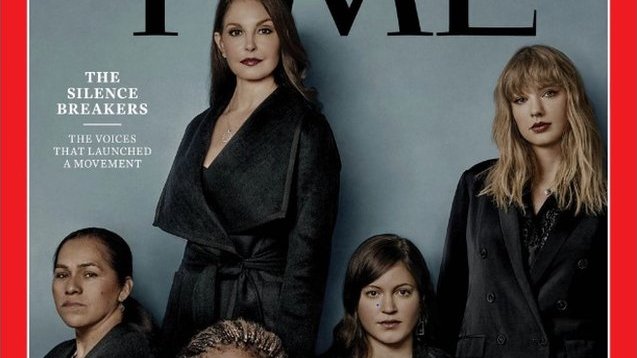
Time magazine cover honouring "The Silence Breakers" as collective Person of the YearImage copyright Time

Time magazine has named “the Silence Breakers” – women who spoke out against sexual abuse and harassment – as its “Person of the Year”.

The movement is most closely associated with the #MeToo hashtag which sprung up as allegations emerged against Hollywood producer Harvey Weinstein.

But Time says the hashtag is “part of the picture, but not all of it”.

“This is the fastest-moving social change we’ve seen in decades,” editor-in-chief Edward Felsenthal said.

He told NBC’s Today programme that it “began with individual acts of courage by hundreds of women – and some men, too – who came forward to tell their own stories”.

The magazine illustrates the ubiquitous nature of sexual harassment by showcasing women from markedly different backgrounds on its cover.

Two celebrities are featured – Ashley Judd, one of the first to speak out against Mr Weinstein, and pop singer Taylor Swift, who won a civil case against an ex-DJ who she said had grabbed her bottom.

They are shown alongside Isabel Pascual, a 42-year-old strawberry picker from Mexico (not her real name); Adama Iwu, a 40-year-old corporate lobbyist in Sacramento; and Susan Fowler, 26, a former Uber engineer whose allegation brought down Uber’s CEO.

But many more people are identified as part of the movement behind the cover shot.

This “moment”, the magazine says, “doesn’t have a leader, or a single, unifying tenet. The hashtag #MeToo (swiftly adapted into #BalanceTonPorc, #YoTambien, #Ana_kaman and many others), which to date has provided an umbrella of solidarity for millions of people to come forward with their stories, is part of the picture, but not all of it.

“This reckoning appears to have sprung up overnight. But it has actually been simmering for years, decades, centuries.”

President Donald Trump was named as runner-up. He was given the title last year.

The magazine’s tradition – begun in 1927 as “Man of the Year” – recognises the person who “for better or for worse… has done the most to influence the events of the year”.

The great majority of people selected have been individuals – but by no means all. In 2014, “Ebola fighters” were recognised while in 2011 “The Protester” acknowledged the significance of the so-called Arab Spring.

Note: This story is auto-generated from BBC syndicated feed and has not been edited by AFRICA PRIME NEWS

Central Bank Of Nigeria To Disburse N75Billion Loan To Farmers

0
Map of Nigeria
Map of Nigeria
Map of Nigeria
By Joseph Edegbo
Kaduna (Nigeria)– The Central Bank of Nigeria (CBN) has approved the disbursement of about N75billion as loan to farmers in the 36 states and the Federal Capital Territory FCT .
Sources made available to Africa Prime News indicate that the facility is under the Nigerian Incentive-Based Risk Sharing in Agricultural Lending (NIRSAL).
The loan guarantee scheme, is a public-private sector initiative set up to transform the country’s agricultural sector.
 It was initiated by the apex bank, the Bankers’ Committee and the Federal Ministry of Agriculture and Rural Development, to guarantee 75 per cent loans provided by Deposit Money Banks (DPB) to farmers as part of efforts to transform the country’s agricultural sector.

US to recognise Jerusalem as Israel’s capital

0
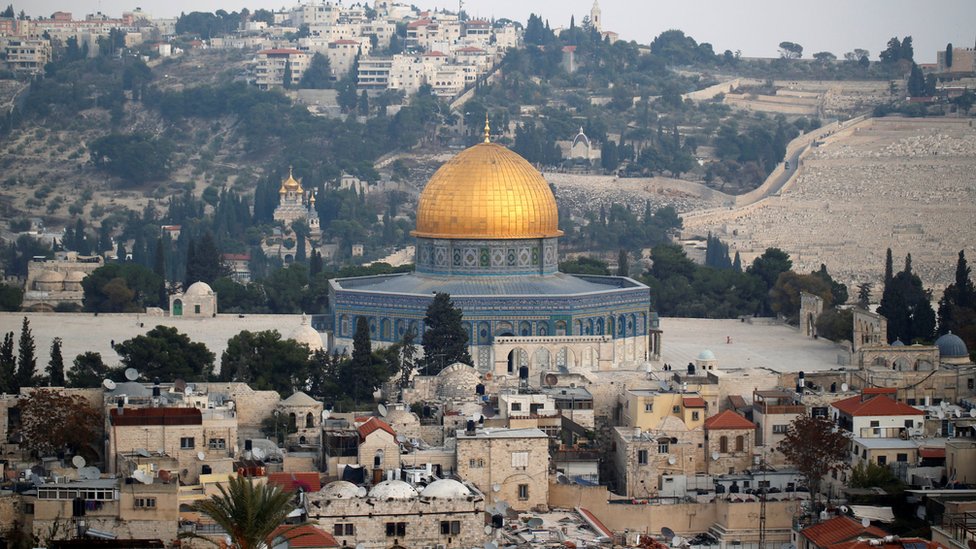
Temple Mount in Jerusalem
Picture of the Temple Mount in Jerusalem

Media playback is unsupported on your device

Media captionWhy the city of Jerusalem matters

US President Donald Trump will recognise Jerusalem as Israel’s capital, senior administration officials have said.

He is due to announce the controversial decision in a speech later.

Mr Trump is also expected to approve moving the US embassy from Tel Aviv to Jerusalem, but not for several years.

Israel welcomes the changes but the Palestinians and Arab leaders have warned they will jeopardise any Middle East peace process.

The Palestinians’ UK representative, Manuel Hassassian, told the BBC the changes would be the “kiss of death” to the two-state peace solution and amounted to declaring war in the Middle East.

Israeli Prime Minister Benjamin Netanyahu has yet to comment officially but Education Minister Naftali Bennett called on other countries to follow Washington’s lead.

“Jerusalem has been and always will be the eternal capital,” he told the Jerusalem Post Diplomatic Conference.

Pope Francis called for the “status quo” to be respected. Dialogue would only come through “recognising the rights of all people” in the region, he said.

And UK Foreign Secretary, Boris Johnson, said he viewed the reports of what Mr Trump would say “with concern”.

Israel has always regarded Jerusalem as its capital city, while the Palestinians claim East Jerusalem as the capital of a future Palestinian state.

In recognising Jerusalem as Israel’s capital, the US becomes the first country to do so since the foundation of the state in 1948.

What is so contentious about Jerusalem’s status?

The issue goes to the heart of Israel’s conflict with the Palestinians, who are backed by the Arab and wider Islamic world.

The city is home to key religious sites sacred to Judaism, Islam and Christianity, especially in East Jerusalem.

Israel annexed the sector from Jordan after the 1967 Middle East war and regards the entire city as its indivisible capital.

According to the 1993 Israel-Palestinian peace accords, its final status is meant to be discussed in the latter stages of talks.

Israeli sovereignty over Jerusalem has never been recognised internationally and all countries maintain their embassies in Tel Aviv.

Since 1967, Israel has built a dozen settlements, home to about 200,000 Jews, in East Jerusalem. These are considered illegal under international law, though Israel disputes this.

In recognising Jerusalem as Israel’s capital, the US could reinforce Israel’s position that settlements in the east are valid Israeli communities.

What is the US proposing?

Trump administration officials said recognising Jerusalem as Israel’s capital was seen as “a recognition of reality” by the US government.

However, specific boundaries of the city would remain subject to a final status agreement, the official said. The status of holy sites would not be affected.

Mr Trump would also direct the state department to begin the process of moving the US embassy to Jerusalem – but this could take several years as it still has to be designed and built and security concerns would need to be addressed.

He originally promised the move to pro-Israel voters during his campaign for the presidency.

The US officials added that the president would still sign a regular waiver blocking the embassy’s move from Tel Aviv to Jerusalem until the new building was completed.

Successive presidents have signed waivers on the grounds of national security for the 1995 Jerusalem Embassy Act, which mandates moving the embassy.

Mr Trump has vowed to pursue a peace agreement between Israelis and Palestinians, led by his son-in-law and top adviser Jared Kushner.

An administration official said the new US policy on Jerusalem was not designed to favour Israel in that process.

What other reaction has there been?

Image copyright AFP
Image caption Palestinian protesters burned pictures of Donald Trump on Tuesday
  • Saudi Arabia, an ally of the US, called the new policy “a flagrant provocation to Muslims”
  • Hamas leader Ismail Haniya called for protests this Friday
  • China warned against escalating tensions in the Middle East
  • Jordan’s King Abdullah said the decision would “undermine efforts to resume the peace process”
  • Egypt’s President Abdul Fattah al-Sisi urged Mr Trump “not to complicate the situation in the region”
  • Turkey’s President Recep Tayyip Erdogan said on Tuesday his country could sever ties with Israel

US government employees and their families have been barred from personal travel in Jerusalem’s Old City and the West Bank for security reasons ahead of expected protests.

Israel’s intelligence minister Israel Katz told Army Radio that Israel was “preparing for every option”, including an outbreak of violence.

France, the European Union and the Arab League have also expressed concern.


No sign it’s a bargaining chip

Analysis by Barbara Plett-Usher, state department correspondent, BBC News

By recognising Jerusalem as Israel’s capital President Trump is fulfilling a campaign promise. There is no other obvious reason he is doing this now.

Administration officials said he would simply be acknowledging reality – that Jerusalem functions as Israel’s capital. They said the decision would not determine final status issues such as boundaries and sovereignty – that is still left to negotiations.

On other core issues of the Israeli-Palestinian conflict, Arab and Muslim leaders may be able to work with changes in the US approach but Jerusalem is also holy land, not just a disputed capital.

Jordan and Saudi Arabia are custodians of Islam’s holy sites and have issued strong warnings that this move could inflame the Muslim world.

There is also no indication that this is a bargaining chip to advance the peace process: according to the officials, President Trump is not expected to publicly endorse a two-state solution.

It sounds like the Palestinians will get nothing. Perhaps there is a wider strategy at work but it looks like a workaround so the president can satisfy his pro-Israel voters.

Note: This story is auto-generated from BBC syndicated feed and has not been edited by AFRICA PRIME NEWS

Nigeria: CSOs Collaborate With Kaduna State For Better Health Service Delivery

0

By Amos Tauna

Kaduna (Nigeria)–Towards achieving universal health coverage with a motivated workforce, Civil Society Organizations in Kaduna State, northwest Nigeria have come together to critically analyse possible ways that could enhance the health of the people, particularly the children.

At the Forum organized by Save the Children, a Non-Governmental Organization, the CSOs discussed  ways to motivate the health workers to show commitment towards realizing a healthy society.

Dr. Ado Zakari Mohammed, Director of Public Health in Kaduna State Ministry of Health who represented the state Commissioner of Health, Dr Paul Dogo, explained that the state has in service training as part of motivation for better service delivery in the health sector.

He explained that students’ in training programme mainly for student doctors has  been in existence for the past 15 years, stressing that the programme has been extended to health personnel to enhance their performance.

In Kaduna State, he noted, the steer project that is meant for the rehabilitation of vulnerable children are adequately taken care of and their education, adding that another project is to improve the health workers on how to work together with health ministry to improve the health capacity of workers as a way of improving the quality of health service delivery.

He explained that the ministry has been running training programmes for various categories of  staff in the ministry, pointing out that efforts were  being made by the state government towards ensuring qualitative health care delivery in the state.

The one day interactive session was between the Kaduna State ministry of health on one hand as well as the Save the Children and Civil Society Organizations on the other hand.

It was  aimed at fashioning out ways for better collaboration for a effective and efficient health service delivery in the state.

Currency Exchange Rates

USD - United States Dollar
ZAR
0.06
EUR
1.17
CAD
0.73
ILS
0.31
INR
0.01
GBP
1.34
CNY
0.14
Enable Notifications OK No thanks