Image copyrightReutersImage caption Mr Fields is said to have Nazi sympathies
A man suspected of killing a woman near a white supremacist rally in Virginia in August is facing a possible life sentence after charges against him were upgraded to first-degree murder.
Charges against James Alex Fields Jr were confirmed in an emotional hearing.
He is accused of ramming his car into anti-fascism protesters, killing Heather Heyer and injuring 35 others.
The incident followed violent protests in Charlottesville over the removal of the statue of a Civil War general.
Mr Fields is said to have harboured Nazi sympathies.
State District Court Judge Robert H Downer Jr said the court case could proceed, and upgraded the murder charge against him from second-degree to first-degree. Other lesser charges against the suspect were certified.
Prosecutors will now seek an indictment before a Grand Jury on Monday.
If found guilty, Mr Fields faces between 20 years and life imprisonment. Second-degree murder carries a maximum sentence of 40 years.
Under most US jurisdictions, first-degree murder implies that an attack is premeditated and planned, whereas second-degree murder suggests no premeditation.
The parents of Heather Heyer, 32, as well as victims of the attack, attended the preliminary hearing.
Many became emotional as prosecutors played two previously unseen graphic videos of the attack.
One victim, Marcus Martin, swore out loud and stormed out of the courtroom.
Image copyrightAFPImage caption Anti-fascist protesters were rammed by the car
Mr Fields showed no reaction to the videos or testimony.
Hundreds of white nationalists convened in Charlottesville on 12 August to protest against the removal of a statue of Gen Robert E Lee, who had fought for the pro-slavery Confederacy during the US Civil War.
These groups, which include the Ku Klux Klan, Neo-Nazis and other white supremacy organisations, have coalesced under a banner of the so-called “alt-right” movement.
They were challenged by anti-fascist and counter-protesters and the rally erupted into violent clashes.
During the melee, Ms Heyer was struck by a car that rammed into a crowd of dispersing counter-protesters.
Note: This story is auto-generated from BBC syndicated feed and has not been edited by AFRICA PRIME NEWS
Leveraging on innovation as a smart way to involve more young people in environmental advocacy and involvement, an environmental advocacy group, ‘My Environment My Wealth’ is set to launch ‘Green Games In Nigeria.’
According to the initiator, Wonne Afronelly, “Green Games is aimed at changing the mindset of Nigerians regarding waste management, indiscriminate disposal and other environmental issues.”
“We recognise the need for an over-haul of the people’s mindset; we hope to educate the subconscious of Nigerians through the Green Games, however, we want to begin with Port-Harcourt.”
Associating the Green Games with Sustainable Development Goals, SDGs 4, 13, 15 and 17, Ms. Wonne hopes to educate the subconscious of young ones to imbibe ecocentric values that allow for the environmental sustainability.
The launch, according to a statement issued by Alli Sheriffdeen Abiola, the programme which is first of its kind in Nigeria, will take place at Den Bec School, Rumuokoro, Port Harcourt South- South Nigeria on Friday, 15th December, 2017.
Kaduna (Nigeria)–The Federal Ministry of Health has observed with dismay the low coverage of routine immunization in some states of the country.
Kaduna State Deputy Director in the State Primary Health Care Development Agency, Hamza Ikara announced the Federal government position during an interactive session with newsmen on the activities of the agency in Kaduna state, northwest Nigeria.
He however attributed the failure of the programme in the state to inadequate awareness campaigns which contributed 51percent, mistrust and fear accounted for 22 percent and service delivery related issues which stood at 16 percent.
According to him, instead of 80 per cent set target, only 30 per cent of children 12-23 months were able to receive measles vaccine which he described as worrisome.
What this means according to him, was that more than 50 percent of the targeted children were unable to receive the vaccine within the period under review, adding that the report was not good for Nigerian children as they are exposed to measles being one of the six leading child killer diseases.
He said, “To be sincere with you, Kaduna is one of the worst states in the Northwest in routine immunization because 51 percent of targeted population are not aware of what we are doing in routine immunization.
“Due to what we have been able to achieve in Polio across the country, we are moving from Polio immunization to routine immunization. Lack of knowledge, time or other family issues, mistrust or fear are major contributory factors being identified. We have a big gap in these areas which we must collectively address as a national call.”
On what the agency was doing to address the identified lapses, he said, “We are embarking on massive campaign starting with the traditional and religious leaders so that they can help mobilise their subjects for the immunization. This is important because we noticed that people listen to them.
“In addition, we have trained over 17,000 workers, 4,000 village heads among others. What this means is that, our trained people are now ready to do the needful. But then, people that will avail these children for the immunization have to be on the same page, hence the engagement of all stakeholders including the media to reach out with them.”
He expressed worry over the security situation in the state especially kidnapping which is preventing service providers from penetrating into remote communities to render the service.
He frowned at private facilities who are charging N500 for the series of the immunization in the state vowing to stop them in 2018, “We gave them free training, vaccine and syringe. They should support us to render this service for free in the interest of our children and better future base on the MoU we had with them,” he explained.
Before now, Bill Gates and Dangote Foundation have signed a Memorandum of Understanding (MoU) with Kaduna state government to support provision of the vaccine within four years, he said.
Kaduna (Nigeria)–Media practitioners in Kaduna State, North west of the country have been urged to double their efforts in reporting issues affecting adolescent and young people living with HIV/AIDS.
This was necessitated by the 50 percent increasing prevalence rate of HIV and less than 10 percent knowledge of HIV status among young people in the state.
Speaking at a one day media dialogue with Journalists on Adolescents and Young Persons (AYPs), organized by United Nations Children’s Fund (UNICEF) in collaboration with the National Orientation Agency in Zaria, a Child Protection Expert, Faruk Abdullahi, described the media as key in making consistent advocacy towards accessing care and support to adolescents living with HIV/AIDS.
Abdullahi who was speaking on the topic ‘Understanding Child Protection, Issues in Accessing care/support for Adolescent Living with HIV/AIDS, noted that adolescent are most vulnerable due to their continual exposure to different forms of child labor, abuse and trafficking, as such, the media has a great role in protecting and reporting such ills.
Abdullahi also noted that, global statistic reveals that 22 million people living with HIV are still not accessing antiretroviral therapy –” the proportions of people who do not have access to treatment are 58% in South Africa, 64% in India and 80% in Nigeria; 76% of children living with HIV are not receiving HIV treatment”.
According to him, HIV/AIDS prevalence rate in Nigeria is declining among adults as a result of extensive campaign , while there is a 50 percent increase among adolescents over time.
He further emphasized that Journalists should ensure that adolescents are targeted with adequate and useful information on HIV/AIDS in order to curb the menace and stay safe.
On his part, , the Kaduna State UNICEF Field Officer, Idris Baba, said the agency has committed significant resources to supporting AYPs HIV intervention programme in seven local government areas of Kaduna state – Igabi, Birnin Gwari, Lere, Kagarko, Chikun, Jaba and Jema’a noting that, much cannot be achieved without media’s support.
He further stated that UNICEF has budgeted about 200 million to run the AYPs programme on HIV prevention, treatment and care.
Baba a mm explained that the main objectives of the intervention programme was to raise AYP access to HIV testing from 20 to 40 per cent, increase condom usage among adolescents from 30 to 50 percent in the seven local areas, raise the use of anti retro viral therapy from one to 21 per cent among HIV positive persons and increase the number of schools providing Family Life Health Education from the present 25 per cent to 45 per cent by the end of the programme in May 2018.
Image copyrightPAImage caption Bitcoin can be purchased online or via special ATMs
A New York woman has been accused of laundering bitcoin and other cryptocurrencies and wiring the money to help the so-called Islamic State.
Zoobia Shahnaz, 27, was charged with bank fraud, conspiracy to commit money laundering and money laundering and is being held without bail.
Ms Shahnaz was born in Pakistan and worked as a lab technician in the US.
Prosecutors say she took out fraudulent loans of $85,000 (£63,000) in order to buy the bitcoin online.
Bitcoin is an online currency. Despite not being legal tender – it can’t be used to pay for traditional goods and services – the value of bitcoin has rocketed this year.
It has been exploited by criminals to launder money. British authorities are pushing to increase regulation of the currency.
According to court records, Ms Shahnaz, who lives in Brentwood on Long Island, was a lab technician at a Manhattan hospital until June.
Prosecutors said that Ms Shahnaz obtained a Pakistani passport in July and booked a flight to Pakistan with a layover in Istanbul, intending to travel to Syria.
She was arrested at John F Kennedy airport carrying $9,500 in cash, just under the limit of $10,000 that a person can legally take out of the country without declaring the funds.
Searches of her electronic devices showed numerous searches for Islamic State-related material.
Ms Shahnaz faces up to 20 years in prison on each of the money laundering charges and up to 30 years for the bank fraud charge.
Her lawyer, Steve Zissou, said she was sending money overseas to help Syrian refugees.
“What she saw made her devoted to lessening the suffering of a lot of the Syrian refugees and everything she does is for that purpose,” Mr Zissou said outside the courthouse.
Note: This story is auto-generated from BBC syndicated feed and has not been edited by AFRICA PRIME NEWS
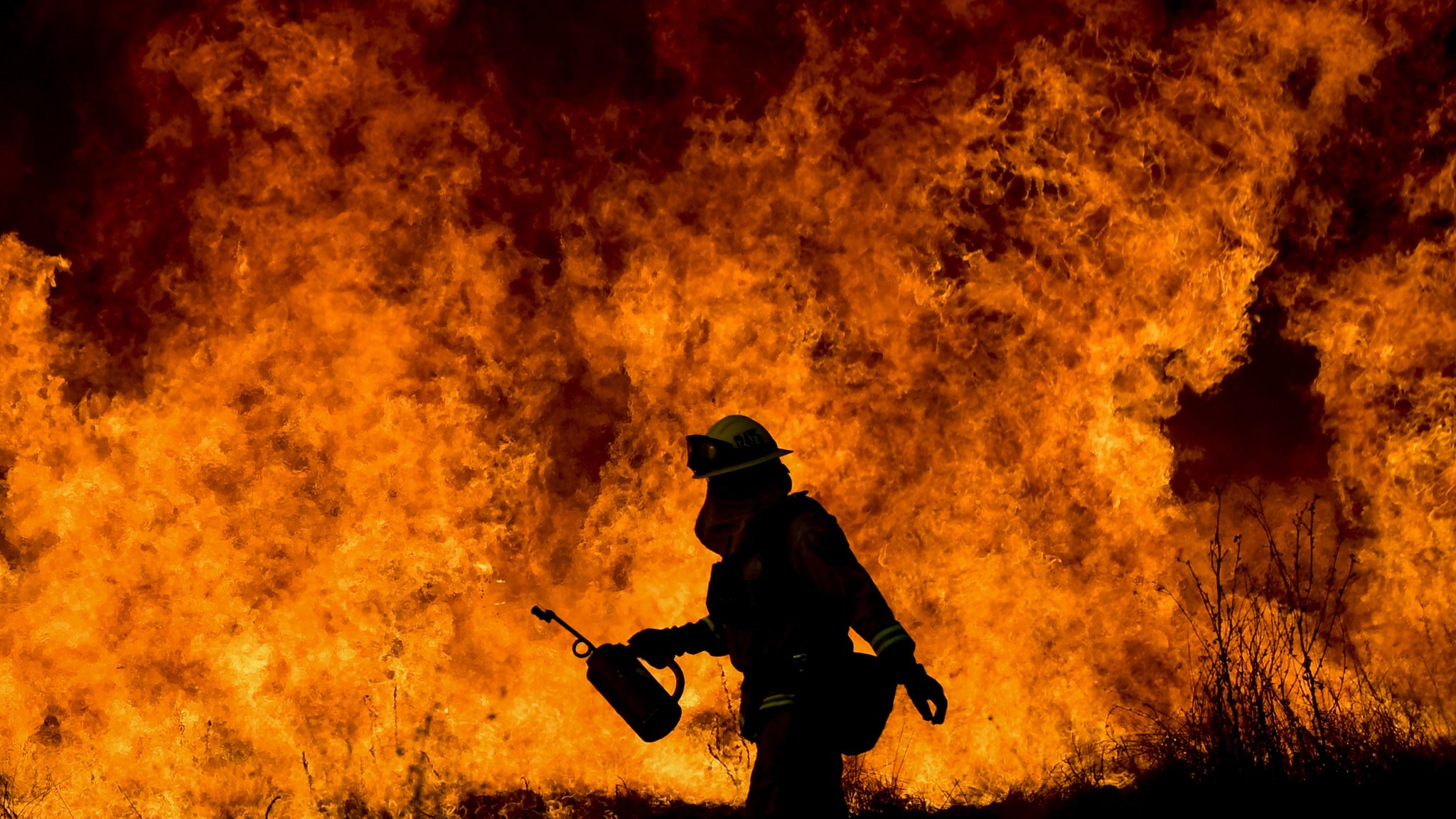
Image copyrightMARK RALSTONImage caption The Thomas fire has destroyed about 900 properties, including 690 homes
A California firefighter has been killed by a wildfire burning across Ventura and Santa Barbara counties.
Fire chief Ken Pimlott said the victim was apparatus engineer Cory Iverson, 32, a father-of-one whose wife is pregnant with a second child.
Iverson was part of a crew battling the Thomas Fire, one of six major blazes currently raging in the state.
The Thomas fire has grown to 379 square miles (981 sq km), becoming the fourth-largest in California’s history.
It has destroyed more than 900 properties, including 729 homes, two residential apartment blocks, two hotels and 18 other commercial properties, and scorched an area the size of New York and Paris combined.
The California Department of Forestry and Fire Protection (Cal Fire) did not give out any more details about Iverson’s death, but it followed reports earlier in the day of a fire unit being overrun by the blaze near the town of Fillmore.
Media playback is unsupported on your device
Media captionThe long battle against California wildfires
Cal Fire said on Thursday that the Thomas blaze was 30% contained, up from 20% on Tuesday, but it continues to grow.
The agency said 8,144 firefighters were tackling the blaze, using 1,004 fire engines, 59 water tenders and 80 bulldozers. More than 30 helicopters and six air tankers are reportedly involved in the fight.
Several thousand of those firefighters are prisoners. According to local news station KPBS, they are paid $2 per day and and additional $1 per hour when they are actively fighting fires.
Steep slopes and rocky terrain have made it dangerous to tackle the flames.
Efforts to combat the Thomas wildfire have already totalled more than $48 million (£36 million). Many local school districts have cancelled classes and will not reopen until after the new year.
The blaze – named according to where it started, near the Thomas Aquinas College – is by far the largest of six major fires alight in the state.
The Thomas fire shows no signs of letting up as gusts of wind up to 40mph (65km/h) and low humidity pose a continued challenge to firefighters.
‘Fire is coming right at you’
By James Cook, Los Angeles Correspondent
Radio traffic between firefighters and their controllers on Thursday morning gave a glimpse of the terrifying reality of tackling this monster blaze.
“Fire is coming right at you,” said one message as units in the Fillmore area on the far eastern edge of the wildfire were ordered to pull back.
The weather had apparently changed suddenly, posing a threat to the lives of the firefighters in the area.
There were reports of a Mayday call, a rescue helicopter was scrambled and controllers attempted to contact a firefighter who was said to be “down” in the area.
The confirmation that a fire engineer had died came quickly. The man’s family have been told of his death.
Note: This story is auto-generated from BBC syndicated feed and has not been edited by AFRICA PRIME NEWS
Image copyrightGetty ImagesImage caption Nkosazana Dlamini-Zuma (c) and Cyril Ramaphosa (r) are the top candidates in the race to take over from Jacob Zuma (l)
South Africa’s governing African National Congress (ANC) is set to elect a new leader at a conference starting on Saturday following a fierce contest between seven candidates.
The scandal-hit President Jacob Zuma will step down as party leader, opening the way for his successor to spearhead the ANC’s campaign for the 2019 general election.
The ANC has governed South Africa since the first democratic election more than 20 years ago, so there is a strong chance that whoever the party picks as its leader will also succeed Mr Zuma as president when his two terms end in 2019.
But under Mr Zuma the ANC has become wracked by infighting and allegations of corruption, raising, for the first time, the possibility that it could lose its majority.
So the incoming ANC leader will be expected to knock the party into shape, and regain the trust of voters.
While there are seven candidates, only two, Cyril Ramaphosa and Nkosazana Dlamini-Zuma, have a realistic chance of winning.
Who is Cyril Ramaphosa?
Currently the deputy president, Mr Ramaphosa is said to have long had his eye on the top job in South African politics.
He worked closely with anti-apartheid icon Nelson Mandela to negotiate an end to minority rule, and to give black people the right to vote for a government of their choice.
Cyril Ramaphosa at a glance:
Image copyrightGetty ImagesImage caption Cyril Ramaphosa is said to have long held ambitions to be president
Born in Soweto, Johannesburg, in 1952
Detained in 1974 and 1976 for anti-apartheid activities
Launched the National Union of Mineworkers in 1982
Chairman of the National Reception Committee which prepared for Nelson Mandela’s release from prison in 1990
Became an MP and chairman of constitutional assembly in 1994
Moved full-time into business in 1997, becoming one of South Africa’s richest businessmen
The legend goes that he was so upset about not being chosen by Mr Mandela as his deputy following South Africa’s first democratic election in 1994, that he did not attend the presidential inauguration, and refused to take up a post in government.
He stepped out of the political limelight and went into business.
The former trade unionist is now one of the richest politicians in South Africa.
Mr Ramaphosa’s track record in the private sector has helped him win the backing of the business community.
He supports the ANC policy of Radical Economic Transformation – putting more of the economy and land in black hands, in an effort to address the legacy of apartheid.
But Mr Ramaphosa has also sought to reassure the business sector, acknowledging the need to “improve investor confidence”, and stressing the need for “partnership”.
Image copyrightAFPImage caption The ANC has battled to fulfil its promise to curb unemployment
This is important because South Africa’s economy has been in something of a tail-spin in recent years, with several credit-rating downgrades.
More than a quarter of the population is unemployed, and more than half live in poverty.
The country is one of the most unequal in the world.
Mr Ramaphosa has positioned himself as the man who can turn this around.
He has also spoken out against corruption and so-called “state capture”, saying “If corruption holds our economy back, we must solve the problem of corruption. If state capture holds our economy, we must solve the problem of state capture.”
And he is promising to unify the party, which has been torn apart by bitter rivalry over who should take over from Jacob Zuma as its leader.
What he cannot seem to shake off though, is the shadow of Marikana.
He is tainted by allegations that he pushed for police action against striking miners at the Lonmin mine in 2012.
Thirty-four miners were killed, in what was the worst police shooting since the end of apartheid.
At the time Mr Ramaphosa was a director at Lonmin.
Emails emerged showing he had called for “concomitant action” to be taken against the striking miners, who had been taking part in a violent, wildcat strike.
Image copyrightAFPImage caption Families of those killed in the Marikana massacre are demanding justice
The leader of the opposition EFF party, Julius Malema, has repeatedly blamed Mr Ramaphosa for the killings, calling him a “murderer” and vowing not to let the matter rest.
Although Mr Ramaphosa was cleared of any responsibility for the tragedy by a judicial commission, going into an election with the opposition continuing to bring these allegations up is far from ideal.
He is also considered by some to be less in touch with ordinary people than his main rival Nkosazana Dlamini-Zuma, with a support base that is more affluent.
And Mr Ramaphosa’s critics say the events at Marikana show he does not care about poor people.
The choice then for ANC delegates as they prepare to vote, is whether the candidate who seems more likely to steady the markets and rescue the country’s troubled economy, is worth the risk of alienating its core support base.
Who is Nkosazana Dlamini-Zuma?
She is a medical doctor, and has served in the cabinets of all four of South Africa’s post-apartheid presidents.
After serving as Minister of Health, Foreign Affairs, and Home Affairs, she went on to become the chair of the African Union Commission – the first woman to lead the organisation.
Nkosazana Dlamini-Zuma at a glance:
Image copyrightReuters
A leading anti-apartheid activist
Fled South Africa and completed medical training in UK
Met ex-husband Jacob Zuma while working as a doctor in Swaziland
Divorced him in 1998 after 16 years of marriage
Declined offer to take place of her sacked ex-husband as deputy president in 2005
Chair of the African Union commission from 2012 to 2016
Ms Dlamini-Zuma was born in KwaZulu-Natal, the second most populous province in the country, and which will have a big bearing on the outcome of any general election.
Whoever leads the ANC needs to bring votes from this province to guarantee victory.
Although it has been said that Ms Dlamini-Zuma lacks charisma, she is considered by many within the ANC to be someone who gets the job done.
She is credited with having turned around the performance of the Department of Home Affairs.
And the fact that she spent almost two decades in key positions at the heart of government, speaks to her political ability.
Image copyrightAFPImage caption Women will make up 50% of delegates at the ANC conference
Ms Dlamini-Zuma has complained bitterly about being referred to as Mr Zuma’s ex-wife, pointing out that she was a politician in her own right.
The national broadcaster, SABC, has apologised for doing so, admitting it was “sexist and demeaning”.
Her relationship with Mr Zuma is one of her greatest strengths in this race, and her biggest weakness.
Her former husband is a formidable force who can mobilise support for her, particularly at grassroots.
And like him she is considered to be down to earth and more able to connect with voters than some of the other candidates.
But her detractors argue that Mr Zuma has cut a deal with his ex-wife, backing her candidature to avoid being prosecuted for alleged corruption once he steps down.
Media playback is unsupported on your device
Media captionThe Zuma presidency: Scandals and successes
Kinder critics say that as the mother of four of his children, she would find it difficult to make sure he stands trial, even if she wanted to.
For those within the ANC who are tired of being hit by one corruption scandal after another, the elevation of Ms Dlamini-Zuma to the top job would be a perpetuation of the status quo.
And, they fear, that might be an election loser in 2019.
Note: This story is auto-generated from ‘BBC News’ syndicated feed and has not been edited by Africa Prime News staff.

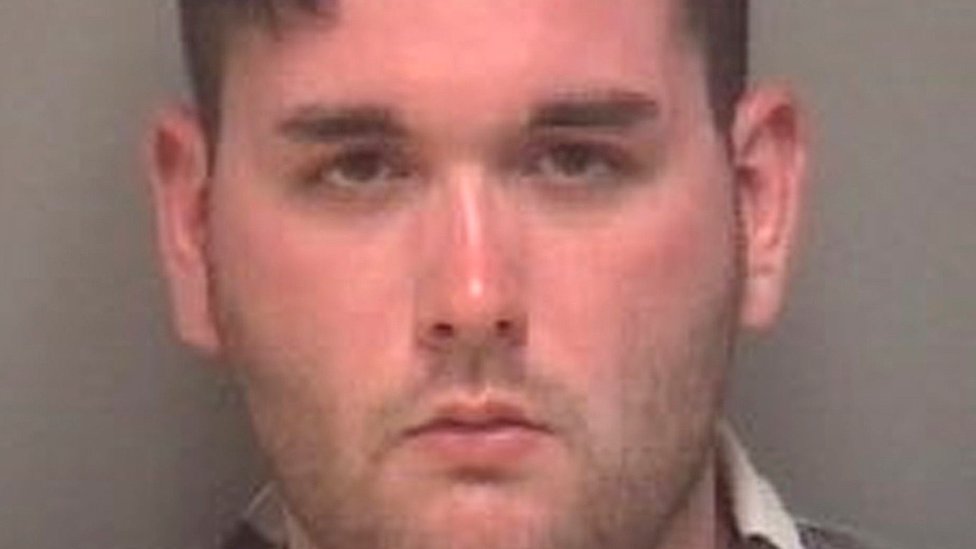
 Image copyright Reuters