Home Blog Page 1363

US braces for explosive and bone-chilling ‘bomb cyclone’

0
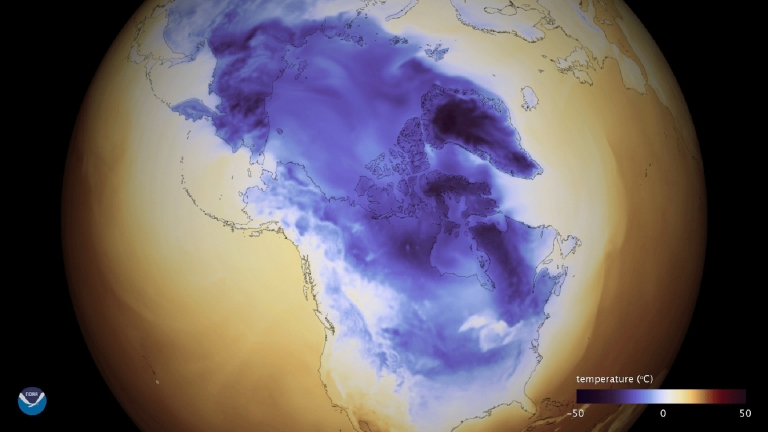
US weather satellites capture the cold snapImage copyright NOAA
Image caption US weather satellites show the cold snap across North America

The US is braced for a “bomb cyclone” – a weather phenomenon which officials say will arrive during a cold snap that has already claimed at least 11 lives.

Forecasters say a severe pressure drop will lead to an explosive winter storm along the eastern US, and is already bringing snow to Florida.

The US is currently on its 10th day of frigid record-breaking low temperatures which began around Christmas.

But the predicted new storm has led meteorologists to deploy a new term.
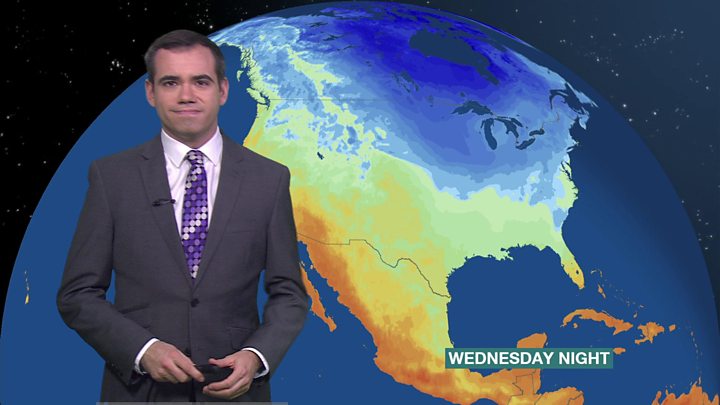
Media playback is unsupported on your device

Media captionCold snap grips North America

The National Weather Service (NWS) has warned that “Arctic air mass will remain entrenched over the eastern two thirds of the country through the end of the week”.

“Very cold temperatures and dangerously cold wind chills expected,” the NWS added.

What is a ‘bomb cyclone’?

A “bomb cyclone” or “weather bomb” is an unofficial term for what is known as explosive cyclogenesis, according to BBC Weather.

This occurs when the central pressure of a low pressure system falls by 24 millibars in 24 hours and can result in violent winds developing around the system.

The winds can be strong enough to bring down trees and cause structural damage.

The Washington Post adds that the coming storm will “in many ways resemble a winter hurricane” which could be the eastern US’s most intense in decades.

It comes as the average temperature across the continental US hovered around 9.1F (-12.7C) on Tuesday morning, according to CBS News.
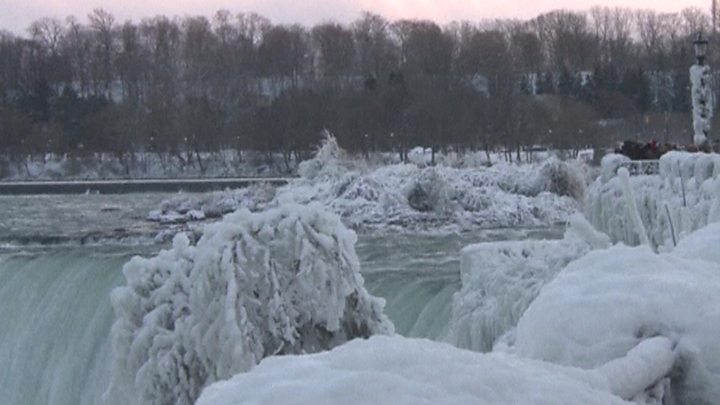
Media playback is unsupported on your device

Media captionParts of Niagara Falls freeze

Where is it expected to hit?

On Thursday and Friday, the major storm is expected to develop along the eastern seaboard of the USA, bringing strong winds, rain, sleet and snow.

The storm is forecast to undergo rapid cyclogenesis over the Atlantic Ocean, and current projections show areas north of New York as having the highest risk of seeing significant impacts from strong winds and heavy snow.
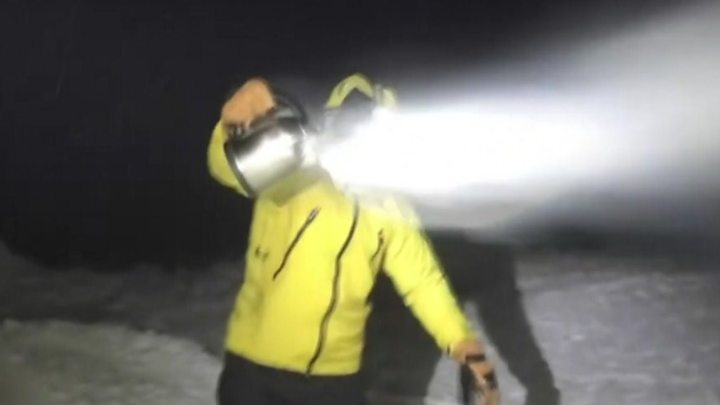
Media playback is unsupported on your device

Media captionPeople around the US have rapidly been turning boiling water into snow

Major north-eastern cities such as Boston are at risk of blizzards, and it is expected to cause disruption at air travel hubs with power outages also possible.

In the US South, freezing rain and sleet may reach as far down as Orlando, where agricultural officials say cold-sensitive crops such as citrus and strawberries are threatened.

Parts of Florida, including the northern city of Tallahassee, have already seen their first snow settling in decades.

Excited residents have been snapping photos of themselves playing in the snow, and school is cancelled in much of the state.

Is it cold everywhere?

No.

Several of Alaska’s northern and central towns experienced some of their hottest months of December on record.

On Tuesday, the Merrill Field Airport in Anchorage recorded a temperature of 48F (9C) – higher than almost anywhere in the Lower 48 states.

What about Canada?

Environment officials warned that a major winter story is expected to smash into the provinces of New Brunswick, Nova Scotia and Prince Edward Island on Thursday.

Officials predict that snow and high winds may cause worse power outages than those that affected 158,000 customers in Nova Scotia on Christmas Day.

Note: This story is auto-generated from BBC syndicated feed and has not been edited by AFRICA PRIME NEWS

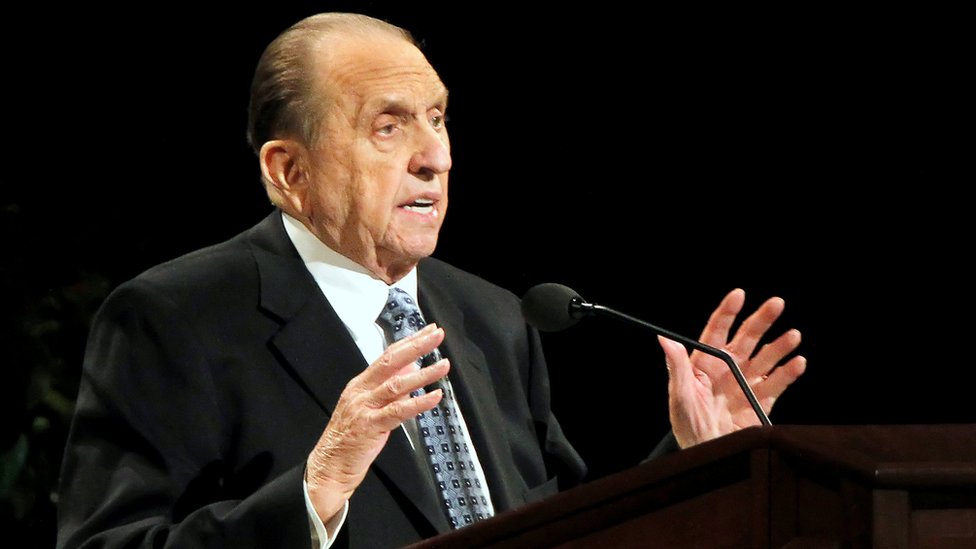
Thomas Monson: President of the Mormon Church dies at 90

0
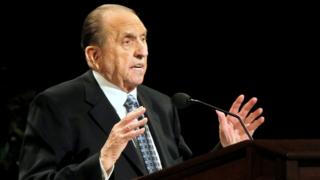
President of the Church of Jesus Christ of Latter-day Saints, Thomas Monson gives a talk in Salt Lake City, Utah (October 2, 2011).Image copyright Reuters
Image caption During Mr Monson’s presidency, dozens of new Mormon temples were built.

Thomas Monson, leader of the Mormon Church, has died at the age of 90, the church has announced.

Mr Monson died on Tuesday at his home in Salt Lake City, Utah surrounded by his family, according to a church statement.

In 2008 he became the 16th president of the church, following the death of Gordon Hinckley.

Mr Monson is known for leading the church’s backing for a gay marriage ban in California in 2008.

He is likely to be succeeded by 93-year-old Russell Nelson, who is now the longest-serving member of the church’s governing body.

During Mr Monson’s leadership, the church’s members grew from 13 to over 16 million worldwide, and dozens of new temples were built, according to the church.

He also reduced the minimum age requirement for missionaries, which led to an increase in missionary numbers the church added.

For the followers of the Church of Jesus Christ of Latter-day Saints, as the religion is officially known, the president of the church is also a prophet who receives divine revelations.

Among the faith’s followers is 2012 US Republican presidential candidate Mitt Romney, who paid tribute to Mr Monson.

In 2008, at Mr Monson’s urging, Mormons led a vigorous campaign in support of banning gay marriage in California – which backfired with protests and vandalism against the faith’s church temples across the US.

Members of the church worship Jesus Christ, but have substantial differences in belief to the Catholic, Protestant, and Orthodox Christians.

Note: This story is auto-generated from BBC syndicated feed and has not been edited by AFRICA PRIME NEWS
Suicide Bomber Kills 11 In Borno Mosque Attack

0


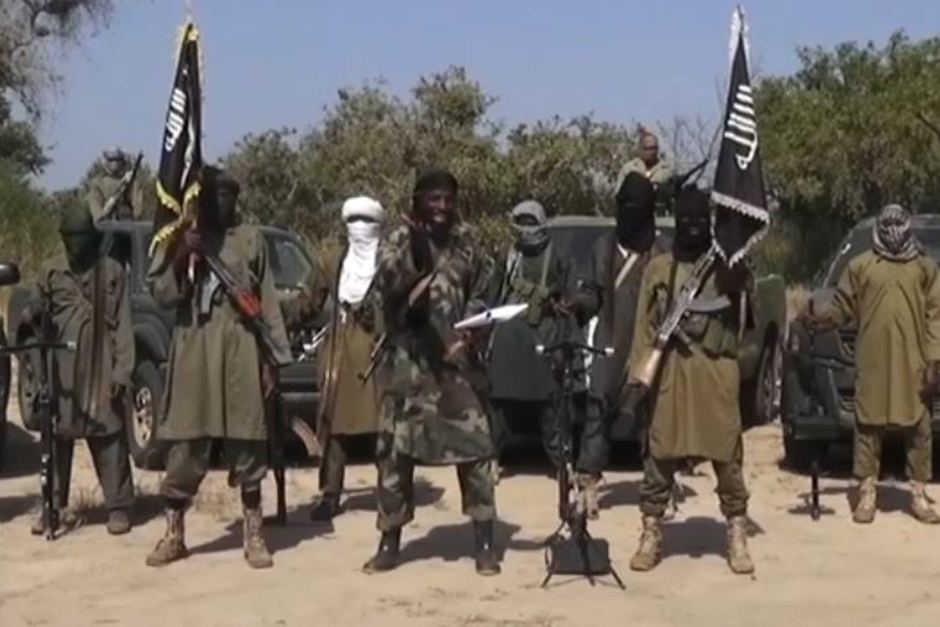
A suicide bomber has killed 11 persons on Wednesday in an early morning suicide attack on a mosque in Gamboru, a Nigerian border town with Cameroon in Borno State.


A member of a vigilante group in Maiduguri, North-east Nigeria, Abba Yusuf, told journalists on phone that “a suicide bomber detonated an explosive strapped on him at the mosque.”


He said the suicide bomber died in the explosion, alongside 10 worshippers.


Nine persons died on the spot, while the other two died in the hospital.


The Military and other security agencies in Maiduguri were yet to comment on the incidence at the time of filing this report.


Borno State government on Tuesday announced the tightening of security in the state with an extension of hours of curfew in Maiduguri, the state capital, after a resurgence of violence.


Total Blackout Across Nigeria — Two Days After Buhari Celebrated Power Landmark

0

By Chinedu Asadu

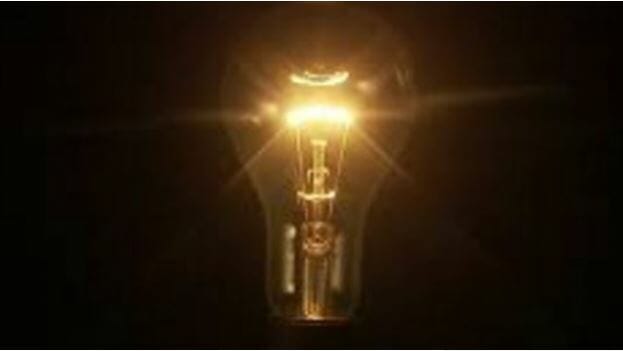
There was blackout across the country on Tuesday as a result of the collapse of the national grid.

The situation was caused by a fire incident on one of the pipeline systems in the country, the ministry of power said in a statement.

It identified the pipeline system as Escravos Lagos Pipeline System near Okada, Edo state.

The ministry, which also includes works and housing sectors, said it was working to restore power distribution nationwide.

The statement released on Tuesday night read: “Regrettably, after a sustained period of increasing production and distribution of power since September 2017 to date, the Nigerian Gas Processing and Transportation Company Ltd (NGPTC) has reported a fire incident on its Escravos Lagos Pipeline System near Okada, Edo State on Tuesday, 2nd January, 2018.

“The incident requires a shutdown of the pipeline supplying gas to Egbin 1,320MW; Olorunsogo NIPP 676MW, Olorunsogo 338MW, Omotosho NIPP 450MW, Omotosho 338 MW and Paras 60MW power stations.

“The sudden loss of generation due to interruption in gas supply from these stations caused the national transmission grid to trip off around 20:20 on 2nd January 2018. The national transmission grid is owned and operated by the Transmission Company of Nigeria (TCN).

“Most of Nigeria’s power generation is from thermal power stations that require gas for fuel. The gas is produced by oil and gas companies overseen by the ministry of petroleum resources.

“The gas is delivered to the power stations through pipelines owned and operated by Nigerian Gas Processing and Transportation Company Ltd (NGPTC), a subsidiary of Nigerian National Petroleum Company (NNPC).

“TCN and the generation companies are working to restore operation of the national grid.

“Once the national grid is restored output from the hydroelectric power stations and all other unaffected gas fired thermal power stations will be increased to the extent possible to minimize the impact of loss of generation from the affected power stations while NNPC takes necessary steps to restore gas supply.”

In his New Year speech, President Muhammadu Buhari had celebrated landmarks in the power sector under his watch.

He said: “Generation has now reached 7,000MW. On December 8, 2017 the country achieved 5,155MW of power delivered to consumers, the highest level ever recorded.

“Several moribund projects have been revived.  Repairs of Afam Power Station added 110MW in 2017 and another 240MW will be added this year through a private investment partnership.

“Katsina Power Project is now being tested and producing 10MW of power from wind for the first time in Nigeria.  It should be fully operational this year.

“The Zungeru 700MW Hydroelectric Power Project, stalled by court cases is due for completion in 2019.  The transmission and other requirements to operate the 30MW Gurara Phase 1 Hydroelectric Plant, the 40MW Kashimbilla Hydroelectric Plant and the 215 MW Kaduna Gas/LPG/Diesel Power Plant will also be completed this year.

“A landmark project, Mambilla Hydroelectric Power Project is at last taking off.  This project has been on the drawing Board for 40 years, but now the engineering, procurement and construction contract for the 3,050MW project has been agreed with a Chinese joint venture Company with a financing commitment from the government of China.  Completion is targeted for 2023.”

Curled from The Cable

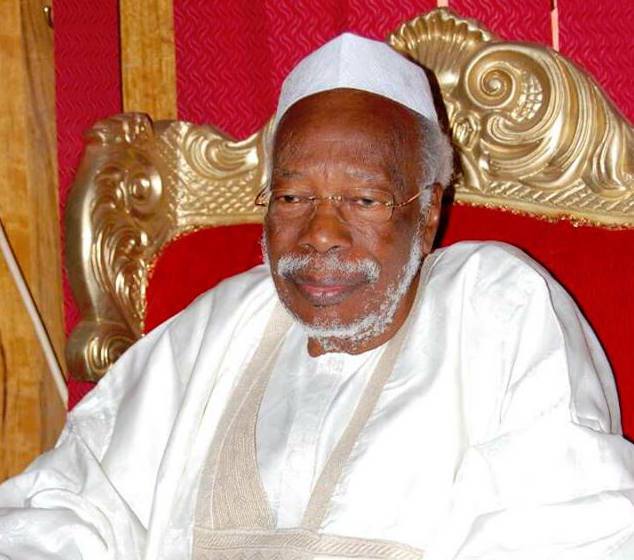
Nigeria: House Of Reps Speaker Dogara Mourns Former Kaduna Governor Lawal Kaita

0

By Joseph Edegbo

Kaduna (Nigeria) – The Speaker of the House of Representatives, Yakubu Dogara has expressed sadness over the demise of second republic Governor of old Kaduna State, Lawal Kaita who died at the age of 85.

Mr. Kaita was governor of old Kaduna state between October and December 1983, when he won election on the platform of the then National Party of Nigeria (NPN).

In a statement, issued by his Special Adviser on Media and Public Affairs, Turaki Hassan, the Speaker described the late elder statesman as a man of outstanding character and a committed Democrat, who devoted his life to working for the development of democracy in Nigeria.

While noting the exploits and positive contributions of the late Kaita as a member of Constituent Assembly that midwifed Nigeria’s Constitution and Governor of old Kaduna State, Dogara said the deceased will continue to be remembered for his selfless service, patriotism and abiding faith in the unity and progress of the country.

“Alhaji Lawal Kaita was a very courageous man who left a legacy of service and built bridges of friendship and unity across the north and the country in general”.

“He will continue to be honoured and remembered by present and future generations for his dedication to the service of his people during his tenure as a Governor and even after”.

“Painful as his death is, we are however consoled with the fact that Alhaji Kaita left an indelible footprint and legacy of service to the society as well as commitment to the ideals of democracy and nationhood “.

While condoling with the bereaved family, the government and people of Katsina state, Speaker Dogara prayed God Almighty to grant the deceased eternal rest.

At the first attempt, Late Kaita lost to Balarabe Musa of the Peoples Redemption Party (PRP) when he contested for governorship in 1979.

Before then, he was a member of the Constituent Assembly of Nigeria (1977-1978) which fashioned out Nigeria’s 1979 constitution, and later appointed special assistant to former President Shehu Shagari.

He was a leading member of the late Shehu Yar’adua’s political movement, as well as a founding member of the Action Congress of Nigeria (ACN).

We Can No Longer Sell Fuel At N145 Per Litre, Nigerian Oil Marketers Insist

9
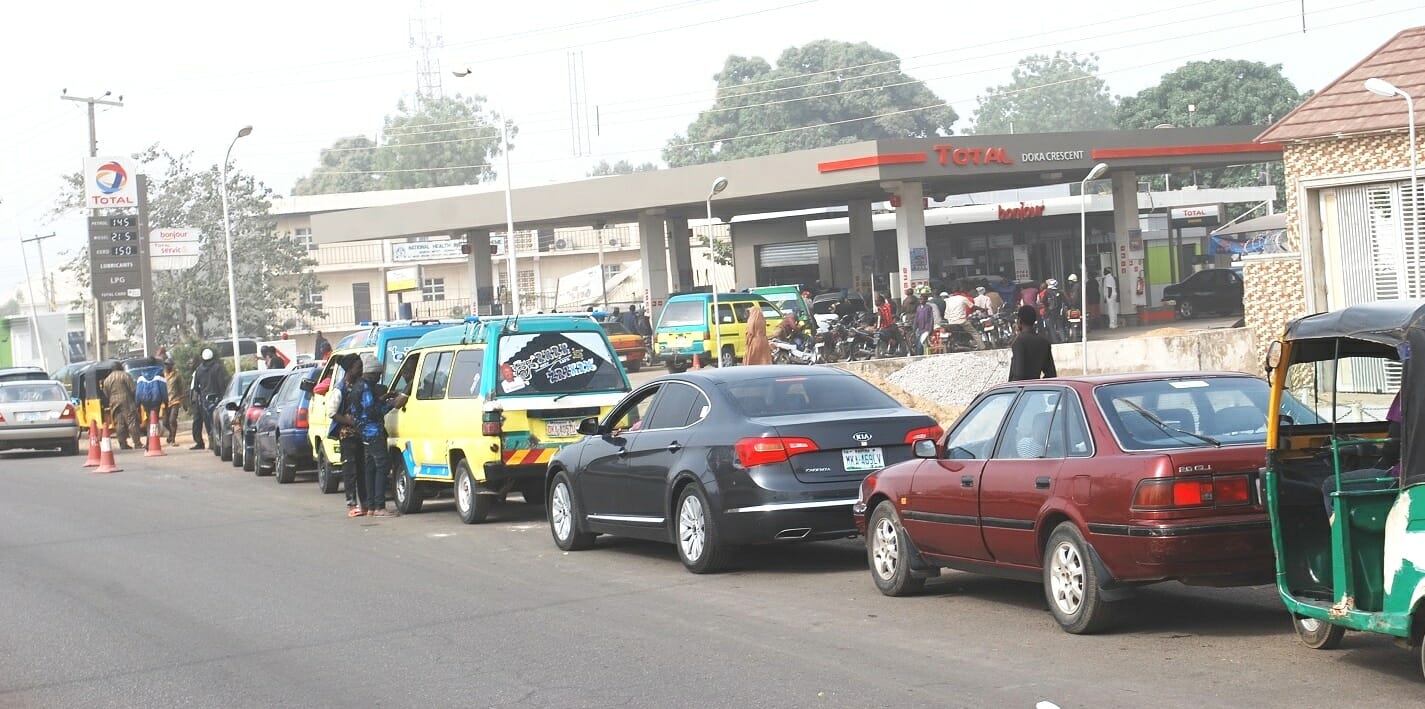
Vehicles take long queue to buy fuel in Kaduna, northern Nigeria

By Iliya Kure

Oil marketers in Nigeria say they will no longer sell petrol at the rate of N145 per litre – the government price, saying, “it is no longer profitable to sell at that rate.”

Speaking with journalists Tuesday after meeting with top government officials at Aso Rock Villa Abuja, chairman of Depot and Petroleum Marketers Association of Nigeria (DAPMAN), Dapo Abiodun, said, “Today’s meeting was called at the instance of the chief of staff to the president and it was to find out exactly what happened, where we had the problems we had in December with the supply of petrol and how Nigerians were made to go through the pains and suffering,” he said.

“He wanted to know the truth and to ensure that going forward this problem will be solved once and for all. And that is why you saw that we sat in here from 2pm and the meeting just finished after three and half hours.

“A lot of issues were raised and a committee was constituted that will meeting tomorrow under the chairmanship of the minister of petroleum to further go into the nitty-gritty and to ensure that these problems do not reoccur again.

“From our point of view as marketers, we made our submission known to government and we emphasised the fact that this was not a marketer-related problem. There was no hoarding on the part of any marketer. Marketers are your brothers, they are Nigerian citizens, they are businessmen, no marketer makes money from hoarding petroleum products, our business is to take petrol and sell.

“We explained that the problem that you saw is not willful on the part of anyone either NNPC or marketers.

“The situation, from our point of view, is that from January to December, the price of crude remained relatively stable. Following the Hurricane Katrina in the month of September, October, crude prices went up and marketers lost the ability to import any sell at N145 per liter.

“Since the price of crude is directly proportional to the refined product, we could not import petrol and sell at N145 anymore. And this business is a partnership between marketers and NNPC. Marketers being in a certain volume and NNPC also brings in a certain volume.”

He also spoke on the cause of fuel scarcity, advising government on the steps to take to avoid a repeat of the situation.

“In the past marketers bring in about 60% while NNPC brings about 35 to 40 percent. But by the month of October marketers completely stopped importing because there no more subsidy so we can’t sell for profit so we have to stop importing.

“So, the burden of importing 100% now fell on NNPC. So you can imagine a situation where NNPC was importing in part and marketers were importing in part and then suddenly NNPC begins to import 100%. Couple with the fact that in the months we called the ember months from October to December the consumption of petrol is highest in the country.

“So, you now have what we call a double warning. NNPC is suddenly finding its importing what they probably didn’t expect in terms of volume and the fact that Nigerians themselves are consuming more volume that they will normally consume in earlier months. Couple with the fact that the countries that are surrounding us as a nation are all selling fuel at more than $1 per liter. $1 today is about N360. If you go to Cotonou, Ghana, Niger so is not unlikely that some of our petrol is finding itself across the body to these countries.

“All these are issues we believe amounted to what we saw in December but thankfully NNPC rose to the occasion, they stepped up import, stepped up supplies that situation has since normalized.

“Today’s meeting is to ensure that this does not happen again and this we are going to continue tomorrow in the committee that was set up under the chairmanship of the minister of state for petroleum to ensure that we find a long-lasting and enduring solutions to this problem so that Nigerians will not have to go through this borrowing situation again.”

Maikanti Baru, Group Managing Director of the Nigerian National Petroleum Corporation (NNPC), Ibe Kachikwu, Minister of State for Petroleum Resources, and Lawal Daura, Director-General of the Department of State Services (DSS), were in attendance.

https://www.africaprimenews.com/2017/12/30/news/nigeria-fuel-crisis-labour-hails-senate-threatens-mass-action-lf-scarcity-persists/

New York to install 1,500 security barriers after vehicle attacks

0
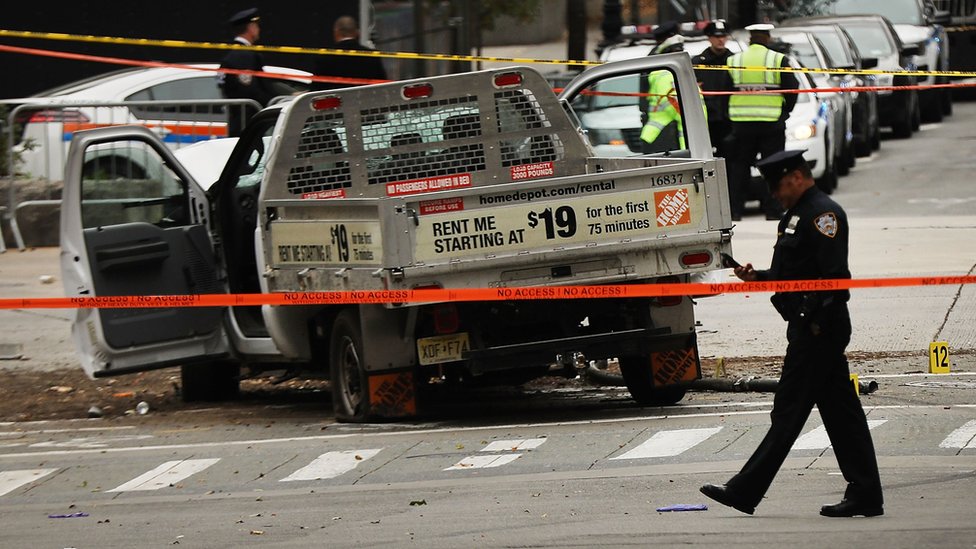
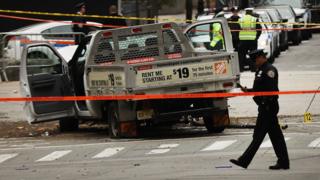
The crashed vehicle used in what is being described as a terrorist attack sits in lower Manhattan the morning after the event on November 1, 2017 in New York City.Image copyright Getty Images
Image caption On Halloween, a terror-related vehicle attack killed eight in the city’s Lower Manhattan.

The mayor of New York City has announced plans to install 1,500 steel street barriers to prevent vehicle attacks.

Bill de Blasio said the protective barriers were part of a $50m (£37m) investment in security infrastructure.

The move comes after two vehicle attacks in 2017 that killed nine people in total.

The new permanent barriers will replace temporary concrete blocks that were put in place after the incidents.

“I want to tell you these are the most cowardly kind of attacks – when someone with a vehicle ploughs into a group of innocent pedestrians. It’s disgusting,” Mr Blasio said at a press conference in Times Square, near where one of the vehicle attacks took place.

“But we know there are some out there who mean to do us evil and we will protect against it.”

Last Halloween, a 29-year-old man drove his truck into people on a cycle path in Lower Manhattan, killing eight people and injuring 11.

In May, another driver rammed his vehicle into the crowds on sidewalks in Times Square, killing a 18-year-old and injuring a further 20 people.

Temporary concrete blocks were installed in Times Square and Lower Manhattan in the last few months following the attacks in the city and others worldwide.

“That was necessary to immediately secure those areas in light on these new trends we’ve seen,” Mr Blasio said.

“But we knew we needed long-term solutions, we needed permanent barriers.”

Note: This story is auto-generated from BBC syndicated feed and has not been edited by AFRICA PRIME NEWS
Traditional Ruler In Northern Nigerian Kaduna Community Kidnapped

0
Map of Nigeria showing Kaduna State

By Amos Tauna

Kaduna (Nigeria) – The paramount ruler of Ikulu in Zangon Kataf local government area of Kaduna State in northwest Nigeria, Yohana Sidi Kukah, has been kidnapped by unidentified gunmen.

The traditional ruler was kidnapped alongside one of his security guards at about 7pm local time on Tuesday, at his residence in Anchuna.

The attack is coming barely 24 hours when another traditional ruler in the area is killed alongside his wife.

A source in the village who wants to remain anonymous said, Kukah’s house was surrounded by gunmen who shot sporadically into the air and took away the traditional ruler.

“The gunmen surrounded the house of the traditional ruler and started shooting. They moved inside his residence and took him away,” the source told AFRICA PRIME NEWS.

The source said the sole administrator of Zangon Kataf local government area has been contacted and confirmed the incident

Both the police and the Kaduna State government are yet to make an official statement on the incident. Phone calls placed to the police spokesman in Kaduna, ASP Hussaini Muhktar, could not go through.

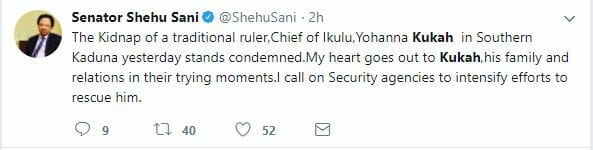
In a tweeter reaction, the Senator representing Kaduna Central Senatorial District, Shehu Sani, condemned the attack and called on security agencies to rise to the occasion.

The chief of Ikulu is a brother to the Catholic Bishop of Sokoto Diocese, Mathew Hassan Kukah.

Currency Exchange Rates

USD - United States Dollar
ZAR
0.06
EUR
1.17
CAD
0.73
ILS
0.31
INR
0.01
GBP
1.35
CNY
0.14
Enable Notifications OK No thanks