A group, Youth Political Hotspot of DE Watson Leadership Academy has urged youths to embrace and support other fellows aspiring to political positions in respective of tribal ,cultural and religious differences.
Leader of the group, Alhassan Adamu of the Federal College of Education and Technical Gombe, Northeast Nigeria, made the call at a news briefing organized by Leadtots and Human Development Services of the National Endowment for Democracy, USA over the weekend in Gombe.
He said every youth should be an advocate of a fellow youth running for elective position in the country.
“We call on every youth in Nigeria to get involved in partisan politics, get registered and inspire more youths to run for elective position from grass root of local government, state and Federal levels.
“Youths must come out en mass to support the aim of the not too young to run bill on increasing their participation in politics, we are half of the population in the country and the world at large.
“Improving youth and women involvement in partisan politics is necessary in strengthening democracy in the country this is one way of ensuring that everyone from every aspect of life had equal opportunity to take part in decision making and leadership.
“Relying primarily on the strength of just aged men as leaders can result in an imbalance of perspectives and ideas. Only inclusiveness of Youth and women in party politics can solve this.
Adam explained that the group was formed by the De Watson Leadership Academy and funded by the National Endowment for Democracy USA under the service of Leadtots and Human Development Services in order to bring student union leaders to share ideas and exchange good practices.
“The student union bodies being the hub of political leadership development have great responsibilities in the training, strengthening of politics with positive and sound ideologies among student union leaders at the stage of their political development.” he said.
A 32 year-old former Boko Haram Commander, Rawana Goni, has appealed to the Nigerian military authorities to allow him make a phone call to the elusive leader, Abubakar Shekau and at least 137 other terrorists to make them surrender.
Goni, who is undergoing rehabilitation at a military detention camp in Maiduguri, said this in an interview with the News Agency of Nigeria (NAN).
The former Boko Haram commander is an indigene of Bama in Borno state. He surrendered to the military in Cameroon after escaping from Sambisa Forest eight months ago.
He claimed to have held several positions in ten different cells of Boko Haram in Sambisa.
He said the last position he held was as the Chief officer of Dispute Resolution for the group.
He explained that many militants came to him to settle problems ranging from family matters. He also reconciled Boko Haram factions.
“I rescued people sentenced to death and minimised punishment of those who committed crimes. I am one of the most influential persons in the group and they always listened and abided by what I said.
“I joined Boko Haram because of the condition I found myself in the last five years. When the insurgents invaded Bama town, I ran with my family to Cameroon thinking I was in a safe destination. But on reaching Cameroon, I was shocked to realise that I brought myself into another Boko Haram camp. By that time, I knew I would not survive without joining the group.
“Days after my induction, we opened a permanent camp at the Cameroon border and named the forest “Aluska”. It was in that camp that I learnt all types of trainings including handling weapons.
“After the training, we embarked on our first mission.We invaded a military formation in Cameroon, dislodged the soldiers and took many weapons from their armoury. We couldn’t take any vehicle because the area was surrounded by river.
“We took the weapons we recovered to our leader Abubakar Shekau and briefed him on our success. He was happy that five of us could dislodge a military formation. After congratulating us, he appointed me to lead the group and returned our weapons to us.
“Few days later, I recruited many fighters, because as a commander, you are expected to have no fewer than 250 fighting troops.
“With the new fighting force, we invaded Waza village, Damaga and Banki. We also invaded Bama which is my hometown.
“I was touched to see my people being tortured and killed, while many women and children were living in excruciating hardship. So I decided to pass a message to my fellow insurgents from Bama and we formed a group comprising about 137 persons to help our people in prison to escape.
“I was able to rescue about 300 hostages at the prison facility in Bama. I usually lied to the guards at the prison that I was going to kill the inmates. But I would take them to a safe place in Konduga and ask them to run to a safer destination.
“Many of the prisoners were exposed to hard labour while some were used as guinea-pigs at shooting range by new arms handlers among Boko Haram,”he said.
On Abubakar Shekau’s health status, Goni told NAN that the insurgents’ leader was healthy as against a report that he was ill.
“Nothing happened to him. He broke his leg five years ago while riding on a horse. But he had since recovered. Anyone saying Shekau is sick is only deceiving himself. We used to communicate through radiophone but not any more,” he said.
Goni, who believed that the war was coming to an end, urged the military to let him tell Shekau and other insurgents that he is still alive.
“My 137 boys are on standby to hear I am still alive and I can assure you they will run out of Sambisa Forest and surrender to the military. I once told them to surrender and they said we shall all get killed.But I told them that I will surrender and they said if nothing happened to me, they will all come out,” he said.
Goni commended the military for the special treatment given to inmates who surrendered.
“They received us with joy and interact with us at all time. They feed us well and always want to know our problems. If other Boko Haram members knew how we are being treated, they will never want to remain where they are,”he said. (NAN)
A four – day Routine polio immunization campaign in Kaduna State, Northwest Nigeria begun on Saturday.
The exercise is being carried out from house to house, streets, market places, motor parks and highways.
A statement jointly issued by the Deputy Director, Kaduna State Primary Health Care Development Agency, Hamza Ikara and the Coordinator of Journalists Initiative on Immunization against Polio (JAP) Kaduna State chapter, Lawal Dogara called on Parents to ensure they made their children available for the immunization.
The statement appealed to traditional and religious leaders to as usual, give all the needed support for the successful conduct of the exercise in the State.
It explained that all adequate arrangements had been made for the smooth conduct of the exercise by all the stake holders including the State Government, Primary Health Care Development Agency and Development partners.
Speaker Dogara (R) during a courtesy visit to Da Jacob Gyang Buba at the Palace in Jos
Speaker Dogara (R) during a courtesy visit to Da Jacob Gyang Buba at the Palace in Jos
Speaker of Nigeria’s House of Representatives, Yakubu Dogara, has commiserated with the people of Plateau state following the recent wave of violence which engulfed communities in the state claiming the lives of about 200 people.
Speaking during a condolence visit to the state, Speaker Dogara described the sad occurrence as a collective loss not just to the affected communities and families, but to the country as a whole.
“I know that in difficult moments like this when you’re dealing with tragedies that involve collective loss it’s always difficult to cope in the sense that in most cases bereavement has been individualized. People tend to deal with the bereavement on individual basis but this is something that involves collective loss, not only to the people of Plateau State, but across Nigeria as a whole. I know that the wounds will still be fresh and deep, because tragedies of this scale leave scars.”
“When events like these happen, the tendency is to ask what the government is doing about it? I had cause to have an interphase with the President, in company of the Senate President, and he has assured that the affected communities will be rebuilt. He has even directed NEMA to take census of what has happened and present the implication to him for approval. He also talked about looking at the security architecture to see what can be done in order to ensure that we do not have a repeat of this type of tragedy.”
He further warned of the grave danger which unchecked violence portends for Nigeria and restated the commitment of the House to working seamlessly with the Executive to combat insecurity, while using legislative tools such as appropriation to ensure adequate funding for security agencies.
“I’ve always repeated the point that we cannot afford to lose the fight against violence and still maintain our democracy and civilization, it’s impossible. Whatever it takes, we have to defeat violence. Because if we do not, we may think now it is affecting only Plateau and some selected states in Nigeria but unfortunately, mayhem like these can lead to chaos on a national scale. It may lead to a scale that may even play out outside the territory known as Nigeria, with international implications. It is therefore our collective responsibility to ensure this doesn’t occur again, and if we’re determined, we’ll be able to stamp it out.
As a leader in the National Assembly, I want to say from the bottom of my heart because of the teeming people who put us in office, that we are willing and ready to work with the security agencies and the Executive to provide whatever is necessarily needed to end this mayhem across Nigeria, wherever it is in the North or South, and to provide support and funding through appropriation to be able to deal with this challenge that is a serious threat to us all.”
The Speaker also called for wider consultations and coordinated efforts to restore peace.
“Working for peace is really not easy; it should involve the government, faith-based organizations, the Church and its builders, leaders from the Islamic faith, community-based organizations and leaders, and if we’re finding it difficult, nothing stops us from calling for assistance from the international community in order to deal with this problem.”
Speaker Dogara commiserating with some Victims of the violence at the UNIJOS Teaching Hospital
Speaking further, he noted that the people of Plateau state are widely acclaimed for being peaceful and urged those who lost loved ones to the violence to not resort to self-help by engaging in retaliatory attacks.
“One thing the people of Plateau have been known for is being peace-loving, as the motto is home of peace and tourism. We shouldn’t allow these deep and fresh wounds or scars that the crisis is leaving behind to turn us into what we are not. In most cases when events like these happen, because we’re all human, the tendency is for one to seek revenge or retaliate; we should however always look to the future.”
Governor Simon Lalong, in his remarks, thanked members of the National Assembly for their concern regarding the insecurity in the state. He lamented the resurgence of violence after more than three years of uninterrupted peace and pledged the commitment of his administration to restoring harmony.
(From Right to Left) Dr. Aliyu Waziri, Dr Adamu Maigari Musa, Prof Kabir Danja, Alh. Fahad Chikaji
(From Right to Left) Bilkisu Muhammad, Dr. Aliyu Waziri, Dr Adamu Maigari Musa, Prof Kabir Danja, Alh. Fahad Chikaji
By Austin Emmanuel:
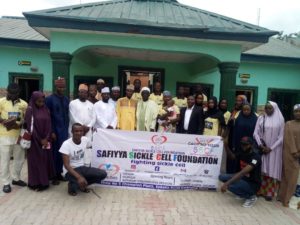
An awareness Programme on sickle Cells anaemia has been held in zaria, Northwest Nigeria to commemorate the World Sickle Cells Day with a call on Nigerians to go for Genotype test before marriage.
Kaduna State Commissioner for Health, Dr Paul Manya Dogo gave the advice at a lecture organized by an NGO, Arewa Youth Trust Foundation in collaboration with Saffiyya Sickle Cells Foundation, touched on sickle cells anaemia, peaceful coexistence, girl child education and personal hygiene.
The Commissioner who was represented by the Medical Director, Limi Hospital, Dr Adamu Maigari Musa, said the call was necessary in view of the hardship the victims went through and the need to reduce the spread of the disease.
Dr Maigari-Musa lauded the efforts of Arewa Youth Trust Foundation for organising the “educative and impressive lecture series,” which will be of beneficial not only to the state but the country at large.
Also speaking, A Consultant Hematologist at the Ahmadu Bello University Teaching Hospital (ABUTH), Dr. Aliyu Waziri advised people to stop addressing the victims as sicklers, rather, they should be addressed as sickle cells anaemia patients.
The medical expert also spoke of the need for people to go for genotype test before marriage, adding that “it is very important for all to know their genotype.”
He explained that the disease was neither contagious nor communicable, but hereditary as a result of marriage between persons with AS and AS or between AS and SS.
In his presentation on Peaceful Coexistence, Prof Kabir Danja charged students and youths to promote peace at all times to pave way for national development.
He identified some tendencies that could lead to conflict in the society to include poverty, religion, ethnicity and lack of self-help, among others.
Participants at the awareness program
Amina Shabba, a sickle cells anaemia patient and a 400 level student of Accounting at the Ahmadu Bello University, shared her experience on how she suffered several health failures which had almost cost her life as well as her academic and social being since from childhood till date .
She therefore urged couples to know their genotype before planning to get married so as to avoid given birth to a child that would suffer so much pains on a daily basis.
On her part, Bilkisu Muhammad, a Pharmacist from the Suffiyya Sickle Cells Foundation, encouraged the students on personal hygiene, while parents should support Girl-Child education
The Executive Chairman of Arewa Youth Trust Foundation, Fahad Chikaji, thanked the students and Hallmark International School management for always hosting the awareness program, which he noted, prepares students to broaden their knowledge ahead of their equals.
He advised the students to take advantage of the lectures to enhance their knowledge, while educating others.
Africa Prime News reports that the Foundation visited orphanage centres, at Gwargwaje and Tukur -Tukur, all in Zaria metropolis where it made some donations.
No fewer than 10 people died in an accident that occurred on Kaduna-Kano expressway on Saturday.
The News agency of Nigeria (NAN) reports that the accident occurred around Nuhu Bamalli Polytechnic, Zaria, at about 5:30 a.m.
A statement issued by the Head of Public Enlightenment, Zaria Unit Command of the Federal Road Safety Commission, Mr Idris Yahaya, confirmed the occurrence.
Yahaya said in the statement that the Unit Commander, Zaria Unit Command, Assistant Corps Commander, Muktar Zubairu, described the accident as “pathetic”.
“The accident involved three vehicles, a luxury bus; marked GDD 361 YE, a car; marked SGR 57 XA and an articulated vehicle; marked LND 246 XE.
“There are 48 persons in the three vehicles; nine people got burnt to death, while one other woman died in the hospital, 31 persons were injured while seven persons survived the accident.
The driver of the luxury bus is receiving treatment at Ahmadu Bello University Teaching Hospital, Shika, Zaria.’’
The unit commander said that the injured persons were also receiving treatment at the hospital, while the bodies of the dead had been deposited at the same hospital.
Zubairu called on drivers traveling long distance to exhibit the habit of stretching their legs by stopping and walking around for a while after four hours of journey.
“When a driver covers a distance of three to four hours, he should stop, relax and stretch his legs to clear the fatigue and carry on with the journey later.
“Drivers should also drive with care, especially in this rainy season; they should ensure that their tyres are good enough for a long journey; and driving with smooth and fairly-used tyres is very dangerous,’’ he advised the drivers.
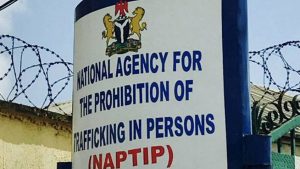
The Director-General, National Agency for the Prohibition of Trafficking in Persons (NAPTIP), Ms Julie Okah-Donli, has described the conviction of a British-based Nigerian nurse, Ms Josephine Iyamu, as good omen to the fight against human trafficking.
The Head of Press and Public Relations of NAPTIP, Mrs Stella Nezan, quoted Okah-Donli’s reacting in a statement in Abuja.
The statement noted that Iyamu was convicted by the Birmingham Crown Court for human trafficking.
She quoted the NAPTIP boss saying that conviction is the beginning of the renewed determination by the agency to bring all foreign-based human traffickers to justice irrespective of their location around the world.
According to her, Okah–Donli in collaboration with other foreign partners and law enforcement agencies will continue to smoke out suspected human traffickers and make them to face justice just like their counterparts in Nigeria.
The News Agency of Nigeria (NAN) recalls that operatives of NAPTIP and National Crimes Agency (NCA) had during a joint operation tagged “Operation REDROOT”, arrested Iyamu under the joint counter trafficking project called Joint Border Task Force (JBTF).
It said with the latest development, Iyamu had become the first person to be convicted under new modern slavery laws, after being found guilty of trafficking five Nigerian women to Germany to work as prostitutes.
She said that Iyamu was prosecuted under the Modern Slavery Act involving victims who had no connection to the UK but had been victimised by a British national.
“Jurors were told the 51-year-old Liberia-born British citizen forced the women to swear oaths to hand over money to her during `juju’ ceremonies.
“These included forcing women to eat chicken hearts, drink blood containing worms, and have powder rubbed into cuts.
“Iyamu, formerly of Bermondsey in London, then arranged for the women to be trafficked across the Mediterranean, with one being told to pay a bill of 37,000 Euro (about 32,700 dollars),’’ the statement read in part. (NAN)
Economic Community of West African States (ECOWAS)
Economic Community of West African States (ECOWAS)
The Economic Community of West African States (ECOWAS) on Friday inaugurated its Regional Electricity Market to address power challenges and fast track efficient cross-border electricity trade among member states.
President of Benin, Mr Patrice Talon, represented by the Senior Minister of Planning and Development, Mr Abdulahi Tchiane, officially inaugurated the project.
He said that the measure would go a long way in ensuring steady integrated power supply among member states.
The News Agency of Nigeria (NAN) reports that the official launch was preceded by series of meetings by experts and Ministers of Energy from ECOWAS Member States to review and adopt a document for the take off of the regional electricity market.
Talon said that the inauguration of the project was a realisation of the founding fathers of ECOWAS and would help boost economic integration and development in the sub region.
“The inauguration of this project is very historic and it will also help our economic integration and development in ECOWAS, ” he said.
Earlier, Nigeria’s Minister of State for Power, Works and Housing, Mr Suleiman Hassan told NAN that the project would help solve some of the power challenges in the sub region.
He said that Nigeria as a major player in the electricity market would be fully involved in the implementation of the project.
“The setting up of the regional electricity market will help solve the problem of unequal distribution of energy resources between member states,
“It would also bridge the gap between supply and demand for electricity,
“In the long run, the regional integration of the West African Electricity sector into a unified market will enable the population of ECOWAS benefit from a more reliable and affordable electricity supply,” he said.
The Regional Electricity Market is being coordinated, managed and regulated by the ECOWAS Regional Electricity Regulatory Authority (ERERA) and the West African Power Pool (WAPP).
The Regional Electricity Market is planned in three phases with the first phase being transitional for two years while the second phase kick starts by 2020 with a competitive market.
The third phase is a long term vision dependent on the availability of adequate regional transmission capacity and enough generation reserve in member States. (NAN)

 By Ahmad Umar: