Cote de’Ivoire President, Alassane Ouattara, named a new government on Tuesday, but the key positions of finance, defence and agriculture were unchanged, a Presidential Spokesman said.
Ouattara dissolved the administration on July 5, because of a row between his RDR party and its ruling coalition partner, the PDCI of Henri Konan Bedie, whose support helped the president get elected in 2011 and 2015.
Few of the 36 ministerial jobs were changed in a re-jigging that was largely cosmetic.
A handful of extra jobs went to the PDCI and one key post went to an ally of National Assembly Head, Guillaume Soro.
Soro is a former rebel leader, who loosely controls armed factions of the military that have staged several mutinies in the past few years.
Prime Minister, Amadou Gon Coulibaly, would retain the finance portfolio, Hamed Bakayoko retains defence and Mamadou Coulibaly Sangafowa remains Agriculture Minister, said Patrick Achi, Secretary General of the Presidency.
Foreign investment and a plethora of lucrative cash crops, including 40 per cent of the world’s cocoa, have enabled Ivory Coast to become one of Francophone Africa’s most prosperous economies.
But political squabbling, which sometimes spills over into ethnic conflict, periodically threatens its stability.
It was divided for nearly a decade between a government-controlled south and rebel-held north, ending in a short civil war that killed 3,000 people after a disputed poll in 2010.
Many fear that old rivalries over power and land could easily flare up again at the 2020 election.
Government spokesman and Ouattara loyalist, Bruno Kone, was made the Construction and Urbanisation Minister.
His replacement was Claude Isaac, a senior PDCI member.
Jean Claude Kouassi, also PDCI, became the new Minister of Energy and Mines to replace a minister who left in April.
Sidiki Konate, a close Soro aide, was made Minister of Arts and Culture.
The two parties had fallen out over the PDCI’s insistence on a candidate of its choosing in the 2020 election.
The party spurned the idea of a joint ticket if this condition was not met in June.
It was unclear whether this will resolve the spat.
Several PDCI members, including a party spokesman, did not respond to requests for comment.
Julien Kouao, a political analyst in Abidjan, doubted Ouattara’s reshuffle would appease the PDCI.
“This newly formed government could deepen divisions,’’ Kouao said.
“We are far from achieving the political cohesion necessary to resolve this.’’
Nigeria says it will Google to ensure greater digital access in the country and around the world.
Vice President Yemi Osinbajo stated this during a meeting with Google executives at the company’s corporate headquarters in the Silicon Valley, at the start of the investment roadshow he is leading to San Francisco and Los Angeles.
The proposal is in line with the Federal Government’s Economic Recovery and Growth Plan (ERGP), especially its strategy to diversify the economy by making technology an important foreign exchange earner.
A statement his spokesman, Laolu Akande, says, Google CEO Sundar Pichai, welcomed the Vice President to the meeting held at Googleplex in California, U.S.
The Vice President said the Federal Government would partner Google in the area of localisation of content and content creation to make content cheaper and more accessible to Nigerians.
Osinbajo also discussed other areas for partnership with Google, including the establishment of Google Artificial Intelligence Centres in Institutions of Higher Learning in Nigeria.
Another is the establishment of a Youtube Creator space to support Nigeria’s digital content producers and enable them to make money with their craft leveraging on Youtube and Google Tools.
Other areas discussed include the expansion of Google’s Launchpad Accelerator Programme in Africa.
According to Akande, Google also indicated interest in the policy environment in Nigeria and formulation of policy to encourage partnerships and investments from Google global with companies in Nigeria’s technology space.
For Nigeria, the Google Next Billion Users plan is expected to provoke innovation on a large scale.
Nigeria has been identified as one of the major countries where the latest generation of Internet users will come from, and the next billion users are said to be already changing the Internet in three key ways.
The areas include: the prominent use of smartphones to access the Internet, an instinct for universal computing, and a demand for localized content.
The future of the internet is in the hands of the next billion users, as the global technology company has noted.
It is reckoned that the latest generation of internet users will come online on smartphones in places such as Brazil, China, India, Indonesia and Nigeria.
The country’s interest is in line with its ERGP plans and quest to become a data-driven digital economy in addition to making gains in terms of the efficiency and transparency of process that a digital economy offers.
“Also in Federal Government’s effort of ensuring a skilled work force, it is partnering Google to increase the number of Nigerians in the global technology firm’s Launchpad Accelerator, and Google I/O Developer Festivals.
“Also Google will offer training to Nigerians on Android and Web Development, Digital Marketing and Taking Business Online,’’ he said.
Akande recalled that an objective of the Vice President’s trip was to showcase to the world the progress and strides in the country’s technology, innovation and creative space by Nigerian start-ups and entertainment industry practitioners.
At the meeting held on Tuesday in Silicon Valley, the Vice President also interacted with scores of Nigerians working with Google.
He later met with a series of key technology investors and also visited the headquarters of LinkedIn where he was the Special Guest at the firm’s Fireside Chat with Nigerians in the Diaspora.
A Nigeria based NGO, Development Communications Network (DevComs) has called for the establishment of Youth Friendly Centres dedicated to providing sexual and reproductive health services that meets the special needs of the target group.
“it is important to establish Youth Friendly Centres dedicated to providing sexual and reproductive health services that meets young people at their point of need rather than resorting to practices that endangers their lives,” says Akin Jimoh, programme Director of DevComs in a statement on the 2018 World Population Day.
These according to him should operate based on elements of full, free, and informed choice with clients having access to information on all methods of contraceptives and also have the right to make decision about what service to take without coercion and barriers.
As against the current practice, Mr Jimoh says, “women, youths and adolescents in Nigeria must be provided services that are accessible, available, and acceptable to prevent unplanned pregnancies most of which ends in procurement of unsafe abortion, one of the contributors to maternal deaths in the country.”
The organisation also says it supports the promotion and mainstreaming of information and service delivery on family planning as a key strategy to manage Nigeria’s population.
This, it says, is especially important for marginalised groups and people in hard to reach areas across the country.
DevComs says the celebration would not be complete without recognising Nigerian women who bear the brunt of death and infirmities due to complications in pregnancy and childbirth.
“With Nigeria’s population growing at an unsustainable rate for national development, we support all efforts to address the in-balance in the country’s development and the current population of 198 million people, with urban population growing at an average annual growth rate of about 6.5 per cent,” the statement says.
World Population Day is celebrated every year on July 11. This year’s theme is “Family Planning is a Human Right”
“According to United Nations Population Fund (UNFPA), family planning is the information, means and methods that allow individuals to decide if and when to have children. Individuals, including women, youths and adolescents right to contraceptive information and services is grounded in basic human rights. The obligation for right to health mean that health care services must be available in sufficient quantity; accessible in ways that are non-discriminatory and ensure that services can be accessed physically and financially; acceptable in the sense of being respectful of the culture of individuals; and of good quality.
“Family planning is a wise investment for national development though with a number of differentials in level of acceptance across the country, that needs to be further enhanced for the benefits of Nigerians. It is very important that government at all levels should ensure the availability of family planning commodities and consumables in order to advance access to a major means of addressing the country’s population debacle. Government should realise that without contraceptive products there will not be a programme to save the lives of women, children and others who needs it. Government should be accountable for ensuring that the supply contraceptives products and consumables are available at the point of needs for every prospective user.
“All stakeholders needs to collaborate in other to make up for the unmet needs among target groups which according to the World Health Organization (WHO) is high among adolescents, migrants, urban slum dwellers, refugees and women in postpartum period. Health workers have a key role to play in making reproductive and sexual health service available to those who need it. From when an adolescent walk through the door of a clinic, to when he/she leaves, the services provided, good or bad, might shape the future of such individual,” the statement says.
Clients of troubled VBS Mutual Bank will now be able to access their funds after intervention from National Treasury.
VBS was placed under curatorship in March after it experienced liquidity challenges over 18 months. Problems included a failure of the board of directors and executive management to manage the bank’s rapid growth funding and its liquidity.
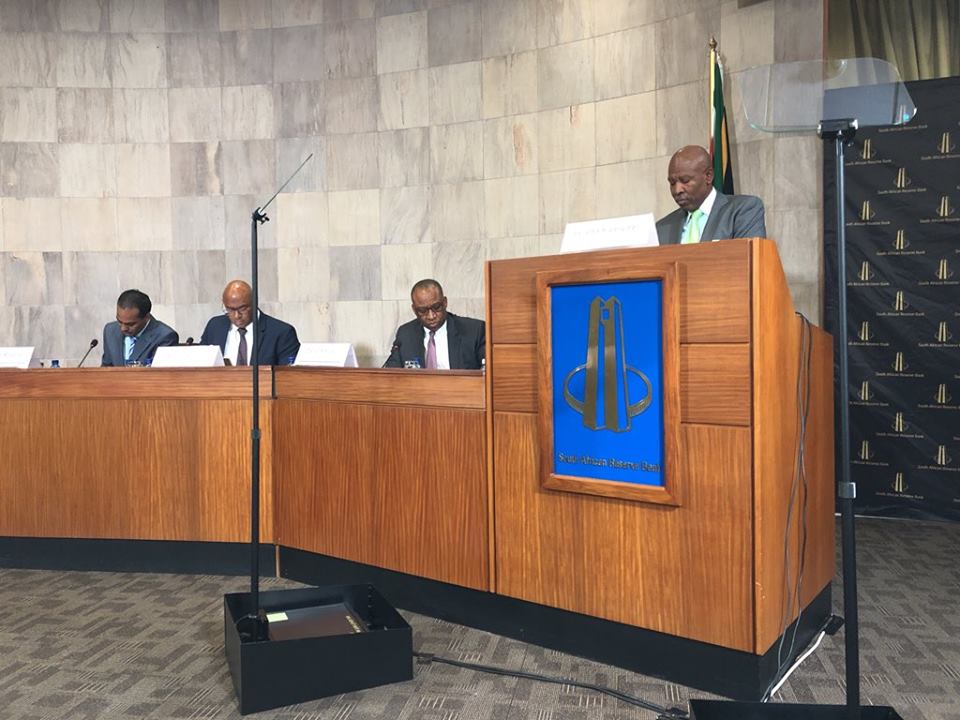
“Today, we are pleased to announce mechanisms to repay qualifying VBS retail depositors,” South African Reserve Bank (SARB) Governor Lesetja Kganyago told reporters at a press briefing on Monday.
Kganyago said the resolution came after discussions with Treasury.
Government has provided a guarantee to the SARB to facilitate the repayment agreement for all retail deposits up to R100 000 per retail depositor, starting from Friday.
When the bank was placed under curatorship in March, the SARB had said all retail deposits up to the amount of R50 000 per depositor would be guaranteed. The relief was for retail deposits from individuals, burial societies, stokvels and savings clubs. However, the guarantee does not cover municipal or corporate deposits.
Depositors will able to access their funds through Nedbank.
“After considering several options, and based on specific criteria for how we could give retail depositors access to their funds, we have decided to use Nedbank to facilitate the repayment of retail depositors.
“The criteria for selecting a repayment medium included proximity to depositors, cost structure, speed of execution, the complexity of having multiple mediums as well as the advice provided by the curator of VBS.
“We also looked for a pay-out institution that specifically provides similar types of products as VBS offered to its customers, in case VBS clients should choose to leave their deposits with the pay-out institution,” said Kganyago.
Retail depositors will have to visit their nearest Nedbank branches and produce authentic identification to access their funds.
Retail depositors will be asked to sign an agreement ceding their rights to their claim in VBS to the SARB up to the amount of R100 000 of their deposit, the governor said.
“To facilitate the smooth transfer of personal and account data from VBS to Nedbank, VBS branches will not be able to provide cash withdrawal services from Tuesday (July 10),” Kganyago said.
A forensic investigation, headed by Advocate Terry Motau, into possible fraud and malfeasance by VBS is ongoing and set to be concluded in late August or early September.
“Initial findings of the investigation were made available to the curator by the SARB. The curator has used these preliminary findings from the investigation to launch urgent applications to take steps to recover monies owed to VBS,” Kganyago said. – SAnews.gov.za
Members of Islamic Movement of Nigeria in one of their processions
By Amos Tauna;
The Islamic Movement in Nigeria has called on the general public to disregard a fake news being spread in the social media, alleging that it intends to ‘attack’ Kaduna Wednesday, due to the arraignment of its Leader, Sheikh Zakzaky in a Kaduna state High Court.
In a press statement signed by Ibrahim Musa, the President of Media Forum of Islamic Movement in Nigeria said, “The Islamic Movement in Nigeria cautions the general public about some false statements being circulated today Tuesday 10th July, 2018 among residents of Kaduna city that we are planning a “big attack” tomorrow during the trial of our leader, Sheikh Zakzaky at the high court.
“One of the messages being circulated on WhatsApp reads: “Security alert. Kindly avoid Magajin garin and Kasuwa areas dis Wednesday 11th. D Zakzaky people are planning a big attack. Pass it on.”
The Islamic Movement in Nigeria expressed shock and deep sadness over the false story, saying, “It’s a false flag message which we believe is being peddled by our detractors, the security agents inclusive.
“We have never staged any attack on anybody throughout our 40 year history. Even at the last sitting it was the security agents that attacked us and disturb public peace. We urge the public to disregard that devilish message and go about their businesses. We are peaceful as we have been for many years.”
According to the statement, “The truth of the matter is we don’t even have any plan to stage a peaceful protest in Kaduna tomorrow. This clearly shows that the messages were mischievously concocted to damage the peaceful reputation we enjoy among the public.”
The statement added, “We are aware of attempts by the security operatives to turn our peaceful protests to violent ones by attacking us unconstitutionally.
“We will therefore like to assure the public that our history speaks for us, we are always the victims of forceful aggression.
“We however wish to caution our oppressors to abide by the constitutional demands of allowing peaceful assembly and protest of citizens wherever and whenever. We have never killed, maimed nor destroyed anybody’s property, and we will not start it now. All that we are saying and will keep on saying is FREE OUR LEADER SHEIKH ZAKZAKY.”
South African Government has thanked its citizens who joined the #100MenMarch on Tuesday, for a call to action and to end gender based violence.
People in their thousands marched to the Union Buildings in Tshwane to voice their concern about violence against women and children. They also committed to be part of the solution by signing a pledge to end violence against the most vulnerable in society.
While others expressed their support through social media and digital platforms, the march brought together members of civil society, government, business, labour, NGOs, the religious community and ordinary South Africans.
The fight against gender based violence cannot be won in one day, but through this march, a clear statement has been made that gender based violence has no place in the country and should be confronted head on.
“We thank all our partners and stakeholders, who played a role towards making this day a success. Without your support, we would not have achieved this. As we approach Women’s Month in August, let us continue to work together in the fight against gender based violence.
“This is not just an ordinary march – we want action,” Minister of Communications Nomvula Mokonyane said.
Government has appealed to all citizens to support victims of gender based violence and those affected to seek help by reporting any form of violence to the police. The toll-free number is 0800 428 428. Child abuse incidents must be reported through the ChildLine toll-free number – 0800 055 555.
Government is committed to making communities safe for all.
“Working together, we can do more – Thuma Mina!” the Minister said. – SAnews.gov.za
Disbarred Lagos lawyer, Emeka Ugwuonye was on Monday arraigned before Magistrate Court 9, Wuse, Abuja, presided over by Abdulaziz Omezia on a nine-count charge of obstruction and interference with Police investigation, offensive publications among other seven charges.
The charge reads “extortion by threat of accusation, an offence punishable by death, injurious falsehood, defamation, giving false information, with intent to mislead public servant, obstructing public servant in discharge of his duty, use of insulting or abusive language, influencing course of justice, fabricating false evidence, inciting disturbance, failing to assist public servant when bound by law to assist and influencing course of justice contrary to sections 295, 393, 392, 140, 148, 399, 182, 158, 114, 150 and 182 of the Penal Code.”
Some other charges preferred against him are within the jurisdiction of the High Court and would be appropriately filed when High courts resume from holidays.
When the charges were read out to him in court on Monday, he pleaded not guilty. The matter is adjourned to August 23, 2018. He was however granted bail under stringent conditions, including two Civil Servants not below grade level 12, among other requirements. As at the time of filing this report, he is yet to fulfil the bail conditions.
Ugwuonye was arrested last Friday by men of the FCT Police command in Abuja over his alleged infamous role in the obstruction of investigations into the murder of Abuja business woman, Charity Aiyedogbon.
His arrest followed a petition against him over offensive publications and alleged obstruction of police investigations in the case of late Charity Aiyedogbon.
The Petition, addressed to the Commissioner of Police, FCT Command, Abuja, written by Juris Associates, signed by Uzoma Nnona, Esq, captioned “Complaint of Offensive Publications and Distortion of facts amounting to Interference with ongoing Police investigation into the death of Mrs. Charity Aiyedogbon, against Mr. Emeka Ugwuonye”, dated 25th June, 2018; urged the Police to investigate Mr. Ugwuonye over his recent online posts on the late Mrs. Aiyedogbon’s case.
The petition reads in part:
“It is important to note at this point that the said confession of the arrested suspect, Mr. Chukwuemeka Paul Ezeugo clearly corroborated the eye witness account of Mr. Emeka Ugwuonye, which was published on his Due Process Advocate page on Facebook in May 2016, suggesting that he had pre-knowledge of the crime but concealed it.”
“It is also on record that Mr. Ugwuonye did not report to the Police the information about the disappearance and now death of our client’s estranged wife, which he now claims to have had before the confession of the principal suspects, even though he was invited several times by the police over this matter.”
“…the Commissioner of Police should kindly direct that Mr. Emeka Ugwuonye be invited, for questioning, over his recent statements on his Due Process Advocates page on Facebook, as it is obvious that he has privileged information on the disappearance and eventual death of Mrs. Charity Aiyedogbon, having discredited the investigation of the FCT Police Command and the parade of the principal suspects in this matter.”
Ugwuonye had, shortly after the confessional statement and eventual parade of the principal suspect in the case of the late Charity Aiyedogbon, Chukwujekwu Ezeugo, posted several disturbing comments, discrediting police investigation and procedure. He allegedly claimed to have conducted a private investigation that was superior to that of the Police, a claim he is said to have bungled all opportunities created by the police to enable him prove himself.
Ugwuonye is also accused of interfering with police investigation by allegedly aiding the suspect to escape arrest sometime in 2016.
Meanwhile, Ugwuonye is facing three other suits over his alleged defamatory statements against some persons in relation to late Charity Aiyedogbon.
One of them is a Ten Billion Naira suit instituted against him by ex-husband of late Charity, Mr. David Aiyedogbon, who approached the Court to seek redress following the alleged refusal of Ugwuonye to desist from posting materials he considered defamatory on his Facebook group, The Due Process Advocates. He also wrote Mr. Ugwuonye through his lawyers, demanding an apology and retraction, but he refused to heed, leaving Mr. Aiyedogbon with no option, but to approach the court to seek justice.
Ugwuonye had falsely accused Mr. Aiyedogbon of having a hand in the sudden disappearance of his estranged wife, Charity Aiyedogbon, a claim he is unable to substantiate till date.
In addition to the Ten Billion Naira damages, the Suit, with number CV/2750/16, between David Aiyedogbon (Plaintiff) and Emeka Ugwuonye (Defendant) on defamation of character, before Justice Peter Kekemeke of the Federal Capital Territory (FCT) High Court 14, Apo, Abuja; also prays that the defendant be ordered to pay for the cost of the litigation.
The Plaintiff is also seeking an order of perpetual injunction “restraining the Defendant, his Agents, Privies, Associates or whosoever called” from making further defamatory publications against him and his family members.
Mr. Ugwuonye is accused of posting severally on The Due Process Advocates (DPA), a Facebook group, claiming to have evidence of the involvement of the late Charity Aiyedogbon’s ex-husband, David Aiyedogbon in her sudden disappearance. One of the posts reads in part:
“I now have overwhelming evidence that Mr. David Aiyedogbon killed his wife, Chacha. David has an idea of the kind of evidence at my disposal.”
In another development, lawyer to Mr. Aiyedogbon, Tony Ogbulafor also dragged Mr. Ugwuonye to Court for what he also sees as a defamatory publication on the same Due Process Advocate against him.
Similarly, Ugwuonye is facing a case of injurious falsehood and false evidence before a Chief Magistrate Court sitting in Wuse zone 2 area of Abuja, presided over by Chief Magistrate Mabel Bello.
He was first arraigned alongside two Abuja-based lawyers, Nsikak Udoh and Farouk Khamagam before the Chief Magistrate Court for their alleged criminal roles in the disappearance of missing Abuja woman, Charity Aiyedogbon.
Ugwuonye is charged with false evidence and injurious falsehood, contrary to sections: 158 and 393 of the Penal Code; while the other two lawyers were charged with criminal conspiracy, forgery, impersonation, giving false information with intent to mislead a public servant contrary to sections 97, 364, 179, and 178 of the Penal Code.
He was recently disbarred in Nigeria and his License to practice as a Lawyer revoked. Investigations revealed that he is presently being investigated in the United States over unethical practices, following a petition by one Oluchi Enaworu.
Despite the fact that abortion is legal in South Africa, it is estimated that between 52% and 58% of the estimated 260 000 abortions that take place in South Africa every year are illegal.
This came up during the Abortion and Reproductive Justice Conference underway in Makhanda in the Eastern Cape.
The Department of Social Development, in partnership with the Critical Studies in Sexualities and Reproduction Research Programme, Rhodes University, the Sexual and Reproductive Justice Coalition and the International Campaign for Women’s Right to Safe Abortion officially opened an international conference titled ‘Abortion and Reproductive Justice: The Unfinished Revolution III’.
The conference, scheduled to take place from 8 – 12 July 2018, is attended by 285 delegates from 26 countries across the globe.
The conference builds on the two previous conferences held in Canada in August 2014 and Northern Ireland in July 2016. It comes at an opportune moment as issues relating to abortion and reproductive justice have once more come to the fore in the global development agenda.
The South African Constitution protects the right of persons to make decisions concerning reproduction and to security in and control over their bodies.
The conference also builds on the ongoing work under the leadership of the Inter-Ministerial Committee established by Cabinet to oversee the implementation of the Population Policy, the National Adolescent Sexual and Reproductive Health and Rights Framework Strategy, as well as the coordination of the United Nations Population Fund Country Support Programme.
In 2015, Cabinet approved the National Adolescent Sexual and Reproductive Health and Rights Framework Strategy (2014-2019). The strategy resonates with the vision of the Population Policy of South Africa (1998).
In 1997, Parliament enacted the Choice on Termination of Pregnancy Act (Act No. 92 of 1996), which places an obligation on government to provide reproductive health services to all, including safe conditions under which the right of choice can be exercised without fear or harm.
However, 21 years after the passing of the Act, serious challenges still persist regarding its implementation.
Poor access to services
The Amnesty International report in 2017 found that less than 7% of the country’s 3 880 public health facilities perform termination of pregnancy. This is far less than the 505 medical facilities designated by the Department of Health to perform terminations of pregnancy across South Africa.
Speaking at the official opening of the conference on Monday, Social Development’s Chief Director of Population and Development, Jacques van Zuydam said when they evaluated progress made in the implementation of the International Conference on Population and Development Programme of Action in South Africa in 2014, they found that many challenges remained in government’s endeavour to realise the full sexual and reproductive health and rights of the people.
“Persistent gender inequality in the economic, social and private spheres continue to undermine the sexual and reproductive rights of women. South Africa’s Cabinet decided in 2015 that Sexual and Reproductive Health and Rights (SRHR) must be one of our country’s Population Policy priorities.
“This specifically included the sexual and reproductive health and rights of adolescents, and a recommendation that a reproductive justice approach should be developed to guide our work in all spheres,” Van Zuydam said.
Professor of Law at the University of the Witwatersrand, Cathi Albertyn, said reproductive justice goes hand-in-hand with access to reproductive decisions.
“Women need constructive social recognition, financial recognition as well as reproductive freedom. Women need to be afforded the freedom of choice with their bodies,” Albertyn said.
The programme themes for the conference are health systems, histories of abortion, and abortion politics; education, interventions and treatment; theory and methods in research; social contexts and communications and activism and advocacy. – SAnews.gov.za