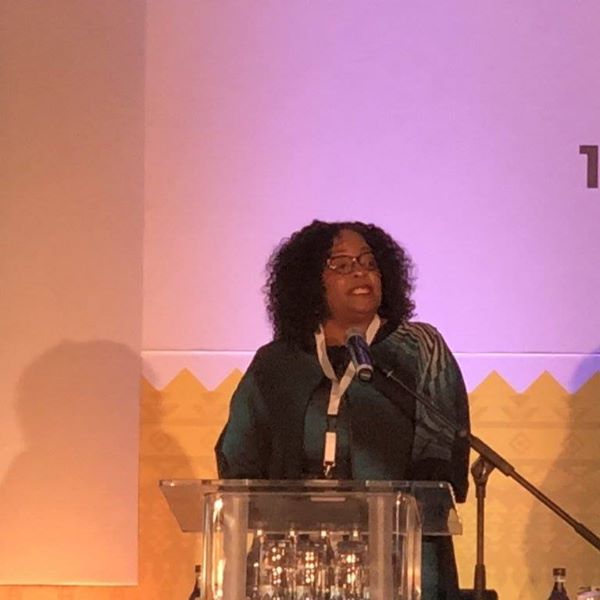
Former President of Mauritius, Prof. Ameenah Gurib-Fakim, on Thursday urged the world not to forget the parents of the yet to be released Chibok and Dapchi girls.
Gurib-Fakim told the News Agency of Nigeria (NAN) in Lagos that she had a meeting with some parents of the yet to be released Chibok and Dapchi girls’ to share their experience and pains.
NAN reports that the closed door meeting which was held at the Federal Palace Hotel, Victoria Island, was convened by the Chief Executive Officer (CEO) of the Murtala Muhammed Foundation (MMF), Mrs Aisha Muhammed-Oyebode.
NAN learnt that no fewer than 10 parents of the yet to be released girls were at the meeting which started at about 7.15 p.m on Wednesday.
Recall that 105 of the 110 girls abducted by members of the outlawed Boko Haram group from the Government Girls Science and Technical College, Dapchi, in Yobe State on Feb. 19 have been released.
Also, of the 276 girls abducted by members of the same group from the Government Secondary School, Chibok in Borno State on April 14, 2014, the government has been able to secure the release of many, but more than 100 are still missing.
The mothers of the missing girls still remain expectant of the return of their girls.
”It was a real touching moment to be speaking with these mothers.
”The message I want to send to the world is that the world must not forget them.
“They are suffering, they have lost relatives — some of them are in captivity and I’m sure they will get them back.
”So, let us all work together and help these girls come home safely to their families and be reunited with them once and for all.
”I have really enjoyed talking with them and If I can do something to take away their sufferings, I will do it, ” she said.(NAN)
Nigeria’s Ministry of Foreign Affairs says it will on Friday evacuate its stranded citizens in Moscow, Russia, who were abandoned at the end of the 2018 World Cup Tournament.
The Ministry’s Spokesperson, Dr Tope Elias-Fatile, in a statement on Thursday in Abuja said over 230 stranded Nigerians had been cleared to board an Ethiopian Airline flight to Abuja on Friday.
He said that the development was sequel to Mr President’s directive that stranded Nigerians in Russia be evacuated with immediate effect.
According to him, the Ministry and Nigerian mission in Moscow in collaboration with the Ministry of Aviation have been monitoring the process of the evacuation.
”As at the last count, over 230 stranded Nigerians had been cleared to board an Ethiopian Airline flight to Abuja.
”The aircraft would depart Domodedovo Airport in Moscow with the stranded Nigerians at 08.30 hours Friday, July, 20th and arrive Abuja at 16.00 hours same day,” he said.
He noted that over 150 stranded Nigerians were among the fans who travelled to the Russian Federation for the 2018 FIFA World Cup tournament that besieged the Embassy of Nigeria in Moscow on July 12th.
The fans according to him, were stranded after the events due to lack of funds for their upkeep as well as allegation that some airline travel agents cancelled return tickets of their customers without their knowledge.
”Consequently, the Mission submitted a formal complaint to host authorities against the airlines that brought the stranded Nigerians to the Russian Federation.
”The Mission also made arrangements for the feeding and accommodation of the stranded Nigerians in hostels around Moscow,” he said.
.
He noted that President Mohammadu Buhari had on July 16 directed the Ministers of Foreign Affairs and Aviation to evacuate the Nigerians to Abuja immediately.
Fatile said the Ministry of Foreign Affairs would continue to monitor the evacuation process and keep the public informed.
Road Traffic Management Corporation (RTMC) on duty
Road Traffic Management Corporation (RTMC) on duty
South Africa’s Road Traffic Management Corporation (RTMC) has urged members of the public who have information about the irregular clearing of outstanding vehicle licence fees and penalties to report it.
“All information provided will be treated as strictly confidential,” RTMC said in a statement.
The public has been encouraged to contact 0861 400 800 to report any corrupt activity in traffic law enforcement.
Four people have been arrested for colluding with motorists to clear outstanding vehicle licence fees and penalties by irregularly registering vehicles in the names of unsuspecting individuals or deceased persons and then re-registering the same vehicles in the name of the original owner.
“In this way, fees payable by the original owner are dumped on the unsuspecting individual or deceased person and the officials would receive a bribe for conducting these fictitious transactions.
“It is believed that the State loses millions of rands annually in licence fees and penalties through this unethical conduct,” RTMC said.
The arrests followed months of investigation in which the transactions conducted by the four suspects were carefully analysed.
Suspected transactions include mainly the registration of light passengers and heavy load vehicles. – SAnews.gov.za
Communications Minister Nomvula Mokonyane, addressing the 3rd BRICS Media Forum at Westin Hotel in Cape Town
Communications Minister Nomvula Mokonyane, addressing the 3rd BRICS Media Forum at Westin Hotel in Cape Town
South Africa’s Communications Minister, Nomvula Mokonyane, says media organisations in the BRICS countries would make a huge difference if they could drive a people-to-people conversation across their platforms.
Mokonyane said this when she addressed the second day of the 3rd BRICS Media Forum at Westin Hotel in Cape Town on Thursday.
The 3rd BRICS Media Forum, which is being attended by over 120 media delegates, takes place as governments under the five-country bloc prepare to meet at the 10th BRICS summit in Sandton next week.
“…It is worth noting that the best media cooperation should not only be within the confines of the media rooms and publication but through people-to-people engagement as well.
“The media organisations within BRICS would make the biggest difference if they were to succeed in getting people talking, whether face-to-face or across virtual networks. Admittedly, social media enables such discussions, broadening them beyond geographically defined communities and existing editorial agendas, and at a scale hitherto unimaginable.
“For any modern media organisation that predominantly produces mass media outputs, social platforms enable them to see how people respond to the content and debate the issues raised in their programmes. In turn, a loop is created wherein they observe and interact with audiences in a way that is not possible with legacy media like newspapers and TV,” she said.
Mokonyane said as the global community advances towards the technological era of the fourth industrial revolution, this transition should be used to solve the triple challenges of poverty, inequality and unemployment – challenges that all BRICS member states are faced with.
“The irony of the fourth industrial revolution is that it impacts on all nations, rich and poor. And, therefore, it is incumbent upon us as South Africa to see how we could utilise the technological advancement at our disposal to deal with the challenges and find synergies with other countries within the BRICS bloc to foster a more humane, inclusive and just world order.
“The advent of new social media platforms brings in new challenges for the traditional print media which had enjoyed dominance for many centuries,” Mokonyane said.
She said the media of BRICS countries should be an instrument to promote peaceful development, cooperation and equity.
“Importantly, we should share our experience as well as learn from each other to better cope with change in the fast-changing media industry.
“As the BRICS bloc, we should strive to do better in coordinating our efforts to deal with the challenges that beset the world, including fighting terrorism, eliminating poverty and hunger, dealing with economic imbalances and addressing climate change.
“BRICS media should become the champion of peace and development, promote the common development of the five-member bloc, and safeguard the common interest of emerging markets and developing countries,” she said. – SAnews.gov.za
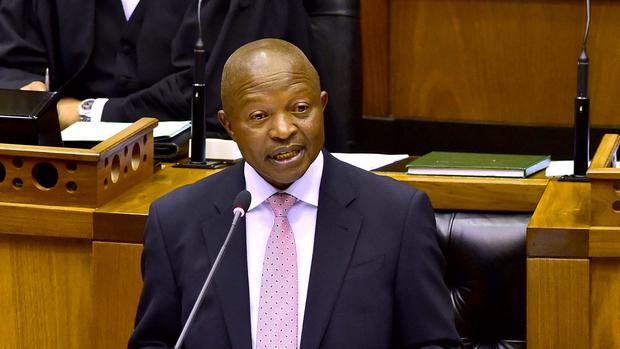
South African Government is pushing ahead in implementing the ring-fencing of certain economic sectors to achieve economic transformation, says Deputy President David Mabuza.
“Among the measures we must practically implement without wasting time is the issue of localisation and ring-fencing of certain economic sectors to achieve real economic transformation,” said the Deputy President on Thursday.
Deputy President Mabuza was speaking at the Broad-Based Black Economic Empowerment (BBBEE) Rural and Township Economy Summit at the East London International Convention Centre (ICC).
He said that by implementing ring-fencing, government will be dealing with existing obstacles to the meaningful and sustainable participation of black people in procurement opportunities provided by government and the private sector.
“We cannot make meaningful progress in this regard, if we do not link procurement to government strategy as a conscious agenda for the revitalisation of township and rural economy,” he told delegates attending the first of the two-day summit.
He stressed however that an economy still exists among the country’s townships and rural areas though it may be small, simple and informal.
“But it can make a significant difference in the lives of ordinary people and so we must treat it with seriousness and determination,” he said.
Government said in its efforts to revitalise township and rural economies, the country must consolidate, integrate and accelerate pockets of work done across government that would meaningfully support supplier mobilisation per economic sector.
While it is common knowledge that township and rural economies are predominantly small and lack the sophistication demanded by the mainstream economy, such barriers must not deter the country.
“That is why we must consider reviewing service level agreements and tender documentation for both consultants and contractors in order to incorporate principles of an enterprise development model that localises the manufacturing and supply of materials,” said the Deputy President.
Bigger companies in the construction sector, he said, should identify and engage local enterprises within communities in which any construction project is implemented.
These local enterprises in turn should be supported by government through supplier development programmes.
Supporting youth owned enterprises
Deputy President Mabuza said government is acutely aware of youth not having the opportunities necessary to grow the economy.
“Our rural areas and townships can also be better served if our young people are trained and encouraged to express themselves and innovate, either for commercial and social pursuit. In our youth, we have bounds of energy, ideas and potential for unlocking prevailing socio-economic challenges.”
He said skills hubs in townships need to be built to give youth platforms to realise their potential while also becoming globally competitive.
“For those of us who are in the Presidential Broad-Based Black Economic Empowerment Advisory Council, we have a responsibility to see these young people on the path to success. We can assist in making them excellent traders, entrepreneurs and industrialists,” he said.
Work conducted by BBBEE Council
Meanwhile, member of the Presidential BBBEE Advisory Council Thami Mazwai said it is important not just to provide financial support to businesses in townships and rural areas.
He said the environment in which township and rural areas small businesses operate in, play a critical role in the development of these businesses.
“When we met as the council, we said we should look at small business in its entirety. You can give a small business markets but it doesn’t guarantee success,” said Mazwai, adding that “our areas have become markets for others” has got to be reversed.
He said that the council in its previous meeting aimed at ensuring the proper framework for the country. That meeting led to the study conducted by the World Bank in 2014 that encapsulated surveying areas such as Diepsloot.
Analysing the data of the World Bank, the Council identified 12 big ticket items which must drive the two-day summit has to thrash out.
Among the 12 items is that policy formulation has not largely taken into consideration the needs of 41 million in rural and townships areas also adding that the World Bank did a study in the 1960s which highlighted a problem of the “missing middle” being small business. This resulted in what Mazwai called “big faith” in big companies.
Industrialists of the future
While in present South Africa this mind-set is changing, the country still has a long way to go in addressing this.
In addition, the country’s major development initiatives were not initially focused on small business.
Mazwai echoed the Deputy President’s comments that South Africa must come to a point where all agree that poverty, high unemployment, and deepening crisis of inequality is not good and is a threat to the sustainability and stability of democracy.
Deputy President Mabuza said the country needs its people to be enterprising and become industrialists of the future.
“We must encourage our people to be enterprising, to see beyond townships of old and into the future as industrialists, as people who will claim the African century, as people who see themselves as job creators and not job-seekers.”
The Deputy President said while economic advances have been made in the last 24 years of democracy, the legacy of colonialism and apartheid is still deeply entrenched in society and continues to manifest in South Africa’s economic structure.
The Summit will conclude on Friday. – SAnews.gov.za
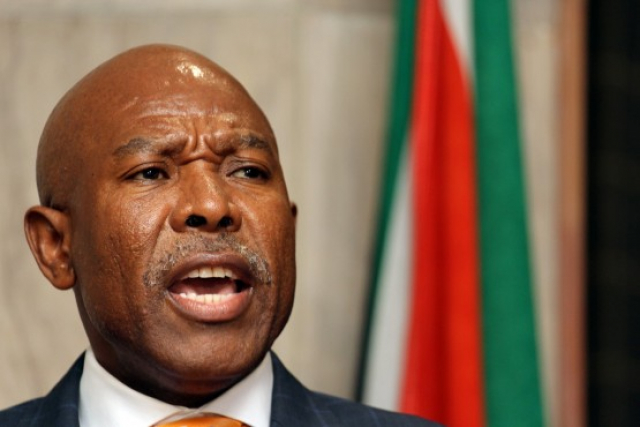
South African Reserve Bank Governor, Lesetja Kganyago, announces the repo rate
South African Reserve Bank Governor, Lesetja Kganyago, announces the repo rate
The South African Monetary Policy Committee (MPC) has unanimously decided to keep the repurchase rate unchanged at 6.5% per annum.
Making the announcement on Thursday, South African Reserve Bank Governor, Lesetja Kganyago, said the MPC still sees the stance of monetary policy to be accommodative and appropriate, given the current state of the economy.
“However, the MPC has noted the deteriorating inflation outlook, driven mainly by supply-side factors. The approach of the MPC continues to be one of looking through the first-round effects and focusing on the second-round effects.
“With risks and uncertainties at higher levels, the MPC will continue to be vigilant and will not hesitate to act should there be second-round effects that take us significantly away from the midpoint of the inflation target range,” Kganyago said.
The governor said a number of key risks and uncertainties highlighted in recent meetings still persist.
“Electricity prices continue to pose a further upside risk. The growth forecast has deteriorated, and the outlook remains constrained. Demand pressures in the economy are not assessed to pose a risk to the inflation outlook.
“The MPC assesses the risks to the growth forecast to be more or less balanced. A firm commitment to credible structural policy initiatives and implementation is required to make a marked impact on employment and potential output.”
Since the previous MPC, several risks to the inflation outlook have begun to materialise. While headline inflation is comfortably within the inflation target band, indications are that the country has passed the low point of the current cycle. Developments in the international environment have placed upward pressure on the inflation trajectory, while the domestic growth outlook remains challenging, Kganyago said.
The year-on-year inflation rate, as measured by the consumer price index (CPI) for all urban areas, was 4.4% in May 2018 and accelerated to 4.6% in June. Goods price inflation increased to 4.2% (up from 3.5% in May), while services price inflation moderated to 4.9% (down from 5.3%). The South African Reserve Bank’s measure of core inflation – which excludes food, fuel and electricity – declined to 4.2% in June. Producer price inflation for final manufactured goods increased marginally to 4.6% in May. MPC Statement July 19th, 2018 Page 2
Despite remaining within the target band throughout the forecast period, the SARB’s model projects an increase in headline inflation, peaking at levels closer to the upper end of the target range.
VAT impact
Thus far, the impact of the value-added tax (VAT) increase appears to have been less than anticipated. However, the weaker rand exchange rate and the higher oil price assumptions result in a more elevated inflation trajectory, said Kganyago.
Headline inflation is now expected to average 4.8% in 2018 (down from 4.9%) before increasing to 5.6% in 2019 and decreasing again to 5.4% in 2020 (up from 5.2% in both years). Headline CPI inflation is expected to peak at around 5.7% in the first and second quarters of 2019 before declining to 5.3% at the end of 2020.
The forecast for core inflation is 4.6% in 2018 (up from 4.5%), 5.5% in 2019 and 5.3% in 2020 (up from 5.1% in both years). Inflation expectations, as reflected in the survey conducted by the Bureau for Economic Research (BER) during the second quarter of 2018, are largely unchanged in the near term, averaging 5.2% in 2018, 5.4% in 2019 and 5.5% in 2020.
Five-year-ahead inflation expectations are at a historical low of 5.4%. Expectations implicit in the break-even inflation rates (i.e. the yield differential between conventional and inflation-linked government bonds) declined marginally across all maturities.
While the global economic outlook has remained broadly favourable, expectations are that world growth will begin to slow in the third quarter of 2018. In addition, escalating trade tensions are contributing to uncertainty around global trade. World trade volumes contracted sharply in April 2018 – the worst performance since May 2015.
The global inflation outlook remains benign but is on a moderate upward path due to the rising oil prices. The prices of most other commodities have been retreating.
Rand strength
Since the previous meeting of the MPC, the rand has depreciated by 7.2% against the US dollar, by 6.2% against the euro, and by 4.9% on a trade-weighted basis. At current levels, the SARB’s model assesses the rand to be undervalued.
“It is likely that the local currency, along with other emerging market currencies, will remain volatile. The implied starting point for the rand is R13.40 against the US dollar, compared with R12.37 at the time of the previous MPC meeting.
“A key external risk to the rand remains the possibility of tighter global financial conditions. However, the pace of monetary policy normalisation in the advanced economies continues to be gradual,” Kganyago said.
At this stage, further policy tightening by the United States Federal Reserve (Fed) is expected to follow a measured path in the absence of significant inflation or growth surprises. Higher-than-expected US fiscal deficits could result in a stronger monetary policy response.
The domestic economic growth outlook for this year is weaker than expected, the governor said. Following the broad-based contraction of 2.2% in the first quarter and early indications of modest growth in the second quarter, the SARB’s forecast now indicates a growth rate of 1.2% for 2018 compared with 1.7% previously.
The forecast for 2019 is 1.9%, marginally higher than the previous forecast of 1.7%, while the forecast for 2020 is unchanged at 2.0%. At these growth rates, the negative output gap is wider in the near term but is still expected to close in 2020. The composite leading business cycle indicator declined for the second consecutive month in April, consistent with a deteriorating outlook.
Business confidence, as reflected in the Rand Merchant Bank (RMB)/BER business confidence index, decreased to 39 index points in the second quarter. In this context, gross fixed capital formation contracted by 3.2% in the first quarter and is expected to remain weak in 2018.
Household consumption
Consumption expenditure by households, although slightly weaker than last year, is expected to be positively impacted by the improved consumer confidence and the increase in households’ disposable income.
In the near term, however, consumption expenditure is likely to be constrained by the VAT increase and other tax changes, weak employment growth as well as subdued growth in credit extension to households.
Although credit extension to households increased earlier in 2018, year-on-year growth remains low. Average wage growth is expected to remain elevated at around 7% over the forecast period. This is particularly a concern if labour productivity growth continues to decline.
Much of the upward pressure on wage inflation arises from the public sector wage settlement, which is at levels above headline inflation. Higher international oil prices will contribute to petrol price inflation in 2018.
The impact on headline inflation is somewhat moderated by lower food price inflation. Annual food price inflation is expected to remain within the target range over the forecast period, and is not seen as a major risk to the inflation outlook. This is largely driven by an adequate supply of grains over the near term, alongside moderating meat price increases.
The MPC noted the rising inflation trajectory which, while remaining within the target range, is moving closer to the upper end of the range.
Impact of global environment
Key uncertainties in the global environment remain. The continued strength of the US dollar (which has appreciated against most currencies), any sustained elevation of oil prices, escalating trade tensions as well as geopolitical developments continue to pose risks to the inflation outlook.
The rand will remain sensitive to changes in global monetary policy settings and investor sentiment towards the emerging markets.
The implied path of policy rates generated by the Quarterly Projection Model has changed since the previous MPC meeting. Whereas previously four increases of 25 basis points each by the end of 2020 were indicated, five increases of 25 basis points are now implied.
As emphasised previously, the implied path remains a broad policy guide which can and does change in either direction between meetings in response to new developments and changing risks.
“The MPC does not mechanically respond to changes in the path, and the assessment of the balance of risks to the forecast cannot be done by the model,” said Kganyago. – SAnews.gov.za
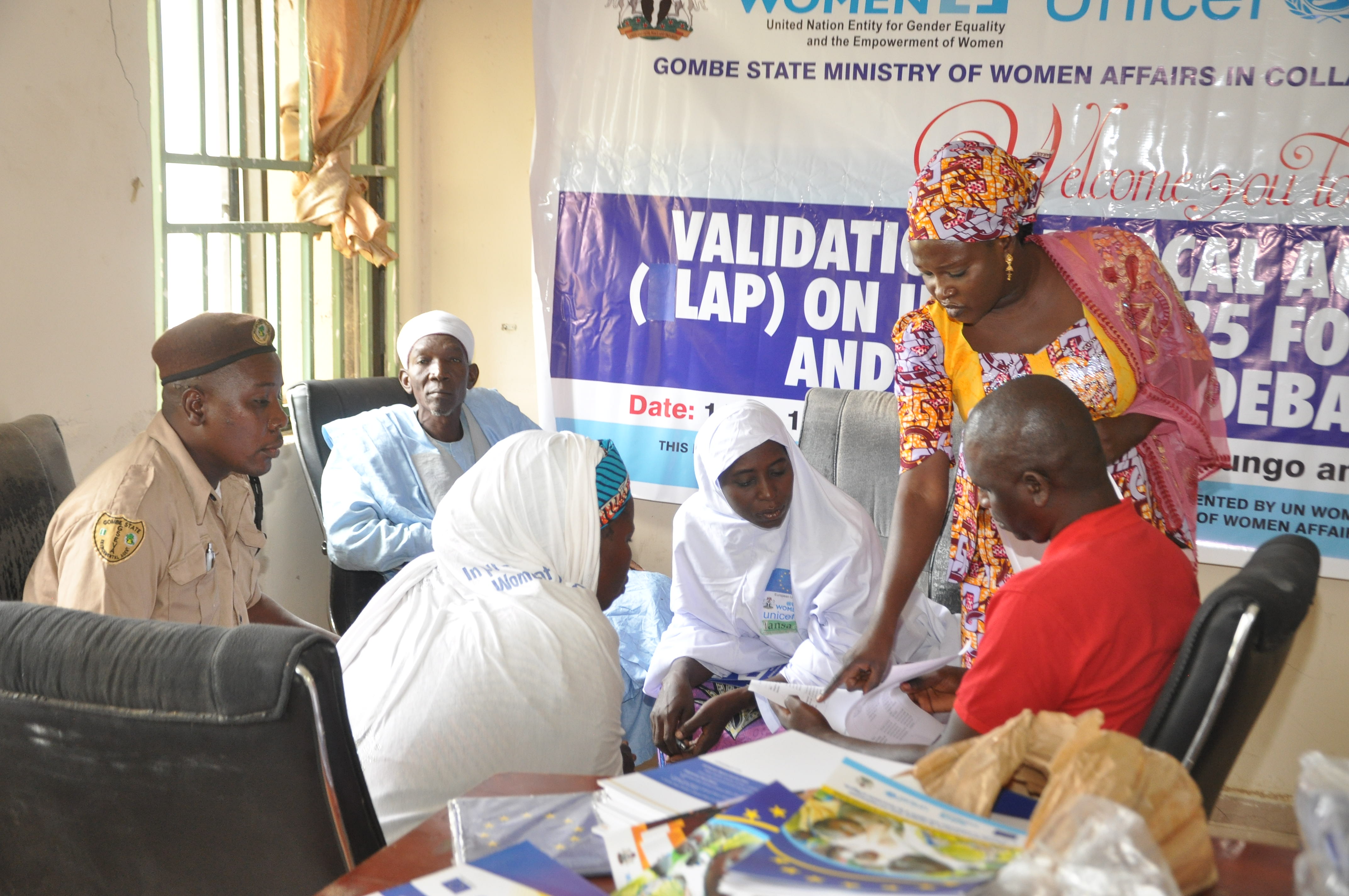
UN-Women Gender Technical Adviser GTA Rhoda Dia with some of participants in Kaltungo local government area during the validation workshop.
UN-Women Gender Technical Adviser GTA Rhoda Dia with some of participants in Kaltungo local government area during the validation workshop.
By Ahmad Umar
A Non-governmental organisation, Search for Common Ground, has commenced validation of local action plan in Gombe State, Northern Nigeria, on implementation of United Nations Security Council Resolution 1325.
The resolution creates more visibility of Women Peace and Security (WPS) program through the use of stakeholders in the state.
The State Project Coordinator of the NGO, Mr. Chorbe Joshua Gonlur disclosed this at the validation workshop on the data collected for reflection on context specific modules of the Local Government Areas, and the State for deepening Engagement on Women Peace Security project in the State.
The programme which was supported by UN-Women in implementing European Union funded program in partnership with UNICEF and Gombe State Ministry of Women Affairs, was held in Kaltungo local government area of the state.
Gonlur said that the workshop would improve knowledge and understanding of the Women Peace Security project across the Local Government Areas, while the State Local Action Plan (LAP) would be a specific document for the implementation of UNSCR 1325 in the local government areas.
“The development of the document had engaged lead consultant, researchers and enumerators who facilitated the process of information generation, reflections, hence the need to validate the data collected by the respondents through reflections on the information presented.
“The validation would serve as a basis for the final document to be produced and launched. The Launching of the document will be done in the two LGAs in the month of July- August 2018 where the document will then be disseminated across LGAs and communities in the state.”
The State Project Coordinator also expressed satisfaction with the lead consultant on the progress of the work so far. He is optimistic that the final document which is context specific would help the stakeholders from the LGAs to use in the implementation of their local Action plan.
“The document will be used by the leaders to address issues facing the communities and to further strengthen women in decision making processes in communities. The document is a bottom top approach which will help in facilitating issues in a non-adversarial way and having the common ground approach in the implementation of UNSCR 1325.
He hoped that the document would further serve as a working tool to the Local Government Authority as a sustainable measure to enable them own the process at the Local level.
Also speaking, the UN-Women Gender Technical Adviser, Rhoda Dia appreciated that support given by the stakeholders since the commencement of data collection across 12 communities in the two LGAs to the validation stage.
She noted that women and girls suffered most during violent conflict but seek to improve on the response mechanisms that would prevent conflict issues from escalation. She added that the document is context specific hence the need for stakeholders to validate the outcome of the research conducted to fit into the current realities in addressing the issues at the Local Government Areas.
The Board of Directors of Ecobank Transnational Incorporated on Thursday in Lome Togo, announced the appointment of Patrick Akinwuntan as the Managing Director & Regional Executive – designate of Ecobank Nigeria, subject to applicable regulatory approvals.
Prior to this appointment, Patrick was the Group Executive, Consumer Banking responsible for leading the Consumer Banking business across Ecobank’s global network of 40 countries, 36 of which are in Africa.
As a seasoned banker with over 20 years of senior and executive management experience, Patrick has held several strategic positions for the Ecobank Group in Ghana, Togo and Nigeria.
He had previously been a Group Executive Director on the Board of ETI and earlier as Executive Director in Ecobank Nigeria.
Patrick started his career with Ecobank, in 1996 as Head of Commercial Bank and Regional Head in Ecobank Nigeria and since then he has held various senior and executive positions in Nigeria and within Ecobank Group, including Executive Director, Retail Bank, Ecobank Nigeria, Group Chief Finance officer, ETI, Group Executive Director, Operations & Technology, amongst others.
Prior to joining Ecobank, Patrick was a General Manager, Springfountain Management Consultants, Lagos from 1993 – 1996; Deputy Manager – Corporate Finance, Credit and Marketing, Manufacturers Merchant Bank Plc, Lagos from 1991 – 1993, and was a Supervisor in Ernst & Young International (Chartered Accountants), Lagos from 1987 – 1991. A fellow of the Institute of Chartered Accountants of Nigeria (FCA), Patrick also holds a Masters degree in Business Administration from the Obafemi Awolowo University, Ile Ife.
He is an alumnus of the senior executive program (SEP) of the Harvard Business school, an honorary senior member of the Chartered Institute of Bankers of Nigeria and an associate of the Chartered Institute of Taxation of Nigeria.
In line with the bank’s leadership and business continuity procedures, the outgoing Managing Director, Charles Kie, will continue to manage Ecobank Nigeria throughout the transition period and ensure a smooth handover to Mr Akinwuntan. the bank said