Authorities of the Snakebite Treatment and Research Centre, Kaltungo in Gombe State, Northern Nigeria have revealed that over 400 snakes of different varieties are being exported from the centre to Liverpool in England every month.
Dr Abubakar Ballah, Officer in charge of the centre, who made the disclosure to the News Agency of Nigeria (NAN) in Kaltungo on Thursday, said the snakes exported served as raw material for the production of anti-snake venom.
“The manufacturers extract the venom from the snakes to produce the drugs,” he said.
He said the raw material provided for the processing of the anti-snake venom made the drugs cheaper in Nigeria when compared with countries that did not supply raw material for its production.
Ballah said countries that do not supply the raw material were buying a single vial of the drug at the cost of 1,900 USD, which is equivalent to N684, 000, while the same drug in Nigeria is N35, 000.
According to him, the same drug in the United States for rattle snake that undergoes the same process of production costs between N7million and 8 million, which is very expensive.
He said the Centre engaged people within Kaltungo and its environs to catch the snakes and package same, at the cost of between N500 and N1, 000 per snake, depending on the size of the reptile.
The officer in charge said the snakes were usually taken to Abuja from Kaltungo, from there they are packaged and exported to England.
“On arrival in England, they will undergo some screening to ensure they have not suffered because Animal Rights Organisations are on the watch; after following the process, drug production commences,” he said.
NAN reports that Kaltungo town, popularly called the ‘Snake Haven’ lies within the Snake belt region of Northern Nigeria, and is known for its abundance of different species of snakes.
The common species found in the area are Carpets Viper, Puff Adder and Cobra.
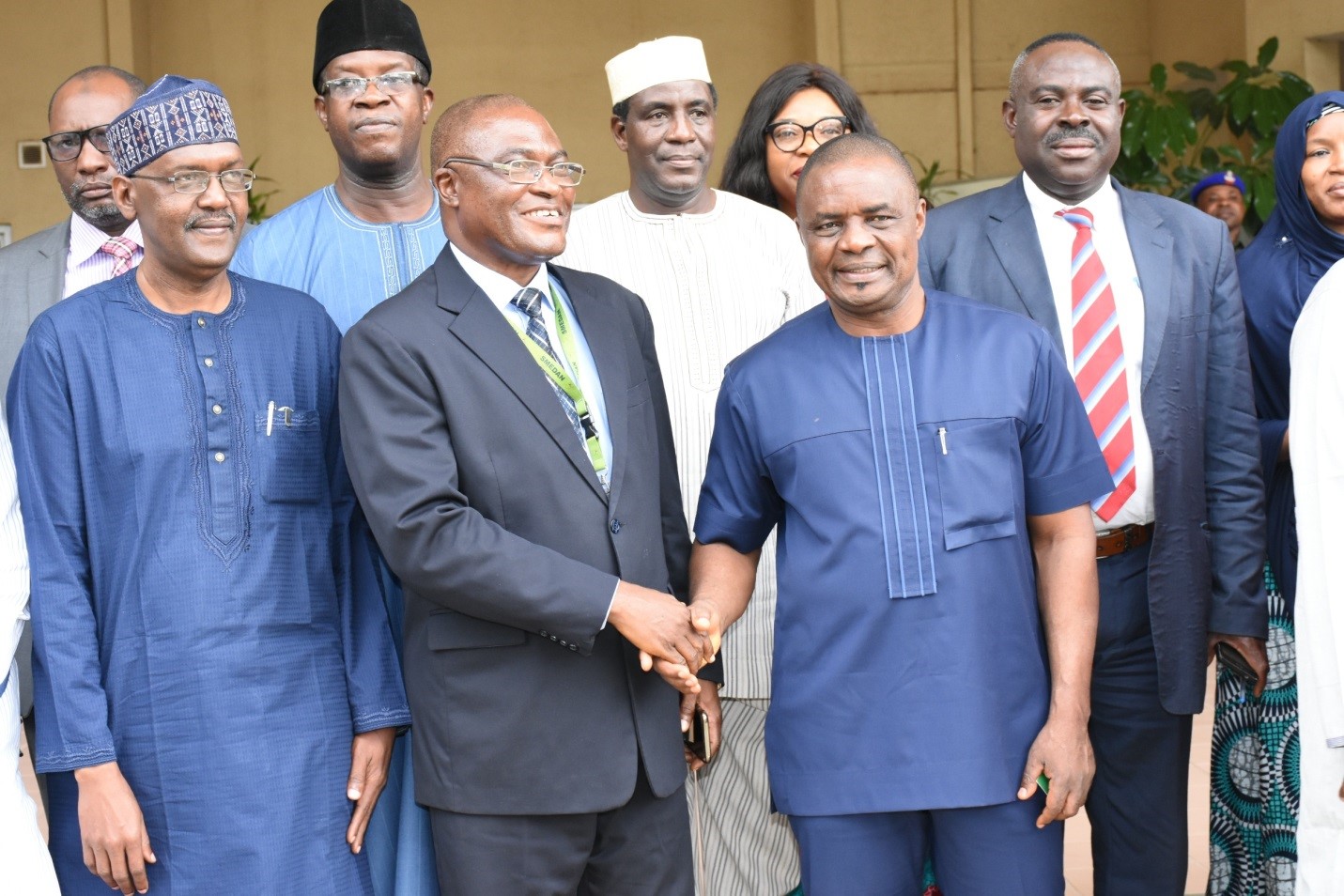
As part of efforts towards creating an enabling environment for the development of small businesses and to ensure they have easy access to finance, the Federal Capital Territory Administration, FCTA has inaugurated the Council on Micro, Small, and Medium Enterprises, MSMEs.
Speaking at the inauguration, The FCT Minister, Muhammad Musa Bello, said the Council would serve as an institutional framework to drive MSMEs across the territory.
Mr. Bello, who was represented at the occasion by the FCT Permanent Secretary, Sir Christian Ohaa, said the Council would act as aggregators across states, coordinate the implementation of the national policy on MSMEs as well as provide linkages and synergy among all stakeholders in addition to ensuring seamless implementation of the National Enterprises Development Programme, NEDEP.
The Minister stated that the establishment of the Council became necessary due to the unhealthy consequences of the fragmented approach to MSMEs development in the country.
According to the Minister, “We believe that the establishment of the MSMEs Council will give greater impetus to the economic diversification agenda of the Muhammadu Buhari Administration.”
“It would facilitate efforts by the current Administration to improve Nigeria’s rating in the ‘global ease of doing business scale’ and also drive poverty alleviation and create jobs” he said.
The Minister used the occasion to restate the FCTA’s commitment towards creating an enabling environment and providing necessary logistics for growing MSMEs in addition to encouraging stakeholder engagement in the sector.
To this effect, he said the capacity of the Abuja Enterprise Agency, AEA will be strengthened to drive the sector in the FCT and to effectively function as the secretariat for the Council.
Bello however commended the Small and Medium Enterprises Development Agency of, SMEDAN as well as the Abuja Enterprise Agency and other stakeholders for the successful constitution of the FCT MSME Council.
He expressed confidence in the ability of the Council and its members to ensure that the intention of the Federal Government is actualised.
Also speaking through the Director of Economic Planning, Research and Statistics, Abubakar Sani Pai, the FCT Permanent Secretary, Sir Chinyeaka Ohaa, who is also the Chairman of the Council, thanked the FCT Minister for the confidence reposed in the members by the appointment.
He assured the FCT Minister that the members would put in their best towards the realisation of the objectives of the Council, as he also called on all stakeholders to join hands with the Council to actualise the desired results.
Membership of the Council cuts across relevant parastatals and stakeholders in the sector.
Representative of the DG, SMEDAN and Director, Policy, Advocacy and Coordination, Monday Ewans, in his remarks said MSMEs play very critical roles in the development of nations in terms of job creation, wealth creation and poverty alleviation.
He said strengthening MSMEs in the country will be very pivotal to achieving economic diversification as well as improving productivity and national development, all of which would assist in realising the economic recovery and growth plan of the change administration.
Ewans added that 15 other councils on MSMEs have been inaugurated in other states of the federation.
Northern Nigeria Leaders have condemned the on-going face-off between the executive and legislative arms of government saying that it is capable of truncating democracy in the country.
The northern leaders, under the umbrella of Arewa Consultative Forum (ACF) met in Kaduna, North West of the country and issued a communique, condemning the political squabbles in the nation’s polity.
In a statement signed by the National Publicity Secretary, Mohammad Ibrahim Biu quoting the communique described the excesses of the Directorate of the Security Service (DSS) in the country, as a great threat to the present democratic dispensation.
It condemned last week’s siege “on the citadel of democracy, the National Assembly, by the men of the Department of State Security (DSS)”.
“The meeting said the actions of the DSS run contrary to democratic tenets and reeks of intolerance. NEC therefore applauded the actions taken by the FG and urged the Federal Government to thoroughly investigate the immediate and remote causes of the NASS invasion by the DSS personnel in order to unveil the truth and to sanction all those found culpable, no matter their status both within and without the service”.
“And because punitive measure was never taken against those involved in similar episodes in the past, it has encouraged the DSS to do what it recently did to the NASS. ACF therefore commends the actions taken so far by the Presidency against the DSS as deterrent to future occurrences.”
“The ACF Meeting “also expressed serious concern on the lingering crisis between the Executive and the National Assembly on issues of good governance which is not only avoidable but also very embarrassing”, pointing out that “the situation has not only affected governance but also the polity and growth of our nascent democracy.”
“Both the Executive and the NASS members are in place in order to deliver on the promise of democracy and not to engage in unnecessary flexing of muscles that have nothing to do with real issues of real concern to real ordinary Nigerians.”
ACF therefore appealed to both the Presidency and the National Assembly leadership “to sheath their swords and put the interests of Nigeria above all other pecuniary considerations”.
The National Executive Council (NEC) of the Consultative Forum’s quarterly meeting presided over by the Acting Chairman, Musa Liman Kwande, was attended by NEC members from the 19 Northern States and FCT.
“The meeting paid glowing tributes to the late Chairman, Ibrahim Ahmadu Coomassie, GCON, Sardaunan Katsina, who died on the 19th July,2018, in Katsina. His career in the Nigerian Police Force from Cadet Officer to the top as Inspector General of Police for 36years was eventful and fulfilling”.
“NEC urged Nigerians to emulate his legacy of service to humanity, hard work and due diligence and love for traditional values most northerners cherish.”
Equally eulogized by NEC, “were the deaths of our elder statesman Mallam Adamu Ciroma whose contributions to the development of the North and of the country in general are common place, and ACF National Financial Secretary Alhaji Ahmed Bawa and others who also died recently.”
The ACF meeting also received in audience the leadership of the Youth Assembly at the United Nations YAUN, led by Amb. Dawan Gabriel Kudangbena, President of the Youth Assembly, North Central zone of Nigeria.
Kaduna State House Of Assembly Northwest of Nigeria has passed the Witness Protection Programme Law 2016, Bill along with two others.
The passage on followed the presentation of the report on the bill, by the Chairman Adhoc committee on bills, Kantiok Irmiya Ishaku in which one section of the standard rules of the House was set aside to allow the third reading and the passage.
The purpose of the bill is to establish a programme to allow certain persons to receive information, investigation, inquiries or prosecution.
Other bills passed by the House are for A Law to establish the Kaduna State Fire and Public Safety Law, 2017 which is aimed at establishing an effective and efficient fire service management, while the other is, Kaduna State Audit Law, 2018 which intends to provide for the Audit of Public Accounts and matters connected therewith.
The speaker of the House, Aminu Abdullahi who presided over the plenary said, the three bills before the passage had received thorough study and that series of meetings held alongside interactive sessions with various stakeholders to ensure smooth and effective bill.
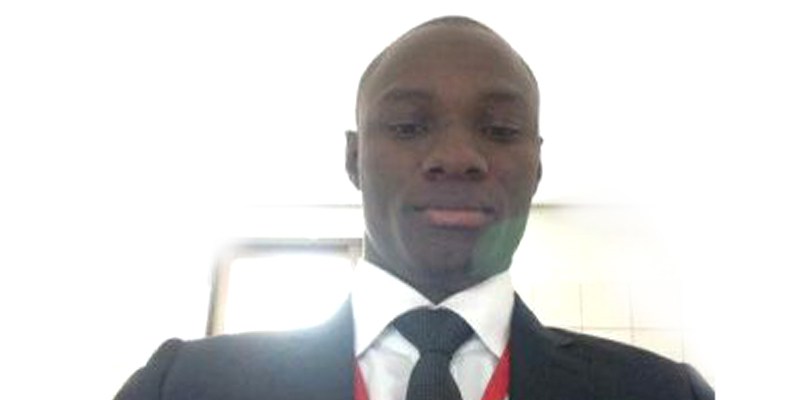
Samuel Ogundipe of Pemium Times (Photo Credit: Premium Times)
Samuel Ogundipe of Pemium Times (Photo Credit: Premium Times)
By Joseph Edegbo & Iliya Kure
Nigeria Police Force on Thursday says it’s attention has been drawn to what it calls innuendos and misinformation in the media about the arrest and ongoing prosecution of one Samuel Ogundipe of Premium Times online publication by Police Investigation Unit.
A statement by the Force Spokesman, Jimoh Moshood in Abuja on Thursday says that Samuel Ogundipe is being investigated and prosecuted for offences of “theft and unlawful possession of restricted and classified documents” inimical to State/National Security that could jeopardize peace, breakdown of law and order, capable of precipitating crisis in the Country.
Other offences for which the accused is being investigated and prosecuted, according to the statement, are the violation of Official Secret Act, Cyber Crime Act, and the Penal Code Law for which “he has volunteered statements and is standing trial.”
The statement gives further details on the Investigative Journalist who was believed to be carrying out his professional duties.
“It is factual to state that Mr. Samuel Ogundipe was arrested on the 14th of August, 2018 and on completion of Preliminary Investigation, he was arraigned in a court of competent jurisdiction in the FCT in less than Twenty-Four (24) Hours of his arrest. He was remanded to Police custody and the case was adjourned to Monday, 20th August, 2018.
“The Nigeria Police Force as a law-abiding organization will continue to ensure that the Rule of Law and its supremacy which are essentials of democracy prevails at all times.
“However, individual(s) or group(s) who violates the law must be brought to justice, the Force will also ensure that all Nigerians irrespective of profession, practice or carrier are subject to the same Law, and therefore wishes to impress it on the Media to encourage prosecution of all offenders upon whom a prima facie case has been established. Every concerned group(s) or interested person(s) should be aware that the matter is in court and the due process of law is being followed.
“The Nigeria Police Force and the media are veritable partners in ensuring peace, law and order in the country, but the Force will not compromise or allow an offender to go scot free or pervert the end of justice.
“The Force is hereby assuring all law-abiding Nigerians, respected media practitioners and other members of the public of a guaranteed freedom of expression and other rights as enshrined in the 1999 Constitution as amended, and will continue to hold in high esteem with utmost respect, the views of prominent and notable media unions, practitioners’ associations and other stakeholders. However, the Force is constrained by the Law to allow justice to take its course and rule of law to prevail in this case.
“Consequently, members of the public are implored to disregard every sentiment being peddled to cast aspersions on the investigation and the ongoing prosecution of the offender in court,” the statement said.
On the other side
On Tuesday, PREMIUM TIMES published on its website stating, “Mr Ogundipe was arrested at about 300 p.m. and driven from the SARS headquarters in Abuja to the IGP Monitoring Unit at Force Headquarters where he was made to write a statement concerning the source of a recent story he wrote. He has declined giving his source as allowed by journalism ethics.
“Mr Ogundipe’s salary account with Ecobank was frozen in an attempt to frustrate him. One of the police officers handling the investigation, Emmanuel Onyeneho, an inspector, was heard saying they had to freeze the account to incapacitate the reporter.
“At the Force headquarters, where he was taken, a Deputy Commissioner of Police at the IGP Monitoring Unit, Sani Ahmadu, was heard directing lawyers to “rush to court” to obtain a warrant to detain Mr. Ogundipe.
According to PREMIUM TIMES, “Apart from asking Mr Ogundipe to disclose his source, the police also accused the reporter, who covers the security sector, of publishing mainly negative stories about the police.
“Mr Onyeneho told Mr Ogundipe that they believe the journalist had written more negative stories than positive stories about the police and they considered that a crime.
“He said the journalist must disclose all his sources for his stories about the police, something Mr Ogundipe professionally declined.
“Aside Mr Ogundipe, this newspaper’s editor-in-chief, Musikilu Mojeed, and its education correspondent, Azeezat Adedigba, were also briefly detained and harassed by the police at the SARS headquarters in Abuja.”
Between 1970 to 2018, the Niger Delta region has recorded over 10,000 oil spillages and hardly were the affected communities compensated or quick clean-up of the affected communities impacted,Odimegwu Onwumere writes
Oil spill has become a recurring decimal in the Niger Delta region since 1956 that oil was first found in Nigeria.
The country was then a British protectorate and the oil was found by a joint operation between Royal Dutch Shell and British Petroleum.
Investigations have shown that the country has recorded over 10,000 spills between 1970 to 2018 and hardly, were the affected communities compensated.
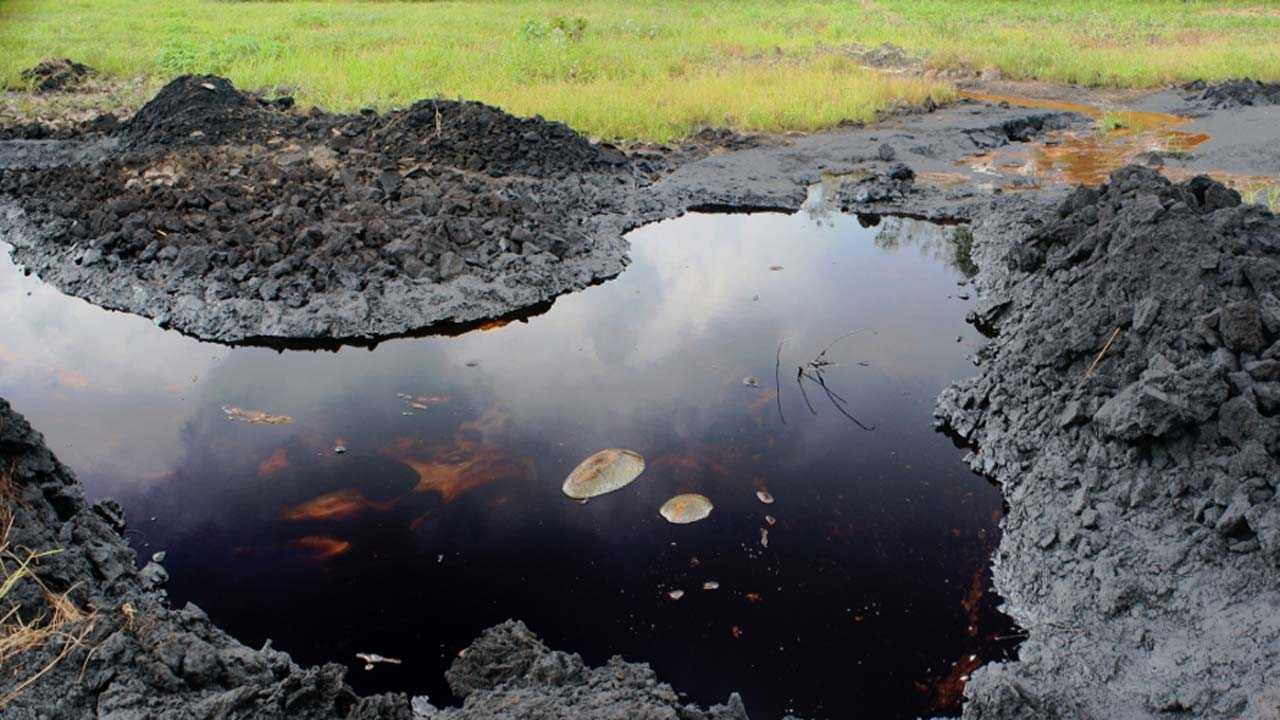
There have been incessant oil spills in Ogoni and by extension, the Niger Delta region, leading to thousands of litres running on Ogoni farmlands and rivers.
There was a major spill in 1970 which led to a £26m fine for Shell in Nigerian courts 30 years latter, and the authorities were recalcitrant to the plight of the victims of the disaster.
Besides this, just on May 17 2018, over fifty fishing settlements in Bayelsa community of Niger Delta were destroyed by oil spill.
The incident occurred in Aghoro 1 and 2 communities, hosting an oilfield operated by Shell Petroleum Development Company (SPDC) in Ekeremor Local Government Area of Bayelsa.
The story of the spill was confirmed by the Oil and Gas Producing Areas Enlightenment and Empowerment Initiative (OGPAEEI), an NGO in Bayelsa.
This was as Nembe Creek community in Nembe Local Government Area of Bayelsa State called on federal and state governments to look into the delay of AITEO Production and Exploration Company in cleaning up an oil spill that was destroying farmlands in the area since 2016.
The Amanyanabo of Nembe Creek Community, Chief Kemmer Igbeta, and Vice Chairman of United Nembe Creek Fishermen Association in Yenagoa, was not pleased with the situation.
According to a statement from the community in April 2018, “The reckless activities of the company have endangered the health of our people, while the sources of drinking water are all damaged.
“We wish to notify the public, as a demonstration of our commitment to peace, of our frustrations and disappointment at AITEO Production and Exploration’s indifference and nonchalant attitude to the plight of the people of Nembe Creek communities, precipitated by AITOE’s exploration and production operations at Nembe creek oil fields.”
In Odimodi Community in Burutu Local Government Area of Delta State, there was a devastating oil spillage that occurred on the 24 inches Trans Ramos crude oil pipeline owned by the SPDC.
The crude oil spillage spread to over fifty communities under the Odimodi Federated Communities and others in the creek.
Dr. Anapunere Awoli, Spokesman of the OGPAEEI, speaking to our correspondent on behalf of the President of the group, Mr. Jackson Igbabiri, in Yenagoa, disclosed that the spill in Aghoro was devastating as sources of water and farmland and fishing tools worth millions of Naira were destroyed.
He added that communities in Aghoro 1, were most greased with the spillage and they included Garden of Eden, Aya Ama, Famous Ama, Azatitor and Birigbene and so many others.
According to Igbabiri, “From the assessment we conducted on the incident, we found out that about 10,000 fishing nets, over 50 fishing settlements, farmlands including coconut farms, plantain and water yam farms were destroyed by the spill.
“Some of the fishing settlements in the area are Amasese, Idolo, Semetiegbe, Yoba, Agoloudu, Ama Iyorodtugbene, and Isun Adofeye camp, among others.”
He went further, “We are calling on SPDC to urgently provide alternative sources of water like borehole for the people; the people are also in dire need of medical aid and food items; the situation can lead to public health challenges if not taken care of.
However, His Majesty, King Enimikem Famous, the traditional ruler of Famous Ama Community in Aghoro, was not pleased with the incident. He described it as “unfortunate”.
In his words, “We have suffered too much of spills; our people have suffered from several illnesses such as cholera, severe cough and infertility caused by the type of water we consume.”
The Bayelsa State Government, through the Deputy Governor Gboribiogha Jonah led a delegation that visited the affected areas and admonished the SPDC to embrace international oil practice standard to avert further spillage.
Conversely, Dr. Alice Aje, Manager, Stakeholder Relations at SPDC, described the spill as “regrettable”.
But this is primary to disasters that Ogoni people have been suffering for years in the hands of multinational oil companies operating in the Niger Delta region.
UNEP Rescues Ogoni
It was the umpteenth time that this writer has to investigative disasters occurring from oil spillage that the people of Ogoni have come to endure for decades.
The Ogoni people are in shadow of the negative impact of crude oil explorations by multinational oil companies in their land.
The SPDC was at the centre of the environmental degradations that Ogoni are suffering till date.
The company operated in Ogoni without any development or implementation of environmental assessment methodologies. It did not take into account the economic, socio-cultural and conservation values of the environment in Ogoni.
The observation with Environmental Impact Assessment Laws was zero, so also was the implementation of health safety and environmental management systems and quality assurance control, as oil production began in the Delta in 1956.
While Ogoni Suffer
Nigeria as a colony of the rapacious British Empire, the imperialist gave the SPDC the unlimited right to explore crude oil anywhere in Nigeria. This Right was given in 1937.
Scrutiny was that not less than $900 billion profits have been made by the FG from results of oil exports to foreign countries since 1960.
The SPDC did not give a hoot to launch inclusive waste management programmes or put-into-practice a continually update of fully operational oil spill prevention programmes.
The Ogoni people suffer environmental risk assessment. They experience ultimate results of accidents as regards to lack of mitigation measures.
There is hardly any design for National oil spill contingency plan for control, containment, and cleanup.
Ogoni being the third party among the FG and the SPDC, do not experience a review in practice to effectively address in a timely manner the damage oil explorations are causing the area. Gas flaring is a scourge in Ogoni.
Ogoni Voice
About twenty-five years ago, a voice emerged among the sons and daughters of Ogoni; a people in the Niger Delta region with a population of close to 832,000 (according to the 2006 National Census) and covering close to 1,000 square kilometres in Rivers State, southern Nigeria.
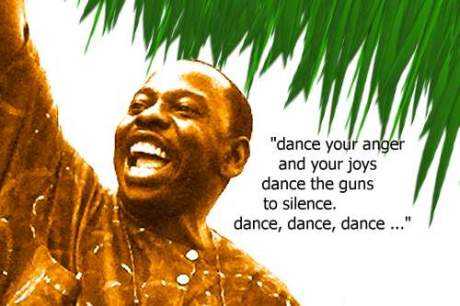
A United Nations Environment Programme (UNEP) examination characterises Ogoni by the third largest mangrove ecosystem in the world. An internationally acclaimed writer, satirist and environmental activist Ken Saro-Wiwa emerged from this ‘mangrove’ in 1990.
He was peacefully protesting against the oil pollutions and severe environmental degradations in Ogoni, being caused by the oil companies, especially the SPDC.
The Movement for the Survival of the Ogoni People (MOSOP) was born and was one organ through which the activist informed the entire world of what the people are suffering in the hands of the oil companies and the Nigerian military government.
In that regard, Ogoni Bill of Rights was created. This was the people’s self-determination manifesto, to streamline the activities of the foreign oil companies in the area.
The Bill also helped other ethnicities in the Niger Delta region, to formulate manifestos around the activities of the oil companies in their respective communities.
With MOSOP being led by Saro-Wiwa, over 500,000 people joined in the struggle, in protest against the ruinous activities of the oil companies, especially the SPDC.
In 1993, the once untouchable SPDC, which was in collaboration with the FG to taint Ogoni-land in the name of oil explorations, was coerced to stop drilling in Ogoni.
Ogoni Intimidated
With Nigeria in the hands of the military, the SPDC lied against Saro-Wiwa and his staunch cabinet members numbering eight, of murder. The Nigerian military government did not give Ken Saro-Wiwa, Saturday Dobee, Nordu Eawo, Daniel Gbooko, Paul Levera, Felix Nuate, Baribor Bera, Barinem Kiobel, and John Kpuine a civil trial, having had them arrested in May 1994. They were condemned and were executed in 1995, for crying out loud of the disasters emanating from oil spillages on their land, upon international communities’ outcry.
Aggrieved by the decadence of their land and preceding several extra-judicial killings in Ogoni conspicuously engineered by the FG, a matter was instituted against the SPDC at the court, which after a lengthy legal battle of 14 years, the SPDC succumbed to pay $15.5 million, regarded as remuneration for the families of the deceased persons.
United Nations Intervention
Not satisfied with the money paid by the SPDC, Ogoni people were bickering and tinkering that their polluted land must be cleaned up; an issue that the Federal Government (FG) have been lackadaisical about till the intervention of the UNEP.
It is palpable that with the UNEP in Ogoni, the Federal Government (FG) has been on policy to conserve biodiversity in order to sustain the use of forest resources. It is also bent on preserving benefits accruing from soil, water, and wildlife conservation for economic development.
Nigerians expressed cheerfulness when the country’s priority programmes included the extension of National Parks and Reserves and the compilation of the flora and fauna. The Nigerian Biodiversity Strategy and Action Plan (NBSAP) was on top of these reviews.
What The Federal Government (FG) Was Doing
The activities of the Nigerian government in the area of protecting the atmosphere included wiping away the utilisation of ozone depleting substances (ODS), monitoring background atmospheric pollution and the total column ozone, data bank automation, a greenhouse gas inventory, climate change research and training, promotion of environmentally friendly energy practice, and participation in the Global Environment Monitoring Systems (GEMS), since the United Nations Conference on Environment and Development (UNCED).
The UN was hammering against the sources of gaseous emissions, a situation the Federal Government (FG) promised on Friday, 25 March 2011, that it had set agenda for ending gas flaring and unveiled what was regarded as “ambitious $10bn gas revolution” and to create 500,000 direct and indirect jobs.
The Federal Government (FG) made this disclosure during the formal launching of the Gas Revolution in the country.
The then President Goodluck Jonathan, said: “Today’s event marks the beginning of what I believe will be a fulfilling journey towards the restoration of Nigeria to the league of nations which have successfully leveraged on the advantage derivable from the abundance of natural gas, to positively impact on the lives of present and future generations of their citizens.”
Warning To Nigeria
The UN, however, benchmarked 2010 for compliance to end gaseous emissions. Reviews on emissions that included those of vehicles, generating sets, and aircraft were fad.
The UN through its agency such as UNEP, was creating awareness campaigns at all levels that Nigeria should make use of adequate effective technology, ensuring efficient energy use, maintain effective databases on industries and their compliance status, maintain a register of technologies, vehicles, generating sets, aircrafts, introduce and enforce emission control certificates for vehicles, generating sets, and aircraft by 1999, eliminate ODS consuming processes, enforce laws relating to the siting of new industries, install a minimum of primary treatment for all new industries, build secondary central treatment facilities in all major industrial estates in cities such as Lagos, Kano, Kaduna, Port-Harcourt, Warri, Ibadan, and Enugu by 2005.
The Sustainable Development Knowledge Platform – an arm of the United Nations Department of Economic and Social Affairs – continues in the above to ensure that in Nigeria, there is 100% waste segregation, recycling and re-use by 1999.
The platform also enlightens Nigeria to promote research in Best Available Technology Effective for Local Adoption (BATELA), make eco-labelling compulsory for all products by the year 2000, promote commercialization of sanitary landfill and incineration as appropriate, encourage citizen empowerment in pollution control, introduce green technologies and promote Environmental Management Systems (EMS) in all industrial facilities, create an environment fund for soft loans as economic incentives for environmentally friendly industries, and promote tax rebates for industries installing pollution abatement facilities.
UNEP Report On Ogoni
Ogoni people were in a bid for a second round of their struggle, but UNEP showed commitment in making sure that the environmental degradations caused by the multinational oil companies in Ogoni was resolved.
It was a request by the Federal Government (FG) that the UN agency should investigate the extent of pollution in the region. The UNEP report, on presentation to the then President Jonathan, was adjudged the most detailed scientific study on any area in the Niger Delta.
The presentation of the report was made to the then President Jonathan on August 4, 2011. The UNEP criticised the SPDC and the Nigerian government for contributing to 50 years of pollution in Ogoni-land.
The report of UNEP detailed that 10 out of the 15 examined sites which SPDC had said it has wholly remediated, still has pollution above the SPDC and government remediation charges.
UNEP report found out that, what the people took as potable water had carcinogens, such as benzene, up to 900 times above World Health Organisation (WHO) standards.
The report also revealed that at some places in Ogoni-land, the soil was polluted with hydrocarbons to a depth of five (5) metres.
The report further confirmed that the neglect of environmental pollution laws and sub-standard inspection techniques of the federal authorities had led to the complete degradation of the Ogoni environment, turning the environment into an ecological disaster. Therefore, UNEP held that one billion dollars ($1b) should be spent to clean-up Ogoni.
UN Innovation
The intervention of the UNEP saved the Ogoni from the damning neglect it was suffering over forty years and brought the attention of the world to the area.
The report confronted the Federal Government (FG) and the oil multinationals with the perils the Ogoni people are suffering, because of their nefarious activities in the land.
The report made the world to truly understand that the once supported productive farm lands the people enjoyed, fishing and related activities, were all damaged by the incessant pollutions that are being experienced in the area, which compelled the people to gumboot SPDC out of the place 25 years ago.
Court Awards Payment
In March 2012, the Bodo community in Ogoni had filed a lawsuit against the SPDC in a London High Court and was awarded with a £55 million out-of-court settlement and compensation from the company in 2015.
According to data, “The community had achieved this uncommon feat, working with a pro-development non-governmental organisation, Centre for Environment, Human Rights and Development (CEHRD) and a United Kingdom based law firm, Leigh Day.
“On the payment of the fund, it was agreed that £35 million will be split between those impacted by the spill who will each receive £2,200 (about N600,000) and £20 million will go to the community for the execution of legacy programmes and projects.”
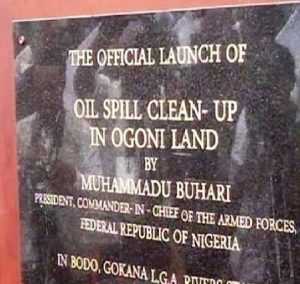
However, President Muhammadu Buhari had in the 2018 budget presentation, said, “We are working hard on the Ogoniland clean-up project, and have engaged eight international and local firms proposing different technologies for the mandate.”
“This would enable us select the best and most suitable technology for the remediation work, and have asked each firm to conduct demonstration clean-up exercises in four local government areas of Ogoniland.”
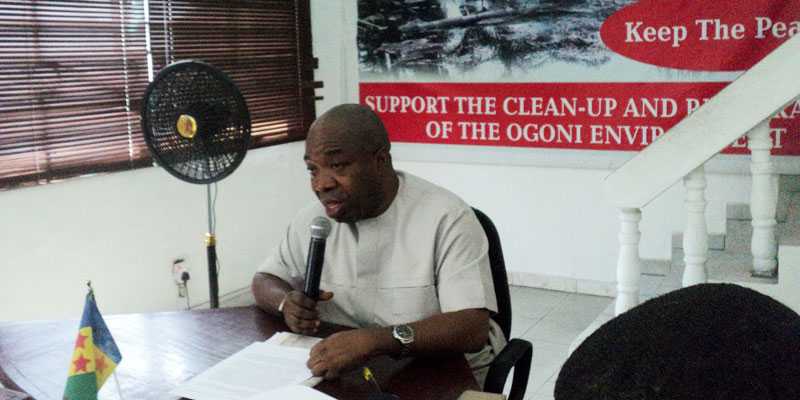
But President of the Movement for the Survival of Ogoni People (MOSOP), Legborsi Pyagbara was however perturbed that Ogoni people were dying every day; they were still drinking from the polluted water. No choice of theirs.
He frowned over the renewal of pipelines for multinational oil companies in Ogoniland when the clean-up has not been conducted. He added that the authorities should have done the environmental impact assessment of the area before the resumption of any form of oil exploration in the area. He earnestly called on the concerned authorities to ensure quick clean up of the affected communities.
Odimegwu Onwumere is a multiple awards-winning journalist based in Rivers State. Email:apoet_25@yahoo.com
An NGO, MamaYe Evidence for Action in collaboration with Gombe State Accountability Mechanisms has launched a campaign called Fund Naija Health in Gombe to Champion timely release of resources towards achieving universal health coverage in the State.
The event which was launched on behalf of the three subcommittees by the Chairperson of Evidence sub committee, Zariyatu Abubakar Hashidu calls for the release of all appropriated funds on health.
“Gombe State Accountability Mechanisms asking Gombe state government for the release of all appropriated funds for the purchase of solar panels to power blood banks in all healthcare facilities in the state.
“Release all appropriated funds to the Gombe state primary health care Development Agency to facilitate the establishment of a drugs revolving funds and release appropriated funds for the internationalisation of MPDSR and the State Health Account.
“Release all appropriated funds for Maternal, Newborn and Child Health (MNCH) and Health Management Information Systems (HMIS)on time and increase annual budgetary allocation to health to meet the 15 percent target agreed upon at the Abuja declaration of 2001 by African head of States.
Also speaking, the Media Advisor of MamaYe Evidence for Action, Mr. Laude Shokunbi said that fund Naija health is about getting policy makers and duty bearers to make the required resources available as a matter of course.
“Because resources are central to achieving the overall objective of improving RMNCAH+N, MamaYe Evidence for Action seeks to achieve two cortical objective during this campaign, increased budgetary allocation to health but particularly RMNCAH+N and timely release of budgeted funds.
Governor Nasir El-Rufa’i of Kaduna State, northwest Nigeria, on Wednesday presented the 2019 budget estimate of N155.8 billion to the State House of Assembly for consideration.
The budget is made up of recurrent expenditure of N62.3 billion and capital expenditure of N93.5 billion.
The budget, tagged budget of continuity, allocates 42.8% to the social sector with 27.15% of the board budget allocated to the education sector, while the health sector gets 15.02% in line with the demands of United Nations’ agencies.
Though the budget is 28% reduction from N216.65 billion budgeted last year, Governor el-Rufai pledged that his administration was set to complete all the projects it started and pay up all its contractual obligations before the end of the year, as election approaches in the first quarter of 2019.
Speaking while presenting the budget to members of the Kaduna State House of Assembly, El-Rufai said, “The proposed 2019 budget size is N155,865,339,539.77 with recurrent expenditure of N62,339,040,309.19 and capital expenditure of N93,526,299,230.58 representing 40% as recurrent expenditure and 60% as capital expenditure.
“The 2019 budget keeps faith with our commitment to human capital development through investments in the social sector, which takes 42.8% of the budget.
“Social sector spending is mainly on education which is allocated 27.15% and health on which we propose to spend 15.02%.”
According to Governor El-Rufai, the key targets of the budget from fiscal perspective are, ensuring the actualisation of the development priorities of the government as articulated in the state development plan and respective Sector Implementation Plans (SIPs) and maintaining a favourable proportion of capital to recurrent expenditure.
Governor El-Rufai said government would ensure that adequate provision is made to complete 2018 projects in 2019; expanding the revenue generation capacity of the state; and maintaining a sustainable debt position in line with Federal Debt Management Office (FDMO) criteria.
He explained, “Mr. Speaker, we will strive to complete every single project we have started in each of our 23 local government areas, and to pay the contractors we have commissioned to work for us. We will continue to cut the cost of government and ensure that our people are the ultimate beneficiaries of public resources.”
Assessing the performance of the 2018 budget, Governor El-Rufai said the government was able to promote equality of opportunity to give ordinary people and their children a fair chance in life.
“We have taken painful but necessary actions to ensure that only qualified teachers are in our public primary schools. We are renovating and rebuilding schools. This year, we have made significant strides towards completing our project to refit 255 primary health centres.” He observed.
The Speaker, Kaduna State House of Assembly, Aminu Abdullahi Shagali in his response commended the state government for ensuring that Kaduna state is more sustainable.
“We are proud of the direction your government is taking. It is a tough time but our government has achieved a lot in making the state stronger and protecting the vulnerable. We assure you that we will commence work immediately to ensure passage of the bill in not too long time,” he assured.